

Read our interview with the filmmakers, below.
Can you tell me a little bit about crafting the story together?
Isa Mazzei: I studied literature at UC Berkeley and wrote a lot, and I studied futurism and the avant-garde. So, when we started talking about doing a film together, I brought a lot of my literature background. And Danny—he went to film school—so he brought this cinema aesthetic and idea to it. We built the story from the ground up together—when we say it’s a film by us, it’s a film by us. Everything we did together.
We’d have these long conversations about story or about my experiences camming and what we wanted to bring into the movie and then I’d go and bust out some pages, and then we’d talk about them. We had this nice collaborative process from the beginning that let us build this trust with each other that we then took onto set.
Why did you decide to go with horror as a genre for a movie about a sex work story?
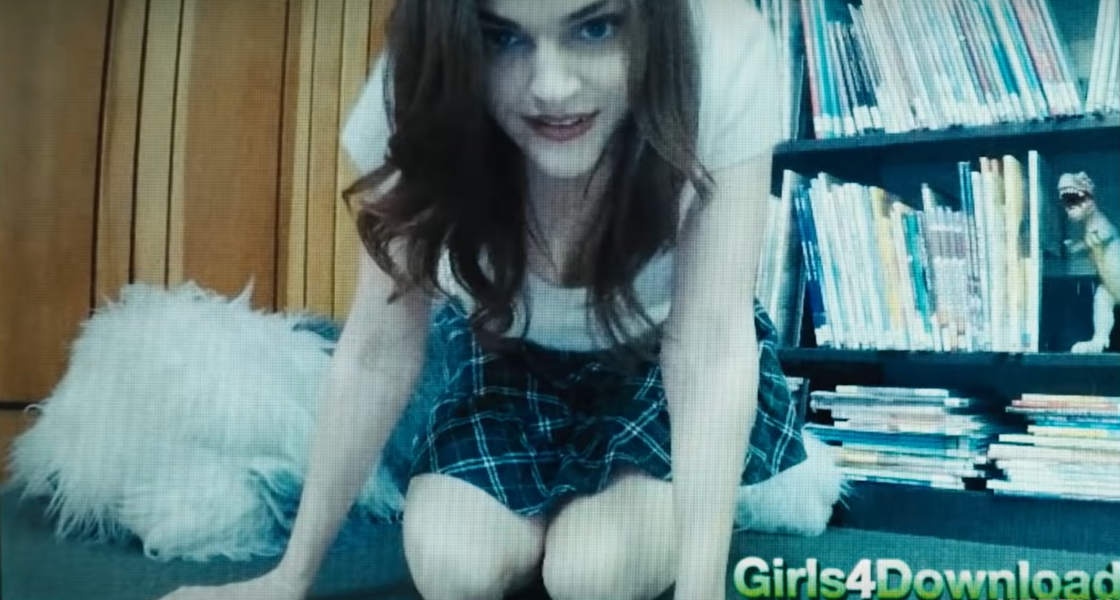
Daniel Goldhaber: Originally, we were thinking of doing a documentary on Isa when she was camming and ultimately ended up feeling that pornography and documentary have a very similar contract with the audience—and that contract is like, voyeuristic, ‘I’m giving you reality.’ And docs are not real. They’re still crafted and there’s still a point of view. Documentaries are very hard to make about someone’s psychological reality. And that was very important in this—really bringing an audience into a camgirl and a sex worker’s psychological reality.
So, we quickly abandoned that, and came up with this opening scene and realized there’s a surreal psychological thriller in here. But when you’re thinking, ‘How do I build familiarity between an audience and a sex worker?’ Genre is a great way to do that because genre is familiar. So, when you take ideas like those in CAM that are subversive and fresh, both when it comes to sex work, but also when it comes to the portrayal of technology and you bake those into genre structure, you allow an audience to feel familiar with them.
How did you keep your story intact when switching from the idea of filming a documentary to horror?
Daniel Goldhaber: We had a manifesto very early on with our non-negotiable rules and ideas for the film. Our number one rule was that the audience has to be empathizing with the sex worker and the negative stakes of the movie can’t be derived from her decision to be a sex worker. So, if you think about it, the horror twist of the movie is a sex worker’s loss of agency over her own body. And that only works if the audience realizes that she did have agency over her body in the first 25 minutes of the film. So, that’s where the stakes come from, even if it happens retroactively.
So you guys considered doing this as a documentary at first and Isa, you have a memoir coming out next year that has to do with camming. When you were working as a camgirl, were you aware of how much creative work it would later lead to?
Isa Mazzei: When I was camming, camming was the creative work. My cam shows were my creative outlet, my art. All this creative energy that I’ve always had my whole life that I put into different places—be they my bad novels, or in this case, my camming—that was the work I was really proud of. That was where I was getting my creative validation and my self-expression. So, when I started writing the movie, it felt really natural to put those creative energies into a new medium and see where that took me. I’m really excited that it opened this door to making movies with badass female leads.