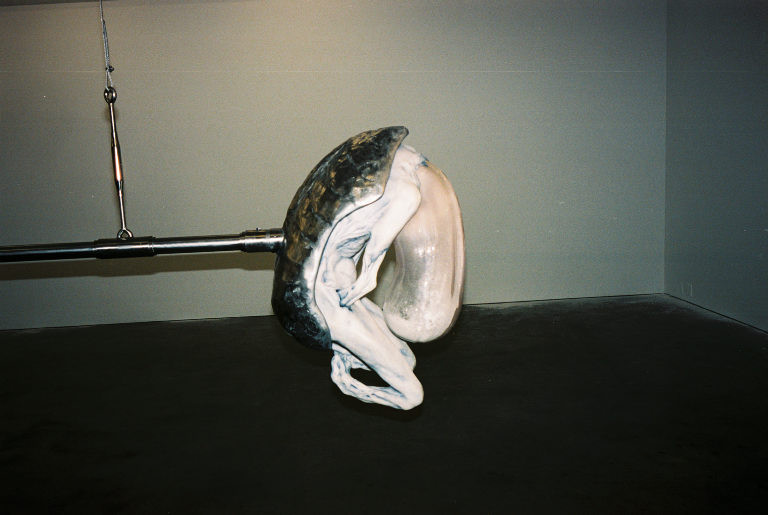
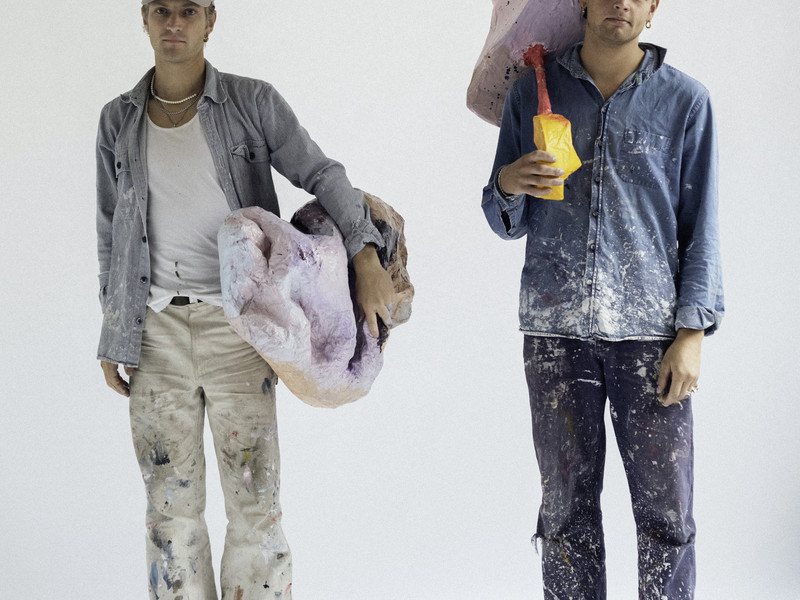
Yeah, that helps explain part of your path.
And then, so all my life, parallel to everything I was doing, I was also working in politics. Doing meetings, sometimes campaigning, because my father is an elected guy so we were campaigning with him, going to neighborhoods, serving drinks while he was talking, when I was a teenager I was doing that. I was packing meals for the protests, you know, “We need to pack a thousand meals!” so we bring all the yogurts and pieces of cake home and packed them up. Or my father also made newspapers, leftist newspapers, so we’d fold them and pile them.
So nuts-and-bolts organizing.
Yeah, yeah logistics and this—I’ve always been into that. I knew the places to print cheap in Bogotá. Meetings, protests, this has been all my life. When I move to Europe, I kind of separated from that, took a step back. It was healthy because it’s very engaging, and you feel bad if you’re not helping. At some point you feel selfish, because you should be contributing. At first it was weird, because my father started campaigning and he was like “You’re not here, I’m alone campaigning, and you’re there and you’re doing your art studies…” And I was like, “Yes.”
Did you find a great contrast in the way that the political atmosphere affected your daily life in Colombia, versus Paris? Did you get engaged, or were you curious? Did you get involved in politics in France?
When I arrived I remember the first week, I got contacted by people from the left who were living there, friends of my parents who were militants, or sometimes they were refugees, so I started getting in touch and working with this association that teaches French to Colombians, mainly women, who work there and who have been in Paris for years but who don’t speak French. I didn’t speak French much, but I was able to teach them a little bit better. But then, in like three months, I cut—I didn’t want to do the same thing, I wanted to get to know this other culture. I never felt I lost anything, I just won more, more information. I was very aware, I’ve always been aware—I used to travel by bus across Colombia because my father is from the south, near Ecuador. We used to from Bogotá to there, which at the time was like thirty hours. So we crossed all these towns, and my father is a politician so he’s always talking to me about the population, “Oh, this town is 300,000 people, the economy is based in sugar cane exploitation.” So I’m very aware of that, when I go somewhere I like to know, what is their per capita income, what is the main place where the money comes from, if it’s mining, agriculture, services. And also go into the street, be real, get in touch with everything, talk to the people, and have all this parallel information. So I guess that was my read on France, the cultures are different. You know, Parisians could be mean, or very dry, it’s different in Colombia, very warm. But there are interesting things, like in Paris people point out problems very quickly. If they don’t agree with something it is very quick, they do something, they say something. Meanwhile in Colombia you kind of put problems aside, like “Yeah, it’s okay,” until the problems become so big you need to solve them. Also I was learning French, because I didn’t speak a word before, so it was interesting to choose the way I wanted to talk. When you’re little you don’t choose, you kind of imitate. But then I was conscious about the language I wanted to learn, even the accent. You decide, I’m going to be a Latino speaking French, or I’m just going to camouflage. I chose the second one, I think it’s more funny. And then it allows you to access some details of language, the subtleties of tone, and jokes. Even the non-words. In terms of work, when I got to Paris I started doing a lot of interventions in the street, in the buses. I was kind of this martian in Paris, I’d never left Colombia before. I was alone, I didn’t know anybody, I was very happy. But I was thinking of this idea, to be alone with ten million people around, being alone together. So I started creating these interactions with people, like, how are they related to the art. The main thing is the difference between the treatment in France and Colombia, people treat each other differently. So I wanted to point out this thing, to approach the other, to talk to them, empathize with them, or shove them, or… Like, I don’t know if you’ve seen these videos I’ve made in New York, where people are looking back at me. I’m just yelling, very loud, “I love you, you’re beautiful people” at red lights, so people are like “What?!” But there’s no sound, there’s just the image, so you have this dramatic, almost like terror. When I started school, I was having questions about the relationship with art history. I learned art history, through Egypt, Greece, Rome, all these different things in Europe, and then pre-Modern art, and modern art, the avant-garde, conceptual art, and I was like “Why do they always teach that?” In the museum it’s like ok, it’s important, it’s great, there are great ideas, but there’s this and not other things from elsewhere. It’s very centralized.
And it’s very colonial in a lot of ways.
Yeah. So like, I saw Mondrian in photocopies all my life, in school, and then I got to see a Mondrian in real life, an I was like “Interesting, but why did I learn this from so far away, when I don’t know anything about pre-Colombian art?” And I don’t think I need to know it, I don’t speak Quechua, I speak Spanish, I don’t feel we need to be “revengist.” All history has been shitty, it’s been shitty forever. We don’t need to fight that, just be real and figure out how things work. So I made some works about the relationship with art history, I made this graffiti thing when I spraye painted over these two Mondrians at the Centre Pompidou. Which is fake. I made a video of it for the open studios in school. Since I worked on the production team, I spent a month adding frame by frame, drawing in the graffiti. Then the school director and teachers, they came and they were all pissed off, they were like "Iván, you don't do that in France, this is not the way it works here, this is vandalism, you're going to get in trouble." I just let them talk, and at the end I told them, "I tricked it. It's retouched."
Graffiti is an interesting topic in relation to your work, because it enables disenfranchised people to reclaim something that is often otherwise deemed public. You've spoken about how public spaces are supposed to belong to everyone, but nobody is really allowed to have an affect on them.
Yeah, it has a lot to do with the public interventions I've done, just the idea to negotiate with these images. Like, having a statue there, it's been charged with historical content, but then when you think about public space, it's a space we all own, but we don't have the right to affect it, it's only the city than can affect it. You con't have a right to put a bench somewhere, it's the city that decides. I feel, somehow, that's how individuality has been considered on a bigger scale. Like, "We don't give a shit about you, let's do practical stuff." Then it's like, we're supposed to pass this life, a very short life, without influencing anything. As individuals, at least. So this idea of renegotiation, it's important to me. It's not like I want to change the landscape of the city, or whatever, but it's like "Ok, I was born, and I have to carry all this story, and then I have your statue in front of my house." Why wouldn't it be allowed to interact with it? Add some content to it? Add a question to it?
Or take something out of it.
[laughs] Or take something out of it!
I just saw a headline recently, in New Orleans they're taking down a number of monuments that commemorate the confederacy, because there has been public outcry that they are symbols of hate and oppression, but the workers that did it had to cover their faces and have security, because there are also people there that are outraged that these symbols are being removed.
Yeah, it reminds me, you saw there was an election lately in France. Macron, the young guy who won, was in Algeria some months ago, trying to do this diplomacy, whatever, and he was interviewed by a TV channel. Algeria used to be a French colony, so they asked him about it, and he said “Yeah, you know, colonialism is clearly a crime against humanity,” and then moved on and talked about other issues. But people in France were so pissed! They were like “What the fuck?! French people died in that war!” and, you know “Of course slavery is bad—but it was good also.” So weird. So he had to backtrack. I was so shocked, general opinion was pissed that he said colonialism was a crime against humanity.