
Take some time to listen to In Another Life, and check out the interview below.
Stay informed on our latest news!

Take some time to listen to In Another Life, and check out the interview below.
Hi Patrick, how are you? How’s life been?
It’s a little weird, you know. But my family is all healthy, so I’m just grateful for that. My wife is actually pregnant with our second child, and she's due in a couple of weeks, so we've been figuring out how to deal with doctor's visits and all that stuff. It's been a little bit hectic! But everyone has their own struggle with it, you know what I mean?
I imagine this is a super busy time for you right now. What does a work day look like for you and your team with all of these precautions for social distancing? How has it affected the drop of your album?
It has in ways that I don't think I really am seeing yet, 'cause we're sort of just getting into the momentum of this rollout. But we had planned a tour for the summer, and now that's kind of up in the air. And it's just been a lot trying to balance taking care of the house, taking care of the family, and trying to pay attention to this album. I think everyone is just trying to figure out what the next step is. But on a positive note, I think this time puts people in a space where they get to spend time with music as opposed to giving a passive listen. I’m interested to see what that means for this album.
"Brighter Day" and "Cruel World" speak so well to these times. Do you have any advice on what you want the world to take from these songs?
Yeah, I've been thinking about that a lot recently. I started the record in 2015, and seeing the Bataclan concert footage and the Paris attacks stirred something in me, so that's when I wrote "Cruel World." And that sort of became this launching point for what I wanted the record to talk about. I think "Brighter Day" and "Cruel World" or even in the title track In Another Life, I hone in on this appreciation for brotherhood, humanity and an idealistic hope that we can all come together and, you know, sort of kumbaya better.
Let’s talk about your inspiration for In Another Life. Your last album, Mercy, dropped in 2015. Is there a reason you waited until now to hit full send again?
Yeah, it's been so many different things. When that record came out, I was feeling a little bit burnt out with the cycle of touring and writing. My life was changing a lot as well; I got married, and we started a family. And I left my label, because I wasn't happy there anymore. I decided that I wanted to build a new team, so I got new management. It was a lot of just reshuffling the cards and trying to figure out what my next step was. The writing process itself really only took about two years. But in the midst of all the other changes and finding this new label and management and then finally like getting a chance to roll it all out, it just took forever.
How do you feel the industry has changed since your last single, "Cruel World," came out in 2017?
I think we can all see it changing all the time. There's a lot more focus and push from online media and journalism, and I just feel like that squeezes everyone a little bit in the interim. Since people have become more freelance, a lot of the smaller outlets have just not been able to sustain themselves financially. So it's tougher. It's a tougher atmosphere to find a way to promote yourself and get people to really champion your music. So I feel like it really has become a time where you have to be your own marketer, your own promoter, your own everything. And then you have to really connect with your fan base, and hopefully they'll continue to spread your message. That seems to be the best way that I see it right now.
Where do you think your sound has evolved between your three albums?
During my second album, I got a little bit lost as to where I was going as an artist. I'm not really interested in making people dance, and I think there were moments where I was trying to touch into that. I think sometimes as an artist, it takes a while to wrap your head around what you're trying to say or who you really are. But with this new album, I feel like I'm finally really coming into my own. I wish it hadn't taken me 10 years, but I'm glad that I can say I feel like I do have a foothold on who I am as an artist. This time away has helped me to refocus my vision in a lot of ways, and it sort of goes back to those tracks that you pointed out in the beginning and me feeling like that sort of subject matter, that tone of sort of drama and emotional energy is something that I really wanted to hone in on. I think a lot of that comes back to the instrumentation that is on the album, which has a lot of string composition. I focused a lot on engineering my own vocals and trying to make them as powerful and dramatic and layered as I could without it feeling prestige or novelty. But yeah, all those things have made me very excited about the next body of work, 'cause I feel like I've really latched onto something. It feels good.
Is there an overarching narrative for these 10 songs?
Initially, the general theme was more about the tragedy and the drama that I was seeing in the world. And then when my little girl was born, it became more about just the overall arc of a life and a look at generations and family. I looked back on images and videos of my parents and grandparents as children and felt moved in acknowledging that each of us has this moment of being young. I found a lot of comfort in seeing that, but I also had this sense of dread over my childhood being gone and unable to come back. The songs revolve around that struggle with change. The initial songs are more about the wonder of everything in this next chapter in my life, and other tracks, like "Color Me" or "Painted Staircase," are induced with fear of the void that may exist when it all comes to an end. So, it’s a little bit of everything.
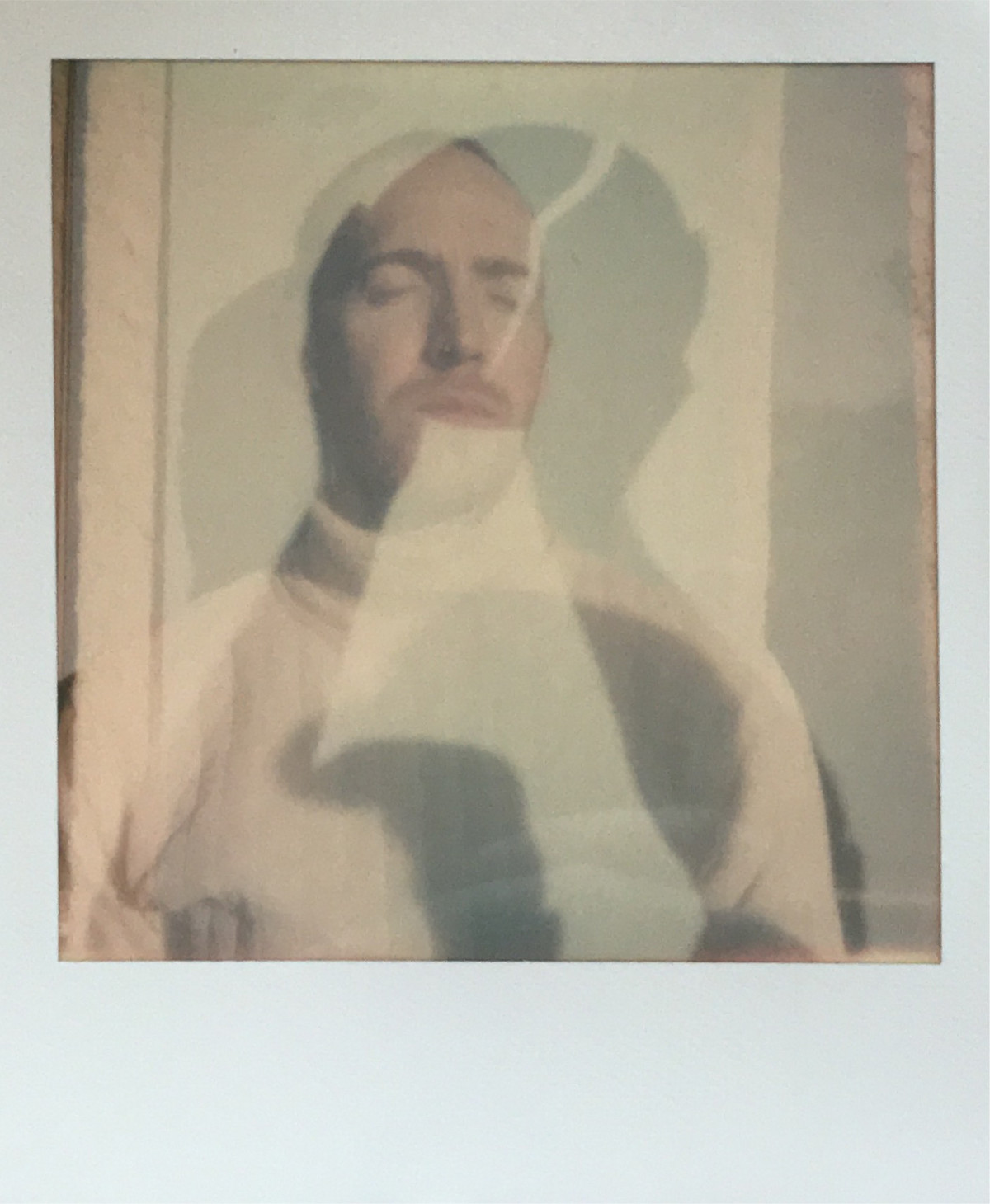
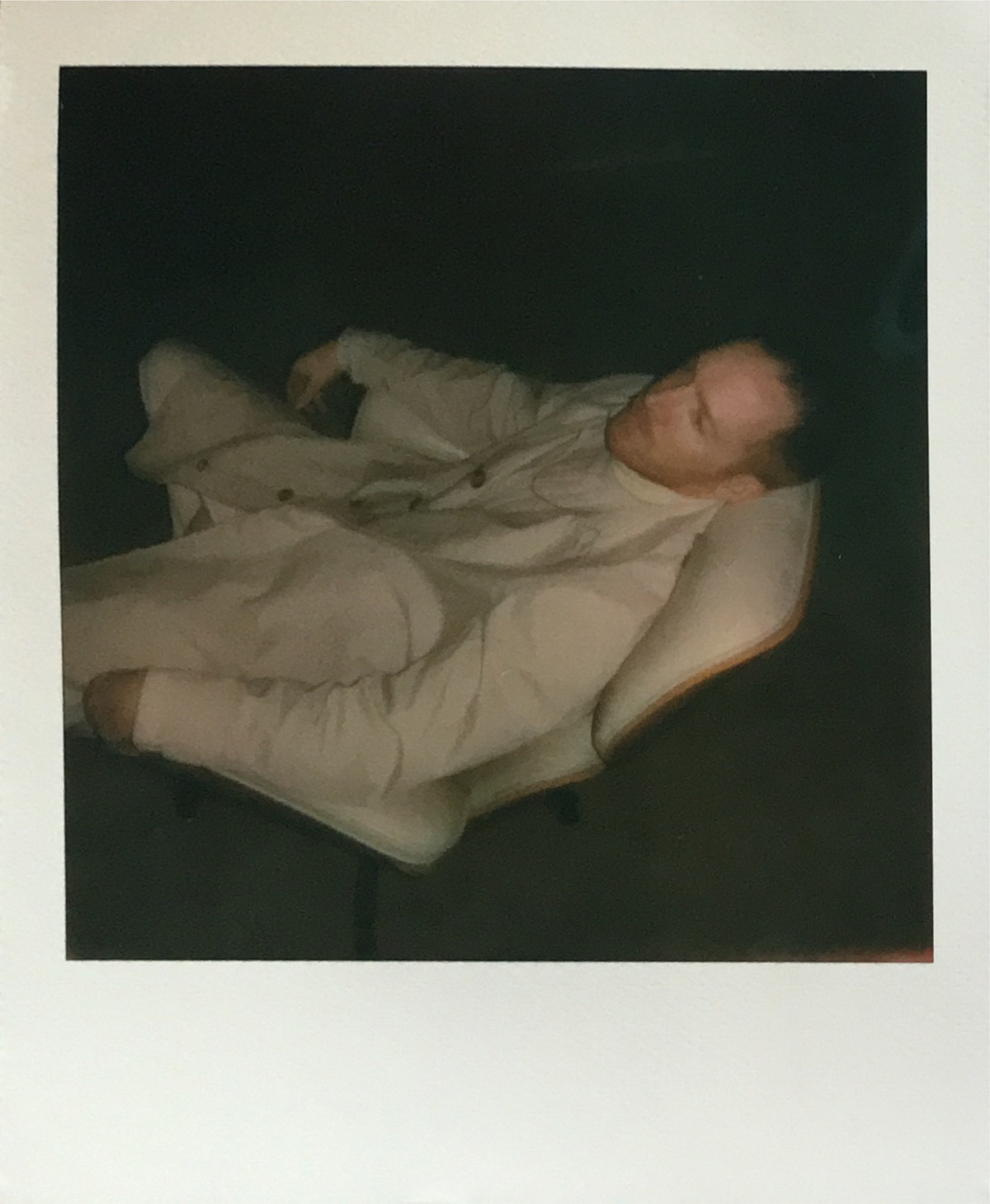
I’ve read that your time as a touring choirboy influenced your music, I hear those roots so strongly in In Another Life. How do you feel that sound has carried into this new chapter of your life?
I think that it'll always be with me, you know? I started when I was nine years old, so I was just a little, little guy, and I sang in the choir for four years. It just really transformed the way I looked at myself and my relationship with music. I remember this phase I had of bringing sheet music to school and not understanding why people thought that was kind of weird. You know, like, why is this guy carrying around sheet music? Everything that I love about the things that I do now, all of those pieces sort of carried that same intensity. I think our tastes in things are almost genetic, at least in my experience. Each of us are drawn towards art or music or whatever. And for me, it's always been that high emotion, tear-jerking kind of music.
How do you feel working with others affects your style and voice?
For me, it's always been really positive. I generally get everything to a close point for myself, and then I find someone to sort of co-produce the finishing touches. But my co-producer Andrew Sarlo was just huge on this one. It had been so long since I put anything out, so I developed this overwhelming feeling of self-doubt to the point of just not being able to finish anything. Andrew came in and injected a sense of confidence in me. It was such a big moment for me to find this person who understood what I was trying to do and knew how to pull it out of me. I spend a lot of time by myself as an artist, so I don’t feel my most confident when collaborating. That's something that I'm hoping to improve on in the future. With this album, my friend Ro and Brita both played the strings. And my friend Dominick does sound healing baths here in LA, so I had him come into the studio, and we spent the entire day tracking him over every song. It created this hidden energy throughout the record that I think is really cool.
So Andrew Sarlo pulled this album out of you, how did you make that connection and why did he make the cut?
I had been trying to find the right person to work with and was not finding someone who felt right for this album. My management suggested Andrew and I started looking at the records that he had produced, and they were all like my favorite records. So I was like, well now I need to meet this guy! He had done all of the Big Thief records, and he had done Nick Hakim's debut record, which I really loved. So we just met up here in LA, and it was just this strange feeling. We almost look like brothers, so right off the bat, we were just like, "This is kind of bizarre." We just really clicked, and we talked about the songs that I had sent him, and he gave me his honest critique. He wasn't scared to give me feedback, which I thought was a brave thing to do in a first meeting. I put a lot of faith in him pretty quickly, and I’m so happy I did, because Andrew saved it for me.
On "Weightless," you collaborated with Sapphire Adizes. He’s known for his roots in classical and jazz. What do you feel he brought to the song?
We only really had a day together when we did that song, but he’s just such a skilled piano player and had a fountain of ideas. He was really fun to work with, and we blended nicely, because we were in kind of a yin-and-yang situation. He’s just this bundle of incredible energy. I move at a much different pace, and I find myself in that position a lot when I do co-writes. It’s like I'm the turtle, and everyone else seems to be the hare, which is a good combination.
I loved your music videos for "Weightless," "Set Me Free" and "All Eyes On Me." Are you planning on releasing more videos from this album?
There's a video for the title track that is sort of a continuation of the "Weightless" video. It's actually my favorite video so far. It's really beautiful. And then there's an additional video that's coming out a little bit later for "Color Me," which is directed by this really great director Martin de Thurah, who has done some great work you’ve probably seen like the James Blake’s "Retrograde" video, some stuff for Fever Ray and a bunch of other cool artists. I was involved pretty heavily in all of them up until Martin’s video. He's a friend who I've been asking to do something with forever, honestly. I sent him the song very early on, like years ago, and he said he’d love to do it. I just told everyone on my team like, "Don't worry, just let him do his thing, and it will be magical." This is the first record where I've done a video on my own, which is for the second single, and it was really exciting. It felt almost like the first time I made a song in a lot of ways. So I just—I filmed it all, and I jumped into iMovie. It was like I was making it my first song in GarageBand or something, and it was really invigorating. I was just so excited the whole time. Everything was exciting to me and new. I've had a lot of fun making these little vignettes for the new songs that are coming out. And I think I might do another video for a separate song eventually.
After the album drops, how are you planning to celebrate?
Oh man, I'd love to be out of quarantine... but I know that's not the case. I don't know. Maybe I'll just order a bottle of champagne from Instacart or something. We’ll see.
Do you have any advice for other creatives who are trying to put out content right now?
Try not to be too precious with your work. I think that has been my biggest learning curve. Your whole career as an artist will be you letting go of things, especially in the sort of moment that we are in now. I think people really enjoy the more, almost like off-the-cuff, not amateur—but you know, people want to see a little bit without it being too pristine, you know what I mean? So I would say try to be a little bit less precious with your work.

"Jungle, footwork, and techno are always a backbone to my creative process. I went to a lot of punk shows as a teenager and also loved raves, while also being obsessed with runway." You are transported into Cowgirl Clue's inspired, referential world just by looking at her debut album cover. On it, she poses with a geometric electric guitar wearing 90's-inspired pigtails and pastels, shot through an energetic fish-eye.
Somehow, though, it all works. Cowgirl Clue's wide range of influences, and her ability to make such a lush record, represents a democratized musical landscape. It's arguable that an artist like her could only exist in this capacity given the relatively recent streaming takeover. With more and more music being readily available and consumed, listeners are ready for their music to be packed with more nuance. Thank the fairy gods that Cowgirl Clue's got it in abundance.
The artist stopped by our office for a 90's-inspired shoot and to talk about the inception of the Cowgirl Clue world.
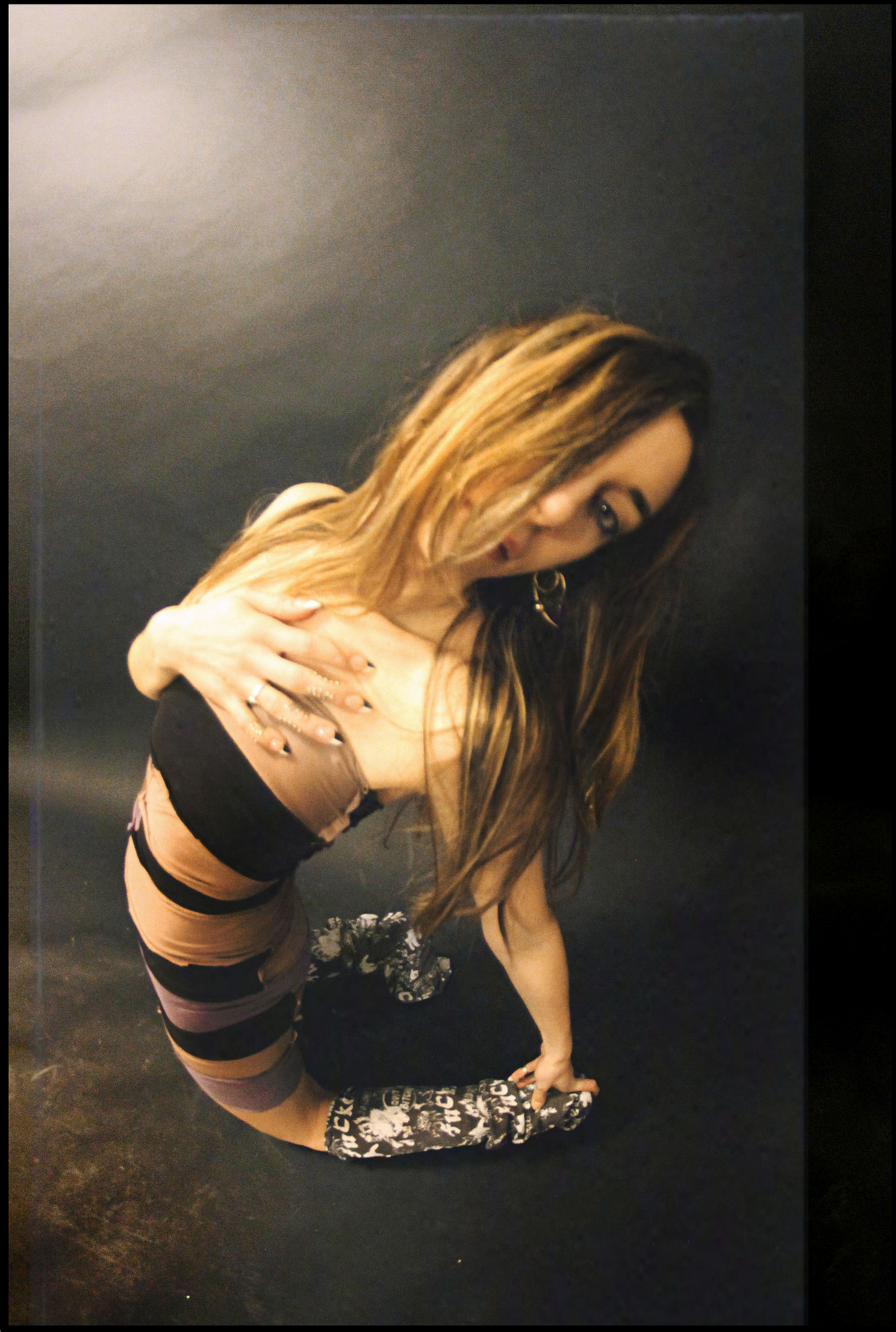
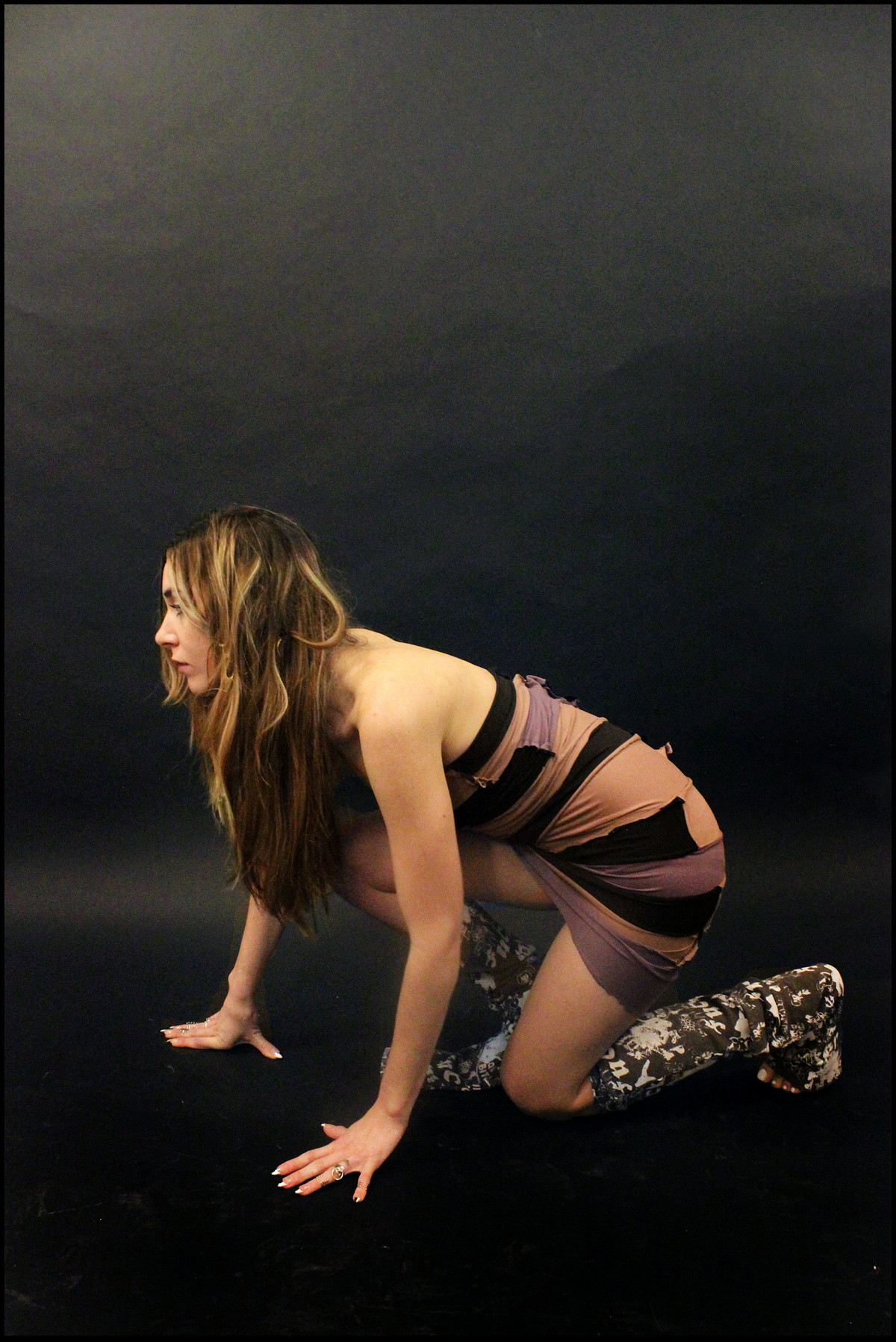
Leg warmers by FRASER KENNETH, Dress made by stylist
Tell me a bit about your background. I feel like you just came out of nowhere with a stunningly produced and distinct debut album. Where did it all start?
Thank you! That's really kind. Cowgirl Clue technically started in 2015 under the alias Wu-Wu. I was DJing clubs during my teenage years and styling shoots to support my new music project during the earliest stages of Cowgirl Clue. I knew I wanted to eventually learn how to begin producing my own dance music and establishing my own sense of style, so it was just a matter of time really. My first release was "Cherry Jubilee" and since then I've been 100% DIY learning the process, industry, and everything on my own. Icebreaker was my debut album and I felt like it was the true beginning of Cowgirl Clue for me and everything I hoped to explore. It felt fresh and the entire album roll out has been epic. I am super grateful for the love and feedback.
Where do you think pop music is headed, and what do you wish to contribute to that?
Pop is constantly evolving and for that reason, I find it quite punk. I think mainstream pop holds a pretty high standard for most artists. As a listener, this style has felt a little intangible/disconnected for me personally over the years. However, a new era of underground pop has been explored in the limelight, most recently and streaming platforms have blossomed tremendously, which has been a cool experience for Cowgirl Clue. I've never felt more understood falling under this umbrella. For Cowgirl Clue, I like to play with hybrid sounds to personalize my production. Jungle, footwork, and techno are always a backbone to my creative process and I love to have a live band at my shows, when possible. I believe my hybrid approach to pop will pave a unique sound for music today as a female pop producer.
What was the production process like on this album? It feels so distinct.
I consider Icebreaker my first complete body of work. It was a bit all over the place to be honest, as I was attempting to learn new production elements and in between moving around. While, also, leading up to this moment, my first big release became it's own world. I would learn something new about recording and revisit all the finished demos and add similar elements (like guitar or a new bridge to let it sparkle). I wrote most of the album in my bedroom and switched from Garageband to Logic halfway through. I would tease the songs live and see how an audience would react, then change the lyrics around at home or add something before it became officially on the album.
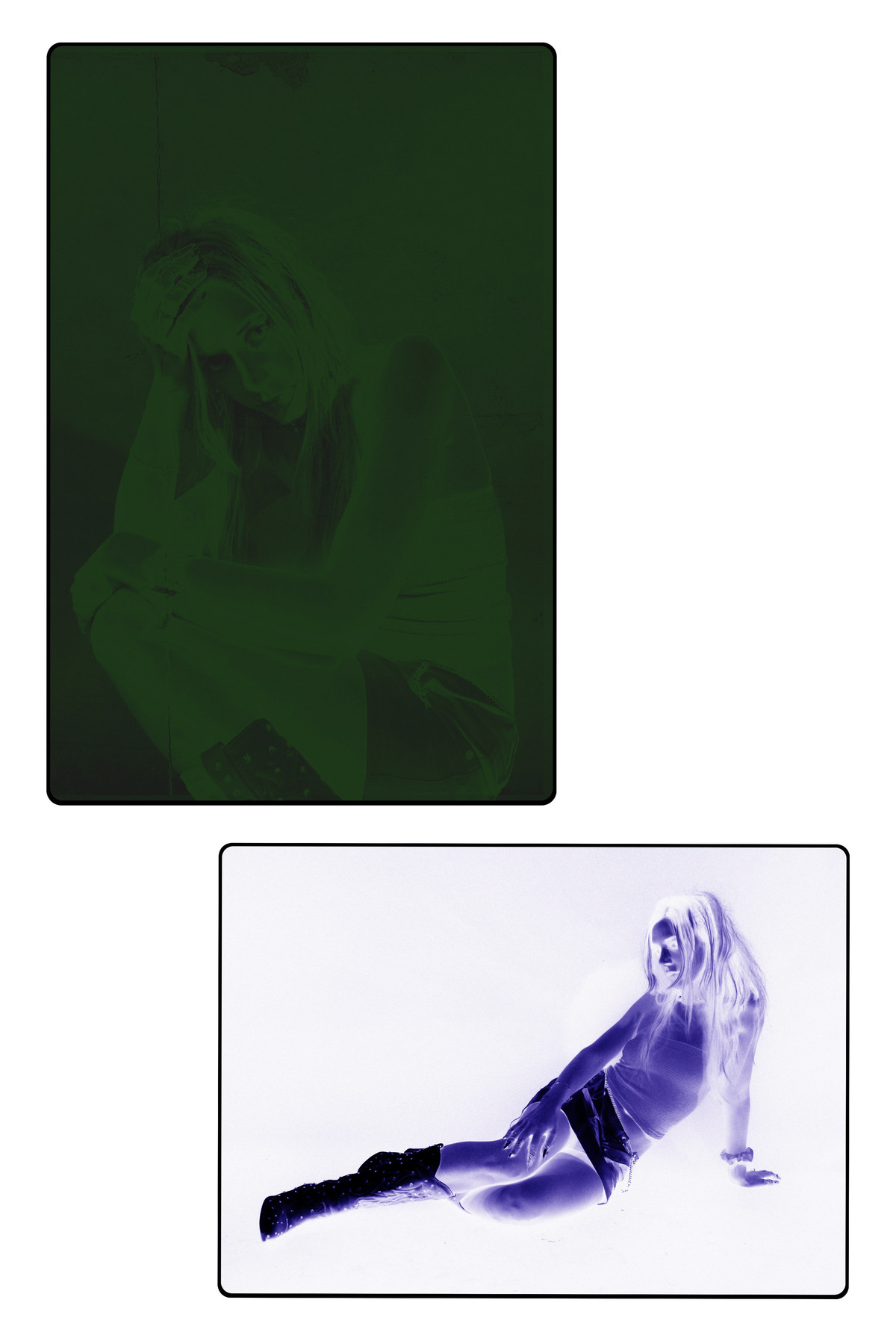
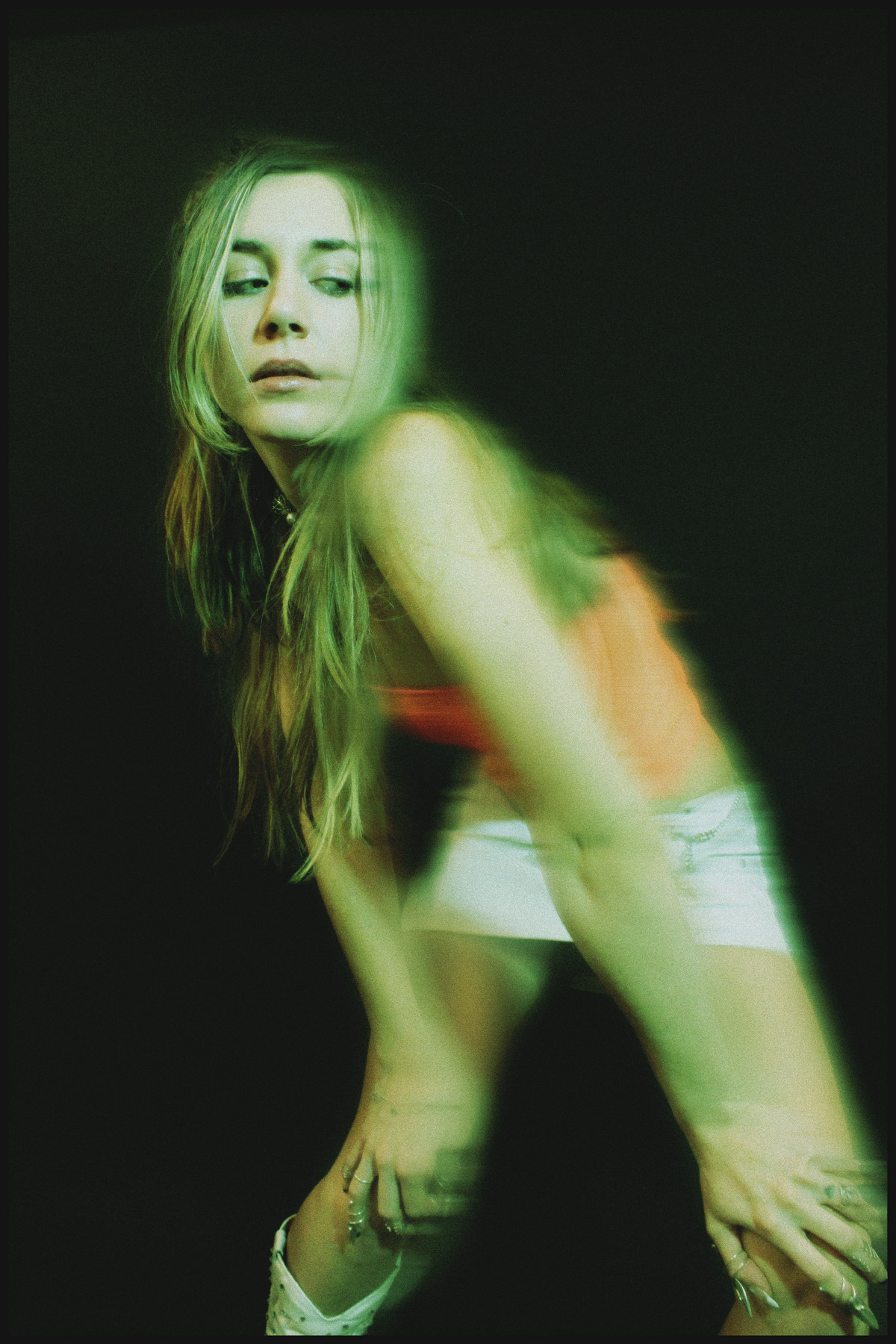
Top and skirt by TRIPP, Jewelry by SPYLN
Why the name Cowgirl Clue?
It's playful yet mysterious. Originally, I wanted to be known as Clue. However, for originality purposes, being born in Texas, Cowgirl Clue felt the most me.
Who are your favorite pop auteurs?
Lady Miss Kier, Björk, and Dennis Rodman.
How do you develop your aesthetic?
Being a hyper visual person, I am usually imagining an environment or something of that nature and snowball off that for aesthetic if I'm listening to music or something. I think I develop a lot of ideas through my sarcasm with a fashionable-esoteric type of feel. I went to a lot of punk shows as a teenager and also loved raves, while also being obsessed with runway. I love to hybrid the different classifications of life and bring them together in Cowgirl Clue.
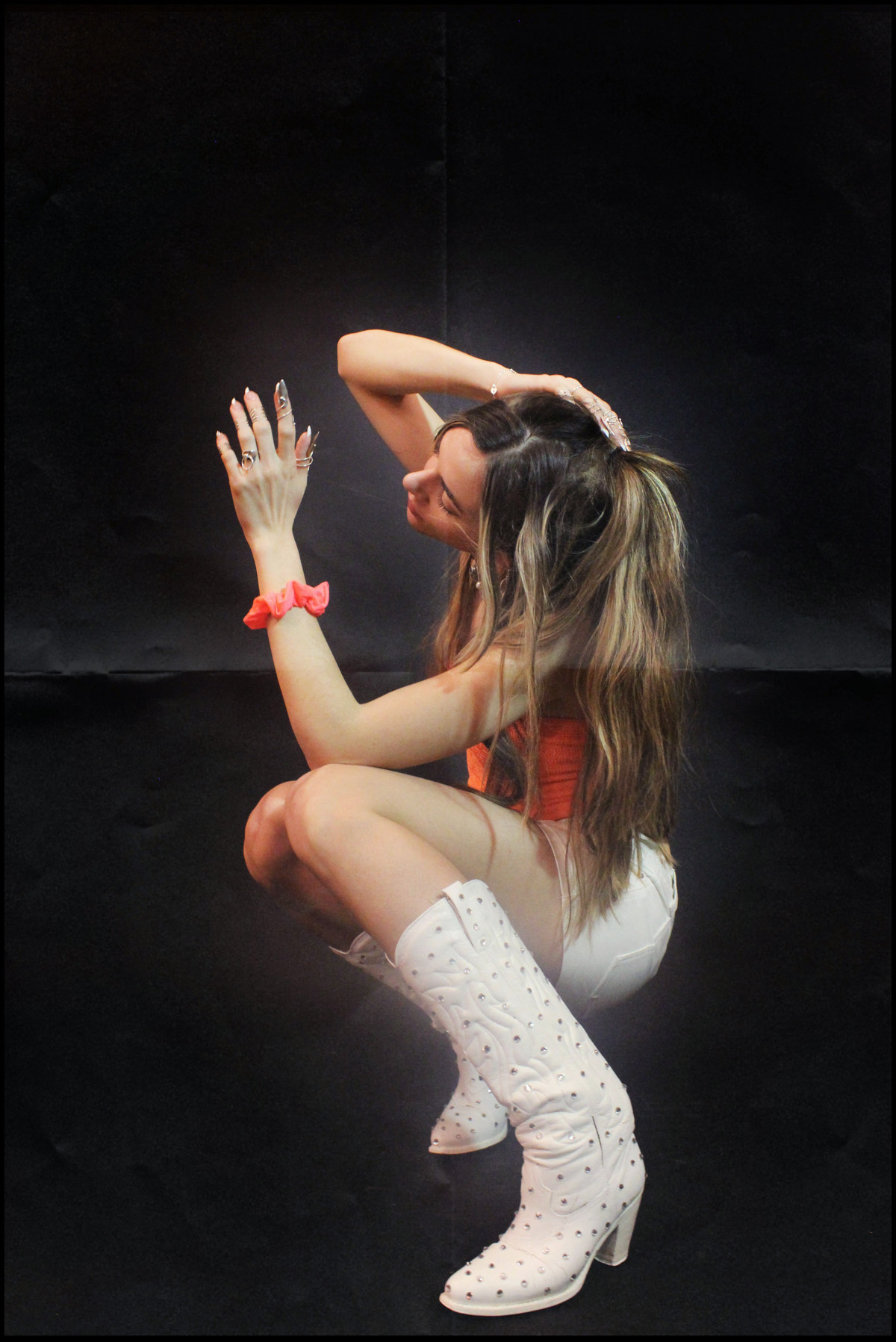
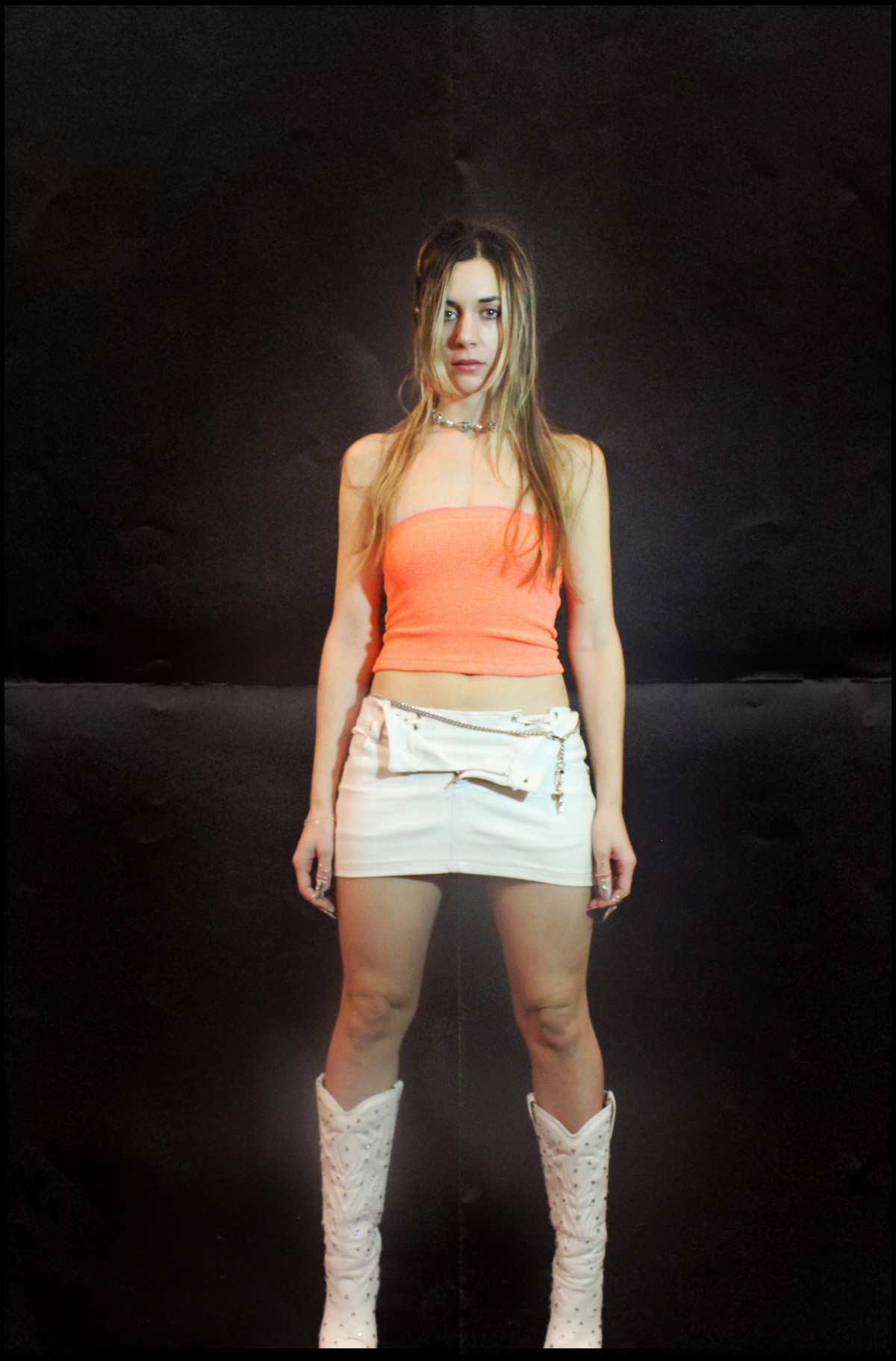
What era do you find yourself most obsessed with, and why?
I think if I was obsessed with an era, it would likely be the late 90s through mid 2000s. The culture was super strong. I often find that the end of a decade and birth of a new decade usually has the most lustful art, music, and fashion. 1998- 2004 were some of the most iconic years in history for so many of bands, pop music, cut throat rap, and high fashion designers ect. 1978 - 1985 was also a time frame where creative cultures were making history.
What are you working on right now, and why should we be excited?
I've been writing a ton of demos this winter, which I plan to release later this year (hopefully soon) with visuals and new concerts to be announced in relation to the new music! I am also working on releasing my A/W20 Collection of Clue Wear (my fashion label/store of reconstructed clothing), which I'm pretty excited to finally launch this year with a few pop up shops as well in Los Angeles and hopefully other cities too. Lots of big projects I am finalizing as we speak, which I am crazy eager to share with y'all.

The female vocalist’s acclaimed discography connecting soul, rap, funk, and now, a self-imagined “southern apocalyptic” genre has planted her under our microscopic lens and has kept our eyes peeled. Last time office sat down with Kari, she detailed her previous record, Laugh now, Die Later, which as you could imagine by the title holds to a lackluster pillar. “I just had to get over my teenage angst, to be honest. And I think with "cry 4 help," I definitely did that. This new music is really fun and I'm a fun person, so I feel like I'm kind of going back to the essence of like who I am in my core. I'm not a sad girl,” she tells us.
Nonetheless, things have shifted for Kari. The newest record flips the table and explores the contrasting complexities of life. Lowkey Superstar proves her newest commitment to modern testaments of life through rule-bending sounds. Along with this, her honest lyrics and eclectic sonic style have led her down the pathway to superstardom with no return—showing fans that the soulful rapper embodies excellence and isn’t afraid to wear it, as long as it’s lowkey.


It's been a few months since you dropped your EP cry 4 help. Why this time now to start dropping music?
Well, it's crazy because I've been working on music, like from June to January. I had just been making a lot of stuff and I actually ended up making an album that I was like, "Oh, I'm going to put this out in April of next year." And then, I kinda sat on the album and was like, "Mm, I could keep working on this." So then I kept working on the album, but then I ultimately just ended up making a whole 'nother project, which is the mixtape that I want to put out. And, so I was just like, "Well, why don't I just put out the mixtape in April instead of putting the album out in April?" I was just like, April feels like a good time, like it's spring. I thought people were going to be outside, you know.
So what are some things you've learned since cry for help that has helped you get ready for your newest music?
Honestly, it's just that I have to be more consistent. The reception for cry 4 help was overwhelming because I wasn't expecting a lot of people to connect with the music as much as they did. So I think it made me just realize how much people fuck with me as an artist. So I was like, "Damn, I really should stop being sad and just give people music, you know?" I just had to get over my teenage angst, to be honest. And I think with cry 4 help, I definitely did that. This new music is really fun and I'm a fun person, so I feel like I'm kind of going back to the essence of like who I am in my core. I'm not a sad girl.
But don't you think that's what people really liked about your music? That you kind of showed a more relatable side to you. Are you scared of neglecting those people that are attracted to that sound or do you think they're ready for a fun Kari?
Well, the thing is—it's funny because at the end of the day, the sound may be different but the content is music. It's still me. Like, even though I'm not sad, I can be cynical, you know? I've always been that way. So even like in the earlier days, when I put out "No Small Talk" and "Goddamn," that was me being very snarky and just talking shit. So it's like, I'm still the same person and still the same artists and you're getting the same content. It's just different packaging. I feel like with this newest single, I have one line where I talk about how my mom stole my birthday money when I was 10 years old and ultimately that's why I don't really trust people, but it's over like a rock beat.
I know growing up in Little Rock, you talked about having a wild imagination and creating worlds and how that's helped with your music. What world are you taking listeners to?
It's Southern, but there are different sounds. A few of the songs feel like Southern apocalyptic music if that makes sense. It's like if the apocalypse was happening in the South and like, you know, people just brought out their like cars for the last time and are like, "Fuck it, we're just going to have a party." It's like that kind of the feeling, it's kinda on the darker side but it's still fun. So that's the world that I'm in right now. I've been listening to a lot more Southern music. I realized I haven't really been doing that as much as I used to. And so, I'm just kinda getting back in that bag. But then also it's like the world is doing whatever the fuck it is and it kind of feels scary a little bit. So I'm just merging those two things together.


If you could only listen to three southern rap songs, what would they be?
Oh, only three. Oh my goodness. "Coming Up" by Pimp C, that's like one of my favorite songs. Probably "Blunts To My Lips" and then "Respect My Mind' by the Hot Boys. Yeah, like that was a deep ass question.
So with "While God Was Sleeping," we hear a different sound from you. In cry 4 help, it seems as the title speaks for itself and we hear a manifestation of sound based on less than pleasant experiences. With this new single, we hear a more revengeful or resilient sound in the messaging with maybe some punk undertones to it. How did you get your confidence back?
Honestly, by the time I had put out cry for help, I had made that like eight months prior to it coming out. So by the time it came out, I was already kind of in a better space. And then, with this new music, the producer that I'm working with, his name is Daniel, and he's an Italian guy—he lives in London and we met through a friend. And we just started working together, and it was something different about him because I don't really work with a lot of people. I like to feel safe when I'm working with people. I'm very shy, a little bit. And so, he just thinks everything that I do is so brilliant, you know? And so it's like, when you're working with somebody who really admires you and really thinks that you're doing something different and innovative and you have that person by your side to like create this music with you, you, you'll try just about anything. And Daniel has a band himself. He makes pop-y music, but he does make garage and rock stuff, too. So with us, like starting to work together, we just try everything. Like the album that we made, it was so strange. I made a garage song, I made like a UK dance song. We hope to put it out this summer, but we just tried so many different things and if we didn't like it then we were like, "Okay, you know, let's just try something else." And that's really where I got the confidence to do a sound like that and just put it out there.
You talk about this idea of being safe. What does that take? What does that "being safe in order to make music" look like?
So usually, I'm the kind of person where I say things out loud, and I may not be necessarily talking to anyone. I'll just be saying things and making weird noises or just whatever. It's just something that I do. I don't understand it sometimes, but, while we were recording, I would do those things. I would be saying different things and he would catch me. So if you listen to the mixtape, all those little phrases that you hear me saying throughout, he would just catch me recording. He would put it in the song and put it into a beat. So he takes all the little quirky things I do that I think are weird, and he finds a way to put it in my art and make my personality shine in the music more. So I think that's really special.
It seems like you're always trying to push yourself to these limits, whether or not that's intentional. Like on Twitter, you talk about not drinking and practicing celibacy. What importance do you place on these actions and how have they helped you?
So the whole drinking thing was not by force. I just happened to be in the house with no alcohol. So it was like, all right, I guess i'm not drinking now. But the celibacy thing, I've definitely taken super seriously. I find that when I don't participate in sex, I'm very focused. I'm a very focused person, like there's no drama. I'm also not like obsessing over a person to come and fulfill my sexual needs, you know? It's just like, I'm good, you know? I'm focusing on what's important. And right now that's music, so.
You seem like a very spiritual person and on a track name like "While God Was Sleeping," it must allude to your relationship with God or to spirituality.
So it's funny because the title goes so many different ways. I actually got the phrase from a friend of mine who just kind of casually said it like years ago. It was something that it had caught my ear and I wrote it down. And so, I ended up writing like, just writing, not even really a poem, but I just kind of wrote the things down, which ultimately ended up becoming the chorus of the song. And to me, it just kind of signifies the times that I was looking for like something or someone to save me from like this misery that I thought I was in. Like, when I was just so like depressed or when I didn't understand why life was going the way it was or why I always felt the way that I felt in spite of my circumstances. I feel like I kind of grew to realize that God gives you the tools that you need to create the life that you want for yourself. So in the song, I'm basically saying that while God was sleeping, I was doing all these crazy things. I tried to figure it out myself in life, saying, "Why was this, and why was that?" I have to be self-reliant in a way and I have to make sure that I'm okay. I can't wait on somebody else to do things for me or make the things that I say I want, happen. So, through all the crazy shit or whatever happens, like I'm still here and you know, God meets me halfway every time. I just have to pick myself up and meet him halfway.
What are some of the craziest things you've ever manifested before?
It's kind of a big deal for me to not be in Little Rock. Like to not have to live there if I don't want to or to be able to travel the world and meet people and have people listen to my music. That is like the biggest manifestation because like you got to understand, nobody really makes it out of Little Rock. And so for me to have done that—I didn't come from a wealthy family. I only traveled so much as a kid. So, everything else was just by pure will. Just being like, "I'm going to get the fuck out of here." So like in hindsight, looking back at all the things that I did and how they just kind of worked out is just crazy. Right? Yeah man, manifestation. You never know how it's going to happen and you can't be really concerned with how it's going to happen. You just got to know It's going to happen.
You talked about being more of a fun version of yourself. What are you channeling with your newest music?
Kari at this age, I'm having fun. When I was younger, I had my fun, but now fun to me is just being mentally healthy and financially stable. I'm having a lot of fun. The songs are just channeling a younger me like when I put out Laugh Now, Die Later. I'm kind of channeling some of that energy while being just a little more mature. So yeah, like I said, it's very Southern, it's a lot of 808s and drums and things of that nature. But it's also very musical cause Daniel plays guitar on almost every song.
You're very tight with your fans. It seems like you talk to them on Twitter every day. What are some things you want them to take from your new music or what are some lessons you'd like to teach them if you could?
I just want them to remember that you don't have to be a part of like the weird social hierarchies that are just present. Mostly on Instagram, but I feel like everything just looks the same. I know for me, like growing up, I was always the outcast because I just didn't really care to fit in with people. So if people feel that way, I just want them to know you can be a lowkey superstar. Like, you don't have to be flashy to be a superstar. You could be lowkey as long as you know that you're cool and you have people that love you. That's it.