Put your reading goggles on, and join us in the Zebra Zone below.
Stay informed on our latest news!
Put your reading goggles on, and join us in the Zebra Zone below.
Hi Ojay! We’re super stoked for your debut album to drop this week.
Yes, thank you so much. I’m pregnant with anticipation and bursting at the seams and losing my shit! [Laughs]
You are nine months and glowing.
I’m like, "Let's get it out!" I need it out of me immediately. It’s this year on top of the year before when I finished it, because I spent another year just trying to get the proper team together to put it out. I really haven't worked with a team in that manner before, so it’s very new and very fresh. I’m ready to go!
Are you enjoying the process of having a whole team behind you for the album roll out?
I mean, yeah! I’m enjoying it, but as an independent artist, I’m constantly juggling some of the different elements of what it takes to release music, manage a label, and be a healthy human being outside of making music where I’m eating healthy, going to the gym, taking time away from sending emails and making sure that the team is all on the same page. It’s been a really different experience, and I think I’ll be able to better answer that question once the album is out, and I can have a clear compare-and-contrast between the two processes. I’m really looking forward to seeing how it all materializes.
Let's talk about the album title Less Is Moor. What made you choose that play on words?
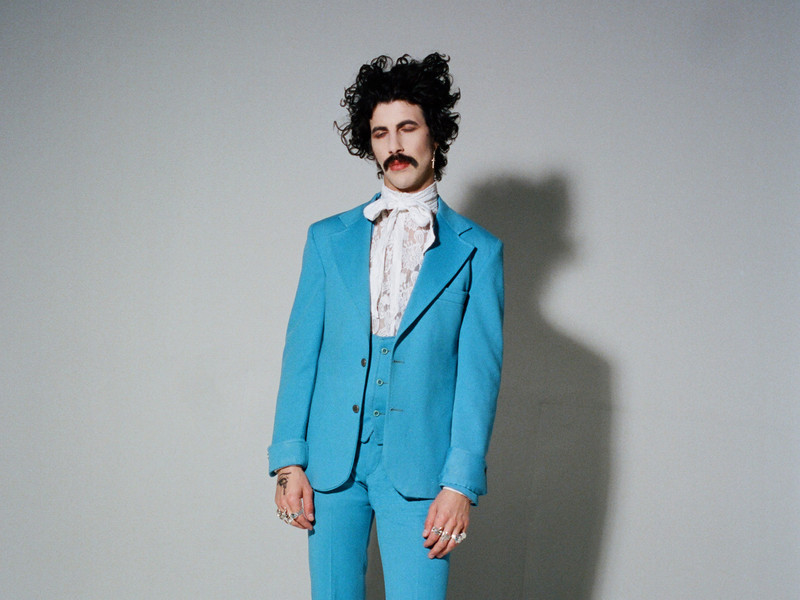
I love playing with words, and in many parts, Less Is Moor is a continuation of my senior thesis piece: Moor Contradictions, which I premiered in 2007 at La MaMa Theater in New York City. That was the piece that actually introduced Zebra Katz. I wanted to kind of reflect upon that and add something new. The title Less Is Moor is also an ode to minimalism; an ode minimalism that’s also very Black—and that Blackness is coming from me. Another play on the word would be ‘More’—like I think many times, I’ve been given less and had to do the most with it. Those are things that I kept in mind and [when reviewing the title], I instantly said to myself, "Well this is it." I liked the way it looks and feels, and I think it’s very much true to my style of music.
As someone who shares many of the intersections that you live in, let it be known that we need Zebra Katz. We need him! "Ima Read" gave us everything, especially with the contribution from Njena Reddd Foxxx. If I’m showing people your music, I always start with "One Bad Bitch" though. It slaps each and every time!
Well, part of me releasing this album is owning my narrative again. In early 2012, a lot of the narrative was focused on my sexuality and the fact that I was different and making music in a genre that people assumed wouldn’t necessarily accept me. People were moreso championing my hardships as opposed to my accomplishments, and I think that was just really frustrating for me, because I think a song like "Ima Read" mostly worked, because it was able to straddle two worlds. Hearing responses from people lets me know that the song still has life; it wasn’t until last year that Netflix introduced it into the Dear White People soundtrack. That was a MySpace song which then went to Mad Decent and then to the runways of Rick Owens—then it kind of cemented itself as the song of Paris Fashion Week before being remixed by the likes of Busta Rhymes and Azealia Banks. If Azealia hadn’t remixed it, I never would have gone on tour with her in the UK. And that UK tour is when I met S. Ruston who is featured on the Less Is Moor track "Monitor," and he was also the first person to take me to Berghain. So there’s all these full circles that this album represents for me. It’s extremely personal and extremely sexually charged.
I like that part.
Yeah, it really had to be. I think earlier in my career I was trying to sway away from sexuality, becuase that was the only thing people were focusing on. I didn’t want to do something that was obvious by giving them something that was overtly sexual in a way that they couldn’t digest it. A lot of my earlier music was ambiguous, it wasn’t meant to be for men or women; it was gender non-comforming. I did that for a purpose, because you kind of want everyone to resonate with the music, and that’s what I like most about music in general. It could be a song from somewhere where I may not even know the fucking language, but there’s something about the tone and the vibe that just resonates.
I’m glad that you’ve gone into a more explicit place with this record. Today, we have artists like Lil Nas X who, while the media does focus on his sexuality, just collaborated with actual Nas, who to me has never seemed like someone who would work with an openly gay artist, but their music together is receiving the bulk of the attention.
Well somebody had to go through it already for the media to no longer talk about that. That’s the reality of the situation. When I first came on the scene, most people considered me a ballroom artist, which A: I’m not from the ballroom. "Ima Read" does have odes to ballroom culture as does "IN IN IN," but it’s doing more than that. It’s trying to blend these worlds and these cultures, so people from both sides can enjoy it. I think that was done purposefully to kind of give a big F-You to the publications that weren’t able to see my work to be able to transcend to the level that it has. As an independent artist, that means the world to me, because there are a lot of people who did not want to release this album, who did not understand what this album was about, nor did they care to try... It’s just a different level of pride and accomplishment for me to be able to do this on my terms. And if I wanted to, I think I could’ve released an album within the past seven years—but was I ready? No.
There’s no reason to force artists into producing work when they’re not ready to.
Well, that’s how all of this works if you’re operating within the regular confines of this industry. They tell you all these things that you need to do in order to become a successful artist, but then you need to ask yourself, "What is success to me?" People say that I’ve been away for seven years, but I’ve been performing nonstop. I’ve been working; I’ve been putting in the hours.
You haven't gone anywhere. The singles you release always pop. Your photoshoots always pop.
I have to also realize that I’m taking a route which very few artists take and are able to take. It’s financially draining. I do put every cent I make from being on tour back into my work—to find these videos, to fund these shoots, to make sure that there’s a new look, to make sure that the producers who are on ZFK records are getting their accounting on time. I just want to continue to give people a peek into Zebra Zone, and I don't think people are ever going to fully understand this character, because they’re going to constantly be evolving as I’m evolving, and this industry will continue growing and changing. A lot of the old models for how things were done no longer apply, especially to an artist of my nature making the music that I make: unapologetic, bold, and harsh.
I wanted to talk about two of the music videos you’ve dropped ahead of the album. Lets talk about "ISH" first! It’s you, and you’re giving really strong dancefloor body movement but your space is confined to a box.
A white box.
Yes, and you're surrounded by a crowd of normies who are heckling your movements.
It’s like where corporate people go to work. It’s the corporate fight club they never talk about. [Laughs] You tend to see these people blend into the background, but they have a very strong force. That’s what those characters represent. It’s hard to tell if they’re in the room with me or if they're in my head, but in the end, you actually see me in the crowd as well. There are all these dysmorphic ways of positioning myself; as an artist, as a spectator, and as someone who is self-critiquing my work at the same time that I push it forward. I think that’s a very dangerous place to be in simultaneously but I wanted to comment on that. Then there’s also me playing the news character who is disgruntled against my co-anchor who can barely get my name right.
“Zébra!, Zébra!”
I’m used to that, and you hear it during the introduction track to the album; it’s a lot of interviews from people who have spoken about me and my work. And most of the time, it was less of an intro, because they would just identify me as this one thing. With "ISH," I really wanted to also show more of my performative side, because I’m a trained actor. I want to start producing work that shows that; get more into who that character is and who’s the man behind the character. Lauryn Hill said she gets out of all these boxes, so I had that in mind too, because it’s easy to be labeled and categorized in this world—but as Staceyann Chin says, “I’d like to go down in history as uncategorizable.” I think that’s where I’d rather have my art be, because once people feel as though they have you figured out, what more is there to learn?
They’ll try to keep you in that box forever.
I’m never gonna feel comfortable with that. I’ve always been someone that doesn't want to fit in. I never saw myself as someone who fit in, because I’m constantly told that I won’t. It’s my work to play against that, to go against that grain and to push myself—to push and challenge those people who are digesting my work. I don’t want it to be easily digestible, because it’s a hard pill to swallow.
Okay, let's get into the video you released for "LOUSY / IN IN IN." It’s a surreal masterpiece and a real artistic achievement. It’s Daughters of the Dust meets Trainspotting. Talk to us about the work that went into the project.
Wow, thank you! It was the first film I worked on for this album, and I knew it was going to be my return and that there was a lot I wanted to deal with. The director and I, we had this idea of retreat and mutiny. I’ve been taking time off to kind of relax, and of course "self care" is a huge term that’s been in the ethos for the last few years. It has to do with that level of rejuvenation and taking time to prepare oneself. Like what is the obsessive side of all of that? Take the moment where I’m chugging the spa water. I need all the hydration I can fucking find!
It’s very much giving me Le1f "Spa Day"—“I’m feeling totally rejuvenated.”
It’s that. I think it’s really important to have that. Then the second part of the video is kind of like the mutiny, where you see these men of color who are taking time to relax and reflect. I think with the lyrics in "LOUSY," it’s about mental health just as much as it’s about artists making more money when they die. It’s like, what are those conversations? What’s it like to deal with depression? Something that isn’t accepted or usually spoken about in a lot of communities that don’t come from wealth. I wanted to have that discussion, and I wanted people to see what that could look like. I also wanted to play with what mutiny looked like and when we’re rejuvenated—like when we’re lost men in the woods with our sticks trying to have this level of community. The video touches on a lot of different things, and there are a lot of different nuances there; reference points that are very personal to me that I think some of my friends will see. But honestly, it’s all left to be open. Once I do and create something, it’s no longer my job to critique what people are going to walk away with. I just hope that they’re going to pick up and take something that was sent or delivered for them. I think that’s what a lot of the work has been. People who know it’s for them, know it’s for them. And the people that don’t don’t necessarily have to, but I hope there’s still something they can walk away with. But yeah, I did the film with Daniel Wirtberg. It was very difficult, because it was also shot on film, and shooting people of color on film is very difficult.
The film chemistry isn’t graded for our skin tone.
That ups the cost, and we have to be tricky, but we do it. And I’m asking people to shoot all men of color who have probably never shot men of color on film before. There’s a heightened level of "What the fuck, let's get this right. Have you thought of this; have you thought of that..." All of that comes in as part of my work. I’m throwing myself into situations with teams where English is not their first language. Everyone’s kind of on a different level of what they’re bringing to the table. I just know that with my performance and my presence, that’s hopefully going to help make the music make a lot more sense in a clear visual way.
I mean this in a very real way; it’s one of the best videos I’ve ever seen. I don’t know where your filming location was, but it looks like you’re out on the water in the middle of nowhere.
Yeah, that water location took an hour and half to get to. It’s in Sweden. You know, you can’t get lights set up by the water on a two-hour hike into the woods with all the equipment and the sound gear and the boom. There’s one scene where we climb up about a hundred feet to go and be underneath a set of trees. There’s a lot of things in that production that really don’t make much sense, and a lot of people are going to be like, "What are they? Refugees? Are they lost? What’s going on?" It’s up to the viewer to take what they can from it and try to connect the pieces. I’m glad it does that and leaves things open.
There are a million things on Earth that can wear a person down, especially if you’re Black. Nothing in your life could be wrong, and you can still be just frustrated over what society throws at you each day.
If you’re Black, you’re in a political body. And you’re in a political body in the sense that it comes with baggage most of the time. Most people see you as a weapon: to be detonated, to be deactivated, or one that could go off at any time.
Or to be wielded, unfortunately.
Exactly. Or not even wielded, somebody could think that they need to be alarmed or think of you as a threat just because of your body. They think they need to deescalate you or call the police because you exist. I grew up in South Florida where there is Stand Your Ground now.
Can you believe that craziness? I grew up in St. Pete. I didn’t know you were from South Florida as well.
Yeah, I grew up in West Palm Beach, but the media kind of rewrote that when they wanted to make me from New York, which is not true. I lived in New York, I went to school in New York. I lived there for thirteen years, but I was born in West Palm Beach, Florida. It wasn’t my job to correct these people who own million dollar companies. [Laughs] I have other things I can be focusing on. But yeah, it’s all really fucked. I’m just commenting on it.
We’re very fortunate to have artists like you who are willing to engage with these realities. The world doesn’t exist in a vacuum, and these things affect all of us. You’re able to channel that into a piece of art that resonates with all of us.
I think it’s good to see other bodies that are dealing with this stuff. Nobody likes talking about race; nobody likes talking about discrimination that’s not directly affecting them, because who wants to talk about a funeral, you know what I mean? That’s what it’s like. I hope that that dialogue can change, and we’re able to have a discussion about something that has some form of resolve and isn’t just stating the fucking obvious. I think the media spends so much time stating the obvious and not really looking for a resolution. People love arguing, but what is your solution? What is your resolve? What can you add to the situation? Something needs to be done. That’s what I’m trying to do—find my own solution to even deal with the hardships that we go through, the hardships that we’re constantly reminded of. Similar to when I started making music, I know I’m going to have to work twice as hard just because they’re going to be like, "Well you’re queer. You need to be better than the straight people." And it’s like, yeah that's what you think. I just need to do what I need to do.
We’re all just trying to win our own marathon here.
Look where it’s gotten me. It wasn’t worrying about what this person or that person necessarily thought it should be. I think that’s a lesson for anyone who’s getting ready to embark on something on their own. It’s not going to be easy, and people are going to tell you it won’t be easy, but don’t let that be the thing that stops you or blocks you from staying consistent with your work.
In that same lane of being unapologetically yourself, you’ve got "UPP" on the album. It’s such a sexy song. It very much captures that timeless experience of meeting someone on the dance floor.
I think it’s about club energy and what’s it’s like to be whispering onto someone like it’s a movie. It’s kinda like a Sean Paul video where everyone’s dancing in the basement. It also references "Pull Up to the Bumper" by Grace Jones, and that’s why I called it "UPP," because it has that nuance of pulling up to someone—with consent—to see what’s gonna happen. And "feel it in your rump" is like when you’re dancing with someone, there’s an energy there. And yes, it is sexual in that sense, and it does sound like an ASMR, because you can get so close to it. That was an element of sound production that I wanted to keep in so that it felt like it was close to your ear. The track comes towards the end of the album. It almost didn’t make it on, but it’s gonna be released as a single.
Yes! It’s very single-worthy. I’m also very happy to hear that Grace Jones was on your mind for this track. She’s the blueprint.
Absolutely, and "Pull Up to the Bumper" is the track. Going on tour with Gorillaz in 2017 and being a part of the Humans album was, for me, such a big fucking accomplishment, because earlier in my career, I was like, "GRACE JONES, GRACE JONES, GRACE JONES! SHE AN ICON, SHE’S THE IMAGE." She was very influential, and I think she’ll always be influential just because of the splash and the statement that she’s made as a proud Jamacian woman. She’s been consistent. And the people she’s created with and the art she’s put into the world will always have an infinity for people who love great performers, who love great energy. Having my name alongside her name was a very surreal moment for me, and I’m just happy that I could do that—to have three songs on an album that she may have listened to at some point. [Laughs] For her to actually hear my voice. That, for me, is just fucking crazy.
Can we also take a moment to talk about the track "LICK IT N SPLIT." How was working with Shygirl?
I love Shygirl. She’s a part of Sega Bodega’s label NUXXE, and I think she’s great. I love her voice; I love her energy; and I love the tracks they’ve worked on. Sega Bodega was a co-producer on this album, and I was in London with him the majority of the time, finishing stuff and working on tracks. I was like, "I have to get Shygirl on." Shygirl was able to help bring the level of energy that I wanted on a song like "LICK IT N SPLIT," which means get it and go, hit it in the quick. [Laughs] It was great with her. She just kinda did her shit. That song is very inspired by Aqua’s "Lollipop." It’s very much that energy. I love doing a back and forth with a fierce female and haven't really done one since Njena in "Ima Read." It was fun to have Shygirl—she’s incredible. We’re hoping to do a music video for it, and we’re bouncing ideas back and forth.
She has the most incredible on-camera presence. We’d love to see a video for this one.
She brings it. She radiates on and off camera. It’s incredible. I’m just like, ugh, this energy! Rub off on me. Give me that vibe. And she has it.
I appreciate that she’s just as much about the hitting and quitting it on this track as you are.
She puts it out there! I think women are allowed to identify as dominant and sexual beings just as men are allowed to be feminine or identify in effeminate ways. We don’t have to be these monolithic figures. Let us live. Let these Black boys be different. Let us make country music. Let us make industrial music. Not everything needs to be ballroom. Not everything we do needs to be hip-hop or urban. Let us live. Please. That’s what this album is about; it’s a comment on that. I consider myself a genre non-conformist, and I wanted to explore as many venues and mediums with this album as possible while still having it be a consistent story. And yes, it’s abrasive, but there are also really light moments, like in "NECKLACE" where listeners get to hear me sing for the first time. That’s the most vulnerable thing on there for me. Then there’s a track like "MONITOR" which is like runway ready, you know. I instantly thought of Rick and Michele when I heard it. I’m dedicating this album to them, because they’re just on it. They get it, and they’ve supported me and been consistent with me. They’re just really sweet people.
That makes me happy to hear, because in the fashion world, so many things are just "for the season." If Rick and Michele like something, they like it for real, and they’re influenced by it, and they’re going to carry through with their support. That’s great.
From "Ima Read" on the runway to the song I made with Michele Lamy called "How Do You Feel" to them letting me film the "Hello Hi" music video in their home, they’ve always been there and been consistent. Michele shows up to shows I do at Art Basel—it’s just a level of support I don’t really get from a lot of people in this industry. I’m very thankful for that because that support is very limited. They’re day-ones.
You mentioned that this was a very personal album for you. Can you give us a top three of the works of art you engaged with while working on it? It could be a movie, another musician, or even a painting that was always on your mind while you made the album.
Mies van der Rohe inspired me with his "Less is more" just as a practice—an ode to minimalism. I was definitely thinking of my own work a lot too, and I thought alot about where I was when I made "Ima Read" and when I made "Moor Contradictions." The use of ‘Moor’ in that sense was definitely something that was in the forefront of my head when I was making this album. There’s so many influences from each track I could pick up on and reference, but I think of James Baldwin, Nina Simone and Grace Jones as archetypes and Black influencers—people who made work at a time when we needed it most politically. It all still resonates to this day, and I was thinking of them. I was thinking about Blackness and my Blackness as a whole; allowing myself to be seen on this album and embracing all of that in a way that I usually haven’t. I’m inspired by my surroundings, and I’m inspired by the people I work with. That’s just the world I’m in right now and the world I have been in. I’ve been really reflecting on everything that’s happened to me in the last seven or eight years and trying to condense that into a somewhat cohesive piece of work. I think that’s what it is, trying to stay true to that and staying consistent and thinking about all that’s led to this conversation with you. That’s work.
Is there anything else you want to share with office readers before we sign off?
Yeah, Less is Moor! That’s what I want to share with you, and I hope you guys like it.
We love you Zebra—Less is Moor!!

At roughly 26 minutes, Ricky Music is his shortest album, but it also feels like his most urgent and expressive, balancing his desire for personal betterment with a chaos that's always looming beneath the surface. In person however, he seems anything but urgent, taking his time to speak softly, carefully, and thoughtfully. That contrast makes the voice in the album sound even more compulsive; it's only with this outlet that he can mitigate the feelings which challenge him the most, and it lends itself to the most compelling portrait of the artist yet.
You finished this almost a year ago, what does a year of waiting before the release feel like? Do you ever get the feeling that you need to change things, or make further tweaks?
It's kind of done when it's done, because you've got to make the final decisions before it gets mastered, and once you do that, it's kind of hard to go back and change anything. But it is one of the strangest time periods in the process of making and releasing music. I've spiraled a bit where you feel like you've been working, and you know you've been working, but you don't really have anything to show for it publicly, so people will kind of ask, "So what's up? What'd you do today?" And you'll just be like, "Oh worked on music." Nothing to say. After a certain point, I started to get confused about what I've done, if anything, but I do still feel good about the album. I've listened to it twice a month, just to check back on it. I didn't want to be tired of it by the time it came out, and somehow I've managed to still be able to listen to it and enjoy it.
What was the point of listening to it twice a month, was it for the sake of rehearsing?
I think just out of excitement, out of wanting to hear it and having a little more perspective each time I listen to it, and thinking about the lyrics and stuff like that.
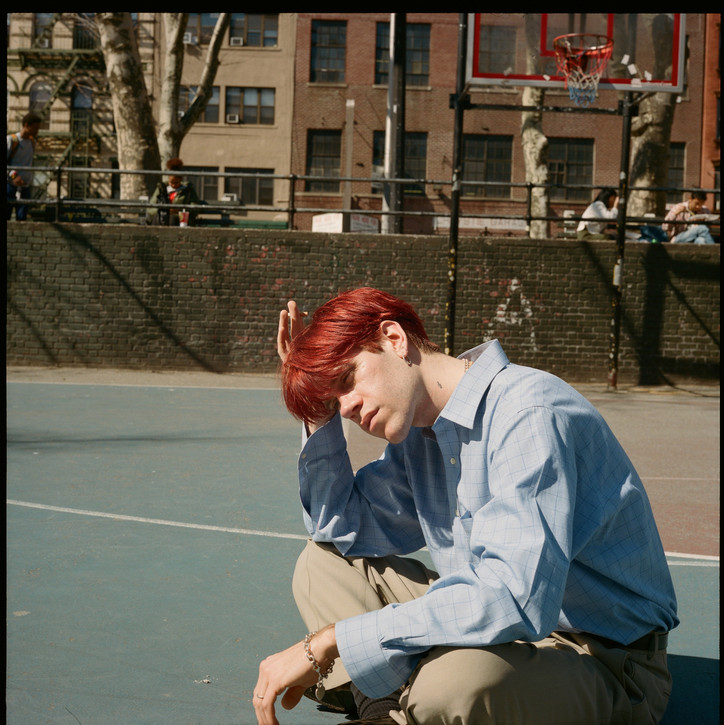
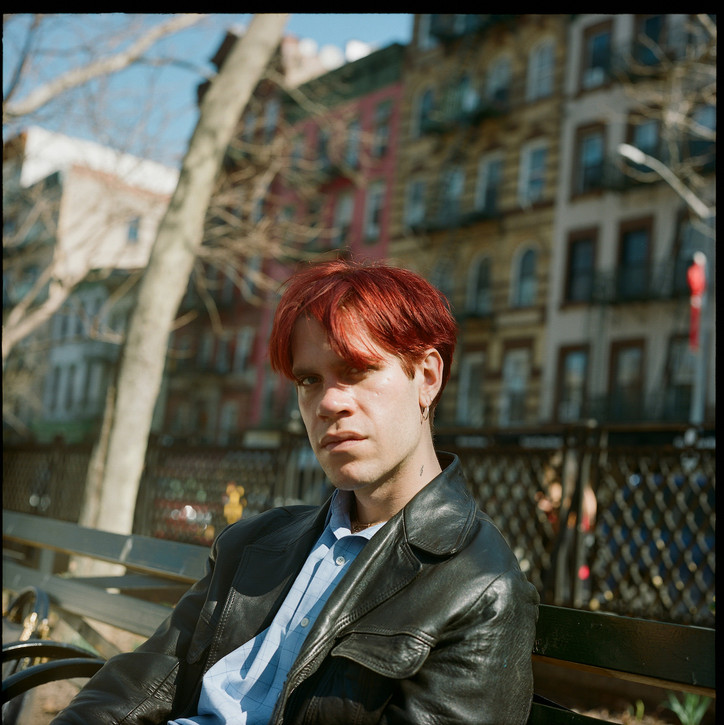
Are you good at finishing projects, and more importantly knowing when they're done?
I'm not great at knowing when it's done, but I am sort of obsessed with finishing something—that feels really good. If there is an open ended part to it, or unfinished lyrics or arrangements, I really geek out, and pretty much anytime I record a song, I try and get the whole idea down in that sitting. Just because it's hard to go back to something after you've kind of felt the initial inspiration. Even if it's a super rough thing, I'll try to make it all the way to the end so when I do go back, there is a full outline of what the idea is.
The reason I ask that is because compared to your previous albums, this one is much shorter. Especially with some of the shorter songs, did you feel a certainty that they were done?
I've always been drawn to shorter songs and more direct songs. There's something really urgent that I'm drawn to about that—the Ramones, shit like that where there's really no fat. I really like the idea of making something as lean as possible, and just having it hit in that way. If i'm going to make music I just try and find the most economic sounds, the most economic lyrics, the most economic structure to just get this idea.
I think that's part of your style of songwriting as well because you often are very direct. Is that a conscious writing technique, to avoid metaphors and say exactly what it is you're feeling in a given moment?
I started writing songs when I was 16. It was kind of before I was experienced enough to ask myself those questions. I just kind of stumbled into the way that I write, and it was all pretty intuitive. I question certain things about it, more content than my voice, but that's just kind of what I've always been drawn to writing about. I've only been working towards being more direct and bold—not bold daring, but bold strokes of words.
It seems like a more optimistic album, but there's also that sense of urgency you mentioned, as if there was a desperation to be happy. What was your headspace like when you wrote this?
It is definitely about that process, and there are a lot of moments on it where I am trying to gain some perspective, which I feel like is where those positive reinforcement or positive mental attitude lines come from. Where you kind of tell it to yourself, even though it's not all sunshine and sunsets, but it does help to kind of talk yourself up or hype yourself up. It's wanting yourself to feel better than you do, and trying to step back and sometimes even laugh about how dramatic you can be or how heavy everything feels.
The first single "rangerover" is actually a bonus track; what made you want to add that in?
I made that after the album was done, and I decided to include it, because it felt like it fit in the general vibe of the record. I wrote it without thinking about an album. it was when Ricky Music was done, so I was just continuing every day to write. I remember going for a summer song, the image of riding home from the beach when summer is over—it's such a bittersweet feeling. I wanted to capture something like that. I sent it to Peter Kwang. We have different music tastes, but I really respect his tastes and his opinions, and he responded to that. Whenever he says he fucks with a song, I really trust that for whatever reason. I didn't really think twice about it after I made it, until I got some sort of response from a friend that I sent it to.
I noticed there's been a theme of dancing, both in the music but also in the music video for "Do U Wanna." Is this something that you're inspired by right now?
Yeah, but less writing about it. I used to breakdance when I was a kid, I was really into that, and somewhere down the line, I became so self-conscious of dancing and moving in public. But I also feel inclined to do that at the same time for whatever reason—I have all these hangups. So I took a ballet class for a couple of months, and I had never done that before, and I was doing yoga and I felt more in touch with my body and its movement. And I have to make these music videos contractually, and I figured like if I'm going to do that I might as well use it as an opportunity to work with other artists I admire. This choreographer Sharleen Chidiac, who choreographed both videos, is so talented. I was like, "Fuck, I should just get her involved with all of them." It's something I wanted to do outside of video, just being in a dance studio with her and having her help me move and learn the choreography. It's just something I've also never done. It's half getting out of my comfort zone and half experimenting, and I guess the third part being almost trying to squash this fear.
I also felt that there's this theme about the artistic process, the frustration in songs like "I Can't Even Think" or "Fuck 3," but also resolving it at the end with "Wrote Some Songs." Is this something you were trying to reflect?
It's meant to be half a celebration of boiling your life down to the most basic thing possible. Whenever you're facing anything just remember, it's trying to zoom out as far as possible and just breathe—you don't need to be so stressed about this shit; you just wrote some songs. That's what I decided to dedicate my time to so far in my life. I think by yelling that a bunch of times, it's kind of like a loud reminder to myself to kind of lighten up or something.
Do you feel that as you've gotten older it's easier to say exactly what you want to say with music, or do you feel that every album is different and presents it's own challenges? Or is it both of those things?
It just goes hand in hand with growing up and hopefully gaining more emotional intelligence as you have more experiences. I guess it gets easier. If you feel more in touch you've got to find new ways to solve how to express yourself and what you want to say, why you want to say anything at all, who it's about. I definitely ask myself more and more questions about each thing that I make, I feel like it's the main thing you have to keep on doing to grow, analyze your own shit, with as much scrutiny as possible.
What do you do when you're in the studio, but you feel like you have nothing to say?
I just try and let it come from somewhere else. If it's not my brain, I feel like there's always something that can come out. If you kind of get into a headspace where you're not even thinking, and you're just kind of spewing out these things, a lot of it is throw away stuff. I have hundreds and hundreds of songs that will never see the light of day, but I do try to always capture whatever is going on in case it seems worthy of releasing.

The video, filmed on iPhone by fellow Spanish visual artist Filip Custic, starts out with a WhatsApp exchange between Maria and Daniela. In response to Daniela's "How are you?" Maria responds, "CORONA VIRUS," and then proceeds to leave the house fully nude and gallavant around a busy plaza.
On the relationship, if there is any at all, between censorship and Coronavirus? "It's funny because now no one can go on the street here in Spain and in other countries," María says. "And I'm on the street plus I'm naked. I wanted to have the experience of being naked for a long time on the street to see the reactions of people when they see someone go out how we all came into the world."
It's definitely brave and makes for some pretty memeable content. Watch below.