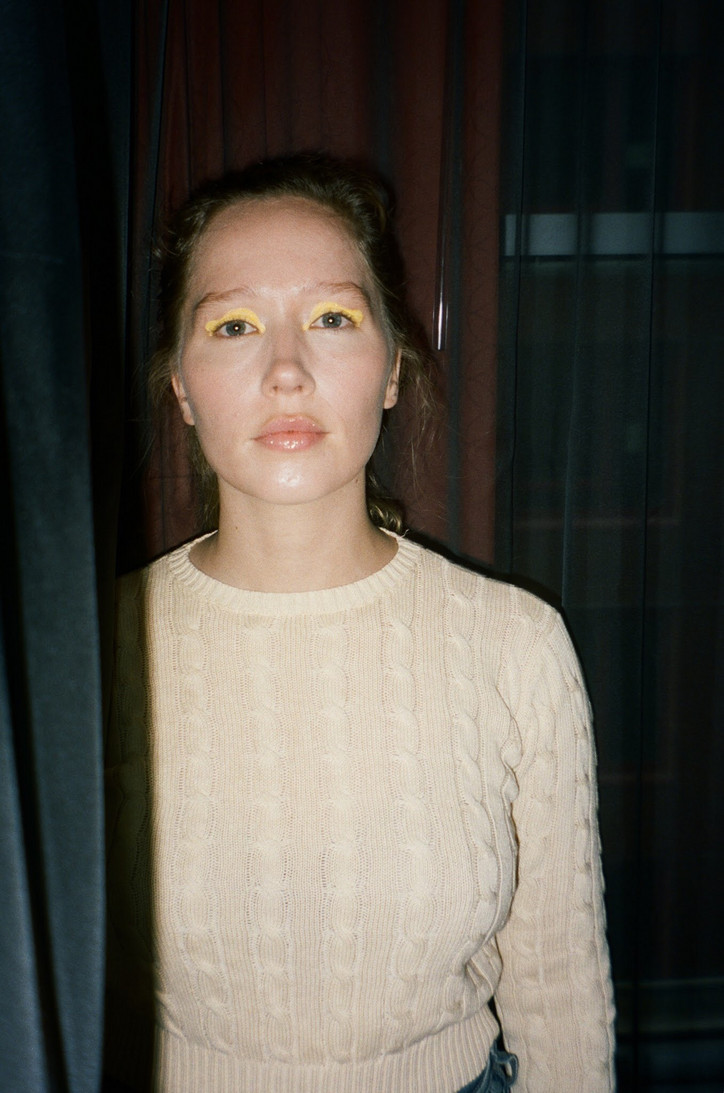
The first three songs on the new album deal really physically with—I wouldn’t say body issues exactly, but just like seeing your body, and seeing how other people see your body. Did that come from a real experience? Is “Body” about a nude, or was I reading that into it?
Just the last line,.
It struck a chord with because I’ve had that experience where I’m like, ‘Please, please delete that picture. Delete it now.’
The song made me think about whenever women are shamed for sending naked photos, or whenever, you know, some celebrity gets their phone hacked, like Jennifer Lawrence, and it’s just laughable to me that that’s criticized—as if everybody hasn’t had something similar happen. Well, not everybody, but we live in a world where the way we communicate with each other is through images, and when you’re young—not even when you’re young, but especially when you’re young and you’re in love, it’s so beautiful how much you trust people, and how much you feel that you’re safe, and that you want to give people everything you have because it’s so beautiful to be in love. So, when that’s weaponized against people after the fact, it’s just sad and ridiculous. As if a lot of the dudes that are slut shaming Jennifer Lawrence haven’t received pictures themselves, or sent dick pics. Like, come off it.
And as if our senators aren’t doing the same thing.
Yeah, it’s just so annoying. So, I think that represents a lot of the record in a way of not just being in a relationship, but just how much you give to somebody, and especially if you mix that with a hectic touring schedule or whatever, it’s just like, ‘Where are we? What is yours anymore? What’s left for you when all your space is gone constantly?’ Also, the world I live in as well, it’s like you’re always going from small, shared hotel rooms, to small venues that are packed, to like small vans, and there’s never really—
It’s claustrophobic.
Yeah, and I love meeting fans after shows, I love talking with people, but definitely the way that I am interacted with, compared to my male bandmates—it’s different. Just the way people want to hug you, and touch you, and kiss you on the face, and all of these things that just start to get into your head. Like, how much do I have to give people of myself before, you know? I want to give people things, but even just being on stage and singing about your life is giving a whole lot. So, over the last few years it’s just been me being like, ‘Where are my boundaries? How can I set them? How can I stand up and enforce them? How can I deal with any backlash that comes at me for enforcing them?’ It requires a lot of strength to ask for what you need and to deal with pushback.
Do you see your music as political in some way now?
No. I find that any time someone who isn’t a white guy sings about their life it’s labeled political, and I try not to read internet comments and stuff, but I have noticed some comments under my music recently saying like, ‘Oh, here we go, Julia’s gone political’ and it’s like, ‘What?’ I mean, yes, I am a feminist, and of course I care about these things, but why is me just singing about my life political, when it’s always been about that? Folk music, singer-songwriter music is about sharing your experience. So, if you want to label it political, sure. That’s definitely not my intention. I didn’t sit down and think, ‘I’m going to make a statement. This is my statement album.’ I never want to be preachy with my music. It’s just me singing about things I’ve gone through, and if people are interested, cool.