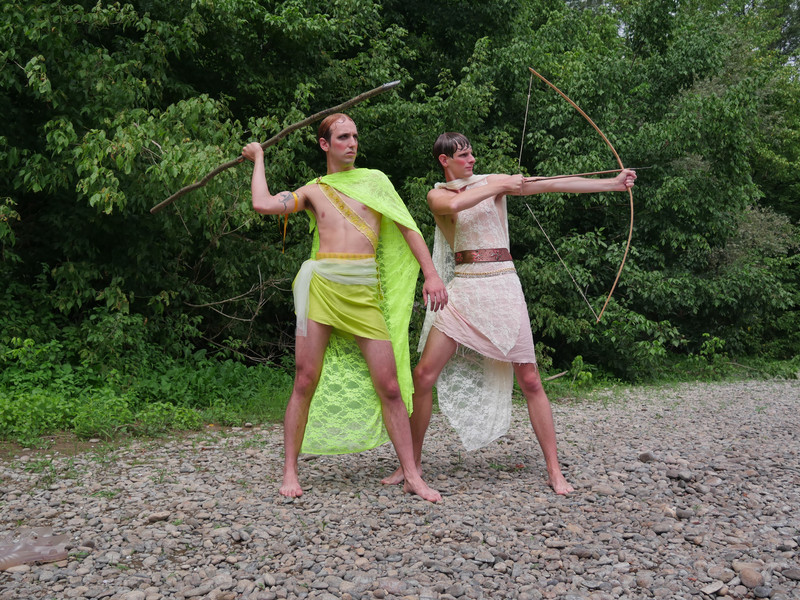
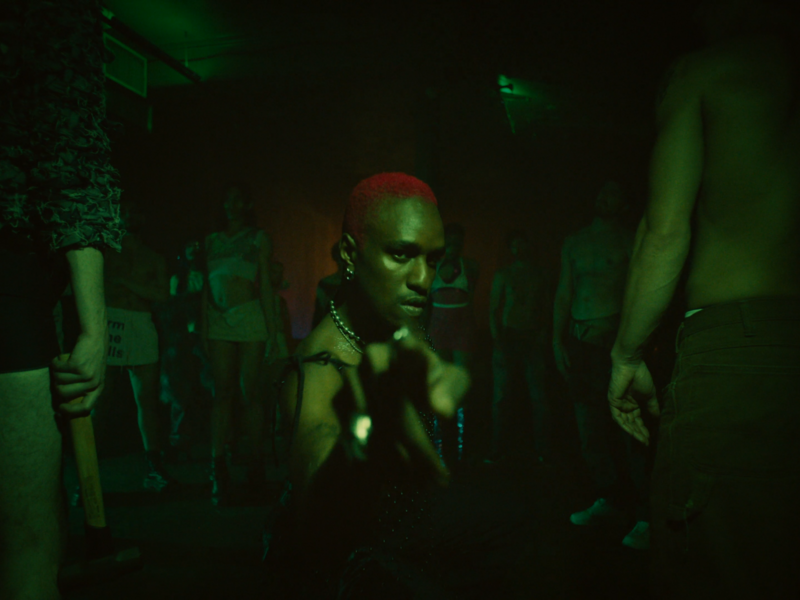
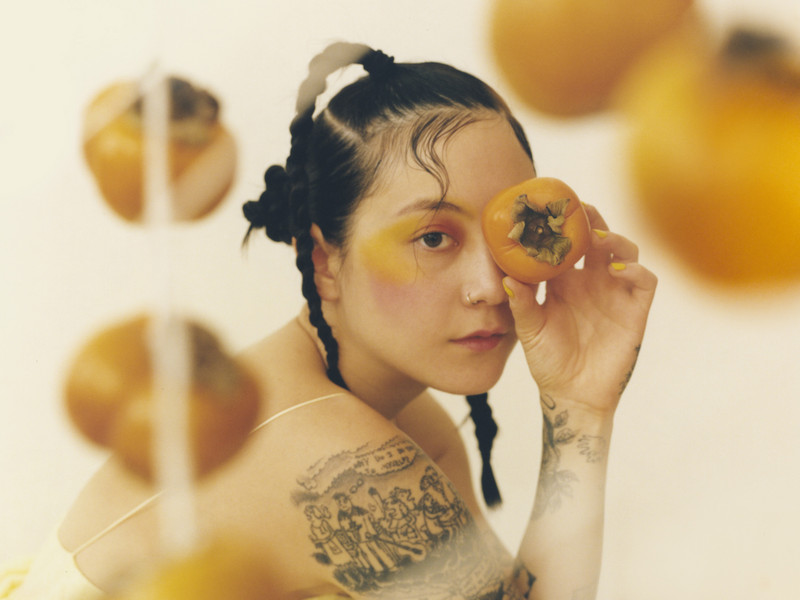
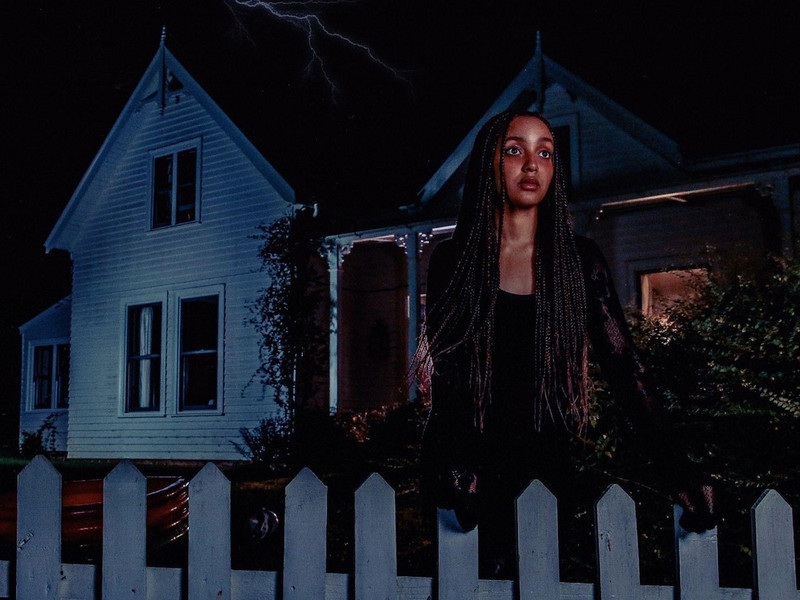
Shirt by Shaina Mote, Scarf by Gentle Thrills; Dress by Christopher Kane, Shoes by Milin
She labels this earlier work as “the crying music,” an enlightening entry point for listeners looking to relish in the weight of her introspective sadness. And there’s a reason why this music is so gripping—her oft-vintage lyrical and sonic palette not only translates so effortlessly into the modern age, but transcends context as a whole. “It doesn’t say, ‘This is my sex,’” she says of her neutral stance when writing. “It says, ‘I’m a human being and these are my feelings, but I also watched myself going through them, removed.’”
Angel’s sepia lens existed long before Instagram. And in a world where social media posts often romanticize sadness to the point of over-saturation, she has struck such a powerful chord by being profoundly human. Whereas her cult-like fanbase may dub her a musical messiah of sorts—an apt narrator for frayed feelings—she comes across on the phone as your favorite girl next door.
“I don’t usually do on-camera interviews,” she tells me, pacing throughout her relatively rural home in North Carolina. “Maybe I would come off as charming, maybe not, but I just don’t want to be seen or speculated in that way.” She would rather insert this charm into her work, and as of 2016, this once hidden spunk has made its way to center stage. Her most recent full-length album My Woman started off with a bang: in a silver tinsel wig and roller skates, she whimsically parades about in an empty roller rink, shooting hyper-aware glances and kisses at the camera, and even breaks the fourth wall at the end—“Do I need to give more attitude, or?”