I Never Dreamed the Sea so Deep, the Earth so Dark

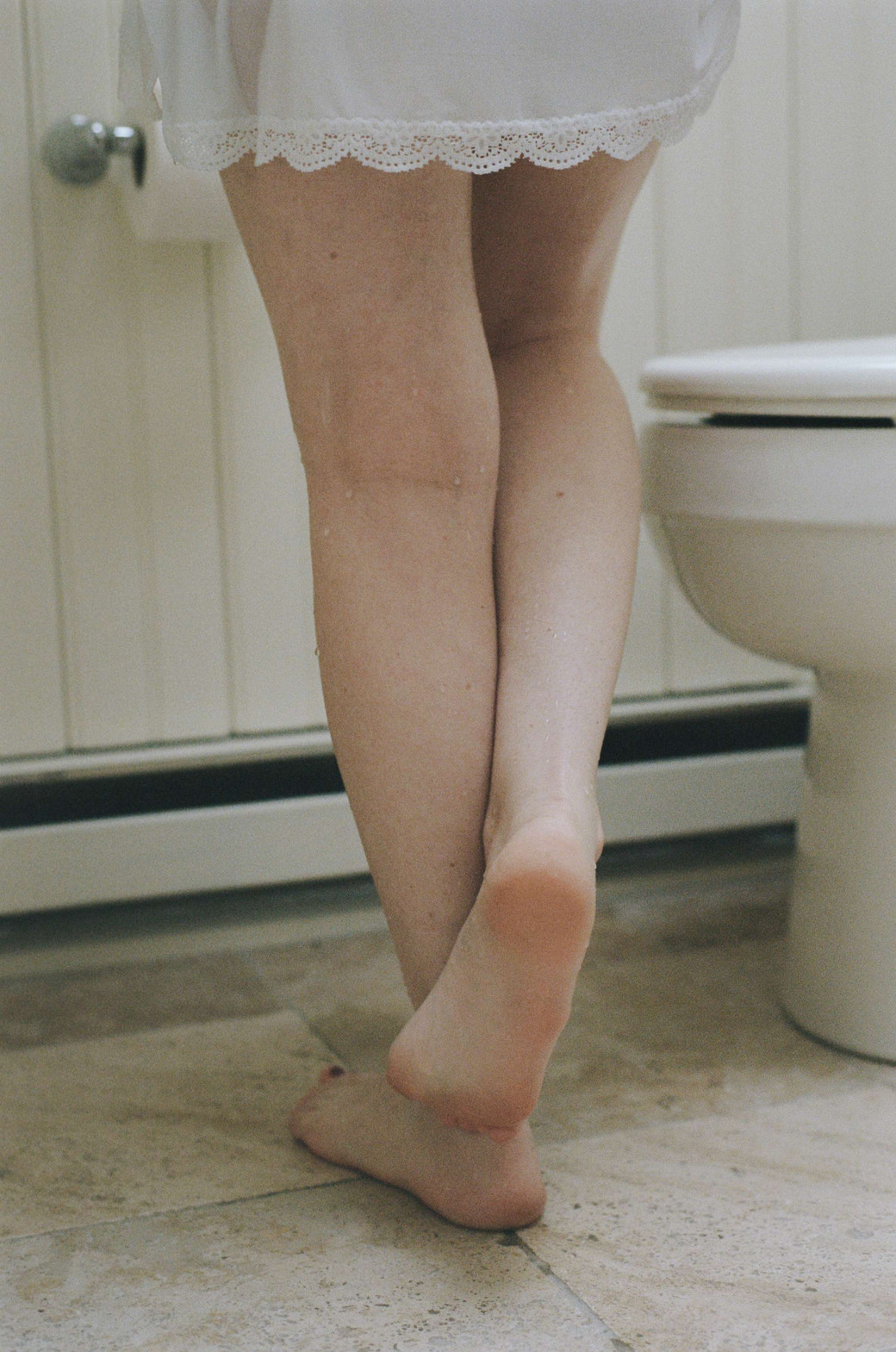
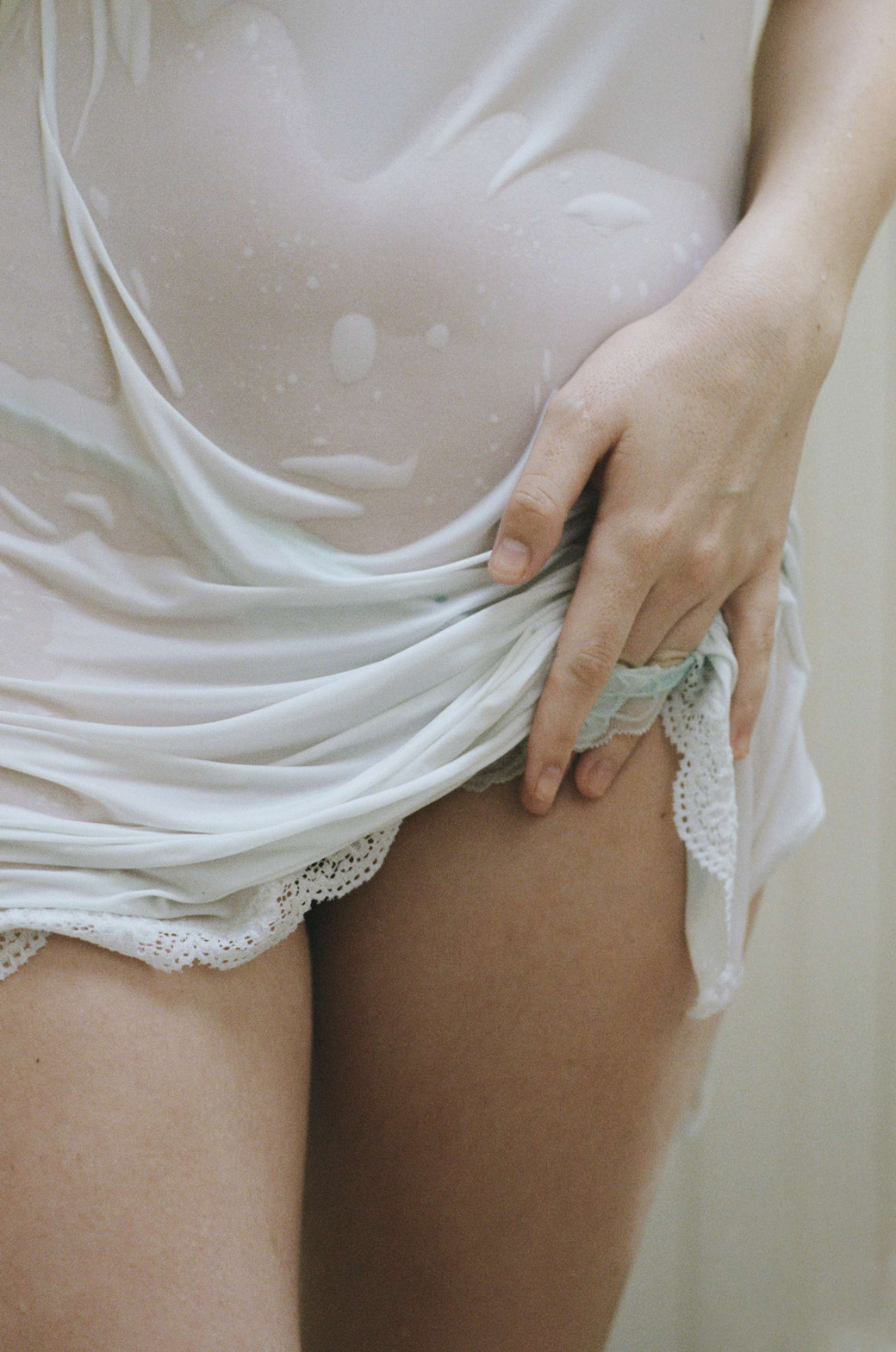

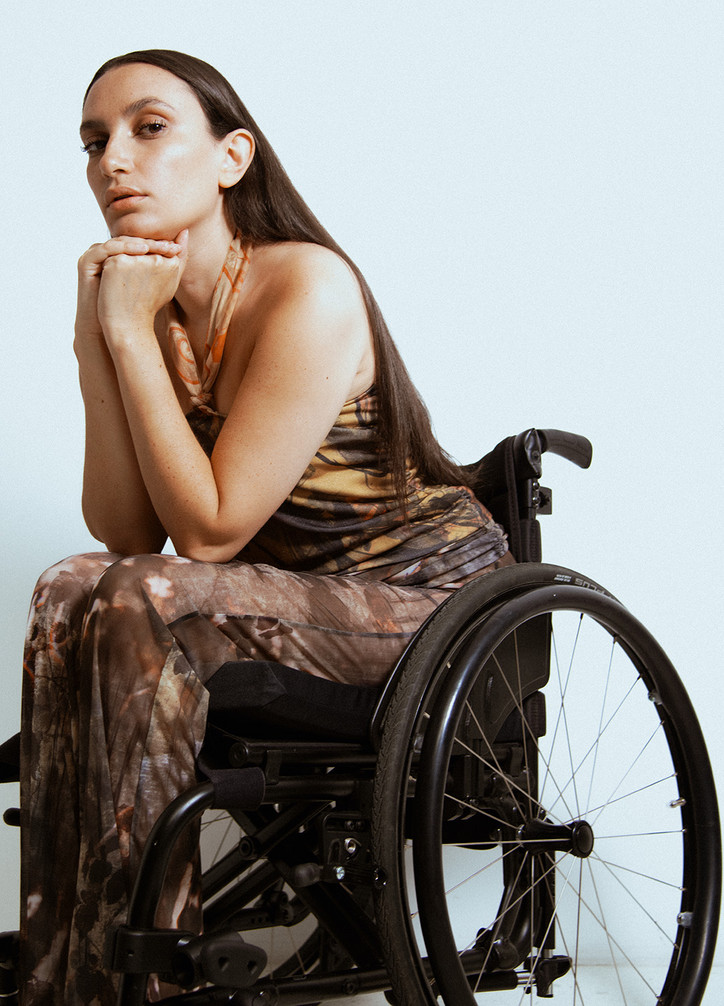
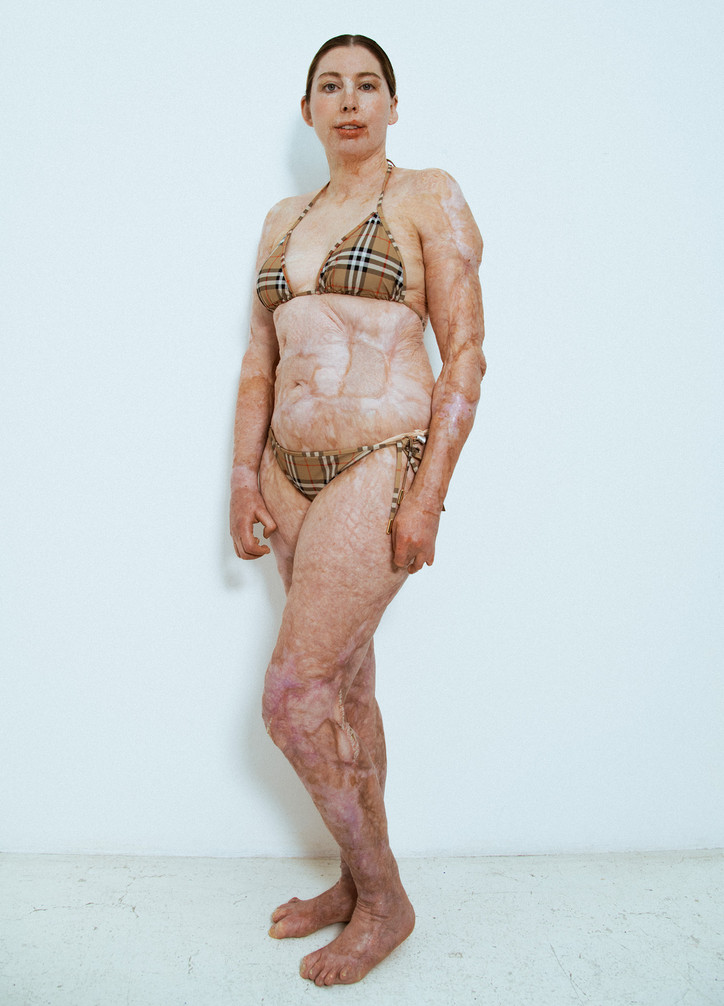
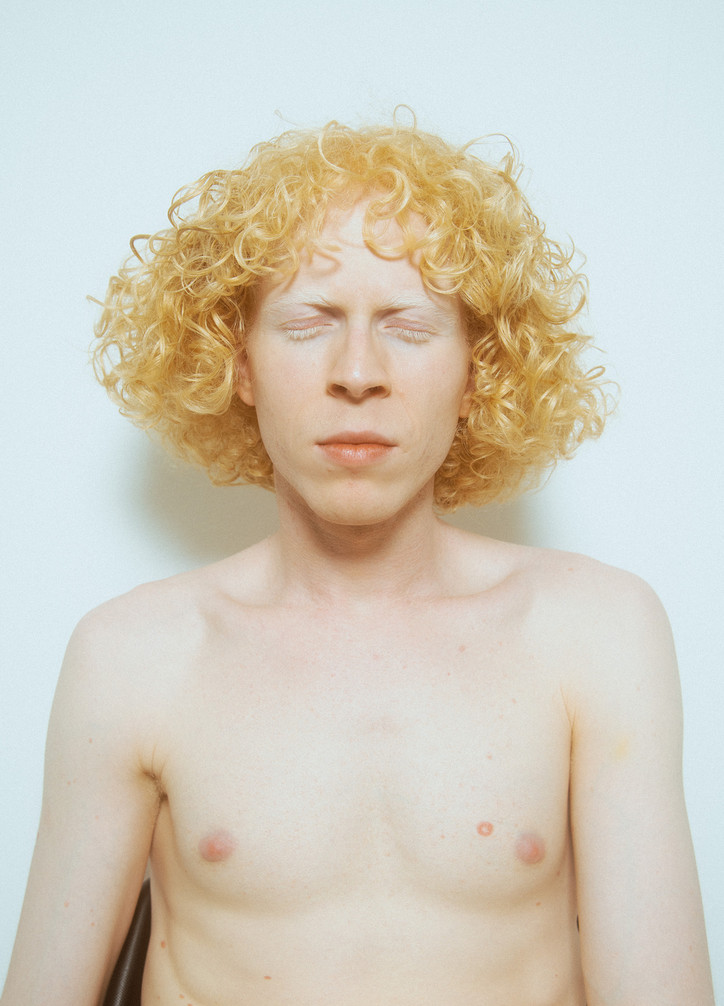
Uncool begins with a quote. “I no longer want to explain myself as a body.” To explain, rather than present a body, is a delegitimizing endeavor. It begs the question: which bodies necessitate explanation, and which ones are unquestionable? Tobin Seibers, one of the principal figures in disability studies, wrote in 2003 that “the disabled body provides insight into the fact that all bodies are socially constructed.” In the digital era, the most dominant form of social construction is image-making. Examining our current culture of images, especially in fashion, differently-abled bodies are hard to find. The conservative pendulum swing has left us back in a drought of representative figuration. So how can people left out of spaces of beauty define it for themselves? It’s a similar question to the structural one of access. Public spaces are often built without proper ramps. The cultural sphere tends to be devoid of people in wheelchairs, with port-wine stains, with albinism, with scars. Both of these gaps connote a wider societal detachment from people whose existence is a reminder that our bodies are constantly in flux, and access can always change.


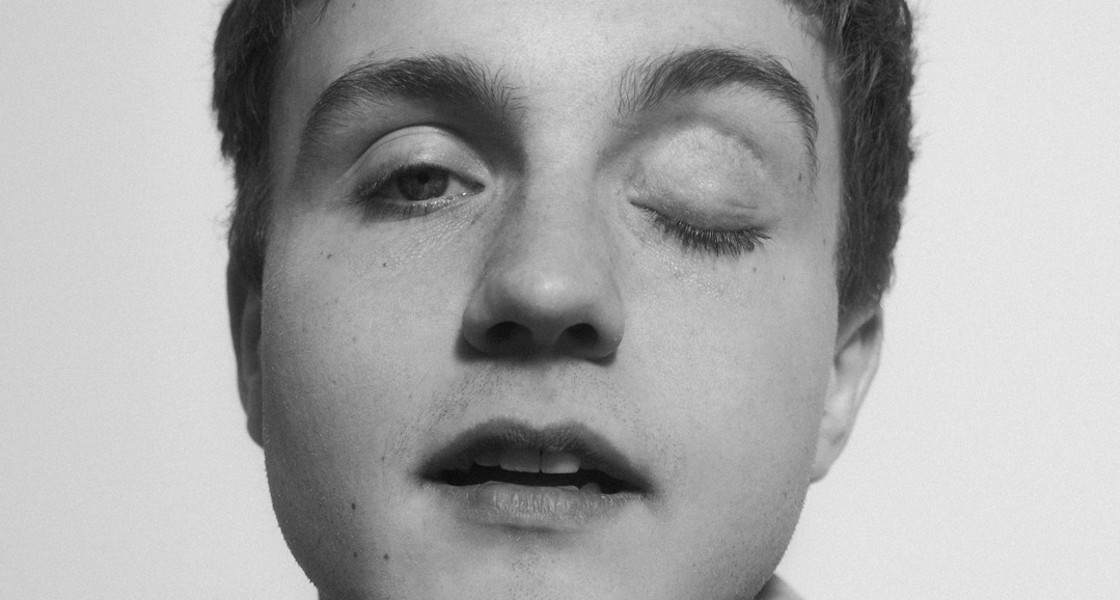
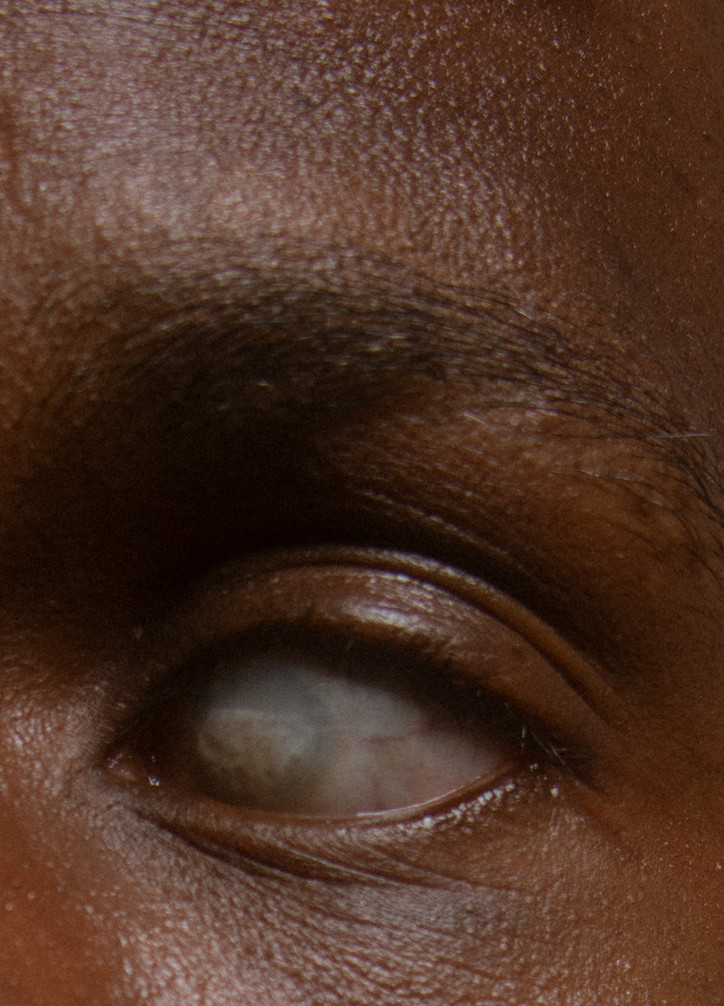
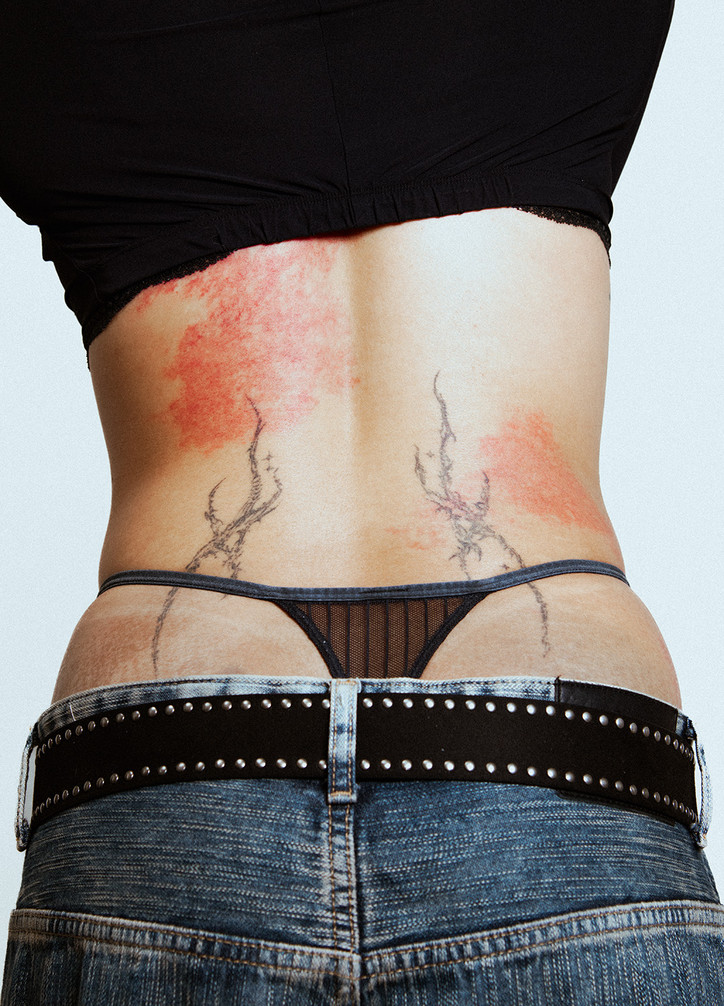
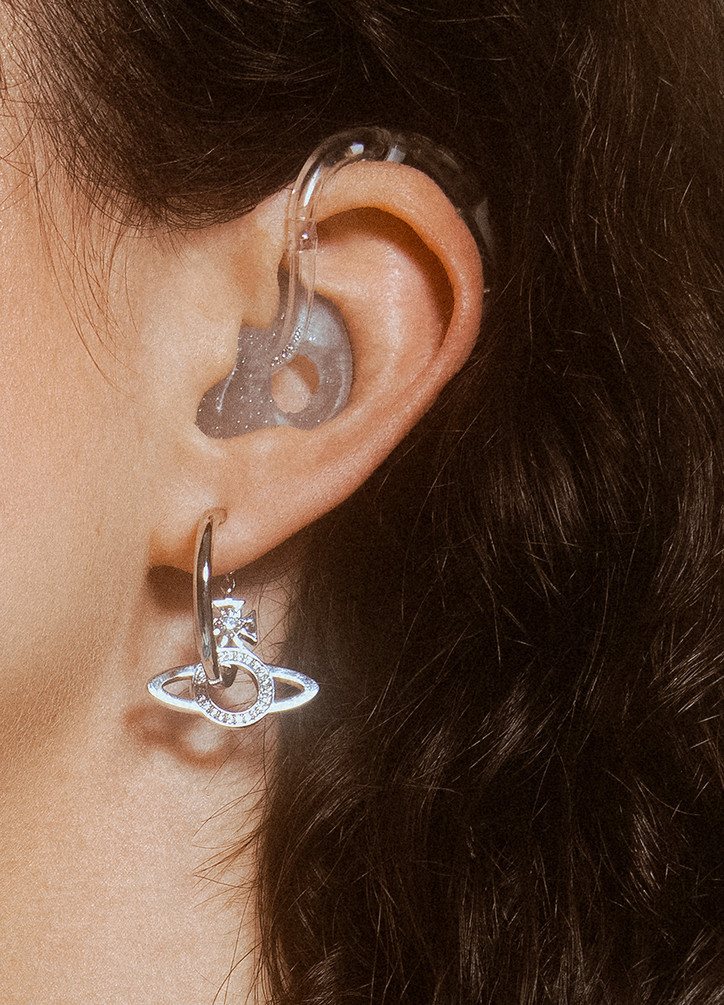
Brunes photos shift a consideration of what beauty is. “I was drawn to physical features that are often perceived as flaws or ‘deficits’, but which I personally find fascinating.” She says. “A lot of the process was about following that curiosity, meeting people and exploring what exactly interests me visually, and how I want to photograph it.”The photos are strikingly delicate, reckoning with personhood through points of disability, rather than in spite of it. Close-up shots show interlocking patterns of scars, blush creeping up the side of an amputated arm, an eye clouded by stormy grey. There’s so much beauty here. Brune’s methods of portraiture force an unbreaking gaze between the viewer and subject. Their unwavering stares assert a belongingness in the very cultural space of photography, art, and fashion.

Alexandra Bondi de Antoni, editor of i-D Germany, writes the closing essay for Brune’s book. Her kaleidoscopic prose echoes the same sentiment that Seibers wrote twenty years ago. “Your body is ever changing,” she states. “Your skin, your muscles, your joints and your tissue carry that change… your body speaks of resistance and transformation. This is the language of survival.” For people with disabilities, survival is evident on their skin, but societal treatment is context-dependent. One of Brune’s subjects, Catrin, a physiotherapist and model, recounts how her perception has changed after a life-altering ski accident that left her with burns all over her body, stating that “a woman with scars is often looked upon with sympathy – a view that has been created by unrealistic expectations of what beauty is.”
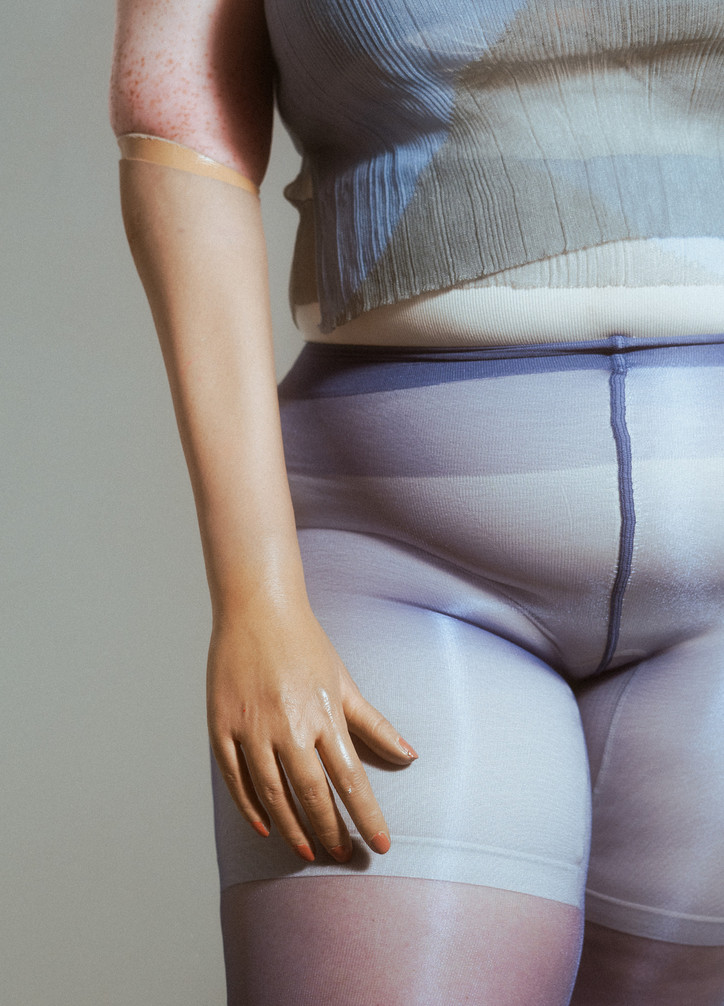

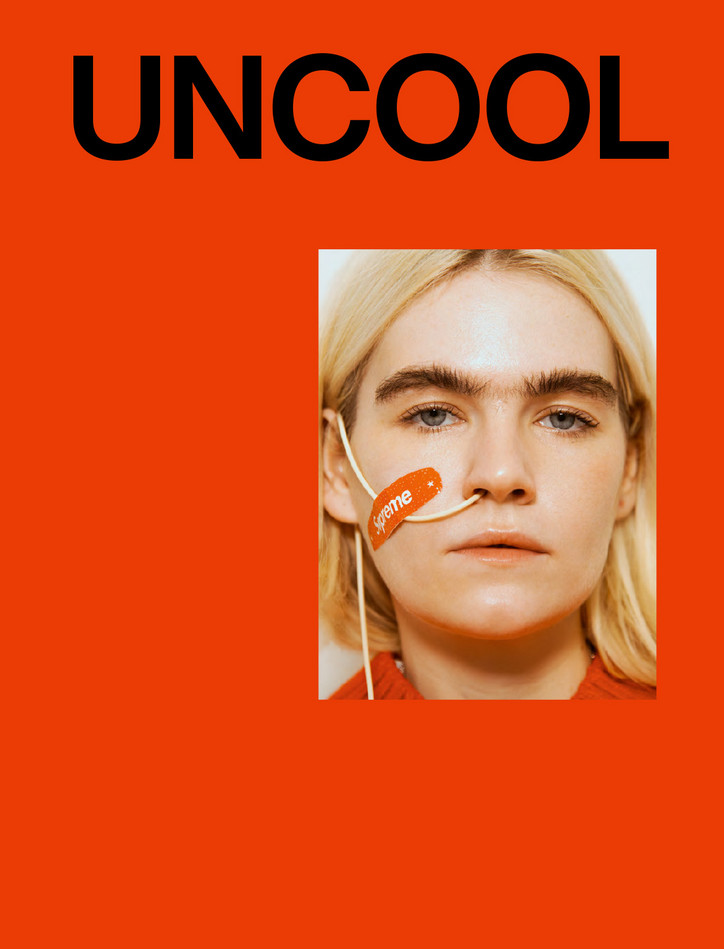
Elle Jo, another subject who uses a nasojejunal feeding tube, said that “[her] illness cannot be hidden, so [she has] had no option but to face people’s judgement and curiosity head on.” Elle Jo graces the cover of Uncool, facing us head on, her feeding tube accessorized with a Supreme sticker. The act of brand adornment on something like a feeding tube, considered utilitarian, gets at the heart of this project and its title. Coolness is a phantasm that’s as powerful as it is moldable.
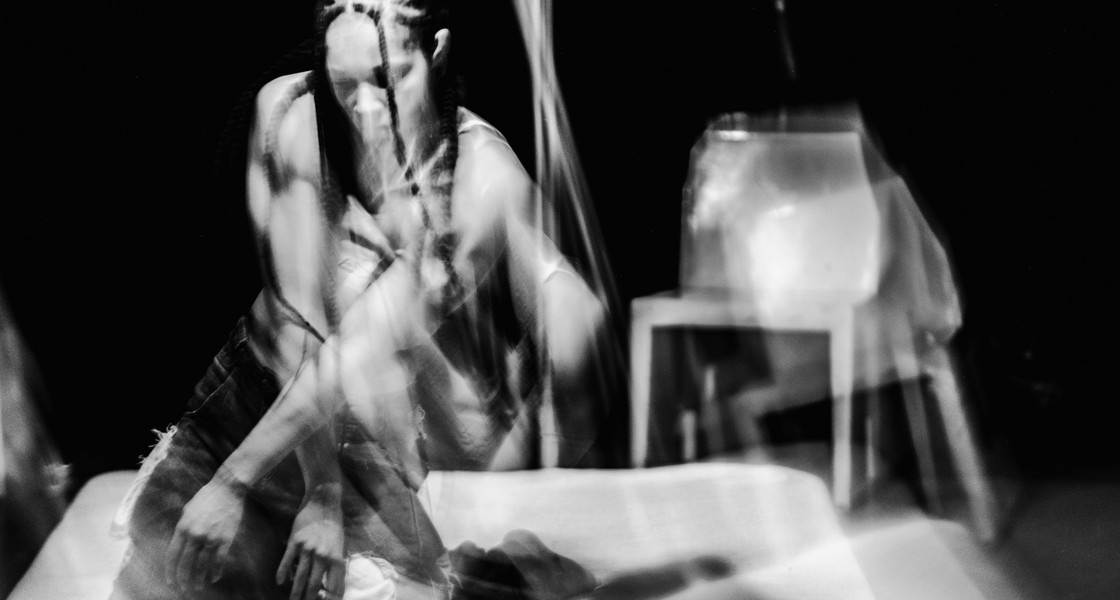
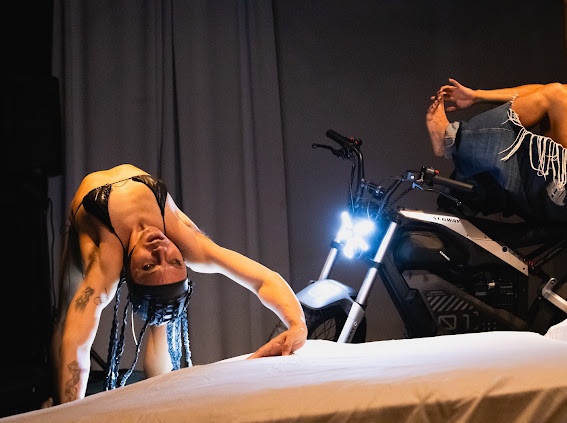
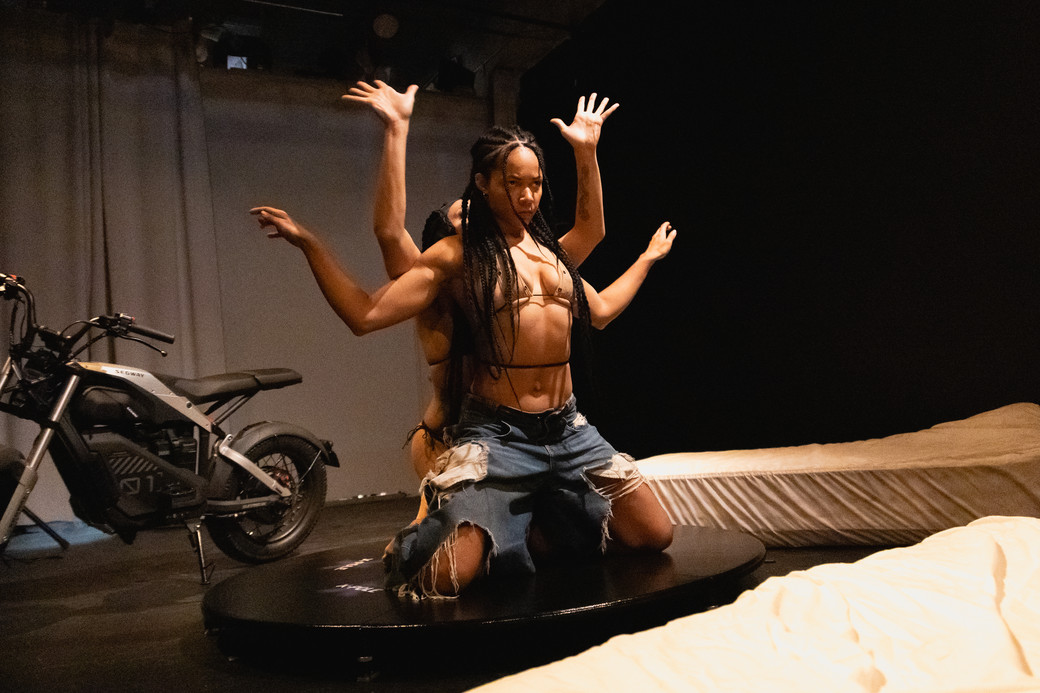
There are numerous phases in the performance, divided into four chapters, in which YAKIKAT lets her frustration and anger sink into the audience with her intense dance sequences and overt physical exertion. She battles for control with a mattress, runs on a treadmill in heels and a latex bodysuit, and balances a flaming birthday cake on her head. YAKIKAT also presents pseudo-commercials projected onto a wall, advertising the fictional drinks ‘SPITE’ and ‘REVENERGY’ before cast members throw cans onto the audience.
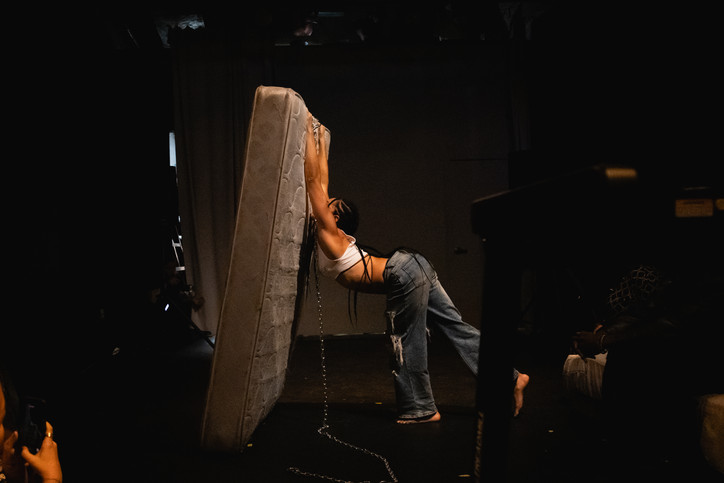
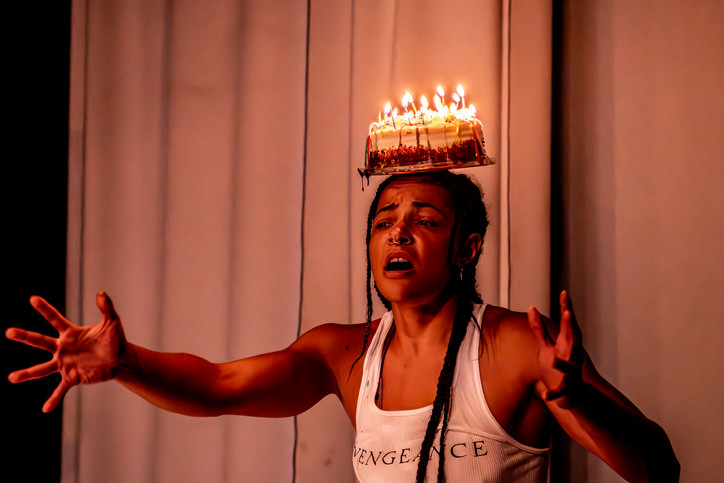
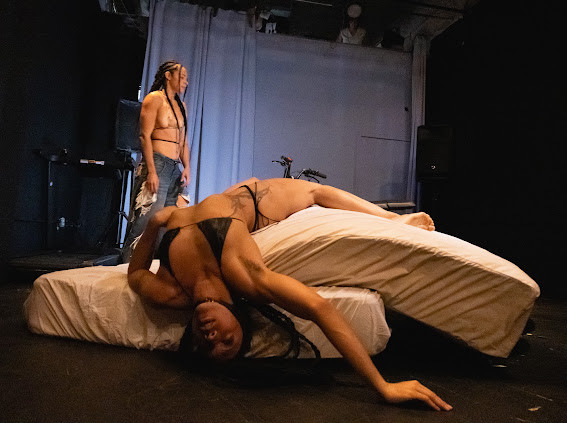
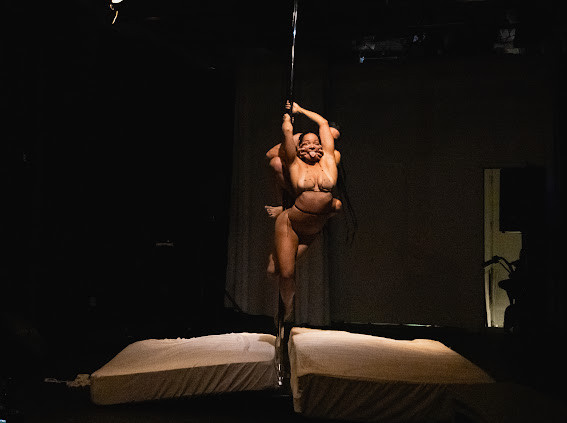
The climax of the performance comes near the end, when YAKIKAT interacts with another person in the show for the second time. Where there once was the treadmill from the beginning, there are two mattresses and a weighted pole in the middle of them. The benches were moved to surround a motorcycle pointed at the two performers.
The two become a mirror for one another, where they fight, touch, and lick each other. They possess the necessary eroticism, and both become fulfilled with the exasperation that the show calls for, and it pays off with a flawlessly choreographed pole dancing sequence. At some points of their routine, they become attached to each other and become one, before splitting off, with YAKIKAT regaining her control and declaring victory over the now whimpering and defeated partner who lies on the bed. The show ends with YAKIKAT calling their partner from the mattress towards the door leading to the basement. Their partner crawls over eagerly, and YAKIKAT leads them both downstairs, slamming the door to the audience behind them.
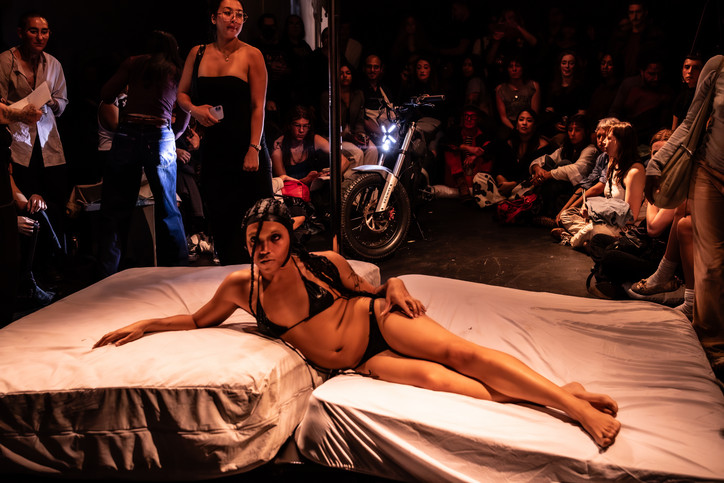
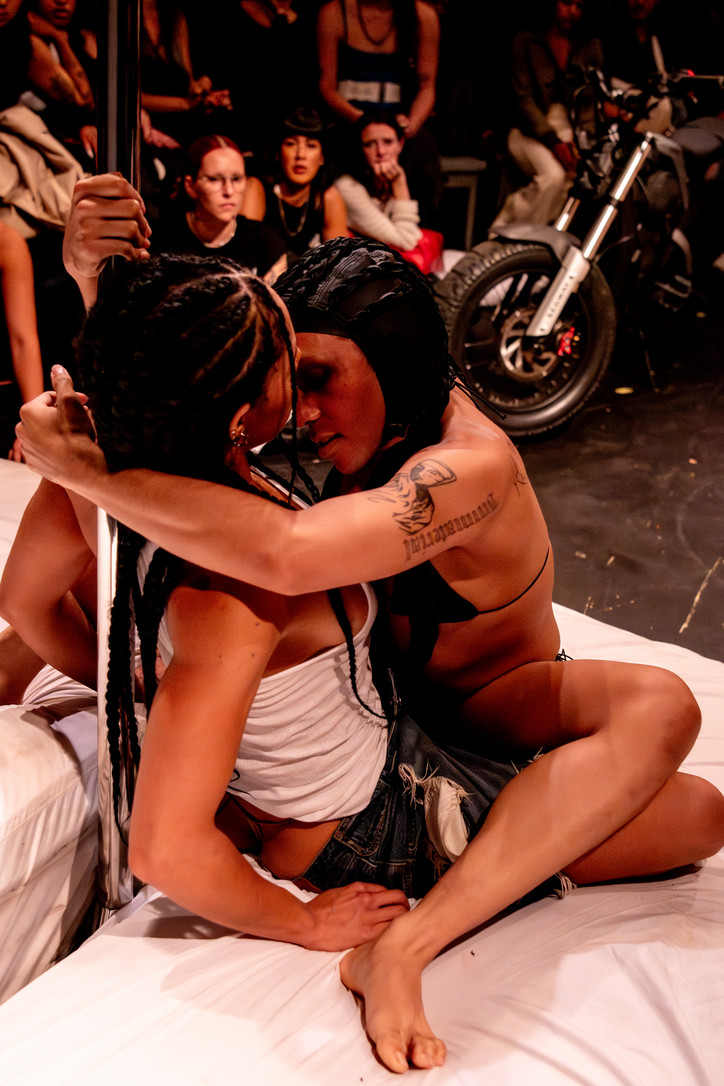
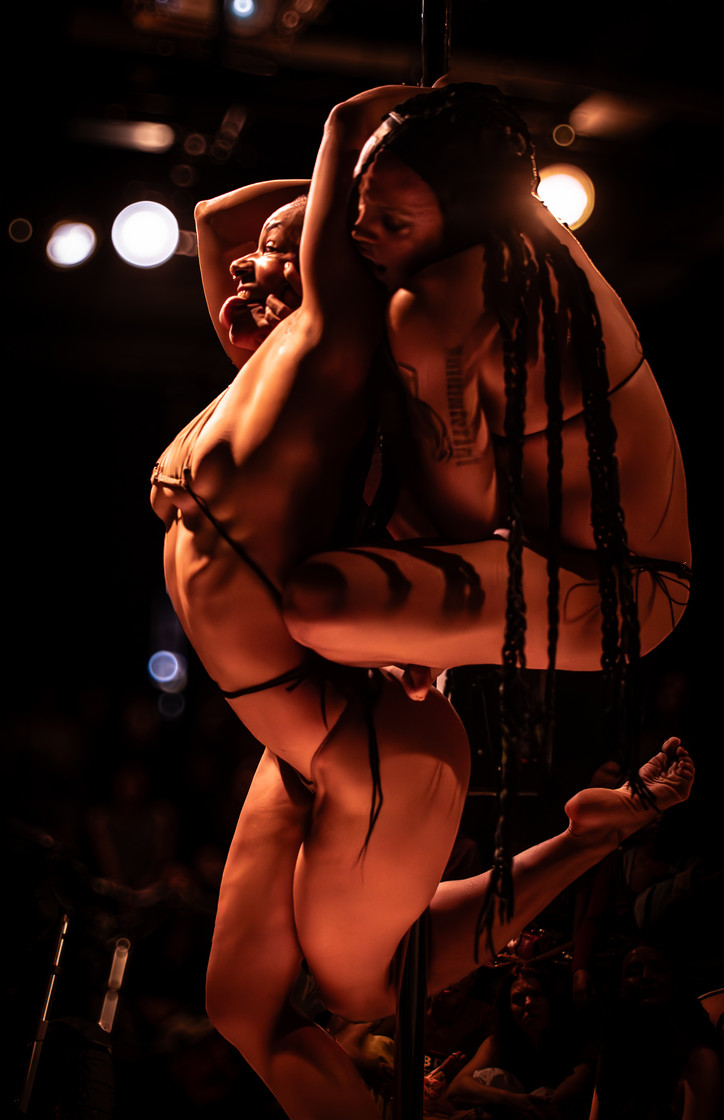
A balance of physical expression, an astounding sonic atmosphere, and ironic-yet-symbolic visuals, YAKIKAT’s debut show VENGENANCE (is a love language) is a poignant and perfectly distinctive display of multidisciplinary artistry. With the displays of eroticism and sexual frustration, anger is recontextualized less as an emotion and more as a state of being–something that should be encouraged rather than subdued. The result is far from lethargic; she produced a highly energetic, experimental performance that cements YAKIKAT as an audacious and valiantly expressive creative.
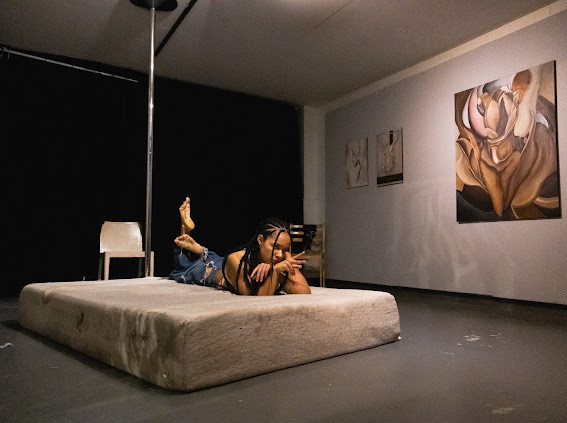
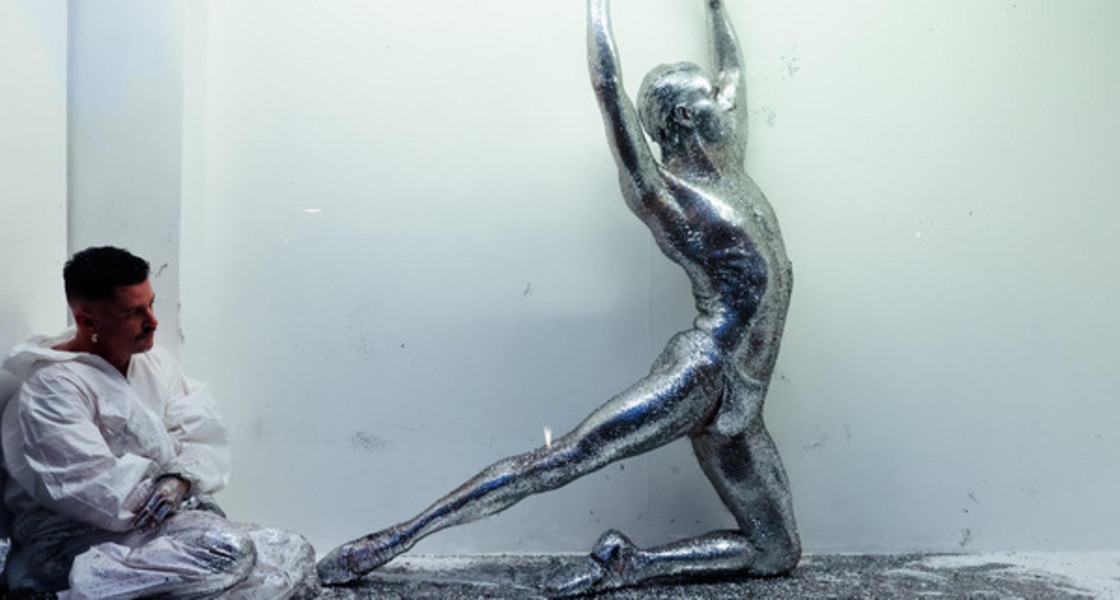
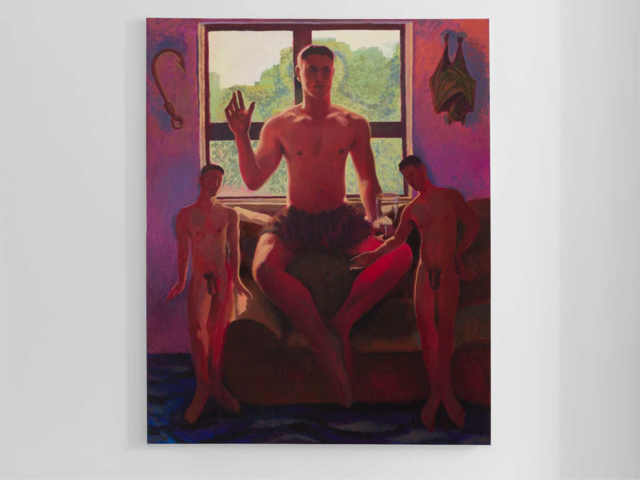
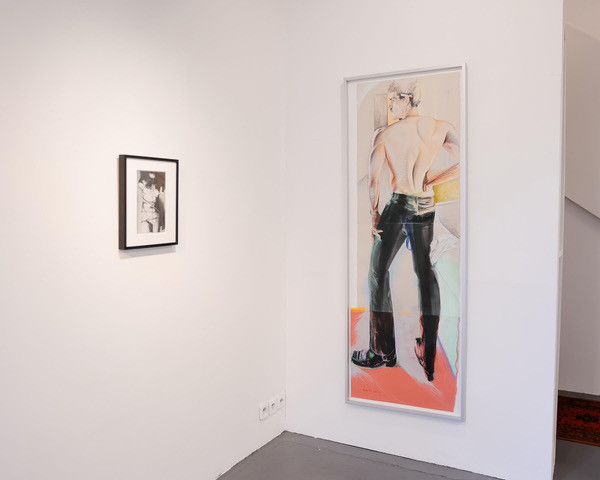
The show’s ethos is determined by one question: “Who gets to decide what we are allowed to see?” Part of the gallery is reimagined to examine how certain media is consumed, transforming the space akin to an adult-video-store backroom filled with physical renditions of homoeroticism, CRT monitors, and archival books. It highlights the concept of voyeurism by allowing videos to be viewed through glory holes, and by allowing performances to be viewed through street windows, with one showcasing a person covered head to toe in silver glitter.
Packed for Pleasure embraces human sexuality and the inclusion of such subject matter in artistic avenues. Brooke Wise, curator of this show, says that she thinks censorship doesn’t stop art from being made or displayed, “it has only changed the routes they take to find one another.” Some on social media, however, question the cultural legitimacy of the show, especially considering recent controversy surrounding an open letter submitted to the foundation from former artists-in-residence.
Despite messy (and alleged) administrative issues with the foundation, the show stands as a testament to artists, both established and up-and-coming, that art cannot be subdued. Packed for Pleasure reflects important artifacts of queer liberation and sexual freedom, and celebrates the inclusion of erotic material in the art world. It leaves a lasting impression and surely prompts you to wonder: Who allowed me to see this?