This is switching the topic a bit, but what artists have you been listening to the most in quarantine?
I’ve really been digging BADSISTA, who is a nonbinary, queer DJ from Brazil. They’re really, really sick. I’ve been listening to Nkisi a lot, who’s a black queer DJ from Berlin. I love listening to all my friends, like Marley, Princess Peggy, all my friends are like sickening DJs and artists. I really like Miss Boogie; she’s a trans artist from New York City.
I love 70’s funk, like Roy Ayers, just like groovy stuff. I’ve been going through waves of emotions, so I’ll be listening to hard core techno and acid house one day, and the next day I’m listening to a lot of goth music and punk. I love Bad Brains, I love Kittie, I love metal and rock.
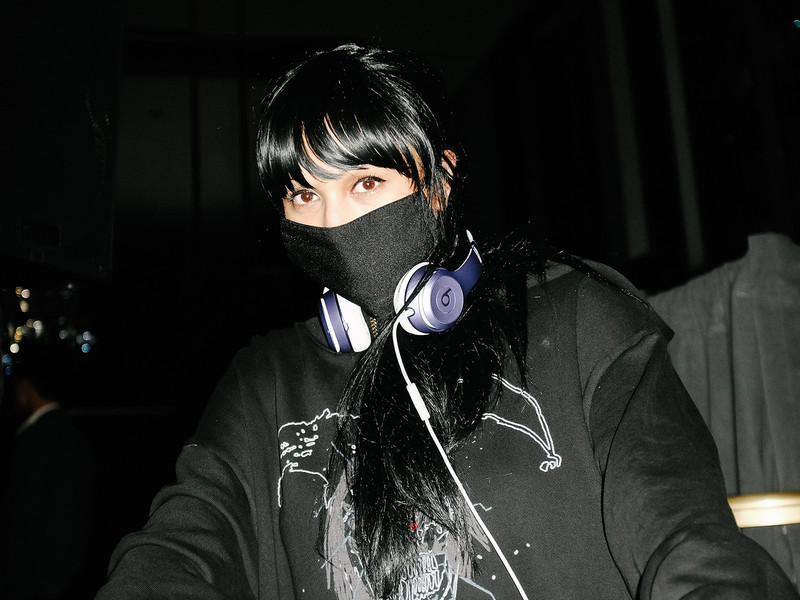
I DJ, and I play a lot of techno and acid house, so I’ve been really doing my deep research into the founders of techno musi— Juan Atkins and Underground Resistance, who are black and brown revolutionaries from Chicago and Detroit who started techno music in the late 80’s. Black and brown and queer techno, DJs, and producers, who layed the blueprint out for electronic music to be what it is today.
I’ve been listening to a lot of my sis UNIIQU3, who is a Jersey bounce DJ. They’re based in New Jersey, they’re absolutely iconic. I love Jersey and Baltimore bounce music, because I grew up going to house parties listening to that. I do house parties in my room when I miss raving, with my lil’ strobe light situation.
Do you make playlists or anything that’s accessible to the public?
I mostly do live sets, but I have some stuff up on SoundCloud. I’m sitting on a lot of mixes that are way past due.
Last week, DisCakes did a collaboration with BoilerRoom, and we did a virtual rave where all the proceeds went to Glits, which is an incredible organization based in New York. All of those sets are going to be uploaded to the DisCakes soundcloud, and when I tell you… there is SO MUCH LOVE put into these sets, like it’s insane! Some of my favorite DJ’s that I was listing: BADSISTA, Nkisi, Peggy, Marley, and QuestionMark, which are like, literally the sickest DJ’s… all the sets are gonna be uploaded on DisCakes.
We’re also sitting on a mixtape that we’re gonna drop soon featuring some mixes from some of our other favorite artists, which will drop in another month or so.
Can you talk a little bit about the Google doc you created compiling resources for creating safer club spaces?
Basically, last year in March, we were throwing our second party which was going to take place in a DIY venue in Brooklyn. We were talking with the person whose space it was, and we were like, this is a DIY underground space, so we are creating our own utopia, our own ecosystem, our own club situation. When you do a rave that’s a renegade or DIY rave, you literally have to do the entire production: your own lights, your own sound, you have to make your own bar… So Marley and I were like, Why don’t we make a doc and find some references for ways that we can make sure we are keeping our babies, our ravers, our staff safe? An outline to thank and appreciate the person who’s letting us use their space so we can trust each other, and they know we actually really care about and respect them and their space?
So I started compiling information for just us to use as a reference. We were thinking about all the awful things - discrimination, assault - that we’ve experienced in venues. It’s not our fault, it’s not my fault something awful is happening to me. It’s systemic. So, what can we do to ensure that we’re taking our bad experiences and transmuting that into harm reduction and protecting our ravers and our community?
I was like, This is more than just me, this is a social issue. This is an accountability process that all venues and organizations need to undergo. Because, when I was doing that, as someone who’s been completely embedded in nightlife, it was an accountability process. Because I’m accountable for all these people, I’m accountable from this day on for every single person who I’m in a nightlife space with. Whether I’m DJing or whether I’m throwing the party. The fact that people own clubs for decades and they’ve never even thought about giving free water to their attendees. It’s fucked up. It’s like being tone deaf to night life being political.
I shared it on Facebook, an open source doc, and people started adding to it. People were adding on their experiences, and there were different sections. Like, one pertaining to security guards. Like, What can we do to create a safer protocol for security guards, and how can we include security in the conversation when we’re talking about the ecosystem of nightlife? Because very often they’re pushed out, or just treated like gatekeepers. A lot of security guards are predominantly black and brown, they’re predominantly treated as if they're disposable. And then people get upset when security guards harass them and treat them like shit, but it’s something that starts from the inside out. Venue owners are treating security like shit, and bartenders, and people as if they’re disposable, so they’re gonna be upset. It’s a cycle that’s gonna put attendees at risk. Talking about that, harm reduction, safer substance use. Things all clubs should be talking about and acting on.
This is something that made Marley and I kind of divest from doing raves, but something I’ve been thinking about a lot is that a lot of people who are in our close and immediate community were either outed or outing themselves as abusers and predators. People who are DJing at our parties and stuff. I’ve been reading up a lot on transformative justice and critical resistance and divesting from carceral thinking when talking about holding people accountable. DisCakes was always like we have zero tolerance for abusers, if you are an abuser, you are blacklisted from our space. But now, it’s like, that approach is still necessary, and I still live by it. I have a zero tolerance policy for abusers. But, moving forward, how are we going to use transformative justice to hold these people accountable so they’re not going out of the city to other spaces and doing the same exact thing. So I want to incorporate that into the nightlife document. It needs to be a community narrative and spoken about in nightlife. Nightlife is where a lot of people go to escape and we need to talk about accountability there.