Previously, your work was photography and collage based, what provoked you to begin constructing sculptures?
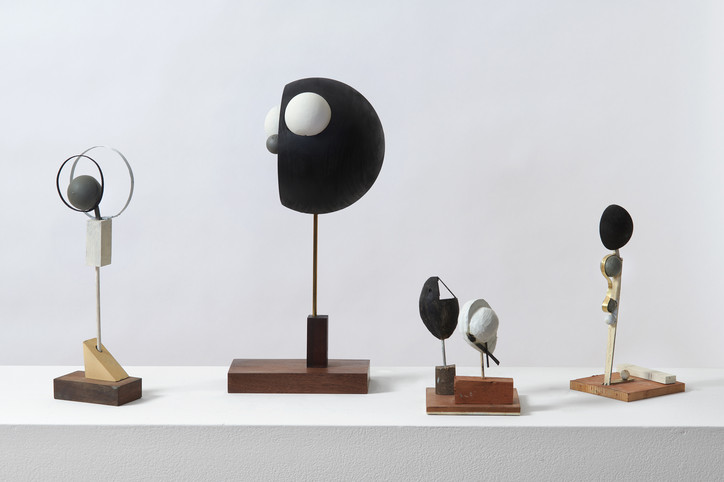
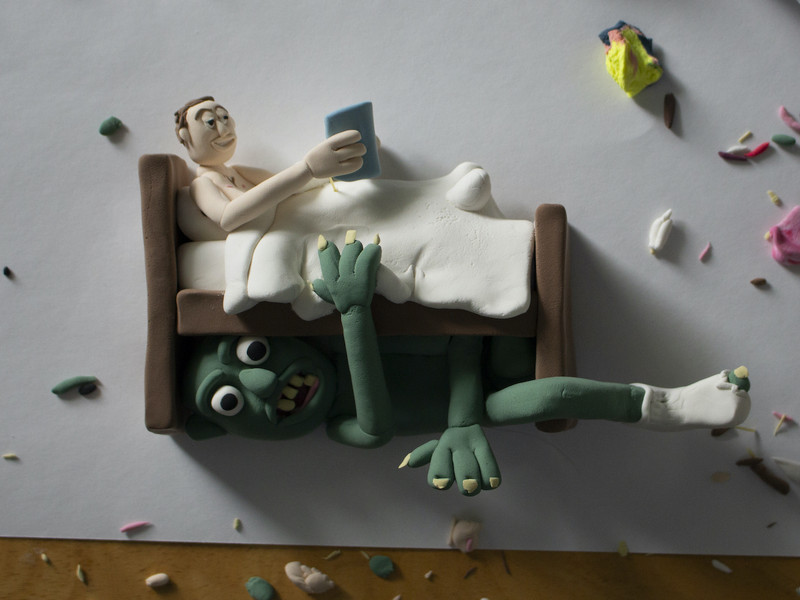
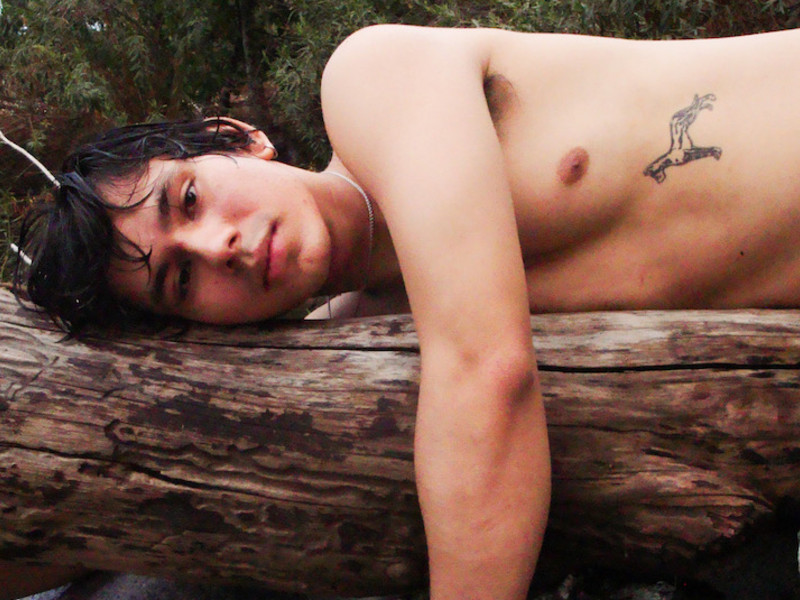
The photography was integrated in the collage work—the polaroid depicts a person, and the collage presents the environment surrounding that individual. What I greatly enjoyed was composing and building the image. Eventually, I, too, started to build these environments, rather than drawing them, or building single elements, like different cages for my head, for example. Little by little I had a whole shelf full of objects that functioned as props for these images, so to speak. Then I thought it would be interesting to take pictures of each body part in its perfect position (from a fashion photographer’s eye) and combine these back again into a whole body. It was too flat for me, I got clay and built them as three-dimensional objects. They were rather grotesquely beautiful.
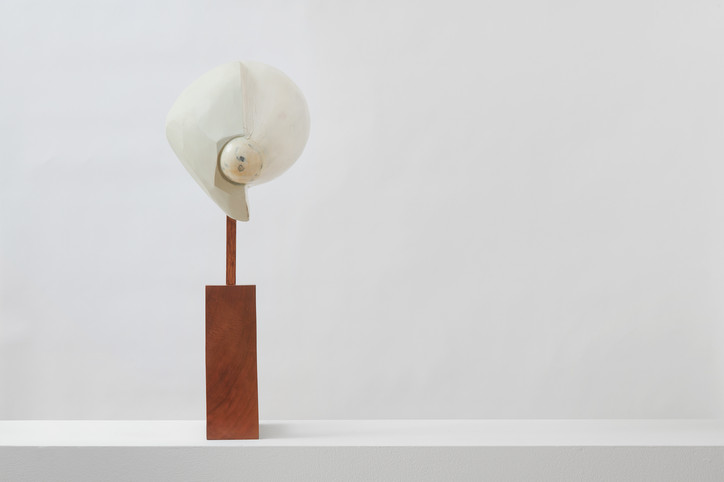
A little later, I started a project of a very different nature, I collected memories from people above the age of 85, I was curious about what it was that they remembered most vividly and whether or not there was a pattern. I created a color-coded chart that resembled a heartbeat print out of a hospital monitor and decided to use fabric—stitching these results onto long strips of fabric. It felt again too flat as a two-dimensional work. So I built a set of small, simple wooden heads and covered them with burlap and started stitching the results onto these little heads. Throughout the last 20 years I have built a good amount of objects or small sculptures, much more than I had previously realized, but a full-focused conversion to sculpture only happened once I started working on a larger performance sculpture, Dystonia (2013), that kept me occupied for 18 months straight. After the performance sculpture, I set out to find a workspace upstate, converted the garage to a studio and started working only on sculpture.
What was the construction process like, considering spatial dimension?
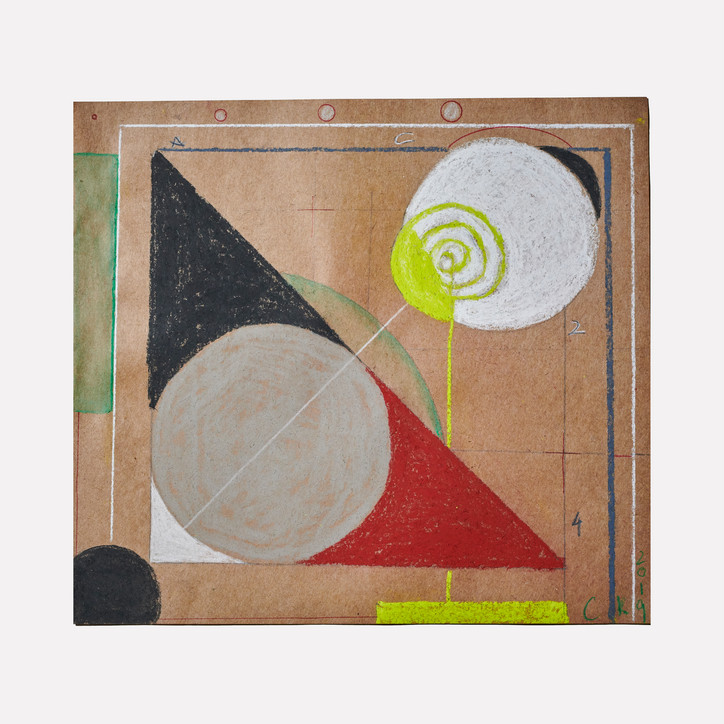
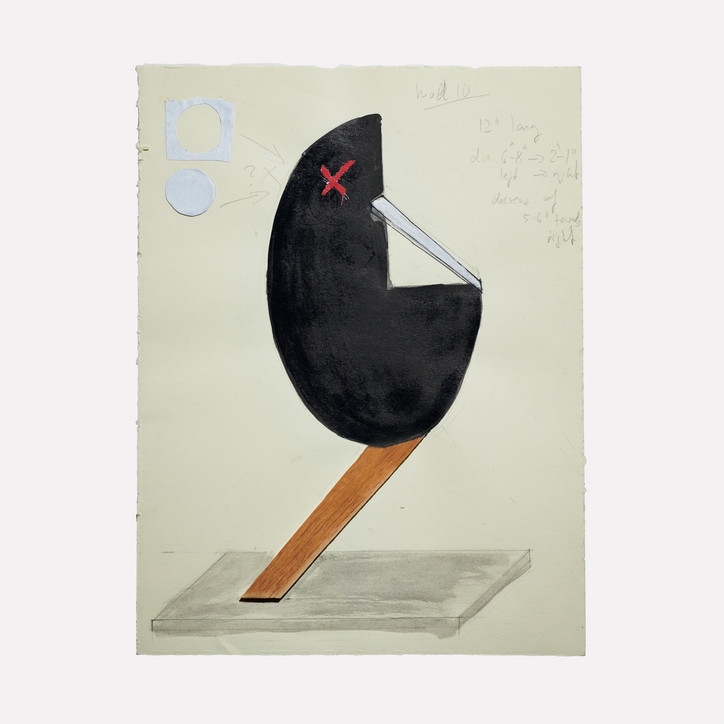
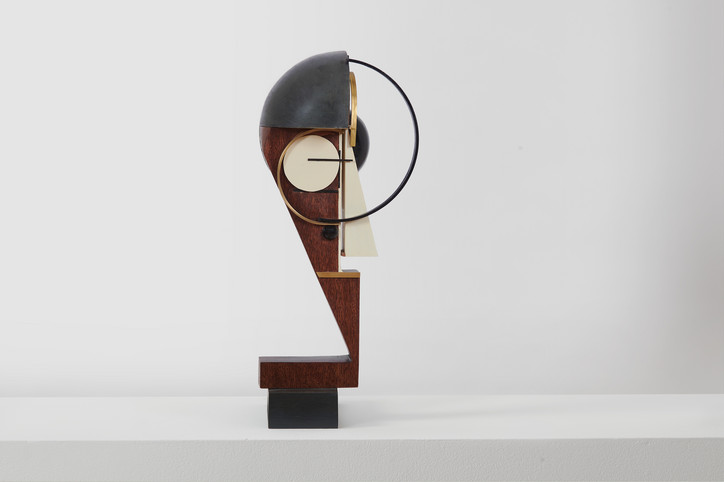
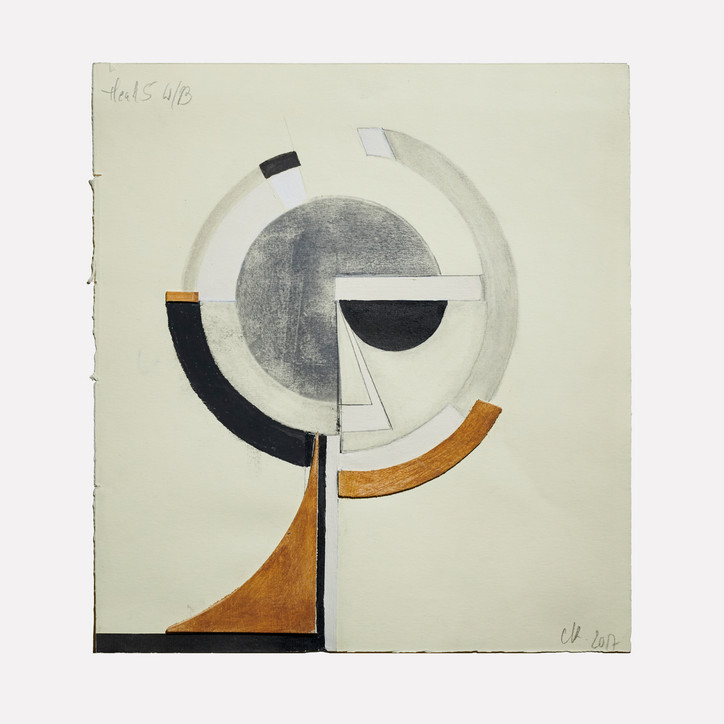
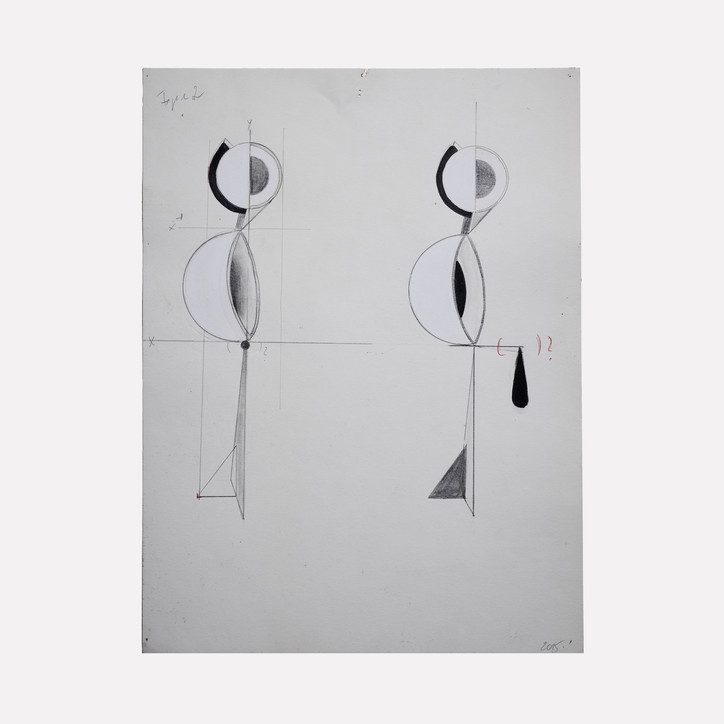
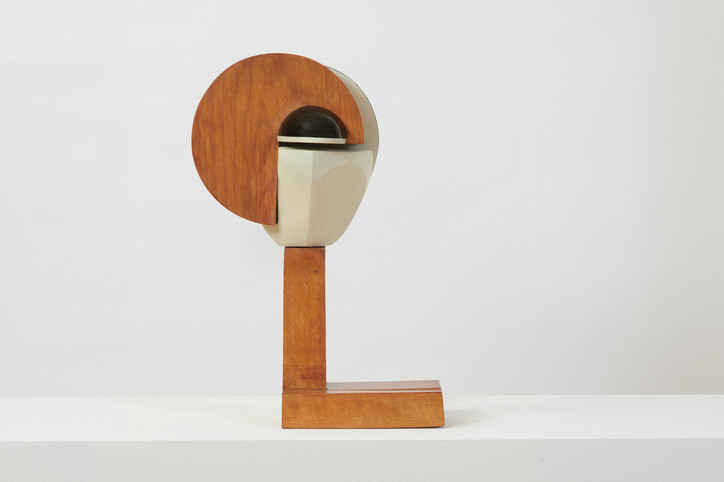
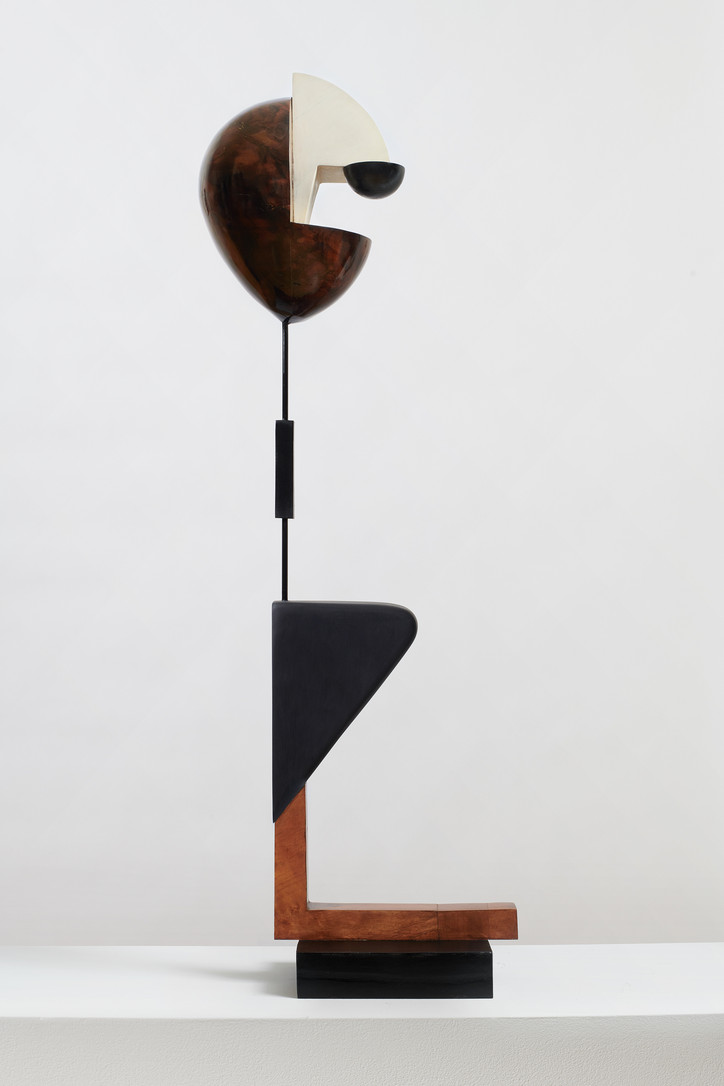
The construction process usually begins with a simple x and y axis drawing and from there on I integrate geometric forms. Its origin is kept in relation to the human body: the 0 point representing the center of an average human body. Once that is in place, I start shifting the forms depending on what I am setting out to build. In Matrose (2018) for example, the extended line representing the neck means a challenged relationship from body to head—the distance is too long, too thin and evokes the sense of a fragility, yet I can counterbalance that fragility with a heavy head, perhaps leaving a negative space that will find its volume again by creating an overly extended base. Its enjoyable to me to find the different ways to balance a challenged character into a solid structure and also to find beauty in the different ways it can function. There is something rational in the balancing act that I find comforting. To recognize and re-organize the spatial dimensions as well as distributing their balances in relation to a human body—even though abstractly—and to remain in the nature of each character is the part I very much enjoy.