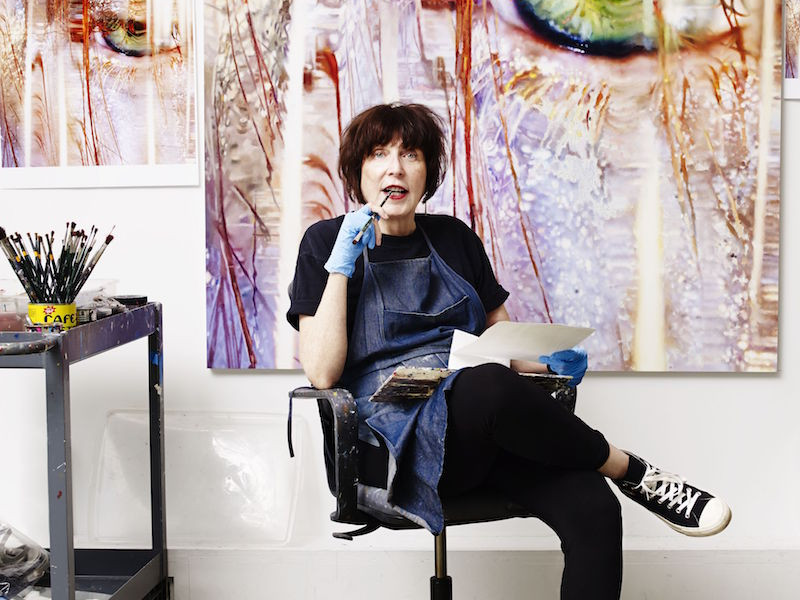


office met with John Bock the day after the opening to talk about barber shops in Austin, Texas, the fleeting nature of desire and the fact that you can use anything as a medium—even Pepto-Bismol.
Tell me about your horror musical.
It’s true—it’s a horror musical. I did it for a museum in Austin—The Contemporary—and we shot the film in four days. In the end, it was 60 minutes long. The story is about an uncanny barber shop with all different kinds of people. Everything they do is abnormal—they tell stories and sometimes, they do different things with uncanny objects, then they sing. It was mostly improvised—I asked them what they like, and one of them said they like funk, or whatever band, so I'd have them sing a funk song and a song by that band. The Spanish guy was a great moment—suddenly, he said he was a singer and could play the harmonica, and it just went from there.
So, a big part of the process was that it came from Austin and the people there?
Yeah, I took an Austin barber shop and made it uncanny. The lead character disappears in a time warp into a hut, then a jungle, then suddenly, she stands in front of her own little apartment and looks in, and she sees herself. There’s the twist. What I liked most was the time in the barber shop—it’s kind of magical, they wait there and they switch off the brain and try to relax. It’s Americana, but it’s also a ritual. I thought, 'What happens when they’re there all the time?' Each day, they go to the barber shop, and they’re with each every day, with all the same guests in this same shop, and they don’t even cut their hair. They do other things though, little miracles and rituals. Then they’re singing. It’s a little bit like a '70s sitcom or a soap opera—like, All in the Family.
How did you decide on a barber shop?
We relax in a barber shop. It’s different than a coffee shop—everyone knows a coffee shop—but a barber shop is more for males, for shaving; a woman goes to a salon. I like this atmosphere where the guys are there, their shaving, cutting their hair. It’s a man’s world, but I was drawn to it, I don’t know why.
Right. But then the lead character is female.
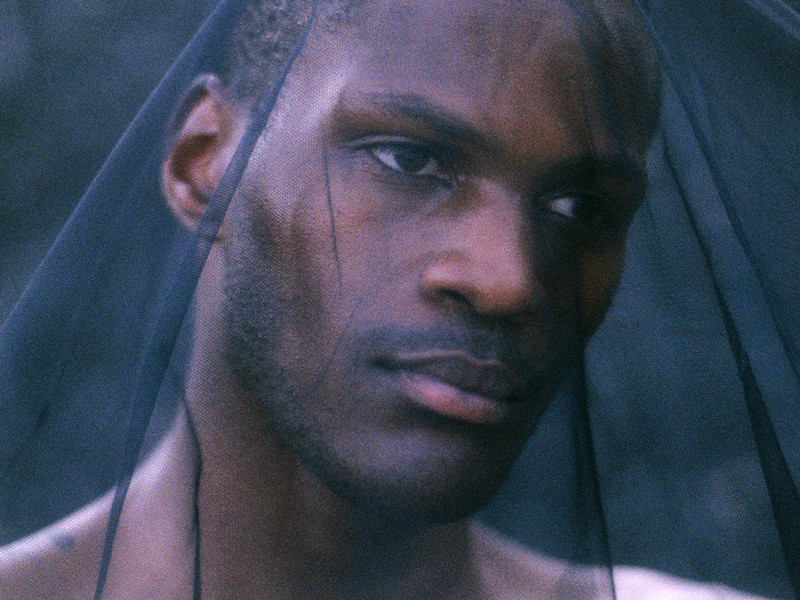
It’s also a little erotic—this young girl and these old guys. But also, I wanted to incorporate different ethnicities—Mexican, black, white. But this is Texas. First, I looked at the faces.
What about the faces?
Oh, they look very good, right? You can tell something from them—the faces tell stories. It’s very easy to shoot animals, and to shoot old men and women because their face speaks in the so-called wrong way. They have so much experience—that's why I don’t understand why Americans get facelifts and all of that.
I was just talking about plastic surgery with another artist.
Yeah, it’s just, why? The thing is, your face is like a painting and it changes, but it’s the best thing you have. Normally, when you have a car, you keep it—only when you crash it do you need a new one. But with a face—it’s crazy.
I overheard some talk about cycles and I noticed a lot of spinning in the video.
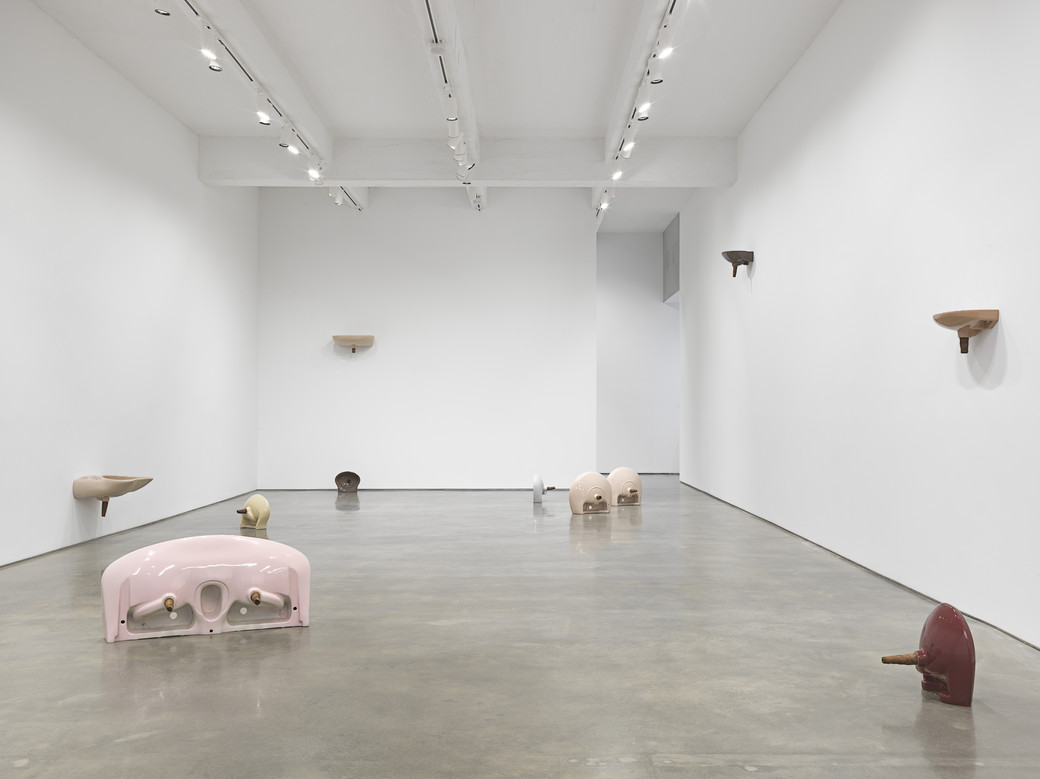
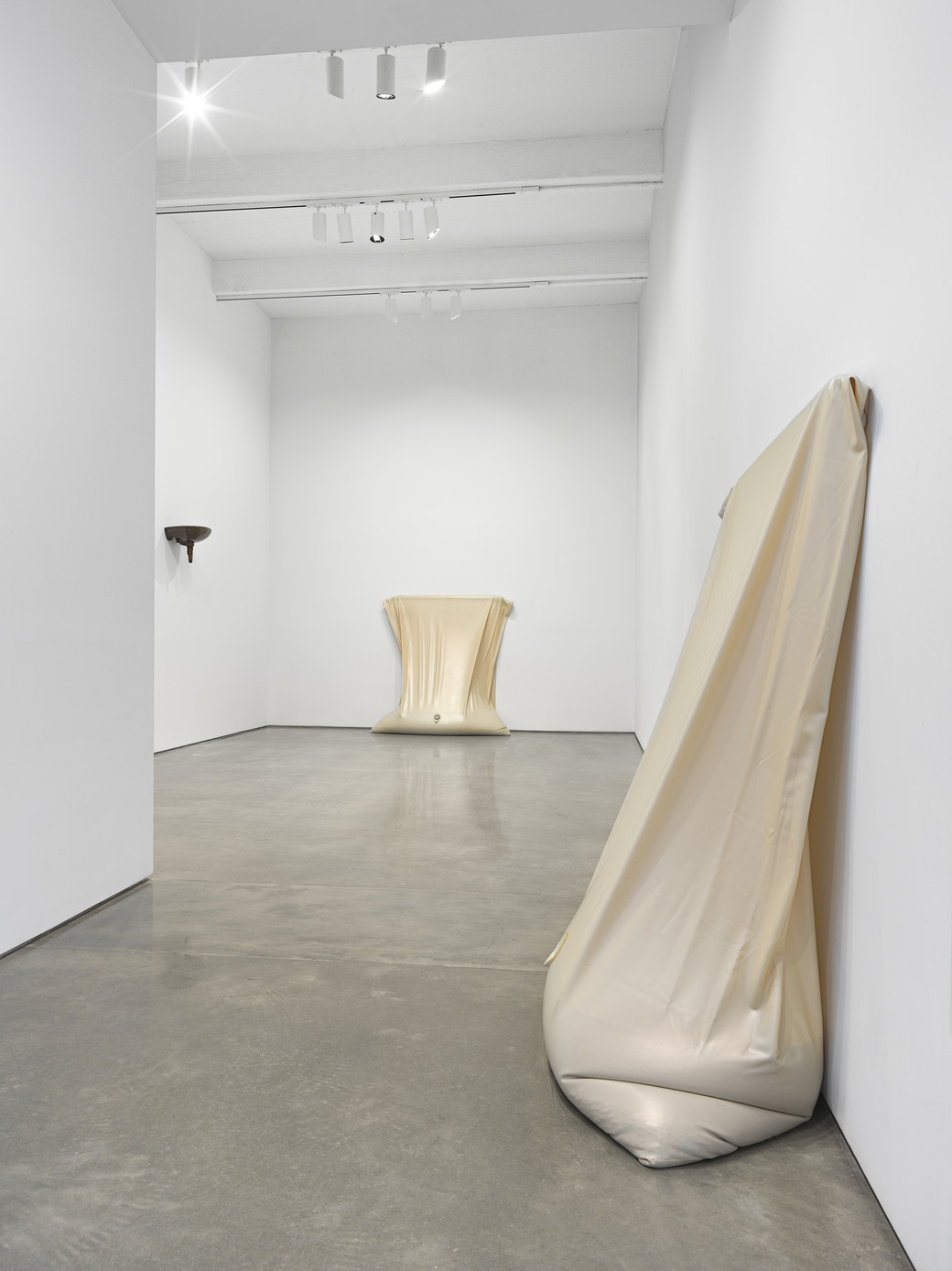
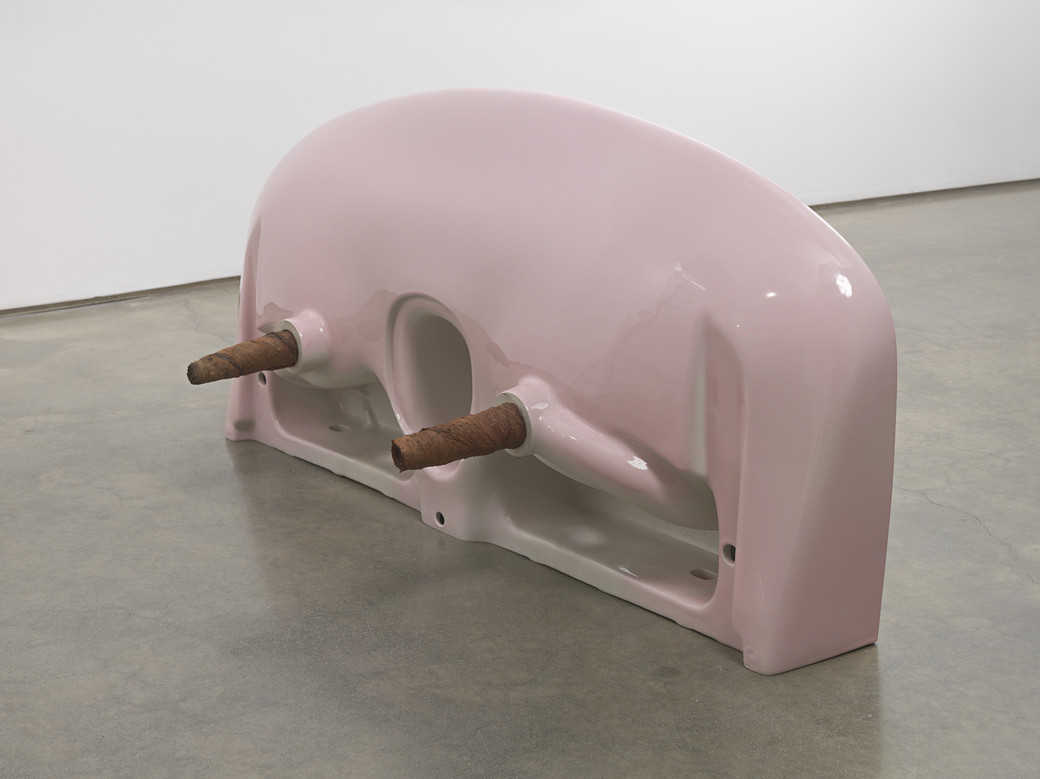
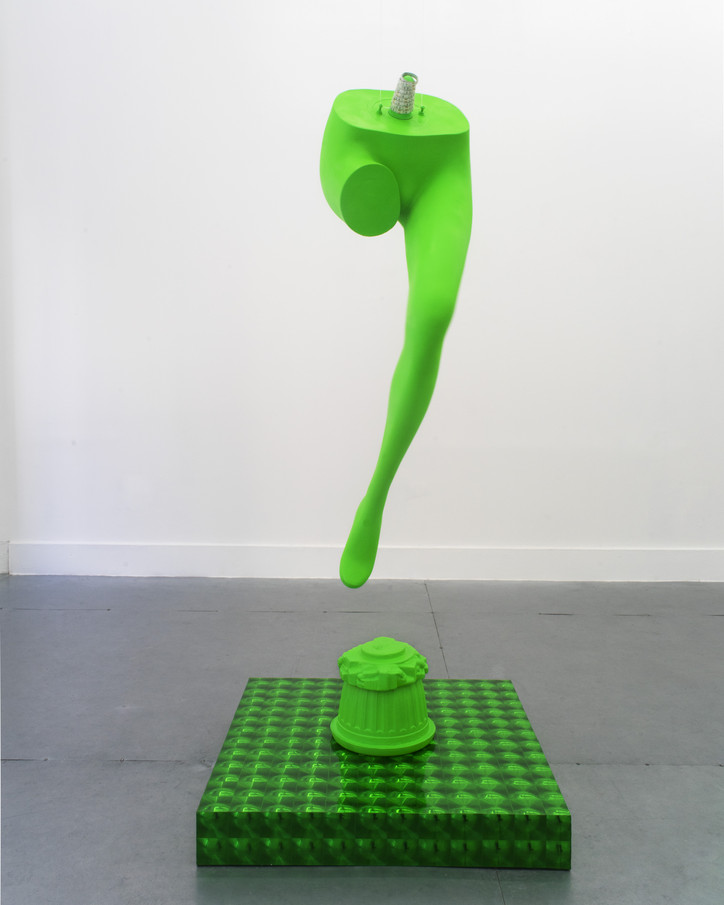
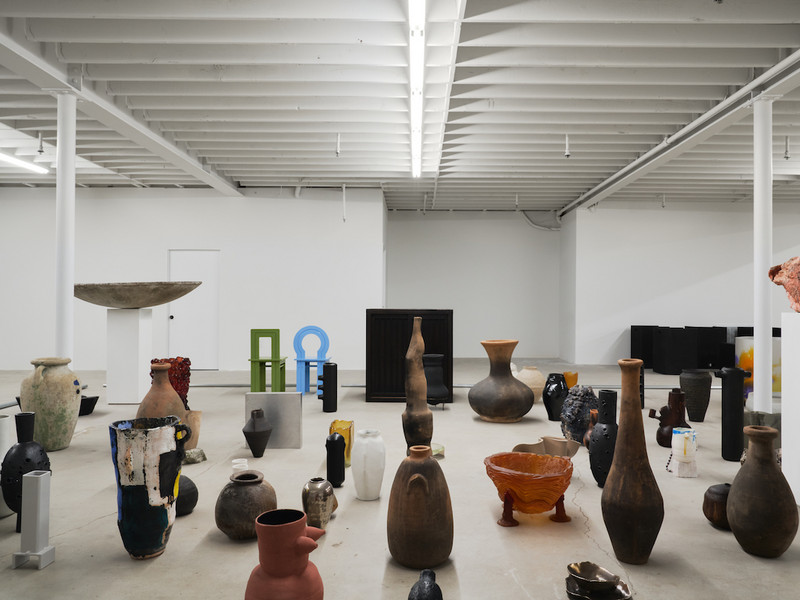
And doubles. In the exhibition, there are pairs—two plates, two silicone creature objects in the barbershop—they are like twins, mirrors. And then I built not only one object, but two—and they come together.
How does the performance play into that?
This was a big improvisation, and it was the first time I’d done it. Normally, I work with a script, and learn text, then recite it. But in this case, I wanted only to be there and do something.