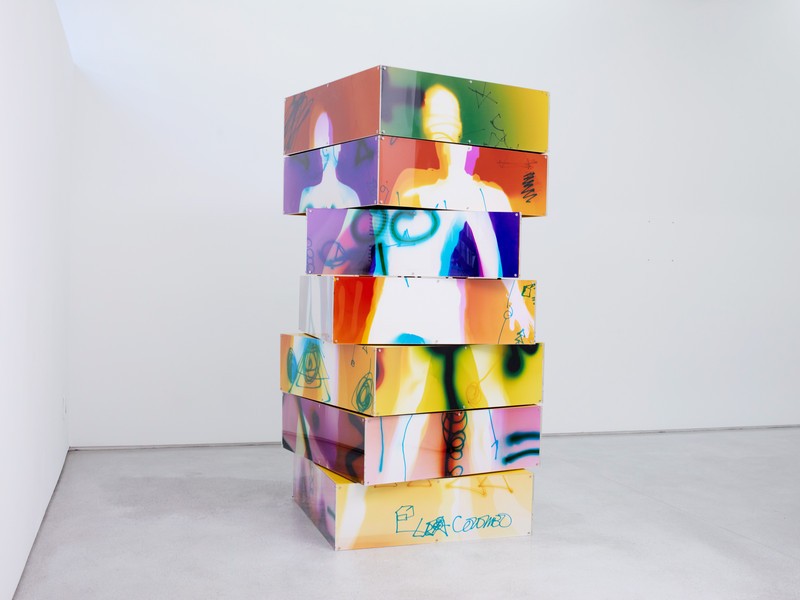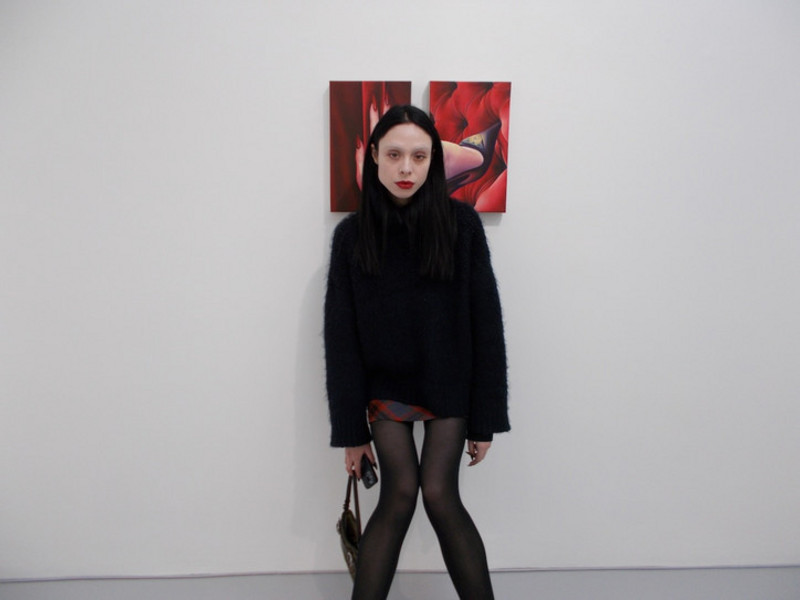

Still Water, Circling Palms, which runs through August 3, is a frankly trippy look at how blurred lines get when it comes to natural disasters (like hurricanes) in the digital age. Now that I’ve probably confused you, like how the fuck does she turn screenshots into stretched linen?, keep reading to hear the artist explain her process, herself.
Loom weaving is a very old art form, and internet trends are, of course, new. What first inspired you to merge digital and tactile art making processes to create your work?
I first fell in love with weaving’s relationship to the hand, then fell in love with it’s relationship to the digital. The smallest unit of woven cloth where one single thread crosses another is like a pixel and operates on a gridded logic with a horizontal and vertical structure at its core. Weaving also has a direct link to early computing. The earliest computer maker borrowed a punch card system from the industrial Jacquard loom to store and process information. So there are already established links between computing and weaving. I’m playing with that even further in my work by looking at contemporary digital culture through a slow and tactile lens, using hand weaving and printing processes combined with commercial inks and synthetic materials that are common in advertising, marketing and fast-fashion industries.
It’s interesting that you use random algorithms to create your images. What part of your process is planned, or structured?
I search specific hashtags and geotags or browse websites and take screenshots of images and text I want to work with. This is a slower process, but allows more specificity in my collection strategies than sifting through huge dumps of images that I was amalgamating with the automated process. So the way I gather source material is relatively structured, but also unplanned in that I don’t go into a specific category or hashtag with an expected result. I let trends reveal themselves and find repeating motifs or unexpected images. The final weaving process is where I control how much of the source files are left legible or are distorted and erased.