ESCHER. The Exhibition and Experience will be on view at Industry City until February 3, 2019, in Brooklyn.
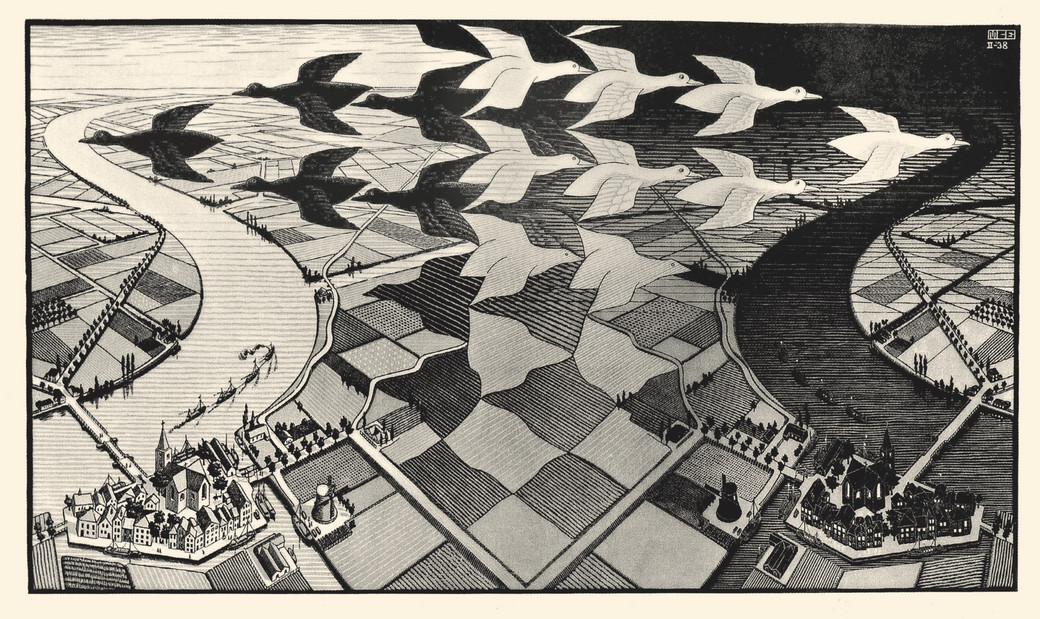
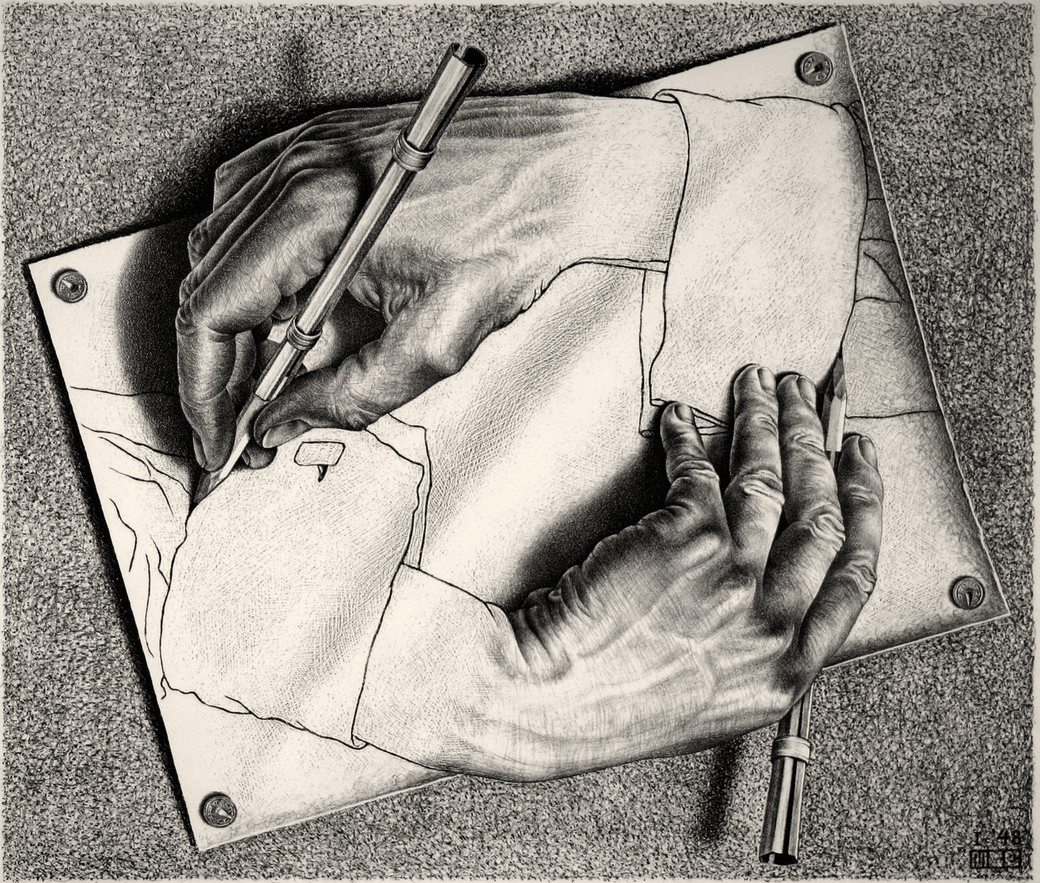
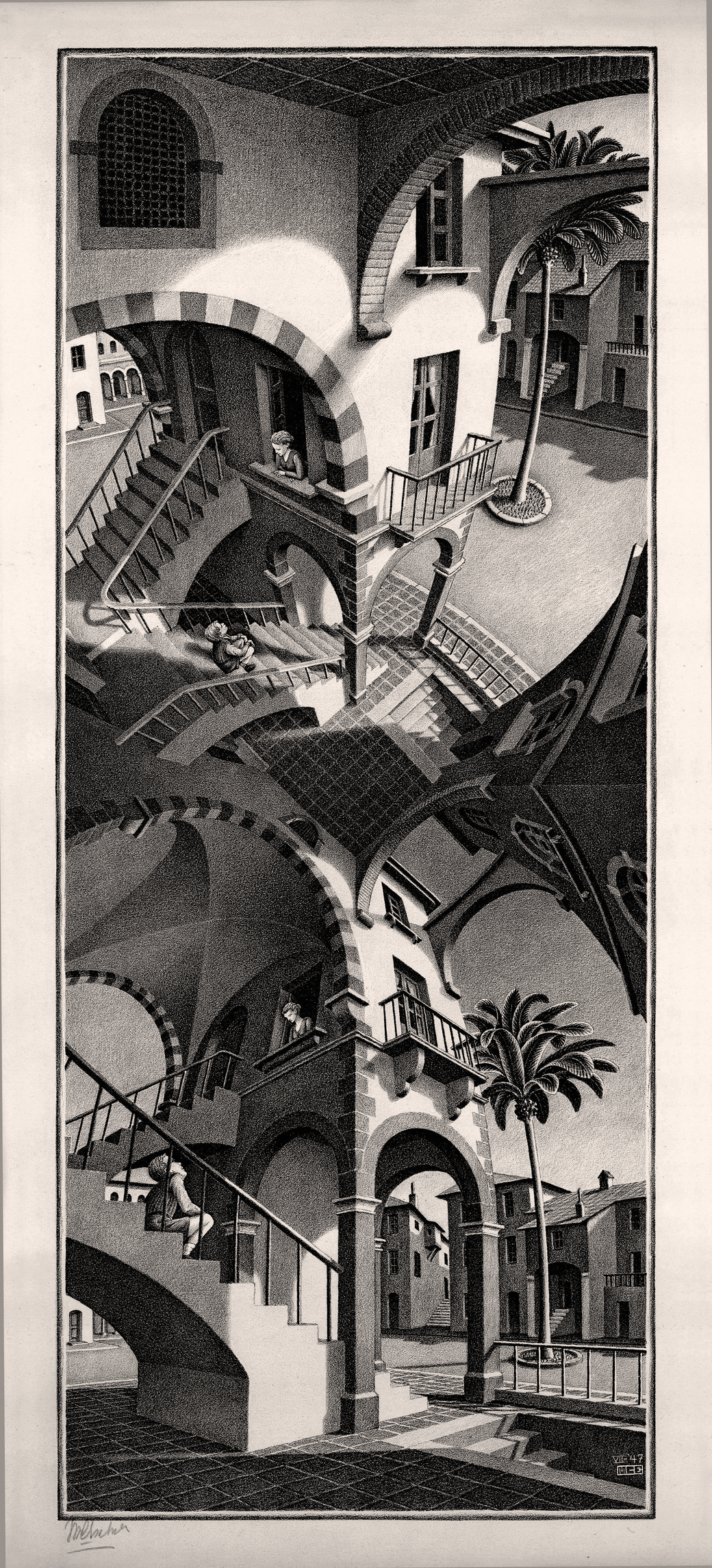
ESCHER. The Exhibition and Experience will be on view at Industry City until February 3, 2019, in Brooklyn.
So tell me about the show.
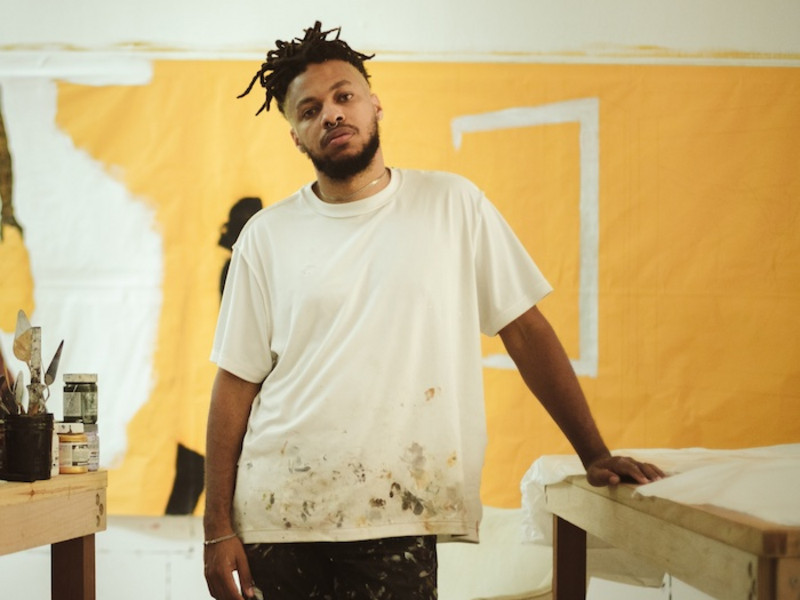
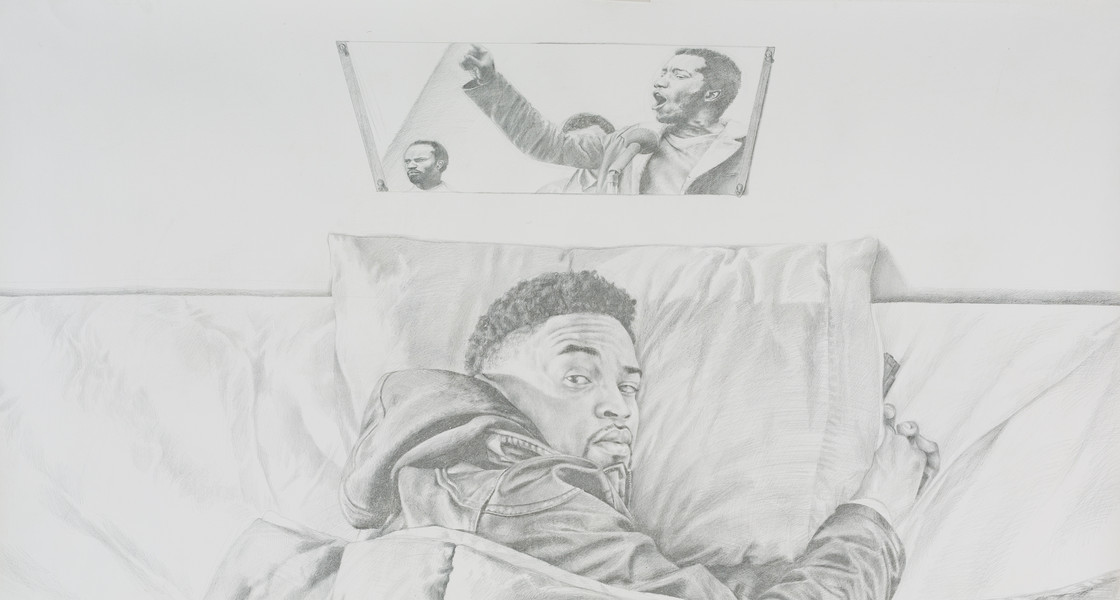
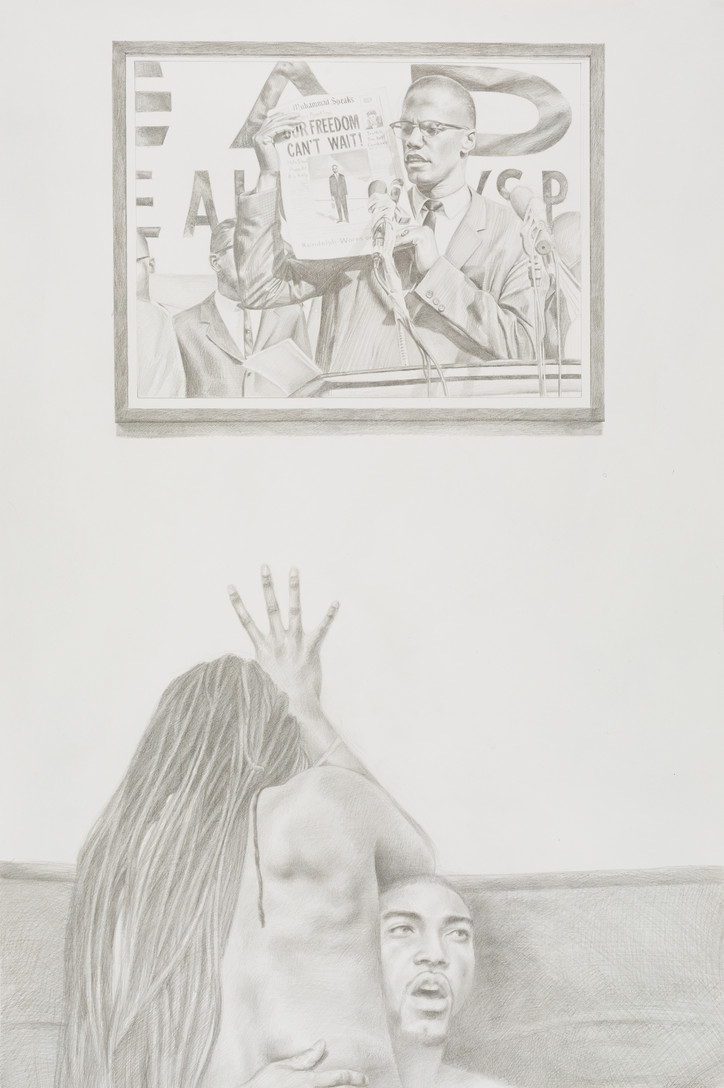
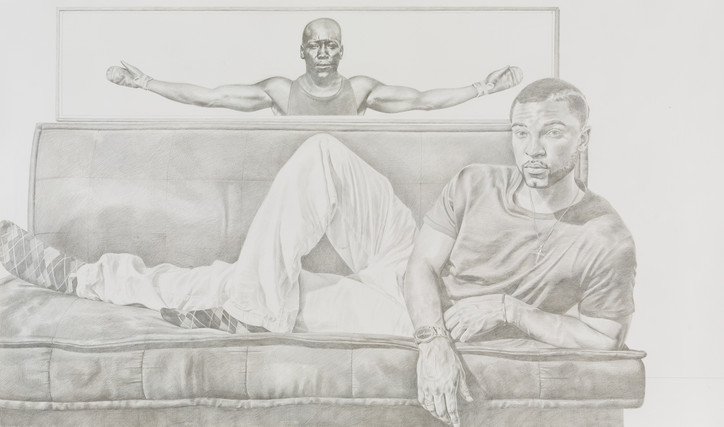
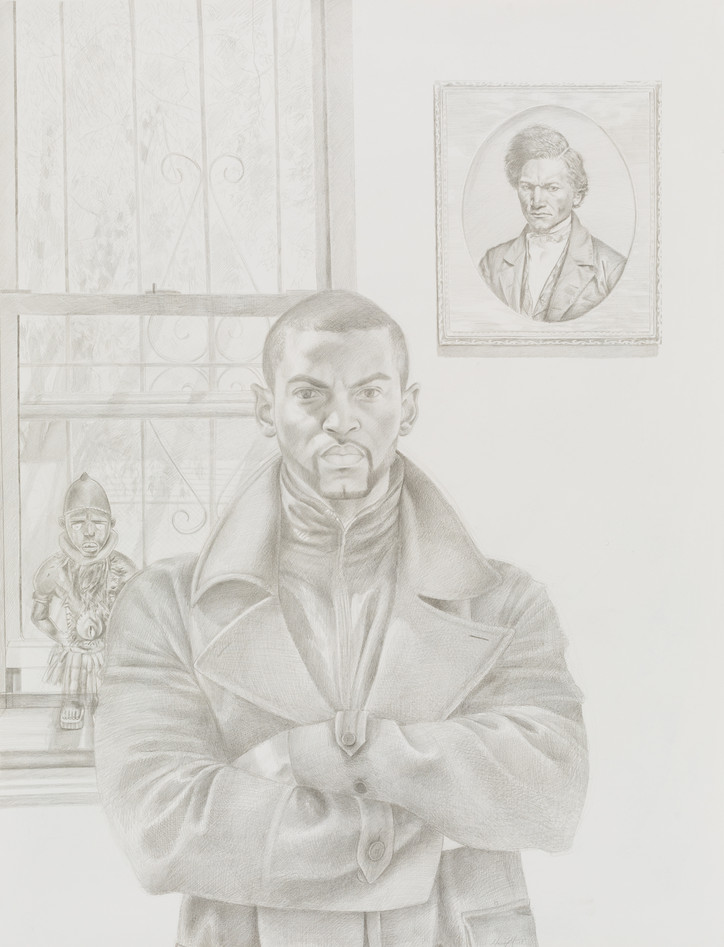
I guess the majority of the work in the show started around the idea of what it means for black men to relax, to rest. I started by doing these silver point drawings, so the idea came from me thinking about myself — before I was doing a lot of paintings of black women, thinking about black women in power and how to bring their images to the forefront of art and painting, but I got into trying to work on myself more, so I wanted to work on black men in America. I was thinking about the police killings and all the stuff that’s been happening and I began to think of it as a triple portrait — of me, an image of Frederick Douglass to the left, and then an N'kisi figure to right of me wearing a jacket. I just wondered, is it possible to show a black man relaxing? but at the same time make it powerful?
So that’s how it started. So then I had a seizure, then brain surgery — it was a lot. I had to recover from the brain surgery — I had the surgery in August of 2017, it hasn’t even been a year yet. But after that brain surgery, it made me think, well, in the moment when we’re forced to recover, I just started to think about what does it really mean for black men to rest, what does that look like? So I started thinking about historical figures like Martin Luther King, Malcolm X, and Googling images with searches like, “historical black men sleeping” or “historical black men resting,” and it was extremely hard to find. But in their moments of revolution and at the podium and all that, they had time to spend with their families, to take vacations, so me being forced into a state of I can’t do anything, forced to spend time recovering, made me think about, in America, especially for black men and black women, of like constantly having to work work work work work work — and not really having the time to think about self-reflection or care for oneself or even taking the time for oneself. So that’s where the work for the show is coming from.
I once heard on a radio show the question posed during a survey was, “What is your number one guilty pleasure?” and the number one response from Americans was “sleep,” which is just patently absurd since we need to sleep in order to live, so to feel guilty about sleeping is just insane to me — so I think maybe you’ve touched on something that’s true of American culture in general.
It’s definitely an American thing, I just think it’s more potent for African Americans. One, because you fall into certain stereotypes — if a black man is relaxing, or just chilling or whatever, then he’s seen as lazy, there’s this concept of laziness — what does that mean? For a lot of African American families, they don’t have a lot of wealth built up to, for example, take a long vacation. It’s definitely an American thing, even when an American goes to relax they’re constantly thinking about work, or bills, or when they’re going to get back and what they’re going to do work. For me specifically, I was thinking about these famous revolutionaries like W.E.B Dubois or James Baldwin and how they had to get out of the American psyche — James Baldwin moved to Paris, W.E.B. Dubois moved to Ghana, Malcolm X went to Mecca, and I think he spent the most amount of time in his life relaxing when he went to Ghana. Muhammad Ali had his belt taken away so he was forced to relax, and then there’s this machismo thing, this macho perception of black men — if you Google Martin Luther King or Malcolm X, they’re going to be very powerful images, but it’s extremely hard to find them just relaxing with their family. So I’m trying to get to what that looks like and how that’s perceived, and combining it with my personal experience. But yeah, it’s definitely an American thing — like in Italy, their coffee breaks are two hours, you know what I mean?

Do you feel different after the brain surgery?
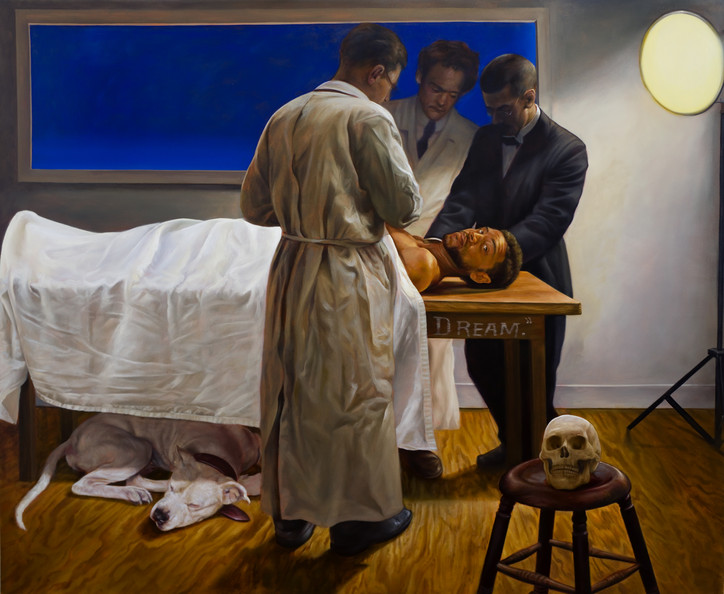
I look at things differently, I don’t know if I necessarily feel different. Everything just happened so fast. I’ve never had a seizure before — that happened in July, and then I had the surgery in August. And they found a tumor in my left central lobe, that’s your language center, so they had to do a very specific type of operation. After that, I just wasn’t sure what was going to happen — am I going to be able to make art anymore? I had a lot of questions. Of course something as traumatic as that is going to change you in some respects, but I feel the same. But it made me think of traumatic moments, from a situation like getting arrested and beat up by the police, or a situation of having a traumatic moment of having a brain surgery, or just looking at constant videos of black men or black boys or black girls dying by police officers — what effect does that have on the mentality of a people and how do you take a break from that? What is rest from that look like? Is it even possible to take a break from that?
There’s an element of force that you keep touching on — being forced to rest. It’s kind of like a prison cell where they’re being forced to just be on this bed. Did you think of that? Would you be happy with that correlation?
I didn’t initially think of that, but it’s just a part of American history so it’s implicated especially when you’re talking about black men. I was talking to this artist, I was in this show in Charlotte, and he was wrongly accused and imprisoned for two years, and then he was exonerated and released so he makes work about that — and we talked about the similarities of being forced into a situation, of him not having control over his body, similar to me in far as having a tumor and surgery, it’s something traumatic happening to you and it’s not having control, for me it was different but for him he saw similarities.
There’s a couple pieces in the show that deal with Jack Johnson, who was the first heavyweight boxing champion who was black, and basically the way that they took his title away was by arresting him, by basically manipulating the law to take the belt away. This was in the 1915, and they just didn’t like him being the champion, so they literally forced this belt away from him, similar to Muhammad Ali saying he didn’t want to go to Vietnam so they took the belt away from him, forced him into a certain position. It has to do with force, but also with your own intuition, your own options, it’s both of those things. The difference is James Baldwin choosing to move to Paris, or Muhammad Ali being forced to have his heavyweight title taken away.
Where do you see black culture and the black experience in the United States today — where is it at? Do you feel like it’s better? Has it been incorporated into the overall culture, or is that even a goal?
I don’t necessarily think that’s a goal — I know my personal goal as a black man in the United States is just to be seen as human.
What do you feel white culture sees you as?
I think they see me as a lot of different things. I think that depends on who you’re talking about, depends on if we’re talking about police officers or white suburbia or specific communities, I might be seen as dangerous, for other people I might be seen as invisible. I think it depends. I hear this a lot, ‘Are we at a turning moment? Have we seen progress as far as blacks in America?’ I think there has been, but also I am critical of that because I think what happens a lot of times in history, like in the Civil Rights Movement and before, people like to say, ‘Oh, it’s not as bad as that,’ but when we actually look at how history is set up, like in the 60s, if we talk about the Civil Rights Movement, a lot of what Martin Luther King did, the structure of that system was making things available to photograph, he organized those marches so that the outrageousness of people getting beaten was seen on camera. The same thing is happening now. I firmly believe that 30 years from now or so, kids are going to say, ‘Oh my gosh, you lived in that time when police were shooting all these kids and things, what was it like?’ and not everyone is going to be able to say, ‘oh I was marching,’ no some people were sitting on their couch, or reading a book, some people don’t see it at all except for on their tv — I think what happens is very cyclical, which is horrible — it’s like, when are we going to get to a point when we really move forward?

"Recovery" will be on view at David Klein Gallery through August 11, 2018, in Detroit.

From painted bronze, leather, wood, marble and neon, Trayte has brought to life bulbous melons, gourds, confections and deli meats that look spookily edible. office is eating it up, so naturally we jumped on the chance to ask the artist about himself, his process and the role of functionality in art.
You have an interesting background as a chef and metal worker. How does that impact your sculptural work?
Working both as chef and metal worker has influenced the way I think about materials greatly. The kitchen is a busy, hectic place. It’s hot, stressful and dangerous; timing is critical; and you have to work as part of a team. It’s such a good place to learn important life skills, but also as a place to challenge yourself. I worked in an unusual restaurant where the head chef was willing to take risks, experiment and try new things. It enabled me to think about food stuffs in new ways when I was studying for my undergraduate degree in Fine Art. I think I learned more about making in the kitchen than I did while in college. Working as a metal worker came later, at a time when I was looking to acquire as many skills as possible. After my work experience at a foundry, I was taken on part time and spent many years fabricating work for various well-known artists and galleries whilst working in my own studio. Welding together complex and sometimes huge castings gave me the confidence to embark on my own projects with equal ambition.
The shapes of your sculptures are unusual and provocative. How do you arrive at them?
I appropriate forms and materials from the natural world and am always on the lookout for odd looking plants, fruits and vegetables, etc. Quite a few years ago I visited a giant vegetable competition in the UK and met with people that dedicate a lot of their spare time to pushing the limits of what is possible in growing things. Every autumn I visit them at this competition, or in their greenhouses and find huge and weird looking things. These are then moulded and eventually cast in various materials, but usually bronze.


Can you tell us a little about your process in general?
My work will always begin with a drawing—something simple in ink and felt tip marker. It’s very helpful to visualize how a sculpture or piece of furniture might come together and quite often it evolves during this process too. It might be influenced by something I have seen whilst traveling and researching, or I may have found a strange form to mould or material to use. Then I have to assemble the various elements, which might involve bronze casting that can take weeks, or water jet cutting that I have to make CAD drawings for. Once the pieces are assembled, I work in the studio welding and metal working, then rendering and painting. Some parts are powder-coated off-site. It can take a long time from start to finish and I usually work on many pieces at once. They come together like a cast of characters or weird family members.
What changes in art when it becomes functional?
Fruiting Habits is the first opportunity I’ve had to put together so many functional things in one room. I’ve made furniture for exhibitions before, but this is the first for many aspects that you see here in the show. Whilst function can dictate certain proportions of a piece, there is still so much to work with. Even just considering the materiality of sculpture is exciting. I have been using various wool fabrics from traditional mills in Yorkshire (which is where I was born) along with unusual leathers and hides for upholstery. As an artist, this has been a sharp learning curve, but also a very rewarding one.

Your work is informed by the "language of color", can you tell us what that means?
I have amassed a collection of unusual food wrappers from around the world. Wherever I travel I always end up in a bodega or supermarket—often spending hours looking through the weird regional selections. In studying these I appropriate information that influences motif, design and colour etc. I’m interested in how the food industry goes to great lengths to persuade us to behave and consume in particular ways.
Fruiting Habits is your first solo show in the US, how does that feel?
It is really exciting to be in the US and to work with such a fantastic team. I’ve been to New York quite a lot over the years, but this is the first time I’ve exhibited properly. It’s great to be able to respond to such a vibrant place and to challenge myself, both in terms of ideas and also materials. The past six months have been intense, but I’m very pleased with the results. I’m also really looking forward to what comes next, to new projects and challenges in the future. I’d love to build a water park one day or make a bizarre café for a museum.