For Lovers
Lamar is a muse for the ages, a lens through which we can explore the love within both our hearts and others'.
Check out the video and photos below.
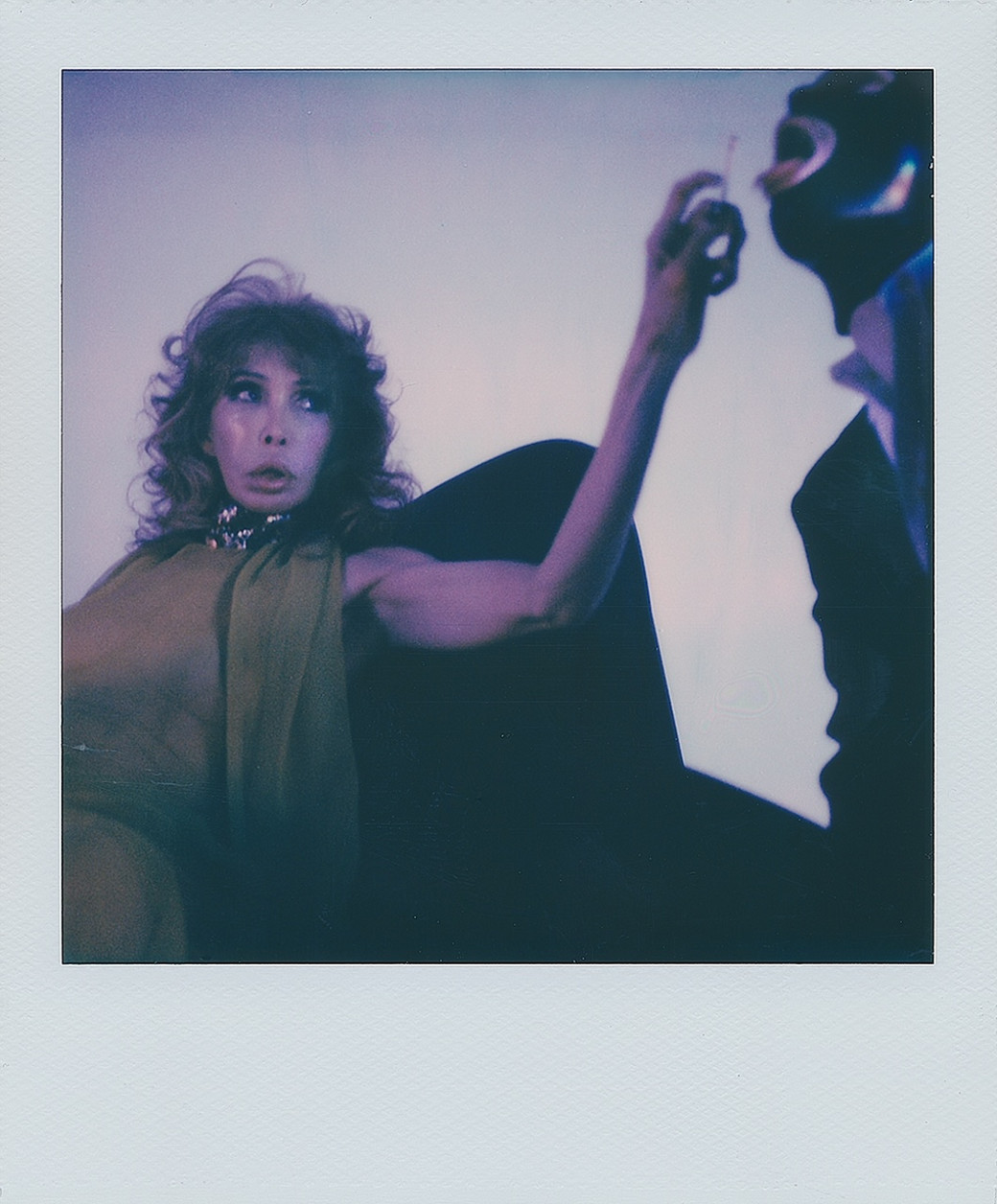
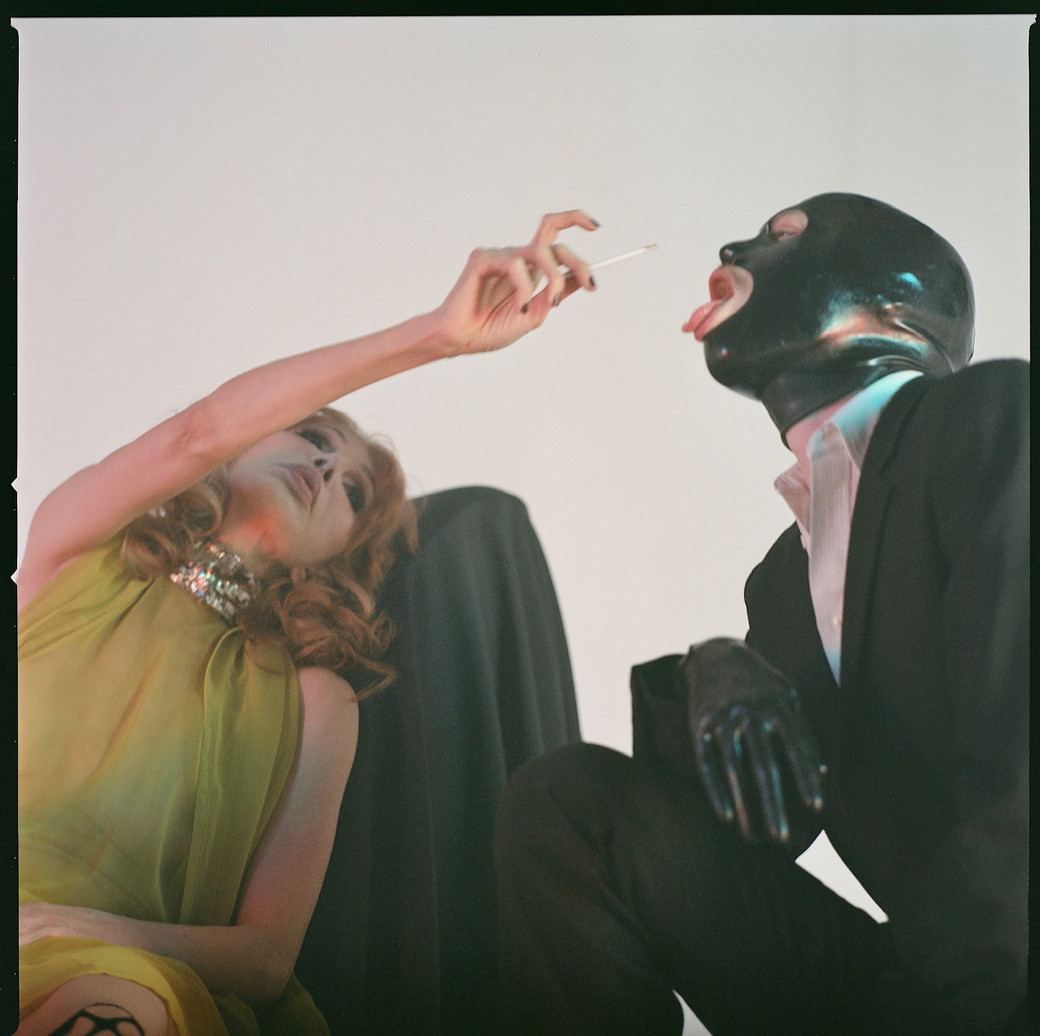
Lamar is a muse for the ages, a lens through which we can explore the love within both our hearts and others'.
Check out the video and photos below.
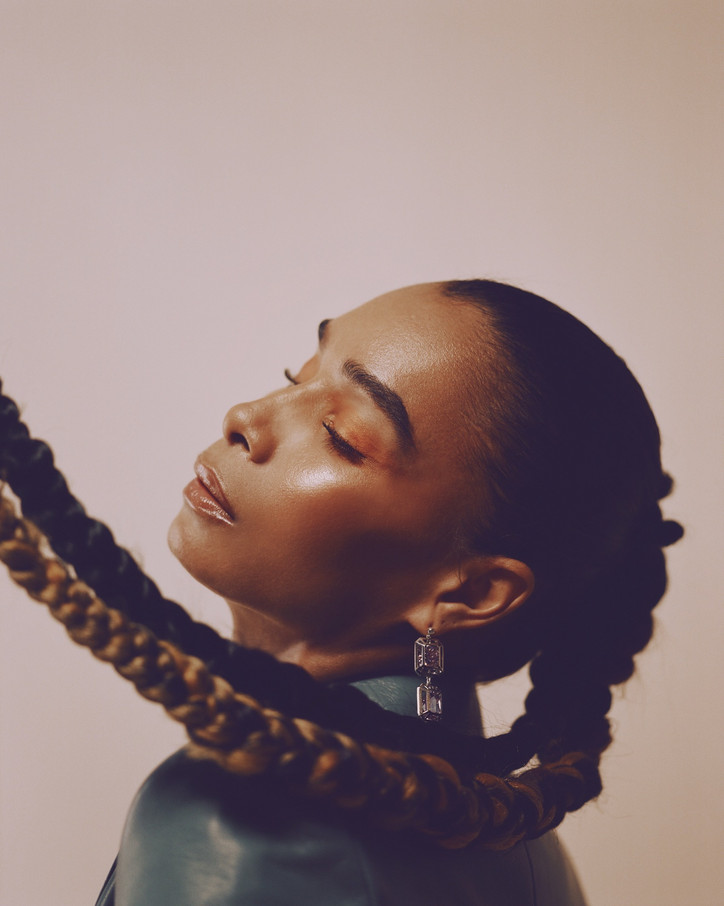
office had the chance to enter the Metaverse and explore Dream House before sitting down to speak with Leiomy about her experience taking part in the pioneering virtual community. While the development of new technologies and ways of interacting with our chosen communities and families are undoubtedly exciting, Leiomy emphasizes the responsibility to stay true to the culture and heritage of Ballroom and use its history to inform our ever-developing technologically advanced communities.
How did you come upon stepping into the metaverse and exploring this kind of space to interact with your art form, as well as your fans?
Well for me, I found out about Metaverse and Oculus via my own gaming experiences. I love gaming. I now have the opportunity to speak on this panel in the metaverse and discuss the idea of chosen family, and also learn how to create an avatar and use gestures to get different facial expressions and stuff like that. It's been really, really fun. I'm looking forward to possibly teaching dance class through the Metaverse because the movements are really so fluid.
I’d love to talk about your experience here as someone who so prominently expresses herself through your body movements and physicality. Now that we are starting to understand a new form of physical presence with this platform, how do you reconcile your relationship with your real-life physicality with existing in such a virtual space?
It's still kind of something new. I'm getting used to it but I am really, really so interested in just how everything moves. And I'm able to do some voguing here like that's so cool. I can only imagine how much further we can get with this technology but I feel that so far it's really fun. I enjoy everything about it. The fact that you can even make facial expressions and give high fives and put your hands up to get confetti…
It’s also nerve wracking, and quite vulnerable compared to what a more traditional online experience is. Ballroom too is such a space where you have to make yourself vulnerable to others.
Yeah it is. Because you know, you have to get out there and get in front of people and be judged for whatever you're representing. That can be very tough.
What was your experience the first time you stepped into the Ballroom community?
I was introduced to voguing through a VHS tape which is so different compared to how so many people now can just hop on YouTube or social media and find out about it. I feel like my introduction to Ballroom was more so me finding myself as a woman of Trans-experience and finding a place where I was able to be myself and showcase my talents in a competitive way. But then also in a way where I feel like voguing shaped me into being who I am today. I was able to learn how to express myself as a young teen and I was able to, you know, express my emotions and disappointments and my happiness and every every emotion you can really talk about through it. That's something that has been a huge journey for me: being able to express everything that I've gone through through my artistry.
Now, being the mother of your own house, you have a global scale of respect and admiration. What kind of responsibility do you feel accompanies that?
I've been a mother even before starting my own house. I've had kids who I've been mentoring for years and have been under my wing. And I feel like as I’ve been becoming a house parent, that has become more of an international thing. I was able to create a family and a house for kids around the world and bring together so many people who wanted to be a part of ballroom, but didn't have the proper mentorship or the right leader. A lot of times, people just come up wanting to be a part of ballroom just because of the excitement and entertainment of it, but they don't understand the culture and familial aspect behind it. I wanted to get a place where I could provide a family to those people who didn't have one at home themselves.
There is visibly a new crowd of people who have been propelled towards Ballroom as a result of the international exposure. Shows like Pose, and then later Legendary which you are a part of, have brought the community into the limelight. While it’s fantastic to see a range of people be introduced to and explore the history and culture of Ballroom, do you think that there is a reason it has been very intentionally gate-kept in the past? Will Ballroom need to continue gatekeeping as a form, almost, of self-preservation?
It's still important to gate-keep Ballroom because a lot of times, yes, ballroom is getting all these opportunities in the mainstream and all these things are starting to open up for people in the community. But a lot of times those opportunities, even though there have been given or open to ballroom people and the people who are actually a part of our own, those are not the people that are able to take the opportunity because a lot of times it's through dance agencies for instance, and they're looking for voguers and they're looking for people who are part of ballroom and here comes somebody who just learned about Legendary last month and then they’ll try to take the gig. That's why even till this day, I’ll constantly call people out and say “sorry, but not sorry, this is not proper. This is not somebody that should have had it.” I don’t do this in a sense of hating, but more so because there's so many people who could have had the opportunity. Brands who choose the wrong person are ultimately cheating themselves and they're cheating their viewers because they're not giving them the proper, authentic talent. I still am a firm believer in this and I stand behind gatekeeping because it's important that we still have boundaries when it comes to getting opportunities through involvement in a Ballroom community.


Leiomy's avatar pictured in Dream House within Horizon Worlds.
On Legendary as well, your critiques are famously very candid and they express exactly what you're talking about, which is that it's about more than just the movement. It's the emotional connection. The dramatics are part of that real-life, lived experience that translates through the story that you're telling. How are you looking forward to sharing those experiences physically, and dramatically, where we are now: in the Metaverse?
I think it'd be fun to teach it like a voguing class. Even if it's just hand performance. It would be fun to get people involved this way. Also, in live classes, you come across people who clearly don't want to be seen. A lot of times they're joining the class, but they're in the back, but I'm the type of person that when I'm teaching those classes and I see those people I push them to the front and I'm like, no, like, come to the front. Don't be afraid to mess up, don't be afraid to come into this space. That's what I'm here to do: to teach you. So I feel like teaching classes through here would be interesting dynamic-wise. Even having panels where you can have a couple of the icons sit around and just share the experiences with others and share how it was in their eras and when they came around, opposed to, you know, nowadays, where things are far more accessible.
Do you think that this is also going to provide avenues for people who may not have the physical ability or mobility to participate fully in vogue and Ballroom to come into that community virtually?
I think it does open things up, especially for people who are not as mobile. This is a place where people will have so many endless options and endless things to do which is pretty inspiring. I love the fact that you even brought that up because I'm sure a lot of people don't even think about that. We should never forget about including everyone in our community. I’m looking forward to hearing from someone who has been able to experience new types of mobility here.
Is there anything that scares you about the Metaverse, considering how different it really is from real-life?
I haven't looked at it in that way. I honestly feel like this is more of a safer space for a lot of people where you don't have to meet people in person. For example, a lot of trans women are being murdered right now. Something like this can open up places where you can meet someone and try to get to know them on a better level where you don't have to go out of your way to meet them and put yourself at risk of violence. Even for trans kids who want to be able to be in spaces where they're not being pointed out because they're trans, who are now able to live experiences and share things with other people and not always have to be surrounded by their physical reality. It is inspiring.
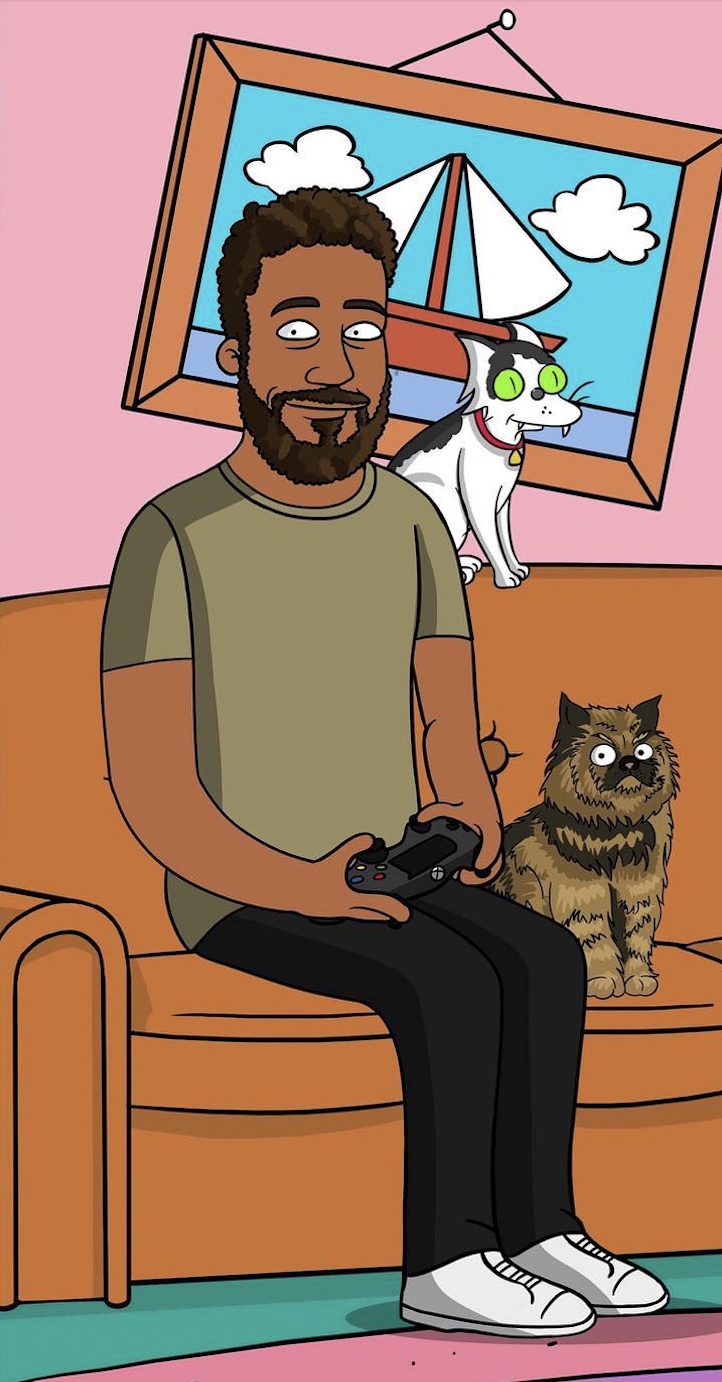
I want to get into all of your amazing accolades, of course, but first, there’s important business to take care of. You’ve spent time in Philadelphia and I also grew up in the Philly area. What is your favorite cheesesteak spot?
I actually only lived in Philadelphia until I was nine years old, and then my dad moved us to Baltimore to try and get us out of the hood. The Wire wasn't out then, so he had no idea what we were walking into. I spent time in Germantown though, but I never really spent enough time there to find a favorite cheesesteak spot. I know Pat’s is one of the big ones and there are a few other popular places, but my friend took me to a hole-in-the-wall place once and that was probably the best I’ve had.
It’s always those types of spots that are the best actually. Do you feel that spending time in cities like Philadelphia and Baltimore has helped you persevere and succeed in navigating a rather difficult industry?
Definitely, living in Baltimore and Philly for a bit taught me to work hard and made me a little tougher. Being from the East Coast, I think people have a bit more hustle in them. When I moved to LA, I think I learned how to slow down a bit. But I think my upbringing totally shaped me and the way I approach my work.
What is the largest obstacle you faced in your pursuit of becoming an animation producer and writer, and how did you power through that?
I tried everything when I got to LA. I was editing, writing, producing, and acting — I wanted to do anything that would get me ahead. At one point, I had written and produced 2 independent films before trying to pursue tv writing. I was in a movie with Kevin Hart on Netflix, so I thought getting into tv writing would be easy — it wasn’t. I still had to go back to the beginning and start from scratch. I took a writing course and really focused on my writing and started to build back up from the bottom. There was a time when I almost gave up and went back home; I was struggling to pay rent and didn’t think it was going to happen for me, so I’m glad I kept going.
You say that the indie movies didn’t exactly help you in the way you thought they would, but did the making of them still teach you valuable lessons?
Definitely — I learned how to run a team and how to fund a project. All of the things that are important to know in general in the entertainment industry. So it ended up paying off anyway.
The logistics. That’s definitely valuable, even if the path you took wasn’t what you thought it would be. Can you give an example of an episode or segment of writing that you are most proud of?
I wrote a movie that came out in theaters. I actually cringe when I watch it now, but seeing it there was probably my proudest moment. I did the acting thing once and I don’t need to do that again.
That’s the thing that a lot of actors usually say — some don’t like to watch their tv shows or movies. But that has to be the biggest moment of fulfillment as a screenwriter though — seeing your ideas come to life on a big screen, with an audience.
Exactly. I wouldn’t say it’s my favorite project, but I think it’s something to be really proud of, coming from Baltimore and finding my way through a more non-normative path.
Did you watch any animated shows growing up, and do you think they shaped your current sense of humor? And to follow that up, if you had to describe your sense of humor in a few words, how would you?
I watched a lot of South Park. My parents didn’t really like it back then, but they love it now. It’s the first tv show that truly introduced me to satire. I love the idea that comedy can be entertaining but it can also bring up important topics and discussions. I’d say that show, The Simpsons, and just other Saturday morning cartoons definitely influenced my sense of humor, but I also put my own spin on it. I became really interested in South Park and Trey Parker, Matt Stone, and Loren Bouchard’s work. I began just studying their art and how they bring real-world situations into these 25-minute episodes; I think that’s what really pushed me to get into comedy and tv writing. And if I had to describe my sense of humor, I would say satirical, sometimes irreverent, and hilarious.
I would definitely hope you’d describe your own work as hilarious! How do you reconcile writing jokes that align with your own sense of humor, but that also toe the line of politically correct, yet still comical, in the current state of the world where sensitivity can run high? I imagine this can be difficult, especially with adult animation.
My answer to that is that for me, it’s easy. I’m not an offensive person and I don’t think my jokes come off that way. Growing up in Germantown for a bit, like I said it was the hood. Then we moved to Baltimore, where we kind of lived in a suburban area outside of the hood, but a lot of my friends were from the hood. And then I moved off to LA. I feel like having those different experiences taught me how to write for all different audiences. As the executives say in the industry, I think my humor hits four quadrants — adults laugh at my jokes, kids understand them too, and so on. On the flip side, I have a script that I just finished and some of the characters are inspired by real-life friends. That one is more niche. I feel like some people watching or reading that may not understand where certain things are coming from, but there are audiences who will really enjoy and resonate with those types of jokes. Obviously, some of the writing I do is just for adult animation, but I think I’ve gotten really good at knowing how to write with a universal sense of humor.
Do you think comedy can be a form of therapy?
Definitely — I mean laughing is therapeutic. I had this existential crisis when I was in quarantine.
As many of us did.
Yeah — it was the first time I had an anxiety attack. I thought I was having a heart attack at first. I just started really thinking about whether or not what I do is important. It was actually right around the George Floyd protests, a lot was going on in the world. I just felt overwhelmed and I couldn’t stop thinking about whether or not my work mattered. I was upset that maybe what I was doing wasn’t important to the world, in the grand scheme of things. I remember watching a movie around that time though, I can’t remember what it was called but it was a black and white movie. It’s about a man who was a screenwriter during the Great Depression, who was also wondering what he was doing with his life and whether or not it was constructive. He ends up getting locked up and has to spend time in jail. While in jail, one morning sitting with the other prisoners, cartoons come on the television, and everyone starts laughing. These men, some of which were going to be locked up for over 20 years, or even life, were enjoying watching cartoons on tv with smiles on their faces. That made me realize — making people laugh is important. Providing an escape does make the world a better place.
Especially today, many people need that escape. It’s essential.
I think once I started thinking of my work in that way, I really started to appreciate what I do more. Everyone needs to laugh sometimes.

As one of few black animation writers in Hollywood, how do you think the industry can begin to foster a more inclusive community for all?
I think it’s definitely improving. There are so many tv shows that now have black directors, who bring on black producers, writers, and actors. There are surely still times when I am the only black writer in the room, but I think we’re beginning to improve. Most people, if they want to pursue a career in this industry, they take the traditional path of becoming a PA or a showrunner's assistant. But a lot of those people also have a connection or a friend who helped them get there. I didn’t approach things that way — I just took a chance, but a lot of people don’t get that chance. The industry can be very nepotism driven so my best suggestion is to try to open up ways for just anyone on the street to be able to apply for these positions, instead of just always basing everything on connections. There’s definitely still some work to do, but I know there are a lot of programs now that are giving creatives these opportunities.
There are tons of grants and programs to assist people now for sure, but I agree that there is still progress to be made. Not only are you a writer and producer, but your creativity also spans the design world, as you co-founded your own brand, NoOne. How do you traverse the design world; do you find yourself channeling a different creative version of yourself with this endeavor than in your writing and producing?
I was very challenged by this project because the creative parts of fashion are a bit scary to me. When we were deciding if we should take this on, I was so scared. That’s how I knew it was a good idea. My friend Lenard handles the more creative parts of the design process. I’m learning a lot from him. I want to learn more, so I’m taking a really open approach to this whole thing. I started to look at it as storytelling.
Exactly. Any creator, at the end of the day, is sharing a story with an audience. In fashion design, the designer is telling a story that the wearer then becomes a part of by putting the clothing on their bodies.
Yeah, once I started realizing that — that every creator is telling a story, it’s just the mediums that are different, it became less challenging. We mix traditional, utility styles with more non-traditional elements because that’s how both of us dress and how we approach life. We both got to our goals in unconventional ways.

How is your fine art practice and process similar and/or different than it is to skating?
They are a lot the same I never know exactly whats going too happen the distance is with actual fine art are so I think im trying for something profound , and ends up hurting the creation.
There’s a tone shift from the first collaboration, what inspired the color and text choices in this collaboration?
I think with the first one I was into doing paper cut out for the color , n it was something I had just tried for that moment but did not really go further with it it was fun too do I have the stuff that was not used laying around n look at it from time to time im talking about the art on the box.
How would you describe your personal style?
Always changing but some how always regognizible.
When you are making art, what inspires you?
My wife gives me the motivation and inspiration.


What grounds you?
Reality.
Do you have any rituals you do around the studio?
Hoping to get a few non so far maybe something with the brushes cause they get damaged quik.
What is the most exciting and inspiring thing you’ve heard recently? Seen? Smelled?
Dinner is ready.


What kind of music have you been listening to?
French lounge jazz romantic enzo enzo.
How do you feel like these glasses embody you and your creative ethos?
They are flashy when its a sunny day the blue makes me think of being on a movie set are something.
Has your creative vision and perspective shifted over the last few years? How so?
I don’t get upset if an art work is going the wrong way I use too get really disappointed.