For Lovers
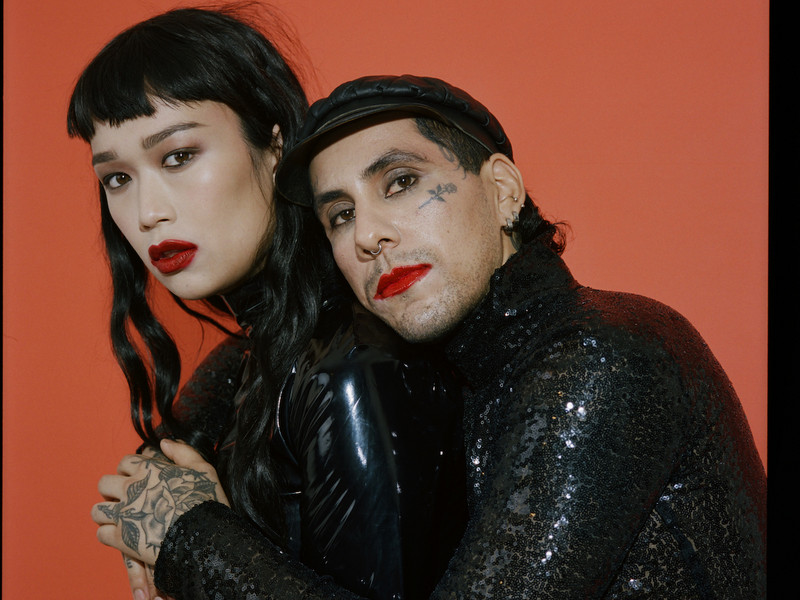
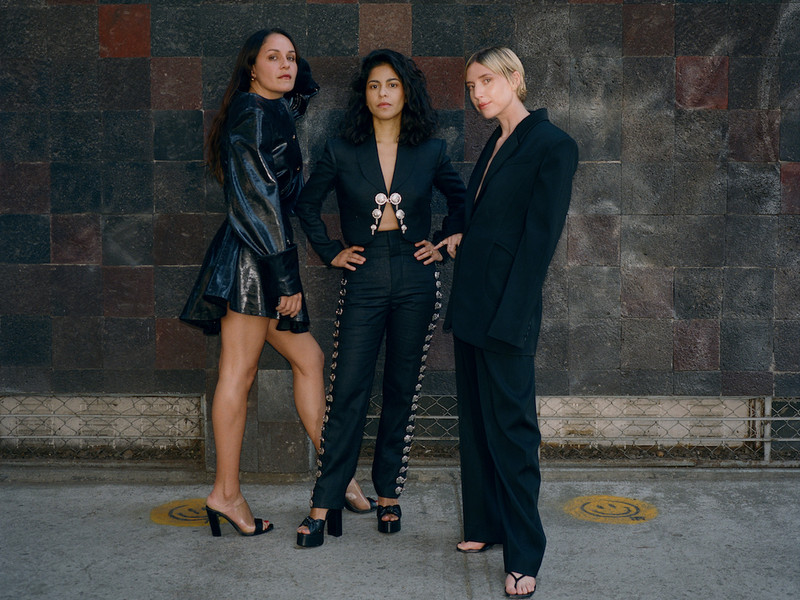
Lamar is a muse for the ages, a lens through which we can explore the love within both our hearts and others'.
Check out the video and photos below.
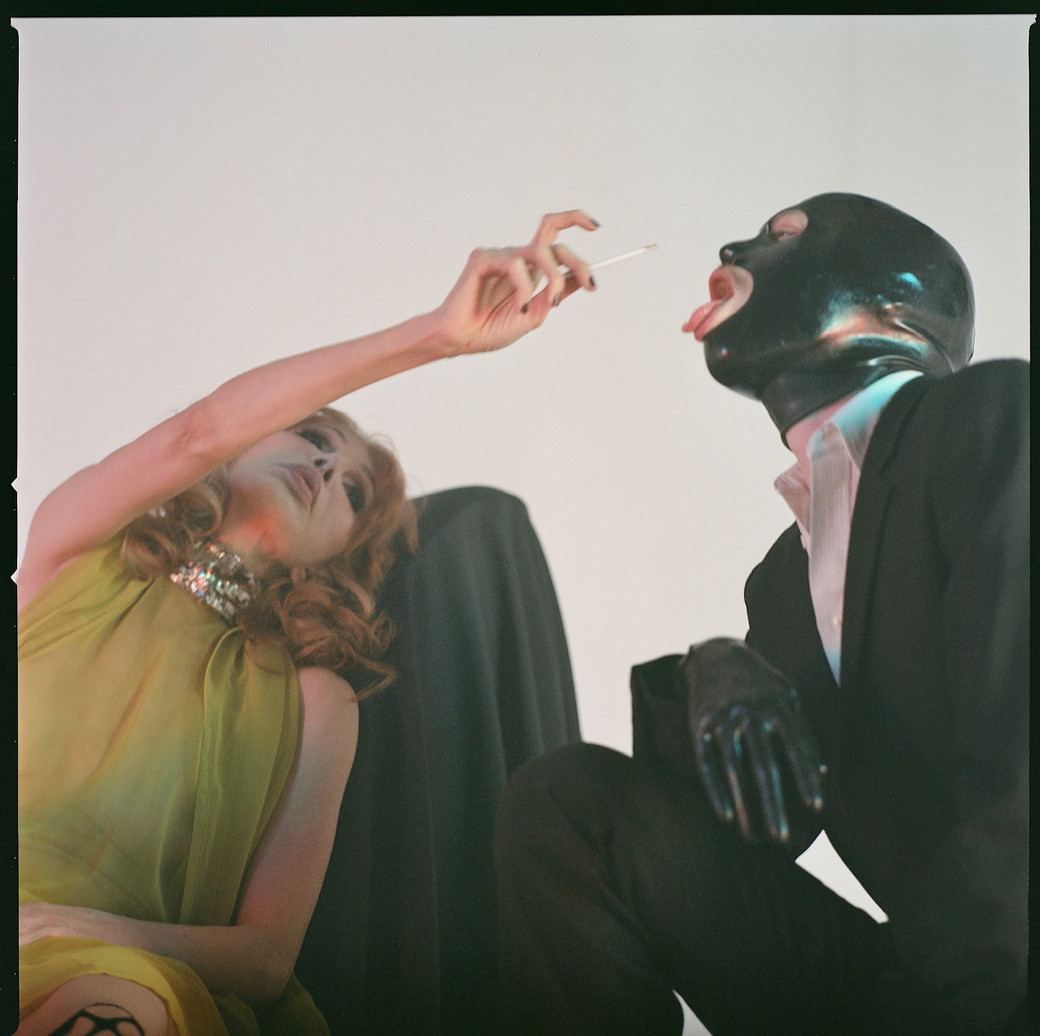
Lamar is a muse for the ages, a lens through which we can explore the love within both our hearts and others'.
Check out the video and photos below.

First up, how did you guys meet?
R We actually met at high school, blur many years later we decided to partner up in the middle of a strange Miami Art Basel trip 3 years ago.
Why the name?
R In small towns, The Flower Shop is traditionally where you got all the gossip, the inside word around town. So we wanted to create the same thing, you make friends, share stories and that's a community built around it. Also, a lot of things designed in here are contributions and collaborations with friends, so we're trying to build a local community that will leave people with a good story at the end of the day.
You’ve only been open a few weeks but your basement has already developed a reputation for being “a man cave” despite your name being The Flower Shop. What's the story?
D We would like to think of it as a hangout spot, not a man cave!
R I'd like to think that the flower shop is a lot of things to a lot of people.


The interior screams “home comforts” and there is clearly a specific vision here. How did you design the space in a very specific way without it coming off as a novelty place?
D We were meticulous and frankly obsessed with the design and deco process but never cautious or worried about it feeling like too much of a novelty.
R Yeah, I agree. As we designed it we broke down the place section by section, running with a gut feeling. We wanted something homey and safe, a place that reminded you of your home. We like the idea of places that we grew up around in Australia like pubs, people's basements, house parties, grandma's house and we put that all together. Once we shared all our ideas for this space we always brought it back to "what would you do if it was in your home?". Every design element was laid out on the table as we went along and decisions were made based off of the idea of staying really true to the certain eras that we referenced, which was very much instinctual. A lot of it felt almost ugly but once it all came together it's charming. Luckily.
It feels “Old-school Americana” but you’re all Australian. Where did that idea come from?
D A lot of inspiration came from mid-western, 70s America. Our main buzzwords were nostalgia, comfort and cheeky when thinking of the design, I think all of those translate internationally.
R We were trying to create a place that is an escape from New York, something that didn't necessarily need to feel like you're in New York. A lot of these places are designed to be for New York but a lot of is living here are like orphans in this city but everyone can relate to their local pub etc. You would be surprised how many great old style pubs and bars still exists in Australia and any Aussie readers will realize that we took some inspiration from old RSL and Bowling clubs. Even my grandpa's best friend had a basement just like The Flower Shop!


I read that you want The Flower Shop to be a place people can go to if they don’t want to queue, be on a list, DJs, doormen etc - zero pretentious. Why does that work for some places and why do you think not having it will work here?
D We lean on our food, ambiance and our base crowd of friends and clients to help us ensure it's a great venue. Above all, we rely on ourselves/each other to make sure it's the best in every way. From a strategic perspective, we just want to create a timeless spot for the next ten years that people will just come - like The Spotted Pig.
R We share the idea of having our own version of "Cheers". Simply, this is a place for people to come and feel at home in. A local joint for everyone. We learned that while all of (the above) does work, it doesn't last long. It's a cool thing for a second (*inverted commas around cool) but we also know how it can work against you and so we just wanted to do something totally different. At the end of the day - and hopefully, this resonates in the press we do - it's a restaurant/bar. We're not trying to be a hotspot or anything like that. Unpretentiousness. Bring your kids, bring your grandma. The doors are open to everyone.
All three of you come from different hospitality backgrounds (Dylan = Ruby's), Ronnie (Never, Never / Up and Down). How did you come up with a concept that you could all agree on for the entire process?
D Firstly, we're all at the right age and time of our lives to agree that this is the sort of thing we want to do, the launching point for hopefully quite a few other things. We all agreed based on where we are in life and what we think the public wants. Also, it was clear to us what we felt was missing from the city's food/beverage scene and we asked ourselves: "what kind of venue do we personally want to go to?". We learned that being business partners is like being married, there will be disagreements along the way and you have to be sensitive to the other person's feelings, needs and be willing to compromise.
R Exactly. We made a list of what we personally would love to have in a venue. From the restaurant to good wine, to the fish tank, to the pool table and the fireplace. Some stuff didn't make the cut but we covered most of our list. We also created this place with all of our friends in mind.


You’re all Australian and part of this wave of Aussie-owned restaurants and coffee shops that cater to the “avocado on toast, smoothie bow” set yet The Flower Shop menu is different, helmed by Chef Michael Hamilton. Why did you decide to do that when surely it would make more sense to go with what people will definitely order?
D Food is a huge passion for all of us and the main inspiration behind our partnership. We're not trying to reinvent the wheel, it's about creative twists on classics and familiar food that best represents us and this space. Actually, the food program is more sophisticated that it appears. The beef and chicken is 100% natural and ethically raised our seafood is line caught in Long Island. All of our produce is from small farms in California or upstate New York.
R With our very talented Chef and partner Michael Hamilton, we had an opportunity to do things a little differently so we took it. Everyone knows where to get an avocado on toast, but not everyone has a secret ramen on the menu and a cheeseburger with black garlic mayo.
Most “bars” or nightlife spots don’t put a lot of effort into the food so it’s nice to see a marriage of good food, good night-spot. Do you think there is more a trend towards people eating first then going out?
D I have noticed in recent years that New Yorkers are keen to start the night early instead of waiting for the clubs to open. There seems to be a more sophisticated approach to going out.
R I think it's been happening forever in New York. Nearly every time you go for a dinner you ends up out somewhere, whether it's karaoke or a club and some of the bigger nightlife venues have embraced that whole dinner and a party thing. Our version is just much more laid back! Also, it goes back to the idea of the classic pub. Once you knock off work you can bring your girl for a meal or a bunch of the boys, have some food and start. We definitely want to encourage that early dinner crowd.
If The Flower Shops sits between a restaurant and a late-night spot, do you think this marks a new genre/new type of place to go to? Maybe a place where people don’t necessarily have to pick one or the other?
D This is the essence of the venue, a multifaceted place that is kind of a one-stop shop.
R In my opinion, this goes back to proper pubs. We can't forget that in places like U.K. or Australia the local pub is a place for people to meet up, eat, drink, take a date, celebrate a birthday or just have a beer at the bar and make a few friends along the way. The Flower Shop pays homage to those places.


You’ve said that you want a mixed crowd of people, does that reflect in your menu and drinks choice? How so?
D We're super aware of the menu having something for everyone so what we did was put everything we wanted on it then tailored it back based on what sold best. We have a little classic cocktail program and the usual drinks for everyone. Same with the food, something for the girls, something to share, something small if you just want a quick bite. But also you can sit there and have a 3-course meal where you can get into some serious food.
R We literally have everything from oysters to hot wings up to a $32 rib-eye steak. There is definitely something for everyone.
You’ve both been involved in some really interesting hotspots and each place has its own narrative. What do you hope people will say after experiencing The Flower Shop?
D That's a really good question. I guess, a place that people walked in, felt super comfortable, enjoyed themselves, received unpretentious service and vibes from fellow customers. A social place, a place where...I mean I've personally been really lucky to have introduced my best friend to his wife - through places like this - and they've now got 3 kids. It's Raya 2.0! We want people to make it their "local" more than anything.
R See you tomorrow..

Your father was primarily known for sculptures but furniture design ultimately began a huge part of his legacy. What did it mean to you and your sister to grow up in a space so intimately surrounded by his work?
We thought it was normal that where we lived was filled with art, books, and furniture that Don made. It seemed odd that other people were perfectly happy to buy their environments and their aesthetics, while Don insisted on making his. For us, his work didnʼt fit into any categories or historical contexts because it was what surrounded us, and what surrounds you is what you consider normal. Insisting on an expensive shoe-box above Central Park or a perfectly useless super green lawn is strange, making a desk for your kids is not.
A lot of the materials he used were locally sourced which ultimately contributes to the reductive simplicity echoed in the final products. What can you tell us about this?
Don had a practical side as well as a respect for local norms or traditions, even if he rejected most of those he grew up with. He was always willing to appreciate local craftsmanship because it was, in itself, a locality, a culture. For the furniture in Texas, there was one lumberyard and they sold pine 1 x 12s so that is what he used. But to get to the point that he wanted to use 1 x 12s for a chair involved a lot of thinking so itʼs only at the relative end of the process that he decided to use them. He also used a lot of aluminum and thatʼs not local to anywhere, he just used what was available and what he liked.
Were you and your sister aware of the design significance that went into the pieces or did it feel like a normal home growing up?
It felt like and is a normal home. Itʼs the world that has changed.
What is your favorite piece and why?
I donʼt really have a favorite piece but that is because I keep seeing the furniture in different materials and environments and so there is always a new way to look at them. They keep being new to me and I think thatʼs really nice, it also means the designs are really good, they arenʼt wearing out on me.


Itʼs been noted that your father began to design furniture out of a want for functional pieces for your home - what do you remember/know of the design process from sketch to finished product?
It was really simple because most of it was figured out in his head and then there was usually a quick sketch for a fabricator. When Don started using so-called real carpenters in New York problems started because they wanted to fetishize the joints and the surface and Don had to keep working with them to keep the pieces plain and simple. He didnʼt want fancy joinery, he wanted the parts to cleanly and simply meet.
What was his favorite piece and why?
He didnʼt have a favorite piece and he was never finished designing. He wasnʼt finished designing furniture, buildings or art or anything else.
Was it ever a case of furniture being “precious” and something you and your sister had to be careful around once finished?
That was true but not any more than any other furniture or object. Don treated everything with respect, you didnʼt break the spines of books and you didnʼt fall down into the Breuer chair and you didnʼt do that with Donʼs furniture. He didnʼt treat his furniture any differently from others.
How does your fatherʼs furniture fit into the narrative of the space?
Any narrative within a space is imposed upon it by us and Don didnʼt like narratives.
Tell us what you remember of your father designing furniture - did he sketch? Source inspiration from somewhere?
There are many sketches, some ultimately made and others not. Like the architecture, it is about solving the immediate spatial problems before you. In Donʼs case, he tried to solve these issues in a way that felt right to him, he wanted to find solutions to problems but they had to fit in with what he wanted to look at. His standing writing desk, for instance, doesnʼt look like any prior desk but it also is something that he would have liked to see every day. He only made things he could live with on a daily basis and that was a pretty high standard.


Your fatherʼs colored boxes are arguably one of his more prolific pieces, produced in unlimited numbers as to mirror the industrial aspect of his work, how you would describe the concept behind them?
All materials were equal to Don and he refused the preoccupation with industrial production as that was pretty much a mistaken assumption. Both the furniture and the art were pretty much hand made one by one. Even if aluminum or paint was used what mattered was the result and not how it got there. The craftsmen had to be really good at what they did no matter what material they were dealing with.
A lot of the wood furniture speaks to American folk aesthetics - would you say this is true?
Only superficially in that if you make something out of untreated lumber it will have a certain look and that look will be similar to furniture made by the Shakers or Midwestern farmers or Swiss or Swedish immigrants. The category of “American Folk” is itself a conglomeration of different cultures from Europe, Africa and other parts of the world.
Ultimately, your father started designing furniture for you and your familyʼs use. Do you think that the pieces still sit best in a personal rather than professional setting?
The two categories simply didnʼt exist for him. A chair was a chair and it was either good or bad and the office or home or building was either good or bad. Clearly, modern offices are not better designed or more comfortable than old farmhouses so the distinction is one of marketing more than anything. A chair doesnʼt care which category it inhabits in somebodyʼs marketing plan, it is what it is.
See more on Donald Judd Furniture