MIRRORS

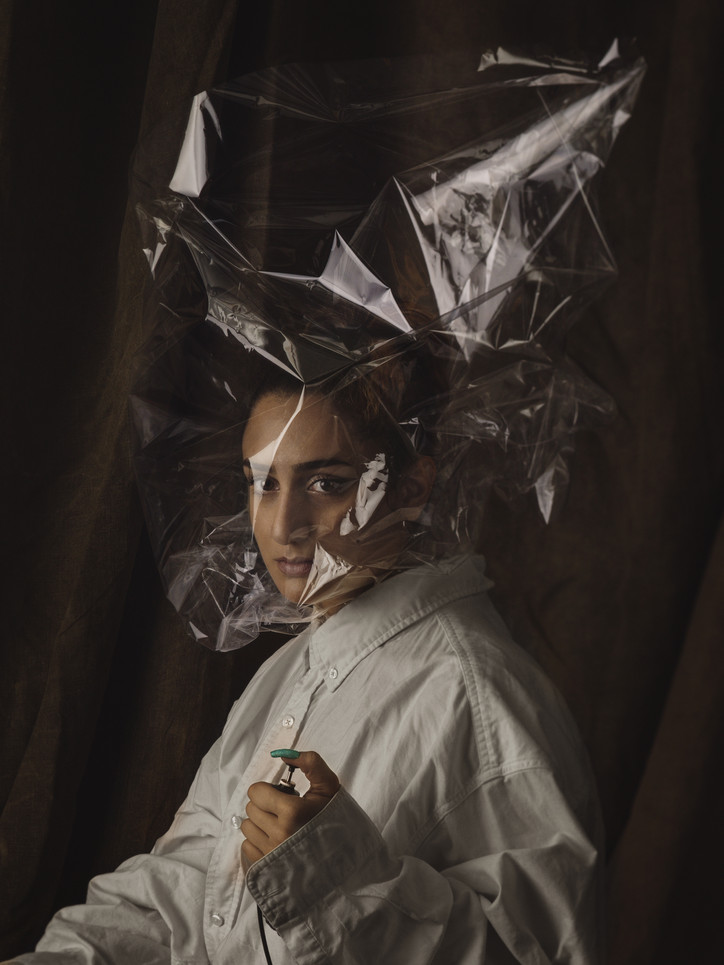
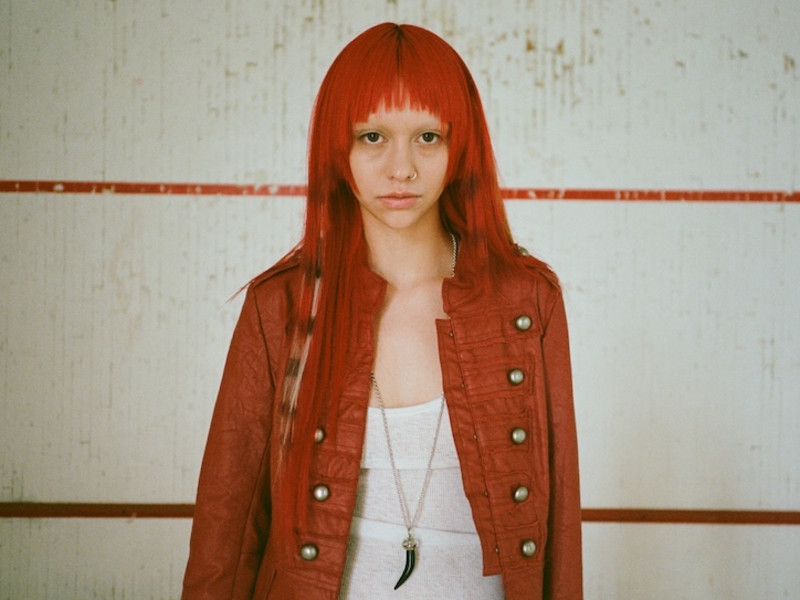
That much is immediately clear, at least musically. Tehran has never been easy to categorize, and the production on Dozakh weaves in and out of genres, tapping into punk, rap, indie pop, and R&B along the way. The album opens with Tehran singing in Farsi on the airy 'Dozakh', before transitioning to her heart-ache induced crooning on the synth-laden 'Down'. “I came up with Persian music from my parents,” she recalls, “then I went through the whole Spice Girls era, the Britney spears era, and then I went into punk music, The Smiths and Joy Division, and then I went into hip-hop, and so all of those styles will always affect the way that I work.”


This sonic palette lends itself to the breadth of feelings beneath the surface. Her confrontational attitude is still present on songs like the punk anthem 'Something New', or the acerbic percussive-rap track 'Jet', but most of the album opts for a more introspective approach—a plea to be understood. “I wasn't arguing with anyone in these songs, I wasn't telling anyone what they should think or what they should think of me, this was just a place where I can just deal with things from an emotional perspective.” Like 'Refugee' and 'Cash Flow', Tehran’s politics are still on full display here; there’s even a song called 'Nazi Killer' which succinctly captures her view toward the rise of the right wing in countries across the globe, including Sweden: “I think it's this idea that we have about ourselves that Sweden is such a neutral country, we're not racist, so the self-image doesn't go with what's actually happening. The winds are really blowing here, and people aren't taking it seriously." But more often she allows the underlying political framework to carry her message, without the need to define it explicitly. “I'm a political person, so I put [the songs] in a political context, but a lot of them are love songs, or songs about drinking too much, or dealing with mental health, or all these things that are a product of a political and structural problem and oppression.”
That’s the heart of Dozakh, and whether it’s prompted by political instability, heartbreak, or interpreting your place in society, displaced identity is the running theme. The word dozakh, which means hell, conveys a sense of longing, which has tugged at Tehran for the better part of her life. “It’s an emotional state that you're in when you're separated from your lover, so it's a very specific place that you are in,” she explains. “It's like a metaphorical place when you're burning in this longing for someone or something, so you're just there, you're in dozakh.” Tehran sees it as a universal idea, applicable regardless of a person’s relationships or background or cultural environment. “It’s a sense that something is missing and you don't know what it is, and the quest of finding it becomes a state of mind. I think I've always felt like I've existed in some kind of gap or a void or in a distance to something, and that's my interpretation of what dozakh meant to me.”
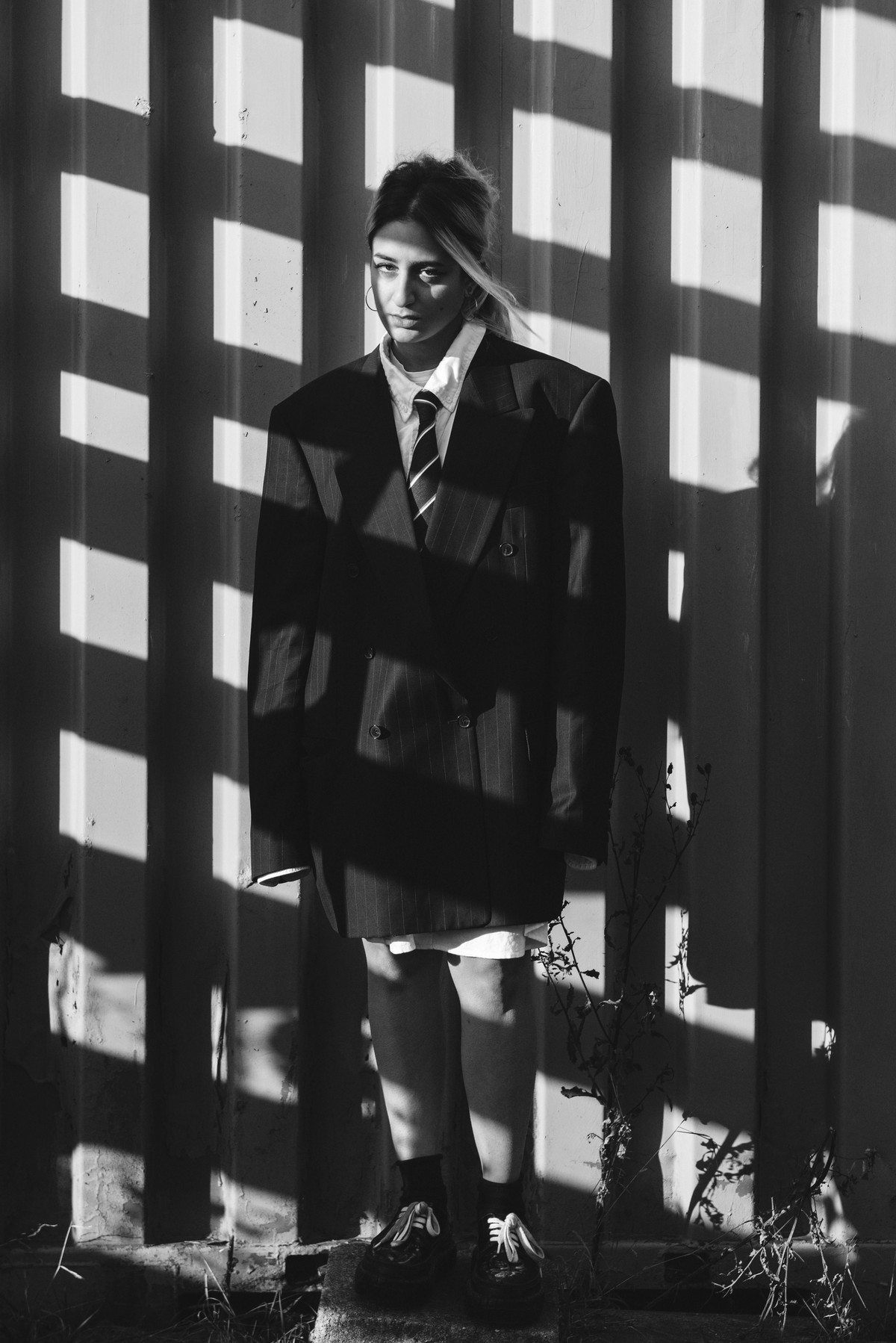

Though Tehran still feels that longing for something, she’s still largely optimistic in the midst of uncertainty, and Dozakh lays all of that out for her in a cathartic way. “I've had this heavy weight that I've been carrying and now that I can tell it to you, you can relate to it, and then it just becomes lighter for both of us, because we can find a unity if we start taking about it and sharing the emotions and sharing the experiences, we can grow stronger together and be there for each other.”
As she surrenders to her feelings on album closer 'In Tune With the Moon', there’s a sense that she’s ready to move forward, and with ten years of her life bottled in a bold, eclectic, and all-encompassing work, it begins to reveal the thing she’s yearned for all along: “That really is the core of why I make music, because it connects me to other people that share the same feeling. It gives me hope, and it gives me energy to try and make a change.”

Limes. Linden-the fairer citrus, a sweeter less acrid alternative to its yellow brother. In ancient Rome, limes and citrus were signifiers of wealth and status. Limes and citrus also served as lofty symbols during the Dutch Golden Age of the 17th century, representing the evolving conceptions and implications of mercantilism. Limes, meet BEA, BEA, meet Limes. We love a velvet-emerald moment.
Mercantilism. Crazy word. Crazy history to it. Brutal philosophy. How can we pretend that economic growth for one party does not happen at the expense of another? Acknowledgement of the crime would be an emerald moment indeed! In a brighter light, posing next to these small, hardened objects of glistening independence, put together in a bag big enough to fit two dozen, makes me feel like I’m looking at a primary school photo packed with enthusiastic children about to *pop* off the screen, seized by an ecstatic greed for life. Limes have so much powerful taste embedded into them. Compressed, covered, and protected in thick glossy skin, the lime knows its own potential and waits for the hand to unleash its fifteen minutes of fame.
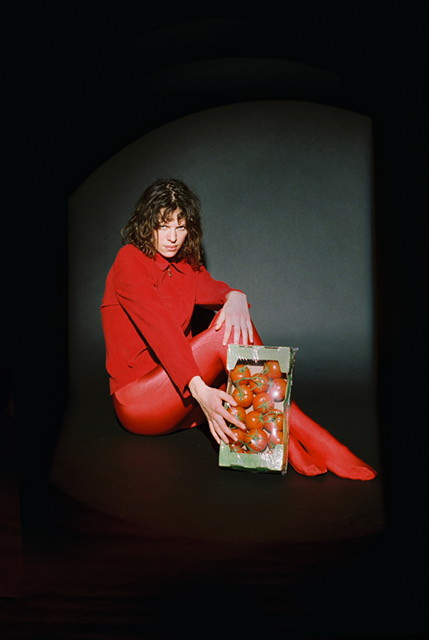
Tomayto. Tomahto. A Tomato can be pureed. It can be roasted. You can simply toss it in a salad. Salsa? Or Ketchup? Marinara? Or V8? Lots of folks look down on tomatoes for their slimy texture and lack of flavor, typically in colder places where the tomatoes are petrified from the frigidity. We like tomatoes in the Mediterranean. Where they’re svelte, flavorful, and juicy. All you need is some salt and pepper. Here, we see you guard the box filled with them.
Tamato. Sexy color, understated value. Worth guarding until understood. A lack of flavor? Surely an error has been made. She needs some sort of company to prove her effective impacts. Grown up in a group of multiple branch sister/brother tomatoes, the "T" is used to having her company in place. If you want her to flourish, don’t be ashamed to grind her into the mix. At times, TOMATO1991 operates at best in this way. She doesn’t bring out her flavor solo by the rule. She needs the insights/ingredients of others to proceed sometimes. Having said that, though, who doesn’t?
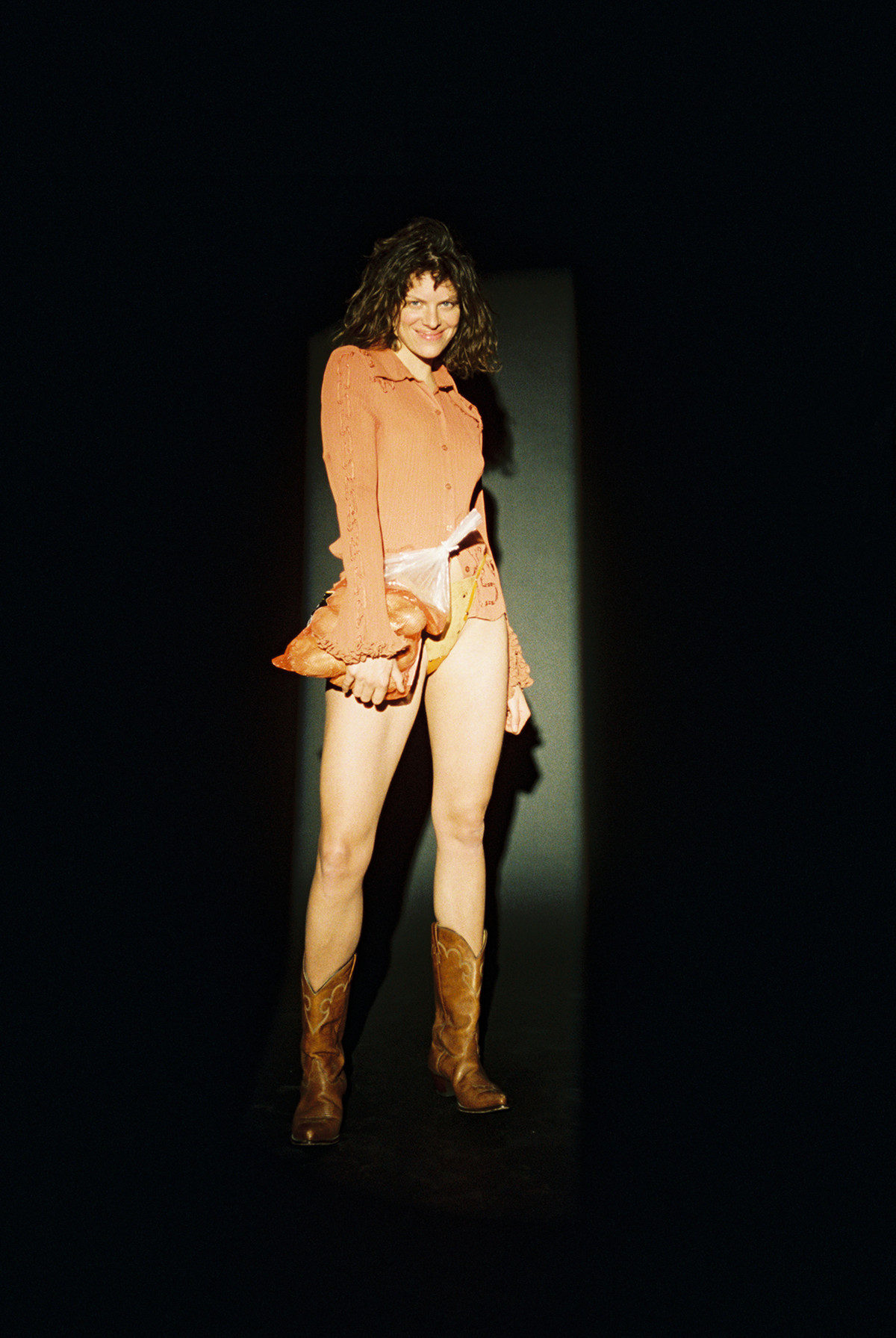
Grape juice or Cabernet Sauvignon? Grapes have undergone dramatic shifts through the magic, or nightmare, of GMO’s. People weren’t huge fans of seeds back then, and food scientists listened, I suppose. To make a Chardonnay, you simply take the skin off. To make Burgundy, you keep the skin on. The insides are all the same. It’s funny—grapes ferment into the blood of Christ, but they also ferment for the joy of Dionysus.
Ever thought about the varieties in alcoholic influence? The wine of grapes make me feel very different to the yeast of beer or the mash of whiskey. Red wine makes me feel, slowly but surely, like something throbbing on the wall, expanding in slow motion, increasing in deep colours of bordeaux and deep purple. A big numb heart-thumping body of work. Perhaps I actually feel how a fermenting grape would feel itself. Blowing up with time. My speech becomes “older”, more serious or pleading for “academic”, whereas with a beer, I will blabber and sound as banal as I can, letting out all the slush collected and stored in my brain. Whiskey makes me giggly, punctual, rude, childish. Drinking grapes feels ancient. Their effect on me feels ancient. I don’t like eating them—too sweet. I like the dust on them and the veins you can see when you peel the skin off.
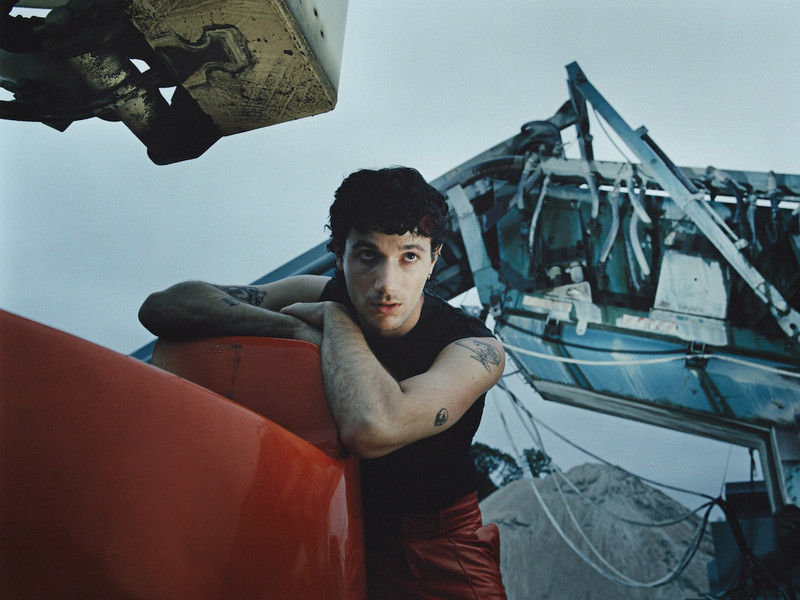
It’s rare that a good dish begins without an onion. It’s the foundation. It’s the absolute fundamental. It also makes us all cry. Surface is irrelevant with an onion, for it has layers upon layers, sinking deeper into a more pungent, potent nucleus. BEA1991, your music isn’t showing any signs of tapering off. And certainly, your sound and lyrics don’t stop at the top. For you, we like to investigate further.
I am a thing of layers. I want to be fundamental. I want people to follow my process of un- and re-layering. I make people cry, too. I’m starting to appreciate my surface more. I’ve also started appreciating the onion in its raw form. Sweet and spicy, crispy, semi-challenging to the nostrils starting from within—can the body smell from within?! I like that this product of nature isn’t particularly beautiful zoomed out, but look at onions zoomed in; there are many different functionalities. Raw, she is absolutely ruthless—people crying, tripping, belly blown. Slowly cooked, she is an absolute pleasure.
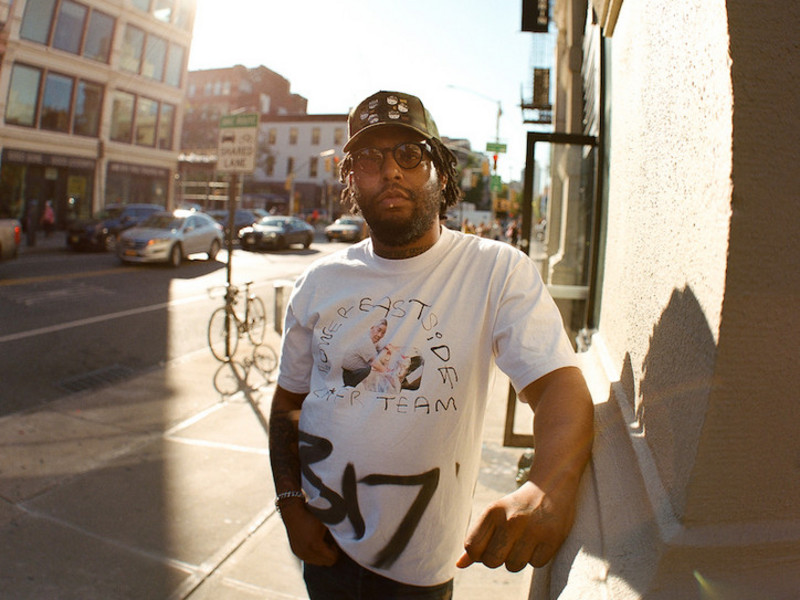
So tell me about yourself and your work.
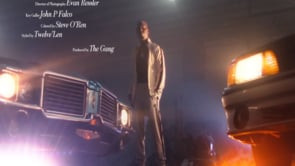
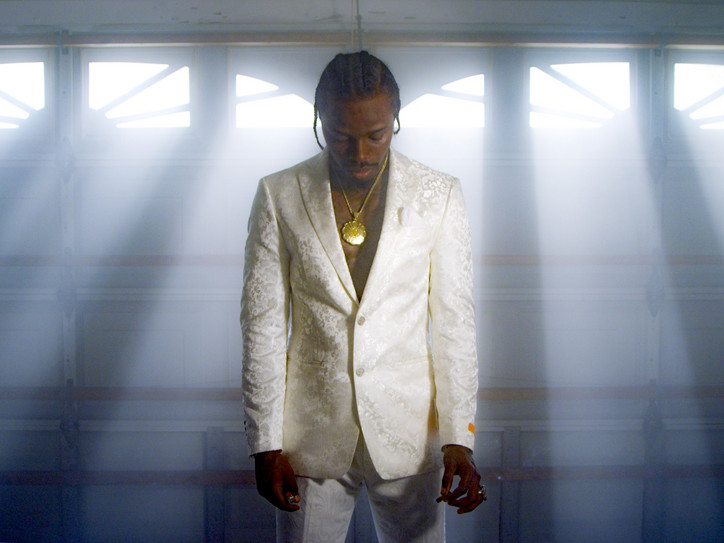
As far as with the music video, the video for “Thank the Gang” started off as a recording, a film recording for a festival that we have here in Miami called III Points. And I just went, and I picked up like a mid-2000s—no, I’m sorry—an early 2000s camcorder out of a pawn shop. I was just trying to shoot some footage with me and my homies for III Points that they could show on the projections. It was a really good show. I played, and then right after me, The Internet came on-stage and played, and then Tyler*.
So that’s how it began, as video for projections, and then we just kept shooting. I said I could do a performance in one of these scenes with this camera, and we actually just started shooting it. And I was like, ‘You know what? I think I want to shoot an entire video with this film.’ Because with the entire album itself that I’d been creating, it’s been built around a lot of 90s and 80s R&B aesthetic and also a lot of influences from Miami that didn’t get the light shined upon at its time. Like the DJ Uncle Al, you know? A lot of people know about, like, Uncle Luke when it comes to Miami culture, but they don’t really shine light on Uncle Al, who is the originator. So, a lot of this stuff is inspired by Uncle Al, like the sample that you hear at the beginning? That’s from Uncle Al. It’s more of the aesthetics of who I am, trying to create a balance in keeping R&B traditional, but still showing this essence of what colored culture, or urban culture itself, projects when it comes to R&B and alternative music. Because growing up, like you know, coming where I come from, I listened to a lot of Frankie Beverly and Maze and a lot of Al Green and Marvin Gaye. And those are the records and that is the music that was projected in our neighborhood that growing up—well, me growing up in my household—it’s what we listened to.
Nowadays, the music that is pushed more into the urban market is, you know, the more heavy-hitting hip-hop rap, you know, trap shit, you feel me? Which is cool, I enjoy it, but it’s kind of fucked up when you have an artist like myself that is doing something that is different from what the mass is doing, coming and being projected amongst our culture of the urban culture. So I get looked at, you know, weirdly at first, until you actually hear it, and you feel the soul in it. And you realize that it’s always lived within you, you know? Because you grew up on it. But we just been disconnected from it for some time, because of what urban culture has been projecting today.
Right, so it’s almost like a return to origins or an embrace of the past?
Yeah, embracing the past and embracing unity and loving one another and coming together, you feel me? Enjoying each other’s company, you know, like those backyard functions and those barbecues when you’re with your family. And when you’re with your lady, you know? When you’re out on your date just having a good night, having a good time, and just growing up. Getting past all the hype.
Part of what I liked about it is what you’re saying, it’s a very different theme just in terms of the lyrics, and the attitude of it is quite different and less aggressive than what is generally perceived these days as cool, like hip-hop, which can be almost jarring and intense sometimes. So it’s really connected to Florida as well?
Yeah, it’s definitely heavily connected with Florida, yo. I actually grew up across the street from the guy named DJ Chipman. He was a very known DJ from even way back in the late 90s as well. He had a few records that—well, not a few—he had a record that was featured on Family Guy as well. It’s like a dance record. It’s a dance record called Peanut Butter and Jelly.
Oh my god, wait, he wrote 'Peanut Butter Jelly Time'?
Yeah, that’s DJ Chipman, yeah.
Oh my god, no way. That’s crazy!
Yeah, so I actually grew up amongst these people as a kid versus a lot of these other musicians, you know, from Florida who know these records and grew up on it. I actually, like, grew up under these guys. They knew me as a child, you know? I knew Rick Ross as a child; I knew Flo Rida as a child. Like I was in the studio with Flo Rida and Rick Ross. I even did vocals for Trick Daddy as a child.
Wow.
Yeah. All of them’s from my neighborhood, you know? Like literally, from my neighborhood.
That’s crazy! So how old are you now?
I’m 26 now.
Okay, wow that’s so interesting. It’s always interesting when a specific neighborhood or a specific place sort of produces a lot of talent. How do you think that happens? Or like, how does that come about? Is it just from people bouncing off each other?
Yeah, I think it was because of people bouncing off each other, or it’s probably something in the water. I don’t know. It’s probably something in the water.
Do you feel a certain pressure to participate in more of the current, aggressive style of hip-hop?
I don’t feel pressure to participate or even dabble into it of any sort, because I grew up on it as well, you know? My favorite musicians would be like Al Green and Marvin Gaye. But actually growing up listening to music, if I had to select music to actually play, I mean, I played a lot of R&B. I played like—my favorite artist growing up was 50 Cent, you feel me?
Ugh, I love him.
Yeah, that was my dude.
He was like my conversion to hip-hop. Him and Kanye West.
[Laughs] Yeah, Kanye West, 50 Cent. Goodie Mob, Outkast, Tupac, like those—that’s what I listened to. Like when I do participate in, like, more of that type of style of music, it’s just like being home, you know? I enjoy the art, the rap music. I love it. Like I fucking love it, but we gotta still have a balance in which we have this area we can go to continue progressing in life instead of being in this one way. And that’s—I feel like that’s the piece I play in neighborhoods like my neighborhood. Outside of my neighborhood, that’s the piece I feel like I play to inspire. Those, I understand, are like, ‘Ay! You know, you a songbird, of course. But you don’t have to make this type of music.’ Like you’re doing something different.
But in all reality, this is the music that your parents raised you up on. This is the music that your mom played around the house, your grandmother played around. Rap music’s only been around for—it hasn’t been around that long. It’s been around what? Like 30 years? 30-35 years? So before that, all we had was soul and rock, you know? And R&B. But that’s my whole thing. It’s that you don’t have to feel like you’re being misplaced in trying to keep it traditional, you know?
Would you classify yourself as an R&B singer more than a hip-hop musician or do you dabble in both?
I mean, I dabble in both. But I would definitely always set my music in R&B, because that’s what I’m more—that’s what I’m true to.
You definitely don’t hear a lot of R&B these days. There was a really cool R&B moment a few years ago with Usher and Trey Songz.
I feel like R&B kind of got stale, because it stopped evolving. And now, R&B has begun to evolve again, because it’s pulling those great things that you like from rap and adopting it into R&B. So therefore, it can evolve once again, you know? It can emerge once again. You know, so you had, like, that whole era where you had—They call it “trap R&B.” Me personally, I don’t like it. I don’t like that. I’ll only accept trap R&B from Bryson Tiller, from The Weeknd, PARTYNEXTDOOR, Drake, and 6lack. Other than that, I don’t accept it from no one else. Because I feel like we shouldn’t have to adopt hip-hop so much into a genre and ruin the genre, you feel me?
That was my whole thing with creating my project, figuring out how to create R&B music and make sure when you hear it, you feel like, ‘Yo, this is R&B. But... it got a bounce.’ It makes it feel hardcore, but it’s R&B, you know what I mean? Like that was my whole thing. Trying to figure out how to balance it, in which I can evolve with traditional R&B. Like listening to Isaac Hayes or listening to Usher and making it today, making it modern, you know?
Check out Twelve'Len's new video, 'Thank the Gang' below.