The Modern Muse


Stay informed on our latest news!


Cue: Adomako Aman’s new film “Fish.” This short is a two-day look inside the lives of two men of color and their everyday struggles living uptown in the Bronx, all from a queer man’s perspective. Written, directed, and edited by Aman, who also stars in the film, “Fish” is a fun pivot from his more serious documentary "Dancing in the Dark” (2016), which investigates the bonds of queer men of color in New York City's nightlife scene.
“Fish” does some of the same; most notably, in a scene where a stereotypical Bronx “thug” bumps into Aman’s character and blows him a kiss before locking hands with his girlfriend. But just as soon as this closeted flirt takes place, we are thrust back into Aman’s bubbly demeanor again, and left swimming in search of Aman’s true analysis of the harm that forced hyper-masculinity does to Black and Brown men.
View the trailer for “Fish” below:
Video courtesy of Adomako Aman
Text by Evan Nicole Brown


Bogart directed and styled the Hunx music videos and developed a visual language that coherently translated the band’s bubblegum oldies sound. Videos like “Lovers Lane” and “You Don’t Like Rock and Roll” are little vignettes within a broader Bogart dimension, unified by a consistent colour pallet, sound, clothing and gesture.
In 2014, Bogart launched his own clothing brand: Wacky Wacko. Each garment features Bogart’s own illustrations and paintings, all distinctly queer in theme and exploding with joyful anarchy. The clothes, like all things Bogart, maintain an edge despite being delightfully unserious. It should come as no surprise that Bogart is also an avid painter and sculptor (evident also from his music video set designs). His “Shrimp Toothpaste” sculptures and “Boob-Face :)" tees are physical manifestations of his punk rock playhouse imagination.
“I never cared about getting good at something or learning how to actually do it the right way. I don’t like to read the manual, I just wanna get wet and try things," Bogart says in regards to avoiding defining himself as either a painter, sculptor, performer, etc., etc., etc.


On the weekend of April 20th, Bogart brought his infectiously “faggy” magic to America’s forgotten city, Detroit. Bogart’s artwork was included in the new Tom of Finland exhibit at MOCAD (Museum of Contemporary Art Detroit), which opened on the 19th.
Bogart showed four ceramic pieces (in the shapes of lube, a ball gag, a banana cocking holder and handcuffs) and a painting (“Jerking Off”): fitting for the exhibition, marking him as a descendant of Tom of Finland.
As if that weren't enough, Bogart was also in town to play at the birthday party of one of his most respected idols: John Waters. “He’s definitely had a huge impact on me," Bogard said about Waters. “I love people who create their own worlds and he is the master." Those familiar with Waters’ work can recognize the significant influence he’s had on Bogart’s self-created world: a dirtier millennial iteration of the Waters classic, Hairspray.


The performance also marked the reunion of Hunx and his Punx, who have been dormant since 2014. Seth went on to release his self-titled solo album in 2016, leading fans to believe the Hunx era was officially over. The venue was El Club, a fresh new edition to a desolate area in a devastated town — owned by the Hunx and his Punx’s first publicist. Bogart hand-painted the walls of the club bathrooms the year previous. A trip to the bathroom at El Club proves Bogart can transform even the most dull of spaces into a carnivalesque and colourful whirlwind.
El Club has become the watering hole for the city’s burgeoning creative scene and in the short time since its opening has established itself as a much needed, multi-purpose community space. John Water’s birthday at El Club was a weekend-long event, complete with a pop-up shop, where Wacky Wacko clothes were sold alongside pieces from 69 Worldwide, Eat da Rich and others.
On the night of the Hunx reunion, El Club harboured a bustling crowd of characters dressed to the nines in Waters/Bogart theme, there to celebrate two queer punk icons. Entering the club from the otherwise desolate street felt like entering a supernatural subcultural portal. Seth and his band mates mixed amongst the crowd of diehard fans and Tecate drinkers, melting into a vivacious hub of leather and studs.
Bogart hand-painted his own leggings just before walking on stage for the band’s performance, exemplifying his own Midas touch, an ability to turn just about anything into an official Bogart artwork. The reunion fulfilled high expectations and was as brilliant a comedy show as it was a rock performance due to Bogart’s incomparable stage presence. His candour kept the crowd constantly laughing by asking honest questions like, “You guys, is this a good reunion? Or a bad reunion?” and honouring the 4/20 performance date by exclaiming “Lets smoke the daddy!”
Between the art show, the pop-up and the performance, the weekend was a feast of Bogart’s talent. Fans in Detroit witnessed firsthand that Bogart is the living exception to the age old adage, “jack of all trades, master of none."


Today marks the premiere of Bogart’s latest venture: his own TV show with World of Wonder, the producers behind the the sensation that is Rupaul’s Drag Race. Feelin’ Fruity will be the ultimate manifestation of Bogart’s wacky, sassy world, allowing Bogart to combine his work across disparate mediums into a single narrative.
“It's my entire dimension,” says Bogart. “I did the music, writing, casting, producing, acting, and did the set design with the help of my amazing friend Christine Stormberg aka Hardcore Tina." Feelin’ Fruity will be a variety show featuring a number of Bogart-approved and affiliated characters, such as Kathleen Hanna, Tammie Brown, John Early and Manila Luzon. Judging by Bogart’s superhuman ability to succeed at creative venues, the show will likely mark another accomplishment on his DIY quest to conquer all things art.
Text and images by Cassidy George.

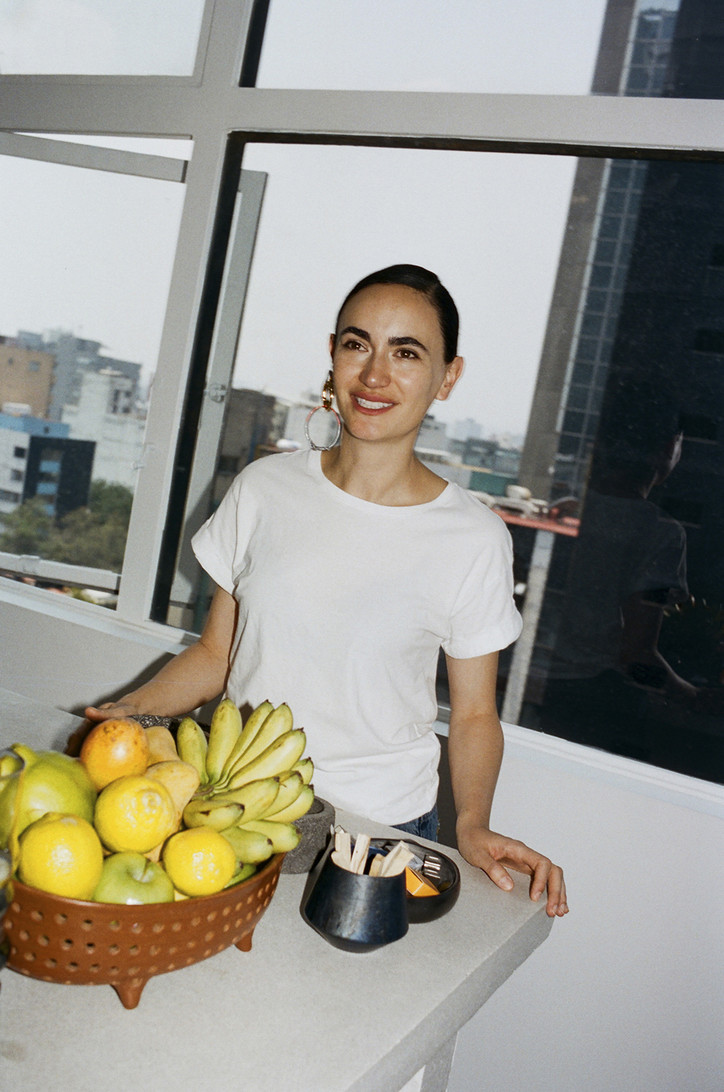
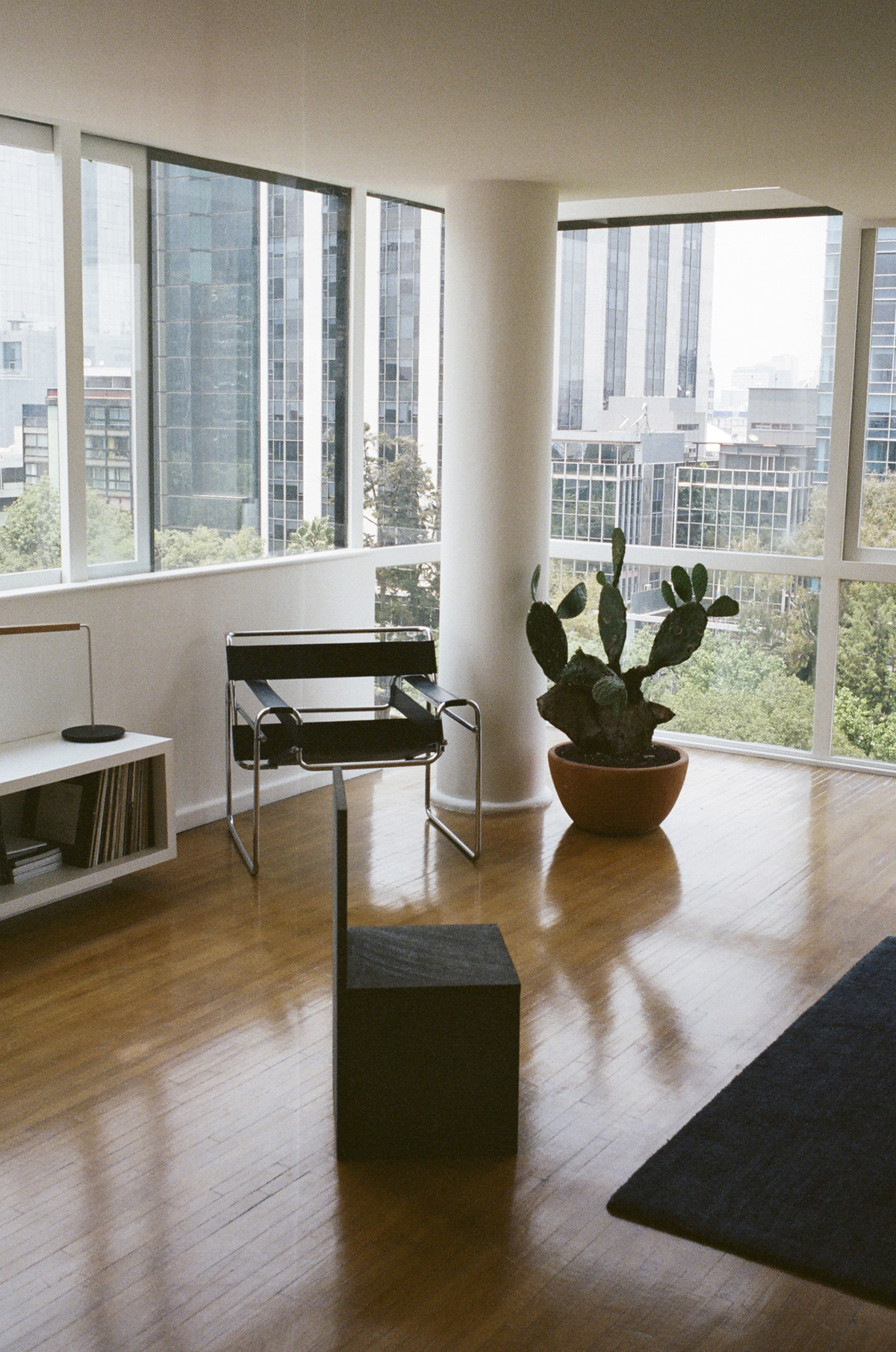
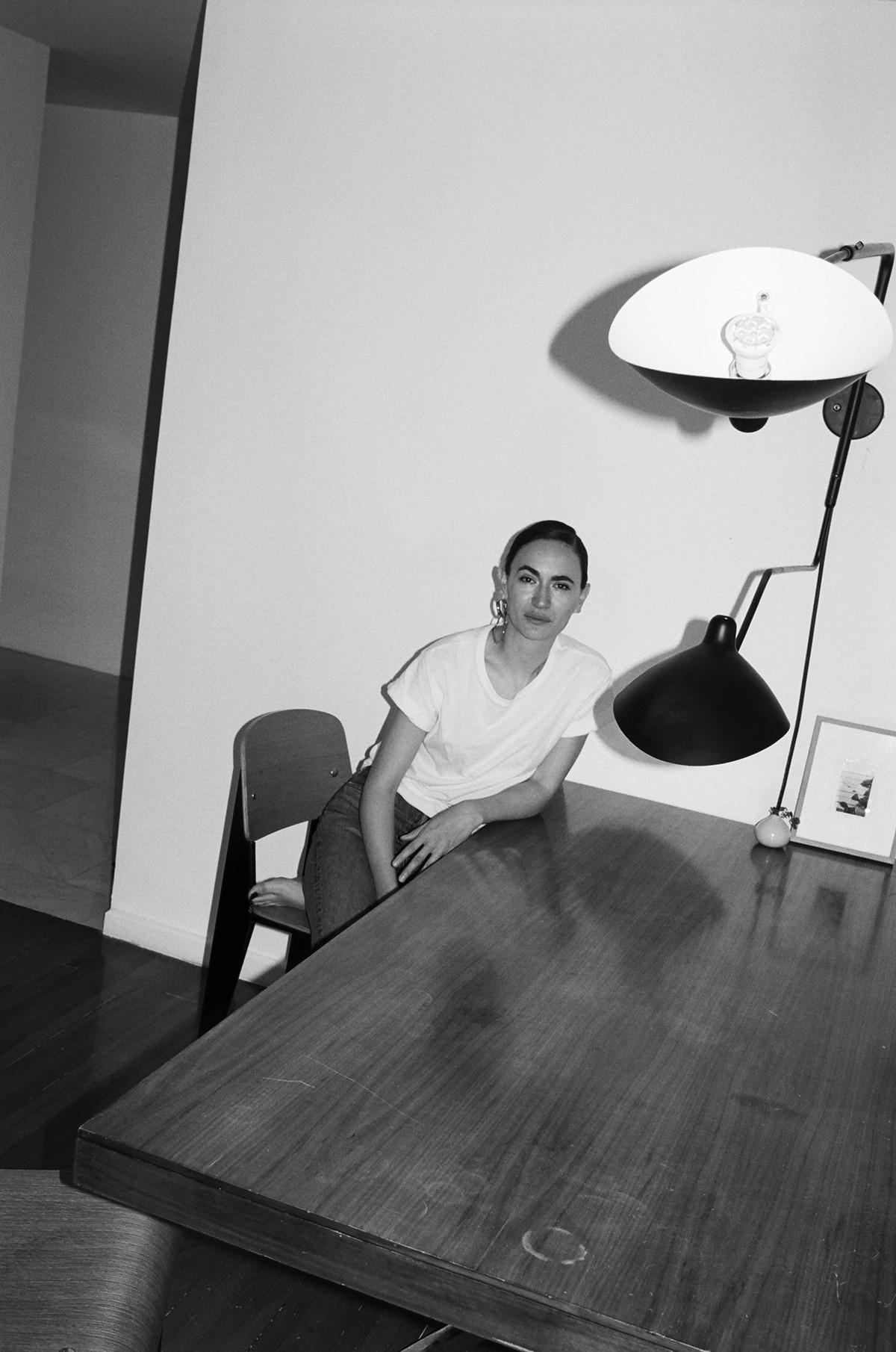
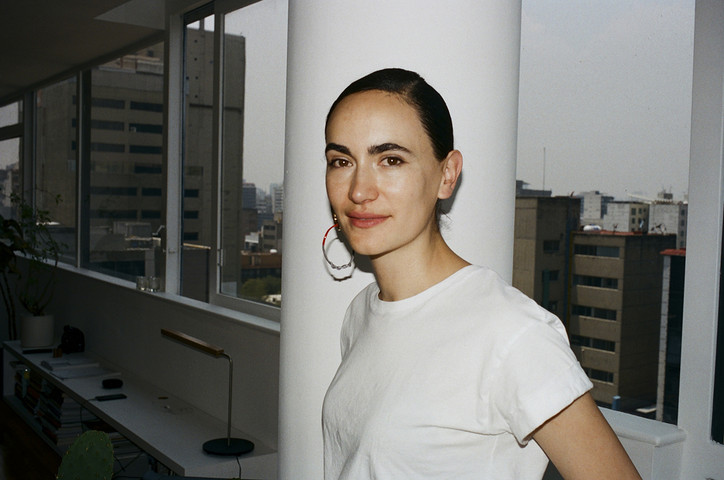
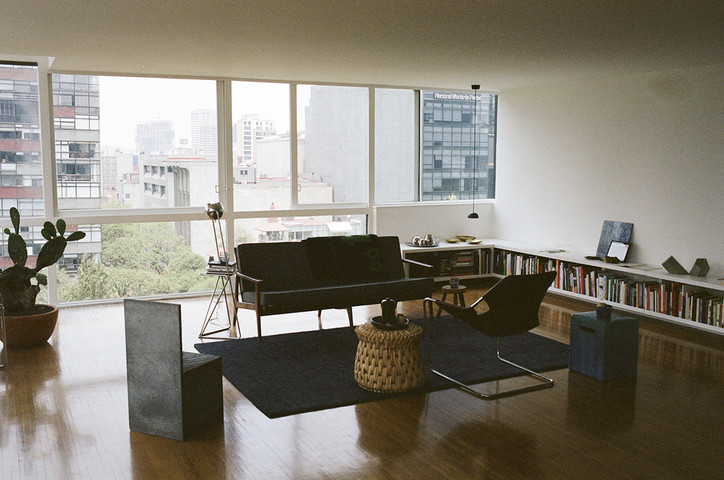
We were lucky enough to meet up with the 39-year-old architect just a few weeks ago, at her dreamy flat in Mexico City. We spoke with Escobedo about everything from her architectural beginnings, her steps towards new spaces, and the overwhelming importance of time.
Give us a little background about your practice and how you got started?
I studied architecture at Universidad Iberoamericana from 1998 to 2003. I started collaborating with a friend of mine, Alejandro Alarcón, right after school. We started doing small renovations, so I never worked for another office. And then I did a project with José Rojas, the Hotel Boca Chica, and after that I decided to start my own thing.
What compelled you to go solo rather than continuing your previous partnerships?
Well, I really enjoyed collaborating with Alejandro, but we were boyfriend/girlfriend at the time, so that was complicated. And with José Rojas, he moved more into the art scene. He’s running now [House of] Gaga gallery. So he moved more into the art world, and I decided to start my own thing. But I do like collaborating with people a lot.
How many projects are you working on?
13.
Wow.
Well, it’s not like we have 13 high-rises. This includes research and furniture projects. We treat them the same way as building projects.


You are based in Mexico City and work on international projects — what role has the city played in your work?
Well, the first thing is that my team is here. But also I like living in Mexico City. It has a lot of information. It is very lively, it's very complex. It has a lot of problems, but you learn from these problems. It’s really nice to see how people appropriate public space, too. I haven't seen this kind of relationship to the outside world anywhere else… probably in China or places like that. But here, you can see everything happening on the streets. Also how we layer things up, how you see adaptations of buildings everywhere. That's something that really informs my practice as well.
Do you see a time when you may need to leave?
No, I don’t think so. I’ll probably travel more, but I like it here.
I read you entered architecture somewhat accidentally—you had interest in art and design and you needed to choose an area of study. Do you feel comfortable identifying yourself fully as an architect now, or do you feel you are existing between different disciplines?
The way I thought about architecture really changed when I went to the [Harvard] GSD. I was not fully happy with what I was doing as an architect. It was just designing and then building—it was very traditional. And then I went to this program and it was like, whoa, you can really do so many different things. You can do an installation, you can do temporary architecture that is more related to other forms of art, you can do research. I'm very comfortable now with calling myself an architect, but I expanded my idea of what architecture is.
What is your least favorite part of architecture?
The administration. The managing of the construction site, the money. I don’t like that part.

What were some buildings early on that made you aware of architecture?
That’s a very good question. I really liked Juan O’Gorman's [Diego] Rivera and Frida Kahlo house. I really liked that idea, having two houses, connected by a bridge, but sharing the same space. Anahuacall (Diego Rivera’s museum of pre-Hispanic art) is also very interesting.
Yes, we were just there. I was amazed by all of the details—on the floors, the ceilings, and all of the artworks.
It’s a crazy building! So those two in Mexico City. Also, when I was very young I went to New York with my mom and we went all the way up the Twin Towers, and that really impressed me. It was like, wow, this is so tall.
What are some things that have inspired you recently outside of architecture?
Traveling is always inspiring. You see things, you see how people behave in space. But also just conversation with interesting friends. We're working with Luciano Concheiro, a writer here in Mexico City, and that has opened the window of possibility to the office. We're doing this research with him about domestic spaces, and how we make invisible some parts of the population—even in the domestic space, with service areas and service rooms. And how this is really embedded in Mexican culture, which is very problematic.
Do you mean the class system that that suggests?
Yes, with Luciano we are looking at that very closely. And it's not just in the domestic space, but it expands into the city, with areas that we just don't want to see, so we bury them under a coat of paint, or push them outside, not allowing public transportation to be visible. Small operations that are trying to do hide this other part of the population which is right here.
If you had an opportunity to redesign your office, what might we see? What is your ideal office?
I like to have a small team. I really enjoy that we have more of a conversation and everyone participates, from interns to senior architects. Everyone is very young, also.
Is that important to you?
Mmm, I don't know. Maybe when when we start doing bigger projects we will need people with more experience. But the part that I struggle most with is the financial part. Numbers and healthy finances are a big struggle, so if there’s someone would take care of that, that would be fantastic.


Let's talk about your Serpentine Pavilion project. Could you tell us about how the concept began and how it evolved?
We had two things we wanted to consider. One was this idea of designing a temporary space that later becomes permanent somewhere else. In the brief they mentioned that the pavilion is in Hyde Park for 4 months, but then it moves to a permanent location after. So it was this idea of what does temporality mean? And then the second question is that the pavilion had to somehow represent what the ethos of the office is. So, ok, we work with raw materials, we like things that age well, we like things that are not super-sophisticated in terms of construction but that can be very sophisticated in how you perceive them spatially. And then we wanted to do something that was questioning this relationship between inside and outside. We decided to do this idea of the courtyard—which is very Mexican— because you're outside but you're in a contained space. Are you in the city, or are you outside? Are you inside the pavilion or outside of the space? In thinking about temporality, it was the perfect excuse to talk about time.
This is a common theme in your work.
A few months before I was teaching at the AA, and part of the program was London time. We were looking at the Greenwich Meridian, this line that is very abstract, that is invisible, but actually determines the way we live everyday. Our economy, how we move, how we travel, everything is determined by this invisible notion. So we did this rotation with the courtyard to be aligned to the Greenwich Meridian. It's a very subtle gesture that points out that we are aligned to that kind of geography that determines time. But then you have another type of perceiving space, which is the personal one. It’s this idea of how you feel in the space and, therefore, perceive time. We have two reflective surfaces, the pool and the ceiling. So it's you in the space, your reflection in the space, and your time in that park, in that pavilion.
Yes, I’ve read the pavilion serves as a type of clock.
Yes, it works as a way to measure time... but also to stop measuring it.