"MY SHADOW"

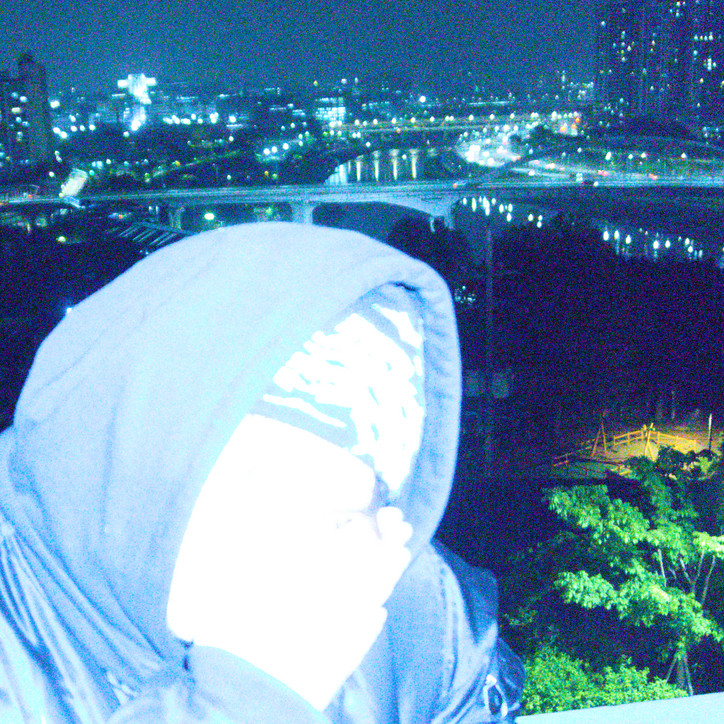
Enzo Holdt— You just got back from Europe, and you're off to Asia soon, right?
Woesum— Yeah, I leave to go to Korea on Thursday. Then there’s quite a few bits coming up. It’s my first time going to China, so that’ll be very cool — I’m excited.
How do you feel about the touring life? Do you thrive on the road?
It’s a bit of a double-edged sword. I’ve really enjoyed playing this tour — the venues let me shape the set the way I want, moving from intense to calm and back. That’s harder in club shows. But the travel and everything around the shows is exhausting, especially on a small solo run.
Do you have any rituals while touring?
I guess that’s the part I’m trying to figure out the best way. The best approach has been treating shows like a job: go home after the set and don’t treat it like a party. I had almost two weeks in Stockholm to decompress with family and friends and do everything except music, which really helped.
When you say “everything except music,” what does that look like?
Mostly watching movies and being by myself. I’ll hibernate for a few days, avoid heavy social activity, and hang with a few friends and family. I’m always making music, so sometimes I have to force myself not to open Ableton.
What have you watched recently?
I really like horror films. I went to see Pulse (2001) at a rerun in London — that terrified me, but it was so good.
How about scandinavian cinema?
The Kingdom by Lars von Trier messed me up as a kid. My dad put me on that when I was eight — way too early — but I couldn’t stop watching. And The Seventh Seal — that whole chess-with-death thing is timeless.
That’s so early.
Yeah — my dad was like, “it’s an old one,” said it was R-rated, and just put it on. I was terrified, but I loved it — it stuck with me.
I noticed you worked a lot with visuals elements such as lighting on this tour. Talk to me about that.
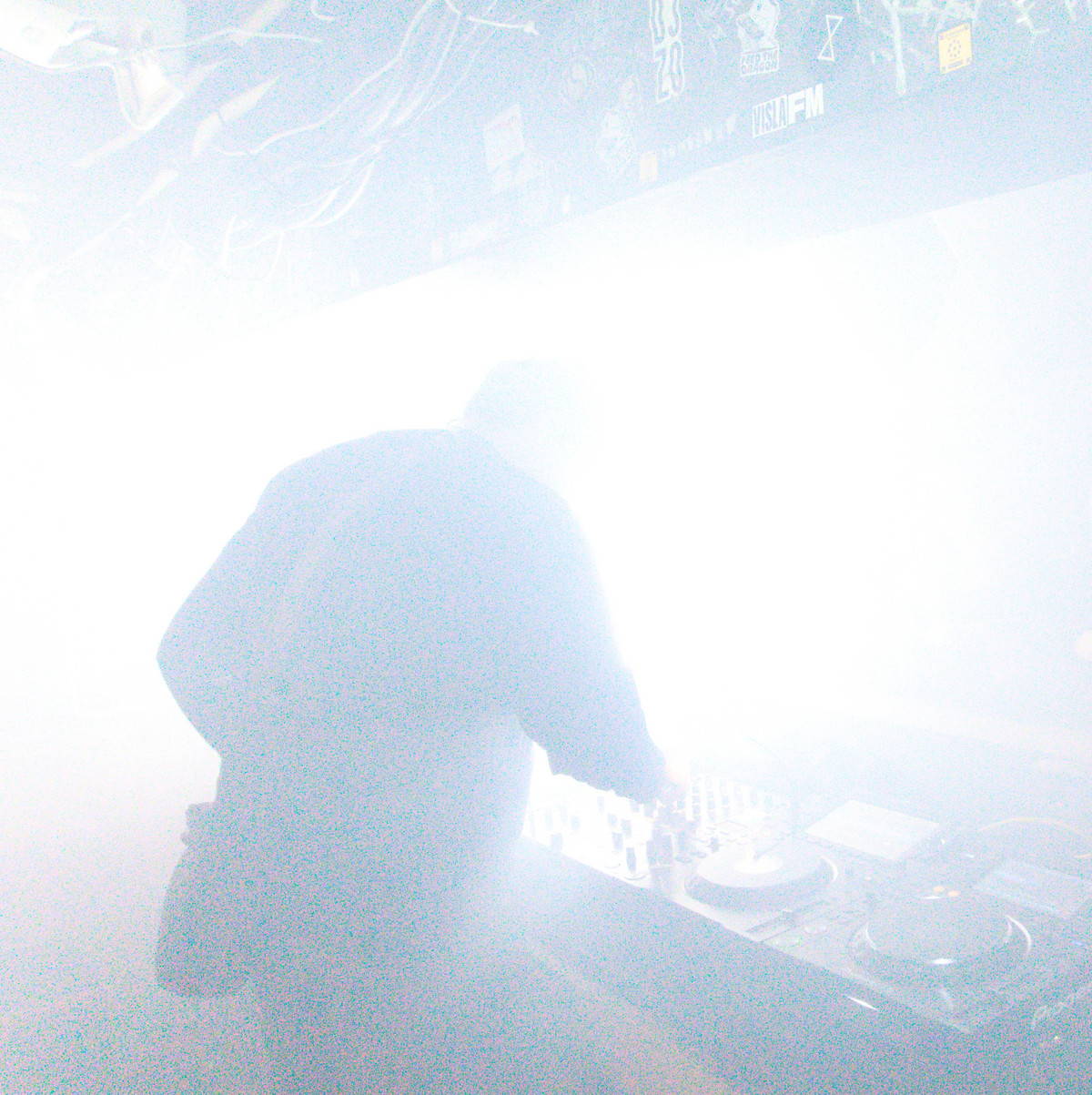
I have kind of very strict guidelines for how I want the lights to work with the music. It’s definitely something I want to delve deeper into, and hopefully in the future maybe get proper LED screens and all of that because I’ve been wanting to do a proper visual aspect that goes along with the music. But you can create that with just a light show as well, and if you work with proper venues — which I was lucky to do this time — you can get really good collaboration between lighting and music, which I think is very important. I do think the music itself is the most important, but when it matches with the visual components it becomes something completely different.
Have you always been interested in working with visual elements to accompany your music?
I think very much it’s been about the music — the majority of my career I’ve been the producer behind stuff more than necessarily the artist, especially before I dropped Blue Summer. Visuals make a huge difference. But bad visuals can turn me off a song, so when it’s my turn to shape the visuals I take it seriously. I’m lucky to work with friends — the drain gang and Sad Boys — who are masters at this. For Protected, about eight people worked on the artwork; I’m not a visual artist, so I rely on people I respect.
Walk me through Protected. When did the idea come?
Every time I go to a session — whether alone or with someone else — you sometimes leave with nine new songs. The same happened for Blue Summer and Protected — the songs just happen, and then you sit on them and start to see a pattern in the stuff you’ve been working on. Then you start compiling them and it becomes a project. After the Paradise Tree EP, which was ambient and lullaby-ish, I wanted something more aggressive, bass-heavy and club-friendly. The songs I thought about for that idea started to show up, and I realized there was a whole project there. Most songs on Protected were finished the same day they were started; there’s not a lot of post production.
Are there older songs on the EP?
Yes — one track is six years old, another predates Blue Summer, and some are recent. If a song still feels right after years, it’s stood the test of time for me at least.
How did you come up with the title Protected?
When I was compiling everything for this project, last fall I had an introspective time. We’ve had some wild years, and I think everyone — especially me — had moments thinking, “Am I going to kill myself doing this? Am I taking care of myself?” I had a moment where I felt I needed to figure out how to do this in a way that works. I felt like there have been so many moments when it could have gone so wrong and it didn’t. It felt like there’s been some kind of “protection” over us — protection from friends, or a spiritual protection. That idea kept popping up, and the songs felt like a mix of the end of times and the start of something new. That’s where Protected came from.
What do you hope people take away from the EP?
I want people to have fun with it. I was trying to make something more for the clubs, but it’s also dramatic and introspective. I hope it evokes introspective emotions. For me, songs like “MourningStar” can be played in a club and still feel melancholic — that cry-in-the-club thing is what I like: fun songs that make you feel something. Ultimately I want listeners to decide what it means to them.
You told me that you’re working on a new album. Is that a continuation of Blue Summer?
It's not a part two. But the next album will be more vocal-forward — I love vocalist collaborations. The last two projects were fully instrumental, so I’m excited to shift focus.
How do you decide if a track should remain instrumental or get vocals?
You just hear it. With Protected, a lot of the stuff felt already full and there wasn’t really space for anything else, so it stayed instrumental. Other tracks you make and you think, “This just needs a vocal.” It’s obvious from the jump whether it’s instrumental or needs a singer.
You’re on the new DJ Billybool project too (Thaiboy Digital’s EDM project)— when was that made?
The start of that song was made three years ago in Bangkok around 6 a.m. I was literally going to bed and he came in like, “No, fuck off, wake up — we gotta make a song.” I was so tired but we made something half asleep, and he laid down the whole vocal. We sat on it a long time and later he and Eurohead expanded it into a full anthem
What’s the studio environment like with Thaiboy and the other drain gang members?
It’s very friendly because we’re all friends. It’s not work vibes at all. Thaiboy is one of my favorite people to work with — we make fun music together. With the Swedes it feels like hanging out: we go to the studio, shoot the shit, and sometimes someone’s making something in the background and suddenly it becomes a song. It can be anywhere — studio, hotel room, someone’s crib. A lot of the stuff with Bladee on Blue Summer was made in his living room at night while we were watching TV. I’d be making beats for fun and he’d grab the mic and record in four minutes. Then we’d continue watching TV.
When did the worlds of EDM and Hip-Hop start to overlap for you?
Hip-hop was always big for me — the first CD I was given as a kid was 50 Cent’s Get Rich or Die Tryin’. My sister is six years older and she got into sites like PlayAhead back in Sweden where people put music on their profiles — it was full of Basshunter, Eurodance, Axwell edits, Tiësto edits, etc. We shared a computer and her downloads filled it with all these tracks (and probably viruses). She showed me that world when I was 10 or 11 and it opened something. It felt like a guilty pleasure then because friends didn’t think it was cool, but I loved both rap and that EDM world. I kept trying to make both, and eventually the relationship between the two happened naturally.
How do you measure success?
What means the most to me is meeting people on tour who say the music helped them through hard times — that’s intense and humbling. If my friends and people I admire think it’s cool, that’s enough for me.


“Julian came to shoot with us for a couple of days, just before we moved out of our house on Laguna Road, the place the new album is named after. We hadn’t planned to make a video, quite the opposite. We simply wanted to capture a quiet portrayal of our life at the house where this music was made,”explains Nini Fabi, the band's lead singer. “When we filmed the pulling of the thread, it was very much in the moment, and there was something cathartic about it. But looking at it now, it’s striking how deeply it connects to the song and what it means to us. It’s a song about Benny [Gebert, her bandmate] and me, about our relationship from the very beginning. About the promises, the negotiations, and the expectations we create in our minds.”
“Creativity and love are both a process of unfurling, of curiosity,” Julian Klincewicz shared with us. “Haerts and I have been collaborating on visuals for almost 10 years — an ever-evolving process. This new album has a simplicity to it, a straight-forwardsness ... and the music video does too: a visual allegory, one of connectedness, of pulling, of tension, of unison, of mystery and desire, and ultimately, of pure process. It's one of my favorite video pieces I've made in a while, and it came about almost completely spontaneously ... as if by magic.”
“Laguna Road is about looking back, a 'piecing it together' album. Sonically we moved away from what we had done on our previous records. We wanted this album to feel raw and vulnerable. The songs move slowly and we leaned into that with a light hand on production.” adds Benny Gebert.


On Childhood, Drive & Family
Tell me a little about your childhood. Any memories that stick out to you today?
Honestly, it feels so long ago, it's hard to remember sometimes. But music was always a big part of my life. I remember my dad driving me to my mom’s office and we’d always be listening to music in the car.
It seems like your family has instilled a real sense of greatness in you. I saw your sister just received her Ph.D, as well—where does that drive come from?
My mom, for sure. She’s so ambitious. She’s worked in finance, marketing, and in the Ghanaian government. She’s always set a strong example for us. One thing she’s always said that’s stuck with me: “When you’re working with others, always be kind and polite.” That’s shaped how I move in the world—how I lead, how I collaborate. I try to create fair, just working environments.
What’s it like working so closely with your mom in your career?
It’s been... interesting. We've learned a lot about each other. I’m more free-spirited and edgy; she’s more conservative, but also very open-minded and extremely hardworking. We’re both strong thinkers. We disagree a lot. On work calls, she’ll be the one to say, “Don’t do that,” and I’ll be like, “No—you don’t understand!” Not just because we’re mother and daughter, but because we’re coming from different schools of thought.
She’s a conservative African mom in many ways. She’ll see a picture and ask, “Are you smoking now? Why?” And I’m like, “Relax! I don’t smoke every day, it was just for the photo or the vibe.” She's always reminding me I’m a role model for young African women, especially because I’m provocative and she’s more traditional. We don’t always agree, but I respect her deeply.

On Black Girl Empowerment
I’ve heard this new era is about Black girl empowerment. What made you want to center that? Is there something you wish you heard sooner—something you’ve been affirmed in or are unlearning?
Everything I do is about empowering Black girls. When I think about my music, I mostly see alt Black women. This era is different, though—it’s about being a Black Star. That phrase means something to me: my daily existence, the people who love my music, the energy we create together.
I was thinking about what it means to be a Black Star—not just within myself, but in how I pass that feeling on. It’s important. We don’t see enough Black girls get to be stars. We’re not afforded as many opportunities to be mediocre and still receive visibility or resources.
I know how much I’ve had to master my craft, how alert I have to be, how I built my business from the ground up. So when I think about who I want to give power to, it’s Black women. Only them.
And how have fans responded to that energy?
That’s been the most affirming part. The fan interactions are the rollout. Like when I tweeted, “I need 50 of the most beautiful girls to meet me at the park,” and 50 Black girls showed up. They share their stories with me. And in pedestalizing me, they’re pedestalizing themselves. I make sure they know I’m accessible. We can talk. We can hug.
What’s something you’ve had to unlearn?
Patience. With myself, with others, with the process of life. That’s been my biggest area of growth.
On Creative Process & Place
You’re not new to this—what’s a non-negotiable part of your creative process now?
I like to make albums in new environments. I travel somewhere I’ve never been—like the Canary Islands for Angel You Don’t Know. The fresh air, the horses grazing in the streets... it opens me up creatively. For Fountain Baby, I went to Brazil. The people there are so free in spirit, in thought, in love, in art. No barriers. They enjoy life to the fullest. It was beautiful to be welcomed into a community I didn’t know I had—and to bring my team along for the ride.
Where in the world has shaped your artistry most?
My hometown, Ghana. It’s the first place I had any real contact with anything—food, music, love, art, family. From being 14 or 15 to now, that’s where it all started.
What’s your comfort meal?
We have this dish called waakye. It’s like a rice and beans stew with avocado, onions, burnt shrimp paste, shito, pepper, gari, spaghetti... I need all of that.


On Play, Persona, and Performance
How have you been having fun this time around?
By centering the fans—not just mine, but the music of others. I’ve been curating experiences with DJs from the community, and making it about their stories too.
Your voice can be soft, sharp, playful, powerful. How do you choose which vocal persona shows up in a song?
It depends on what I want to communicate. Mischievous? Sharp. Vulnerable? Soft. Sometimes airy or smooth. Other times I want to scream. I just follow the song’s energy.
Any lyrics from the new project that feel especially close to you?
Yes—several. One of my favorites is from “B2B.” It starts playful and cheeky, and then gets really somber and reflective.
“I’ve been into you, I like what we do / Now come into me, see my point of view.” “It took me years to see the signs, bitch, I was on the cusp.”
Another one is “Dream Scenario”:
“Kisses in the key of love, it’s ebony / Angel when you breathe into me, heavenly.” “My bitch style like Edna Mode / Can’t put on no cape for her!” “Yes my life is wavier / But she make it wavier ier ier ier ier ier.” “I need a love for summer / Now, what are you gonna do with it? / I know my heart is sensitive / What are you gonna do with it?”
You’ve been playing festivals—and more are on the way. How do you think about your live shows?
What’s the dream version? A small crowd—like 100 people. I just want to sing everything acoustic. Some B-sides. Even the stuff I put on SoundCloud.
On Joy, Humor & Style
I saw you retweeted a Druski video. Got a favorite skit of his?
Yes! The one he did a couple years back about football moms of middle schoolers and then the recent white “Y/N” one killed me.
What’s been bringing you joy lately?
Hanging out with my family. Going to Paris for fashion. Just being surrounded by people I love.
How does your current style reflect what you're feeling inside?
I wear all black all the time because I am the Black Star. It feels like armor. I feel invincible.