It’s interesting to talk about Index right before Vaginal Davis’s retrospective at MoMA, as you published Davis three times during a period when no one in the art world was taking her work seriously.
She’s so much fun. I met her a few times, and she has this great sense of humour – just a pleasure to hang out with. It was a similar thing with Genesis P-Orridge in the art world. I had seen them perform and after her interview someone said to me, ‘I think you’re the only magazine who would have interviewed Genesis and not ask them why they wore a dress’.
You once said it was boredom which made you start Index.
Along with that, the desire to connect with people outside the art world. As an artist, I was always interested in other genres like film, architecture and music and I felt it was important to say that fine artists can be influenced by these genres – now it’s everyday to see such collaborations happen. The art critic Bob Nickas who I co-founded Index with was also into some very interesting things. Through that we arrived at a magazine that dealt with the whole range of culture.
What made you position Index as a kind of anti-Vanity Fair?
It’s funny, because in the last few weeks – partly because of the exhibition in Paris – I’ve been reading books by Tina Brown – who was a groundbreaking editor – and Graydon Carter. They produced terrific magazines, but they were totally involved with Hollywood and stardom. In a way, we were the anti-Vanity Fair. People always talk about Interview, and that was our inspiration. We definitely weren’t mainstream, but we also interviewed people in the mainstream who we thought were interesting. One thing I used to say is whether you're doing something for money or because you believe in it, makes a big difference. So, the people in the mainstream that we interviewed, we thought they had integrity as opposed to just being commercially viable or in it to make a lot of money.
Many of the indie stars you interviewed were just starting out and would become big names. How did you scout them out?
We just had a great network. We weren’t really interested in the ‘cool’. In our case, somebody would read a book or go see a movie or bring in their favourite band. We interviewed Kim Gordon from Sonic Youth as that’s what people at the magazine were interested in. I used to joke around in the ‘90s that we don't need the worldwide web because what we had then in New York City was a wide intersection of people coming together.
Did you and Chloë Sevigny – who was the underground It girl then – ever cross paths?
Well, this is a little embarrassing! We never interviewed her because in our circle, she was too famous – she'd been on every cover of all other indie magazines. Or, you could say we were too late, and she had already become an indie star. We were very competitive – if purple or any other indie magazine did something after we did it, we'd be very happy that we had been the first ones. We introduced Scarlett Johansson which was a surprise as we wanted to interview the director of her film ‘Ghost World’ and he wouldn’t agree. So, they said, do you wanna interview this actor, Scarlett? We said, sure. She was seventeen.
One of your photographers Leeta Harding would define the rave aesthetics of the 2000s. The picture of Björk she took with her pretending to sleep with her teddy bear is something we’d see today. How was Index transforming magazine photography?
The big inspiration was Wolfgang Tillmans. Juergen Teller was already well known when he asked if he could shoot for us. It was a magical situation where a photographer like that would work for us for a very small fee, because we gave them creative freedom. Wolfgang photographed our covers for the first year and I realised that most of the well-known people he photographed was through Index. I think what Wolfgang really wanted to do was photograph real life – not in the studio with studio lighting and styling. That really set the stage for our photography, and it really went with the interviews we wanted to do, which was really about what these artists thought about their work and life in general.
That was the vibe of the Marc Jacobs interview right before his menswear show in 2001.
Mary Clarke, who interviewed him, was his friend. It was nice to humanise somebody like Mark Jacobs, as having personal connections and not always being on the runway. The other day I had a talk with an American actor – I can't mention her name – and I said, could I do an interview with you about a past interview that had been in Index, and she said, no, I can't do that Peter, because with social media people will take it out of context. That really wasn't a problem back then.
We read a lot about Interview’s office with artists popping in and it being a busy place – what was the Index office like?
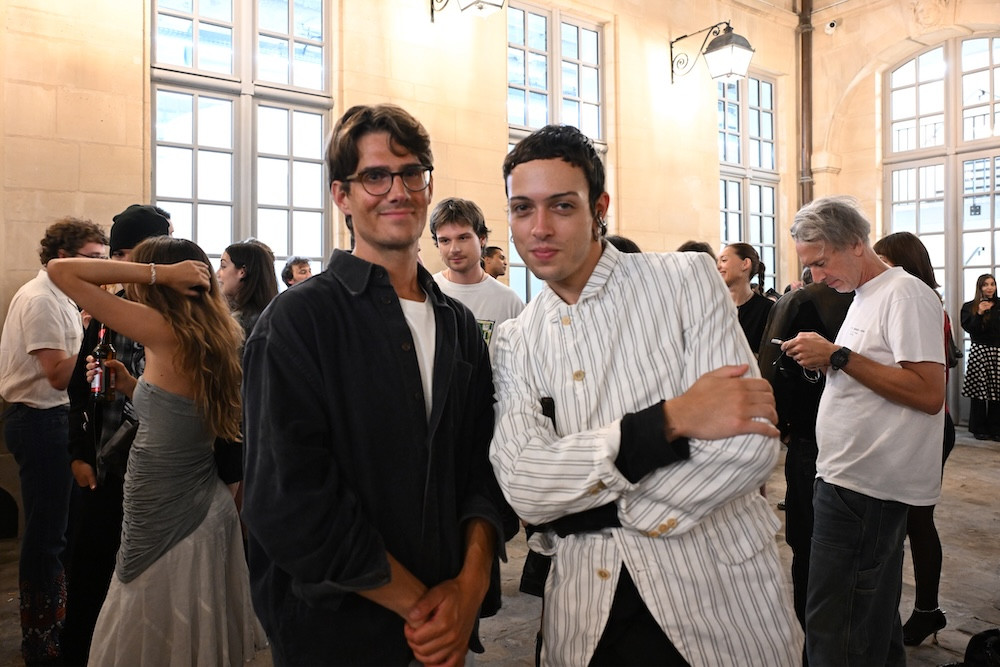
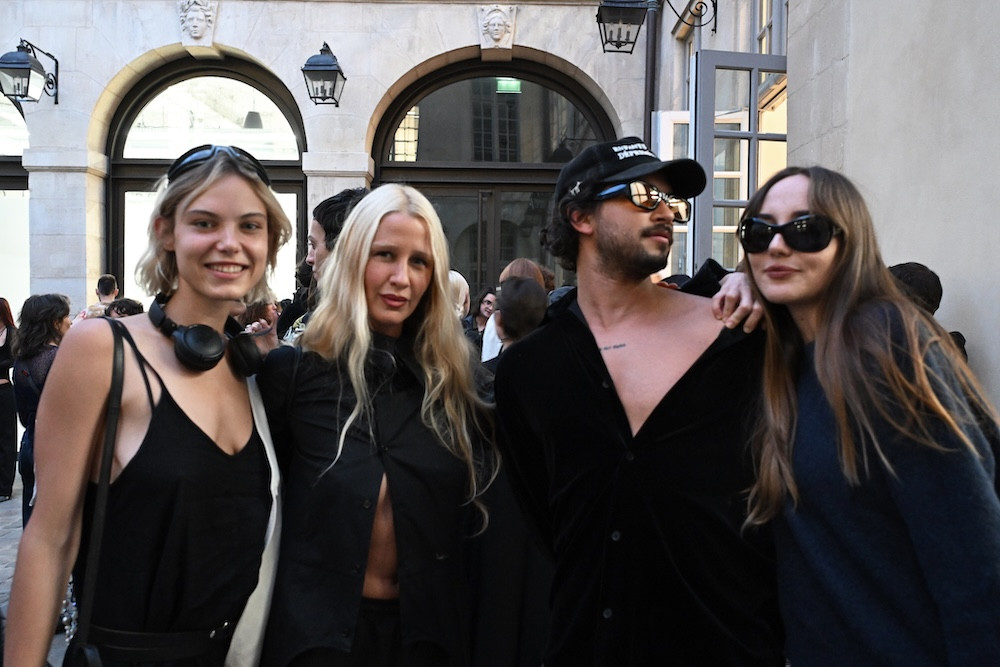
It was in my studio (laughs), and I spend most of my time working on my paintings, but people would be coming in and out all day. Most of the people who worked at the magazine were in their 20s, and I'd always hear about all the drugs they were taking and their extracurricular activities when they weren't at work (laughs). It was quite lively, but it was difficult because there were always money problems. Initially it was funded through my work as an artist and then twenty-five-year-old Michael Bullock came in with a real talent convincing people to advertise in Index. The magazine stopped after I became the Director of the MFA Painting program at Yale in 2002 and I wasn’t in a position to put together a new team after our editor stepped down. We had fun – we'd have a party for every issue in clubs or restaurants that were just opening.
It’s refreshing to find individuals like Octavia Butler and Slavoj Žižek in Index – not many indie magazines would consider an interview with them either, considering they slide more into the realm of cultural criticism. How did that become a significant part of Index?
What I did right as a publisher is let editors have their own voice. If Ariana (Speyer) wanted to go in the direction of politics, that was great. My own suggestion was a playwright named Eduardo Machado who wrote plays about his family's history in Cuba. And I also interviewed a poet named Wayne Koestenbaum, who was one of the real heroes of queer Theory in the ‘90s. In the first years of Index, somebody asked me, ‘Peter, why are you publishing a gay magazine?’ I said, well, it's not a gay magazine, but I really think Index had a queer sensibility. Queerness to my mind isn't a question of who you sleep with, but it's a certain kind of attitude towards culture, and it did emerge in the ‘90s when the sort of ghetto between straight and gay had really broken down.
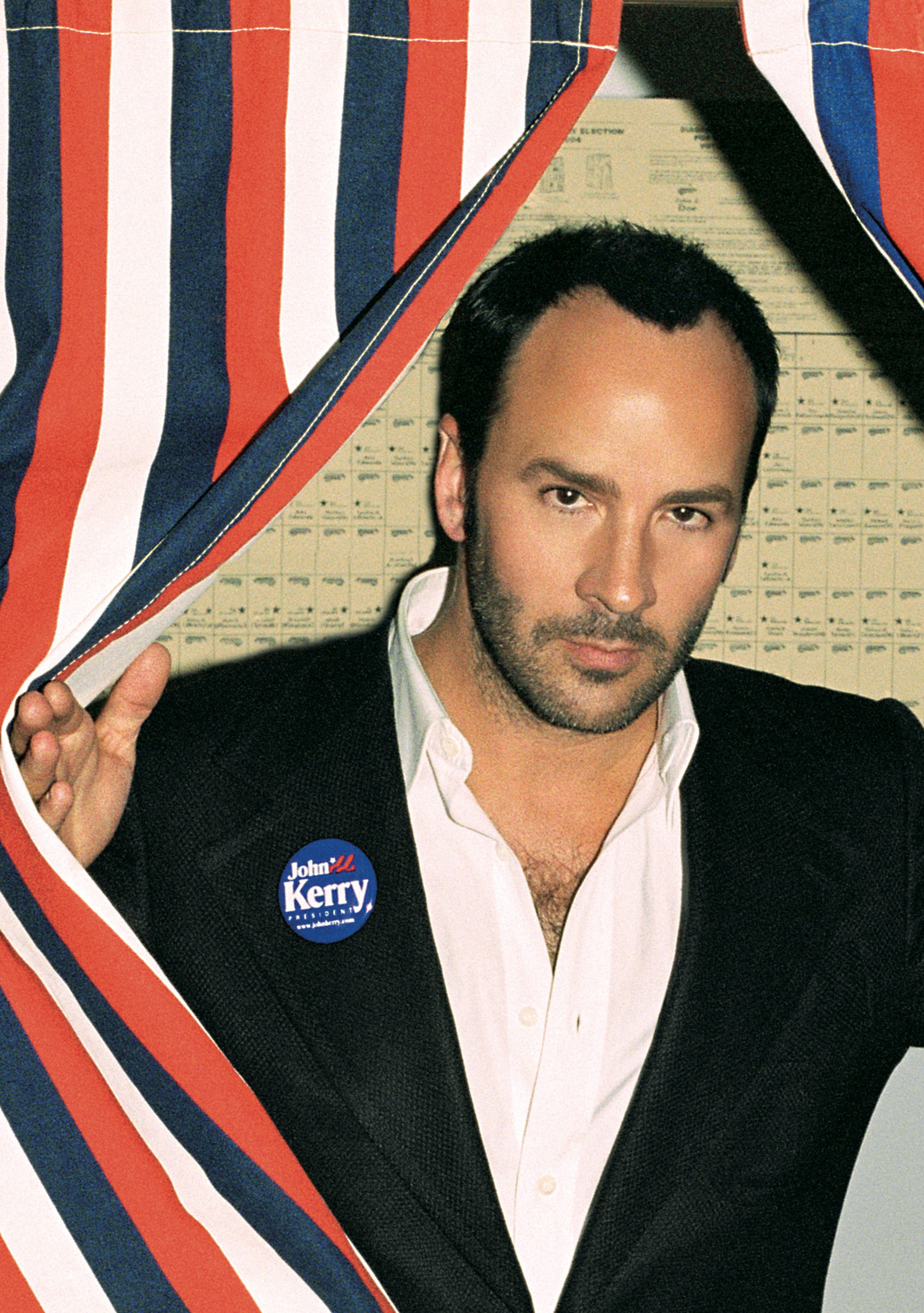
It was interesting how designers were able to staunchly express their political views through this direction – like Tom Ford’s interview right before the 2004 elections when Bush was re-elected.
He had bought a painting of mine. It was the worst of the Iraq War and one reason Tom did it was because of the election. We really didn't want to see George Bush get re-elected and it seemed like John Kerry could win. We oriented his interview around it, and we were also able to interview Keyy’s wife – Theresa Heinz Kerry – who is a really interesting person. We also interviewed Patricia James who was on the city council and now she’s Attorney-General for the New York State and may run for governor. When I took back, Ariana really had her finger on the pulse of what was going on in politics.
Did this also influence the kind of individuals you’d profile in music? Considering riot grrrl’s Kathleen Hanna was your cover girl.
I was there for that, and she was terrific. Her father was a union leader, and she really had a socialist leftist take on the world, which really impressed me because her politics were almost like mainstream Democratic Socialist. A lot of musicians are interesting, but she was really political, and that made a big impression on me.