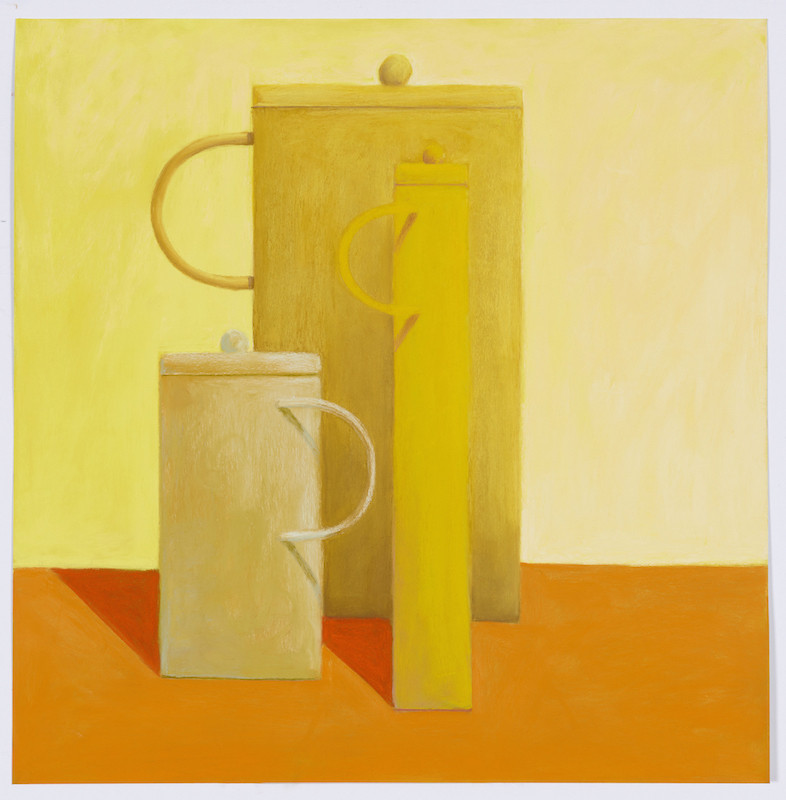
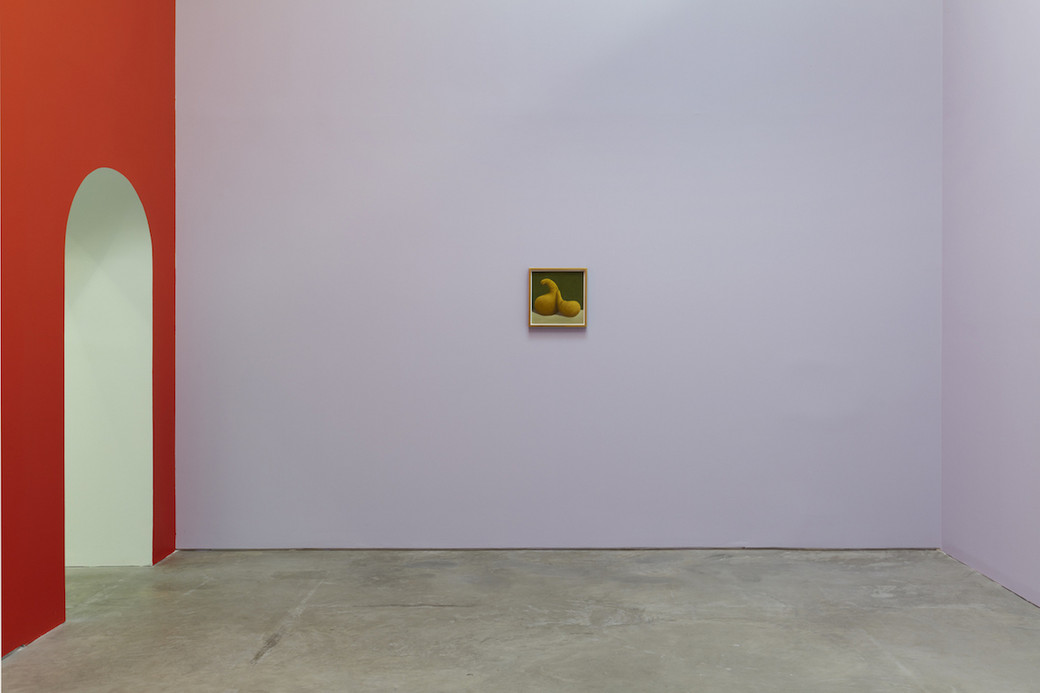
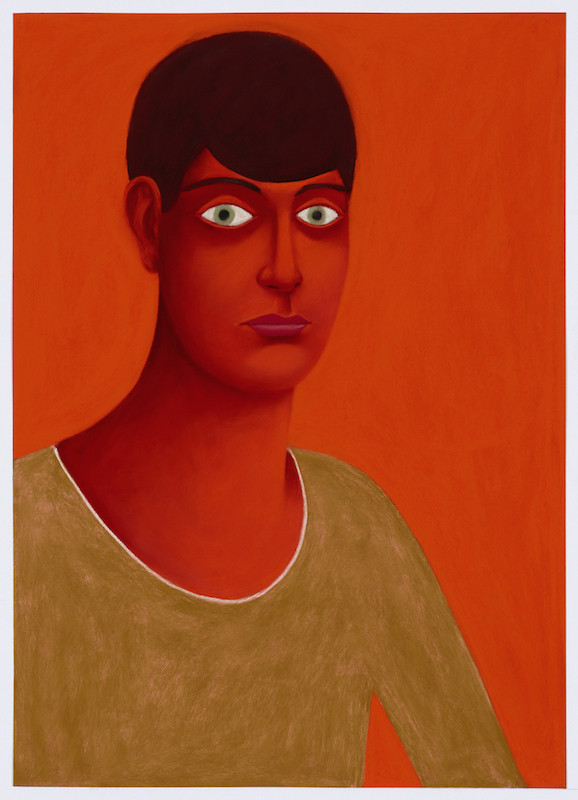
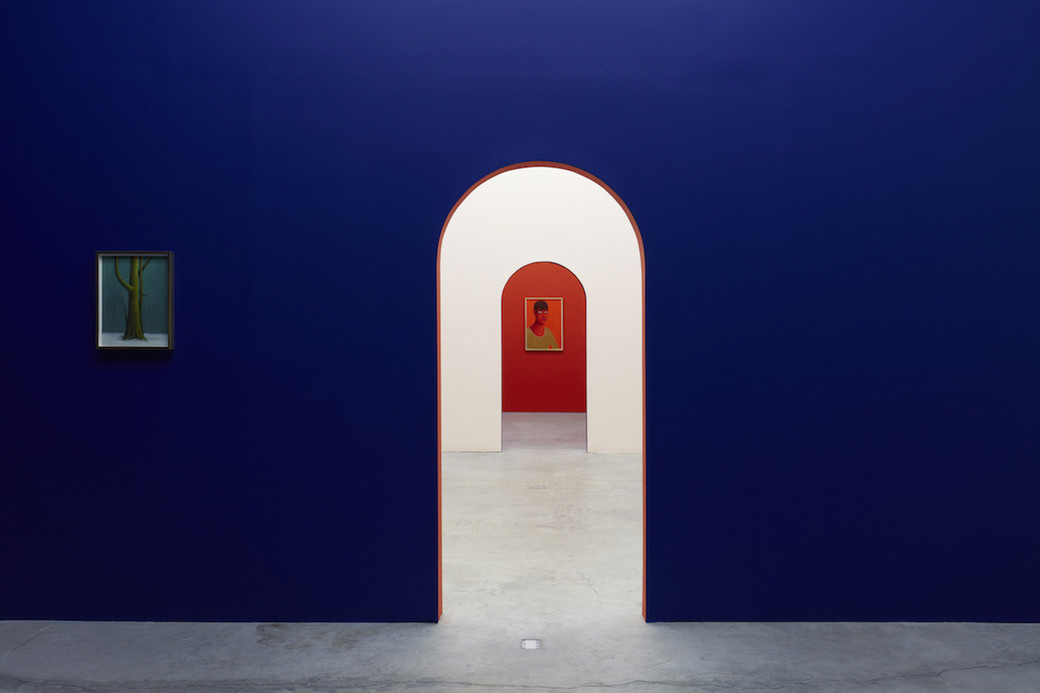
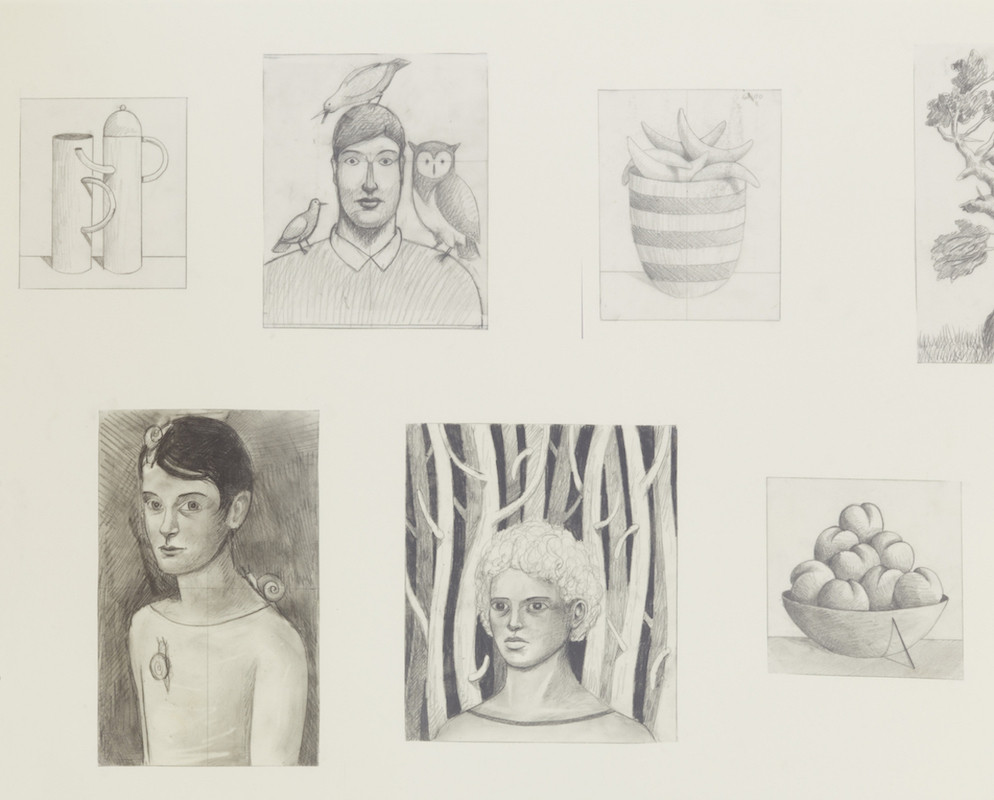
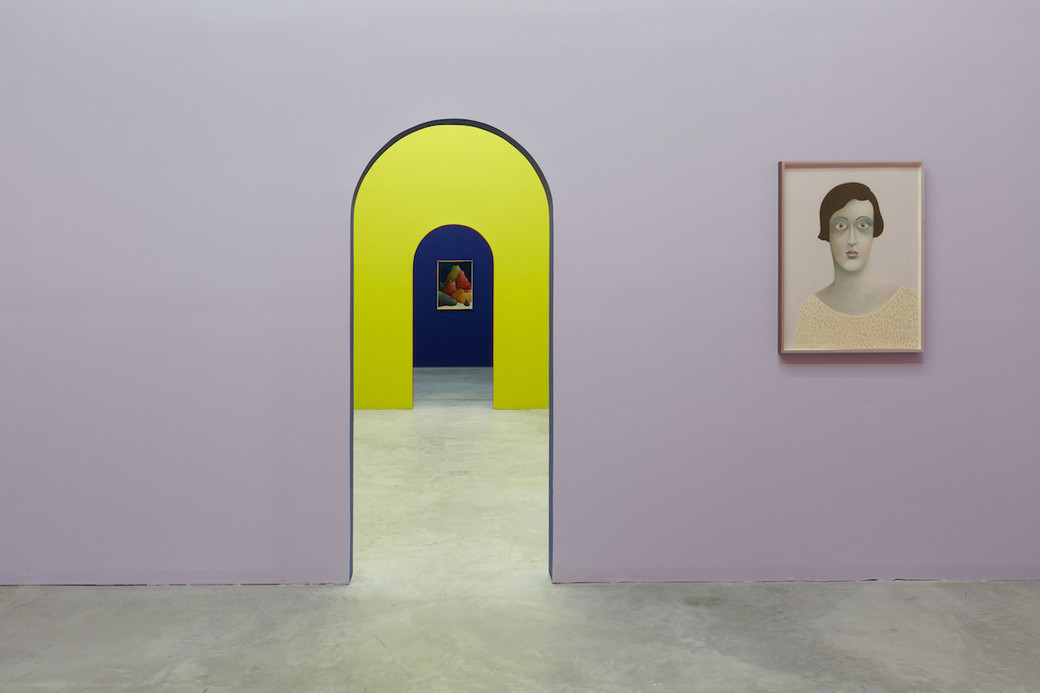
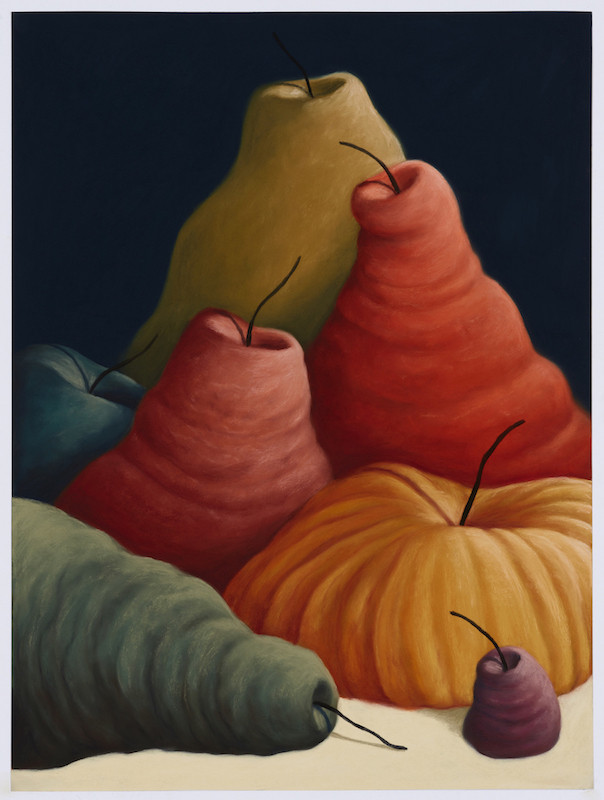
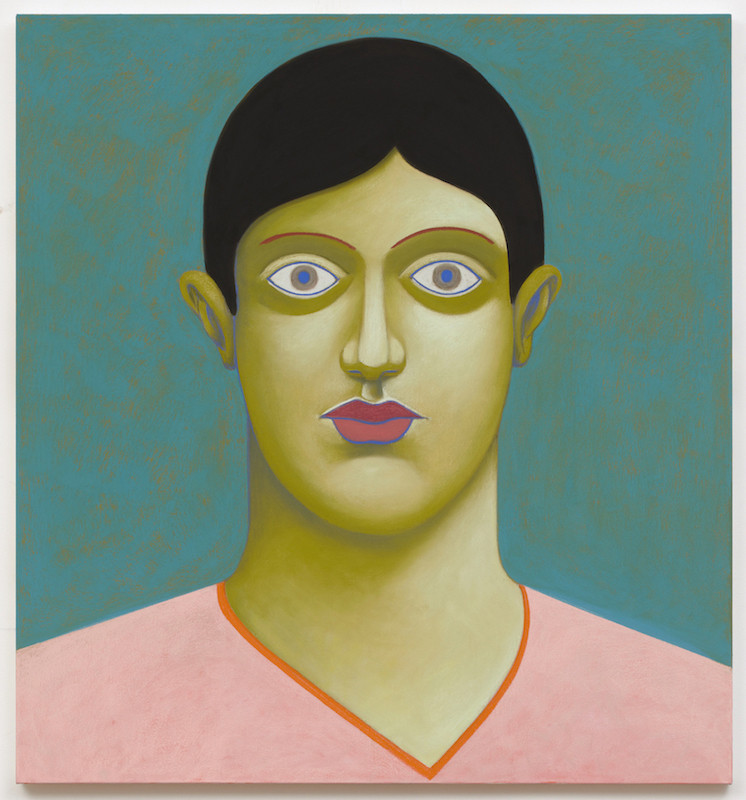
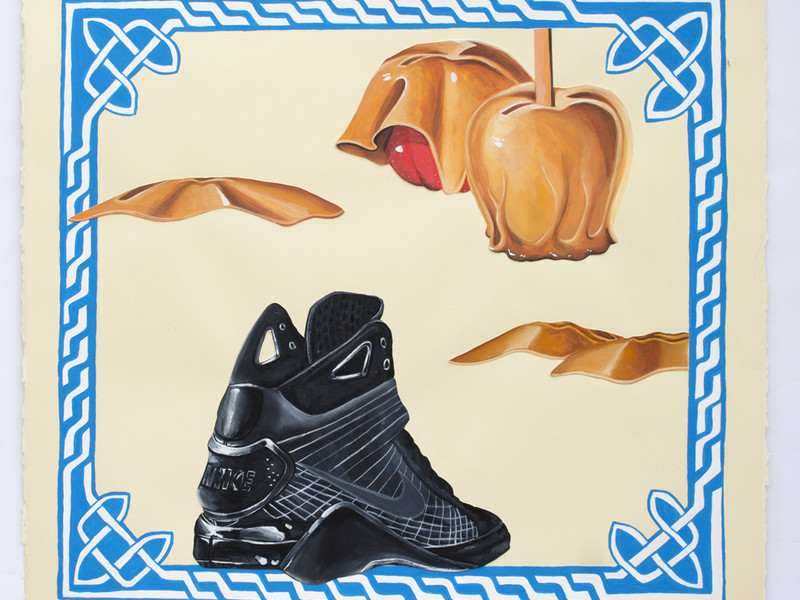
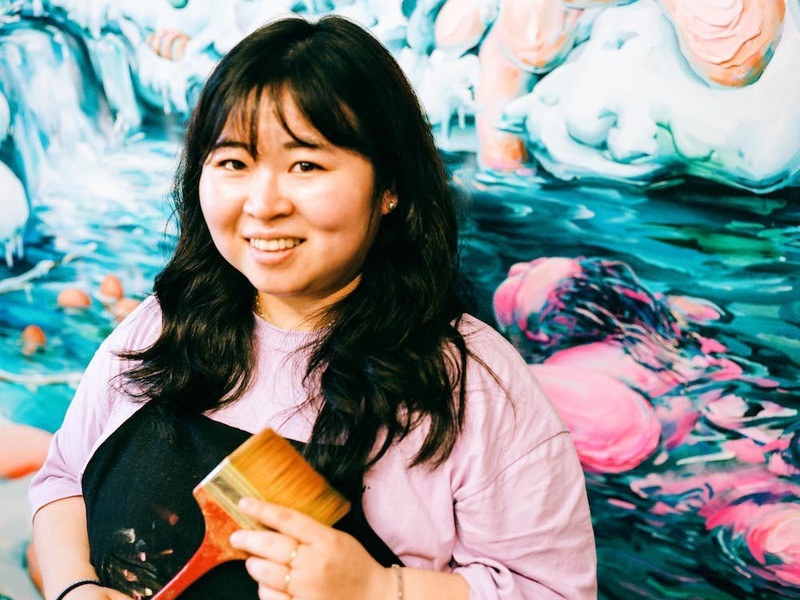
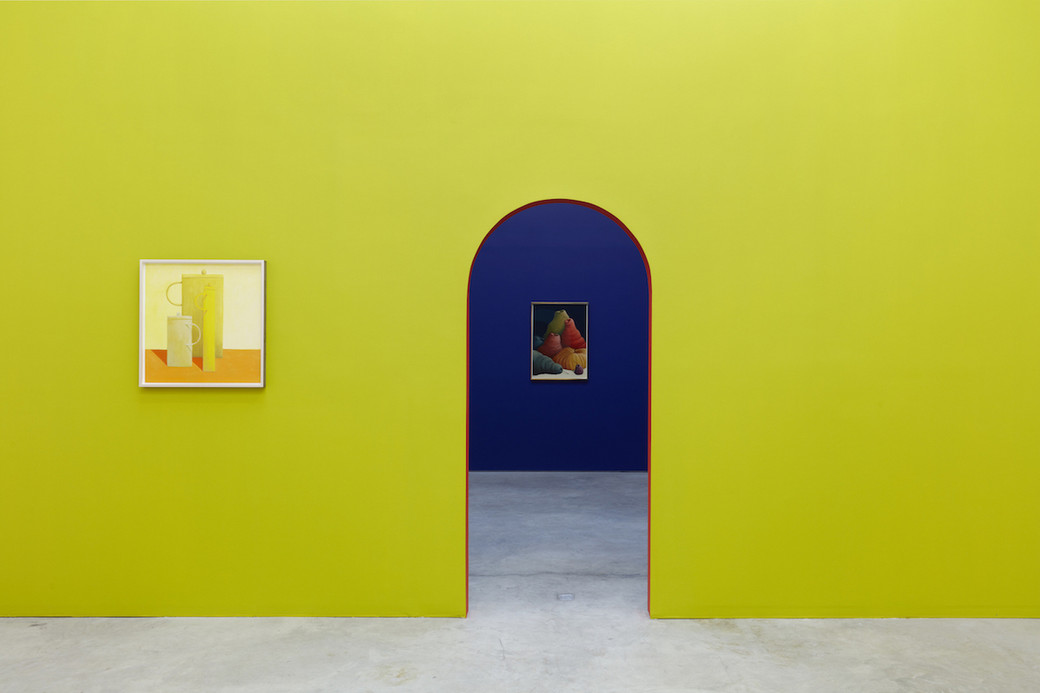
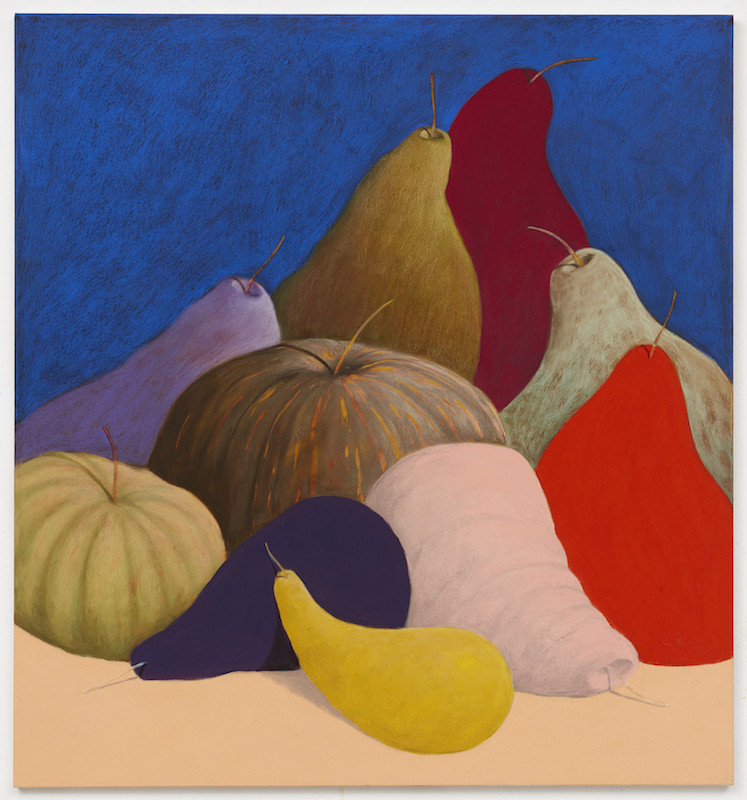
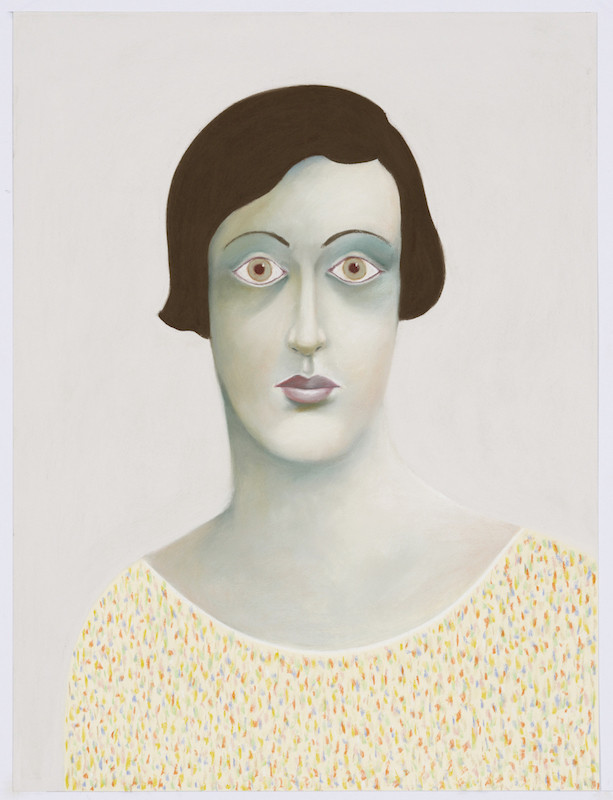
Nicolas Party's Pastel

- Nicolas Party's Pastel is on view at Karma Gallery through November 5th.
- Images couresty of Karma
- Text by Anna Zanes
Stay informed on our latest news!


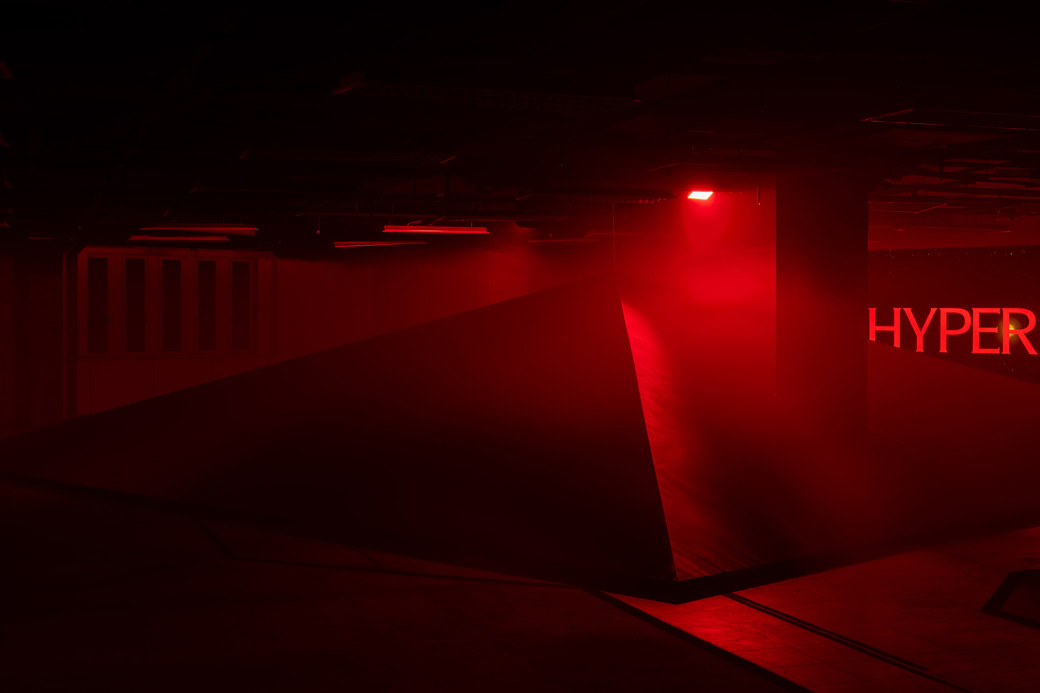
Dead God Flow marks Oyiri’s first installation in Berlin. Here, she created an environment that merges video, sound, and spatial design—with prominent light placements and fog effects used as an accessory to inform the visual narrative. At its core is an 8-minute short film titled Hauntology of an OG, developed in collaboration with Ghanaian-Canadian photographer Neva Wireko during a research trip to Memphis, Tennessee. With a narration by rapper and poet Darius Phatmak Clayton overlaying the visuals, the film reflects on resilience, surveillance, rap culture in the South, and the construction of identity.
“I really wanted to craft an environment that reflected the symbolism of the video,” Oyiri explains. To watch the Hauntology of an OG, viewers were invited to sit on a pyramid-shaped structure directly facing the projected screen. As the film unfolds, the backdrop of Memphis is revealed—a city whose name has links to ancient Egypt—subtly connecting it to Memphis’ own pyramid, a former monument now repurposed into a shopping centre along the Mississippi River.


The fate of the pyramid in Memphis offered an interesting metaphor for American capitalist motivation, which intrigued Oyiri .“The pyramid generally symbolises death, continuity and hierarchy. If you mess up the base of the pyramid, everything falls down,” she shares. This structural symbolism resonated with Oyiri’s own meditations on contemporary society and the endurance of certain power dynamics that persist over time.
The film also highlights the city’s significance as the place where Martin Luther King Jr. gave his final public speech. His assassination echoed the destined end of a shared dream for an alternative future. Within this historical backdrop, Memphis’s rap scene emerges as an architecture of sound—a moulding force and arching narrative for the film at large.


Growing up in Paris, Oyiri developed an appreciation for rap music but was geographically removed from the realities of the US scene. In travelling to Memphis, she was exposed firsthand to the differing infrastructure. “I wanted to really understand the essence of the music that I listened to and the art that I consumed. A lot of artists that I love have black southern roots,” she says.
Her visit drew her nearer to that reality—and also emphasised another line of thought. What she discovered was the passivity of individuals who consume black culture to the point of numbness, specifically regarding the gruesome deaths of black rappers and how frequently they occur. It’s a reality that her friends, who are fans of other music genres, can't relate to, she explains.
She also drew parallels between how much audiences invest in the lives of celebrities and streamers, and, by contrast, the flaunting of wealth that sometimes leads to their demise. “My idea was to reflect on the idea of destiny, predictability, and probability,” she says.


Across her mediums, Oyiri is dedicated to exploring the under-the-surface stories about contemporary culture, media, and identity. “A lot of my work is centred on the dynamic between obscurity and light,” she says. But she adds that there is also a reflection on spirituality present. The name Dead God Flow is born from her teenage angsty love for Nietzsche and its nihilistic undertones.
Her installation serves as both a gateway and a mirror, encouraging reflection on the structures we currently inhabit and those we are futuring. This impulse is echoed by the LAS Art Foundation, which similarly urges exploration of the present as a way to envision and craft more expansive futures—particularly through the transformative powers of art.
--
Dead God Flow by Christelle Oyiri will be on display at CANK Berlin until October 19th, 2025, courtesy of LAS Art Foundation.
Karl-Marx-Straße 95, 12043 Berlin, Germany
Portraits:
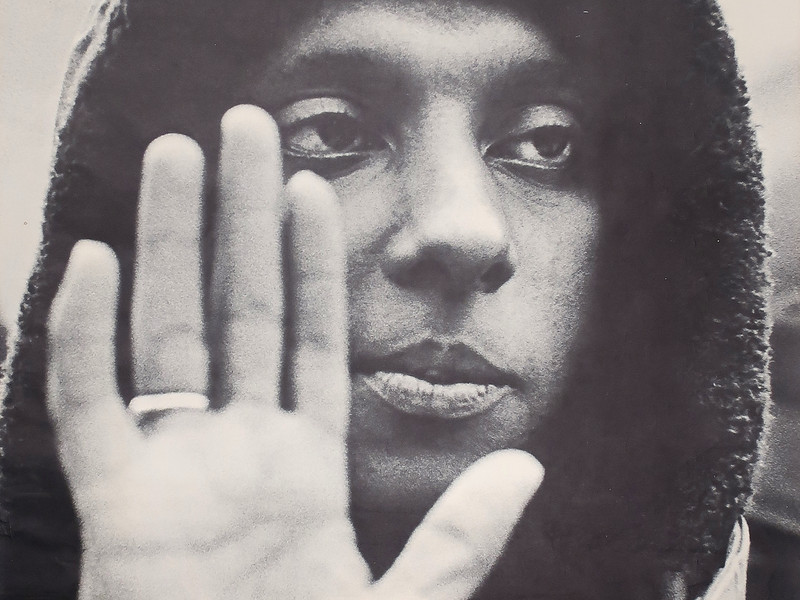
Christelle Oyiri © Gil Anselmi
Video Stills:
Christelle Oyiri and Neva Wireko, Hauntology of an OG, video still, 2025. Courtesy the artist, LAS Art Foundation, Amant and Pinault Collection. © Christelle Oyiri and Neva Wireko.
Christelle Oyiri und Neva Wireko, Hauntology of an OG, video still, 2025. Mit freundlicher Genehmigung der Künstler:innen, LAS Art Foundation, Amant und Pinault Collection. © Christelle Oyiri and Neva Wireko.
Installation Views:
Christelle Oyiri, Dead God Flow, 2025. Installation view at Cank, Berlin. Presented by LAS Art Foundation. Courtesy the artist, LAS Art Foundation, Amant and Pinault Collection. © 2025 Christelle Oyiri.
Christelle Oyiri, Dead God Flow, 2025. Installationsansicht im Cank, Berlin. Präsentiert von LAS Art Foundation. Mit freundlicher Genehmigung der Künstler:innen, LAS Art Foundation, Amant und Pinault Collection. © 2025 Christelle Oyiri.

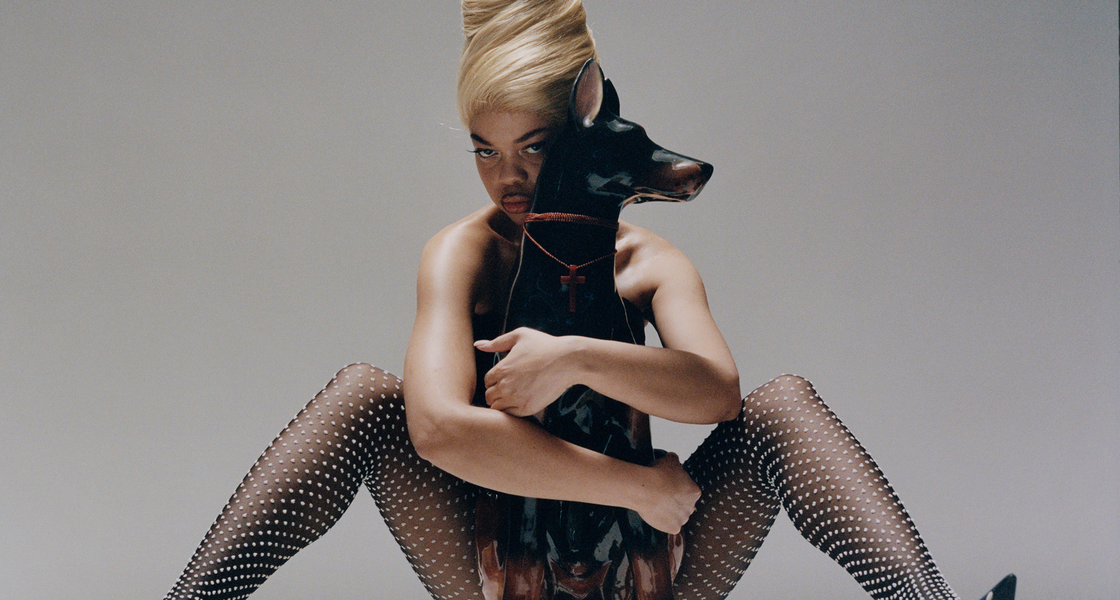
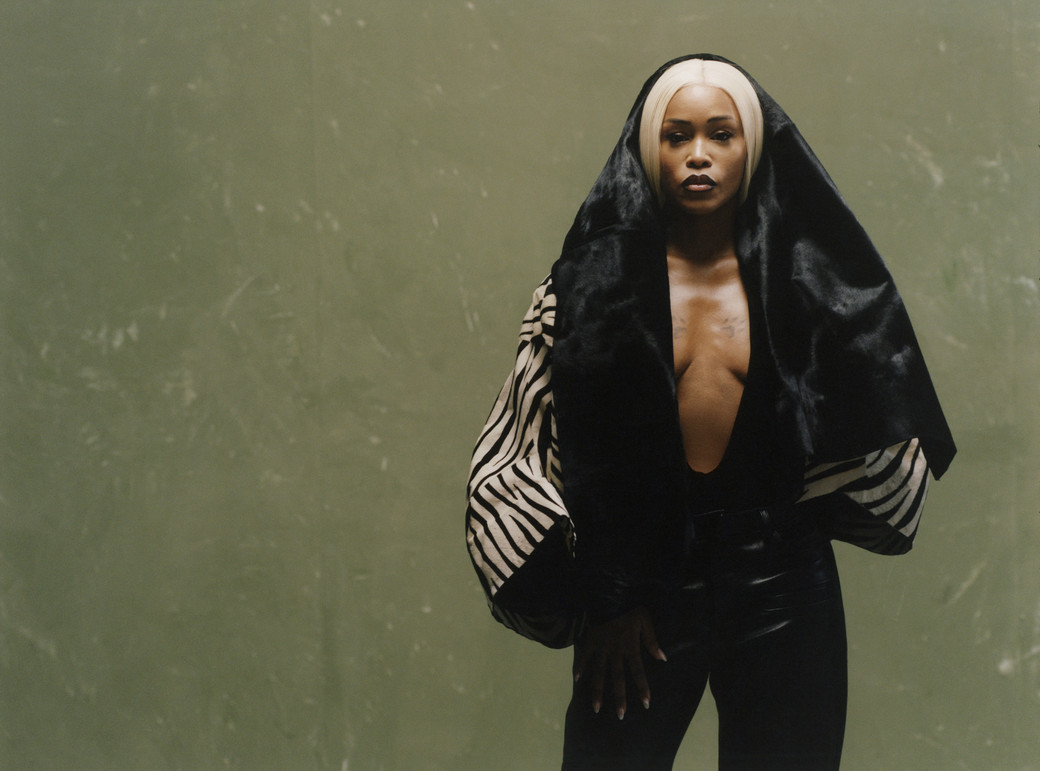
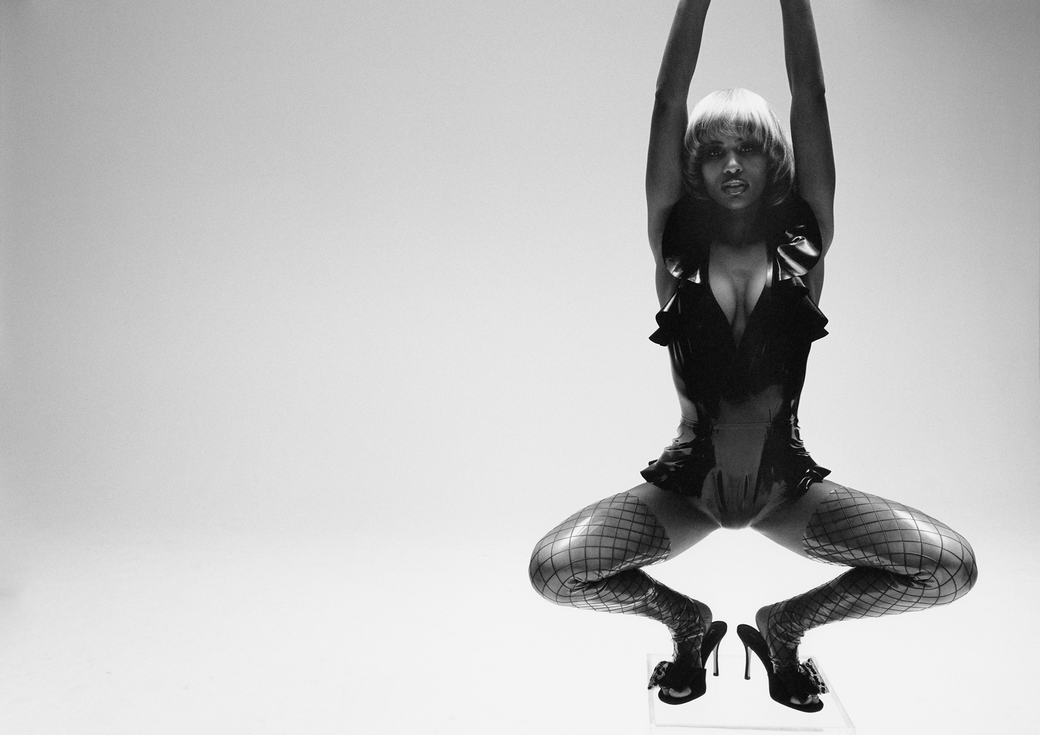
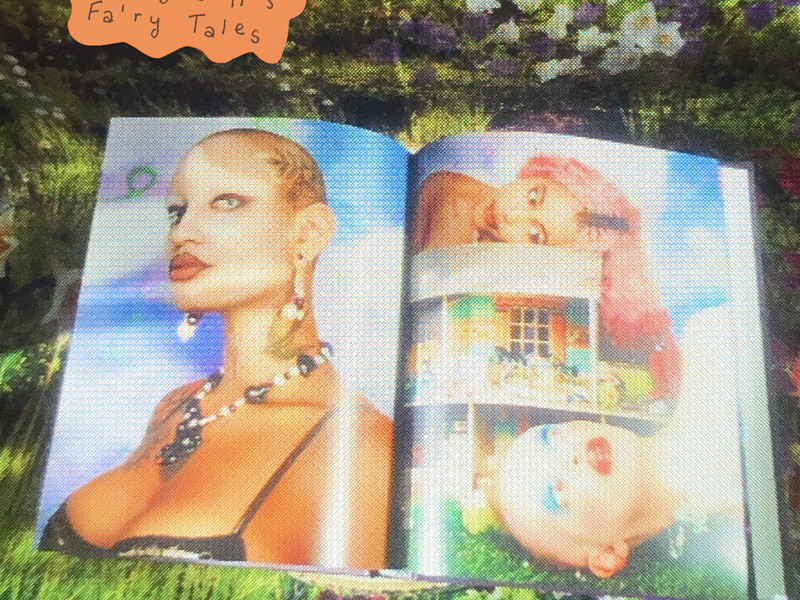
In this issue, Medrano further defines what it means to be an “Ice Girl.” She is confident, fashionable, and bejeweled by her own personhood rather than by the eyes of a collective male consumer. She is esoteric in nature, meant to embody a soul and personality that refuses to be hushed by the modern-day patriarchy. The “Ice Girl” doesn’t have a singular mask; rather, she represents a distinctive step into individual personhood. Sometimes she is dripping in chains of stars that both illuminate and conceal the glisten of her body as she pleases. Sometimes the chain tops are full of metal keys and shot front-facing, wrapping in ideas of access, secrecy, and safety.
Medrano’s images also play with the idea of taking up space. Whether the women pictured are sprawled across the floor and reflected by numerous nearby mirrors, occupying multiple chairs at a time, or laying out on a tanning bed in sheer darkness, Medrano’s work features women taking up space for the sake of taking up space. They do so because they can, they feel safe enough to, and they look good doing it.
The creative direction is inspired by the organic and unprocessed charm of Atlanta, Georgia. While Renell is a NYC native from the The Bronx, she notes feeling a strong connection to the south and aspires toward their relentless spirit and natural beauty. Medrano’s feminist vision is brought to life by her all-women team, which includes makeup by Raisa Flowers, hair by Amidat Giwa, and styling by Marika-Ella Ames. Ice Magazine Vol. 2, published by IDEA launches in New York on September 13, 2025, with a London launch following on September 20th 2025.

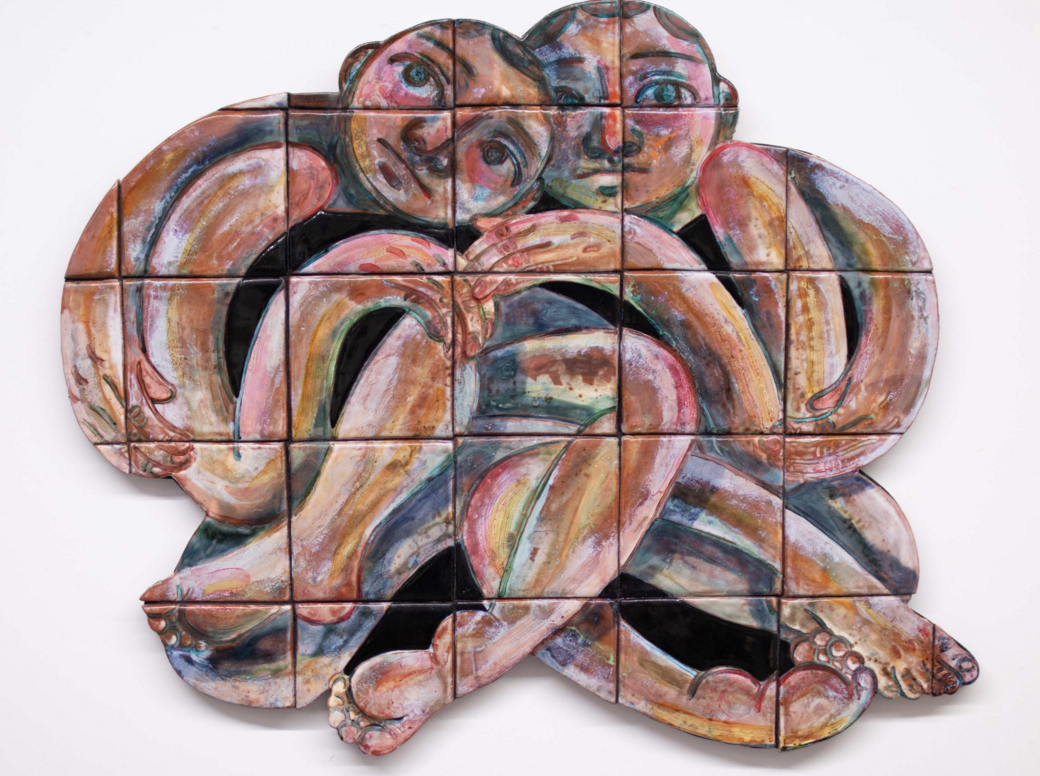
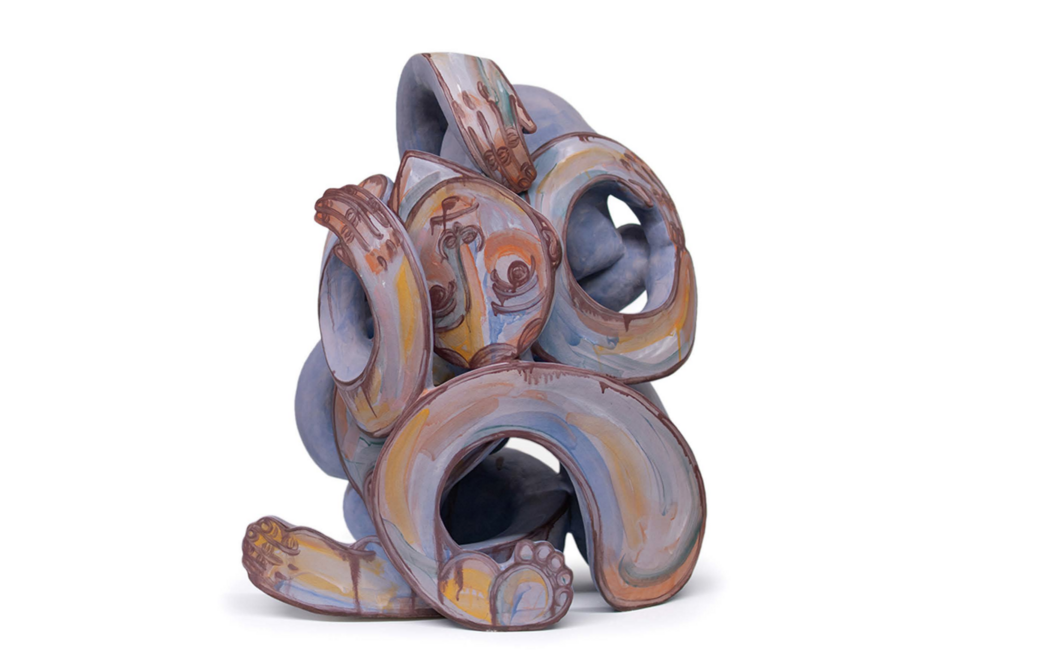
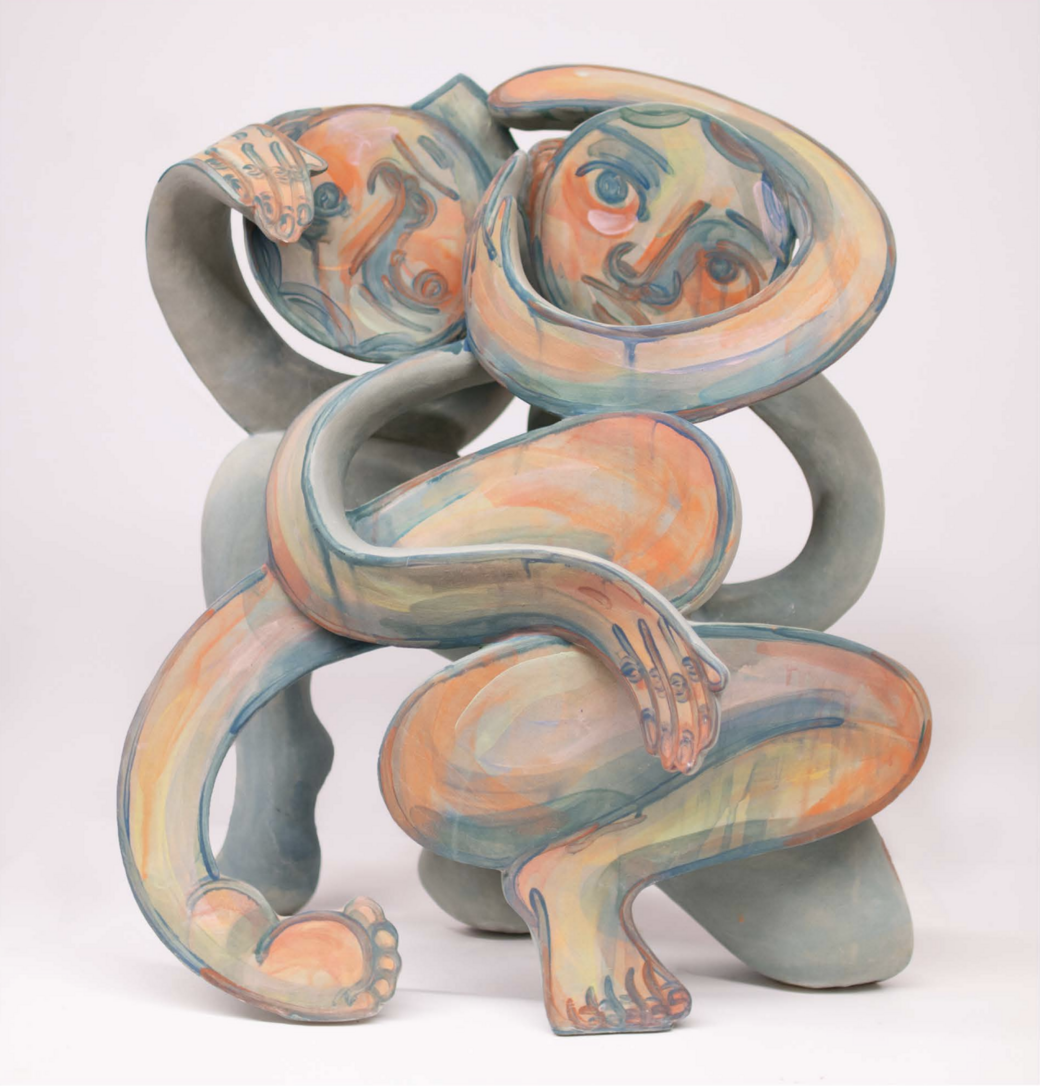
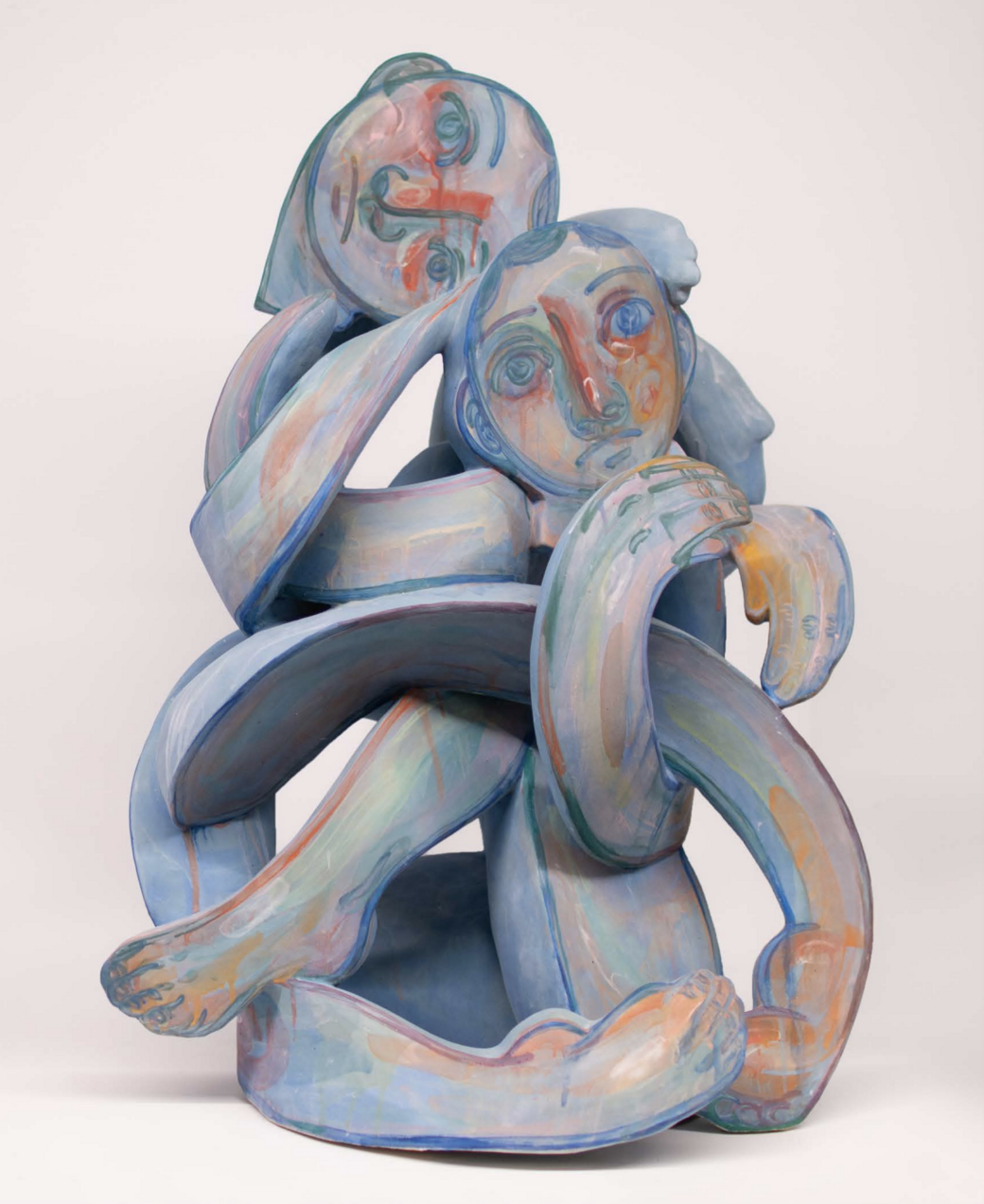
She believes distance, at times, has nothing to do with physical space and everything to do with a perceived reality. An illusion. This ideology is what is reflected in her work, an amalgamation of varying artistic mediums like tiles, murals, and sculptures. Layered, restrained, and highly physical, this exhibition features a number of pieces carefully crafted from ceramic and wood. They are elasticized takes on the human body and the human experience. The people shown are twisted, stretched, and turned, sometimes within themselves, sometimes intertwined with others. In this way, the art toys with the idea of human connection and personal identity. The shades she utilizes add depth to the storytelling. These are beautiful, brief moments of people crossing worlds, struggling with competing ideology, and pausing in the face of new concepts.