Do you feel that your Muse protects you, or are you the one protecting his memory?
I think I’m the one protecting his memory, although in a way, he protects me too. I’ve had the privilege of knowing people who knew Elvis personally and they’ve given me a much more human picture of him—complex and imperfect, but also incredibly humble, funny, spiritual, generous and kind.
I think a lot of people only know the caricature of Elvis, particularly the later years, and miss how extraordinary he was at his peak.
So, I feel a responsibility to remind people of the person behind the icon—not to make him perfect, but to make sure his complexity and humanity aren’t forgotten.
How do you earn the loyalty of an audience when you are stepping into someone else’s legacy?
It can definitely be a challenge. But when people see that you’re not being cheesy, that you genuinely respect the legacy and are putting everything you have into getting it right, they recognize that. You earn their respect, and eventually they become fans not only of Elvis, but of what I do with his legacy.
Do you ever feel that your own identity disappears sometimes?
Not really. For instance, when I speak, I use my own voice. I can talk like Elvis, but I choose not to, because I’m not pretending to be him. I’m paying tribute to him. There’s a real difference in the intention, and ultimately in what you create.
Would you consider impersonating Elvis a form of theater?
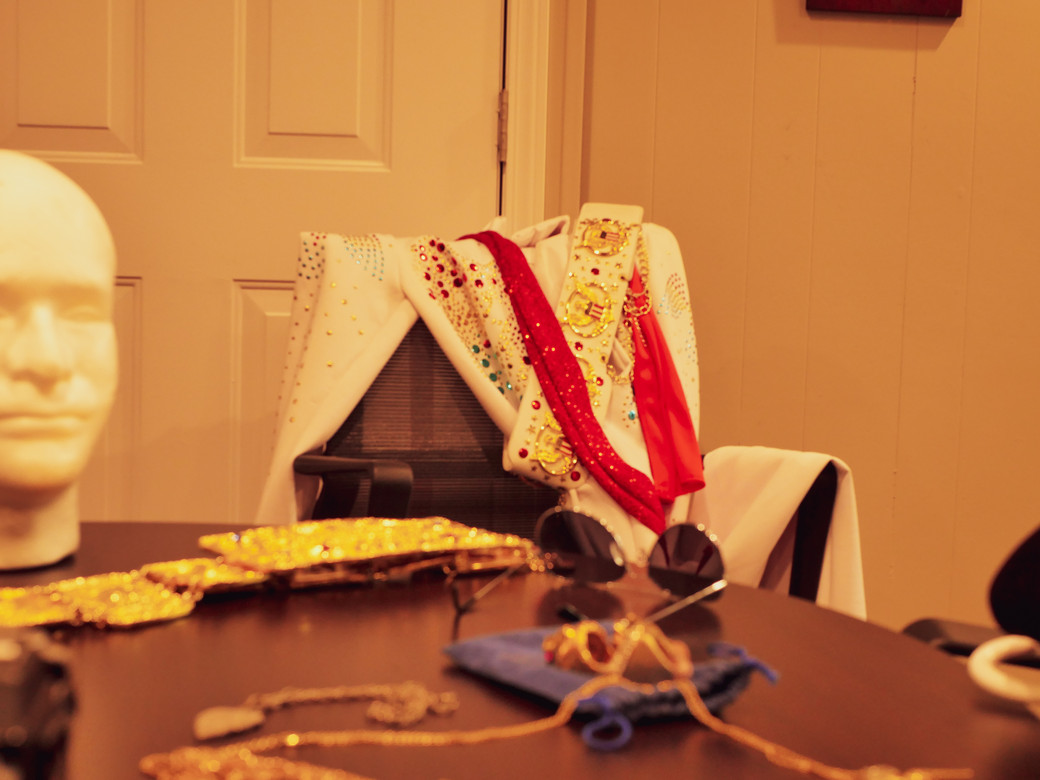
1000%. If you’re doing it right, it’s theater in every sense. There’s the costume, hair and makeup, instruments, mannerisms, facial expressions, movement, and of course the voice. You’re building a character from the ground up. When all of those elements come together, it’s every bit as much a theatrical performance as any other production.
What happens when the two versions of you meet?
They play nice together. In all seriousness, I think most of us are multifaceted. Even Elvis, he’s started out as a blue collar guy before becoming the world’s biggest star.