Fine Art Through the iPhone
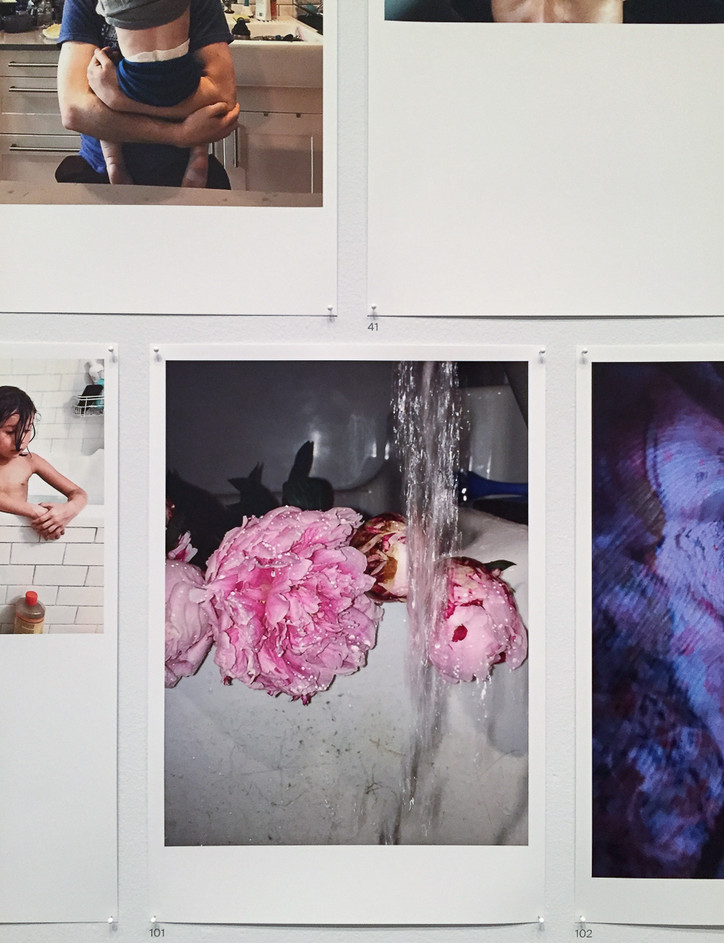
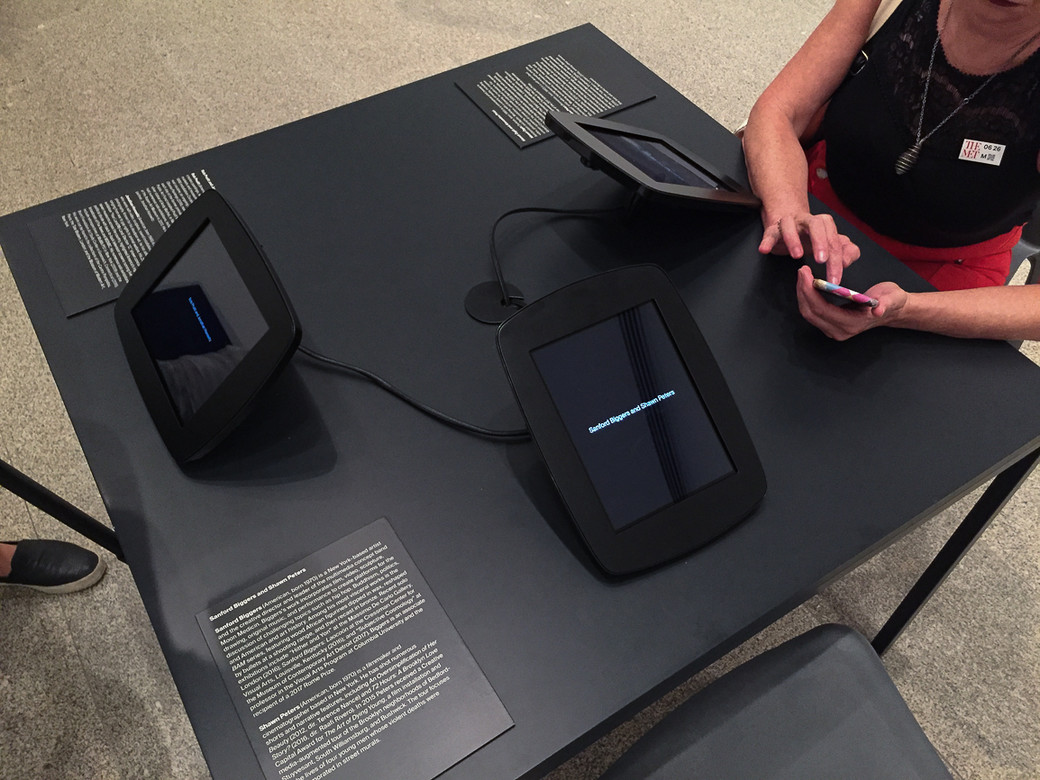
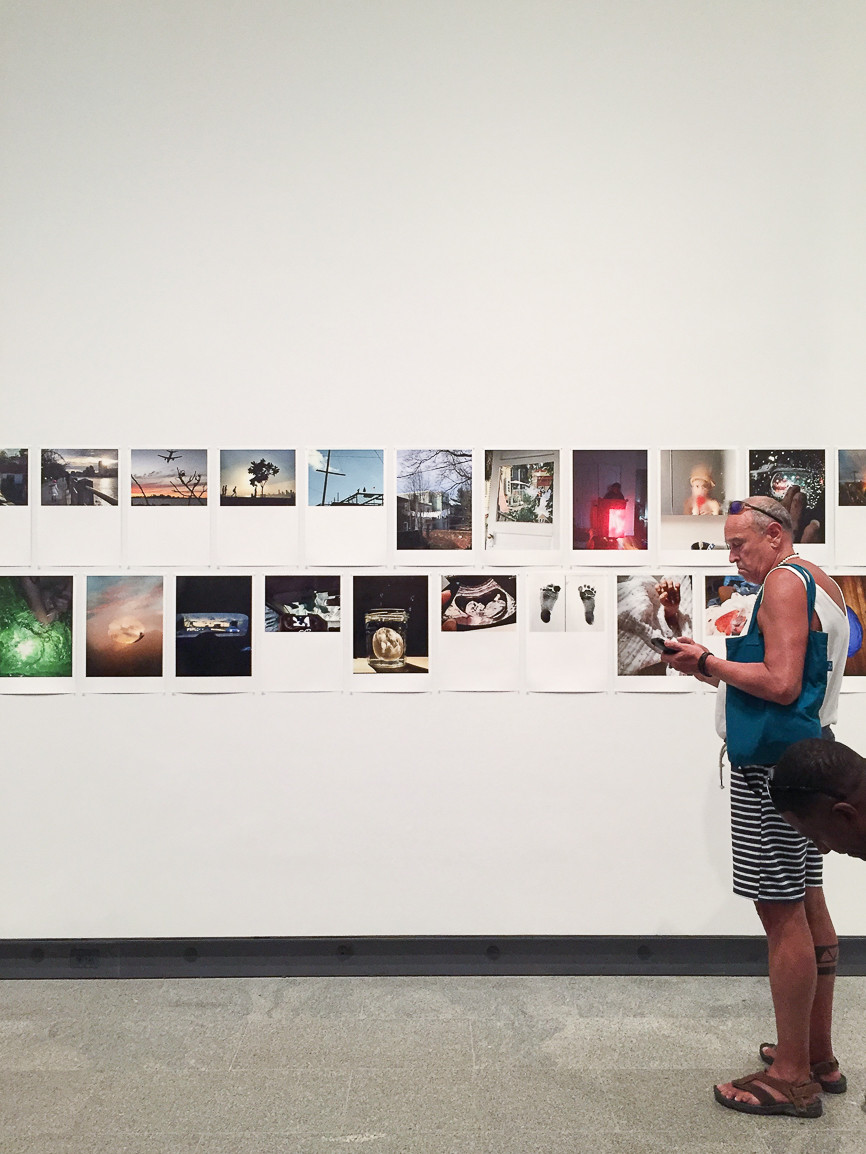
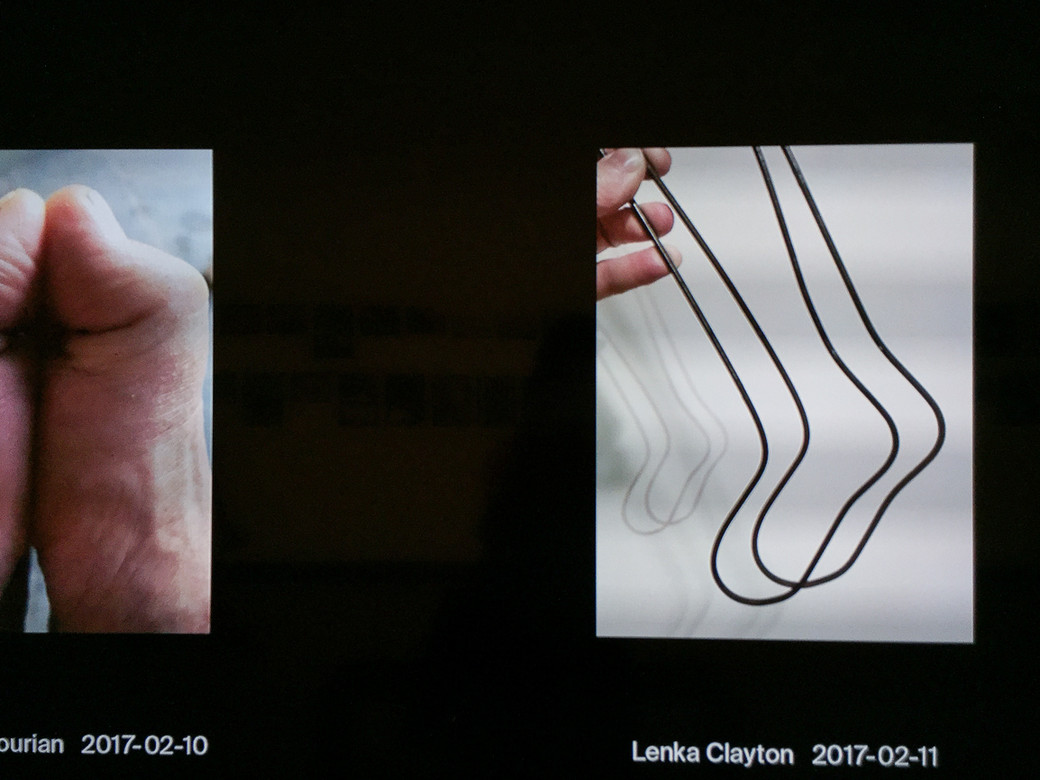
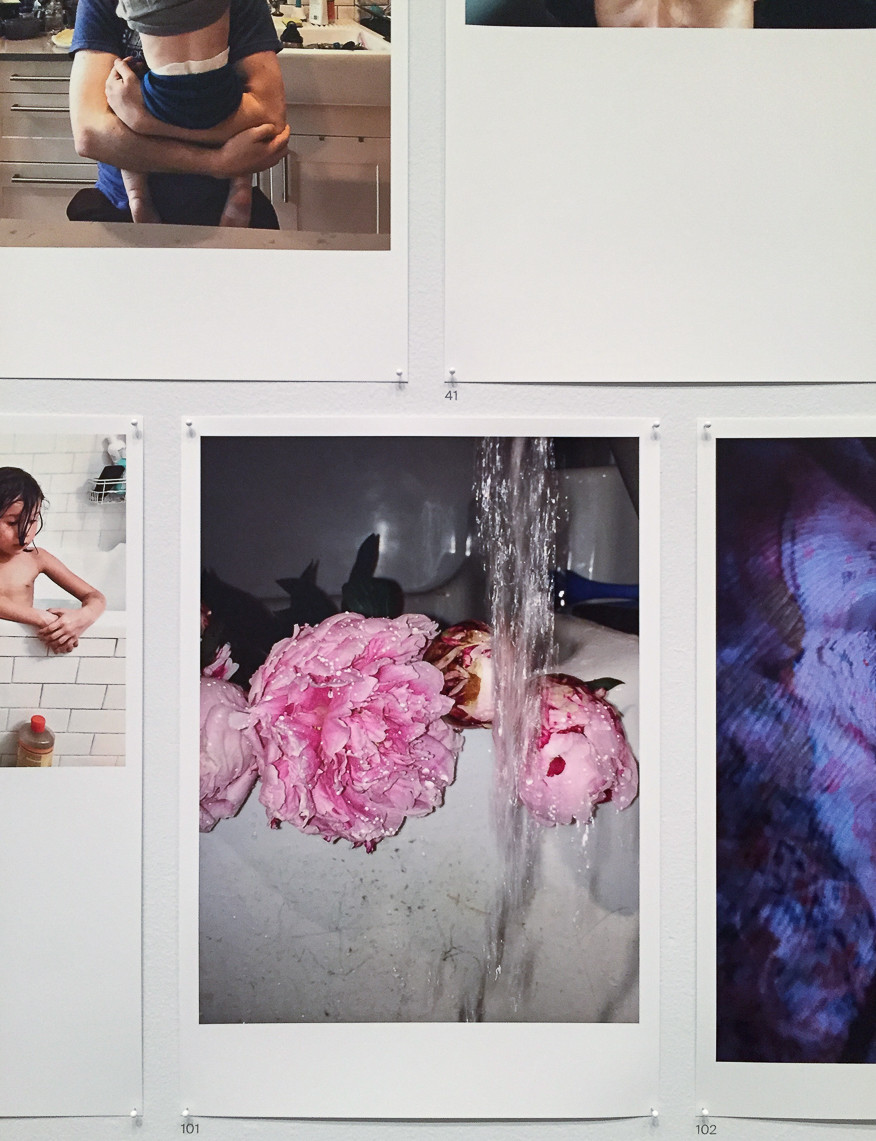
'Talking Pictures: Camera-Phone Conversations Between Artists' will be open through December 17th, 2017.
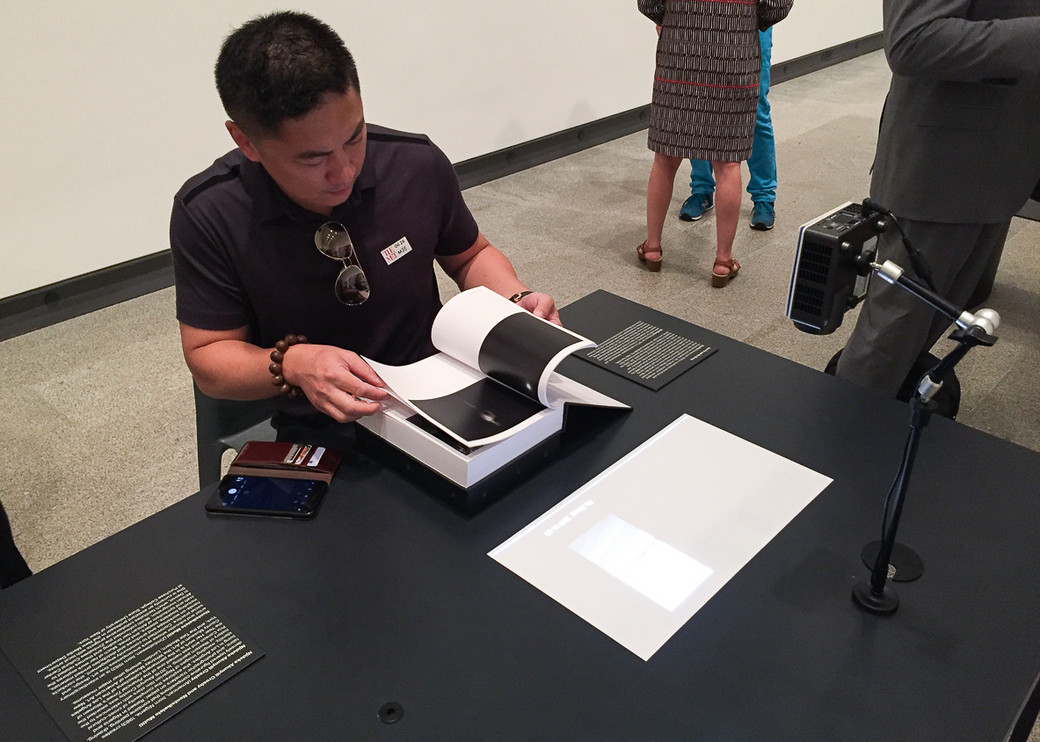
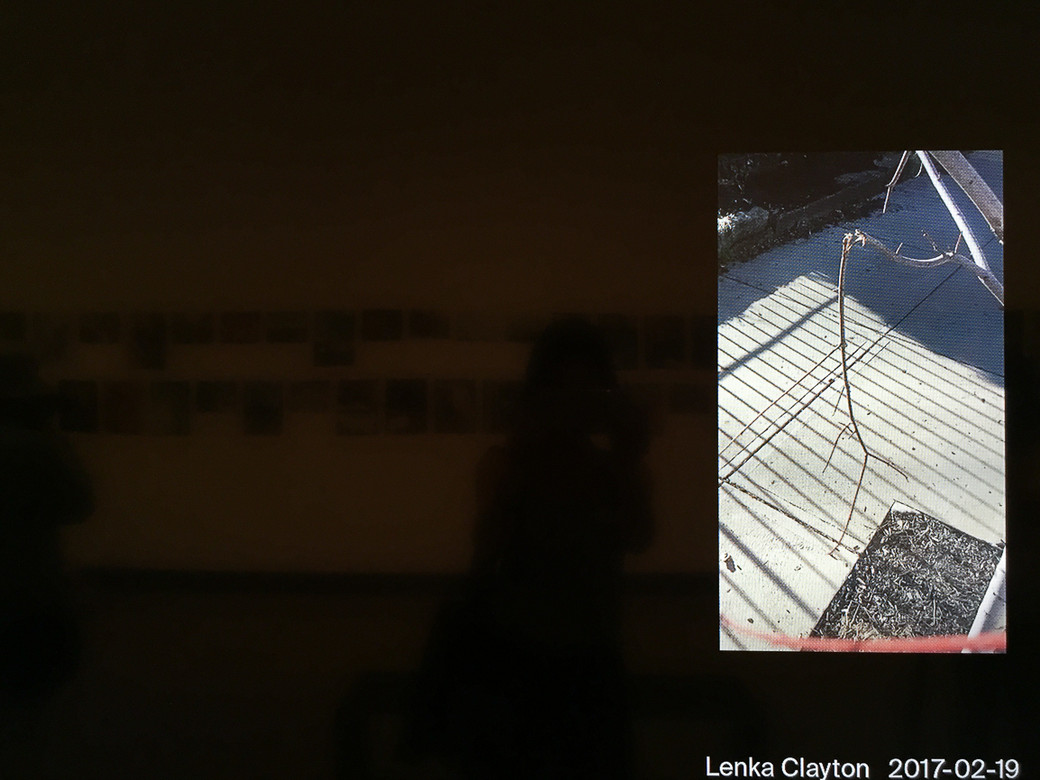
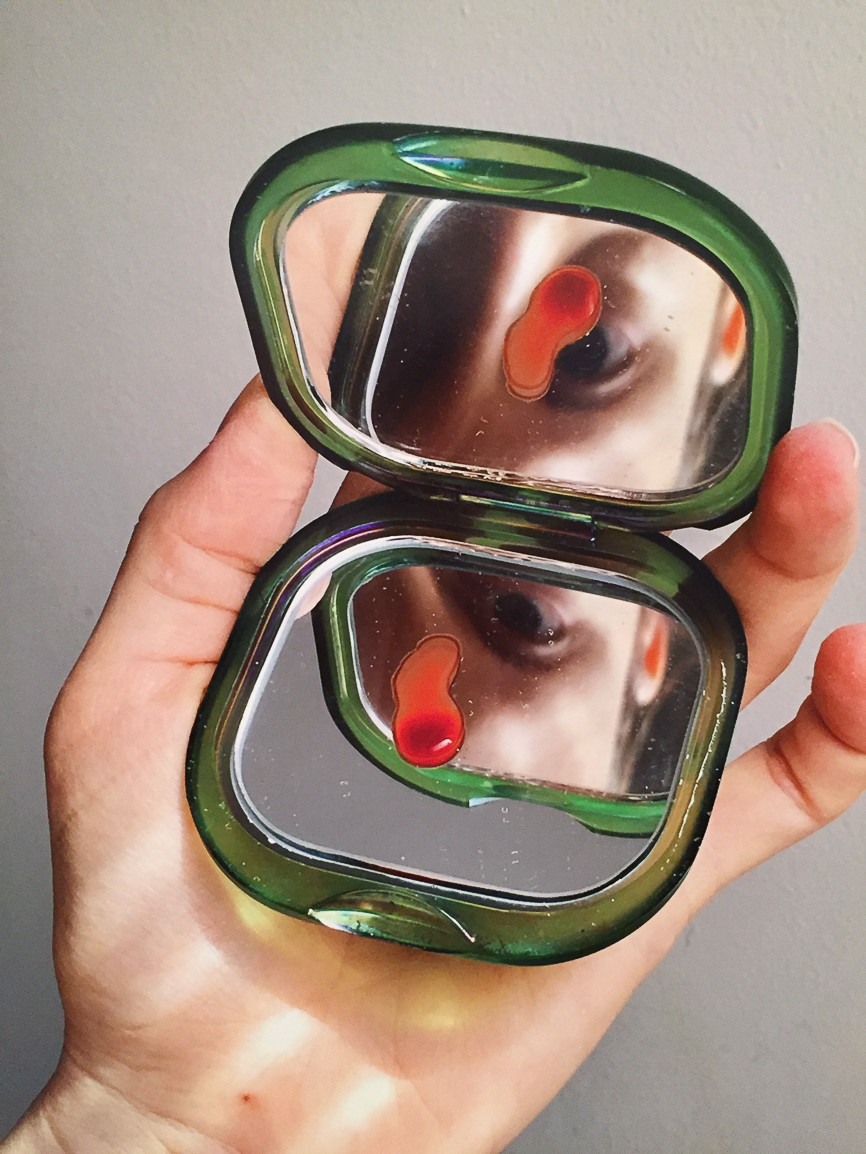

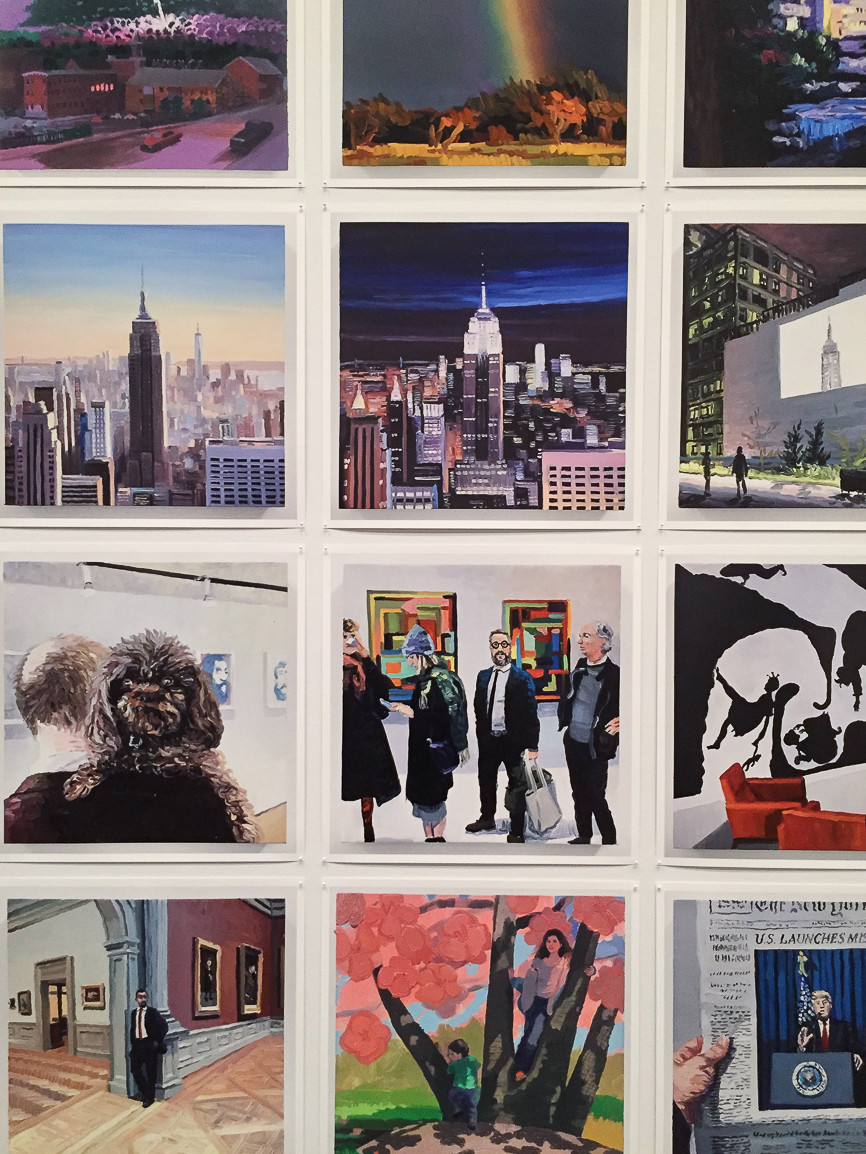
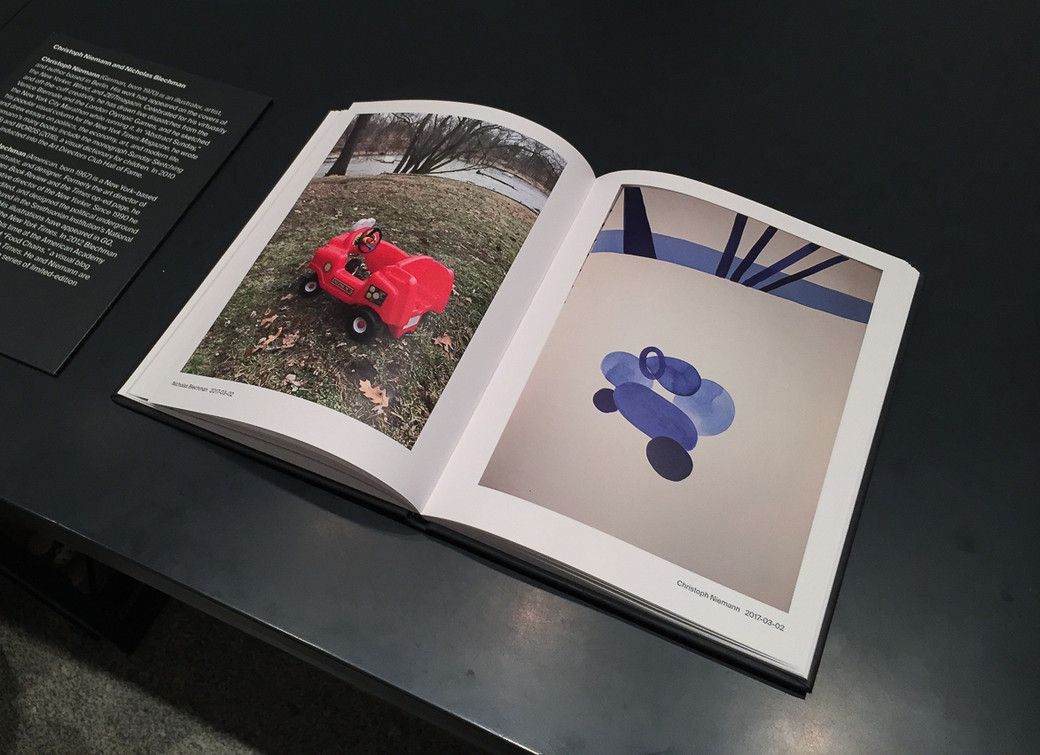
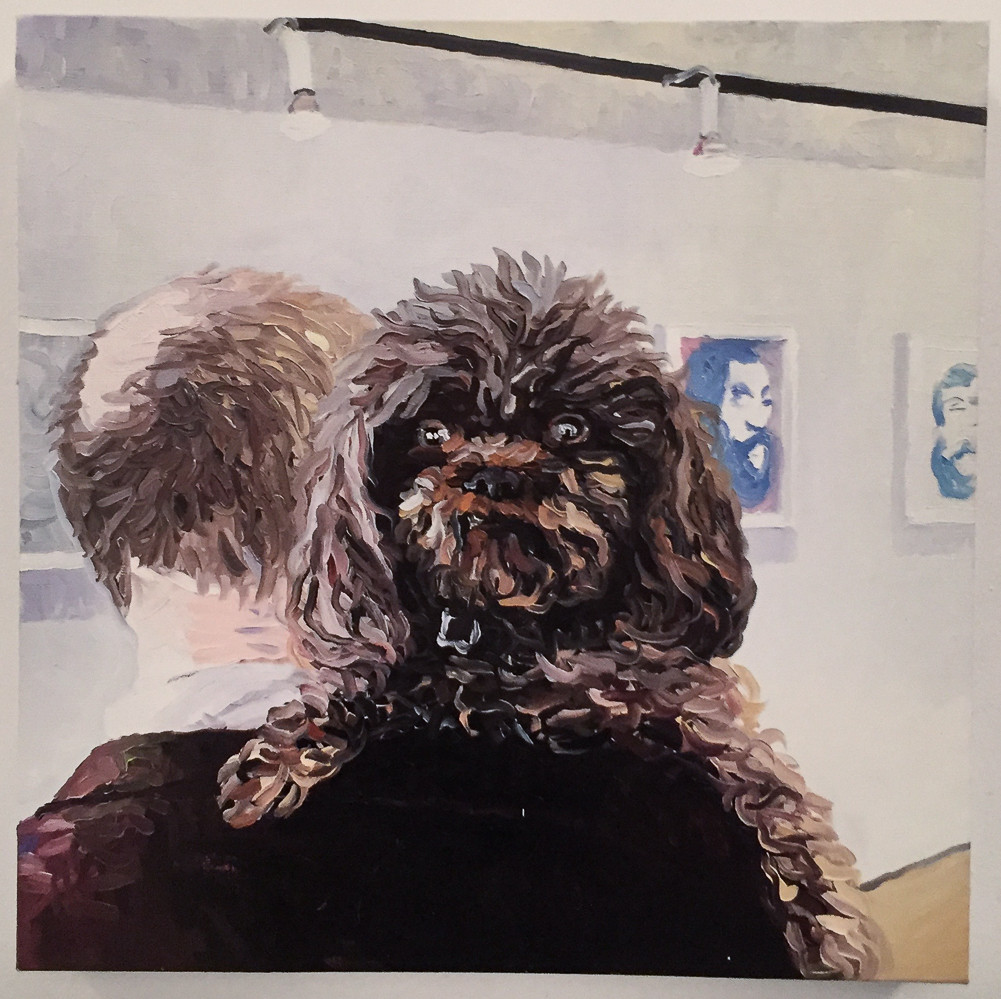
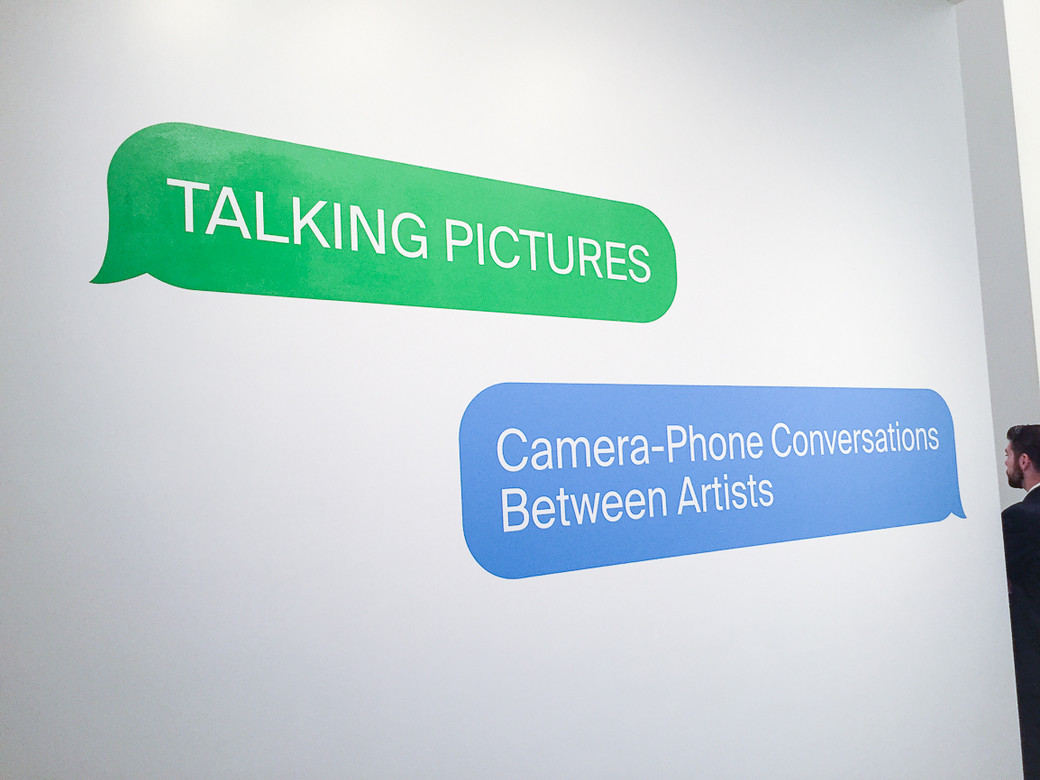
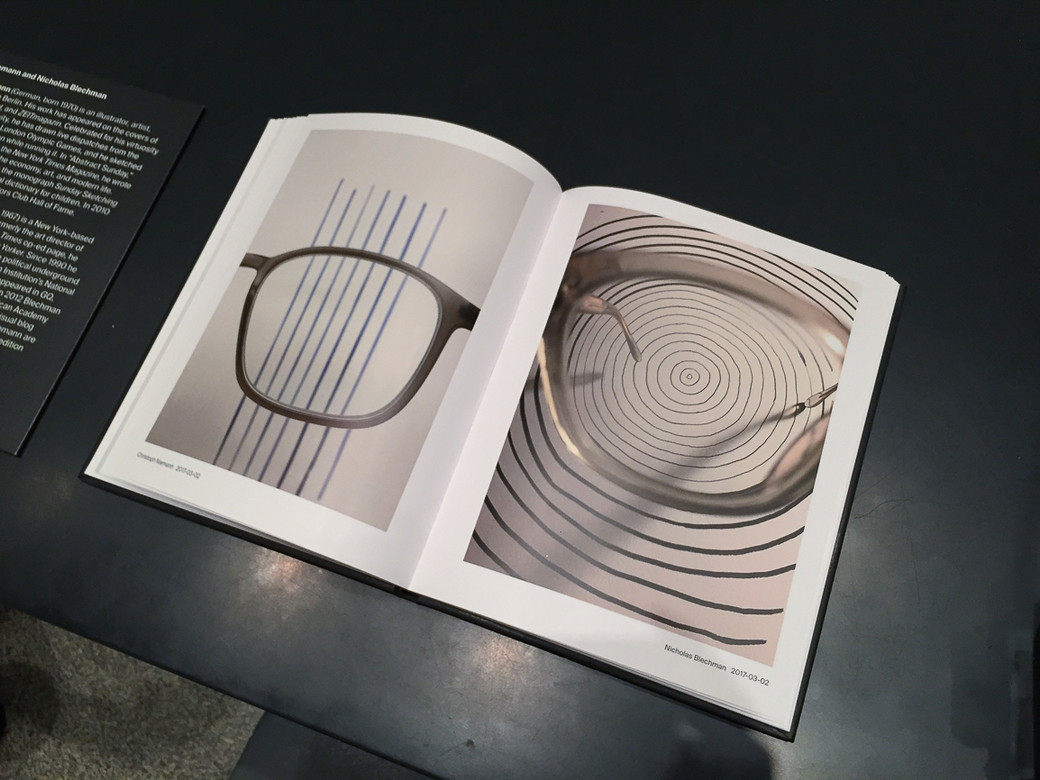
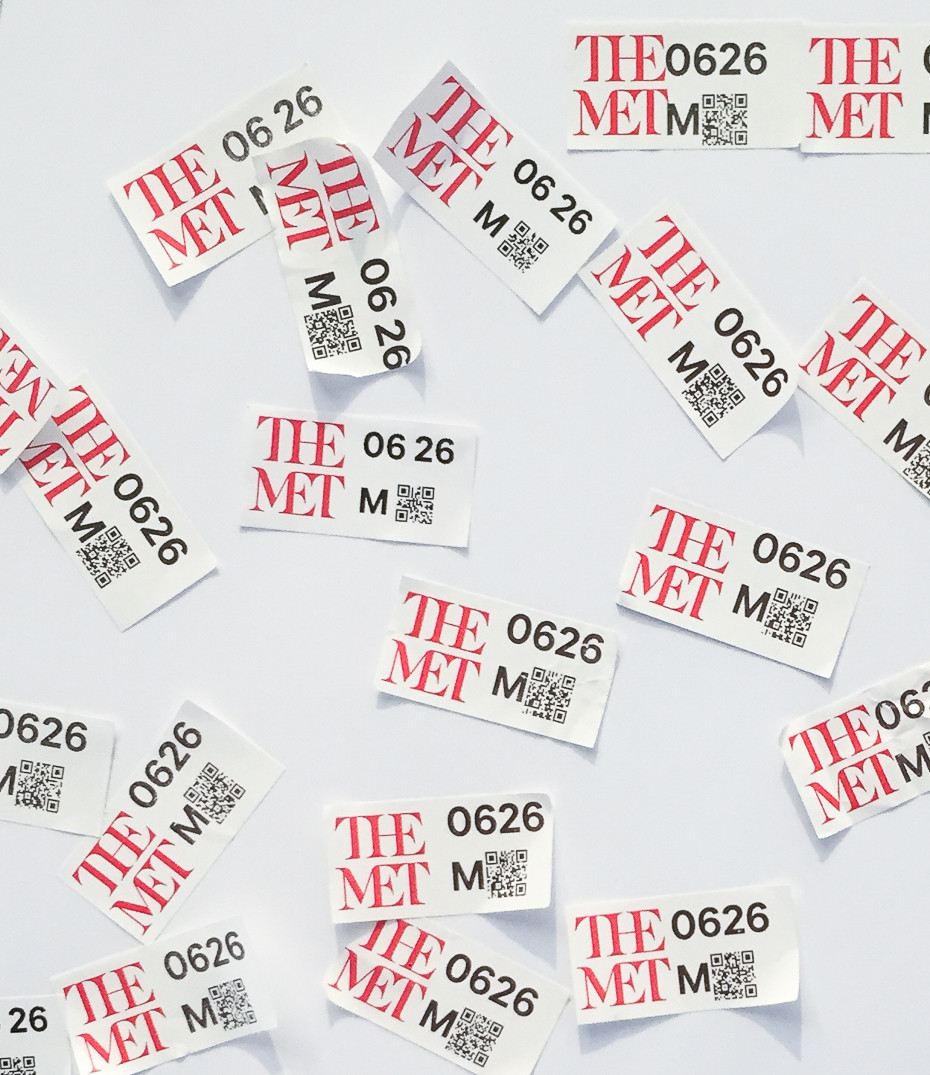
'Talking Pictures: Camera-Phone Conversations Between Artists' will be open through December 17th, 2017.


Your work moves between painting, ceramics, performance, video and livestreaming, sometimes all at once. When someone asks you what you do, what do you actually tell them?
If I'm not trying to get deep with someone, I keep it short and aloof and just say 'everything.' I've always moved between painting and performance, but when streaming came along, the movement between mediums became a medium in itself. Lately I've been calling myself an 'alternative media artist,' because it describes my attitude toward all mediums: painting, drawing, performance, technology. I use each one differently than it's meant to be used, and it all comes together through the livestream.
With drawing, I draw constantly, but the drawings don't always end up framed on a wall. The work also lives as the video of me making it on the livestream, or through a clip of that livestream that gets posted. What I'm really doing is taking plastic art and releasing it back into the world as live media, and that sets it free. A painting on a wall exists in one room at one time. Once it's streamed, it isn't tied to a place anymore. It travels faster, in directions I can't control, and that's what I find interesting.
Your studio has become something you broadcast from, a place where people can watch you paint, perform, improvise and simply exist. What changed when something as private as the artist’s studio suddenly had an audience?
The most palpable change is in how art is valued. Through streaming, the experience of art, and of relating to it, started to matter more than its objecthood, because the experience could connect with so many more people. It gave me a bigger idea of what connection could be: not watching an 'event,' but creating a situation where relating can happen regularly. I don't think there's time to craft personas anymore, and at times I even question the reason to make singular artworks. Instead of curating snippets of what I do and arranging them neatly for some default art world context, I've built what I think of as a creative surveillance system, a setup that lets me beam my essence across the world whenever I want. That's the basis for Miracle Zone, the artist social platform I'm building, so other artists can use that system too.
My work is about engineering systems across all these media, and the audience is one working part of that system, almost a medium in itself. They open it up to chance, and they make my humiliation real. Streaming started as a kind of private humiliation ritual. If I were just recording myself all the time, it would still be embarrassing, but no one would know. So what changed is the technology itself, and my compulsion to use it to build worlds for strangers. I think streaming could change art forever.


In Charm, you placed your own body and image directly inside the work. More recently, you seem to move between different personas, symbols and states of being. Where does Nora Berman end and the character begin?
Well, it's like asking where I end and you begin. I don't believe there's a real boundary between people, so when you look at me, you're literally seeing yourself in me.
Charm, my 2016 exhibition, was already playing with that. Each piece had two sides: on one, photographic prints of me posing like a model, except what I was selling was being a freak; on the other, gestural paintings that are really focused on my hand. Even then I was splitting myself into an image and an inner world, setting them back to back inside a single totemic object, and then arranging those objects into a maze to feel monumental, like a forest.
After that, I started using characters as vehicles, like cups that pour the same 'juice' into different shapes for different occasions. They gave me permission to channel energies and things I didn't feel I could say plainly as myself. There was Dr. Panacea, a quack healer with a British accent, and Kayla, an alien stuck inside a five-year-old girl's body. I played with them a lot in live performances during the pandemic.
Once I started streaming all the time, the need for personas just faded. On stream I move through different textures of my personality so quickly that there are hints of characters, but it's less about playing someone on purpose and more about experimenting with every part of my being, out in the open. That's part of why I say there's no time to craft personas anymore. There isn't a separate character now, or if there is, it's not something I think about. It's all me, and if you believe what I said at the start, it's all you too.
Magic, divination, tarot, mysticism and transformation repeatedly appear in your work. Do you believe art can actually alter reality, or are you more interested in our desire to believe that it can?
Whatever you believe, is. But, it's more of a question of time.


Desire seems to have followed your work for years, from the push and pull of attraction in Charm to Erotic Crystallization Inertia, where desire becomes almost a mechanism for producing images. What does desire make possible for you as an artist?
I think of desire as an engine. My vision for the art I am developing and bringing to the world, it’s coming from a magnetic pull towards philosophical ideas that, for reasons I don’t entirely understand intellectually, I care a lot about. I have a desire for decentralization in the art world, so that fuels me in making new systems for art to exist. I have a desire for connection, so I perform. Drawing and painting comes more from a desire to understand energy and give it form. All of this points to that old saying “be the change you want to see in the world.”
Yeah, definitely. There are countless corollaries. Anonymity online is like talking to ghosts. Avatars are masks. And showing up to stream consistently is devotional. In every stream, there's a spiral painting behind me, which for me is a gateway, a portal to another world.
Yeah, definitely. There are countless corollaries. Anonymity online is like talking to ghosts. Avatars are masks. And showing up to stream consistently is devotional. In every stream, there's a spiral painting behind me, which has been animated to transition through the color spectrum –representing a gateway or liminal tunnel like spacel–not quite here on earth and not yet in space.
I think the internet is the terrain for consciousness to evolve, and what that looks like to me is an evolution of power: being able to move freely without needing accreditation or some authority's stamp of approval, and having sovereignty over our bodies and how we platform our expressions. But it's in the ether. It's not grounded, and that's what makes it dangerous and hard to control. You're always parsing through lies, because the chances of deception are so much greater there.
That's why physical art is grounding for me. When I compose a stream, it's much easier to build a virtual mise-en-scène with physical objects on camera than to have everything exist on a screen. The internet is like the night sky. It's a space we look at and are affected by, the way the stars affect us, but we can't touch it. It's abstract. But everything moves through it.


Your performances embrace improvisation and seem comfortable allowing accidents, absurdity and even failure into the work. How important is losing control to your process?
I think that I am subconsciously attracted to feeling super out of control– and that’s kind of the impetus for my building of systems that act like railings. I like to think of it as creating a harmonic arena for chaos to play. When I first started streaming, no one was watching. It was like my own private humiliation ritual. Some streams are shit, and some feel like I've quantum leaped into a new level of consciousness. When people did start tuning in, I had no idea how it was landing. Because it was on Twitch, the art world didn't take it seriously, as if the gaming context contaminated it. And what I do on stream can look outlandish, even alien. Sometimes I'm drawing like a child, sometimes I'm on a soapbox, and most of the time I'm banging on sculptures and making a mess. It isn't linear. It asks people to be patient rather than expect a narrative arc. The durational aspect, streaming for hours, allows me to let go of control, certain that something profound is bound to happen.
Your recent exhibition was called Creatrix, essentially, a female creator or a woman who brings something into existence. What are you trying to bring into existence right now?
Equanimity, agency, community, free money.
What’s next for you? Are there any upcoming exhibitions, projects or new directions in your practice that you’re particularly excited about right now?
My whole agenda with the stream was to platform my consciousness, and connect to strangers very personally, rather than people’s access to my vision being limited to single images of specific artworks circulated through galleries or online. At the time when I started streaming in 2020, Twitch was the only place for me to do that and it never fulfilled my needs as an artist. So, that’s why I’m putting all my energy into building a social platform for artists with my friend Joseph Stewart, a creative technologist. It’s called Miracle Zone.


Why bring the method of plein air to New York City? The city isn’t known for feeling very open-air. Quite the opposite.
I’ve always had a funny relationship with the term “plein air.” Most painting is done indoors, so when I say I paint outside, people call it plein air. But the technical definition is about open air: a vast area that captures depth, light, and space. My studio practice was kind of thrust outside for a few reasons. I felt guilty whenever I was late on rent for my studio, and I didn’t want to paint there, so I’d paint outside or at home and bring the work to the studio once I’d paid. I was also drawn to painting on location because I don’t like using photo references. It feels strange to make an iPhone such an integral part of the process, so I work from memory or from life. Painting outside in the city means there’s always something in front of what you’re trying to see. A lot of people in New York never see a raw sunrise or sunset because of the buildings, unless you’re out in Red Hook or near the bay. You’re contending with whatever is in your face, and that becomes symbolic of where you are.
Each piece is very personal to your relationship with the city. It feels like the opposite of the French image of a woman painting alone in the mountains, which is what one would usually associate with the term "plein air".
It’s a funny thing to explain. Sometimes I’d say “plein air” and have to explain it, and sometimes I wouldn’t say it, and people would say it for me. It’s a revised version of the term, but it still applies. Early on, I just said I was a landscape painter, because I wanted to be less literal than the academic painting I came from. Then it became landscapes in the city, cityscapes.


What’s it like to work on location, from a subway platform at night to a moving MTA bus? How do the conditions shape your process and the finished work?
Quite a lot. You have to transport the paintings, hide them, or store them, and while you work, you get messed with or have to get up quickly. My setup changed completely. At first I had a box with all my paints and paint thinner spread out, which is fine in the daytime in summer. But at 2 a.m., or when it’s cold, you have to be able to pack up and leave. I realized how vulnerable I was when I couldn’t get up quickly, so I built a minimal one- or two-hand setup. My awareness is now split between the painting and what’s going on around me, making sure I’m safe at night and not losing track of where I am.
Did the practice spark conversations with people? Surely you got some great discussions during this process.
Plenty. The first was a graffiti writer from the sixties and seventies, who had just come out of the hospital (he still had the bracelet) and was visiting from North Carolina. Certain people feel comfortable sitting next to you, and you have to be open to that. I actually paint better with some of my mental energy going to a conversation. In my old studio, my friend and I put a bench in front where people came to eat lunch, and friends would nap on it.


You often paint at parties and leave supplies at bars around the city. Would the work have turned out differently without the spirit of the city behind you? Could you do it in another place?
I think about that all the time. You can’t see the same thing or have the same reason to paint unless you’re actually there. To understand the fire escape painting, for example, you have to be standing under one to know how crazy it looks from directly below. Early on, I’d leave the house planning a certain kind of painting, then run into someone, go somewhere with them, find a moment to myself, and make a painting because I couldn’t ignore it. Sometimes I’d paint over an older one. I’d come home with things I never expected.
If it were a similarly metropolitan city, like London or Chicago, would it have turned out differently? I’m from Los Angeles, and I don’t think this could work there, plus people don’t tend to be as open with strangers.
Maybe, partly because of geography, like whether you look up or down more. Also, New York is so native to me that I know what power each site holds over me. In a foreign place I’d look for more “alien” moments, since I’d be fresher to the subject matter. It’s funny. I once left a painting at a firehouse. It was too big to carry, and I needed a bathroom break. I asked the firefighters to hold it while I walked around. One was smoking a cigar and said, “Sure.” I told him, “If there’s a fire, don’t worry about it.” When I came back, he said it was fine.


Melancholia 2 is one of my favorites in the collection. Tell me about it.
It’s a sequel to Albrecht Dürer’s Melencolia I etching. It looks completely different, and that’s almost the point: it’s a sequel that doesn’t follow the stylistic components of the original. It’s really a painting about representation. In the etching, the figure is thought to be a self-portrait. In my painting, my friend Ashton is a stand-in for me. I looked at him in his room, took a photo of his face so he didn’t have to sit still while he was playing a game, and finished it at home. Looking at it from my bed, I realized I was making a self-portrait using my friend, because making one of myself felt too crazy.
The positioning of his body echoes a less dire version of the crucifixion. He’s just lying on his bed, with a roof over his head and the lights on, though his head is in that position. The divide between the painting and the etching reflects how I experience old spiritual texts like the Bible. They describe an old time when customs and technology were different, and we imagine it in black and white with everyone in tunics. You have to ascribe the text to your own life and work out what it means. That’s why I make paintings rather than writing them down.


In Shaolin (2026), spears jut out from the hallway walls and corners, a nod to a neighbor who actually walks around with a spear. When something like this doesn’t necessarily strike the general public as beautiful or paintable, but rather dangerous, how do you approach capturing it?
Many things in your life hold a lot of weight, and you replay them in your mind until they congeal into an image or a feeling, like a song stuck in your head. This guy has a bow staff, sai, ninja stars. Every time I go to that hallway, even when he isn’t there, I think about it. What does it mean that he exists? What is the hallway symbolic of in my own mythology, and what is he symbolic of relative to it? Painting is a language I’ve developed, so it eventually has to come out that way. I wait for a painting like that to exist, and I can’t stop thinking about it until it subconsciously comes out.


This collection feels shaped by growing up in the city. Do you see yourself moving beyond these themes?
Probably, since you never know the future. The best approach is to take gradual steps so the shift feels natural. Funnily enough, when I think I’m making something entirely different, friends tell me it still has “that thing.” Maybe there’s something in my work I can’t quite see, and that’s what makes it mine.
Sometimes life summons things upon me. For my current work, I had no idea what to make until my inner chemistry, the music I was listening to, and my morning Bible reading intersected. For five years, I’ve read a few sentences every morning. At different points, it has made me laugh, called me out, or reminded me to “go eat and drink, enjoy life.” Now, through another character, it’s telling me to speak of the future, to go to the Gateway of Jerusalem. I’m left wondering what Melancholia 1 means, and what its second version might mean for my own life.
Would you ever incorporate anything overtly religious in your work?
No. I’m extremely afraid of idolatry.
Many artists take pride in having no limits. You seem to set them.
You have to keep it measured. At a school like Cooper Union, you meet many people with the same curiosities, and you want to go all the way down the rabbit hole. But go too far and you start acting crazy and lose some sentience. Wisdom isn’t about how far you can fall. It’s about knowing when to take another step down and when to climb back up. That’s why I think healthy paranoia is important. It means saying no to myself a little and knowing when to set limits.


Taking its name from a fundamental model in physics, the series draws on the harmonic oscillator, a system that moves around a position of equilibrium. While classical mechanics describes this movement in relation to a resting point, quantum mechanics suggests that even at its lowest energy state, a system retains a degree of motion, known as zero-point motion.
For Zeta, this tension becomes a starting point for investigating the relationship between visible forms and invisible forces. Cast in bronze, the sculptures radiate from central spheres, their pointed, organic structures recalling everything from thorns and orchids to bones and distant galaxies. These recurring geometries suggest unexpected connections between the microscopic and the cosmic, the natural and the technological.
Neither entirely organic nor mechanical, the works resemble speculative instruments or archaeological discoveries from an unknown civilisation. Their surfaces and forms evoke something simultaneously prehistoric and futuristic, challenging familiar distinctions between what nature produces and what technology might become.


Harmonic Oscillators brings Zeta’s exploration of physics, geometry and speculative technology into a new collectible format. The series proposes equilibrium not as an absence of activity, but as a condition charged with the possibility of transformation.