Stone Island x Frieze by Reika Takebayashi
Your work sits somewhere between real and imagined landscapes, it feels almost like memory that never actually happened. Are you trying to reconstruct something, or escape it?
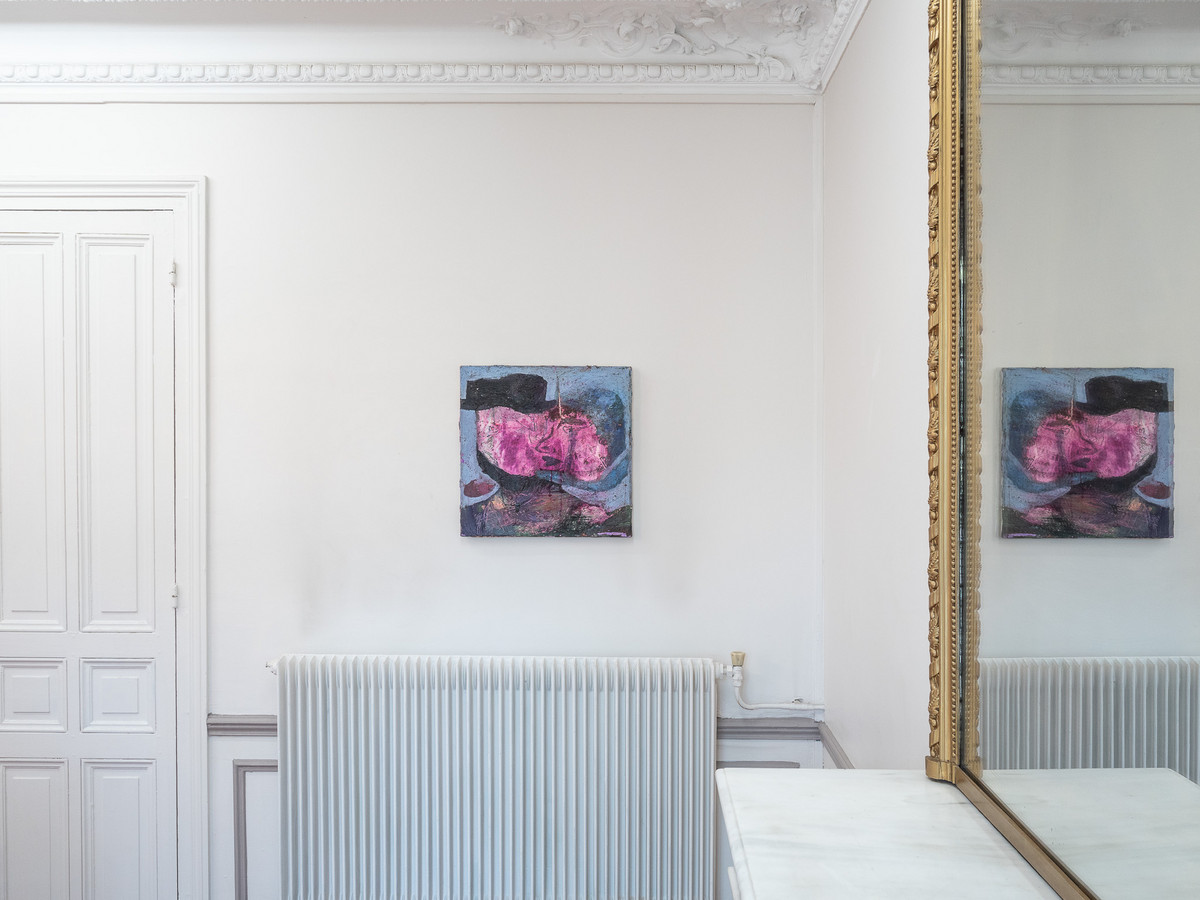
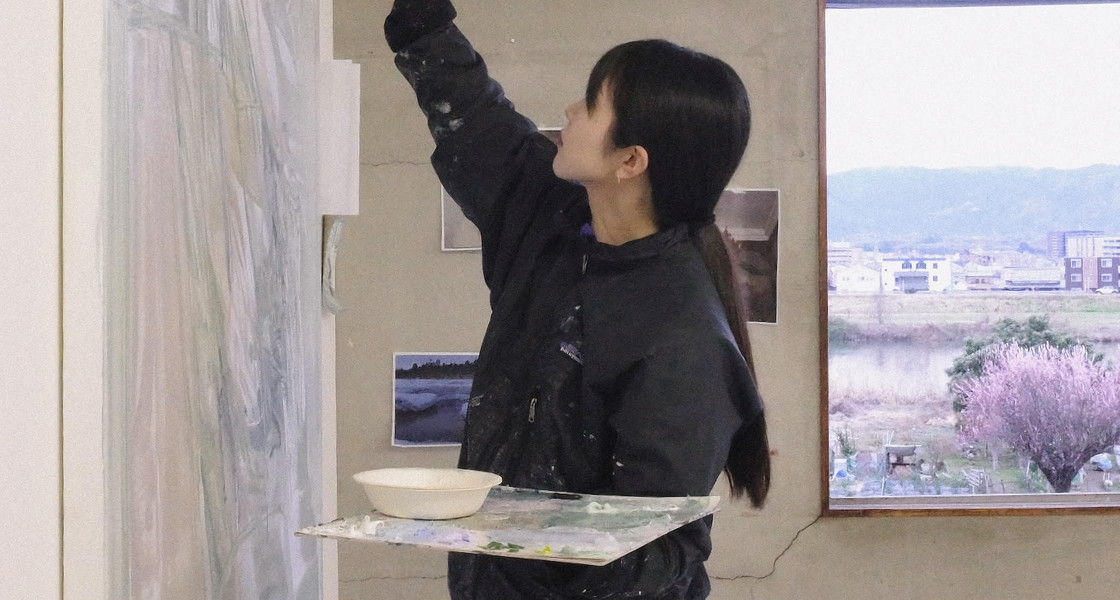
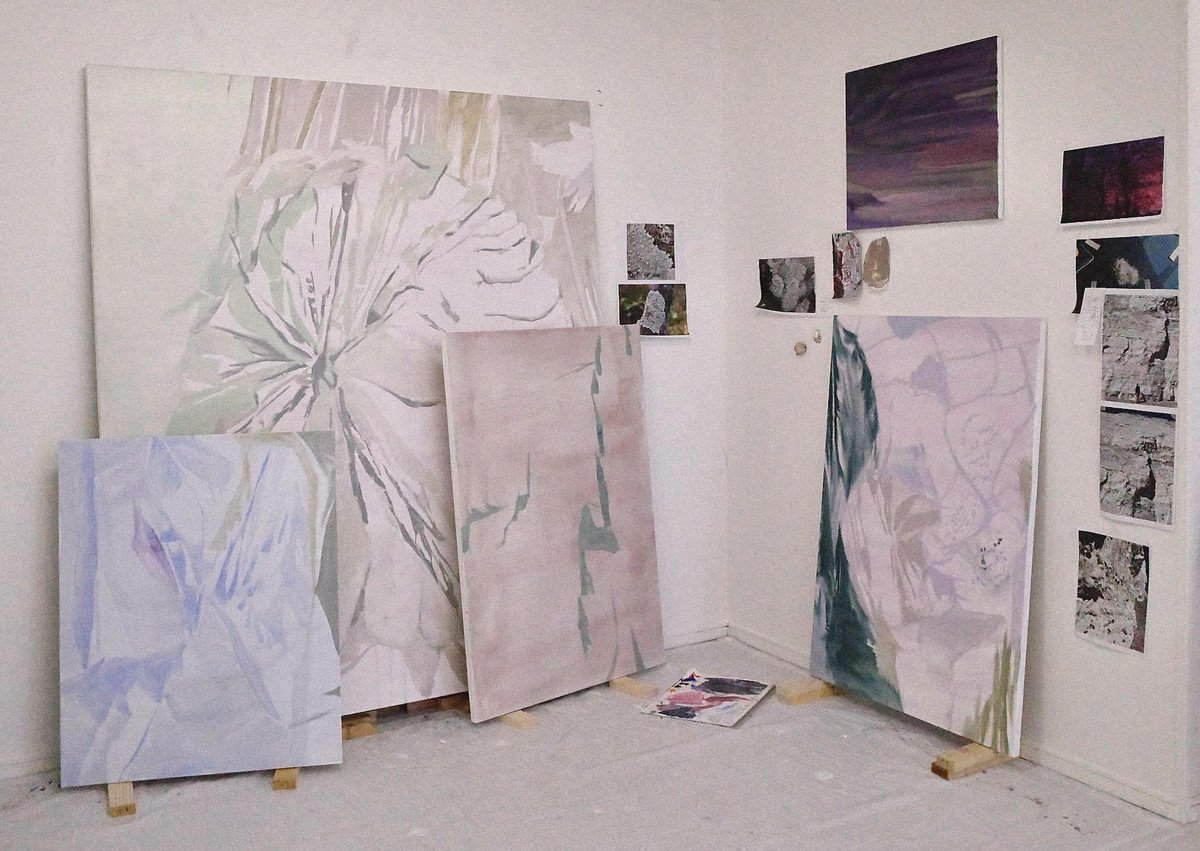
I begin my work from landscapes I have experienced. Rather than simply reproducing what I see, I try to re-examine the atmosphere of a place and the layers of memory embedded within it from multiple perspectives, and to reconstruct a landscape on the canvas. I am less interested in reconstruction than in the process by which fragments of memory and landscape transform over time. By valuing the feeling of “something that seems real,” I believe this is a way of approaching reality.
You’re working with painting and ceramics, both very physical, material processes. How important is the idea of touch and texture in your practice?
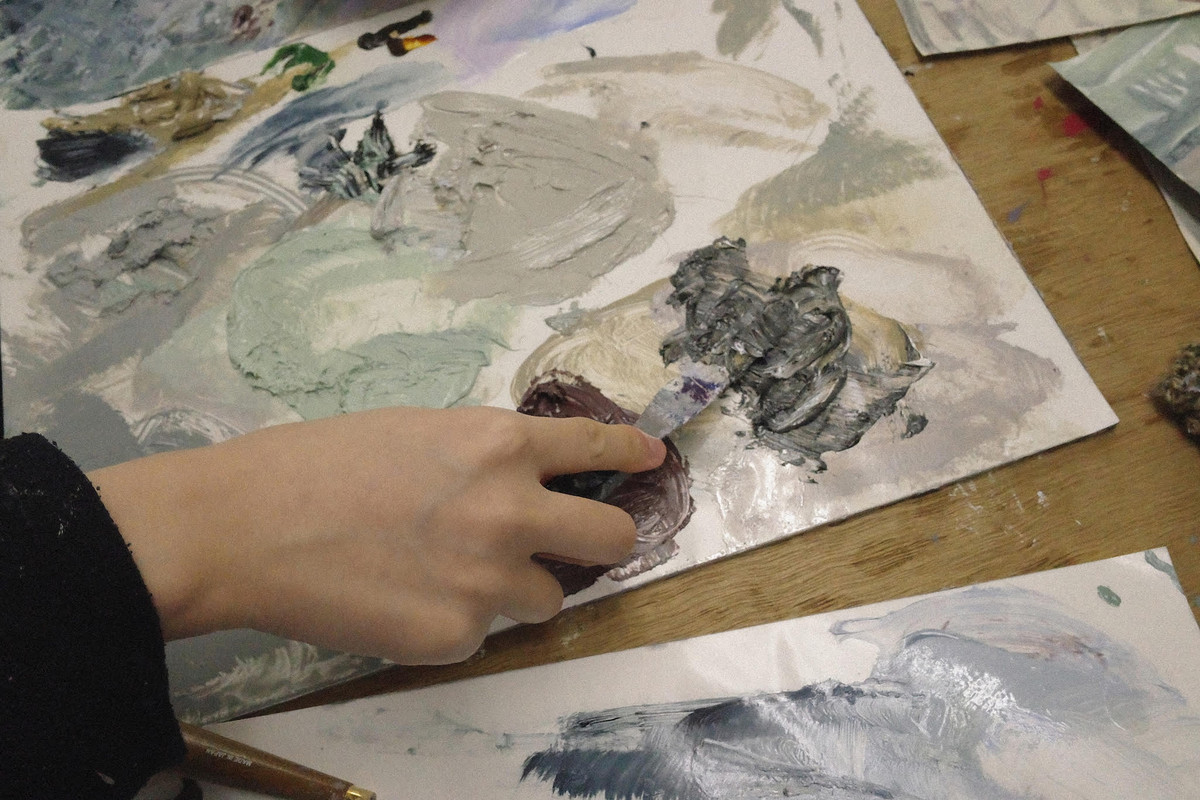
It is very important. Touch and texture carry information that cannot be captured by vision alone, giving a sense of time, weight, and resistance to the work. Like clouds in the sky, ripples on water, or peeling paint on a wall, the natural world is full of abstract phenomena that never repeats itself. By finding scenes within them, I feel that our sensibilities are shaped along the way.
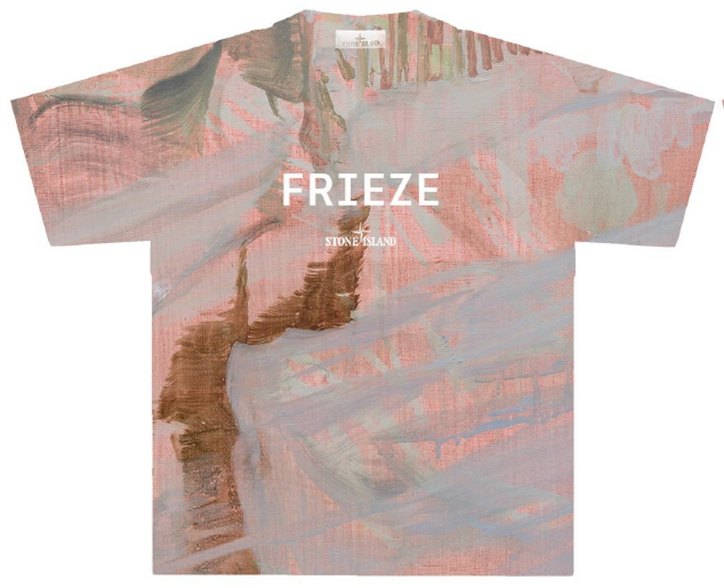
Designing staff uniforms with Stone Island means your work becomes something people wear, move in, and work in. Does it lose something in that translation, or does it gain a different kind of life?
Rather than losing something, it feels like a shift into a different context. When worn, the work is no longer fixed, but changes along with movement and environment. I see this as a kind of extension.
Uniforms usually erase individuality, but your work is very personal and intuitive. Did you try to resist that, or lean into it?
Instead of being completely uniform, I hope subtle differences emerge depending on the person who wears it.
Your work often explores natural phenomena and imagined landscapes, where do these worlds originate from for you?
They originate from memories of landscapes and natural phenomena I have observed, which gradually merge and transform over time.
More broadly, how do you see the relationship between art, function, and everyday use in this kind of collaboration?
I see art, function, and everyday life not as separate, but as continuous. In this kind of collaboration, I find interest in how those boundaries gradually dissolve.
Frieze Week returns to The Shed in Hudson Yards of New York. From May 13th-17th, browse over 65 galleries spanning 26 countries and discover today's most compelling artist within New York's vibrant and irreplaceable art scene spirit.