Tender Like a Bomb: Inside PITKISSER
PITKISSER sits between documentary, fiction, and installation. What made a traditional narrative format feel insufficient for this story?
MM: I’m personally compelled to re-imagine format in all parts of my life; domestic, romantic, ways to sleep, ways to move, ways to listen, ways to learn. Film being the spine of my practice, is a medium unto which we’ve become accustomed to single screen, linear thinking — I wanted the two screens to be in dialogue, one screen talking to the other. How one image makes us re-perceive the other. Single scenes that exist in relation to one another but not necessarily connected gave this sensation of ‘deconstruct’ that felt like you could almost modularly watch the film on loop without a conservative start or end point — I’ve talked a lot recently about ‘emotional editing’ which is a theorem that the editor Nick and I have led with this project, where one shot follows another shot with the only intention being feeling, not order.
The film frames “girl mosh” as both violence and healing. Where does that line blur for you, and when does it break?
SE: I think the reason this project is so important is precisely because those lines are blurred. Coming from a chaotic environment, I was navigating my own femininity and rage, and the pit became somewhere I could push my physical and emotional limits. There’s something incredibly reclaiming about being able to push a man twice your size off you, feeling the sheer strength of your own body. Through the music, the riffs, the physicality of it all, I could be completely raw but hard as steel. What might look like violence from the outside was a form of liberation for me. Rather than directing my anger toward someone who never consented to it, I was entering a space where that aggression could be mutually understood, expressed, and transformed & The line breaks when that mutual understanding disappears. When the intention shifts from releasing something to inflicting something.
MM: The girls and I have all experienced non-consensual violence in our lives, this was a part of what became our friendship and the tissue that connected us. We yearned for rage but don’t abide by violence; mosh offers a space to move or the deep release of a body frenzy. Somatically, emotionally, societally.
You met Syerrah by accident in a Petco. Eight years later, she’s at the center of the work. At what point did this stop being observation and become collaboration?
MM: It’s always been collaborative from the moment we met — we drove, we listened to Slowdive, we looked at books, we ate, we talked about what this could be, what we wanted to say together.


There’s a strong undertone of reclaiming trauma, how do you avoid aestheticizing pain, especially within such a visually charged subculture?
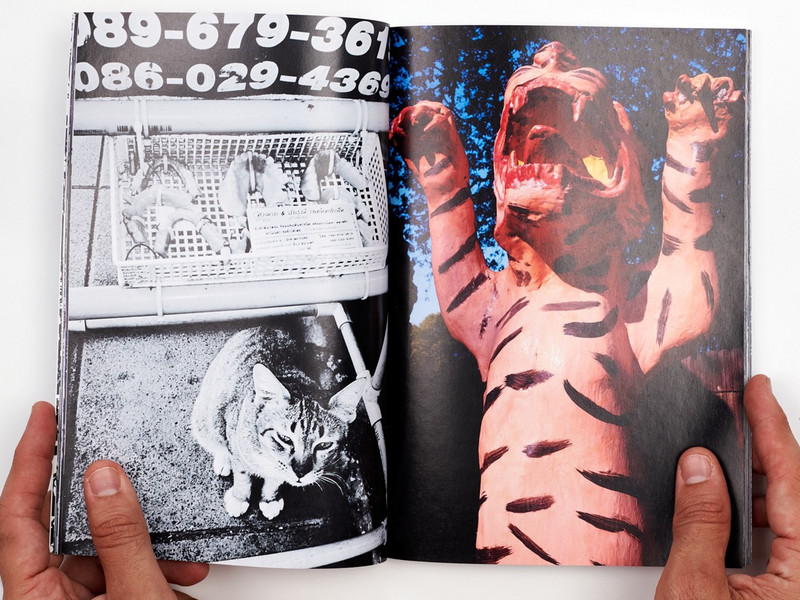
MM: But dare I say there is an aesthetic or sensory perception to pain; or the physicality of it. Blood, bust teeth, bruises. Pain is not always a visual medium, but it can be. Pain as a choice, as an act, as a release is vastly different to pain being inflicted upon you against your will. And the joy of that — the blood and spit on the floor of a pit brings a kind of joy. I write in the book that accompanies the film that the three of us, Syerrah Kris and I, take our big boots down Sunset Boulevard, that we lament in black as our uniform, for the grief of pre-violence, but also as shield. It’s perhaps more of a function with the result of an aesthetic.
SE: I, too, think pain and pleasure have always existed in a strange relationship with one another. They’re not necessarily opposites & sometimes they’re intertwined so intimately that you can’t fully separate them. For me, the intention was never to make suffering look beautiful for the sake of an image. It was about recognizing that something beautiful can emerge from suffering without romanticizing the suffering itself. There’s pleasure in reclaiming something that once made you feel powerless. There’s growth in confronting parts of yourself that you’ve been taught to suppress.
The project talks about subcultures being diluted into aesthetics online. Do you think PITKISSER resists that, or inevitably becomes part of that cycle?
SE: I think PITKISSER pushes against the grain because it’s rooted in something lived rather than something performed for an audience. This isn’t cosplay. This isn’t rebellion for the sake of looking rebellious. For some of us, these subcultures were places where we found ourselves when we didn’t know where else to go. This is livelihood. This is transformation. This is death. This is rebirth.There’s a difference between wearing the visual language of a subculture and understanding the experiences that created it. You can reproduce the aesthetic, but you can’t manufacture the feeling behind it.
MM: So much of our world is in the suck-cycle of cyber infinite, yes — my friend Amelia says we are in the era of the impossible. Fucked if we do, fucked if we don’t. But I like digital information exchange; subculture is a result of care or many people caring about the same things and at it’s root, we must share information to connect, if the kids do it online, if we do it online, if a girl sees this online and gets to fight back, I’m at peace with it. I would think of this film as an offer of information, of another way, a way to process, like Syerrah said, our circumstances or lived experiences.


Rage in the film feels almost ritualistic. Was that something you directed, or something that emerged naturally from the girls themselves?
MM: It emerged from us collectively. I have a distinct image of Syerrah and I crying in the car in the rain outside a motel; we read one another our diaries. We were so angry. We were so sad. We were so hardened. We were so soft. We were collectively compelled to try and show those multitudes.
SE: Rage is ritualistic. Especially as a woman. It wasn’t something that needed to be choreographed or manufactured. It emerged naturally because it’s something I carry with me everywhere I go. It’s lived in my body long before there was ever a camera in front of it. As women, we’re so often taught to soften ourselves, to make our anger palatable, to be delicate even when we’re falling apart. But there’s something almost sacred about allowing yourself to feel the full force of your own strength without apologizing for it. The thrown elbows, the clenched fists, the riffs, the sweat, the bodies colliding becomes almost ceremonial. There’s this constant building of tension, this physical accumulation of energy, until eventually there’s release. And then you build yourself up all over again.
The latex uniform designed by Syerrah reads like armor, fetish, and identity all at once. How intentional was that visual language?
SE: I think the PITKISSER visual universe is rooted in duality. There’s something incredibly compelling about the contrast of being an act of destruction while wearing something so seemingly fragile. PVC/Latex has this beautiful contradiction to it. It’s provocative, almost fetishistic, yet it can resemble armor. It clings to the body, accentuating femininity, while simultaneously creating this sense of confrontation and power. There’s something almost poetic about putting your body through this incredibly visceral, chaotic experience while being wrapped in a material that can tear, stretch, or give way.
MM: Incredibly intentional. It’s also how she actually dresses (!) Everyday for years. She did such a beautiful job at being graphically deliberate about that truth on screen.


You describe the work as an “ode to coming-of-age chaos.” What does chaos give young women today that structure or safety doesn’t?
MM: Chaos is innate. Our bodies are in chaos through adolescence. Body is a battleground. Body is a war. The chaos in coming-of-age often exists in trying to reckon your truth against societal expectation. There’s a lot of poetry in that mess; a lot of euphoria in fucking up. To surrender to anarchy or disorder, as a girl, is to unearth parts of yourself that can set you free. Or get you closer to peace.
SE: Chaos gives us honesty. It strips away the expectations and structures that dictate how we’re supposed to behave, especially as young women. There’s something incredibly liberating about allowing yourself to be uncontained, to be loud, ugly, beautiful, aggressive, and vulnerable all at once. I think every woman deserves a space where she can wreak a little havoc, where she doesn’t have to make herself smaller for someone else’s comfort. Coming from chaos that I didn’t necessarily choose, there was something transformative about entering a kind of chaos that I did. Chaos doesn’t necessarily mean destruction. Sometimes it’s the necessary dismantling of an identity that was never truly yours to begin with.
Showing this as an installation in an automotive body shop feels loaded, what does that space do to the reading of the film along with DCA live performance?
MM: We had a formal gallery involved until the week prior to the show. It just didn’t feel guttarally right for this project. The installation itself was so carefully put together, the 4:3 screens, the frameless glass frames for the imagery. But the intent of a show, especially in this regard, is to unite people through imagery or have dialogue around the imagery. I don’t want that dialogue to ever feel inaccessible. I can’t talk about tyranny in a white box. I wanted a show to happen in the street. Punk shows have often been in emerging or unused liminal spaces. Deaton Chris Anthony doing the live score in a body shop meant we had industrial techno echoing down Virgil — people came who had never been to an art show — people came who had only been to exclusively formal shows in more secular spaces. The guys from the body shop were there. Syerrah’s mom came. BBY Africka came. The Mainliners came. ZEP came. It was like these parts of Los Angeles unifying in a free space.


Your work is often described as “tender,” but this piece is confrontational, almost abrasive. Do you see tenderness inside the violence here, or despite it?
SE: I see tenderness inside the violence, not despite it. I don’t think tenderness has to be delicate or passive. Sometimes tenderness is confrontational. Sometimes it’s the refusal to make yourself smaller, the willingness to stand your ground, to take up space, to exist unapologetically. There’s something deeply intimate about the pit. The sweat, the impact, the vulnerability of putting your body into something so physically demanding. You’re simultaneously exposing yourself and discovering your own strength. I think we’ve been conditioned to associate femininity with softness, but I’ve never believed that softness and aggression are mutually exclusive. There’s a certain tenderness in rage itself, in caring enough about your own existence to fight for it.
MM: The tenderness is in healing yourself so deeply that you can go back out and fight. We sought bliss. And we found it in the pit.It was a long and radical journey to get there. When you see Syerrah mosh, really mosh, she is balletic, aqueous almost. I could cry thinking about it. It’s a classical training of sorts. And requires rigorous kindness. I know, when I see her there, that she is at her altar.
SE: We’re tender, but not necessarily fragile. Tender like a bomb, not like a flower.