You’ve worked across games, film, music, and literature. Is there any medium where you still feel like an outsider? And if you had no time or budget constraints what dream project would you pursue?
Ironically, I feel most like an outsider in the game industry. I don’t connect so much with people in the industry, and I’ve always felt a sense of alienation. It’s like we don’t share a common language. I can’t talk with them about the things I love—movies, books, music, art, or philosophy. On the other hand, I don’t feel that way at all with people who work in film, music, or literature. Our conversations flow endlessly, almost like we’re childhood friends. That’s why I spend my time with filmmakers, writers, musicians, and other artists. As for working without constraints, I can’t do that. If I work without limits—especially when it comes to time—I’ll never finish creating. Ultimately, I’m a perfectionist.
When making a game do you start with a big vision and refine it or do the story and characters evolve during development? Have you ever thrown out your original concept because something truer emerged along the way?
I start by deciding on the theme and the idea for the gameplay concept. Then I shape the world, the story, the characters, and the overall look to align with that theme and gameplay. Unlike film, with games, you have to think in parallel. Things like in-game mechanics and system designs for environments and characters all need to be considered simultaneously. Once the framework is in place, I run gameplay experiments and technical tests while gradually adding in more details. I flesh out the story, the world, and the character backstories—where they were born, how they were raised. Once the world and plot are clear, the characters start to move and speak on their own. At that point, all I do is put their words into writing.
I’m constantly adding layers to the story and the characters’ details. If I enhance one character’s personality, it can leave other characters feeling weaker in comparison, so I go back and reinforce them as well. I add things like costumes, visual tweaks, and subplots to balance them out.
If the foundation—the gameplay system or the story structure—were ever fundamentally wrong, the game would have to be canceled. Fortunately, I haven’t experienced that. Sometimes I’ll change characters’ roles drastically.
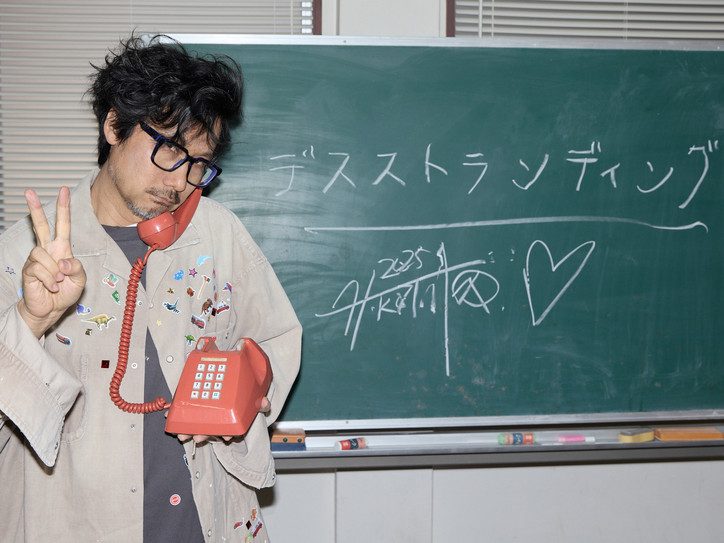
Can you give us a hint about Death Stranding 2? The trailer already introduces themes like BB-28 and family with strong emotional undertones. Is family a central theme this time or is there something more at play as is typical with your work?
In the first DEATH STRANDING, Sam traveled alone (though he did have Lou, a baby who couldn’t speak). This time, Sam is still connecting people and making deliveries, but now he has something following him: the DHV Magellan, a mobile base. It supports him in a variety of ways, and it means he has a “home” to return to. That’s one of the biggest differences. Of course, when people gather, problems inevitably arise. Some might wonder: is it easier to be alone? The feelings of solitude and distance within a group and communication are the theme. Also, the players will objectively witness how the bonds between the three women he befriends strengthen over time.