PRESENTE CONTINUO: the intimate ties between then&now

Starting May 30, PRESENTE CONTINUO will be available to purchase on presentecontinuo.com, cpcompany.com, and at the C.P. Company flagship store in Milan, Corso Matteotti 7.
Stay informed on our latest news!

Starting May 30, PRESENTE CONTINUO will be available to purchase on presentecontinuo.com, cpcompany.com, and at the C.P. Company flagship store in Milan, Corso Matteotti 7.

Kjær and Reffstrup worked together to aim for a fully-fledged and polished season for GANNI. With Kjær's animation and creative imagination, Reffstrup says Kjær was able to make the line feel "inherently GANNI."
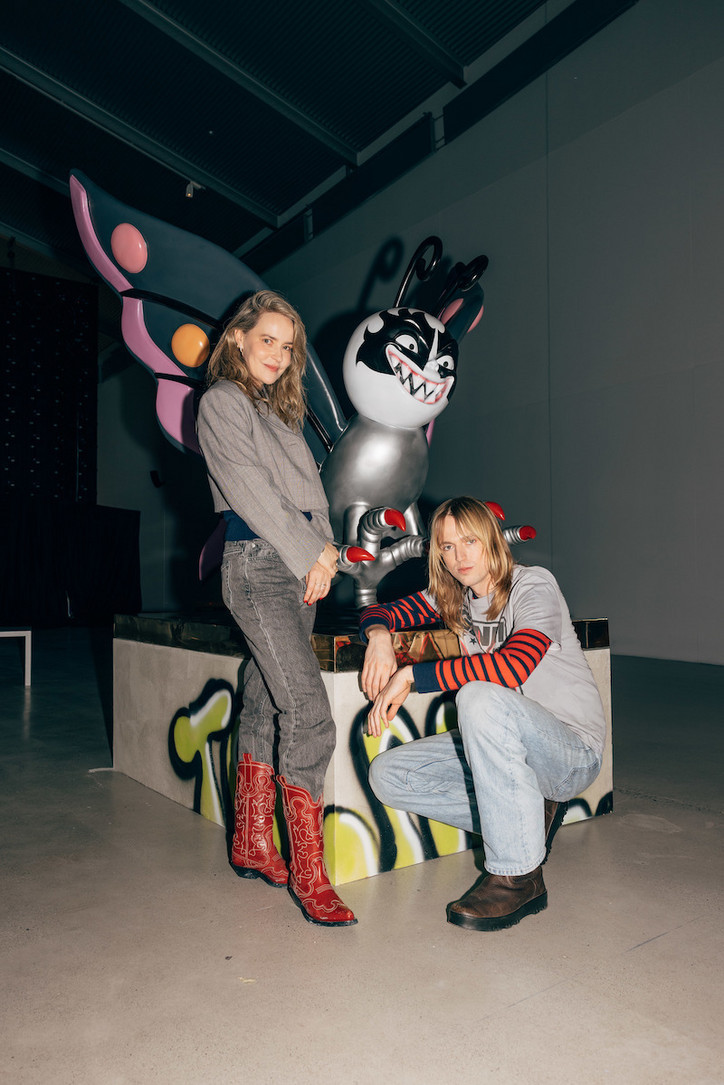
“Everything has just come together so naturally for this season’s show and it feels completely meant to be that we’re doing the show at ARKEN," says Reffstrup. "It’s such an iconic museum, a place built to make art more accessible and democratic. Both Esben and I have the butterfly symbol as our creative point of departure. This season marks GANNI’s welcoming of the new butterfly logo while Esben has created this wild looking butterfly to be the mascot of his new show opening at ARKEN.I love working with friends on creative projects, and collaborating with Esben on the vision for the set design has been such a dream."
You just curated your own art show BUTTERFLY! at ARKEN. How does this coincide with GANNI BUTTERFLIES?
We started the conversation about the show around a year and half ago. I have always been very fascinated by the permanent collection at ARKEN. I have curated around 50 works into the show and It’s been a huge experience getting so close to each piece. I create mascots for all of my exhibitions and for the show at ARKEN it was this merged figure of a butterfly and eagle with corpse face makeup. Although Ditte has a completely different vision for her Butterflies, we both use a butterfly as our creative point of departure.
How did your collaboration with GANNI come to life? Tell me about the inspirations behind it, collaborators and anything that helped you achieve this show.
I was planning my exhibition BUTTERFLY! last year and fell into conversation with Ditte about her collection which was titled Butterflies, so we just instantly clicked on the idea of collaborating for the set design of the show at Arken.
You’re very multifaceted. Tell me about your creative process behind GANNI BUTTERFLIES! and what viewers can expect.
I based the set design on my mascot and sculpture BUTTERFLY! I wanted to create an experience that felt unexpected to the GANNI audience while bringing people on a journey into my world. Working with Ditte has been really organic and I was given a lot of freedom to do my own thing.


You often specialize in large, outrageous sculptures and objects. How do you want viewers to react when they see GANNI BUTTERFLIES?
I want the audience to feel fully immersed in our world of butterflies.
You modeled for (di)vision in Copenhagen. Can we expect to see you on the runway for your own curated shows and in other shows in the future?
I don’t really model. But (di)vision are a cool duo and I like their energy, so I did the show. I’m excited to sit as part of the audience for the GANNI show. The music by Mobilegirl is really strong too, so I am looking forward to that.
You’re also a DJ. What made you want to enter these various careers in the art industry?
I don’t like the concept of being put in a box as an artist. I operate across different mediums and really enjoy the cross section between performance, music and sculptural experiences.
How has the evolution of your artistry helped you improve the way you create art?
I have been working interdisciplinary for the last 10 years and graduated from the Danish Royal Academy of Fine Art in 2022. My time at the academy really allowed me to explore and define my voice and practice.

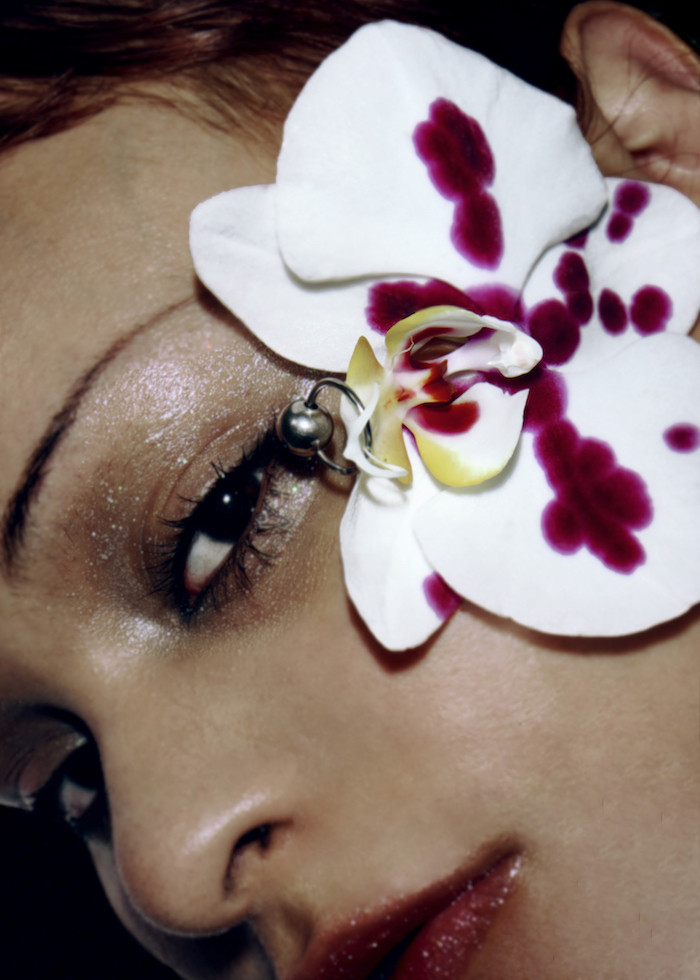
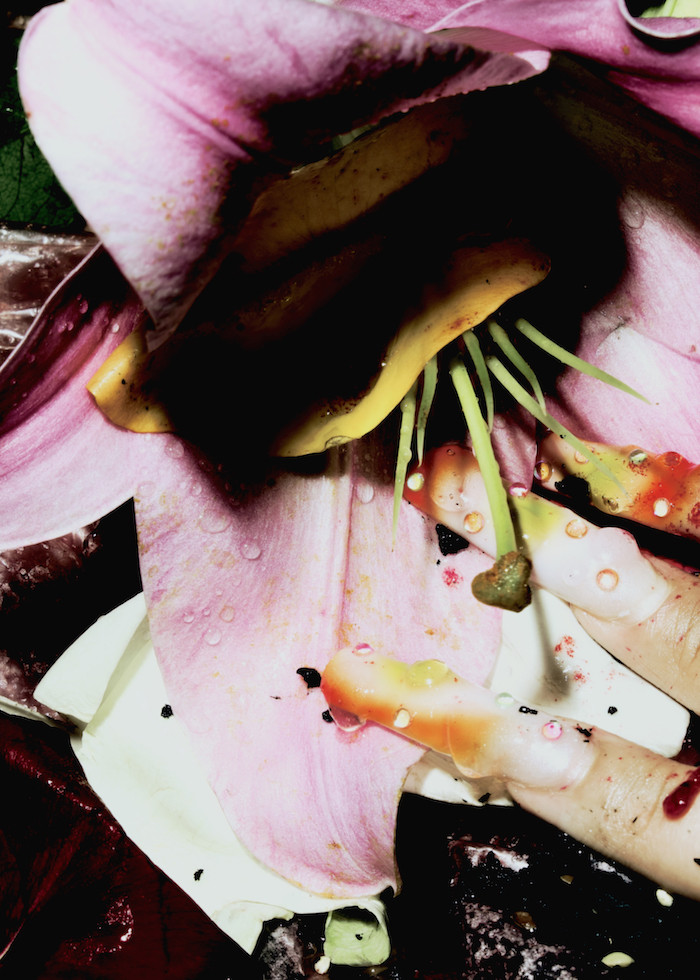
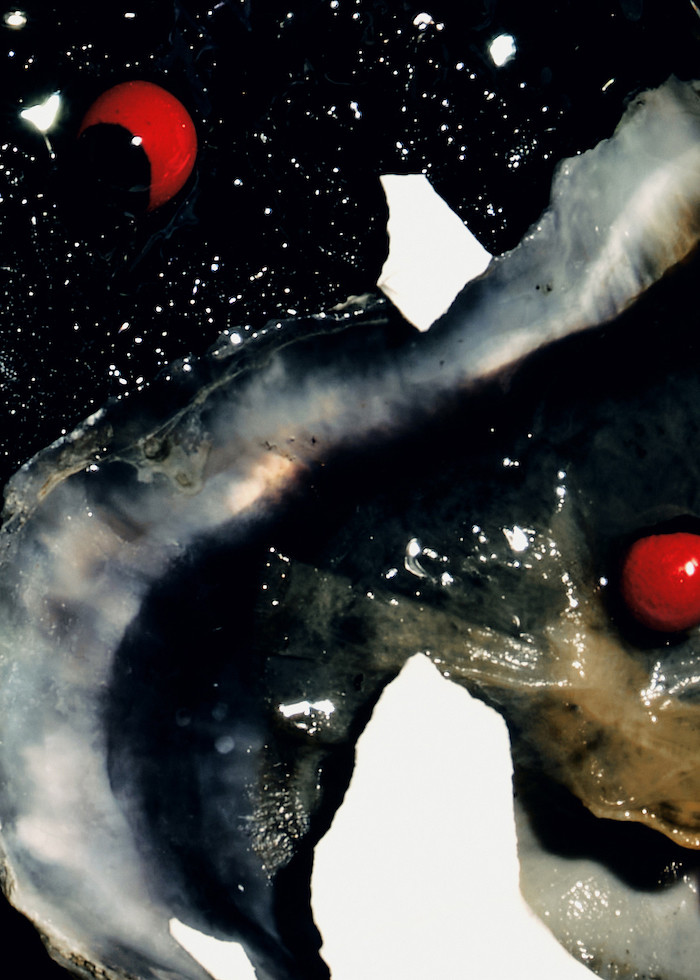
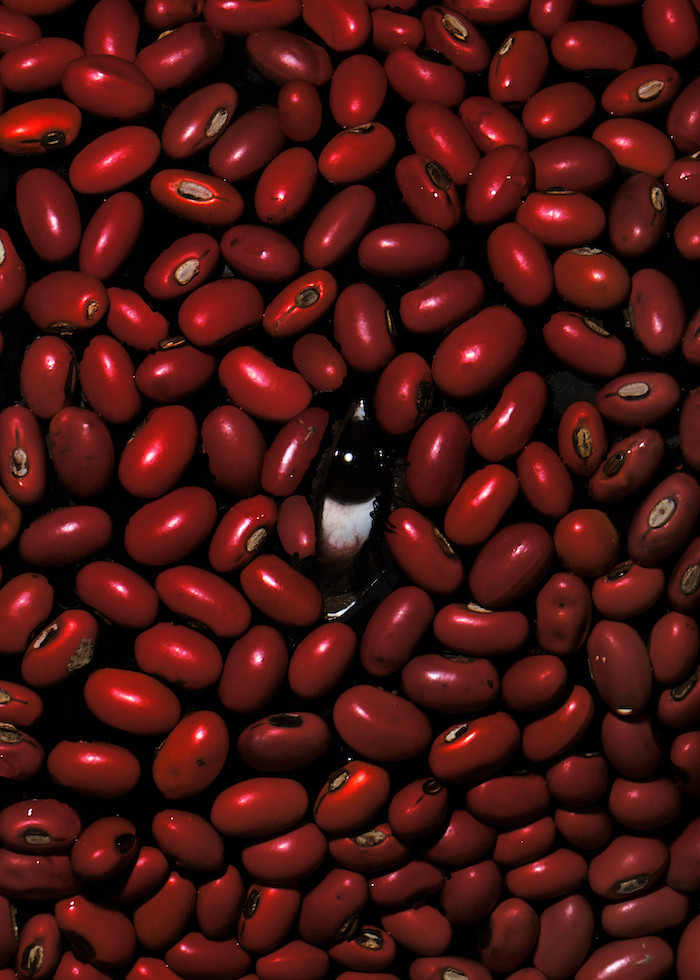
office sat down with Martí and Ol to discuss the adventure they took to Mercado de Senora, the photography process, and the surrealism that drives both the market and their culture as a whole, below.
Carlos, what did you learn from your years of fashion photography? How did you translate it to this project, and in what ways did the medium also limit you?
Carlos Martí— Well, now I think more about aesthetics. I used to do more street photography — that was the thing that I was focused on all my life, just taking my camera and walking and shooting around. I wasn't really focused on an aesthetic. I think fashion photography gave me sort of a narrow point of view. But it also taught me that it's not actually about fashion at all, it's about capturing a moment and trying to engage with people through it.
I can see how that aesthetic carries over, but there are different nuances in both subjects. In what ways did you and Sabrina bounce off of each other and collaborate for Micromorfosis?
Sabrina Ol— I think the community here in Mexico is very collaborative and we're always trying to help each other and push each other. When we started talking about the collaboration, one of the things that we both were trying to exercise was the idea of creating pictures that didn't necessarily have to do with a model wearing clothes. Because, of course, I have a fashion brand. I tend to mostly shoot pictures of people wearing my clothes. I was interested in communicating feeling without having another person on the other side of the camera. Actually composing a vibe with different elements, together with Carlos. And one of our starting points was the Sonora market and trying to get inspired by all these sounds, textures, smells, and people. We tried to recreate a ritual, or it felt that way almost. When we were composing all of the little elements, it felt like a very collaborative moment. We had a lot of control, but we also learned to trust each other and let go of that control.
Mercado de Sonora is the largest herbalist and esoteric market in the world where you explored unique subjects for this project. What are some of the most outlandish things you can find at the market?
SO — The bones were crazy.
CM — They just have everything there. They have the feathers of the most exotic birds that you can find. Bones from every animal. What Sabrina said is so true because it felt like this continuous ritual from the market to the final pictures. It's a very eclectic place.
SO — There used to be ever more available there. There are probably some illegal things being sold, but if you ask, they'll bring it to you.
CM — You get to the point where you lose yourself. After a certain point, you're walking around and you realize you don't even know where you're going anymore.


In what ways are the smells, sights, and sounds of Mercado de Sonora indicative of broader Mexican culture?
SO — Markets in general represent, visually and aesthetically, a lot of parts that explain how the country works. Many aspects of how the country works, politically and economically, definitely have that surrealistic aspect.
CM — Yes, markets in Mexico represent Mexico itself.
SO — It's very creative because it comes from a lack of space or lack of resources. There are very surreal decisions that happen here politically and economically. I think magical realism is the best way of explaining how Mexico and Latin America work. The only way of explaining it all is by putting a little bit of magic into everything and being really abstract with our words because sometimes it's impossible to translate. So going back to the market, it just represents everything — it represents surrealism and it represents order in a messy environment.
CM — And spontaneity.
SO — It represents a culture, unity, and how everyone is helping each other out. It shows that there is some kind of order in the mess, you know?
CM — You're right Sabrina, the Mercados in Mexico are kind of like an anarchist situation, but everybody's hustling and everybody has their place. It's a small representation of the whole country.
I think that notion of order in disorder paints a really detailed visual. And that translates through the photos as well. Tell us a bit more about the photography process — from conceptualization to execution. What challenges did you face in photographing these unique subjects?
CM — For me, finding focus was difficult. It's difficult to remove yourself from the process and look at it from the outside to actually identify the frame of it. We were in this flow of composing so many different elements. So I think the hard part was definitely finding focus.
SO — Definitely. Carlos would keep saying, 'Okay, we have all these elements, but what is the core? What is the spine of what we wanna communicate?' And I feel like he was definitely really good at discovering that structure and that core that made it all make sense.


I think that's kind of the hardest part of making anything — removing yourself from it and seeing it in an objective way. That's really difficult to be able to do. And with so many moving parts as you said, I bet that was challenging.
CM — But that's photography always, you know? You have to stop everything. You stop the universe and then you have to step aside and look at it from afar.
SO — I constantly have these big ideas, but I feel that's part of what I do. Part of my aesthetic is to be a little bit messy with my work, but it ends up making sense for me and for other people too. I definitely feel like as I grow and mature in my work and my process, I have come to have more anticipation. I've learned to simplify my ideas and we were able to do that really well as a team.
I know a big part of that process was choosing elements that evoked this sensory experience for audiences. How do you think senses like smell and texture elevate a photograph?
CM — Well, in this case, it was especially crazy. In the market, our senses were all over the place. There were animal pheromones and smells from everything being sold, like fish.
SO — We were there for maybe two hours and I remember moments where I had to push myself to stay there longer.
CM — It was really draining, energetically. We wanted to translate that energy into the project. When I started photography, I started because of music. It was a synesthetic process for me. I started my own kind of ritual and it was always the same ritual, listening to this hardcore music and just putting myself out of my head. And then the images came along totally just by themselves. It kind of translated the music into pictures. So we did the same thing with the market, just on a bit of a more complex level because there were so many inputs. A lot of colors, sounds, and smells. The senses are universal translators.
The photos are very visceral, which is what I love about them. The idea of sensory experiences also being a universal translator is really interesting because it helps people to connect to the photographs in this really high-level way. The photos you composed are alluring, yet uncanny at the same time. What feelings did intend for these compositions to stir in audiences? Or is the interpretation intended to be multifarious?
CM — Well, we were just like kids having fun. We didn't consider too much how they'd be received. At the moment, we were just playing around with the images. At the time, the images weren't even the point, but it was that experience we shared.
SO — But I do think that you were going for a very specific thing when you were composing the images. Definitely a darker side of the market — that visceral element that you mentioned. You don't see Micromorfosis and think about community and laughs and love; you think about the insides of the market.
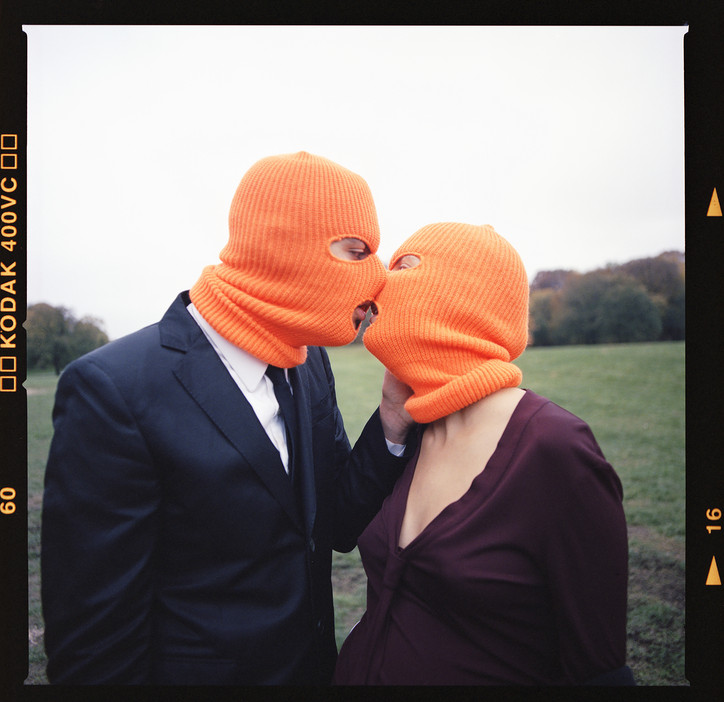
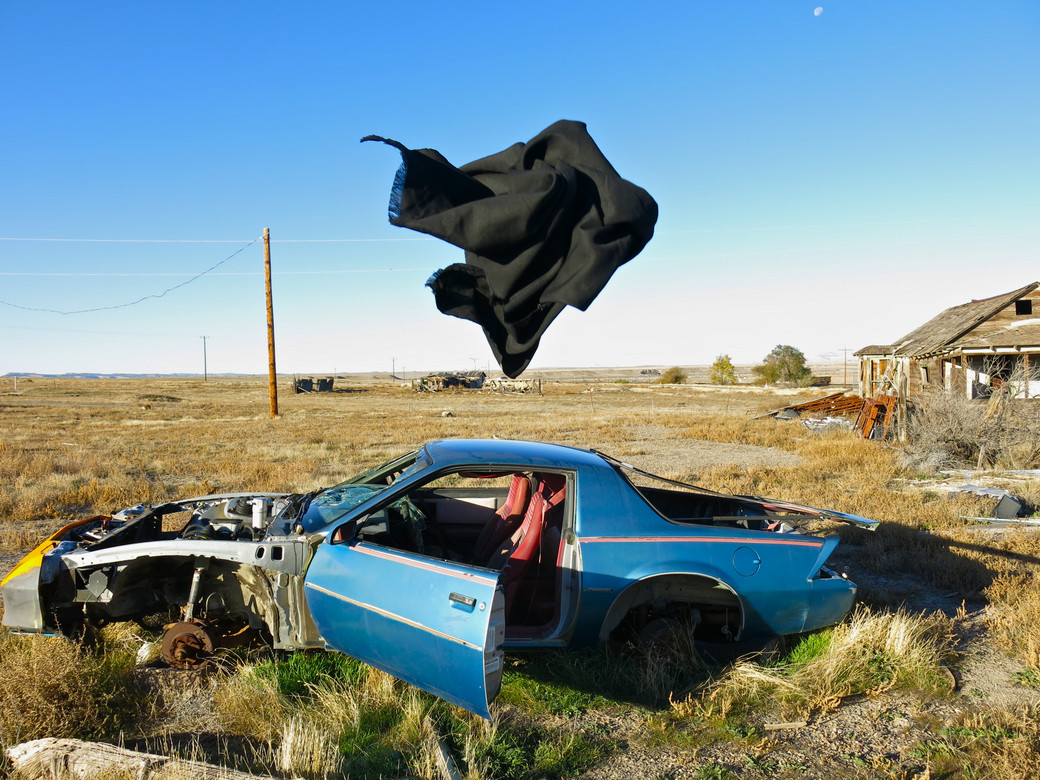
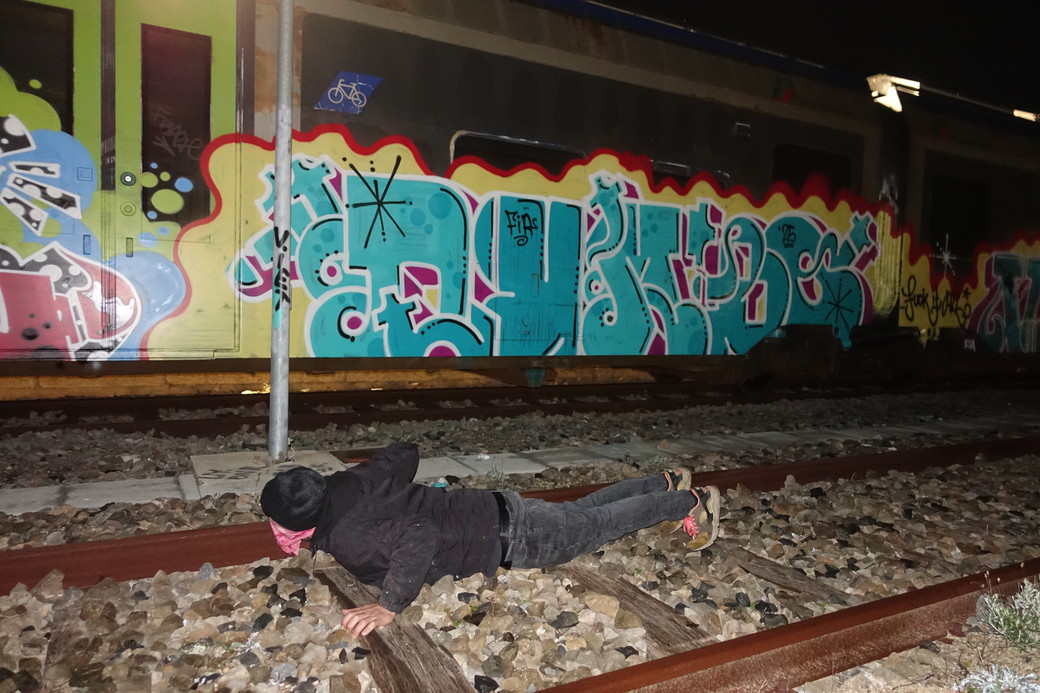
As many of the plants and items for sale are used for “amarres” or love spells — mysticism is embedded in the DNA of Mercado de Sonora. Do you believe that amarres truly work?
SO — The energy there is so strong. I wouldn't say it's a myth at all just because of how I felt. I remember telling Carlos at the end of our trip, 'I feel like I'm gonna pass out.' Just because of all of the smells, noises, people screaming and selling their inventories, and the visual stimulation. In Mexico, especially with colonization, there's so much history buried underneath all the streets. I feel like it definitely has strong energy on top of that. And then the next day we took the pictures, so we brought all that energy I felt from the market. I think I'm pretty susceptible to certain environments; I think Carlos is too. We were both tripping, literally. I feel at the beginning, when we got there, I could differentiate one thing from the other. But by the end of our visit, that got harder to do.
Which is really unique because even for someone like me who has not been there or seen the market, you can feel the photos. It feels like a behind-the-scenes of the market. Although the creative process may have been more free-flowing, now that you have this collection of photos and they will be able to be seen by audiences, how would you describe the realm you want your colorful photos to transport audiences to?
SO — For me, I would hope they go to a completely alternative, surreal world where colors are different and things aren't what they seem. I would hope people have a lot of questions about what things are because, at the end of the day, the theme and title of the project is Micromorfosis. It's like these small universes composed of all these different elements. I would want people to question it, be introspective, and try to make sense of it. I think the photos can represent moods or emotions even. I love to hear what people think we're trying to say. That's one of my favorite things about creating, it's hearing what other people thought. And sometimes they tell you things that you didn't even think about, but you're like, 'Oh, that actually totally makes sense.'
CM — I like the confusion part of it. I want people to look at it and think, 'What is happening here?' This calm state moment of no sound or context — just confusion.
I think that the abstractness of the photos is also one of the biggest parts of their allure. Maybe people don't have to come to an outcome after looking at them, but I think that mystery is what draws you in initially.
SO — I have this friend who writes poetry and she's always like, 'You don't always have to try to understand poetry. You just have to feel it.' So with these pictures, maybe it's about just accepting them in that same way.

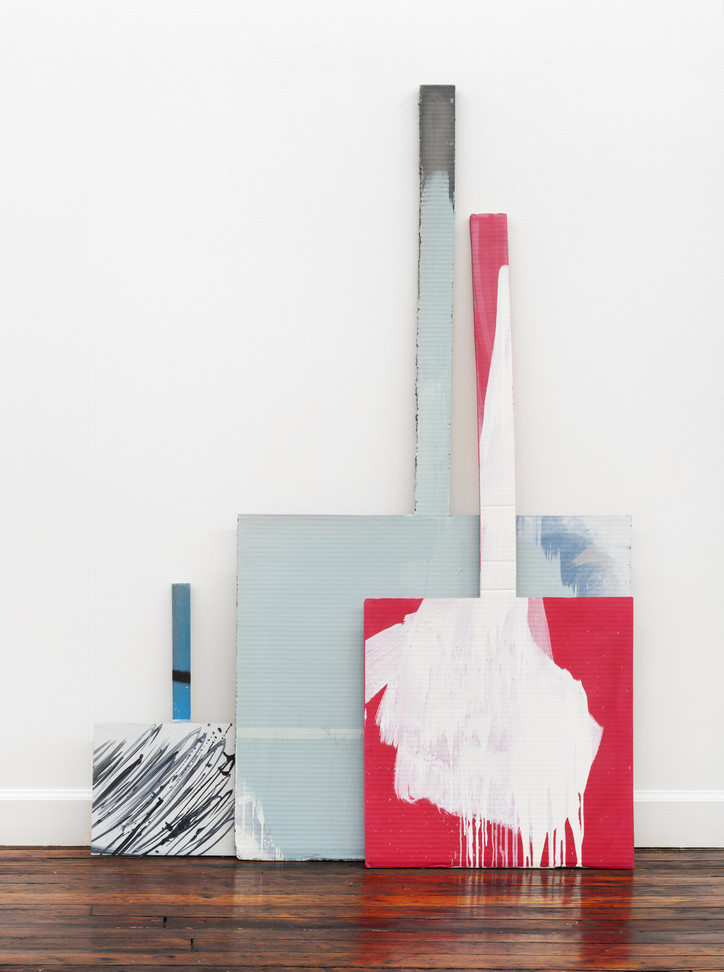
No space is neutral, an idea which is exemplified quite dramatically in Paint the Protest. And for many of the works featured in the show, the guise of agitprop — an otherwise unsubtle medium in its use of punchy, to the point language — becomes recontextualized in the gallery space, granting works the luxury of obscurity and complexity. In the world of Paint the Protest, nothing can be taken at face value — a closer look into Richard Prince’s mostly blank placard sign paintings don’t communicate an absence of meaning, but rather a vessel for projected dissent — an exercise that requires the critical participation of a viewer.
In this vein, Spector realizes how vital the relationship between viewer and art is, because without the engagement of an external participant, the art in its essence presents no steps toward change, or activism for that matter. They are merely objects. However, it is not just this relationship — between artwork and spectator — that is a necessary part of the show’s equation, but a third part is present as well: the recognition of the space, a space that implicitly causes us to treat these works differently than those on the street, for better and for worse, and in its own way, contributing its valued voice to the spectrum of activism.
This show, which speaks to the idea of space and presentation so heavily, is also Spector's very first gallery show. Considering her long and impactful career in museums and as chief curator and artistic director of the Guggenheim, it's a momentous occasion that she is entering a non-institution and a white cube. office had the chance to talk to Spector about Paint the Protest, who offered important insights into her process while constructing the show. Read the interview below.


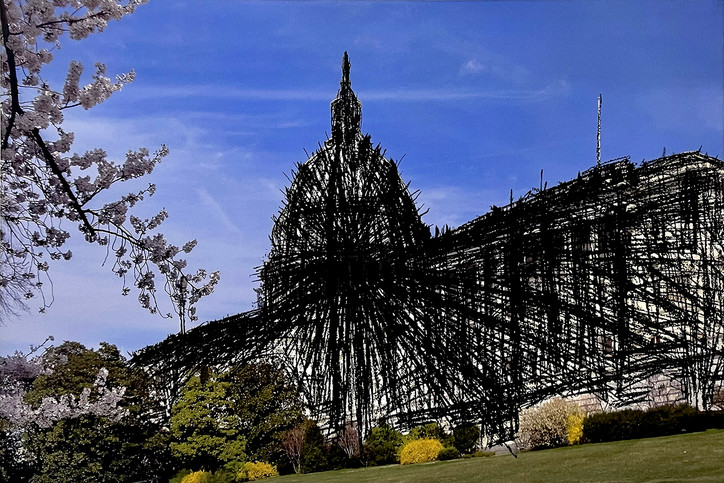
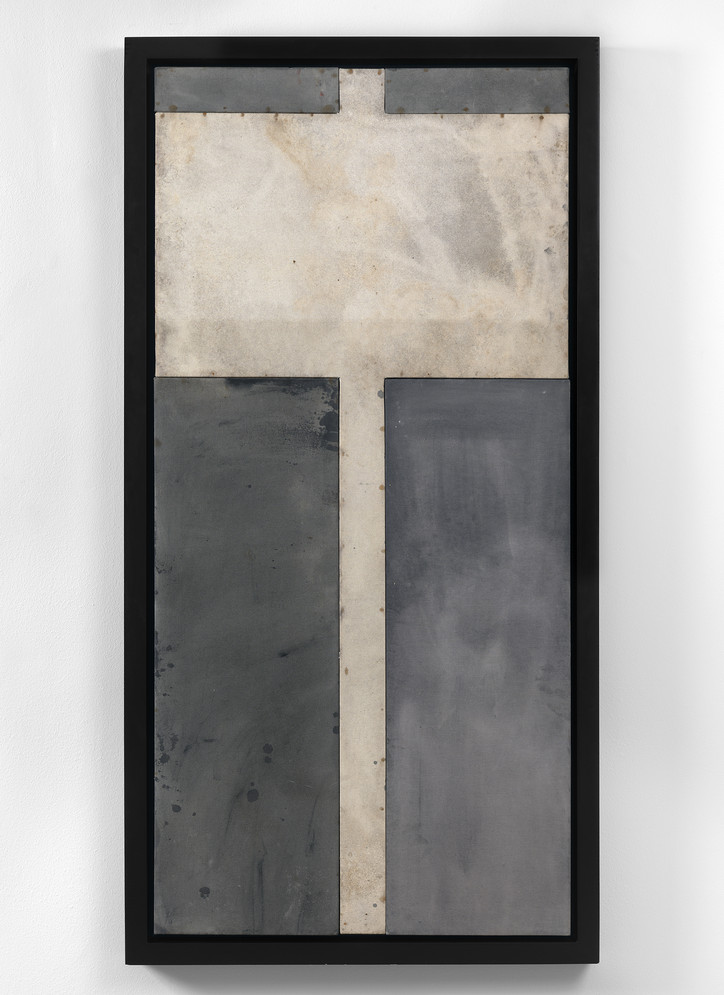
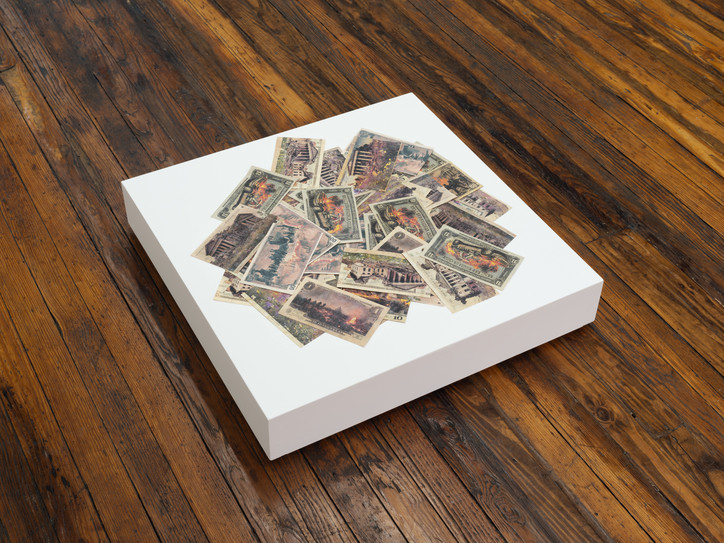
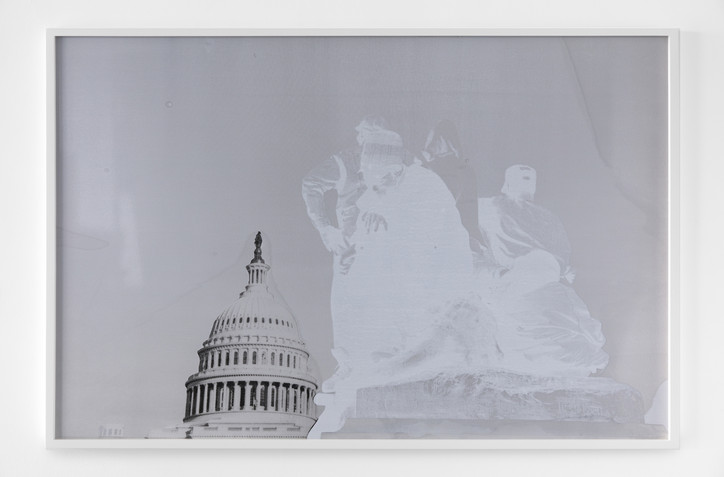
Hank Willis Thomas 'One Million Second Chances (The Invisible Men)'; Dread Scott 'Obliterated Power Capitol'
Generally speaking, there is a fairly deep pool of artists that work in the same vein as your show’s thesis. What initial steps did you take to narrow down this “pool” and which work did you choose to be in the show first?
The genesis for the exhibition was Richard Prince’s Protest Painting series from the early 1990s. He had shared with me that his studio practice was born in an ethos of protest, having been a student in the late 1960s. I particularly liked that the placard-shaped signs embedded in the canvas were largely blank (save for some stray jokes and his signature “bird talk” writings). This way the signs became ciphers for the idea of dissent rather than being about any specific grievance. That sentiment became the guiding force for the subsequent selections of work for the show.
How has your experience in curating past shows specifically helped the curatorial process for Paint the Protest?
It was really important to me that all of the artists included agreed to their participation and, in some cases, made new work for the presentation. Their insights into the topic informed my thinking.
Was the decision to put the Trump piece in the gallery’s bathroom an ode to your gold toilet altercation with him a couple of years ago?
I wish I could claim that I made that installation decision, but Marilyn Minter was emphatic that she wanted her plaque to be installed over the toilet.
How has your experience in curating past shows specifically helped the curatorial process for Paint the Protest?
It was really important to me that all of the artists included agreed to their participation and, in some cases, made new work for the presentation. Their insights into the topic informed my thinking.
Was the decision to put the Trump piece in the gallery’s bathroom an ode to your gold toilet altercation with him a couple of years ago?
I wish I could claim that I made that installation decision, but Marilyn Minter was emphatic that she wanted her plaque to be installed over the toilet.

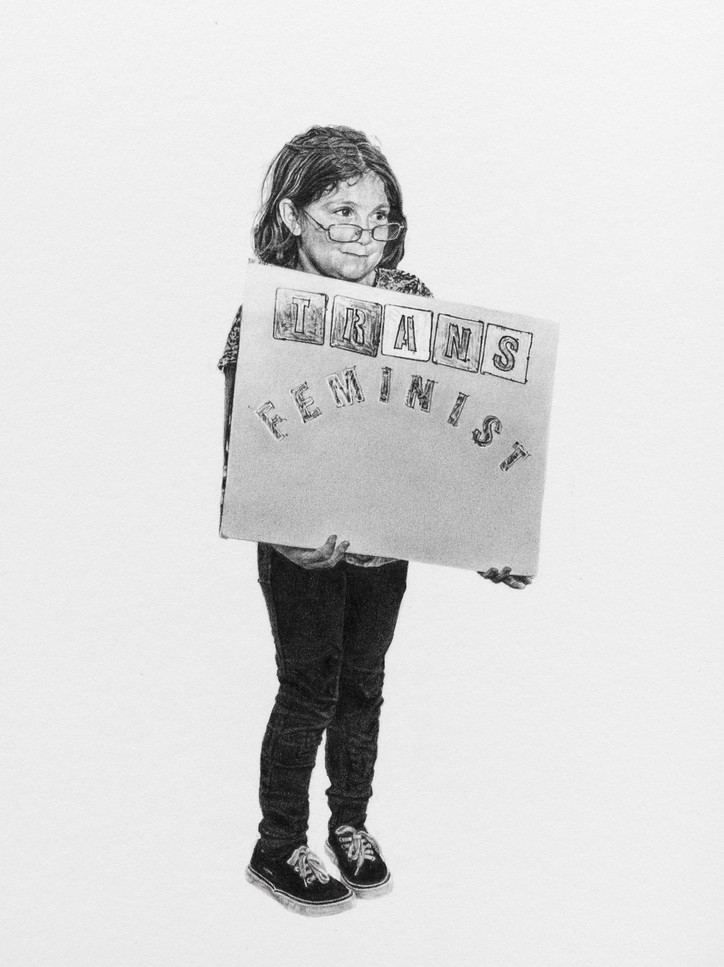
Richard Prince 'Untitled Protest Painting'; Andrea Bowers 'Transfeminist (TransLatin@ Coalition, Blockade at the Beverly Center, L.A., CA, March 20th, 2015)'
Could you elaborate a bit more on the relationship between enacting dissent and describing it? How does the exhibition work to investigate that relationship?
The exhibition asks what art can do, if anything, to affect change. Art can ask questions; art can change minds. But it can’t independently do things. That takes viewers, practitioners, and participants, who might be moved by what they experience in an art context to contribute to the civic discourse.
What was it about Off Paradise’s space that you felt helped contribute to the show’s dialogue?
I love the intimacy of the gallery space, which allowed for the art works to communicate with one another in a very coherent way.


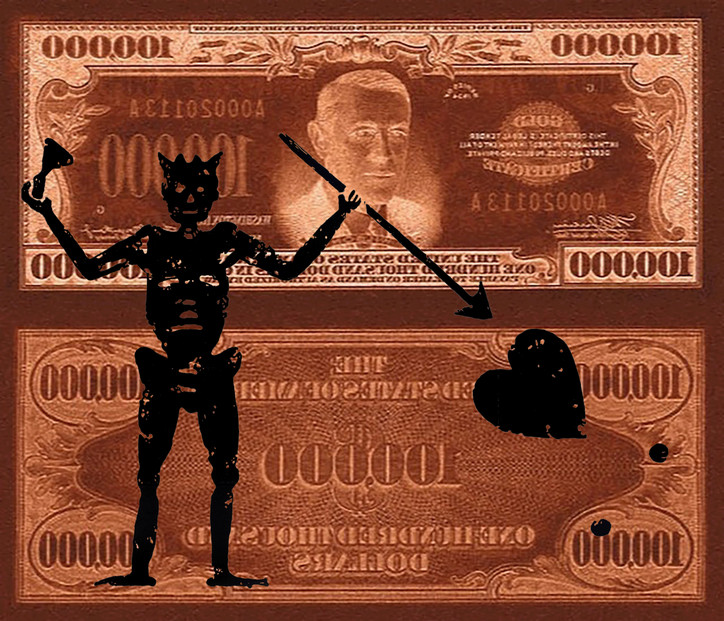
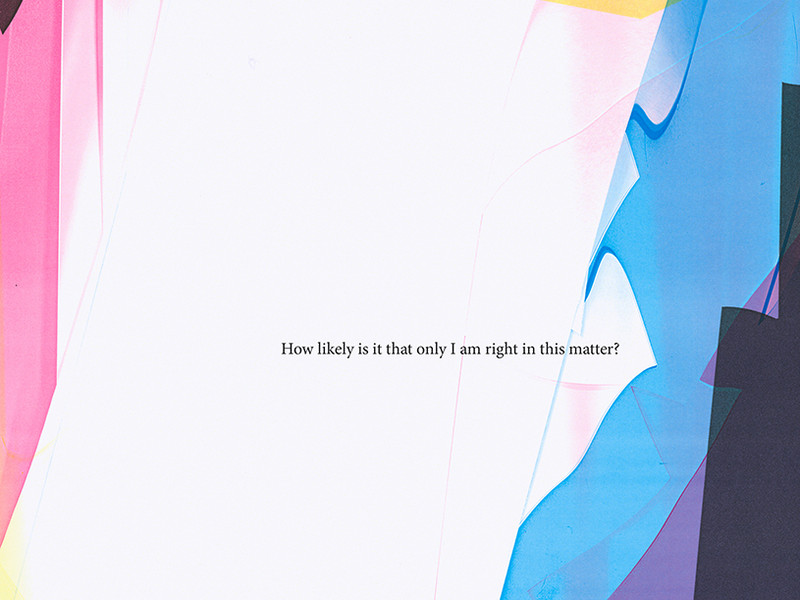
Rirkrit Tiravanija 'untitled 2021 (rich bastards beware)'; Aaron Huey 'Currency of Protest'
What do you hope the viewer takes away from Paint the Protest after seeing it?
I see this as an optimistic project and hope that those who spent time with the exhibition come away with a feeling of renewal and a sense of engagement with the issues of our day.
Did the partnership with Downtown for Democracy come before the idea for the exhibition, or did it come after you had already started brainstorming?
This idea developed in tandem with the conceptual development of the project. I wanted an exhibition that would actually do something, with a tangible contribution to supporting democracy.