PRESENTE CONTINUO: the intimate ties between then&now

Starting May 30, PRESENTE CONTINUO will be available to purchase on presentecontinuo.com, cpcompany.com, and at the C.P. Company flagship store in Milan, Corso Matteotti 7.
Stay informed on our latest news!

Starting May 30, PRESENTE CONTINUO will be available to purchase on presentecontinuo.com, cpcompany.com, and at the C.P. Company flagship store in Milan, Corso Matteotti 7.

Founded by twin brothers Sam and Daniel Kapp, the gallery recently moved to a new location at 86 Walker Street in Tribeca. Lingua Franca marks the first attempt by either brother to break off on one’s own to curate — however Daniel made it clear to me that including Richard Tuttle in the show was his brother’s idea, and a brilliant one it was. In addition to three Tuttle pieces, this democratic show also includes work from Hannah Beerman, Brian Belott, Justin Chance, Clare Churchouse, Susan Cianciolo, Mary Manning, Louis Osmosis, and Rachel Eulena Williams. On view through July 29, Lingua Franca is a must see. While in the gallery, I had the pleasure of talking to Daniel Kapp about Lingua Franca and curation in general, see below for the interview.
After being walked through the show by Kapp, and him graciously waiting as I marinated in the works for an obnoxious amount of time, we sat down in the gallery’s backroom to discuss the show and his curatorial process.


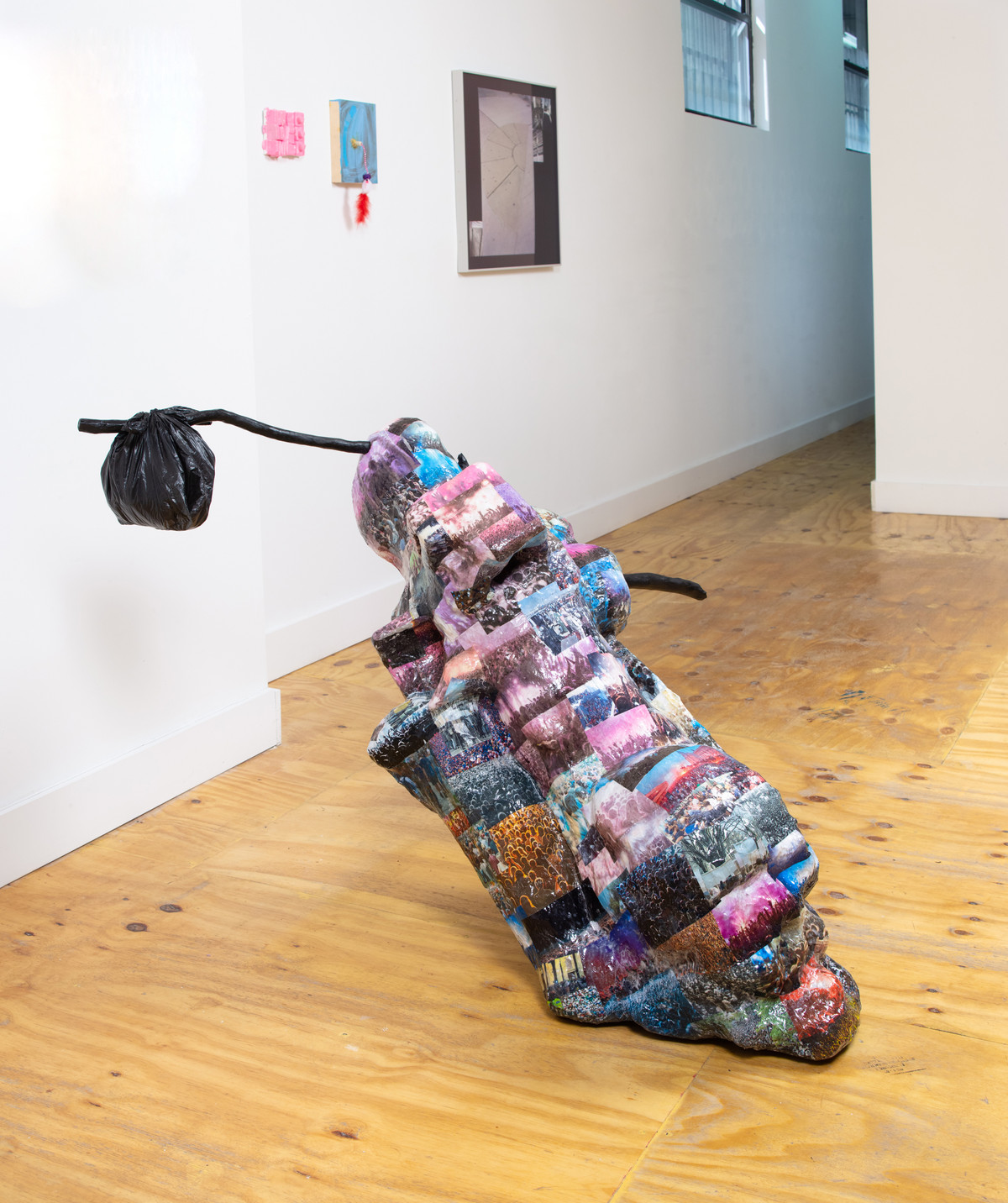
Left: Various Masses by Louis Osmosis, Right: Puff Painting by Brian Belott
You said earlier that the show’s been growing with you for nearly six years, what was the original concept exactly? What was the seed?
There are a couple of artists in this current show that have been a part of the thinking since the beginning. Hannah Beerman was the genesis of the show but Susan Cianciolo was an artist I was considering from the very beginning. Brian Belott was an artist I was considering from the very beginning. I think these were the artists who I was more simply considering as painters painting on other media, or bringing other media into their painting. But it began to grow and change from there. That simple concept of an artist who can’t simply be boxed into one medium, I think maybe that was the simplest curiosity I had that led me into the show. And it still rings true, I’m just even more curious now. I went in with the smaller idea of this being a painting show and while putting it together realized that there was more to be considered.
So it continues to stick with you.
Yes. And ironically, or perhaps not ironically at all, I feel like this show has been a really strange siren — like a literal siren — to the community of artists who work in this sort of “common language.” I’ve met around five or six great artists who retroactively would be perfect for this show, who’ve come in because they felt a connection to the artists and the work here, which I think just maybe proves the thesis of this show true. If it’s going even beyond what was curated within these walls to speak to other artists out there, outside of this gallery, that’s maybe the coolest thing out of all this.

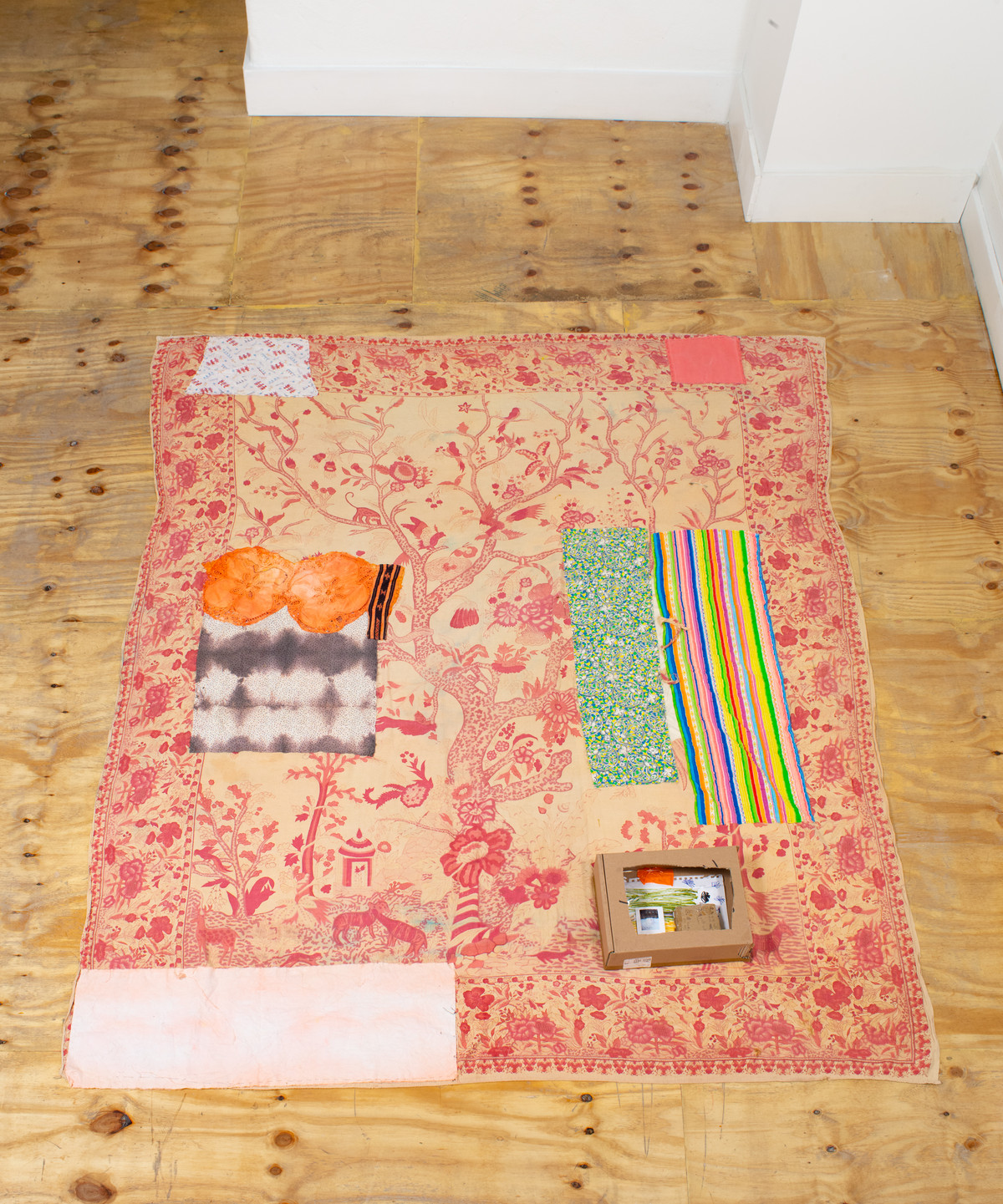
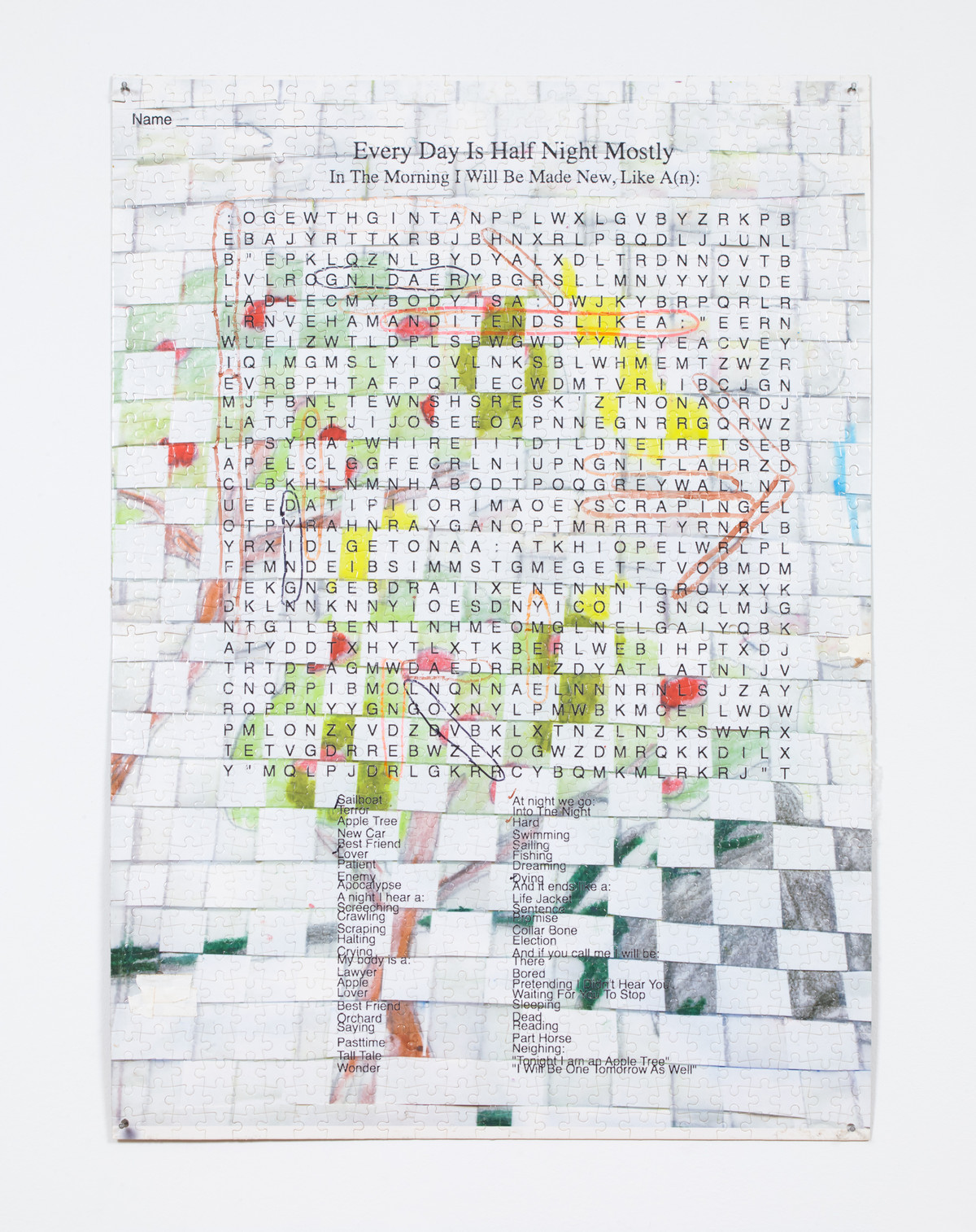
Communicating Telepathically and energetically, ("I LOVE YOU") by Susan Cianciolo
It must feel very validating to receive that kind of reaction.
Totally. And I think artists are always a great source of validation — as you probably feel and know too. Artists are always ahead of the game, ahead of the rest of the art world. That has been some of the biggest praise I’ve gotten, is from artists. And to me, that is the most meaningful praise I could hear.
That’s refreshing to hear. I think a lot of curators and gallery owners — that side of the art world — will say that, but it doesn’t necessarily translate into their practice. More than anything, it’s just a box they check verbally so that they don’t get yelled at.
[laughs] Yeah.
But the fact that you have artists growing with you — the evolution of Kapp Kapp isn’t just a metamorphosis shared exclusively between you and your brother — the artists that grace the gallery inherently become part of your team by association. It’s very communal. And it’s seen in the shows — especially in this one.
Thank you!
Language and community operate in tandem, and I think that’s another way this show could be described; it defies media and medium to create not just a dialogue, but a community of artists and their art.
Something you have me thinking about — regarding the artists we work with — is the act of creating context for them. When we consider representation or consider building a legacy for the artists we work with, context is such a huge part of it. Obviously to have solo shows as a part of the greater gallery program context is one thing, but I think it’s so important for galleries to contextualize the artists’ work or the artists they work with — beyond their program even. And that’s what I think a group show can be so special for. It gives galleries the wiggle room to work with artists and other galleries that might be off limits otherwise. But that’s something we always feel dutiful for, building that context so the world can understand the artists we work with. I think this show is just a step further into that.
You make a really great point about context, I think that’s an idea that should be so frequently associated with curation, practically a synonym.
Totally. In the same way that we were saying before, Lingua Franca could be a completely different show — you can really take any artwork and that could become the new basis of a Lingua Franca show. Considering that context is so important.



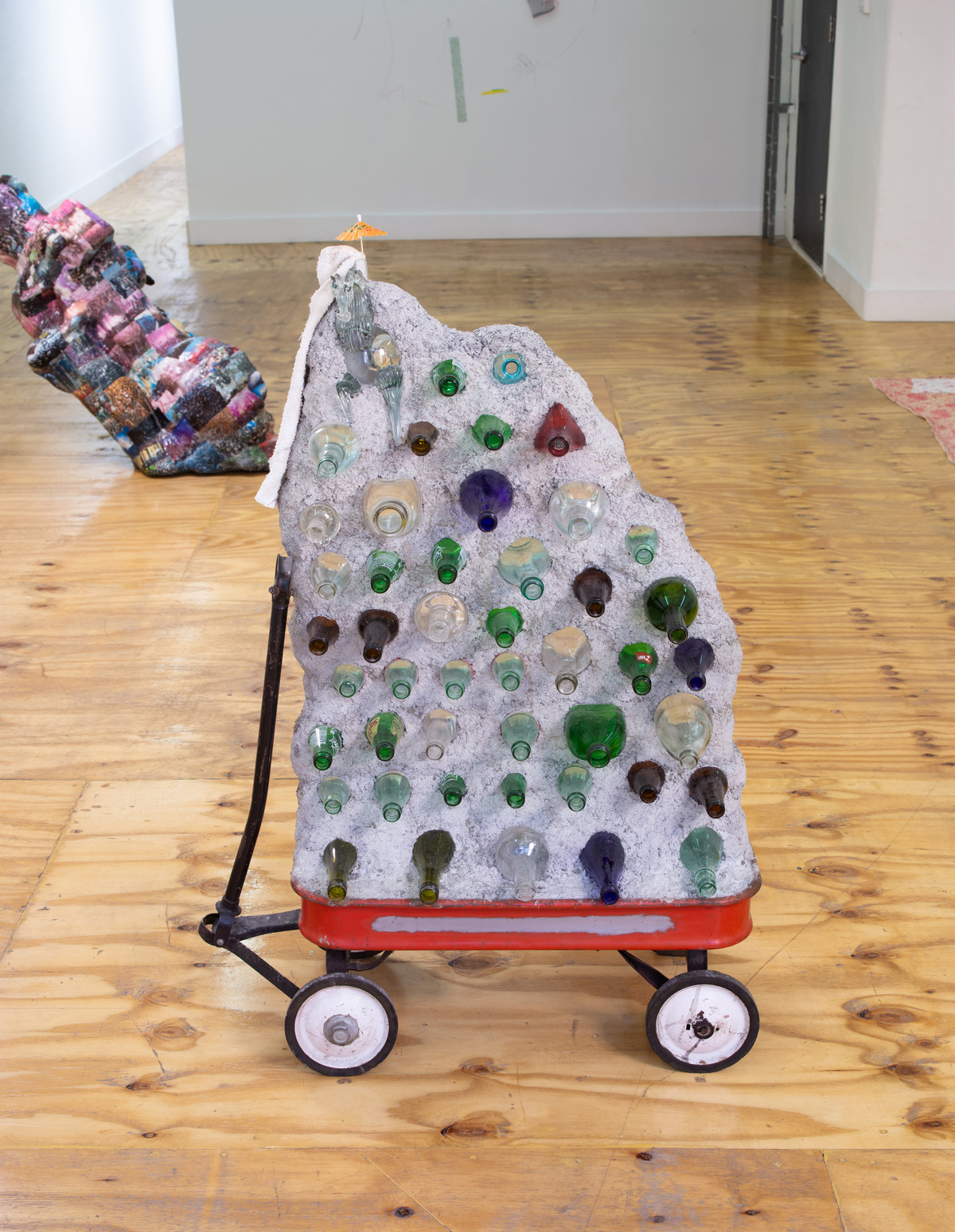
Left: Bottle Wall by Louis Osmosis, Right: Twice (Epletrærne) by Justin Chance
The thesis of the show is very applicable to art on the whole, which is why you could in some way or another substitute different works, and it would fit the scheme. It would create a completely different conversation, but in that is a “Lingua Franca.”
Even just that is interesting to think about; what changing one piece in a show like this would mean, how that could instantly alter the conversation itself.
It really personifies the works when we talk about them in terms of having a conversation. And I guess the most immediate personification of one’s work is the artist themself.
And that’s another thread that pulls through this show. Performance. I see performance in all of these works, just like I see painting and photography and everything else as well. I absolutely feel that, that the artists are here representing themselves in some way. They aren’t distant. Yes.
What role did spontaneity play in the curation of this show?
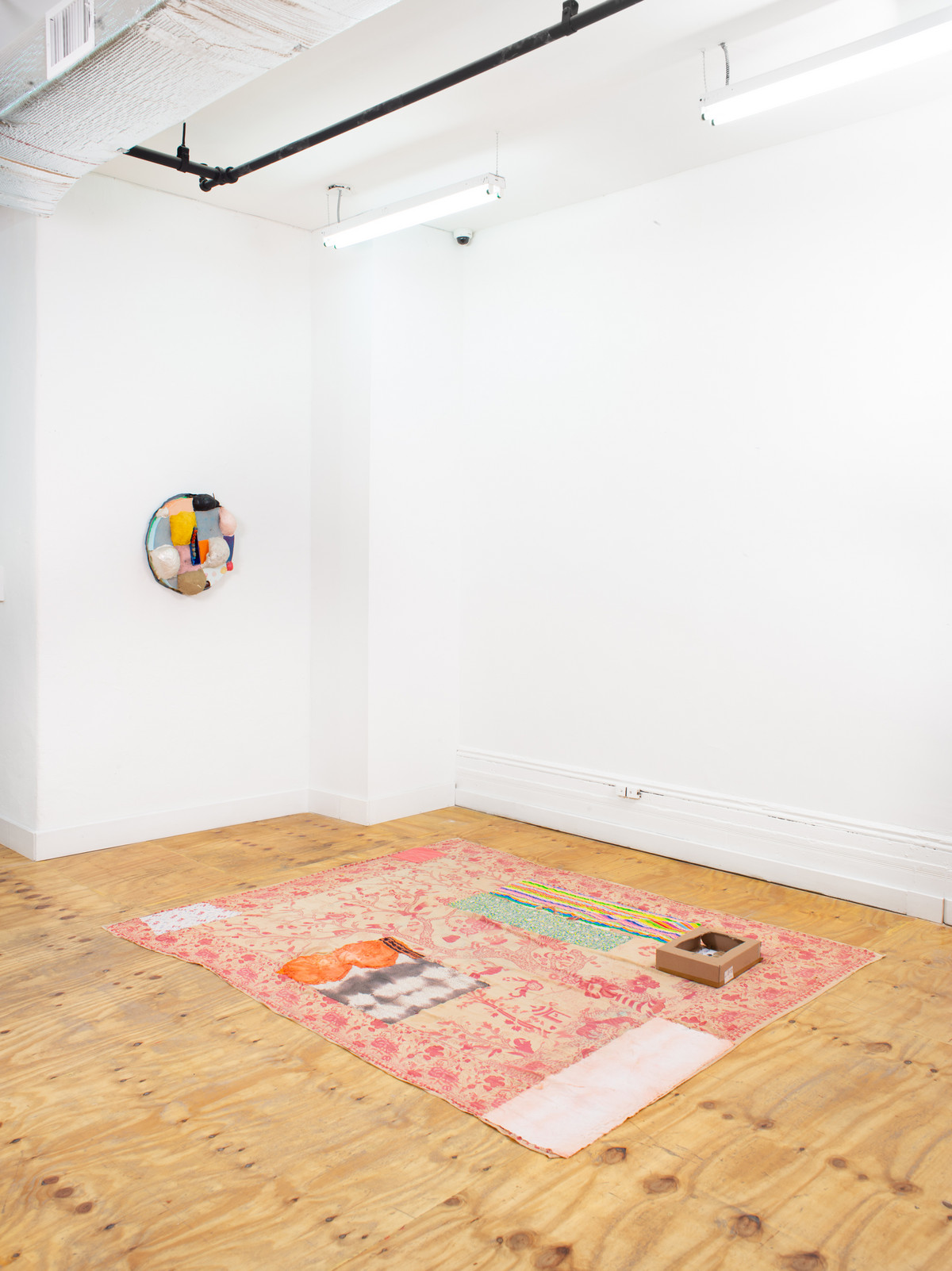
About half of the works in the show I knew specifically, exactly what they would be leading up to putting the show together. And about the other half of the show was a surprise to me, when the work arrived was when I learned what it was or what size it was or what have you. And I think that to me was the final element of the show and the conversation going on in the show. You could really take any artwork from any of these artists, put them in a show together, and there will inherently be a conversation. But the element of surprise is what I think really took this show further. Like with Susan Cianciolo’s piece which I originally thought was going to be hung on the wall before it arrived here, and now looking around the show, I don’t think there’d be enough visual breathing room with Susan’s tapestry on the wall rather than the floor. And I personally couldn’t have envisioned it that way, but I think it’s even better than it would have been. There really were some beautiful moments of accidents and surprise, and that just speaks to the spirit of the show — the artistry that each artist approaches their work with. I think somehow that was similarly reflected in the spontaneity and organization of the show.

You make an interesting point about “breathing room.” In many ways that would seem antithetical to the idea of conversation, but as we know, one of the most important aspects of dialogue is what’s left unsaid.
Exactly. That was something I was very conscious and careful of this whole time. Even meeting 5 or six artists who would fit so naturally in, equally there were near a dozen artists who I felt could fit so naturally into this show, but just considering the space and that breathing room I wanted, something I always intended was to keep this a really quiet show. “Quiet” ironically because there are so many expressive artworks out here, but without that breathing space the conversation would be lost entirely. With so much noise there wouldn’t be room to listen to it. That was something I intended this whole time, to make it both quiet and powerful. Especially knowing the show would fall over the summer and considering the flurry of summer group shows that pop up during this time of year. Getting closer my concern was will this show slip into the ether of summer shows? My retaliation to that was to keep it subtle and quiet. And in that way I feel it was antithetical to the summer group show. Which is so typically just a salon of gallery artists. But I feel, and this seems to be the popular response, that this doesn’t have the air of a summer group show, it has the air of a group show, and that’s what I was going for.
This show is sort of a reclamation of the “summer group show” in a way.
Well thank you, I love that.

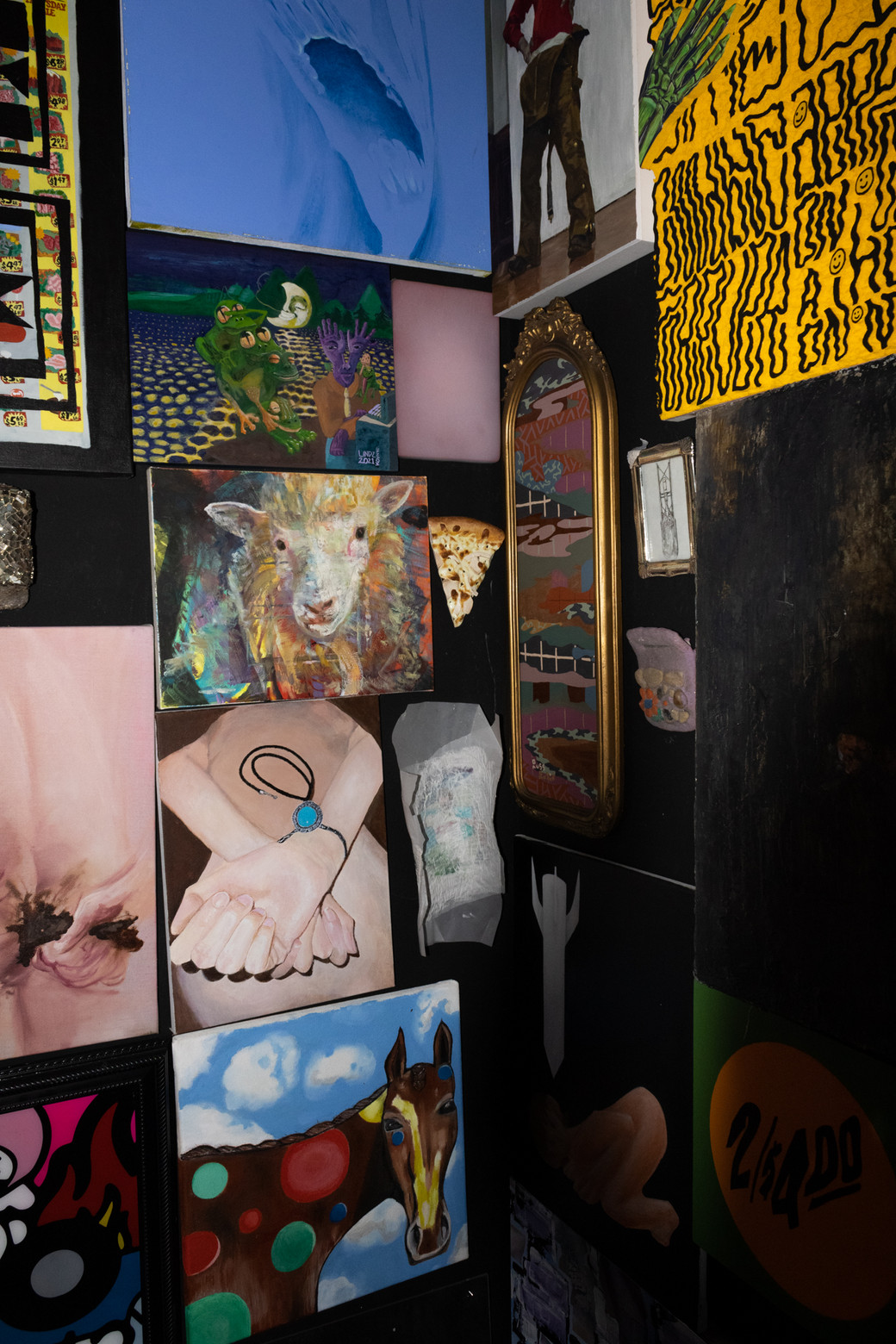
O’Flaherty’s co-founder Jamian Juliano-Villani and her collaborators spent weeks organizing volunteer requests and accepting submissions, which ultimately they by the hundreds from floor to ceiling. The grand opening was schedule, and rescheduled. Though THE PATRIOT was gleefully advertised as an artist’s worst nightmare — the summer group show to end all summer group shows — artists of all calibers eagerly submitted their work with little to no knowledge of what would happen to it.
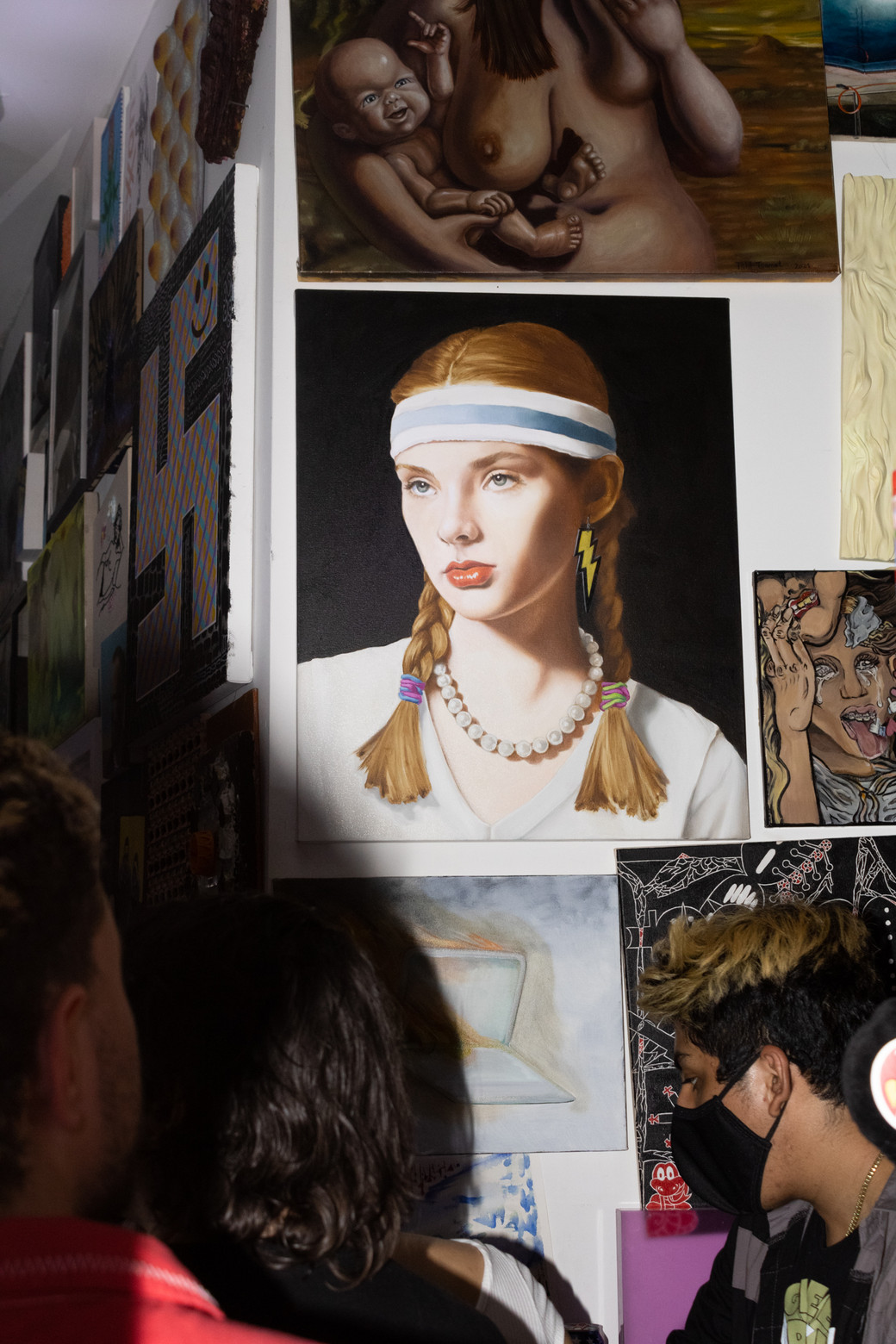
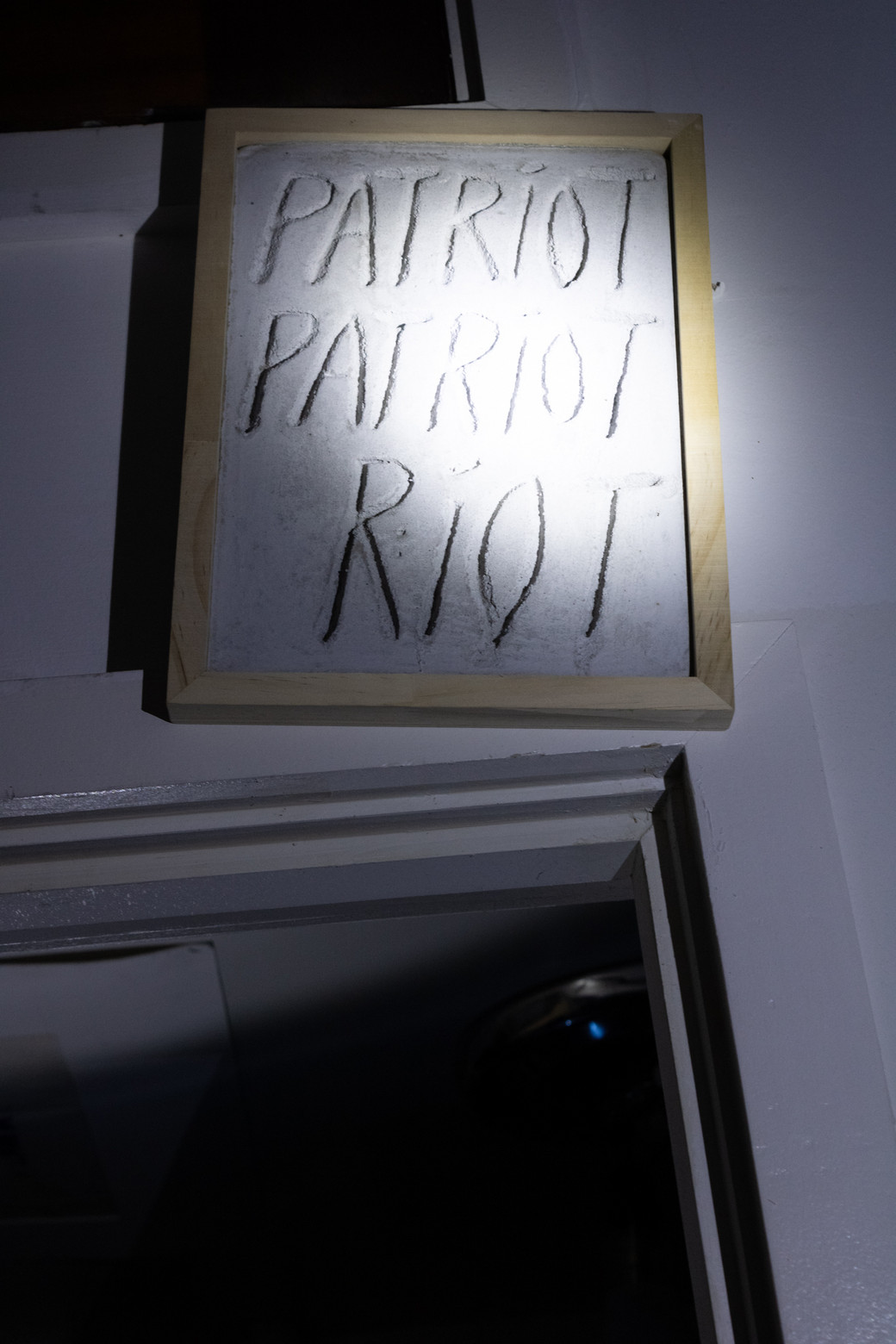
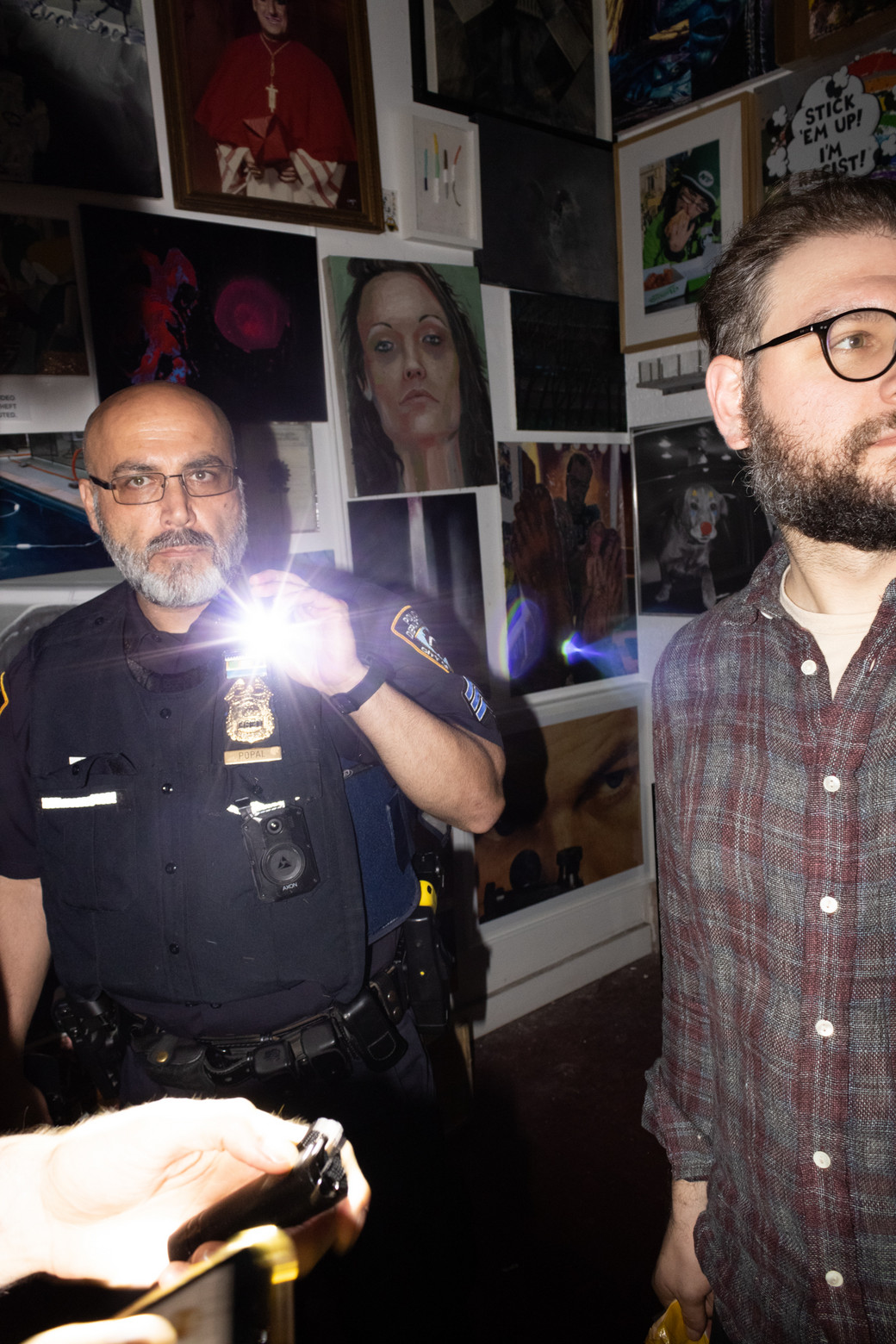
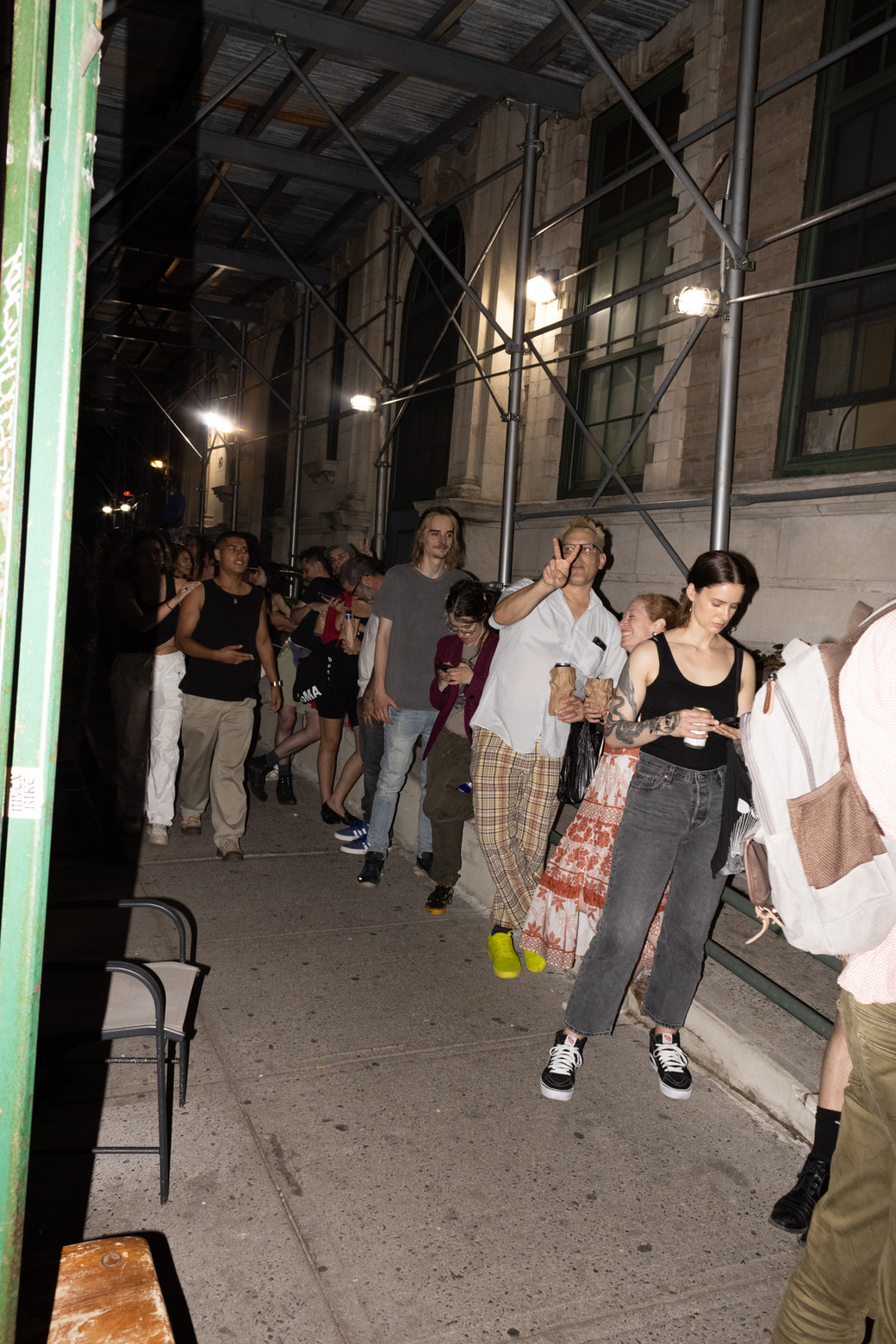
On opening night, the show was a mob scene, packed wall to wall with sweaty hipsters. While agrowing crowd lingered outside, inside artists and friends were scrambling ‘Where’s Waldo’-style, in an attempt to locate their submissions amid a scene full of creative and social chaos. O’Flaherty’s had converted every room, including bathrooms and storage closets, into viewing spaces.
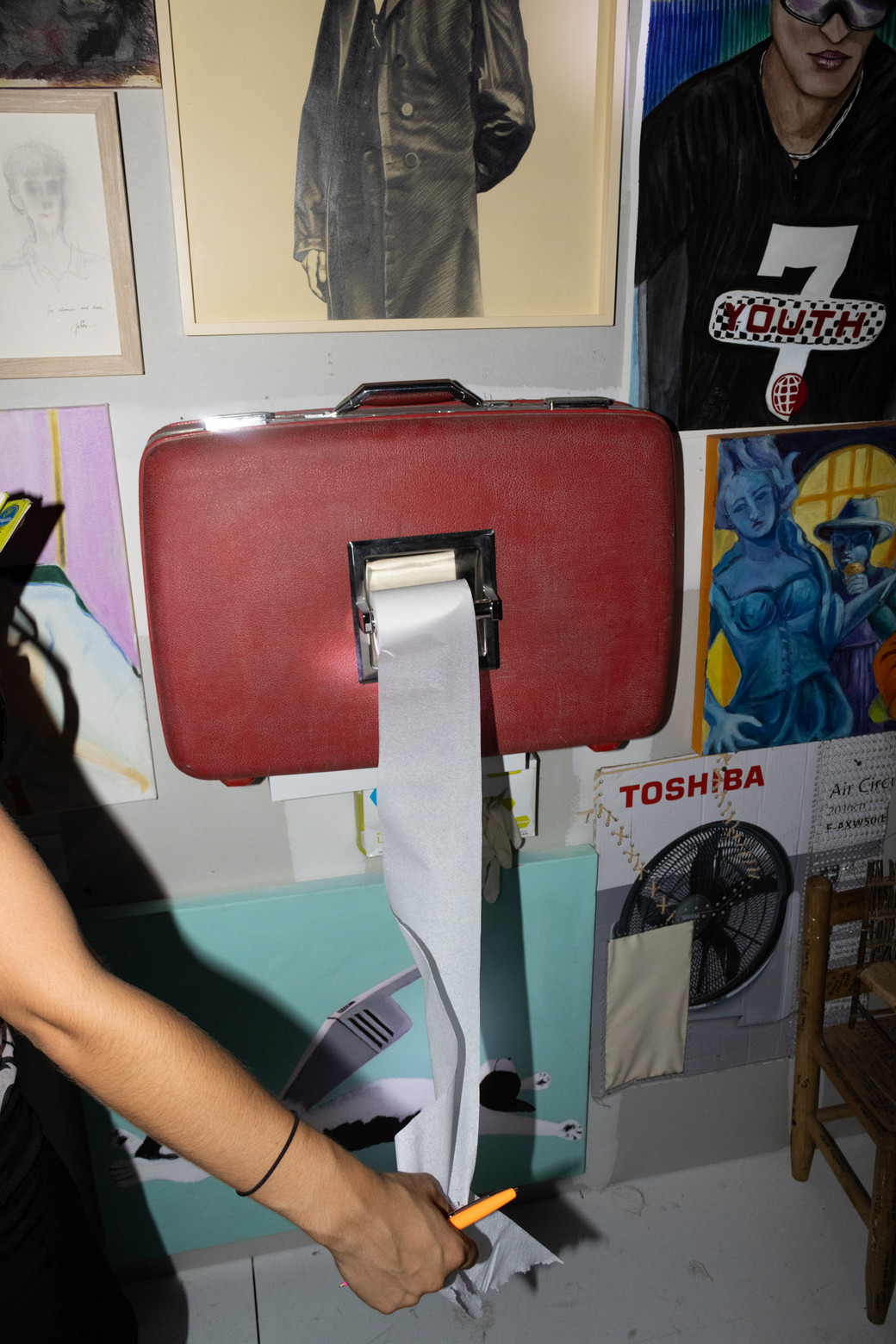
One curtained doorway revealed a candlelit and glass-encased pillow allegedly used by Abraham Lincoln. Another tiny passageway led to a severely lit room containing only a malfunctioning robot monkey shuddering in a litter box, an empty brownie brittle bag chained by the corners to the wall, and pieces of an industrial vacuum strewn across the floor. Select works include a corn kernel watering can, a puzzle-ized ultrasound, a clergyman with a makeover, a briefcase with a built-in toilet paper dispenser, a butt painted on a golden platter.
The show was reminiscent of a Kentucky roadside truck stop curated by a weirdo collector-of-stuff with a couple screws loose.
Fifteen minutes into office’s viewing experience — a mere 45 minutes into the opening — NYPD showed up to shut down the joint, citing fire and safety hazards. Within the hour, and with the help of Juliano-Villani shouting through a megaphone, the giant crowds and gallery-goers dispersed into the streets of Alphabet City. This clusterfuck will be on view until August 9th, presumably law enforcement free.

Coming off the heels of her latest solo exhibition at Harper's Los Angeles Whisper Temptations in My Ear, the playful and meditative artist has poured herself into works that explore the self-questioning of perception and hypotheticals— often through an irreverent lens. Stretching each canvas, gluttonous depictions appear other-worldly, centering conversation surrounding body image and identity. Although each piece speaks to various imaginative states drenched in neon, Choi teeters a fine line between fantasy and reality, prompting the viewer to open themselves up.
"I always battle between, what's really believable, and what's unbelievable in my work, and sometimes the figures can be more virtual and unrealistic, but also the world they are in could be that. I have to leave room for the viewers. It might be very celebratory and festival-like with the toxic, candy colors that I'm inviting you to, and then you come in, walk around the work, and at the end, we figure out that there's something kind of fucked up in there. You feel some catharsis in it. There's pure joy that you get, but sometimes you also feel something is wrong; it's like eating candy, right? If you eat candy, you feel so good, like you love it, and I want to eat it, but you know, that's not good for you either. Right? It's kind of an illusion," she says.


Approaching each piece in a fluid sense, like her identity, Choi's characters play in tandem, stripped of societal confines– an acceptance of self and the unknown. "The things that people don't understand. I don't understand myself either. So I like to talk about that ambiguity, not because I want to be honest. Like, if I'm confused about this, I'm going to talk about that. I'm not gonna try to define this. I'm just gonna live my life because if not, that's stress, right?" she explains. While each figure poses nude or partially nude with indecipherable genitalia and odes to feminity, Choi is intentional when drawing on gender to contextualize a thought or past experience. She notes, "I started creating either super gendered figures or like genderless figures, and it has to do with my experiences; dating a lot of people and doing some stuff or when I'm more of the villain character in my life, I make more genderless, more outrageous works. When I'm more reserved, then it's more genderless."
A curiosity unwaveringly matched with a technique that makes the inconceivable conceivable, Choi's use of pigment holds a lot of the work's allure, bringing to life the fantastical through impasto and fine oil details. After years of practice building color and working with various mediums, Choi has bridged her lessons from one material to the next. "When you do watercolor, the material itself is so sensitive. So if you make one mistake, it can dull the color. So it's like very sensitive. So I learned how to build and sculpt objects by color without dulling the color. That's why I think that all these little changes over colors or vibrations of the colors happen through that practice," she states.


Painting portals into dimensions where pieces of her identity lives, among other wild thoughts, Choi's work is not only influenced by raw emotions but simplicities like a comfort meal or feelings of home. "I made this painting called Rice Power at the show, the orange kitchen painting in the back. Personally, that's like one of my favorite paintings in the show because it explains my habits. Koreans survive the day like we're parsing through the day with rice, balls of rice. In that we call, if you directly translate it, it's called rice power," she explains. With a deep admiration for her culture and community that constantly stimulates her, Choi remains grounded even when an idea sweeps her off her feet. "I think it is really important now, especially that many Asian-American artists are getting attention and just taking up space. We never really had that in the art world."
In celebration of her spectacular show at Harper's, that has come to an end, Choi's immediate consists of days off turning into long nights in the studio, preparing for new shows, and works exploring itches she's more than excited to scratch. On view at Jeffrey Deitch, coming to Los Angeles in September, Wonder Woman is a group show bringing together Asian artists, but most importantly, friends, a cross-pollination of creativity. As days and weeks seem to go by faster than ever, take some time, sit back, and get lost in the universe that is HyeGyeong Choi's art.