PRESENTE CONTINUO: the intimate ties between then&now

Starting May 30, PRESENTE CONTINUO will be available to purchase on presentecontinuo.com, cpcompany.com, and at the C.P. Company flagship store in Milan, Corso Matteotti 7.
Stay informed on our latest news!

Starting May 30, PRESENTE CONTINUO will be available to purchase on presentecontinuo.com, cpcompany.com, and at the C.P. Company flagship store in Milan, Corso Matteotti 7.

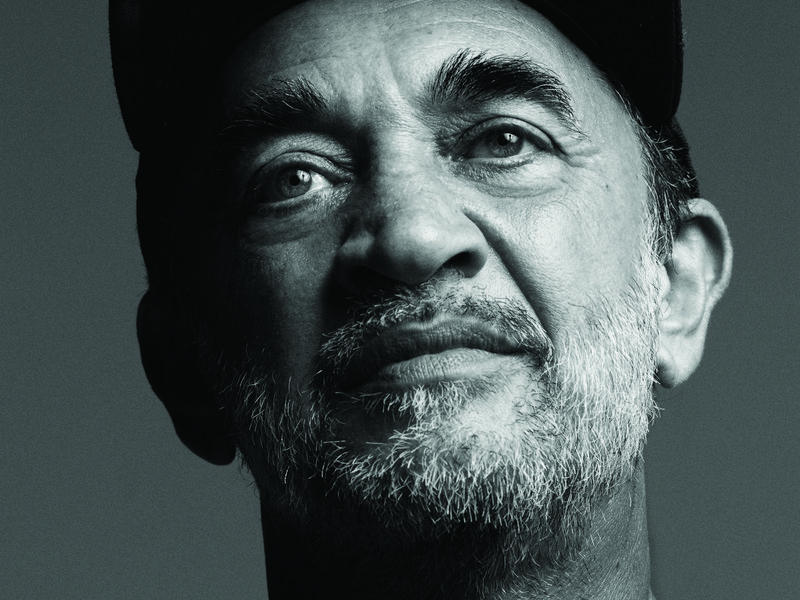
James Perkins, a multidisciplinary artist with grounds in sculpting, painting, photography, and land art explorations, this artists binds the gap between nature and art. To expand on each different talent, Perkins' photography is a wonder of contemporary stills in black and white that evoke raw emotions. His sculpture work contrasts that, creating tranquility.
In a new exhibit at the Hannah Traore Gallery, Perkins has put all of his new sculptures together, with varying sizes and colors of each piece to make you question. As many artists go on a different path, creating work that could either take the simple or chaotic route, Perkins lays his thoughts and perceptions all out with wood.

"I am seeking strategies that embody the spirit of a beautiful neutral human existence. Blurring the lines of human form. The work itself blurs the lines of form and how it came to its existence. Is it painting or sculpture, figurative or minimal, monumental or ephemeral, masculine or feminine, human intervention or nature’s genius, land art or fit for indoors? Does it matter?" Perkins states, in discussion of his work.
As his show has been going since May 12th, be sure to see these artisinal pieces up close and personal for the rest of June and July.


The show closes on July 30th of 2022.

Before Mr. Als begins, we receive a teary-eyed speech from Barbara Paca, one of the primary experts on Frank Walter. She explains that, through the process of collecting Walter’s works, the Walter family have become like family to her. This speech is followed by a brief yet assured note from Jules Walter, Frank Walter’s nephew and the primary liaison for the Walter family in all things art, on the pride and joy he feels in being able to show the works of his late uncle.


Mr. Als ends the introductions with a discussion on how Caribbean artists like Walter are usually classified within the higher art sphere as outsiders while there is nothing in his form or his artist contemplations that would constitute him as anything but as a prolific, studied artist. He tells us that he would rather keep the walk-through brief and would prefer we spend time with the work on our own without too much deliberation. “But since you’re all here…”
The works themselves are both harrowing yet simple in their expressive beauty. They show a man who desperately wished to archive, quite extensively, the lands which housed and nurtured him. It was noted that Walter, with reluctance from his nephew Jules, would often spend weeks in isolation in a small inhabitants away from the family’s regular housing, only surviving on water and the most necessary nutrients. He lived for the sake of meditating on his utopia, and for that it feels only necessary that we observe his archive with the closeness he attempted to achieve with the landscape and characters themselves.

The show "By Land, Air, Home, and Sea: The World of Frank Walter," curated by Hilton Als, is open from June 2nd - July 29th 2022.

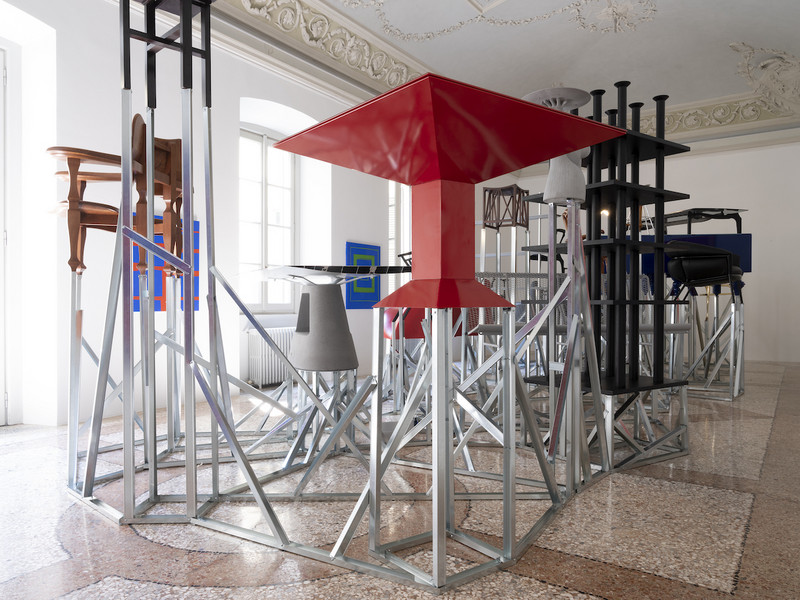
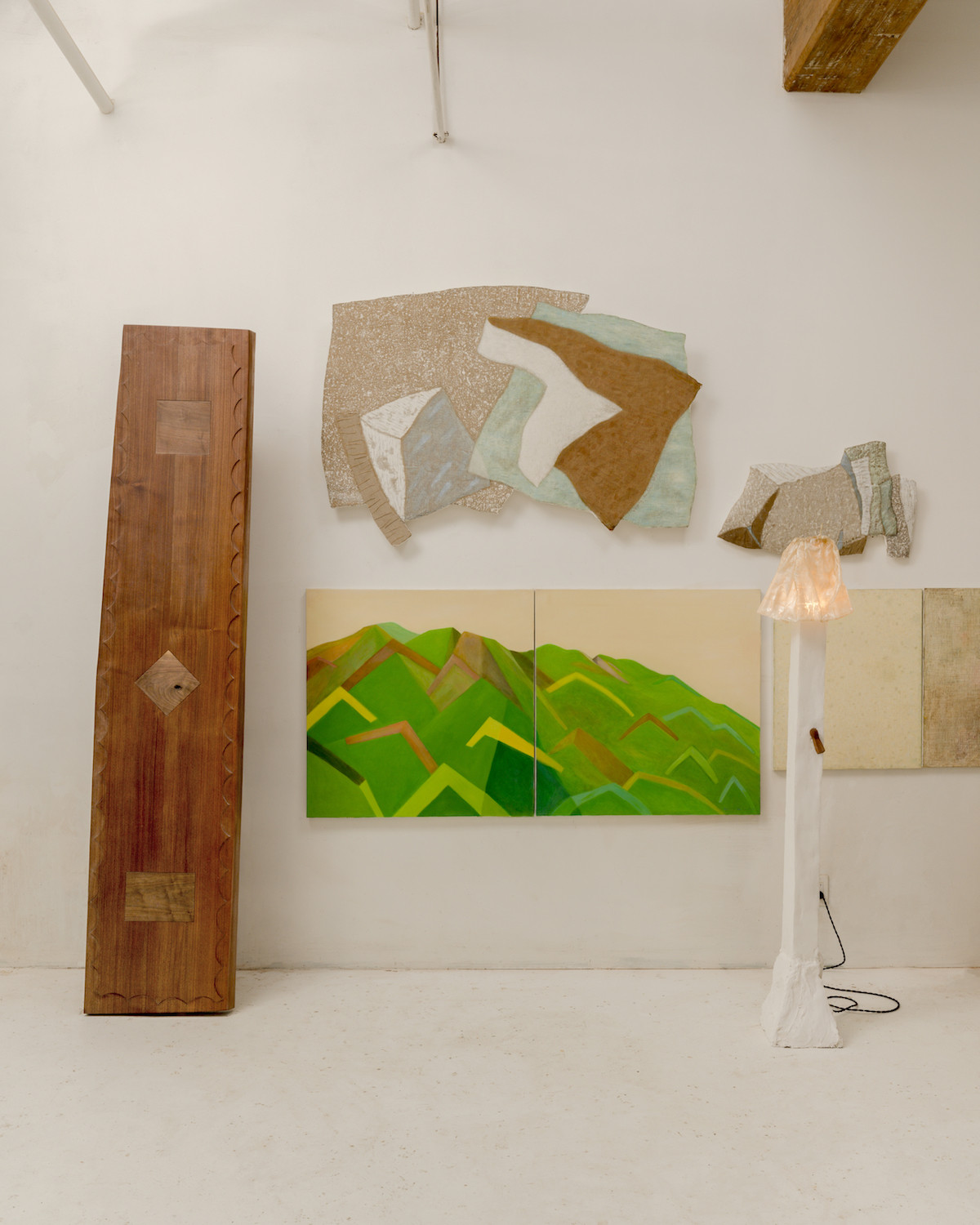
Inviting an audience to witness the imaginative worlds of both Kim and Lee, Matter continues to hold space for art that transmutes reality. Situated among the store's floorplan sits Kim's playful yet innovative creations, where functionality meets fantasy. From quirky wooden chairs to a sturdy bench, Kim manipulates raw material, elevating concepts that seem inconceivable. In a world where function is merely second, Kim's art is backdropped by his mother's paintings, vibrant abstractions pulling on her experiences throughout the years. A medley of pieces in conversation with one another, this show honors multigenerational creative forces.
Meditating on the connection with his mother, MyoungAe Lee, Kim opens up to office about the work that went into this show, long conversations, and the lessons he gathered from his mother's teachings.


I want to congratulate you and your mother, MyoungAe Lee, on this beautiful show. How are you feeling at the moment?
Thank you! It's been almost two weeks since the opening. It was a demanding and intense experience, especially doing it with my mother. I think that's why I also feel pretty removed from it at the moment. It was a lot of specific experience leading up to the opening and the first few days of the show. My mother just left yesterday to go back to Korea. I also just moved to a new apartment where we were staying together for the past few days. This is my first time sitting here alone. It feels as if none of it ever happened.
How did this show at Matter Projects come to be?
Last year Jamie Gray from Matter reached out to me for a studio visit, and I had just asked my mom to send me some of her work because I thought having them around would bring more opportunities for her in the U.S. I was late to the studio visit and hopped out of uber with her painting, and Jamie gave me a hand with it. Later in the studio, we were having a chat, and I mentioned the painting being done by my mother, which was a surprise to Jamie because he had assumed that it was done by the same hands. Our discussion eventually led to showing my work along with my mother's at Matter's storefront gallery. I have a specific memory of stumbling into this space more than 10 years ago in one of my first visits to New York when I had just finished architecture school and being blown away. It felt exciting to come back here with my own work, especially accompanied by my mother's familiar presence.
When creating a string of pieces, what's your design process, and did it change for this show at all?
I usually try to find a single thread of identity or detail that would define that piece and try to let that guide me through the design process. But I've also been trying to break out of that as well and be more impulsive or unplanned, which has informed the way I've been using wood or fiberglass. It's usually clear which part needs precision, and where I can let the fiberglass sit with gravity or where I can freely carve a form. Another thing I've been trying to expand is the material palette. Perhaps it's the architecture school or the modernist design language that I was educated in, but I always had this idea that the palette has to be very 'honest' to the concept, structure, etc., but the years in the design world revealed to me that, as is life, nothing is really what it seems. So I've been more open to using color and paint on my work. Working on this show allowed me to expedite this process. I wanted my work to respond to my mother's work in a pretty literal way. The Shaped Fiberglass Chairs began because I wanted to recreate her language in a truly three-dimensional world. So not only did I have to use fiberglass to replicate her form, but I also had to experiment with more colors and texture and devote the majority of my effort in working on the visual composition.


Your Mother has been an artist for years. What was the relationship like when you began exploring art?
I think it's accurate to say that my artistic exploration was very much nourished by her from the beginning. As a child, I spent a lot of time around her doodling, and she always took them very seriously when she began having art lessons at home for hobbyists and children, she let me sit in and learn from her as well. I believe this experience to be my foundation. But when it came to choosing my career path in my teen years, she advised me against pursuing fine art due to the difficulties she had experienced herself, which is how I began my interest in architecture. But no matter what discipline I was in, we could always share our creative process and give each other feedback.
Lee's artworks are the perfect backdrop for your pieces, a show that celebrates abstraction and playfulness. What was the communication between you two when creating this exhibition?
I had seen her work all my life, yet she had never seen the body of work I've been creating for the past few years in real life, and it was clear to both of us that there was a lot she couldn't really understand in my work without being in the room together. So I began planning the show around her work. I was pretty familiar with the work she had at home and could plan the room and palette accordingly. When I visited Korea last March, both my parents and I ended up catching the COVID together, so we took advantage of that time and selected which of her works would be in the show together. Since her studio and storage are all at the apartment they live in, we were able to pull old work from storage and lay them out among her new work. We were all quite sick, but this was a really nice time. All we did was make meals, clean, look at her work, and daydream of the exciting adventure we were embarking on.
Drawing on familial connections and lived experiences, what was it like constructing a representation of the relationship between you and your Mother?
It's such a difficult thing to describe. Inevitably the show was going to be about our relationship, and doing it would have ripples on our relationship. There was a moment leading up to the opening after the install was done where we were trying to decide the title for the show or whether we were going to title it at all. And I was caught up with the idea that the negative space between our work was somehow symbolic of our relationship, or the only visual or poetic way to describe our relationship. Or ultimately I saw the negative space as something vague enough that I felt comfortable labeling it as representative of our relationship because, at the end of the day, it is so private and personal that a representation of that seemed so daunting. Anyways, it was emotional but inconclusive!


Were there any moments when creating this show where times became overwhelming? This may be because of hard memories or feelings you weren't ready to confront? A show that centers on the connected energy of a mother and son must have had some high emotions felt along the way.
A couple of days before the opening, we finally found a moment to relax and go out for dinner. She had landed a couple of weeks prior to the opening, but the first week, I barely got to see her because I was bunkered at the studio, and the second week was non-stop work at the gallery with installation and photoshoots. After a big meal and a drink or two, we were finally able to share how it had been for each of us as we prepare for this show; her in Daejeon, and me in Brooklyn, some thousands of miles away from each other. She shared why she initially was skeptical and nervous but how this experience has been revitalizing her. I found myself crying on my bike ride home. I think that was the release for me because we had done it. The rest of the ride was pretty neutral other than her giving life advice at every available corner being pretty difficult.
How long have you wanted to have a show with your Mother?
I'd say a little more than a year before Marta, and I began talking about my first show there, I didn't really imagine showing my work in this context. Even for the show at Marta, I had requested to include a painting by her.
What's some advice your Mother has given you when creating?
She gives me a lot of advice on composition or color when I share my work with her... which I don't find all that useful because, by the time I share something with her, the work is more or less concluded! But more than any words, I find having seen her approach to work and how seriously she faces them the most helpful. She taught me that the struggle to get it right is always worth it. MyoungAe as a mother, encourages me to not stay at the studio late, go home, sleep well, and never skip breakfast, but MyoungAe as an artist, knows that I have to face my challenge and see it through.
This being MyoungAe Lee's U.S debut, what did the conversation look like between you two before opening night?
Although she felt good about the work and the install, she was very nervous and very curious about how people would perceive the work. There was also a lot of anxiety related to the language barrier because she was expected to meet a lot of English-speaking people. So we tried to focus our thoughts more on work and the undeniable synergy they have for each other. Then, of course, there were a lot of nostalgic conversations that started with 'remember when...?' We knew that the opening night will definitely be one of those moments where we will revisit over and over in the coming years.