PRESENTE CONTINUO: the intimate ties between then&now

Starting May 30, PRESENTE CONTINUO will be available to purchase on presentecontinuo.com, cpcompany.com, and at the C.P. Company flagship store in Milan, Corso Matteotti 7.
Stay informed on our latest news!

Starting May 30, PRESENTE CONTINUO will be available to purchase on presentecontinuo.com, cpcompany.com, and at the C.P. Company flagship store in Milan, Corso Matteotti 7.

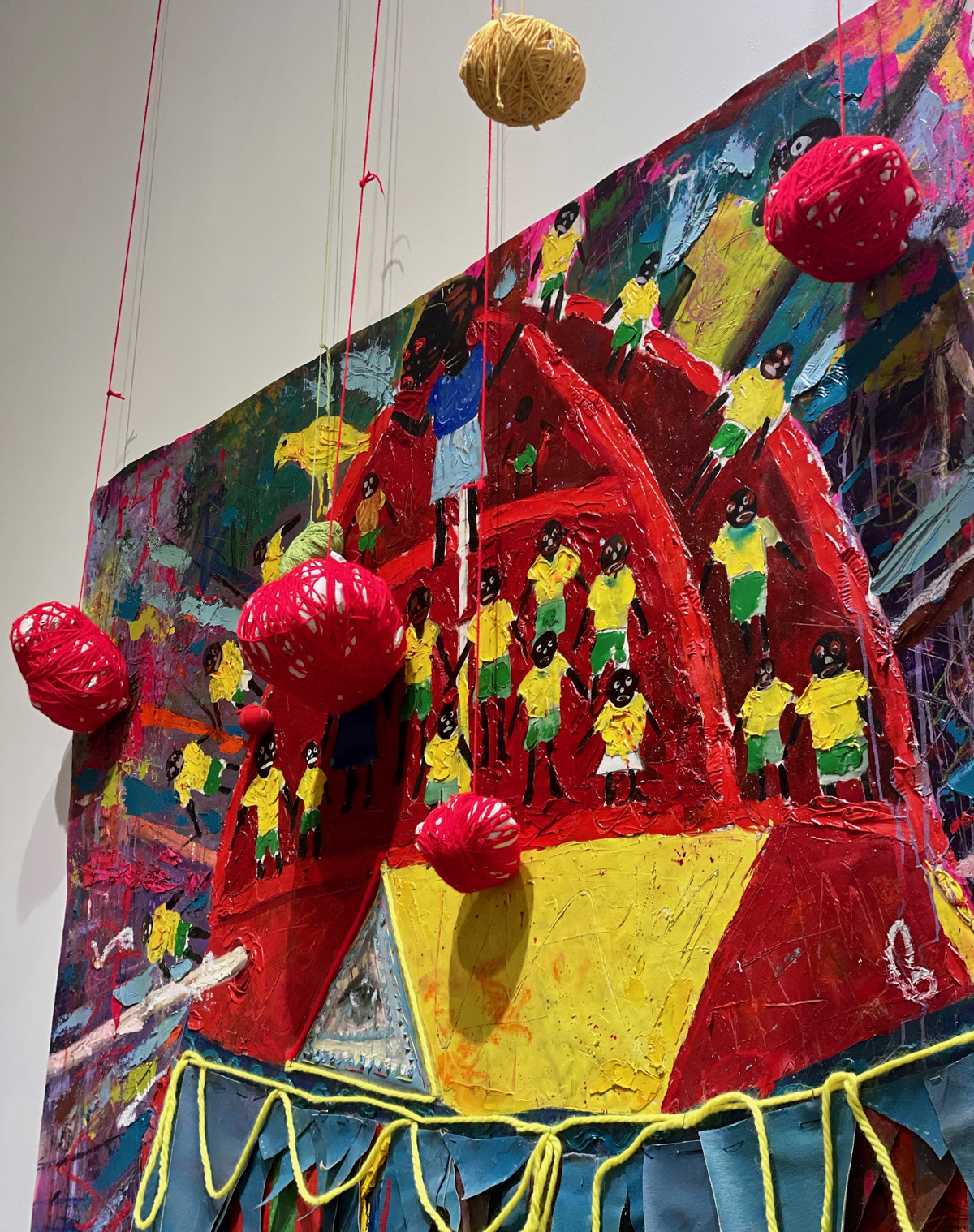
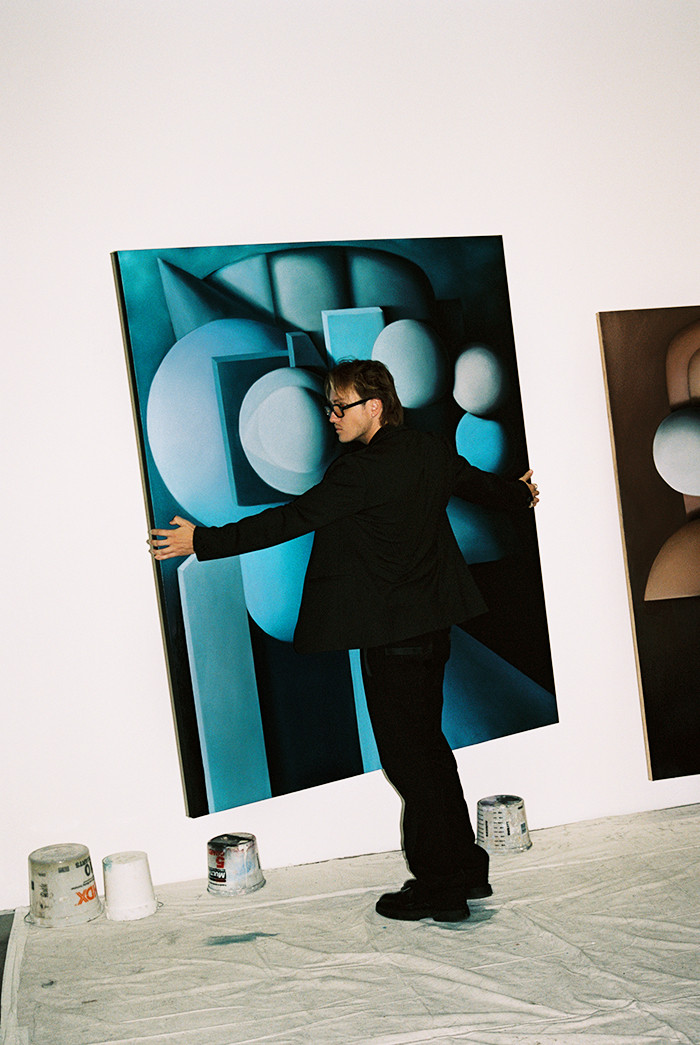
The word Iranti means nostalgia, which is the idea at the heart of Martins' new collection. Exploring the moments of happy and sad nostalgia we experience in our everyday lives, from memories of lost lovers and friends to pure childhood memories that float through our mind because of a smell or sound. Martins understands the importance of holding space for these memories and the impact they have on us, conscious or otherwise
Check out office's exclusive interview with Moyosore Martins below.

I would love to know your backstory story. I read that you started creating art because you would have these vivid dreams and needed to sketch to get them out of your head; I would love to know more about that.
From time to time, I would just get premonitions, flashbacks, messages even when I would be going for walks to clear my head. I would get these nostalgic flashbacks, and when I get home or when I get back to my studio, I just try to let them out. Sometimes I really don't know what I'm doing with a piece. It won't be clear to me until I'm done; sometimes, it even takes a few days.
You need to let it sink in?
Yeah, and a lot of the time, I work on multiple pieces simultaneously. I create a piece without understanding the message. I get clarity on another in the middle of one, and it all comes from dreams and messages.
Did you always know you wanted to be an artist?
So, I always knew that my love for art was there. It just took a long time for me to find support in my art. I couldn't start early because that wasn't there, but the love and need to create have always been there.


Has your main focus always been painting?
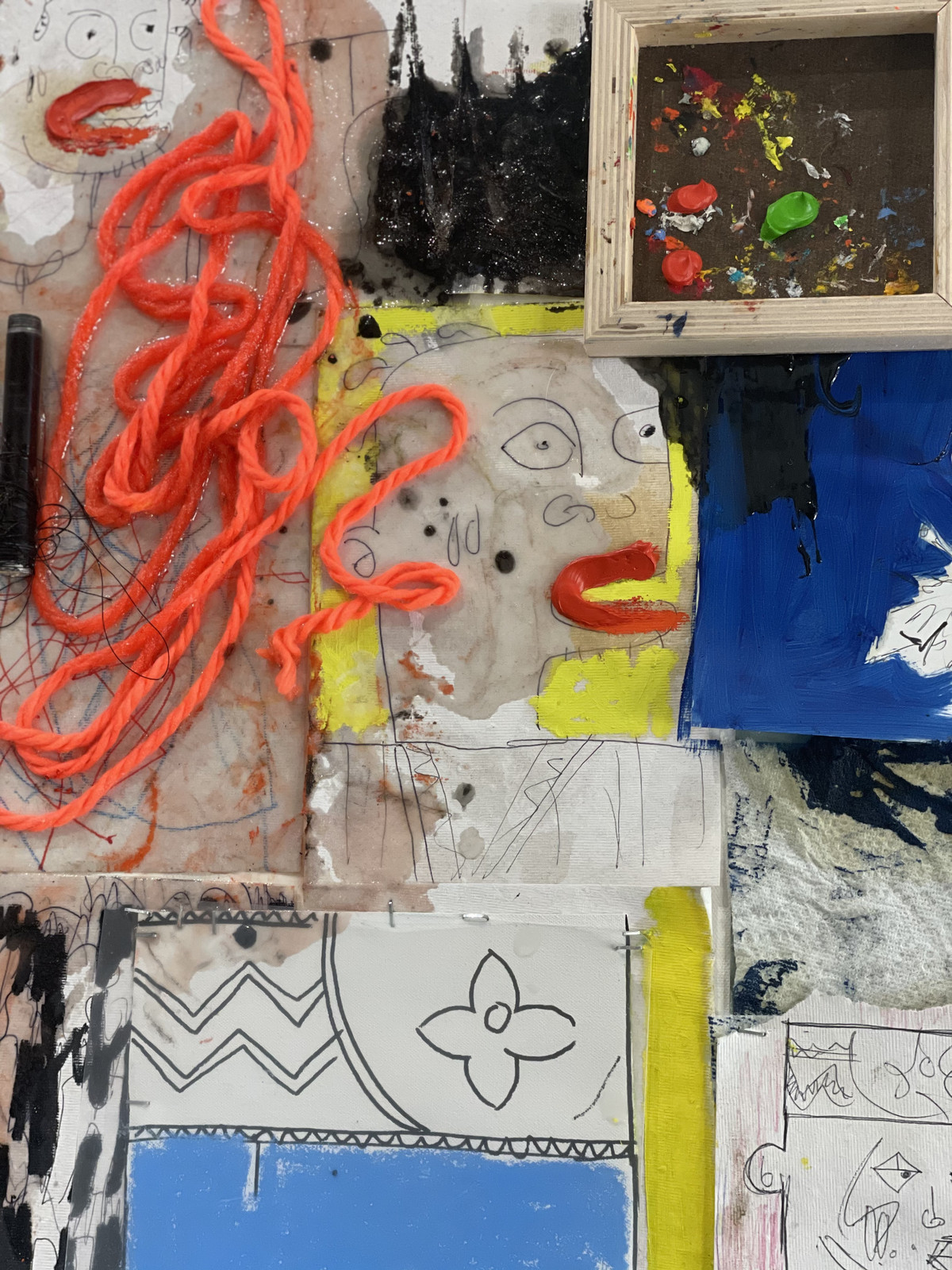
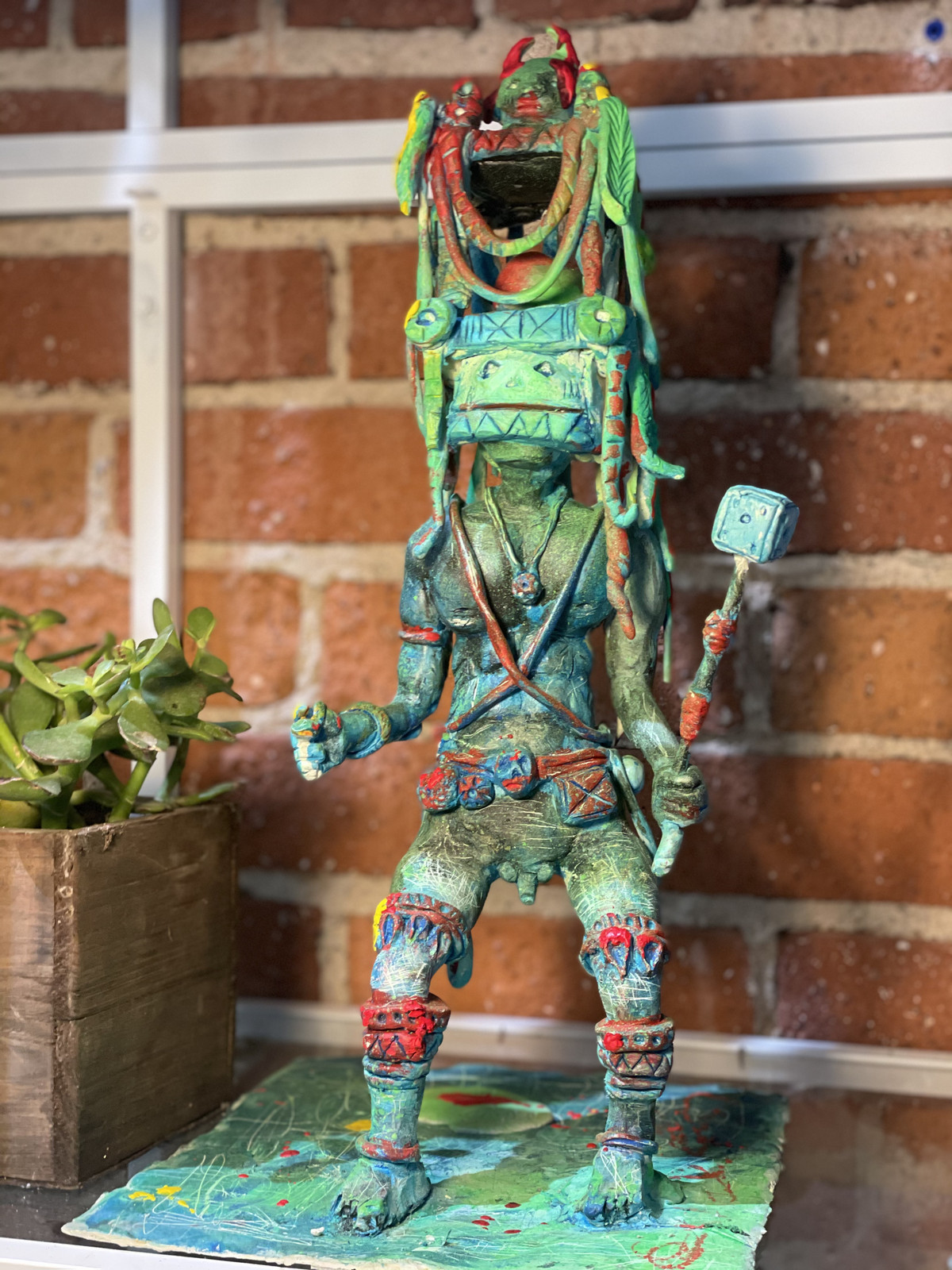
I like to try everything. I have worked with furniture design, sculpture, fashion design, illustrating; I want to use different materials in my pieces, like beads and yarn. I can't just do one thing. There's too much material to use to stick to one thing.
When did you begin to experiment with mixing mediums and materials?
So in Africa, art everywhere is like that. You find huge sculptural ornaments made from fabric and paintings with beads in them. It's all mixed media. I grew up knowing people who would make art using so many different elements. That subconscious idea of mixing materials has just always been there. When I started practicing and studying, I just never questioned combining these things. I would be creating, and something would happen to the piece, and instead of thinking, 'Oh no, that's not right,' I would see it as a beautiful mistake. Going with the mistakes and errors got me to this point.
Aside from the dreams and visions that got you started making art, where do you find your inspiration?
The artists' journey. The artists' journey is fascinating. It comes with a lot of frustration, pain, emotion, and pressure. So I'm feeling so many of those emotions, but it is also a wonderful zone when you can stay grounded and focused. I try and keep structure while navigating the journey I'm on. Finding balance within that and being inspired by the people that I have met throughout my life.


The artist struggle.
Yeah! It made me a loner. I was always trying to find solitude and do things on my own while still trying to find a way to express myself. I would create for myself rather than trying to express myself to someone who wouldn't understand me. The Yoruba culture gave me a strong sense of spirituality, but I was also born into a catholic home. My dad was a catholic, I went to all chaotic schools, so I had the fusion of both the traditional and the old catholic religion. I was in the middle, and it helped me understand and see the differences between them. In Nigeria, there are many tribes with different languages, cultures, and traditions, and I grew up around them and with friends from another tribe. Just like how you have friends from other religions, you understand their traditions and cultures. That mix of cultures really influenced me as well. It's a mixture of all traditions. I think that really comes through in your work and the way you can blend mediums so seamlessly.
The influence of everything around you really shines through in your work. I would love to know how you came to use the color palette that you do. These deep rich colors are so beautiful that I feel like people would be scared to work with them. What is it that draws you to these colors?
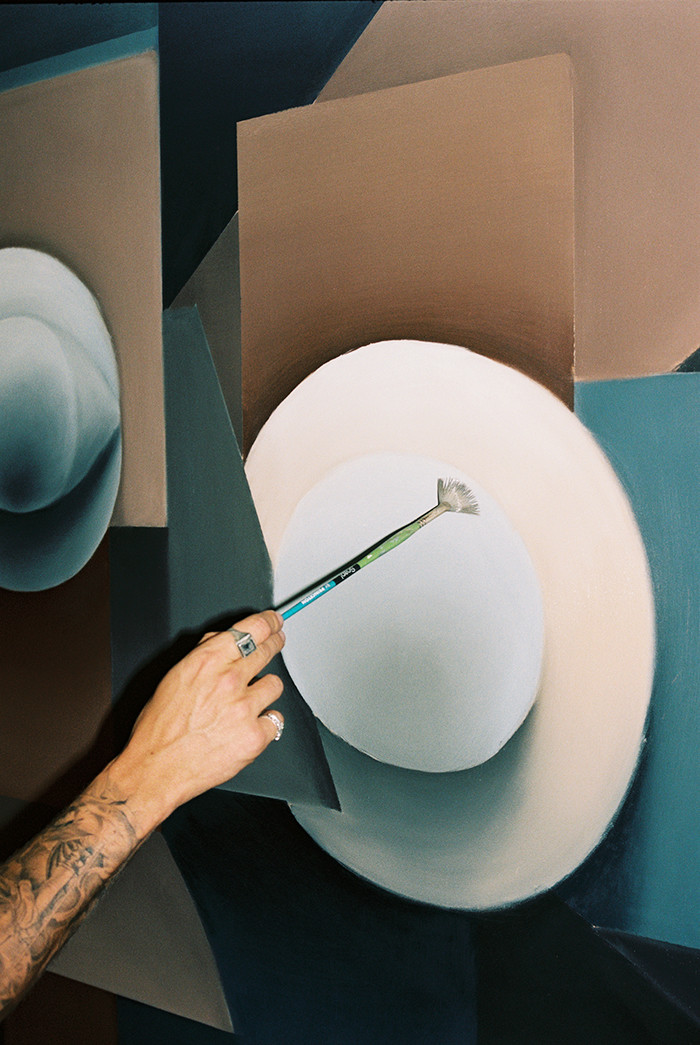
I see the world very vividly, so I just try to paint what I see. I grew to find a way to manipulate the paint and the color itself to complement each other. There's a technique in which you use vivid colors like "normal" colors, and I just really leaned into that. Using three or four different shades of blacks and blues allows for the depth to really come through. And all the pieces glow in the dark.
Oh really?
Yeah, so I use different materials and unique pigments. It takes a while to understand the pieces with the colors and the encrypted messages. Just adding layers and layers and deconstructing them, then going back and adding more layers. I like to think that the messages on there are almost therapeutic. They're repeated so people can start to remember what is trying to be said. I'm just trying to make people get it. I work at night a lot. There are lamps everywhere, but the little light there is very soft, so the pieces look different when I make them and when they're in my studio than when they are in a space like this.


How do you begin creating a piece?
I really treat it as a ritual. I have my set of tools that I use, and I set them up next to the canvas, put on some music, and allow myself to just sit with all the materials. I just let myself be, and it comes to me gradually. I don't have to worry about what paints or colors to use. Once I focus on the message, everything else falls into place. The most important thing is the message, it's not just a decorative painting on the wall, but for me, the motive is essential. The why. Why did I make this? Why is this the message that came through? I want it to hold meaning that continues to evolve as different people see it. Sometimes the viewer knows more than I do. It's like a give and take.
Do you have any idea what your next project is going to be?
My next project, so before I had this show, I had the name. This show is Iranti, nostalgia, its about the flashbacks, me wanting to be in a different place, living in two other worlds. So I know the next show is going to be called the artists' journey. The pieces will be about the artist's journey and everything that comes with being an artist. I am in the phase where you know that saying you need to be careful what you wish for? Now that my wish is becoming a reality, it's become something I never expected, all of that will be exhibited in the next show, the artist's journey.
That sounds amazing. I can't wait to see it!
Yes, I am excited to get started.
Thank you so much for meeting with my Moyosore. It was so amazing to see this show and get to speak with you.
Yes, thank you too!

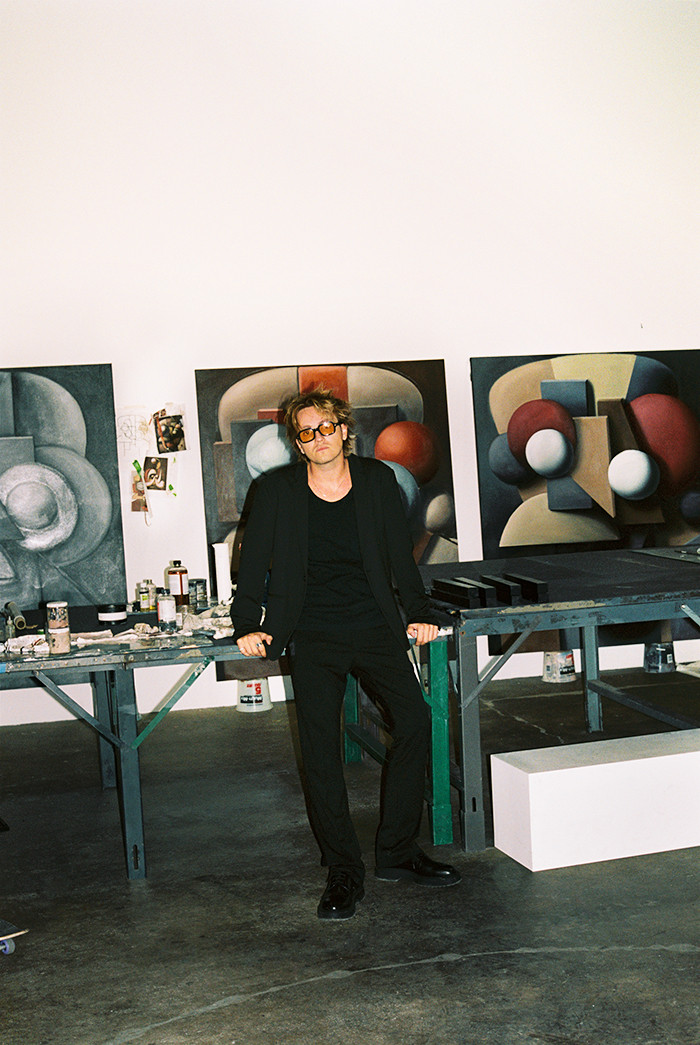
Do not mistake DeJardin as an artist who locks himself away from the world to create. He believes it is important to build a supportive and inspiring community. His studio door seems to be a magnet for creatives from all over the world and echoes that of Warhol's "Factory" . We sat down and discussed early influences, Grandmom’s kindness, and the many challenges of the mind.


Talk to us a little about your early artistic influences, where did your passion for creativity come from?
My earliest source of creative inspiration came from my grandmother, who was a watercolour painter based in Marblehead, Massachusetts. Looking back, I think she was a pivotal figure who taught me about art and encouraged me to create, led by her own artistic passion. Born in England, she migrated to the States and took to painting historical buildings and running art workshops, developing a practice that resonated with the local community. I used to visit my grandmother during the summer holidays and, on one occasion, I stumbled into her basement-studio. She caught me ruffling through her materials but instead of getting angry and frustrated, she decided to teach me about painting. From then on, we would go to the beach to collect sea glass and make cement plates. This was when I first began experimenting with non-traditional materials – sea glass, sand, ripped-up t-shirts, cloth – blending raw materials, to create art, which ultimately helped lead me to the place I am today.
How did you find your voice with painting and creating?
Honestly a big part of my story was, like when I was 16 or 17 I went through very intense counseling and therapy for anxiety & depression. I mean really, really intense – I’m talking 3 hours a day, 3 days a week, for maybe two and a half years. During that time, it just – I mean you feel like the world is gone. Everything is... out. But that darkness is what forced me to spend the time talking it out, working through that rough period and pulling apart those emotions… and I think that, more than anything else, that’s what enabled me to put myself into the art and develop a voice that speaks to people.


Louise Borchers—Tell me about blue.
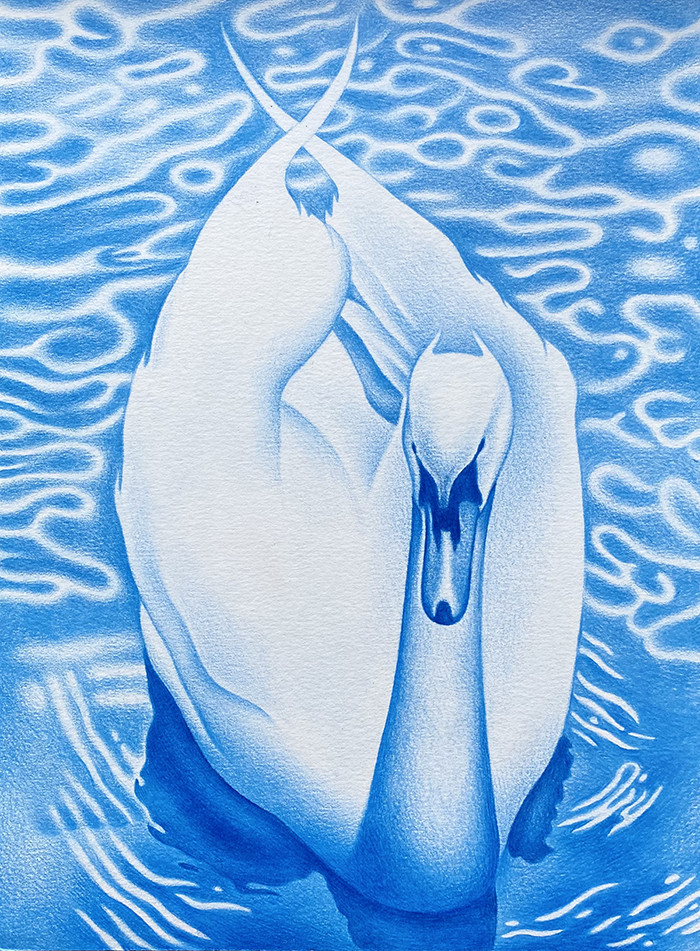
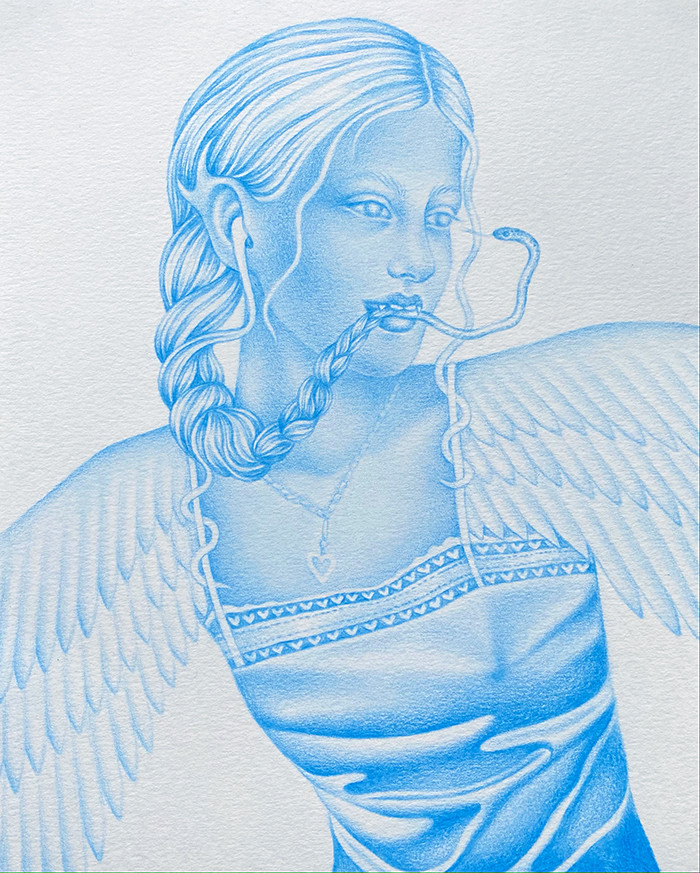
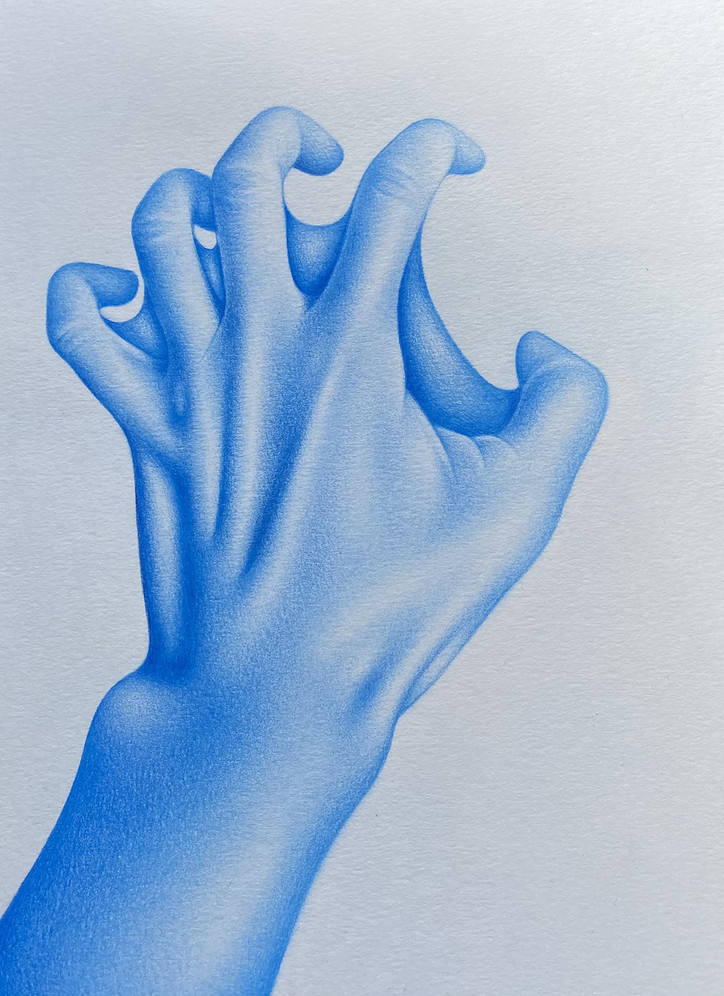
Signe Ralkov—(laughs) uhm, I see my drawing as a sort of development of images. There’s this photographic printing process called cyanotype, that creates cyan-blue prints using sunlight and chemicals. And I guess I relate to that chemistry, whatever compounds my body is made out of. That the images I consume all the time, run through me, and become tainted by this substance.
LB—What about the motifs in your drawings, where do they come from?
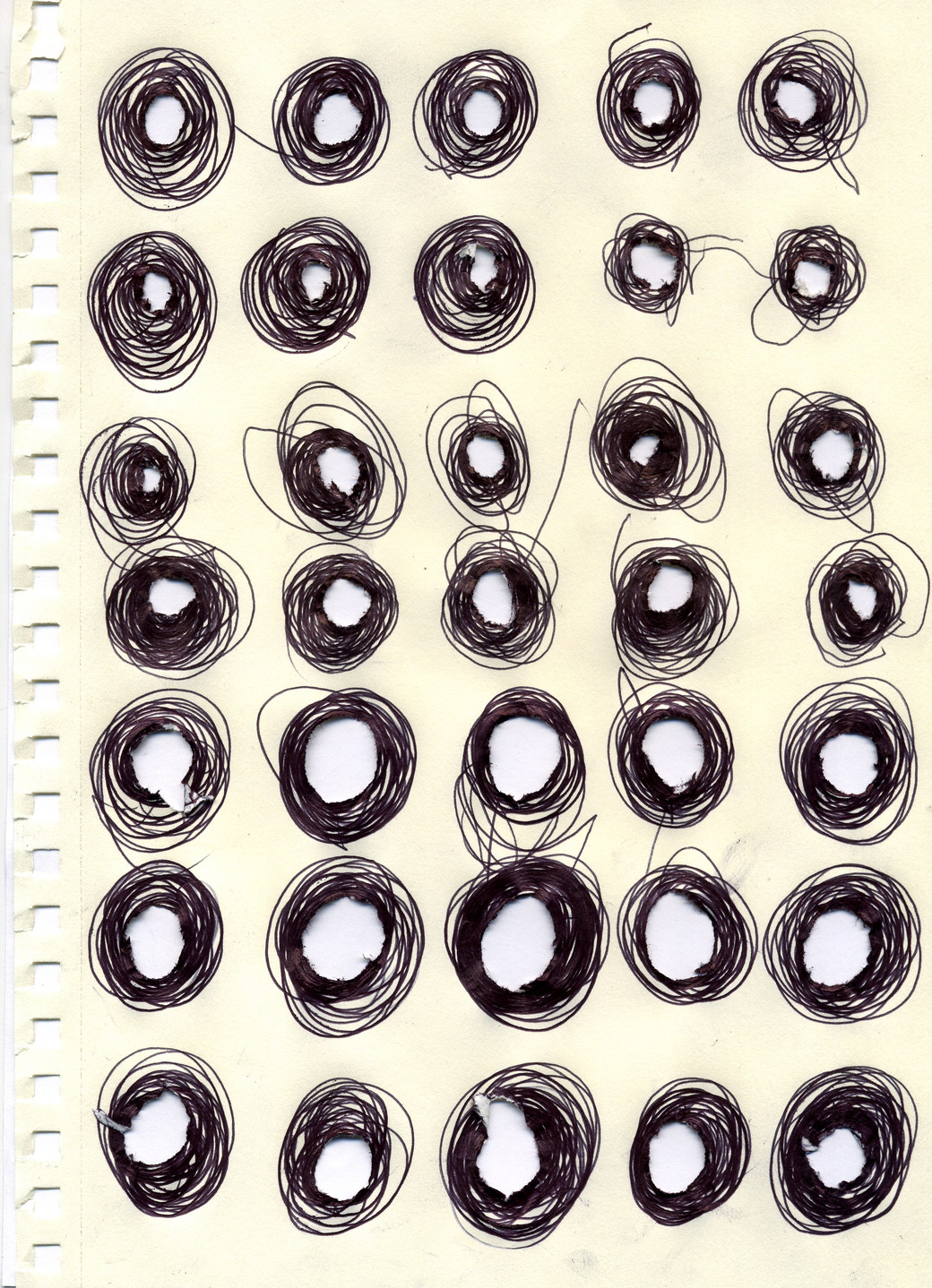
SR—A lot of them are images I’ve taken myself, images taken on my phone and so on, but not necessarily with the intention of turning them into drawings. I use images that date back to when I was a child. Finding stuff from years ago and making drawings of them now makes them part of a circuit. Like time is dissolved.
LB—Tell us a bit about your exhibition Shedding Season, how does that relate to your perception of time?
SR—Well, that maybe time isn’t as linear as we think. That there are just different stages throughout the time we experience. Time doesn’t stop when shedding one skin. You move from one stage to another, from child- to adulthood,
LB—and then at some point you return to childhood?
SR—Yes, exactly!
I still have the shedded skin from a snake I had when I was a teenager. Humans don’t have something physical, like a full shedded skin, that tells the story of our growth, our changes, but this shedded snake skin is an image of that change. And even though it’s gone now its skin lingers with the living.


LB—Where do you keep the skin?
SR—My good friend saved the skin from her pet snake and had it framed really nicely, but I actually just have it in a bag boxed under my bed. (laughs)
LB—And maybe you’ll return to using it in your work?
SR—yeah, maybe, it would make sense. Like a snake biting its own tail, the symbol of the ouroboros representing infinity and life cycles, shedding again and again and again.
LB—When was the last time you shed a skin? If you feel like you did...
SR—Hmmmm. Summer 2019 I think… It’s something I try to mentally prepare myself for as something that can always happen again, will happen, almost! To me, going through these depressed periods in life, that’s part of living. It can be all different kinds of events in your life. A relationship ending, or beginning…it always allows for you to see yourself in a different light. But also going through illness, minor or more severe, you can come out on the other side, resurrected, with new perspectives.
LB—So change can involve pain, or it can be painful in some way… to be blue, sad.. Does your blue relate to being blue…?
SR—yeah in some way, but blue is also uplifting to me! I relate it to happiness and fantasy too!
LB—So you transform the sad through blue!
SR—Yes! Owning the blues! Haha
LB—Thank you, a title for this interview! So, you go back in time a lot for inspiration in your work, what about the future?
SR—I don’t know, I very much live in the moment I think. Maybe when I go back 25 years from now I’ll realize that a motif I’ve drawn is actually myself. A human morphed with an animal or something, and then I’ll be like, “oh, that’s actually me!”
LB—Do you do self portraits?
SR—I use myself in some drawings, or parts of my body…
LB—Do you use yourself in your work in other ways?
SR—I like building universes, mixing real life with my drawings, and creating stories. With the thorns on my hands I imagine a new body, a new way of looking at your body. Outgrowths.
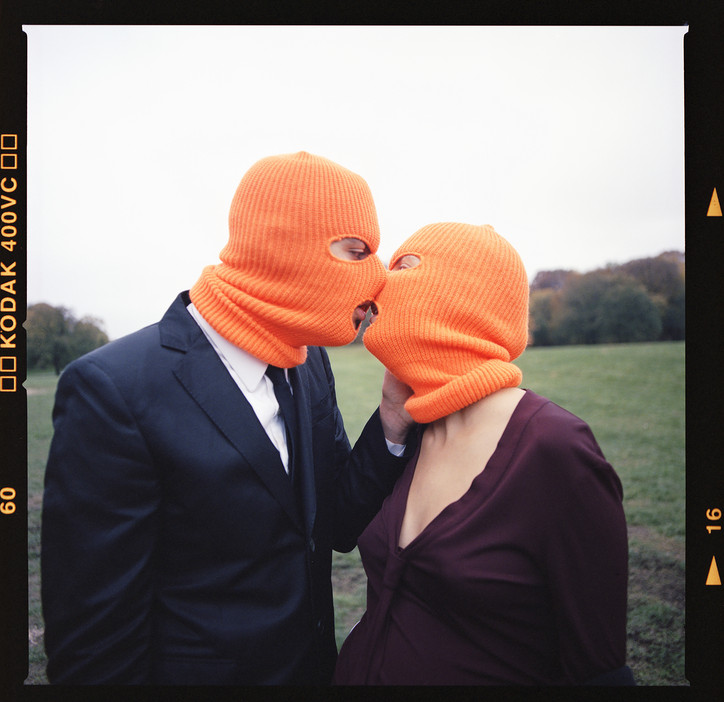
LB—So, you wish you had thorns growing out of your skin?
SR—If they were soft and didn’t hurt people when you hugged yeah! Implants maybe… A thorn human.
LB—If you didn’t draw?
SR—I can’t imagine that! I’ve been drawing my entire life. To me drawing also means to be alone. Having a space that’s mine, where I can process my impressions, recharge. That’s what it’s always been to me. Now, it’s turning into something else as it’s also becoming work. So it’s adding another layer to it.
LB—So how is it for you turning this private practice into something shared with an audience? You had your first solo at Gallery Steinsland Berliner this past fall… !
SR—Good! I don’t think I’m that private after all! I just appreciate being able to share my experience of this process with other people through an exhibition.
LB—Any idols or role models?
SR—I really love Oda Iselin’s work. She’s a young artist from Norway, whose work I think is really mesmerizing. She explores folklore, mythology and such which I’m also really interested in. Her watercolor paintings are otherworldly.


LB—What's your ideal workspace?
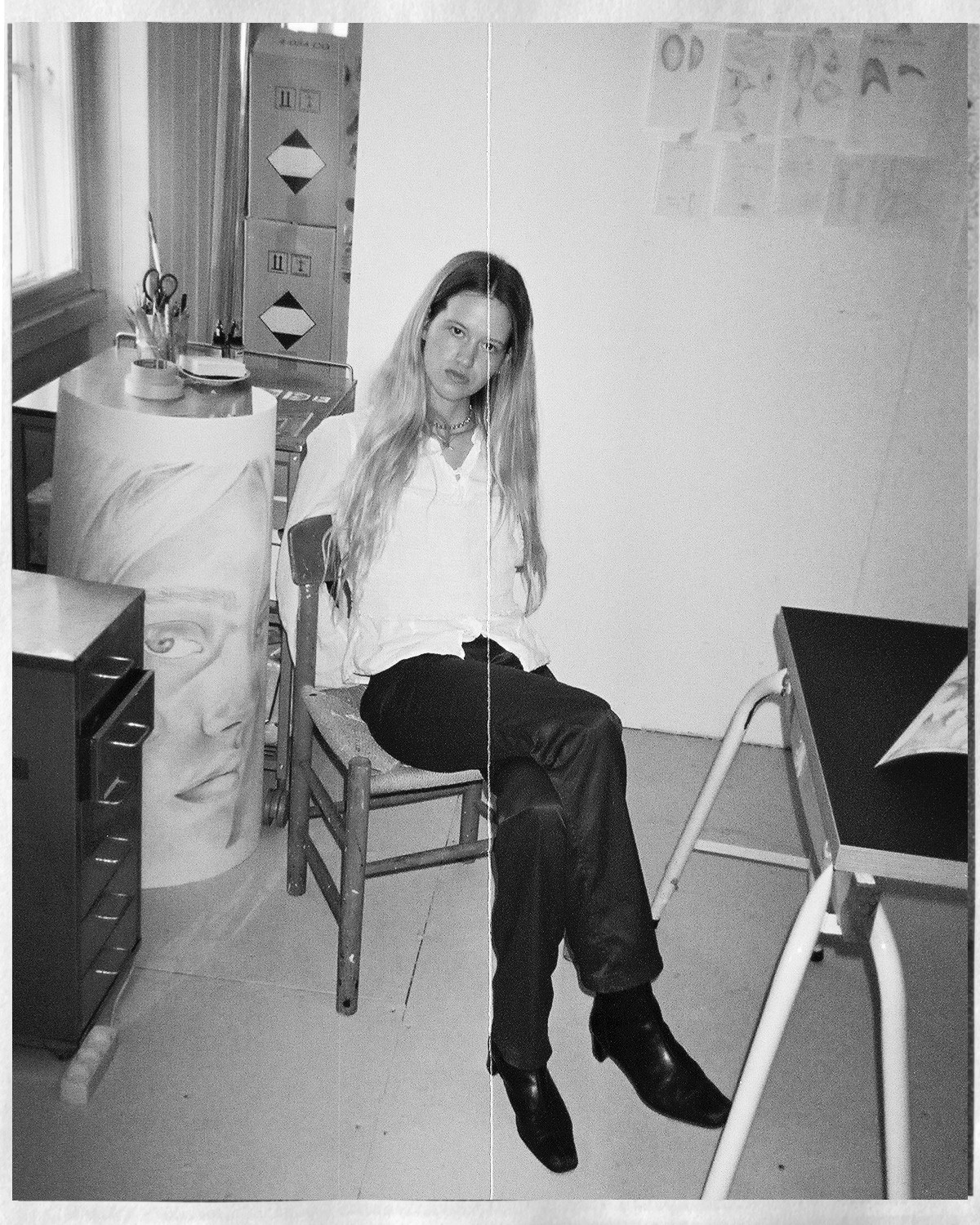
SR— It’s big! With space for drawing, of course, but also cosy, there’s not really much space for that at my school studio. Maybe, the ultimate dream would be to have a studio in the forest! A cabin by a lake.
LB—with blue water?
SR—Yes!
LB—Will you use other colors than blue?
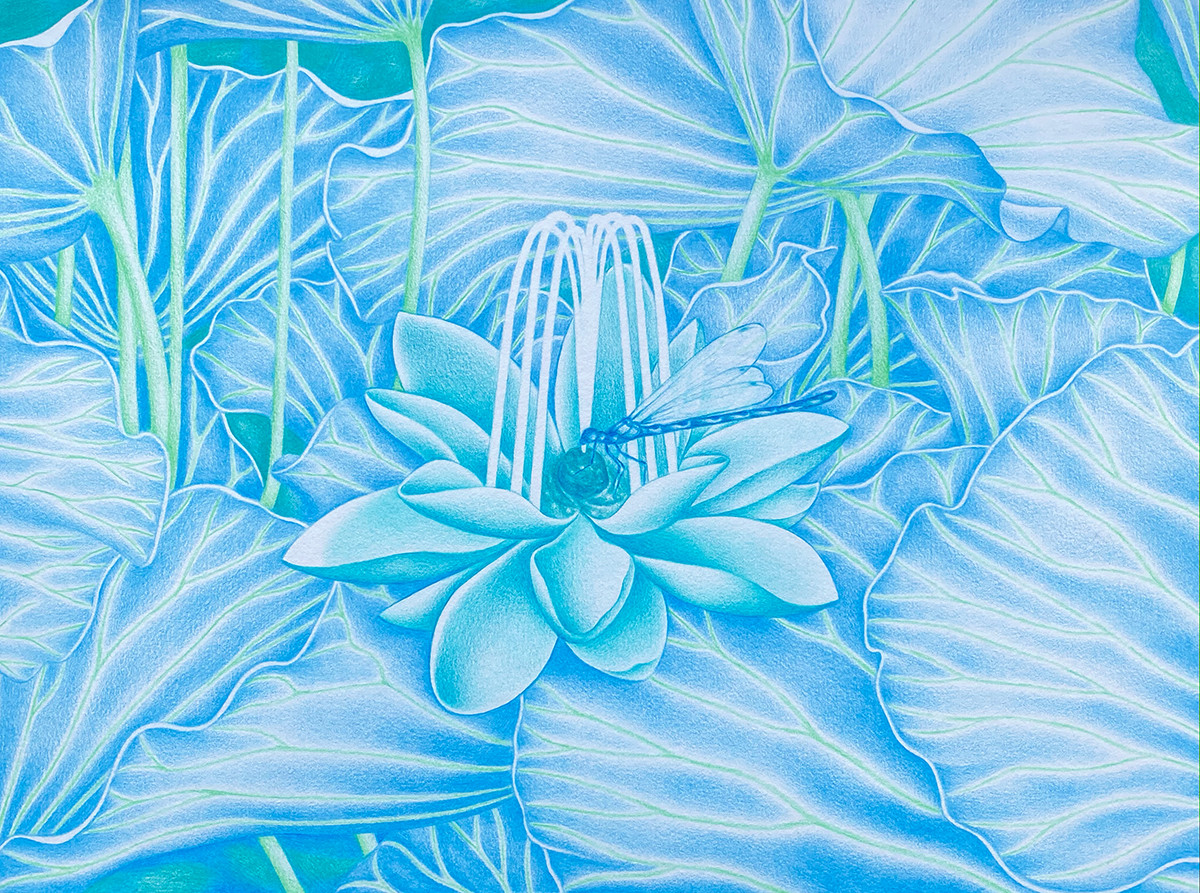
SR—mmmh… I’ve started using red! And I actually use green within the blue as well now. So I’m in a transitioning phase…
LB—A metamorphosis?
SR— yes :)
LB—The future?
SR—Would love to exhibit in New York someday! Or in a different setting, by a lake like I did with a friend last year. The only ones besides us that interacted with the artworks were the dragonflies that mated on them.