PRESENTE CONTINUO: the intimate ties between then&now

Starting May 30, PRESENTE CONTINUO will be available to purchase on presentecontinuo.com, cpcompany.com, and at the C.P. Company flagship store in Milan, Corso Matteotti 7.
Stay informed on our latest news!

Starting May 30, PRESENTE CONTINUO will be available to purchase on presentecontinuo.com, cpcompany.com, and at the C.P. Company flagship store in Milan, Corso Matteotti 7.

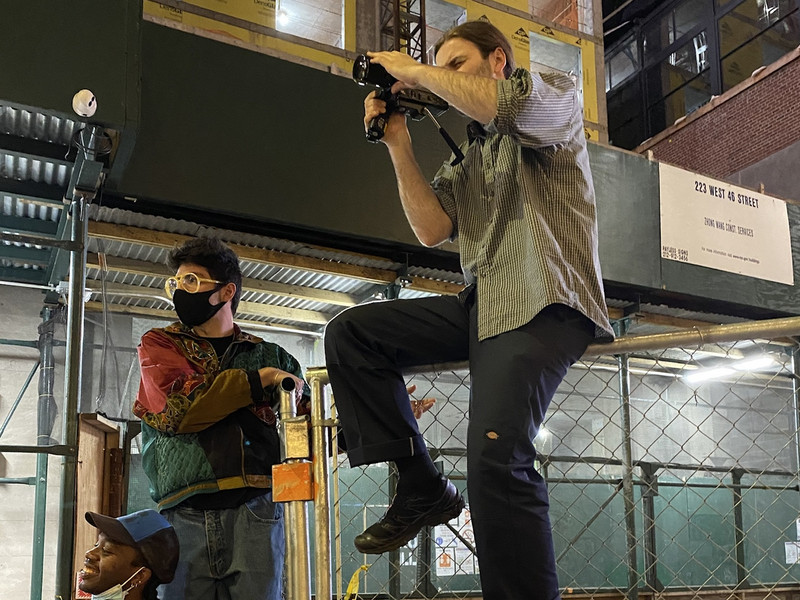
I am bouyed by the urgency to which Mar is making and maintaining space for the Black and Brown community. He is critical, driven, mindful, animated. And is as much an educator as he is a visual artist. You know, one of those — the kind that is cool, yet maintains a necessary competitive edge to him and is naturally curious when it comes to materials. Always wrestling with how to best employ techniques to engage and interact with others, his work aims to unify us. To build a community and practice that prioritizes resistance over violence, he draws inspiration from musicians and artists alike, including David Hammonds, Pope L, Nas, and then Coltrane, Thelonius Monk, and Amiri Baraka.


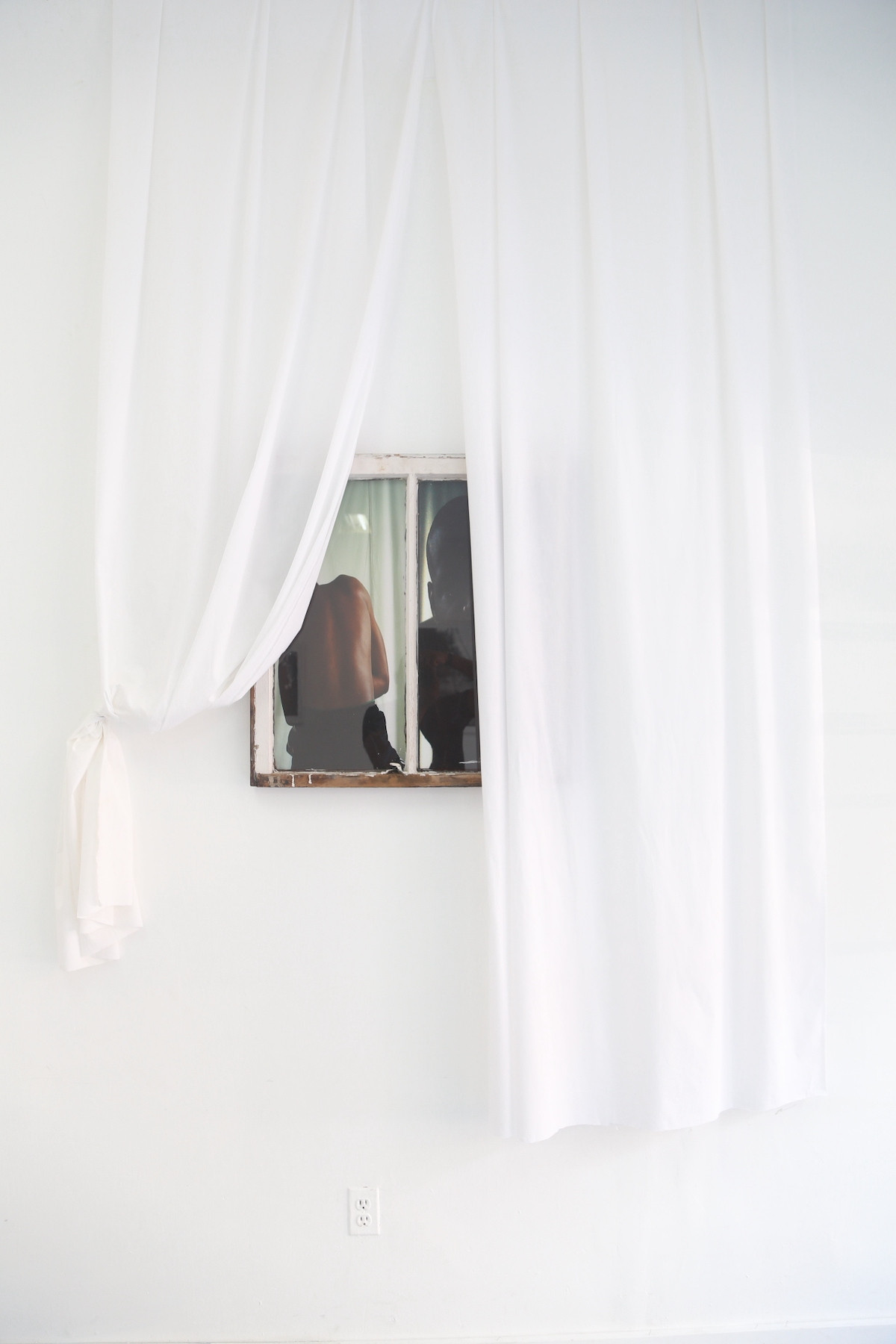
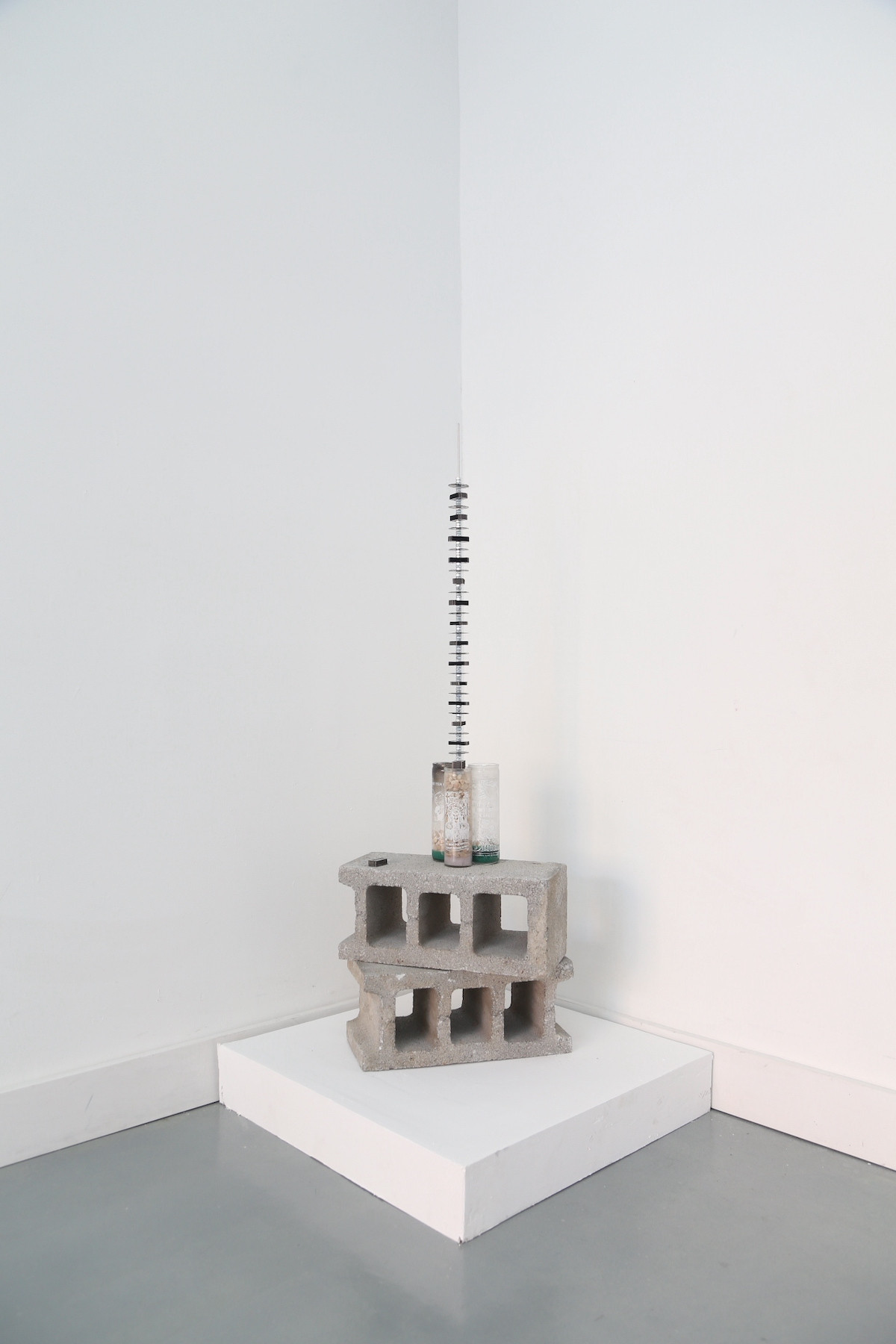
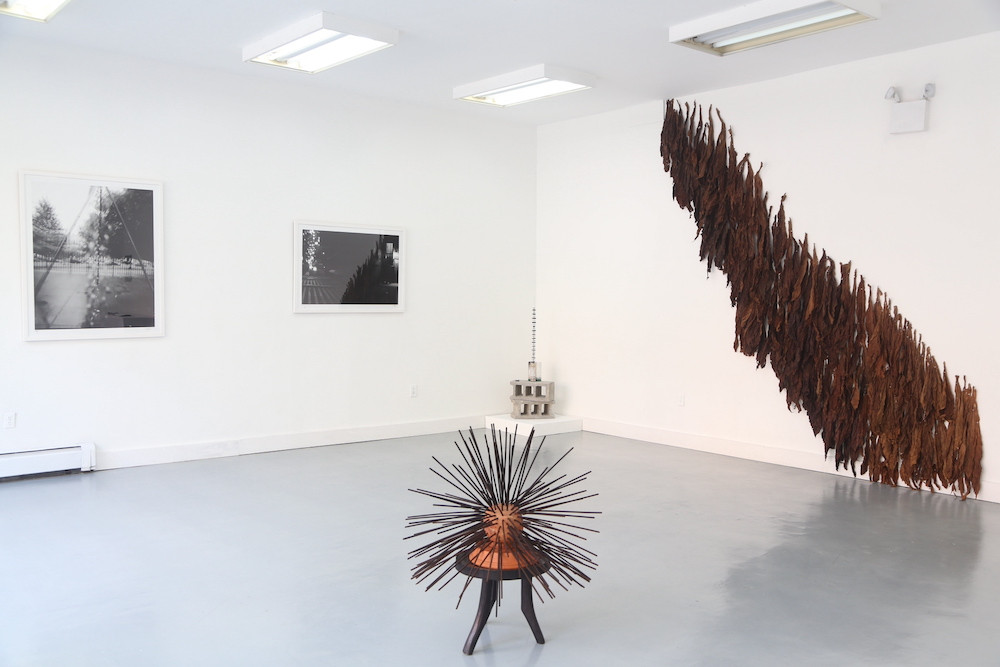
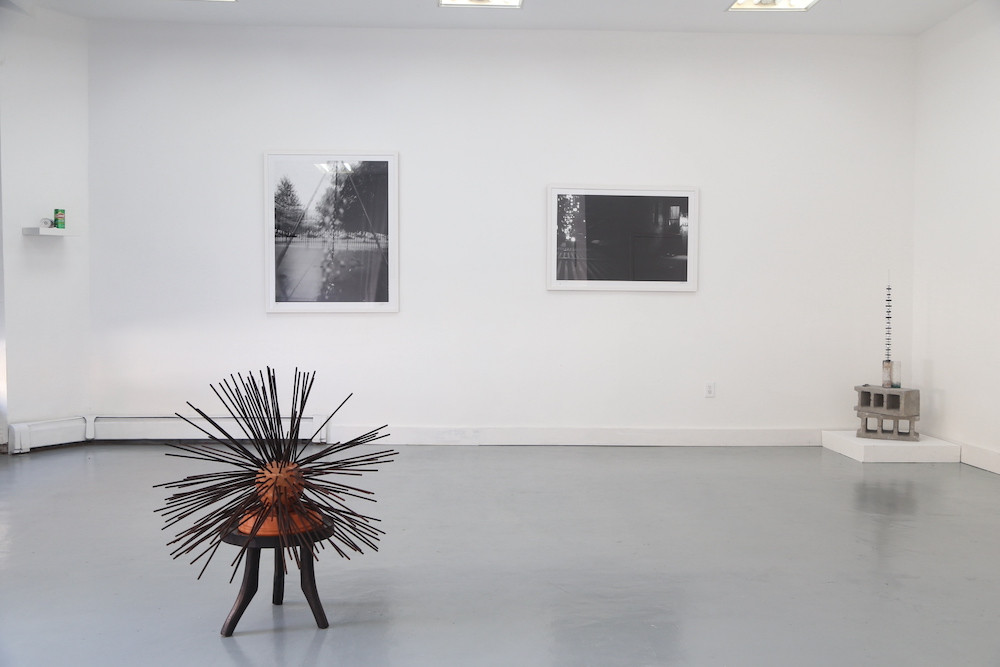
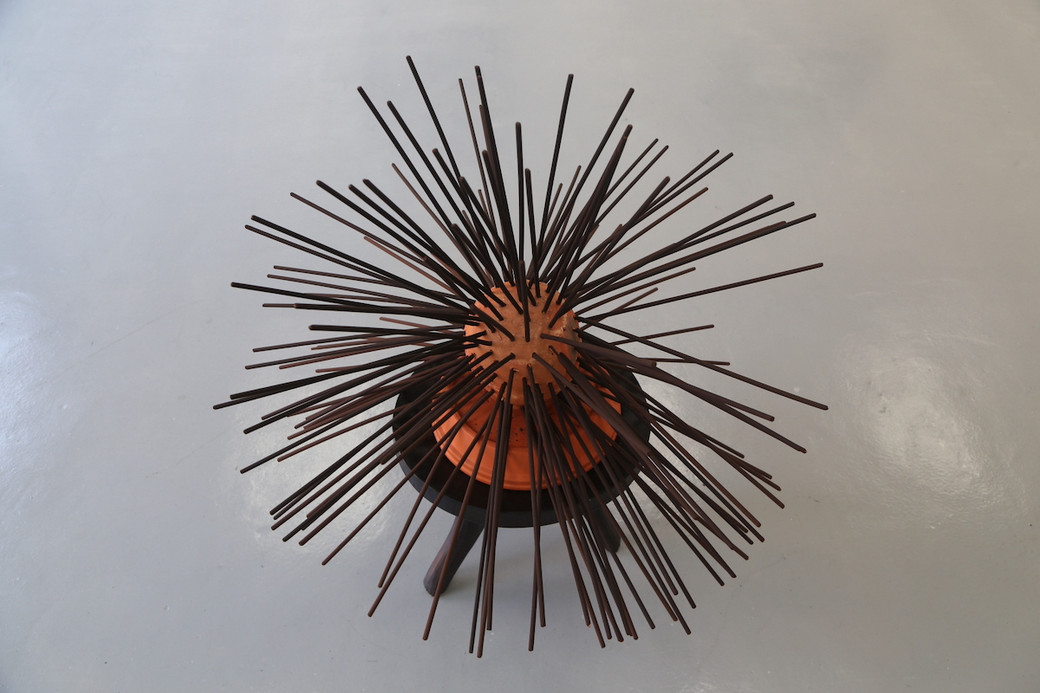
After catching up with Mar on the tail end of his most recent collection of work Soliloquy at Bed-Stuy Art House, his work instills a sense of pride — the sort of pride that you take in and have an allegiance toward. He is first and foremost an arist "of and for us" and it shows. The work is accessible and prioritizes community and engagement more than anything else. It’s about “putting the black body in a space with the absence of black body politics,” says Robillard. As an artist, there is a responsibility to repeatedly and consciously subvert institutions and for this Brooklyn-born artist, language is the starting point to accessibility. Even in the titling of Soliloquy (which is the first of several parts), there is a tactical choice in maintaining subversive and discursive language that is non-alienating.
If Soliloquy is “an act of speaking one's thoughts aloud when by oneself or regardless of any hearers, especially by a character in a play” this work embodies that. That being a physical assertion of space to express his thoughts where second and third parts to this will be other iterations of this Soliloquy— via audiovisual media (ie: NFT) and book releases this act of insurgence is neither temporal nor complete but rather an ongoing living tactile experience to hold and to carry.
Check out his ongoing work here

“I developed ADF from the perspective of someone who is just encountering Greece,” explains Papanikolopoulos, who relocated from Los Angeles to Athens during the pandemic and quickly felt the urge to increase the visibility of the city’s design scene. “It’s an accessible way for people to get in touch not only with local designers but also more generally with experiences that had been held private for a very long time.”
Indeed a very private experience was a visit to Dinoisis Sotovikis’ home and workshop, located in a fascinating building of Greek modernist architect Aristomenis Provelengios from the 1950s. Designer and architect Sotovikis cleverly preserved the house in its original appearance and extended it via an unexpected connection to the neighboring building, accessible through a hidden door in his sleeping room. Throughout the house are repeating juxtapositions of past and present as well as of finished and unfinished. “For me, architecture is about time more than space, it’s about creating a connection between the past and the future,” Sotovikis explains, while his visitors are literally experiencing the passage of time through a space full of surprises.


Located in the outskirts of Athens, Vorres Museum, dedicated to contemporary Greek art and folk art showcased Part of something, an ongoing project by architectural design practice KN Group and artist-designer Stamos Michael. The site-specific environment calls upon ecologies of the local, traditional, and personal - providing an occasion to contemplate in a nature-embracing space.
At Carwan Gallery, in Athens’ port neighbourhood of Piraeus, was Volax by the greek design duo Objects of Common Interest. The name refers to a small village on the Cycladic island of Tinos, surrounded by round rocks which seem to be out of this world. Similarly, the seven functional objects made of wood and acrylic have an aura of a very elegant space opera.
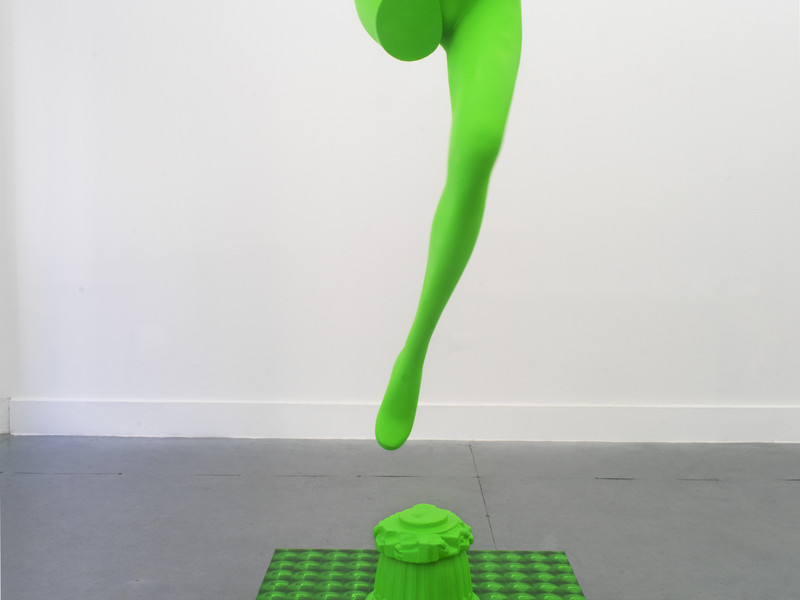
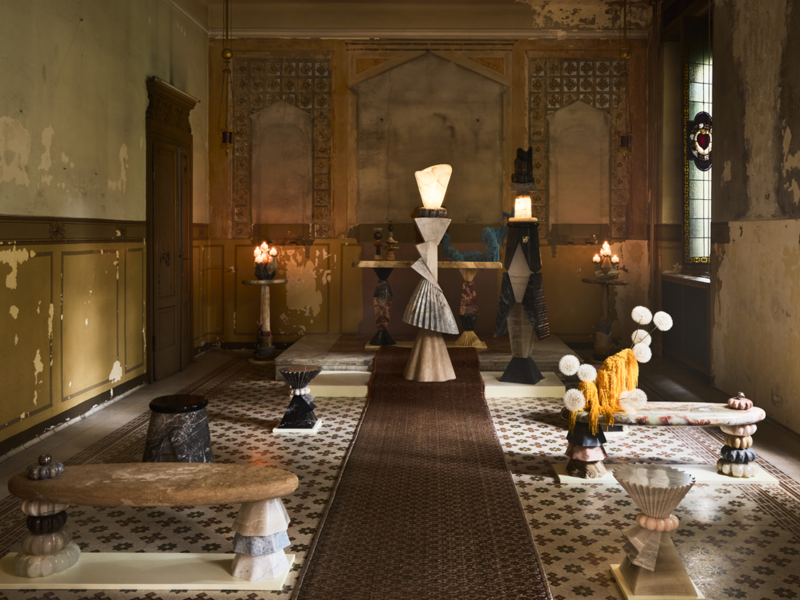
An abandoned factory in the remote neighborhood of Moschato was the venue of two exhibitions. Units of Infrastructure brought together contemporary artists melding design principles in modular art forms. Among them were Zoë Paul’s, whose painted fireplace tiles breathed a new vitality when seen displaced from their functional role; Kleopatra Tsali’s hand-casted and fired melon lamps that neared the scale of totems; Elena Demetria Chantzis, who prompted viewers to question ceramic production and its place in Greek history as a tool of domestic use; Theodore Psychoyos, whose functional marble constructions stuck out with their ancient and yet contemporary appearance.


In the neighboring space, Italian designers Francesco Pace of Tellurico and Stefano Fusani of Neo standard realized their multi-day production-performance Dissonant Classicism, which deconstructed Greek stereotypes by imitating classicistic architectural forms out of styrofoam and reassembled them to stucco-coated functional sculptures.
Speaking of deconstruction: Kostas Lambridis opened up his studio in the industrial neighborhood Nea Ionia, where he creates his anarchistic and baroque-esque design-collages. Lambridis, who is represented by Carpenters Workshop Gallery, combines all kinds of materials from all over the world and all different periods of time to form them into fascinating objects that seem to contain everything at once and yet do not resemble anything else.
A highlight was the visit to the private estate of Alekos Fassianos, probably the best-known living painter in Greece, who opened his house to the public for the first time. Located in the suburban neighborhood of Papagos, Fassiano’s home and studio gives a thorough insight into the universal scope of his artistic practice: sculptural lamps, furnishings, textiles, ceramics, mosaics, and of course many of his strong and colorful paintings.
Athens Design Forum was a successful debut and according to Katerina Papanikolopoulos you can count on a very exciting Forum next year. If you plan to discover Athens' design scene yourself, take a look at Perianth, a charming boutique hotel located in the heart of the city and an excellent base for Athenian explorations of any kind.

Brambilla, known for other mindbending and stimulating visuals, wows viewers in this digital fantasy of movie stars, old Hollywood, and references that are nostalgic to movie lovers everywhere. There’s a hyper-realistic sense of comfort and awe, just as we had felt when watching the movies that he referenced. Presenting “Heaven’s Gate” in an elevator is a genius idea as guests are automatically drawn into the seamlessly never-ending loop of color and imagination.
office had the opportunity to view this showing at The Standard and had the opportunity to ask Brambilla questions about his latest digital masterpiece.
Continue reading for an exclusive interview below.
What was the inspiration behind this video?
I was inspired by baroque painting and the idea of re-inventing this kind of visual storytelling as a digital landscape of looping and collaged film samples. Heaven's Gate leads us upwards through a series of seven surreal landscapes. The panoramas are arranged vertically as a kind of digital totem, in which the monument of our worship questions human nature’s relationship to consumption and excess.
Why did you decide that The Standard was the perfect place to showcase Heaven’s Gate?
My first video collage piece, Civilization (Megaplex) was installed at The Standard New York when it first opened about a decade ago. The installation of my latest video collage follows the tradition of the early work. It is also a vertical video scroll in which we levitate upwards as we are physically while watching it in the elevators.
How long is Heaven’s Gate going to be available for people to watch at The Standard?
This is a long-term installation and will be shown at the Standard for many years.
What’s something that you think is an important message that viewers might miss, but you think is vital to the piece overall?
I think people will take from it what moves them viscerally, the imagery depicts an ascension while simultaneously showing a reflection of the challenges facing us as a society as we rise to the "present-day" environments near the top. It is also a pop-culture retelling of the seven levels of Dante's Purgatorio which borders on visual overload much the same way the media landscape which surrounds us today.
How has your past work influenced this one?
The technique is identical to what I created for the first piece (there are now four in museum collections around the world) However, the subject matter is clearly of the moment there are traces of the pandemic the political turmoil surrounding the 2020 elections running through the narrative.