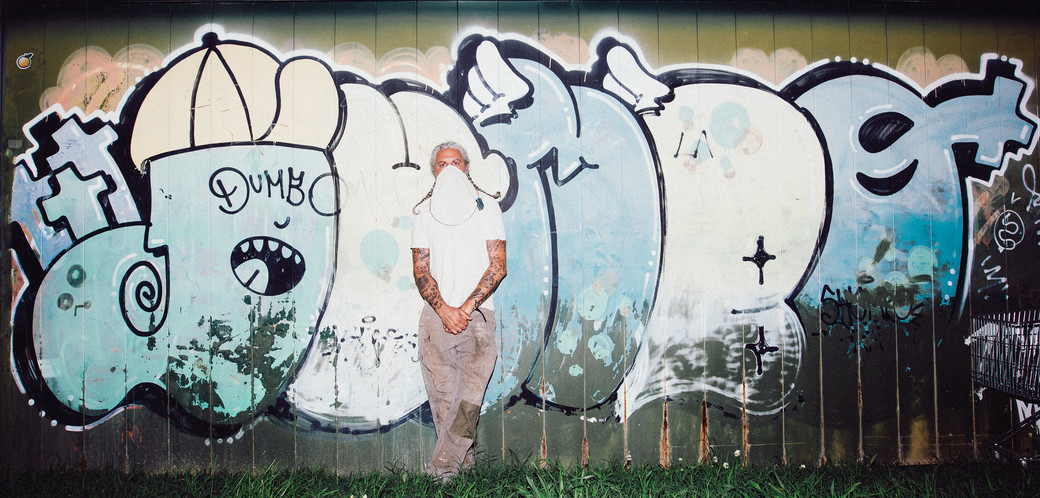
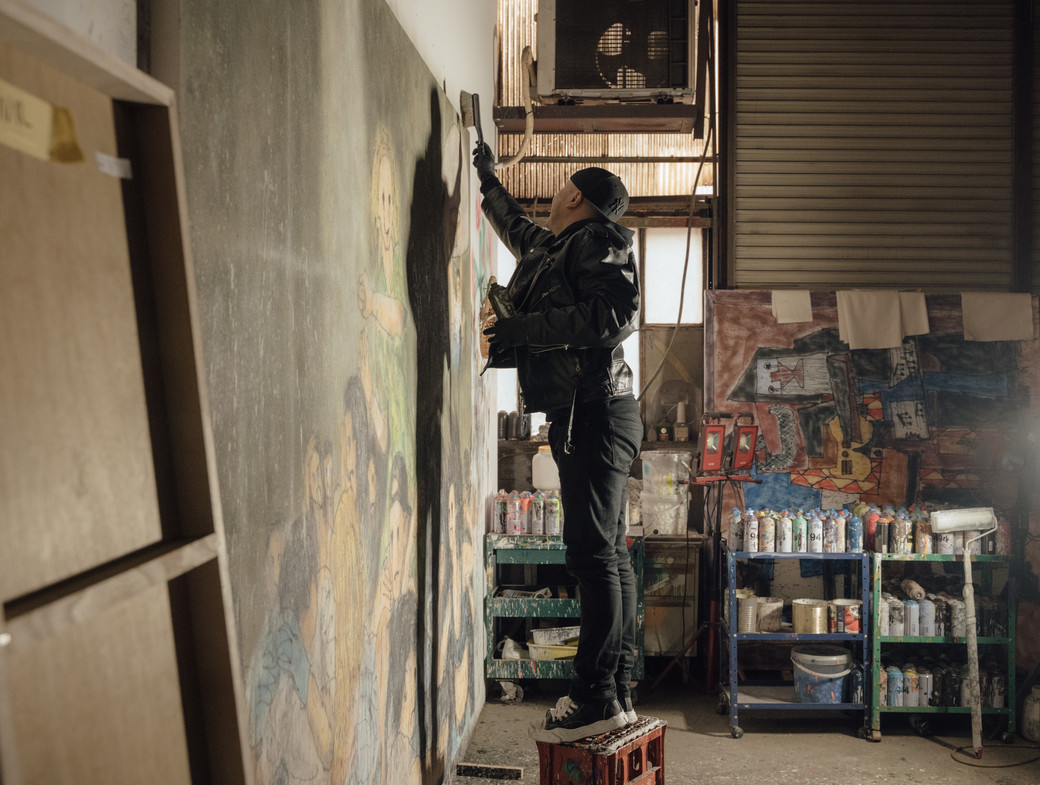
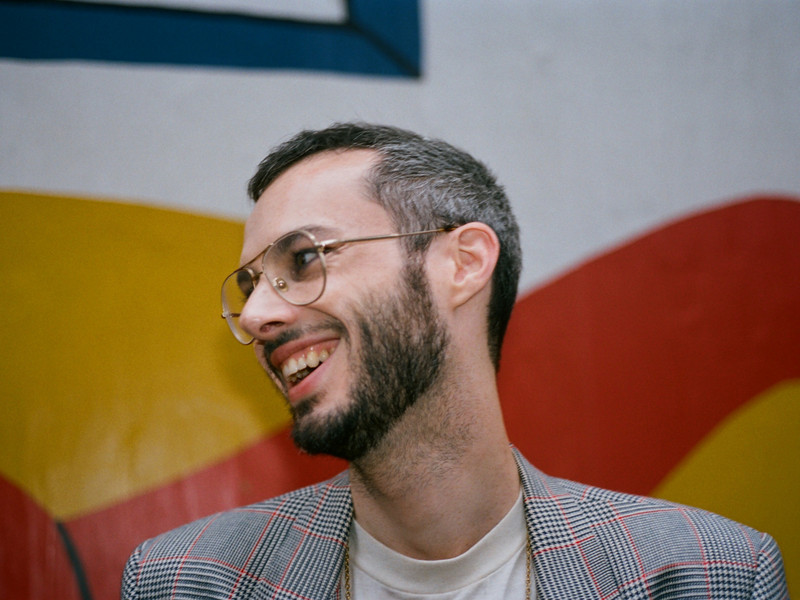
Being Japanese-American, he straddles two identities in this country. He straddles being a member of the Western art world, while also playfully criticizing it. This fact can be metaphorically represented by his physical distance from the canvases upon which he paints. Due to his sole use of spray paint cans, he is required to step away from the surface while he works.
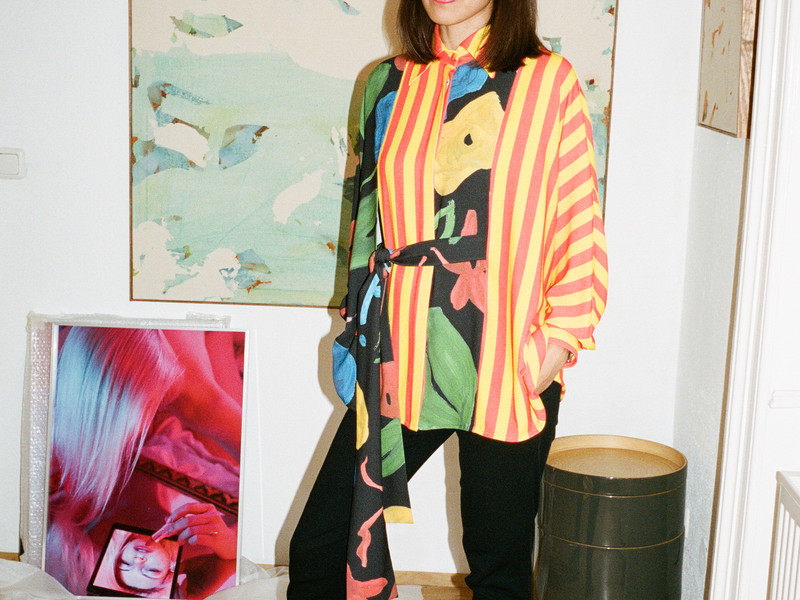
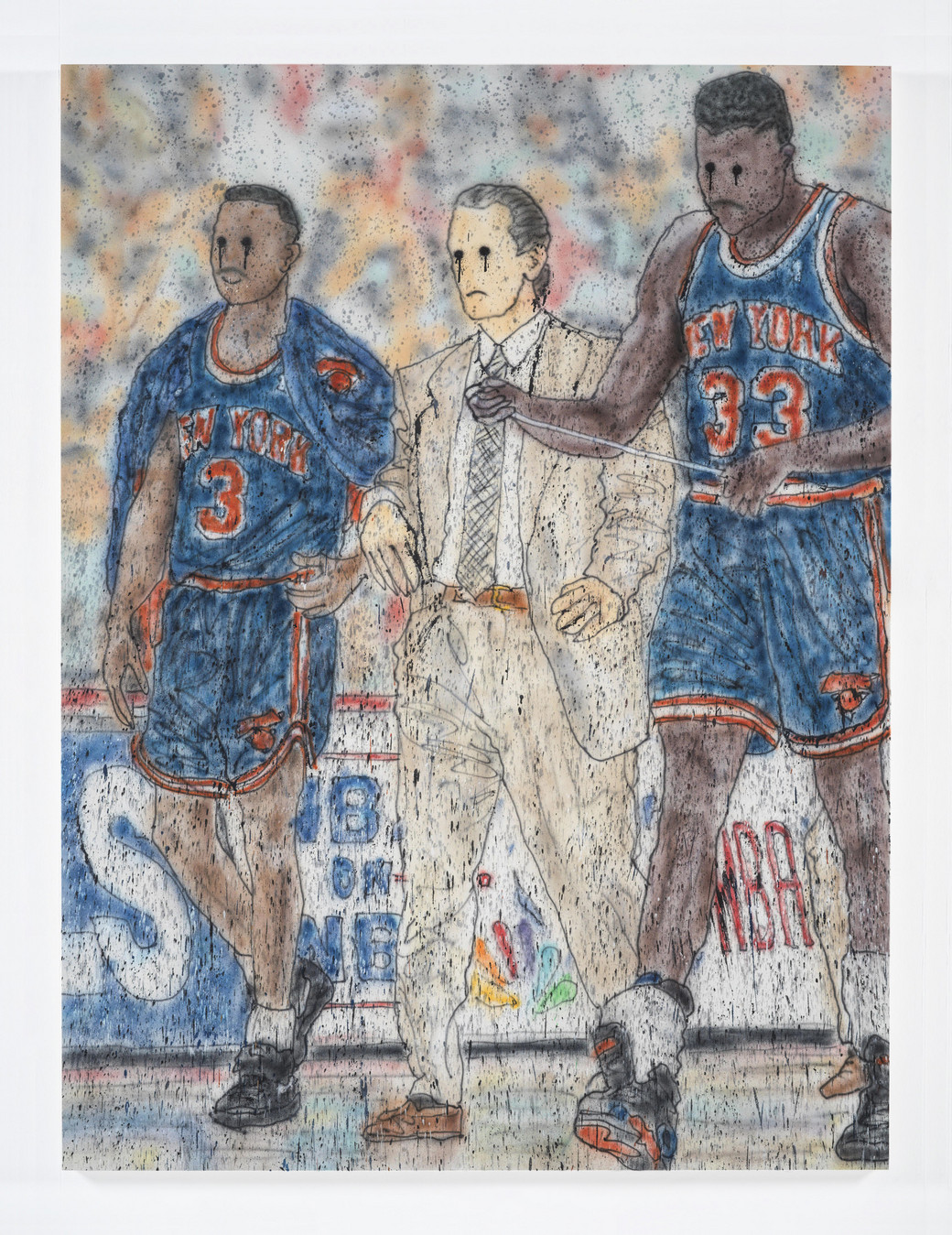
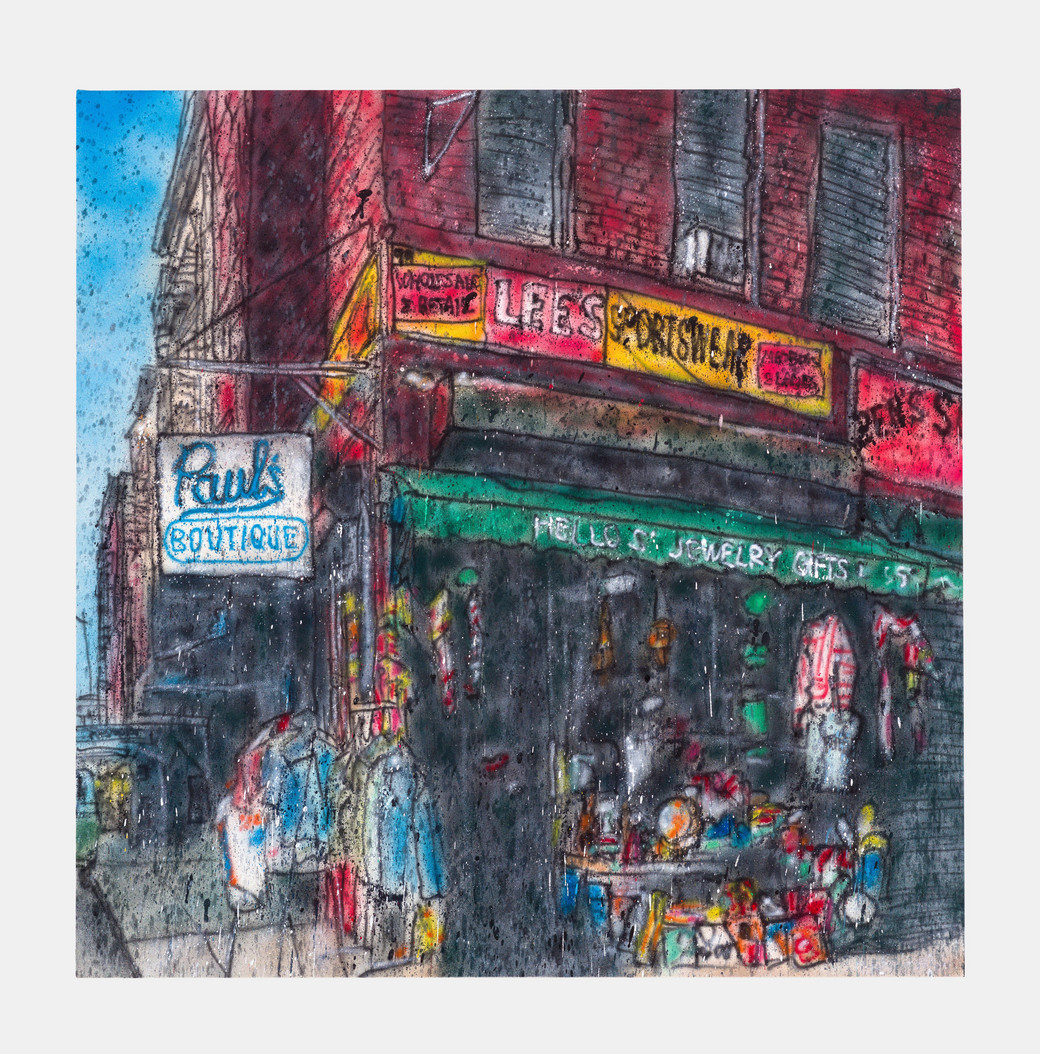
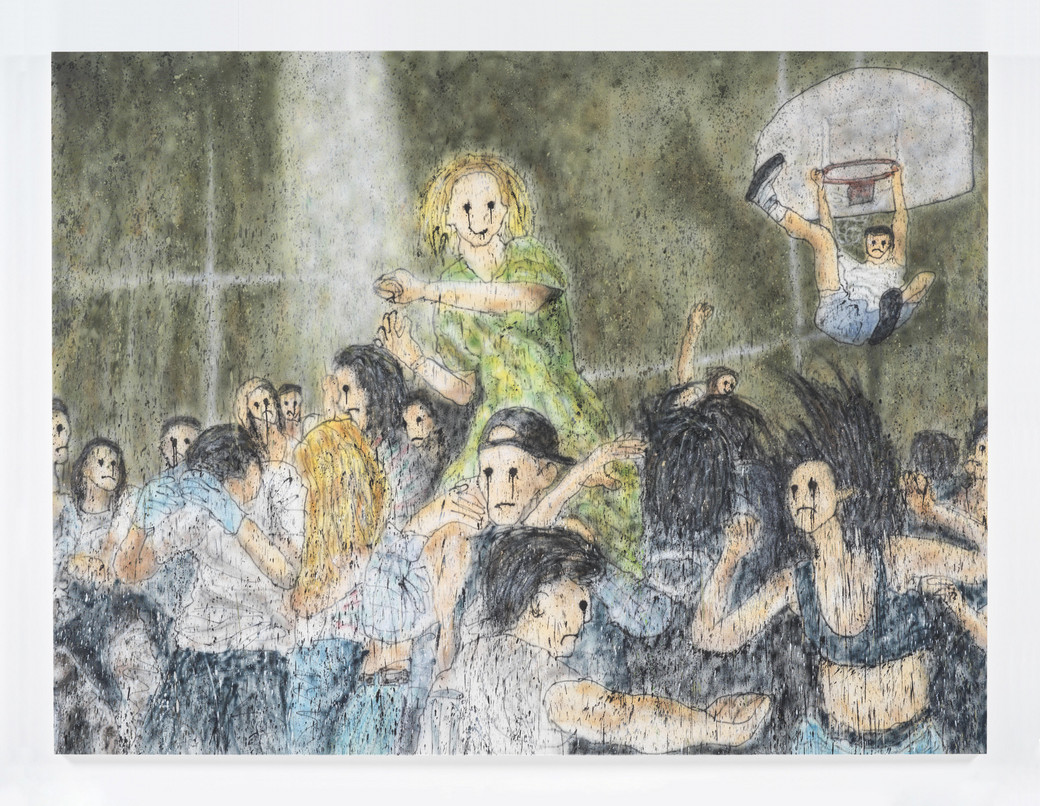
The universe MADSAKI creates is one void of hierarchies; there is no “high” or “low” art, just art. The subject matter is most consistent to him because it’s all based on his own personal experiences. In other words, you may not see a direct correlation between his painting of two Knicks players and their coach and his painting of a family photo in Japan; but the correlation represents the artists memories of growing up between those two worlds.
Can you talk a bit about moving to New Jersey as a child from Japan? How did art become your outlet?
I was 6 when I moved to New Jersey. It was my first time on a plane. A few weeks after I got there, my parents bought me a bicycle. So, I tried pedalling home to where I used to live in Japan. I thought that if I kept riding, I would get there. I couldn’t speak a word of English so I drew what I wanted to express on a piece of paper. I learned that by drawing, I could communicate.
What other media have you used in your artistic practice, and how did you come to find spray paint most accurately conveys your vision?
I never liked using brushes. I was so bad with it. Never had fun with it. And also, it took so much time to paint. I’m not a patient person so it was irritating. For that reason, I just chose to use spray paint cans. It became my favorite medium. I was able to express what I saw in my head instantly on to the canvas.
Who are some artists you admire who you feel also criticize the Western Canon in a similarly humorous way?
Basquiat was a big inspiration. I saw his retrospective at the Whitney in the 90s and it triggered something in me. But my paintings aren’t really inspired by art history, only by my own experiences or view point. I grew up between cultures and I learned about American culture mostly from watching TV. I never felt I belonged anywhere. I was always observing the world as an outsider, so my paintings are observations from my perspective. All my subjects are on the same level, because that is how I learned to understand the world. Or, I guess it’s because I didn’t learn from only one perspective.
When you talk about flattening hierarchies in your art, what exactly is it that you’re referring to? Is it both material and subject matter?
For instance, painting a famous Picasso artwork and painting a movie scene, it’s all the same for me. I see them as images from the viewpoint of my personal experiences. When I first saw the Picasso’s “Three Musicians” at the MoMA when I was a little kid, I really thought it was a scene from a Star Wars movie. The Mos Eisley cantina bar scene. So, my painting of the artwork would be from this view point.
What sorts of subject matter are you most drawn to for your paintings?
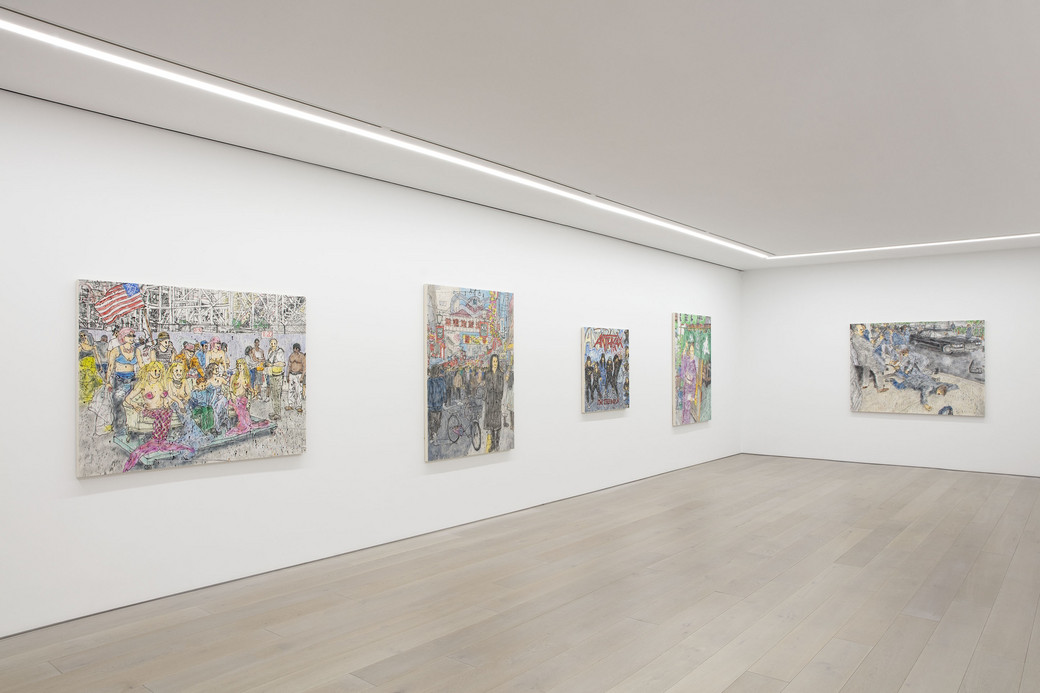
Subjects that I have some kind of personal connection with. I started with my perspective on art, and then the characters that I knew growing up (like McDonalds or Sesame Street). Recently I started painting people close to me, like my wife. For this new show, I revisited my experiences growing up in New Jersey and New York. I never felt comfortable painting my experiences before, but slowly doors are opening, and I feel I can slowly dig into my past. This show in New York is a big step, exploring my time here.
What does it feel like having your first major New York exhibition after growing up in the area caused you to feel so isolated?
It’s my first solo show in NYC. I never thought that I would be able to come back to the city where I grew up and have a show there, especially at the Perrotin gallery. I feel kinda nervous but at the same time, I’m happy. The memories of all that pain and suffering I went through living in the city back then, became the paintings for this show.
Where can people find your work if they’re unable to go to the show?
On my Instagram.