PRESENTE CONTINUO: the intimate ties between then&now

Starting May 30, PRESENTE CONTINUO will be available to purchase on presentecontinuo.com, cpcompany.com, and at the C.P. Company flagship store in Milan, Corso Matteotti 7.
Stay informed on our latest news!

Starting May 30, PRESENTE CONTINUO will be available to purchase on presentecontinuo.com, cpcompany.com, and at the C.P. Company flagship store in Milan, Corso Matteotti 7.

Can you talk a bit about your latest residency with Human Resources?
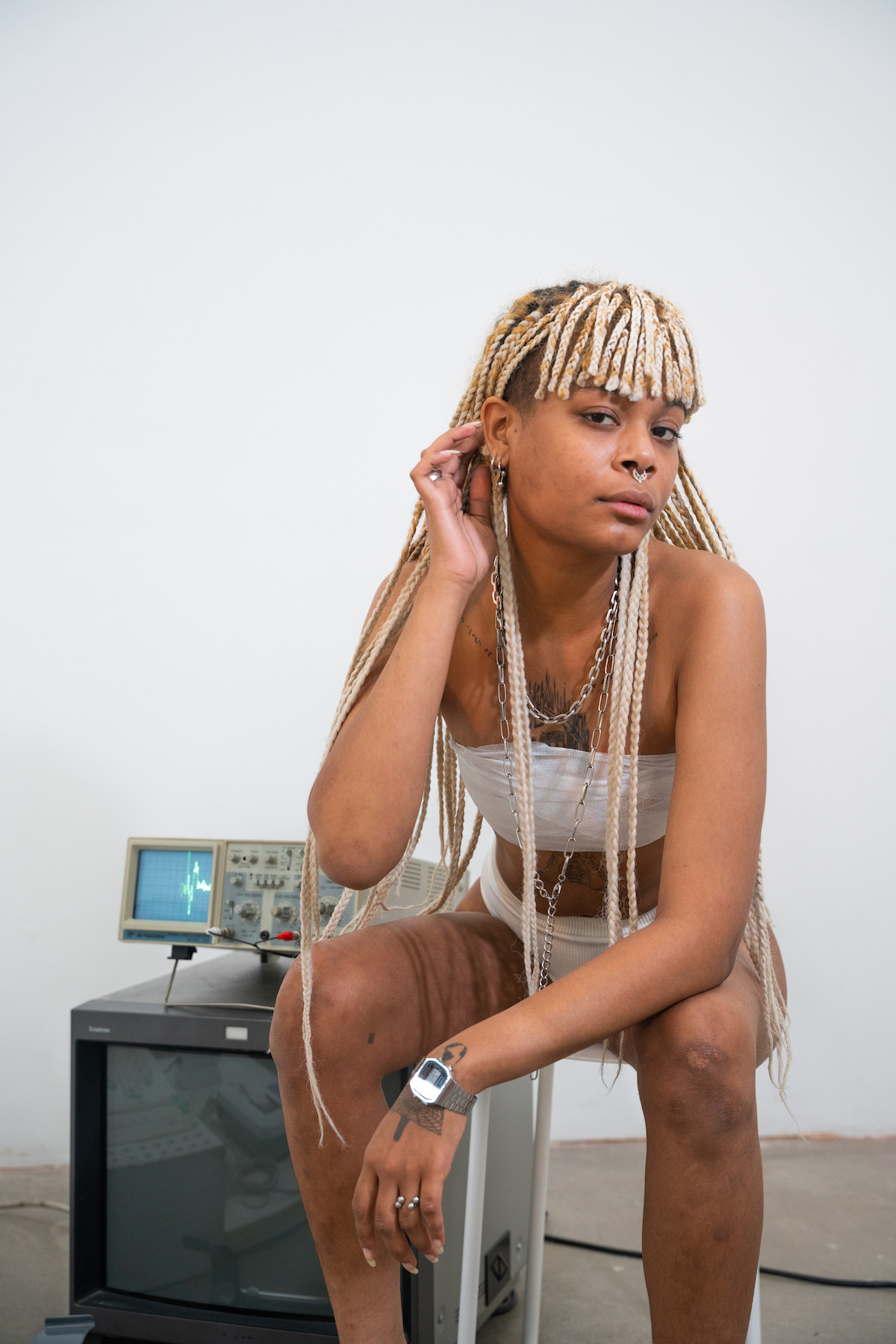
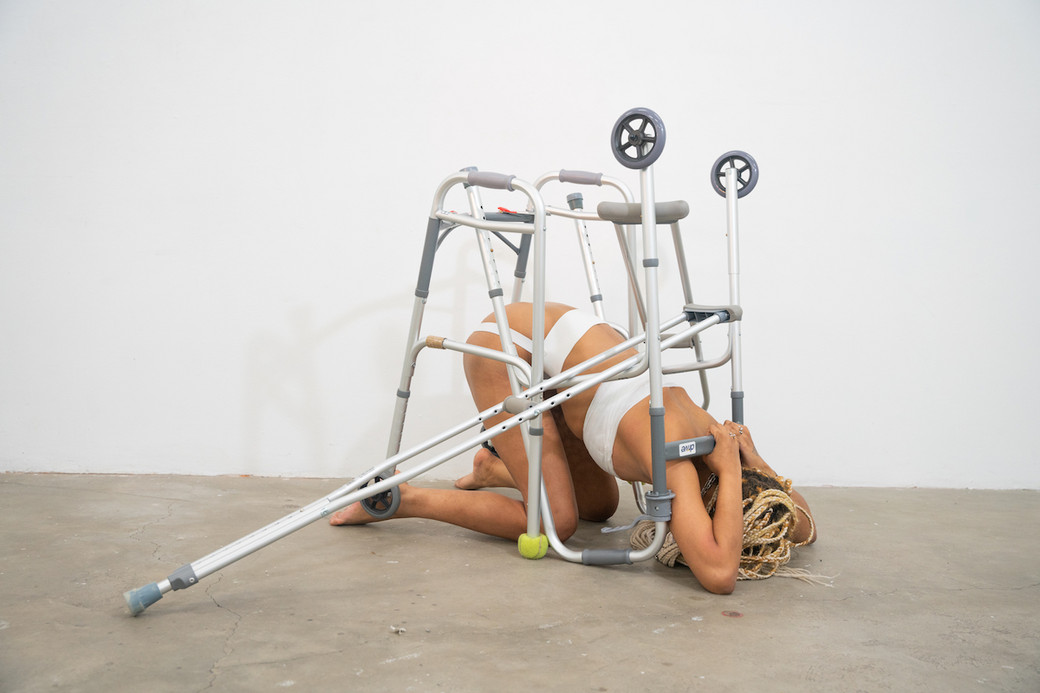
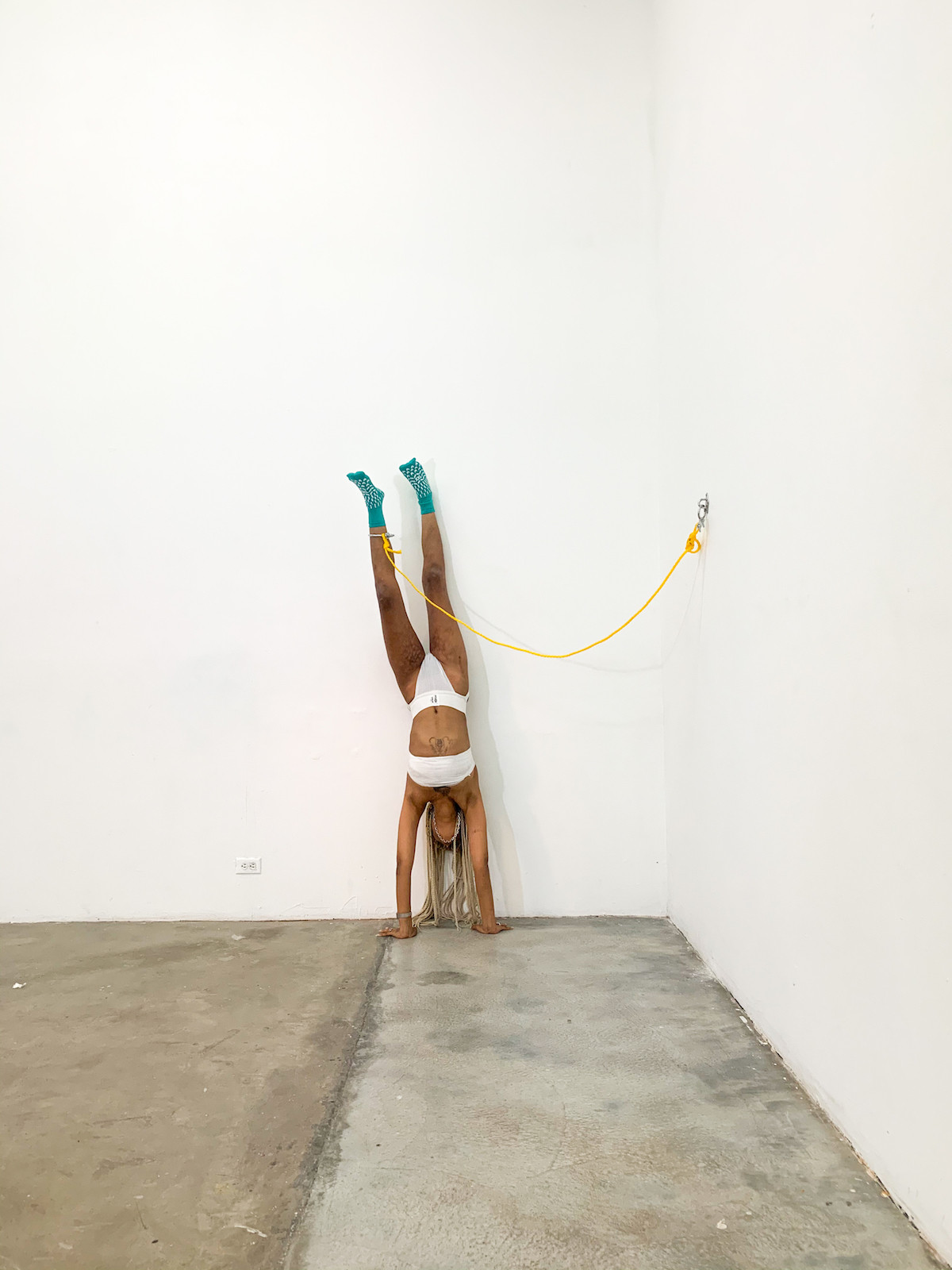
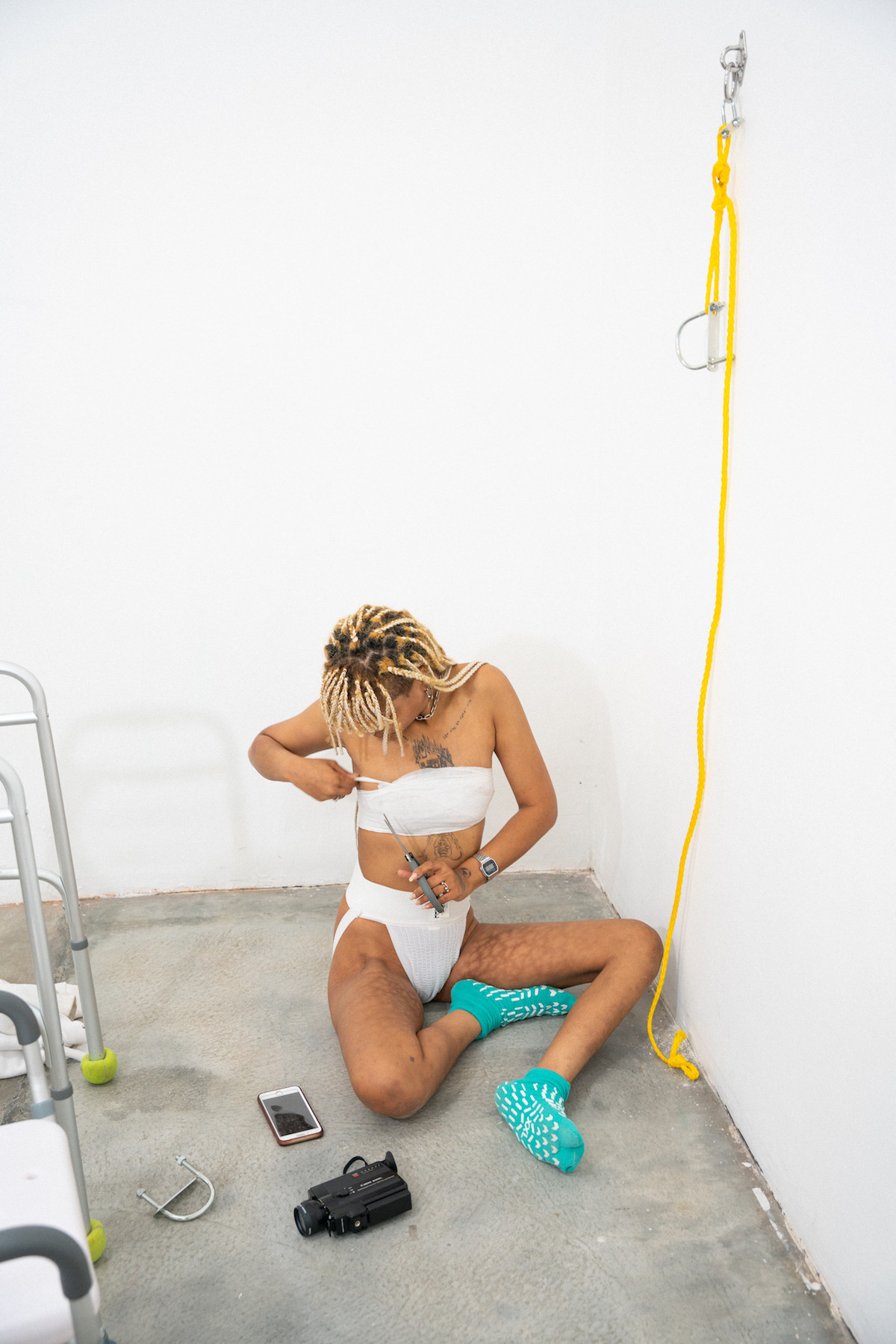
The residency itself is called the Time, Space and Money Residency. It’s been almost exactly a year since my last solo show, HIPAA Violations, so it’s interesting to note how markedly different my work is now. So much of the past was about imbuing my own identity into performance pieces. Now, instead of exploring illness as it relates to my body, this latest project is more a study of The Body—capital T, capital B—and its abstraction. I’m trying to approach this expression of the human body as defunct, restrictive, and inherently violent idea—from a place removed from references of my own hyper specific emotions and memories.
What does that look like in your work now?
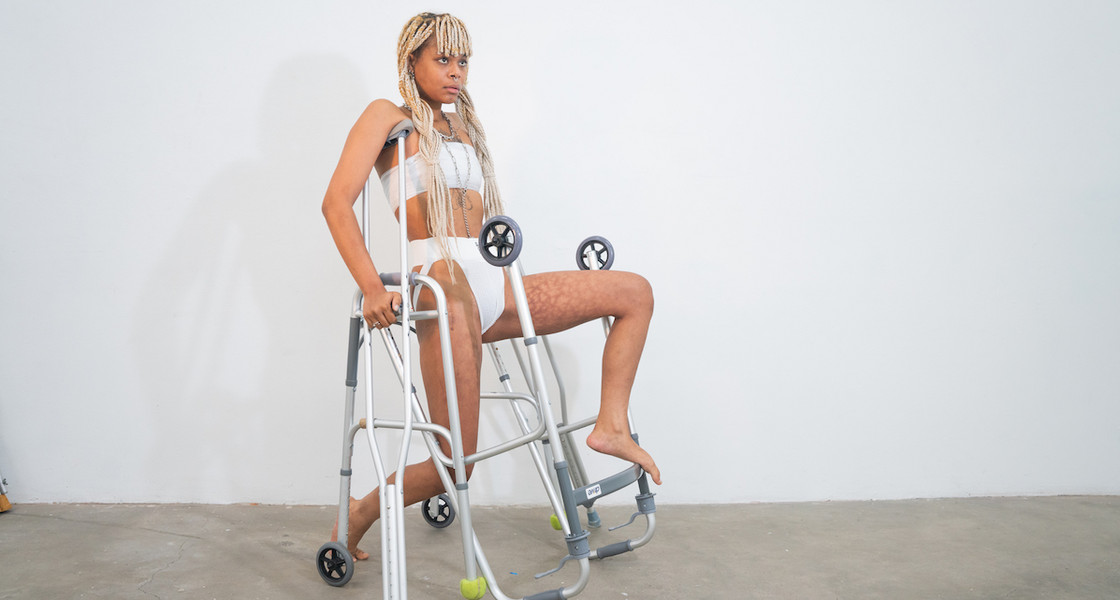
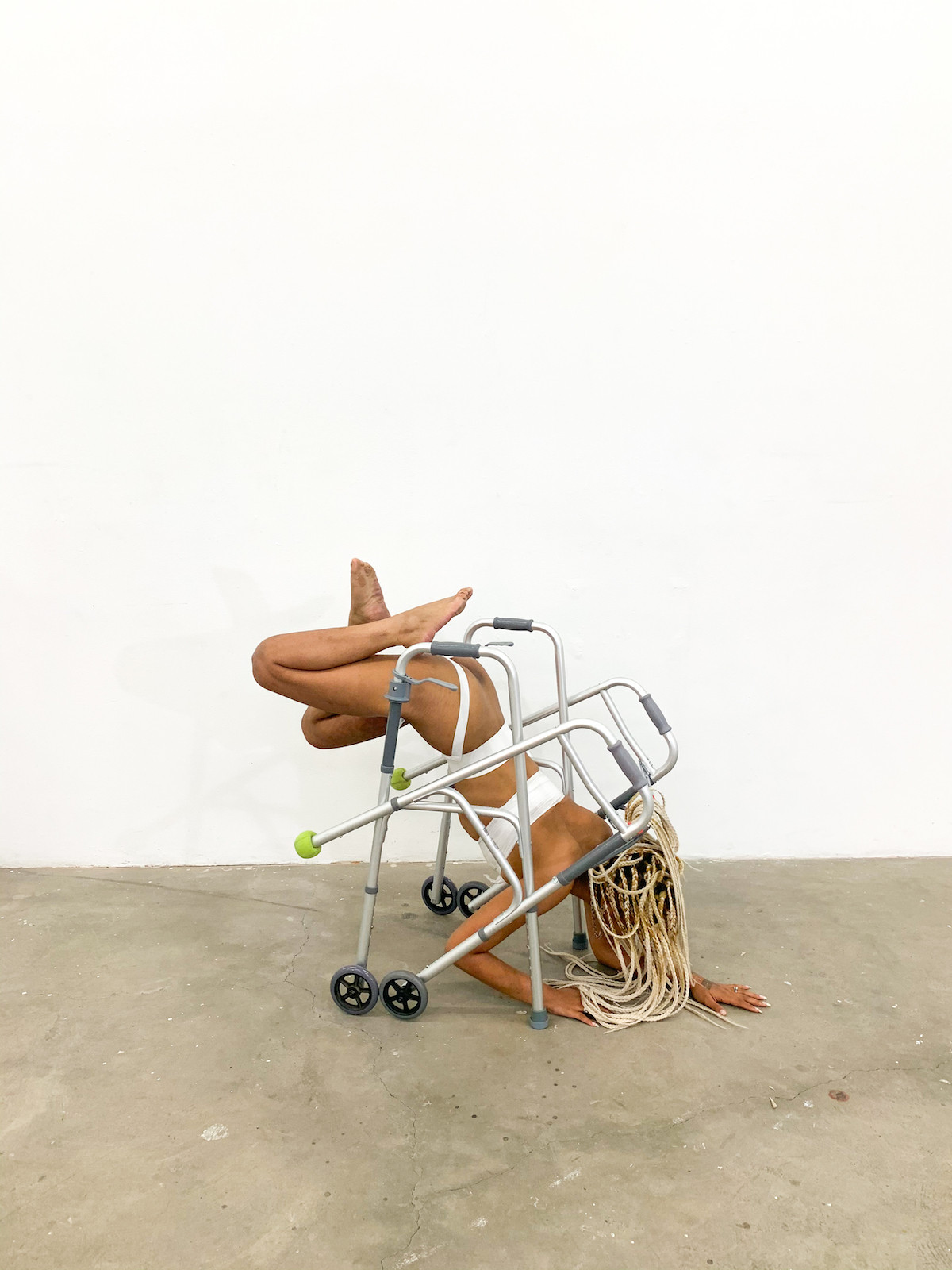
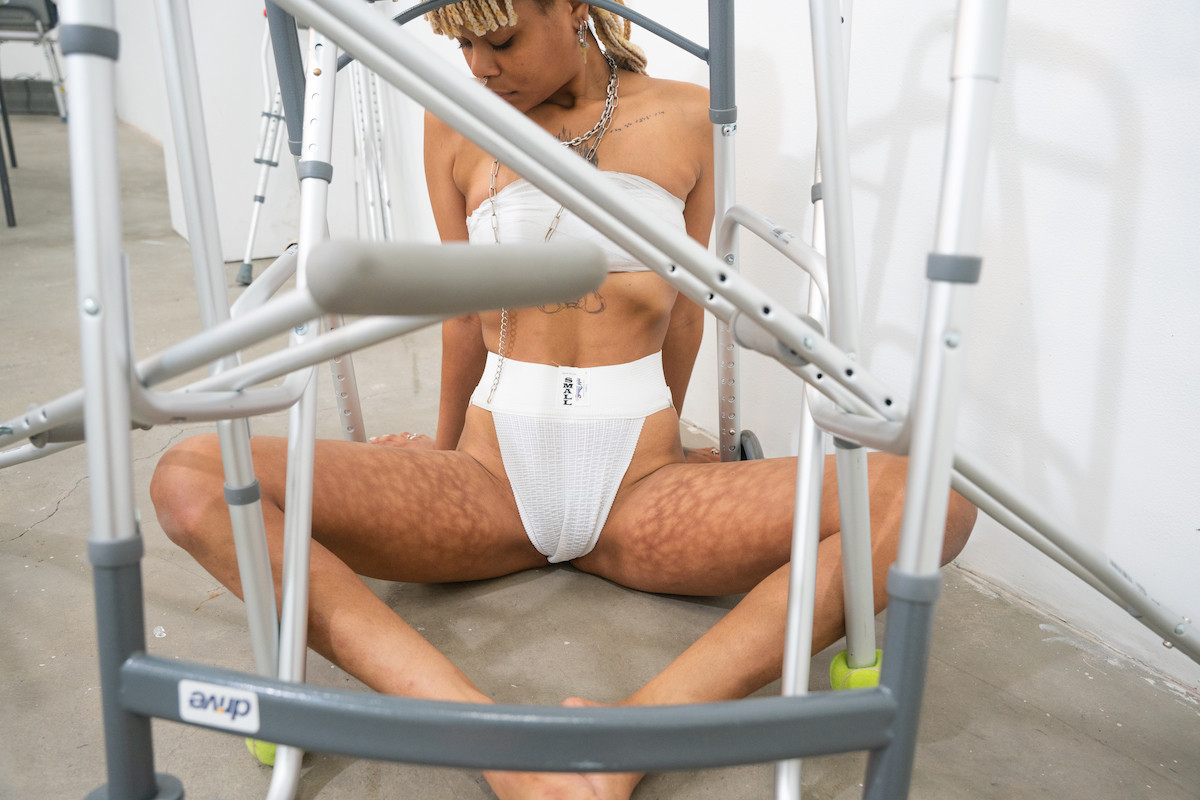
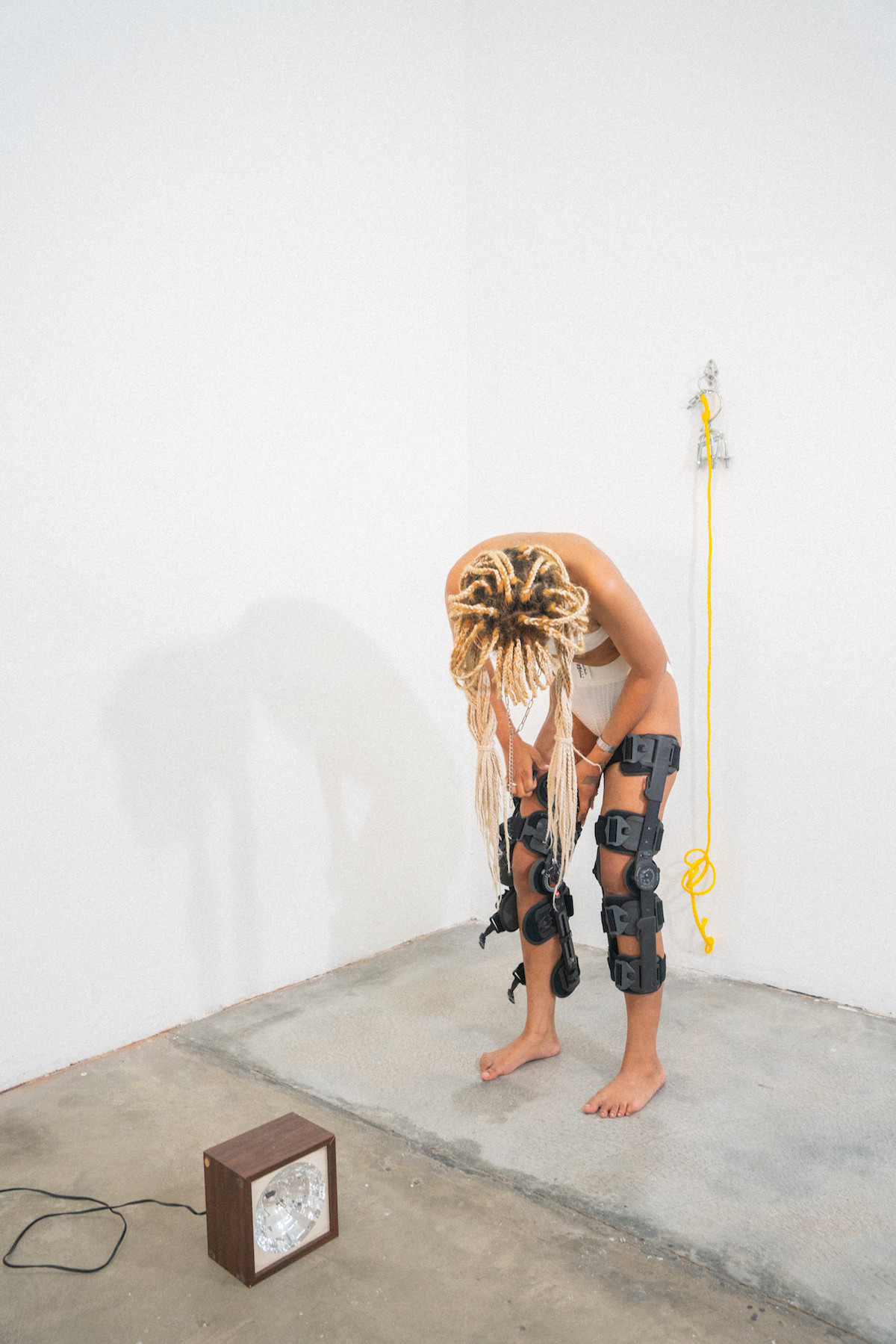
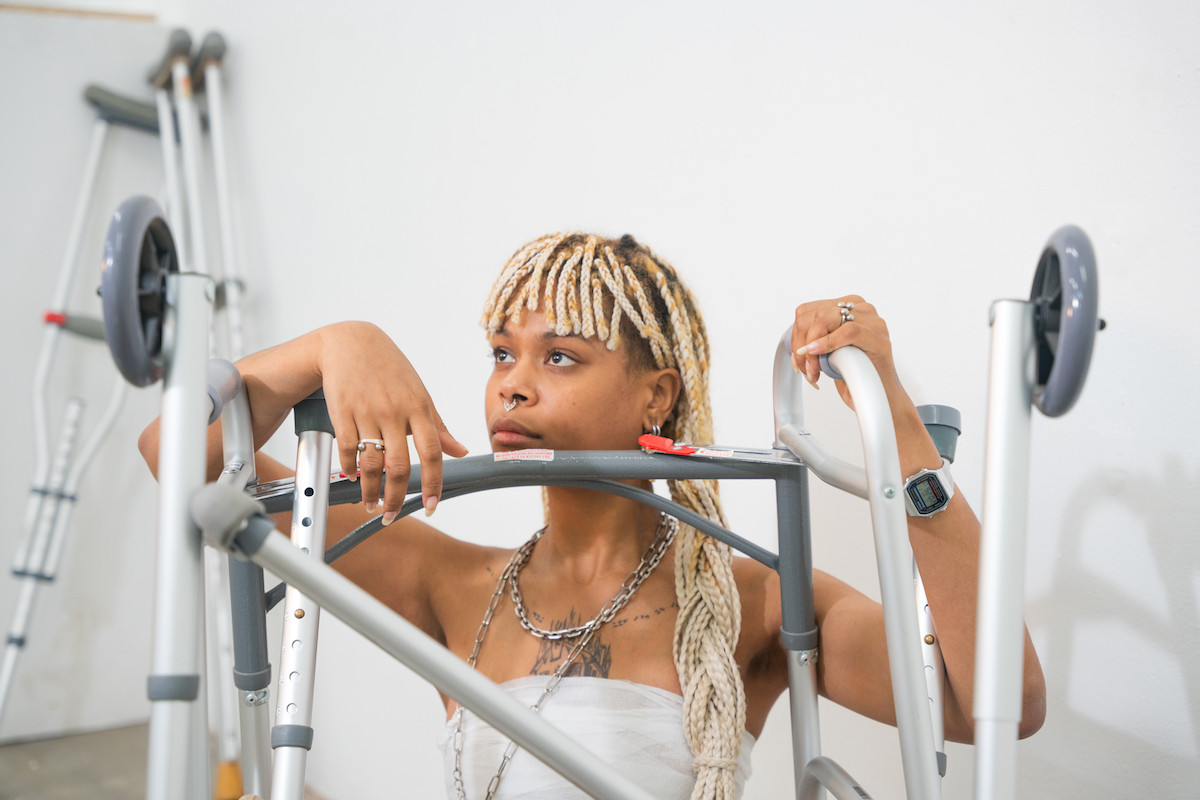
I’m doing more sculpture—a lot of my past work involved integrating medical ephemera used on my body, and turning that into sculpture—whereas now I’m actually fabricating things. Specifically taking medical devices, like mobility aids, and taking them apart and making them into new things. So, still in the same vein that I was doing it before, where I'm using all sorts of medical materials. The difference is now I'm actually turning them into materials instead of recontextualizing them into sculptures.


How do you integrate violence into your performance pieces?
The idea of brutality and violence is so deeply rooted in my work. I think that violence is in every part of language; it's written into the way that we are intimate with one another, in the ways that we have standards around care. Even separated from illness—separated from the body as something that's experiencing violence at the hands of the the Western medical world or at the hands of its own biological system attacking itself— but completely removed from all of that, just being able to acknowledge that humans are so inherently emotionally carnivorous. I want to be able to express that without it being moralistically tainted, it's not about whether it's right or that it's wrong, it's beyond that.
Do you mind talking about how anger functions within the process?
Definitely. For a long time there was so much anger behind everything that my body was experiencing and is still experiencing. I felt really inclined to create pieces where I was basically just telling the audience that they had to sit there and endure what I was going to show them and that it was going to be really uncomfortable for both of us, for everyone involved. They just had to shut up and take it basically. Most of my first video and performance pieces were so tangibly violent. Not only violence against my own body, but I was also bringing in archival footage of surgeries and these really grotesque sort of things that are unquestionably difficult for some people to watch. There was even a particular performance piece where I burried myself under scalpels that I ended up catching a lot of slack for.


You talk a lot about being monitored and probed. How does the gaze, medical or otherwise, affect your work?
Yeah, the medical gaze is interesting because I have so little distance from it, regardless of how truly critical I am. I'll be making a piece tapping into the emotional anguish of hospitalization and then, boom, I'll be hospitalized the next day and I'll lose two weeks in the hospital. I'll come out and I'll go back to that piece and I'll be like, no, no, no, it's all wrong. I have to completely redo this. There's a collapse of the boundaries between my bodily autonomy and the medical complex, so there's practically no way to exist right now in the United States with a life threatening degenerative illness in a way that you are not absolutely trapped under the thumb of doctors and big pharma. I'm still learning every day the ways in which not only am I being surveilled, but that I'm surveilling myself and that people in my life are surveilling me.
There’s a proliferation of the term ‘body’ in the art world— ‘black bodies,’ ‘disabled bodies,’ ‘queer bodies,’ etc. What is your relationship to the term? Is it dehumanizing?
I think that we are so comfortable with using the word body when talking about blackness, queerness, transness, all these things, because to objectify the other is also written into our language super conveniently. When I say “body” I am fully referring to my body as a proper noun, like an object. There is no purpose in denying the fact that there is such an immense amount of objectification that my body is going through. I always have to capitalize The Body because it's something that I'm observing and collecting data from. It’s so much more than just being inside of it.
I understand that with your condition, you have a shortened life expectancy. How does that awareness affect your work?
Since I was about 5, I was first made aware of the fact that I would be dying young, so growing up in the medical complex has removed any rose-tint about the matter. In a lot of cases, especially when my health is the worst, death is a comfort. There's nothing more comforting to me than the finality of life. I’ve medically died and been resuscitated roughly 5 times now. So “recovery” or resuscitation is such a nuanced concept, because dying was such an innately peaceful experience that I don’t want to return to my body when it happens.
Are you comfortable talking about your experience dying?
Yeah totally. Again, I’m pretty detached about death, but essentially they overdosed me on painkillers just trying to treat my pain. They just titrate it too high and then all of a sudden I'm code blue. My heart is stopped. It's like there is nothing, every time it has happened. It’s so hard to articulate the feeling of literally being brought back into a body that is so hostile and just wishing that you didn't have to be.


So what place does death occupy for you in your life?
My relationship to death now is so tied to other people, it's not even about me at all. Death is about my father—the thought of my father outliving me makes me so sad because I know that that would devastate him. And so when I end up talking about death, it's always like a conversation about love. It sounds saccharine. But it's like that. It's true. It’s true.
You’ve talked about the separation you experience of the mind and the body. According to your belief system, where that does that leave the soul?
As I've gotten older I've had to reconcile that gap between body, mind and soul. For me, it's the hyper evolved part of the human mind that is so lost in its vast consciousness. That is what the soul is to me. It's that space, that cavern between body and mind where I have to be just to like survive the pain to survive it every day. The concept of the soul ties so much into the holistic thought process that I had to develop around pain just to survive it. It's a place down. Very, very, very, very down. That's where it exists for me. I wouldn’t use the word soul, but it's that's where real consciousness is.
(FOR PARTS) from Panteha Abareshi on Vimeo.
Just to close, do you have any upcoming shows or projects we should keep an eye out for?
Yes! I have a solo show at the Barnsdale Museum here in LA in February. It's going to debut first digitally, then half way through the show it'll open physically at a limited capacity.
Thank you for your time. This was a fascinating interview.
Thank you, I really enjoyed this conversation. I appreciate being able to talk about these topics with someone I trust.

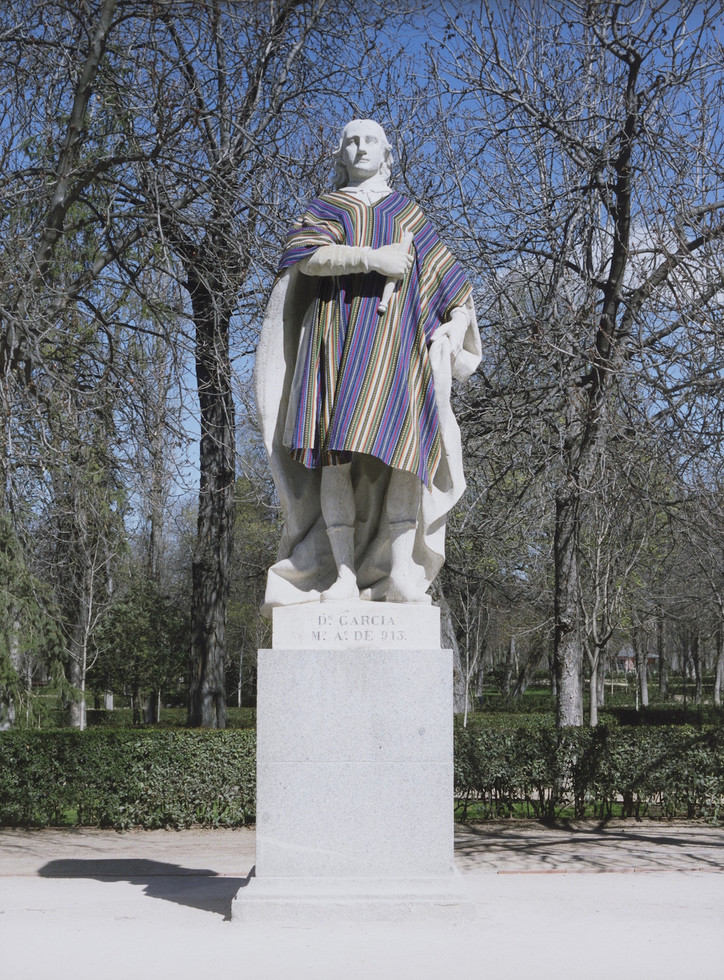
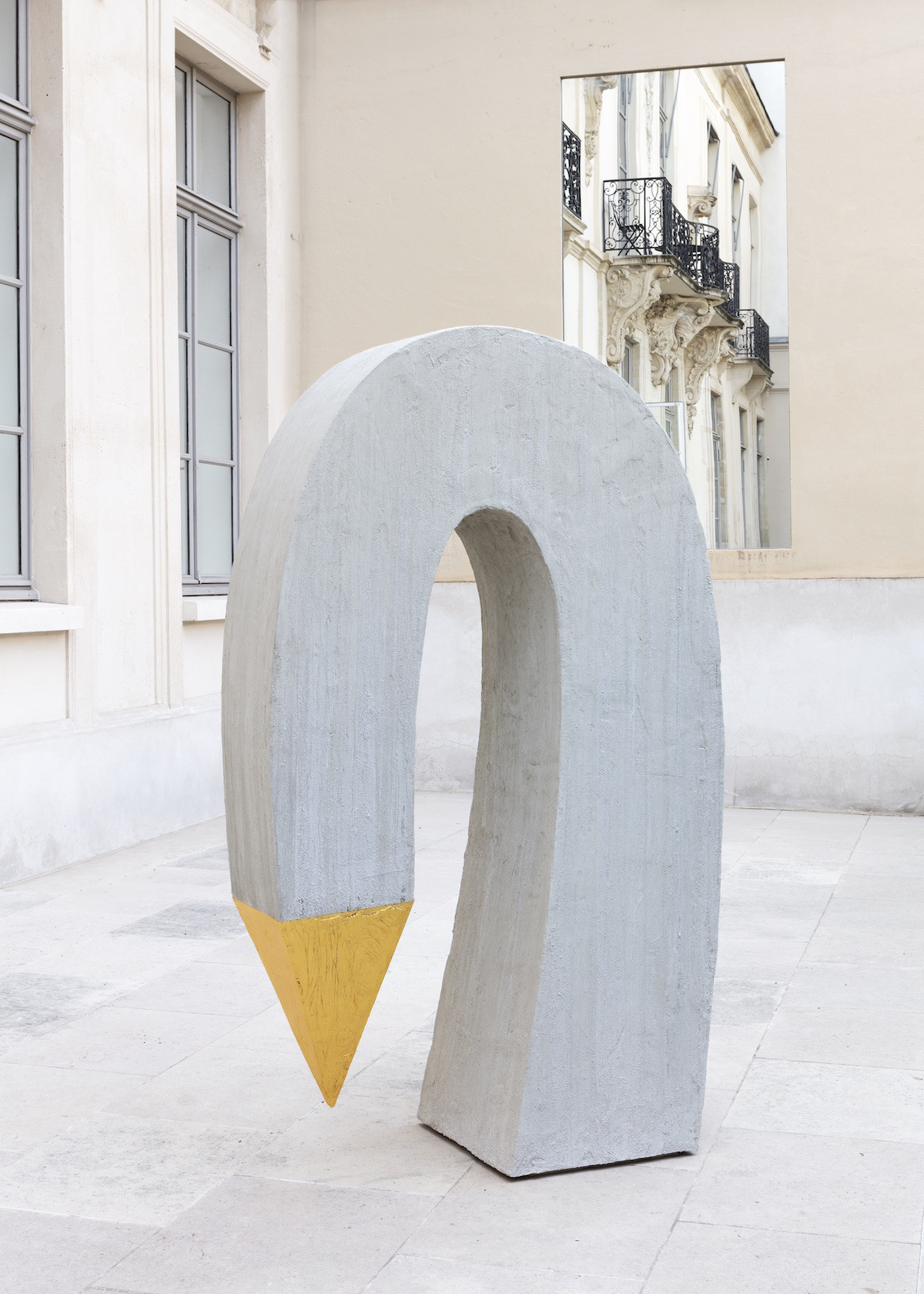
His pseudo-realist installations, which involve colonist statues covered in South American ponchos, grand statues of horse-riding conquerors, sans-the-conqueror, and flaccid depictions of obelisks drained of their origin, stand in defiant contrast to colonial imaginations of superiority and divine greatness. And, at the end of the day, he seems to just be having fun with it.
His show, On Monuments, is on display at Perrotin’s Viewing Salon through November 6th. Iván and I spoke over email about Parisian rain, t-rex sized pigeons, and being a cultural entity.


Left — Turistas (King Charles III of Spain),2013. C-print. Unframed: 160 x 120 cm | 63 x 47 1/4 in. Framed: 165 x 125 x 5 cm | 64 15/16 x 49 3/16 x 1 15/16 in. Courtesy of the artist and Perrotin.
Right — Empire, 2020. Concrete, wood, gold leaf. 211 x 124 x 55 cm | 83 1/16 x 48 13/16 x 21 5/8 in. Photographer: Tanguy Beurdeley. Courtesy of the artist and Perrotin.
Hi Iván, how are you doing?
Good!
Where are you now?
In my studio, in the north of Paris, in the office. It’s raining today.
What has been on your mind?
Oh, so many things. I’ve been thinking about a public commission, of which I’m a finalist, for the Urbanism Research Center in Marseille. I want to create something inspired by Trisha Brown's performance, titled Roof Piece. I’ve been thinking about a new way to manage my studio—my studio manager left and we just hired a new person. I want to change the way we work, maybe collaborate more with other teams. My girlfriend and I are thinking about moving to a bigger apartment. I’ve been thinking about Covid, and that it will likely last. Thinking about my family in Colombia; it’s very difficult right now, violence has increased, the government is negligent and corrupt. I’ve been thinking about the US election.
What are you working on now?
Beside the Marseille project, I’ve been planning for my next solo show at Perrotin New York (September 2021), which will be a continuation of our Viewing Salon, On Monuments — a reflection on the value, use, and pertinence of monuments. I want to generate proposals for a critical approach to monuments, monuments that criticize themselves. I am also working on a solo show at Dortmund Kunstverein, where we will organize protests every week.
I am working on a public commission for Sciences Po (Political Science School in Paris)—six massive concrete arches with the text engraved. Also, a commission for a public park in Berlin—a large-scale permanent project, consisting of different bridges around the park, so I am in touch with engineers and landscape artists solving some details of the project. Lastly, I was picked as a finalist for the Plinth project on the Highline in New York—I proposed a pigeon in the scale of a Tyrannosaurus Rex (20 ft high), so I’ve been scanning pigeons in 3D and creating a model about two feet high, that’s a funny one.


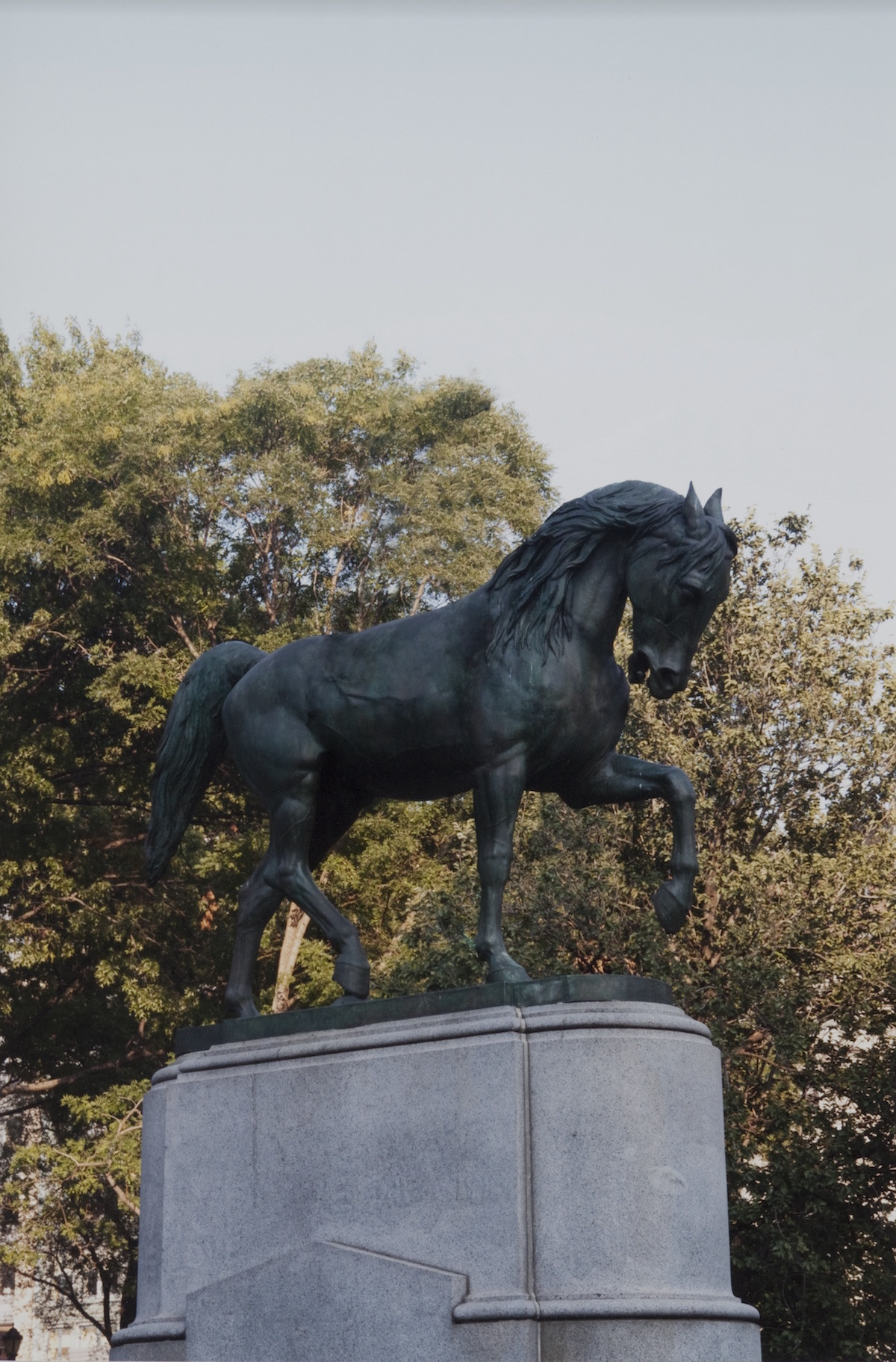
Left — Horse (New York, Union Square), 2011. C-print. Framed: 70 x 50 cm. | 27 1/2 x 19 3/4 in. Courtesy of the artist and Perrotin.
Top right — Etcétéra: en couvrant avec des miroirs Francisco de Orellana, le soi-disant découvreur de l’Amazonie. Parc national, Bogotá (Etcétera: Cubriendo con espejos a Francisco de Orellana, supuesto descubridor del Amazonas. Parque Nacional, Bogotá),2012 – 2018.
C-print. Unframed: 158 x 158 cm | 62 3/16 x 62 3/16 in. Framed: 161 x 161 x 5 cm | 63 3/8 x 63 3/8 x 1 15/16 in. Courtesy of the artist and Perrotin.
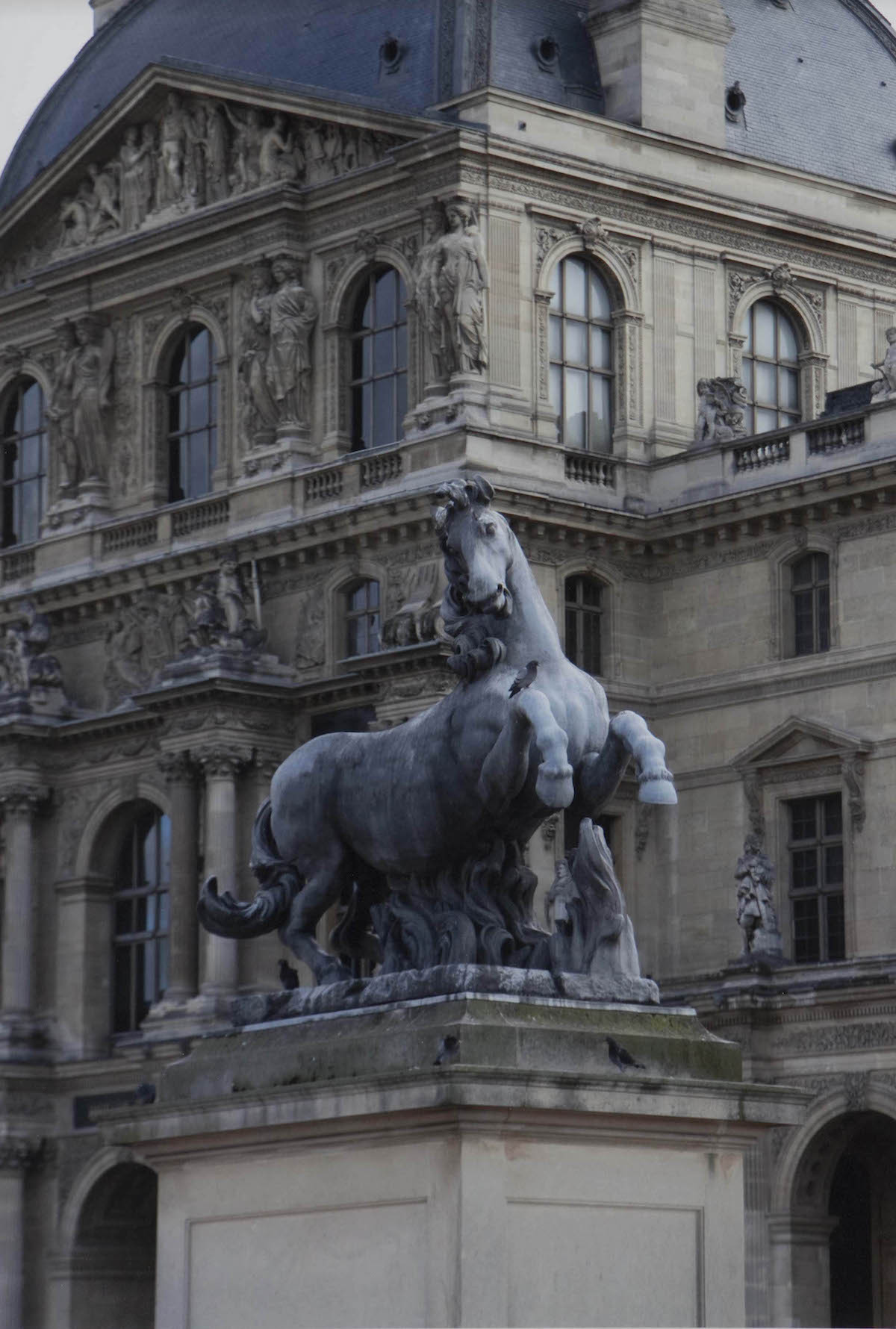
Bottom right — Horse (Paris, Louvre), 2011. C-print. Framed: 70 x 50 cm. | 27 1/2 x 19 3/4 in. Courtesy of the artist and Perrotin.
I had the pleasure of looking through your works in the Perrotin viewing salon with the On Monuments series. You’ve been engaging and negotiating with the idea of the monument for years, but the world had a recent reckoning with monuments over the summer with the Black Lives Matter movements as those in the Americas and Europe vandalized and destroyed monuments to colonial settlers. How did you react to this movement? How did you feel it connected with your work?
Well, the idea of monuments and their meaning is something I have been focused on for the past fifteen years. So, when I saw the current movement going this way, I was very glad. I feel we need to be more critical not only towards the monuments that exist but also towards the idea of the monument itself. Lectures on history and governments' narratives need to include critical teaching. We cannot continue simply adulating our supposed heroes, we need to have a critical lens on our own past if we want to conciliate our present and create a more inclusive future.
Clearly, ‘Monuments’ is a theme that has permeated throughout your works for years. What is a monument to you? Does the power of a monument change for you within its context and environment? What monuments would you like to see in the world?
Historically, monuments have been created to write a certain history into our urbanscapes—they celebrate power, a particular vision; they are propaganda. I feel we should have conversations, create negotiations, modifications to the monuments that exist, and create others that contribute to a different narrative, different perspective. For example, Christopher Columbus… I don’t feel we need to take down Columbus’s sculptures, I feel the sculpture should be changed, moved, or that other sculptures should be added—texts, objects, different kinds of interventions, so we can include the perspective of people who feel he represents the abuse, slavery, and domination of American colonization.
I also had the great pleasure of reading through your book, Let’s Write a History of Hopes, and it mentioned that you grew up in one of the communes formed in Bogotá during the Colombian revolution, and I read somewhere else that your father was a part of the revolution. How did experiencing revolution during your formative years, especially a leftist revolution, influence your practice?
I grew up in a very politically engaged family, true believers of change, and yes, revolution. I learned as a kid that there were many unfair things in the world—against the most fragile and humble people, but also against indigenous communities, Black communities, women, LGBTQ communities. My family talked to me about colonization and about different religions with a critical eye (we are atheist). This was since I was four or five years old. It was truly the way I was raised. For example, my family’s passion is to talk about macro and microeconomics—my mother is an economist, my father an elected politician—we talk, argue, and also have fun talking about all this. So, of course, I see the world with that filter. My years, experiences, travels, and the people I have met have given nuances to that. I have enriched or changed some visions, maybe elaborated on others in a more precise way.



Left — Turistas (Carlos I de España 5 de Alemania, Madrid, Parque el Retiro), 2012. C-print.Unframed: 160 x 120 cm | 63 x 47 1/4 in. Framed: 165 x 125 x 5 cm | 64 15/16 x 49 3/16 x 1 15/16 in. Courtesy of the artist and Perrotin.
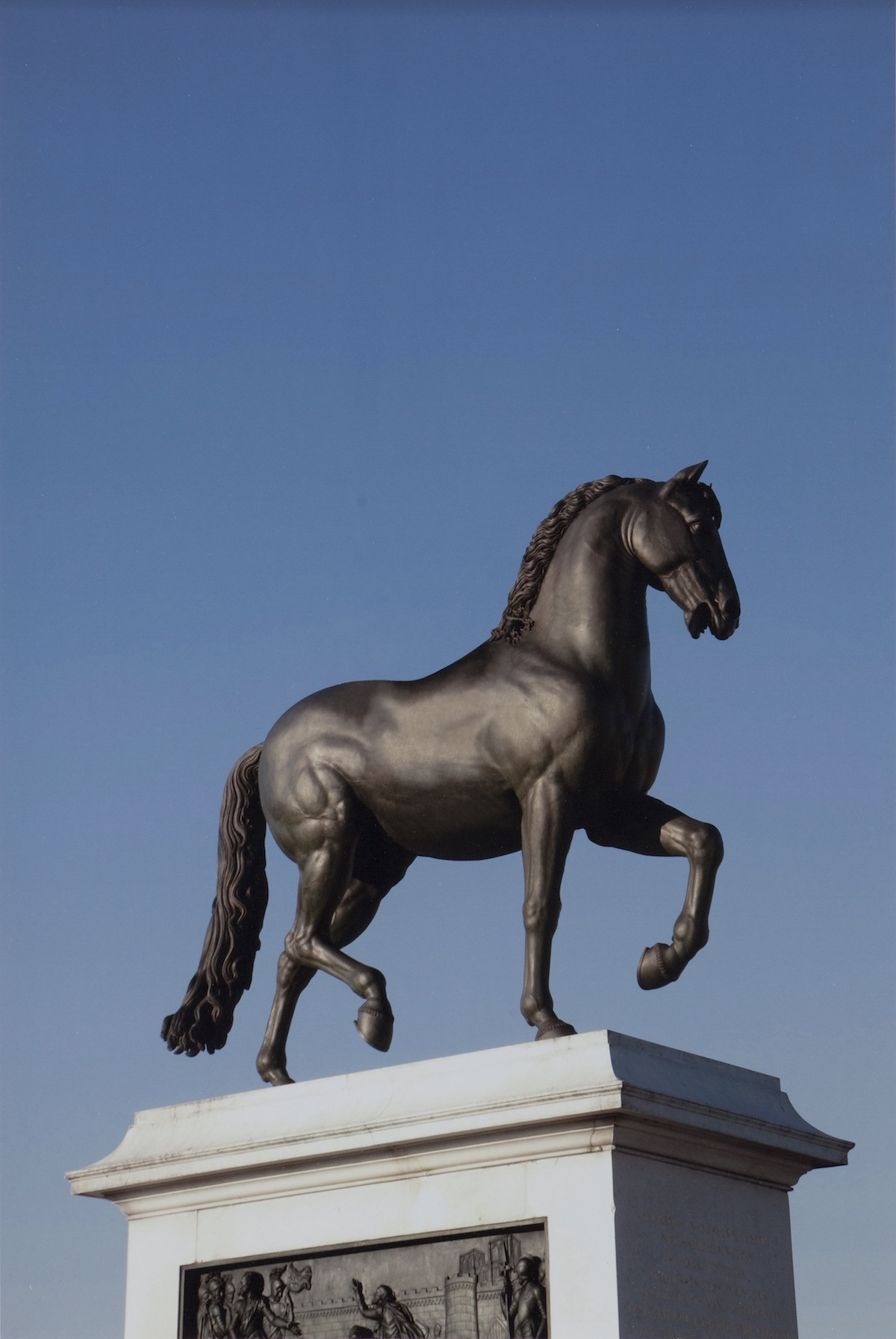
Right — Horse (Paris, Pont Neuf), 2011. C-print. Framed: 70 x 50 cm. | 27 1/2 x 19 3/4 in. Courtesy of the artist and Perrotin.
There are many people, whom I believe are wrong, that believe that political art or political art installations are not art. What are your views on politics in art?
All art is political, all activity is political. Everything we do is an action and a decision that has to do with politics. Some art purposefully deals with political or historical issues. Art, for me, is a philosophical tool—we generate questions and think about the way in which we understand the world, our emotions, our ideas. That has to do with politics. I feel all different types of art are important, it is not one kind or another. Those who say that art shouldn’t be political are maybe afraid to question their own ideas and vision.
What have been your favorite reactions to your monument installations, both positive and negative?
Sometimes, I manage to have complicity from police officers. In Spain, for example, I was putting South American ponchos on statues of Spanish Kings in Parque el Retiro. After I put four ponchos on these big statues, the police showed up. I was on a statue and we started having a conversation, I made a joke. I said I was putting the ponchos on because it was too cold, it was winter. We laughed, and then for two to three minutes, we had a serious conversation about our feelings on the relationship between Spain and Latin America. Then, they asked me to remove the ponchos and let me go. Some rare times I have had problems, but most of the time I end up meeting people, like in Spain, talking about monuments, sometimes in a serious tone, sometimes laughing. Recently a guy insulted me in Nice because I climbed up and hugged a statue. They are very conservative down there.
Where would you like the future of art criticism and discourse to go? How would you want to influence that discussion?
I feel that sometimes in the arts we talk a lot about ourselves. I feel, instead, we need to open the debate and be part of larger conversations. I don’t know if I can influence that, but I feel we should make an effort to use this tool, art, to explore and contribute to other fields. In the way we educate in schools, in the way we conceive our histories, in the way we organize our cities and economies. I believe culture precedes economy. I mean, I feel culture is at the base of everything, before being ‘economical’ entities we are ‘cultural’ entities. Today, in a general way, we think of the economy at the center of everything and that’s a sophism. We generate economies with our cultural behaviors. I feel we can generate change working on culture, thinking about culture in a deeper and more profound way than “cultural activities,” understanding that culture is the engine of our societies.
Polaert writes in the press release, “I felt the urgent desire to assemble a group of some of my favorite artists to reflect a deep sense of hope and optimism.”
As you enter the eerie collection, you see a haunting, spectral Nastassja Kinski in Gregor Hildebrandt’s So nah so weit (So close, so far) (2013), a melancholic photograph of a reflection in a reflection. The next piece, Chinatown Voyeur (1971), a film by Gordon Matta-Clark, “presents a long, static shot, out of the window of an apartment on Chatham Square," benevolently spying from dusk until dawn. The portrait of Nastassja Kinski almost overlooks this gently voyeuristic piece.
The works chosen for “Ascensions” are all in conversation with one another in a nuanced and intriguing manner. A crisp cast of a partially collapsed step stool, created by Mitchell Charbonneau (Step Ladder [Partially Collapsed] (2020)), is like a left-behind sign of a construction worker’s day, and Alicja Kwade’s scattered fall leaves in Time Machine (2016) are sprinkled around as if contextualizing it.
You won’t want to miss out on this eerie yet friendly exhibition that Natacha Polaert seamlessly formed, calling upon artists that are for the most part, dear friends of her’s.