PRESENTE CONTINUO: the intimate ties between then&now

Starting May 30, PRESENTE CONTINUO will be available to purchase on presentecontinuo.com, cpcompany.com, and at the C.P. Company flagship store in Milan, Corso Matteotti 7.
Stay informed on our latest news!

Starting May 30, PRESENTE CONTINUO will be available to purchase on presentecontinuo.com, cpcompany.com, and at the C.P. Company flagship store in Milan, Corso Matteotti 7.

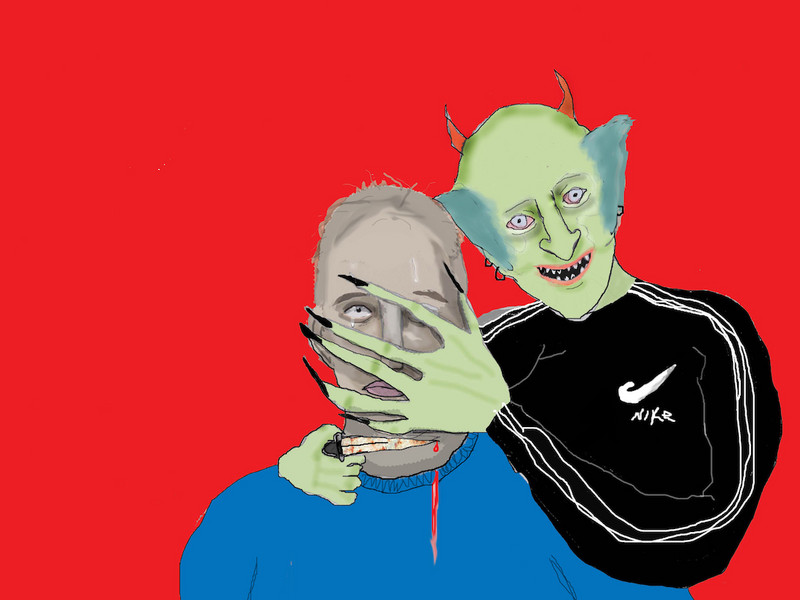
What are these creatures and where do they come from?
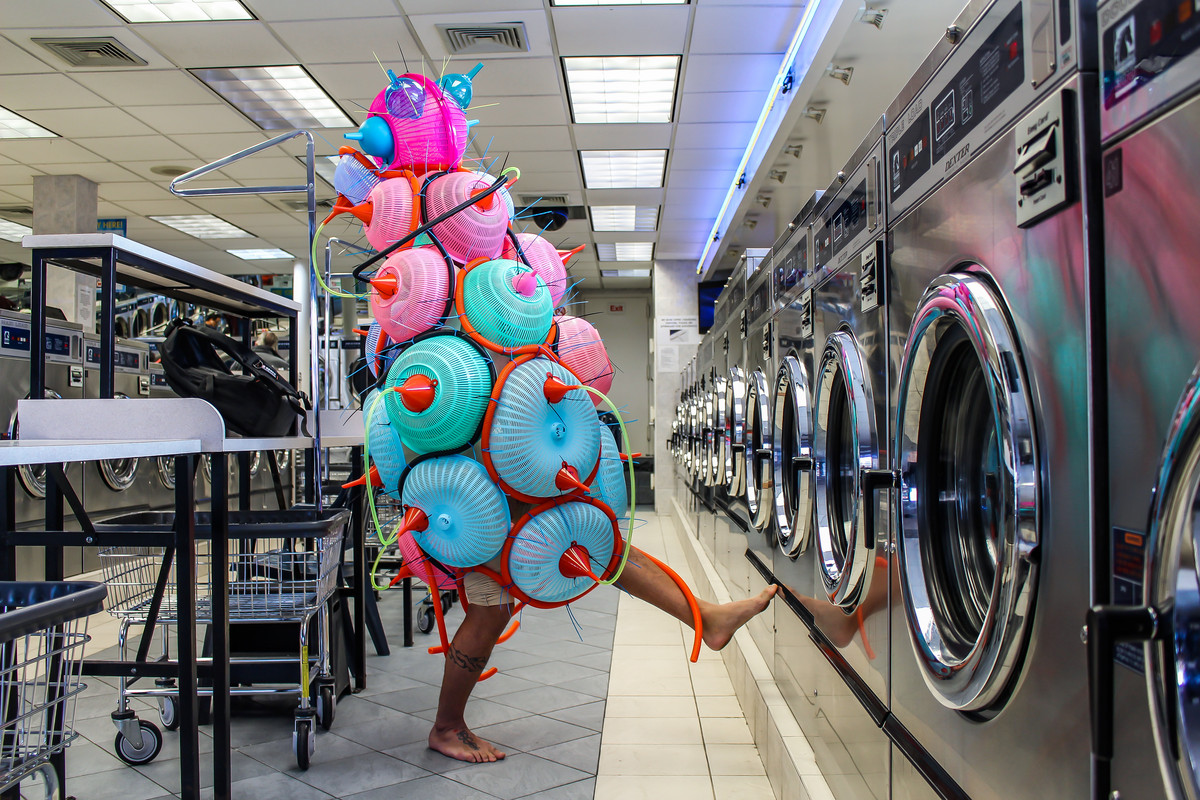
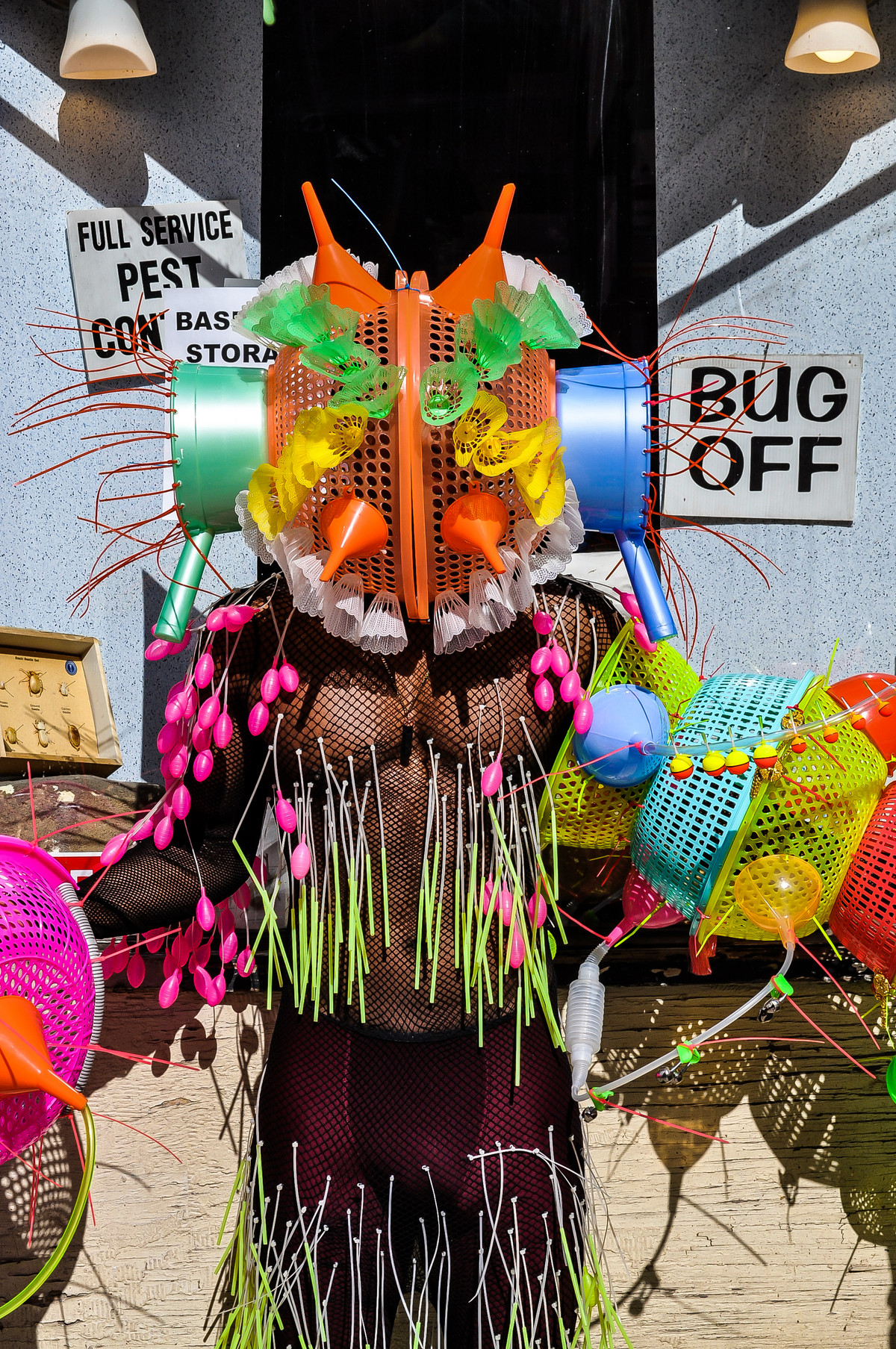
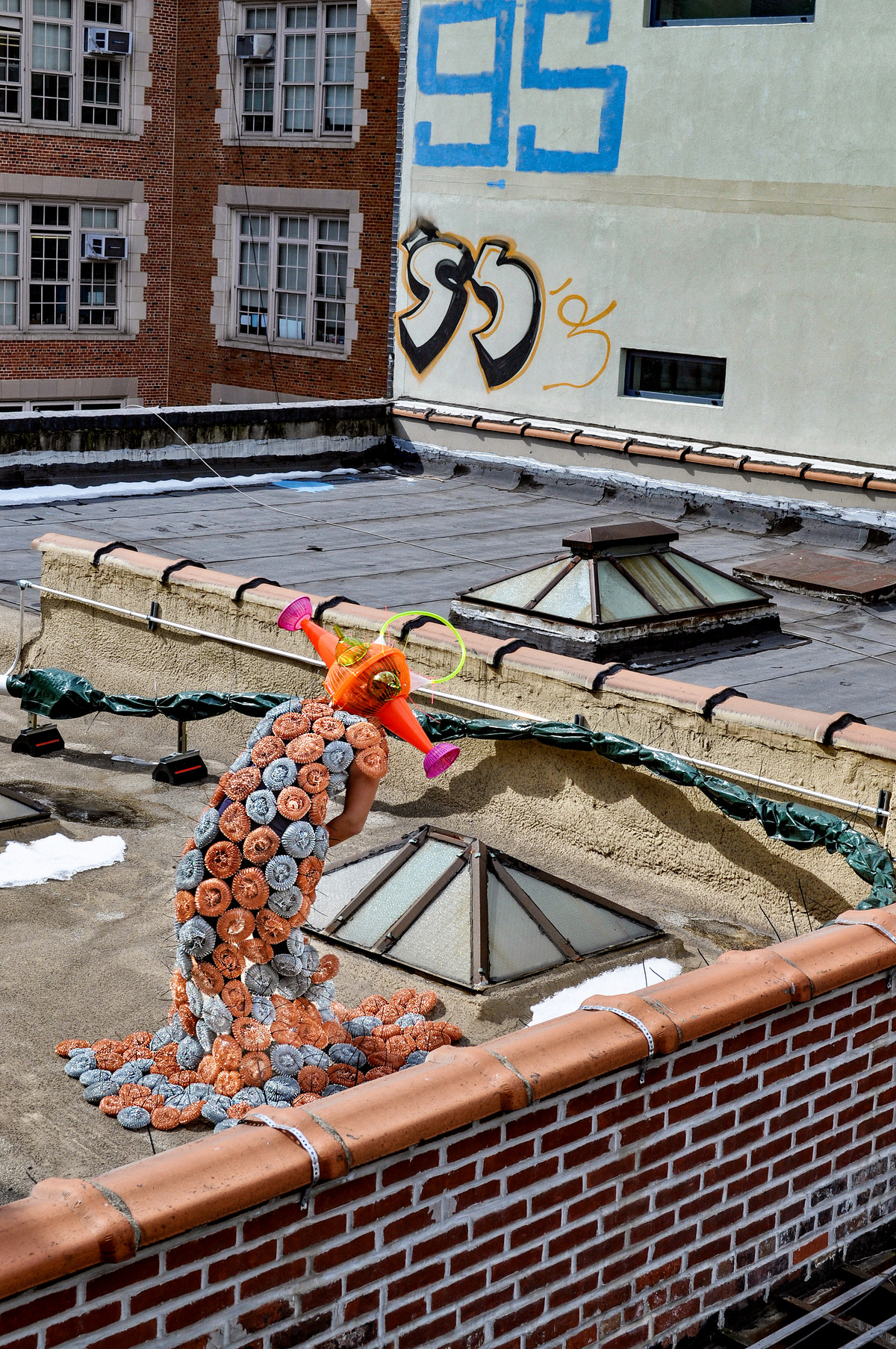
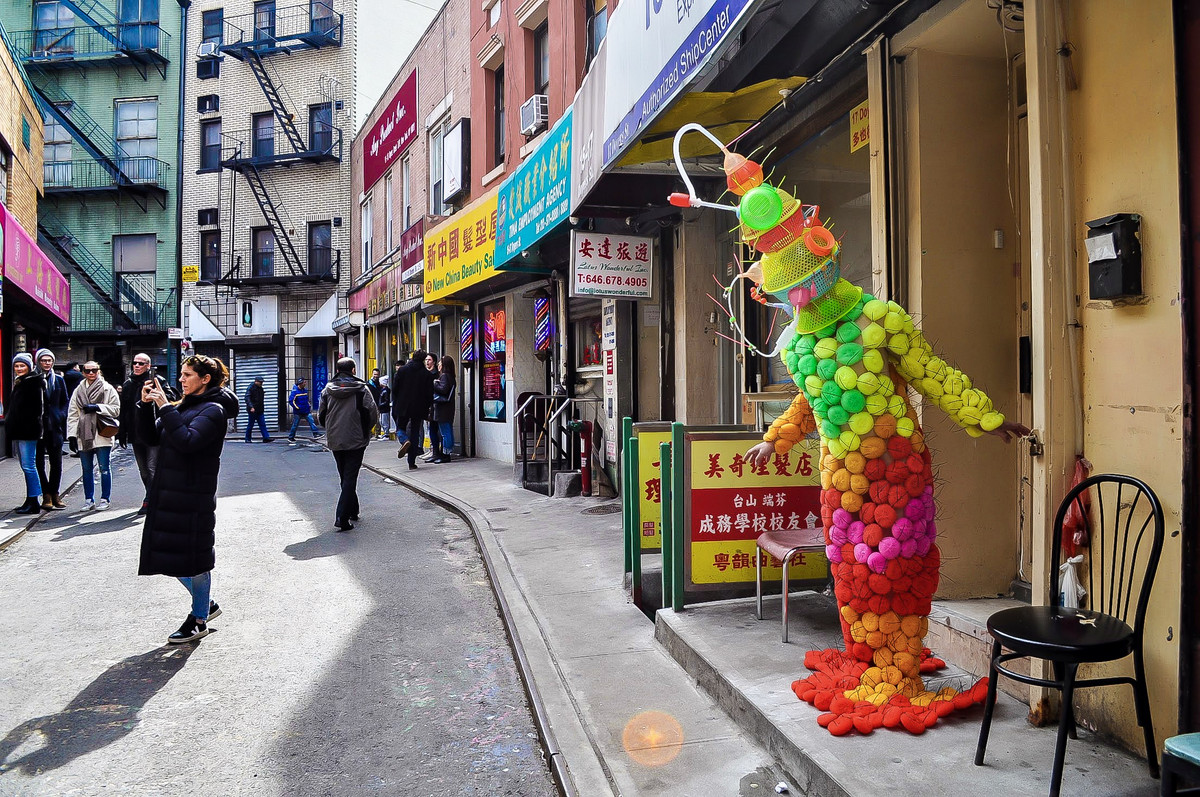
These strange characters came into being as a survival or adaptive response to living in harsh or new, unfamiliar terrain. They manifest through the accumulation of material culture scavenged from navigating through spaces that provide very specific functions like market and industrial districts, 99 cent stores, and recycling centers.
What is their purpose in life?
They simply try to make spaces for themselves in often disadvantageous urban conditions manifested in DIY retro sci-fi space suits meant for exploration as well as protection. In a way, their physicality is a result of how they respond to and what they find in their changing environments.


Above: 'Lu M'bhat at the edge of the world' and 'Venus of Jackson Heights'
If your imagination were a planet, what kind would it be?
A planet that has the crucial ingredients to support life. This life may be different from what is presented as the ideal, but it is a unique and beautiful life nonetheless.
How would you describe your wardrobe? your lifestyle?
Very practical and straightforward. I wear clothes that I don’t have to worry about getting dirty or torn due to my habit of constantly making things, lugging materials around the city, or climbing scaffoldings to install something.


Above: 'Lu M'Bhat' and 'Tug Li Bong Arguing With Sky'
Where did the materials to make these come from? How did you find them?
Initially I resisted traditional European art mediums because they were expensive, but also because I was exposed at an early age to how regular Filipinos transform everyday and often discarded objects into decor for their homes, jeepneys, sari-sari stores, and for the Christmas season. There is this inherent impulse for us to transform spaces as an extension of our need to celebrate life and abundance even though the majority of Filipinos live in poverty. I’ve since applied this principle of responding to what is available and oftentimes familiar.
If these characters could speak, what would they say?
That everyone has the capacity to transform and reclaim existing spaces for themselves in the same way that space explorers attempt to colonize harsh environments.


Above: 'Ma. Buhyan Crossing the Horizon' and 'Where am we'
Which is more important: art or life?
Art is irrelevant to life because life will always find a way, but if we’re talking about human life we’ll see that throughout human history we’ve always produced art, which makes one conclude that it is an enduring impulse for humankind because it is what fills the spaces between the practical functions of eating and sleeping.
All images courtesy of Alpha'a, a new digital art collecting platform, and Pintô International, a non-profit committed to contemporary Philippine art. Lead image: 'Ma. Buhyan journeys to the afterlife'.

office spoke with Berreau about the curation of the show and the impact of Davide Sorrenti’s photography today.


Tell us a bit about the origins of this show—why did you decide to do a curation of Davide Sorrenti’s work?
It all really began when I was editing Let’s Panic Magazine. Because I’ve known the Sorrenti’s for 20 plus years, I approached the family and asked them if we could run some pictures on Davide ... they hadn’t really been published since he passed.
I’d only seen a few of these works in some older issues of Let’s Panic.
Yeah, so with the family’s blessing I was lucky enough to go through the archive and do an edit and publish it. I always had a desire to maybe do an exhibition one day. Havana Lafitte, who was the fashion director of Let’s Panic at the time, founded this gallery and so when the time was right, she said, “I think we should ask the family if they would be willing to do an exhibition.” So that’s how this started. I really did want to focus on his personal work because I think it’s a little bit less known. He started working in fashion and most of his work that was published was fashion, but he had a camera with him at all times. There really was no divide between his professional work, even though he was so young and only beginning professionally, and his personal work. They were just married together. Francesca [Sorrenti] and I curated the show together and we decided to put in a splash of fashion here and there.
What would you like viewers to take away from the show?
Well, there’s a few things. Mainly how his work is still relevant. To me, that’s a sign of a great photographer— timelessness. Also, just to show what a special person he was, and how he was able to carry through his life through his images and his professional work. I find it interesting how someone who is so young…
The work is so mature!
It’s so mature, definitely an old soul, and I think that has a lot to do with the fact that he was sick as a baby and throughout his entire life. He had to endure things that most people his age don’t. So it gave him huge maturity.
What do you think the impact of his work is today? Particularly right now people seem to really like the style of work, I’ve seen a lot of inspiration from his style.
I think he was able to capture the moment in a very authentic, genuine way. Like I said, he always had a camera with him. It was just an extension of himself. This is only a fraction of the work, and that’s just in a two to three year span! And when somebody is taking pictures to that extent, there really is no division between the photograph and their life. And that’s why it really speaks to people today, that it is so real and authentic. And also he had such a wonderful sense of style, so there’s a lot of inspiration for this generation when you look at the clothes, and also just the way people hold themselves.
Even the colors…
His colors are so beautiful as well. He had a very specific palette. We did the best we could to print everything analog, which was at the time obviously the only way to do things and the way he did it. We stayed true to his medium.
What inspired the title of the exhibition?
The title is lifted from one of his diary journal pages! If you look at the door, that’s his writing. I thought it was perfect.


How did you select what went in the show? What aspect of his photography did you really want people to see?
Again it’s mostly the personal work. It’s endless! At some point we had to stop, I didn’t think there’d be this many images in the exhibition. But there’s so much work. We really wanted it to be a balance between his family, his friends, a tiny bit of fashion. Jamie was a big part of his life. So just trying to thread all of those elements throughout the show. Really show that he embraced everything in his life as one.
Yeah that’s what I’ve noticed about the show. Whether it’s a fashion picture or personal one, it always has his own touch that unifies the pictures no matter what the subject. It’s all under the same gaze I think.
Yeah! And with his family, he wasn’t really one to say, oh you know now I gotta go out with my family I’ll see you later, it was all together. All his friends and family hung out.
That’s so special, that’s something I’ve noticed about the Sorrenti’s in general. Gray Sorrenti for example, in her work you’ll see her friends and family all interacting as one—there’s no like, these are the adults in my life, these are my friends … they’re all so close knit.
They’re very close and they look out for each other. They all happen to be in the same business so it’s important to them that they give each other the right advice and stick together. They came to this country as children together, and Francesca was single so she had to figure it all out on her own. I think they really learned a sense of unity from that experience, and respect for each other.
Davide portrays this old New York that people talk about a lot today and are so nostalgic for, especially in light of the changes with Tompkins Square Park. What do you think it is about this kind of life that people, especially in photography, really long for today?
Well there was a lot more freedom before 9/11. I think that that’s the big turning point. New York City changes so quickly—it always has—and that’s something we all have to accept. We all have nostalgia, no matter how old we are, for the old New York. But I really think that 9/11 just sped things up tenfold. So it’s quite shocking to see the difference between now and 20 years ago. So yeah, I think people see a lot of freedom in his photography. I mean I experienced it myself in my twenties during the 90s and it was just a fun playground, you know? We had a lot more liberties than we do now.
Which work is your favorite and why?
That’s such a hard one. I’m gonna go with the heart selfie of Davide.
Mine too!
Because it’s him and I just hold that image in my mind whenever I do anything considering Davide. Davide was so full of love and made people feel so loved and special so it means a lot to me, that image. There are others that I think are aesthetically incredible, but as far as meaningfulness, I’m gonna go with that one.
What do you think makes a great picture?
That’s a hard one… it just has to speak to you. It has to be authentic.
Sincerity in the work is so important.
You can feel it. It’s true, you can tell.
Our Beautyfull Future is on view at 431 East 6th street through July 28th.

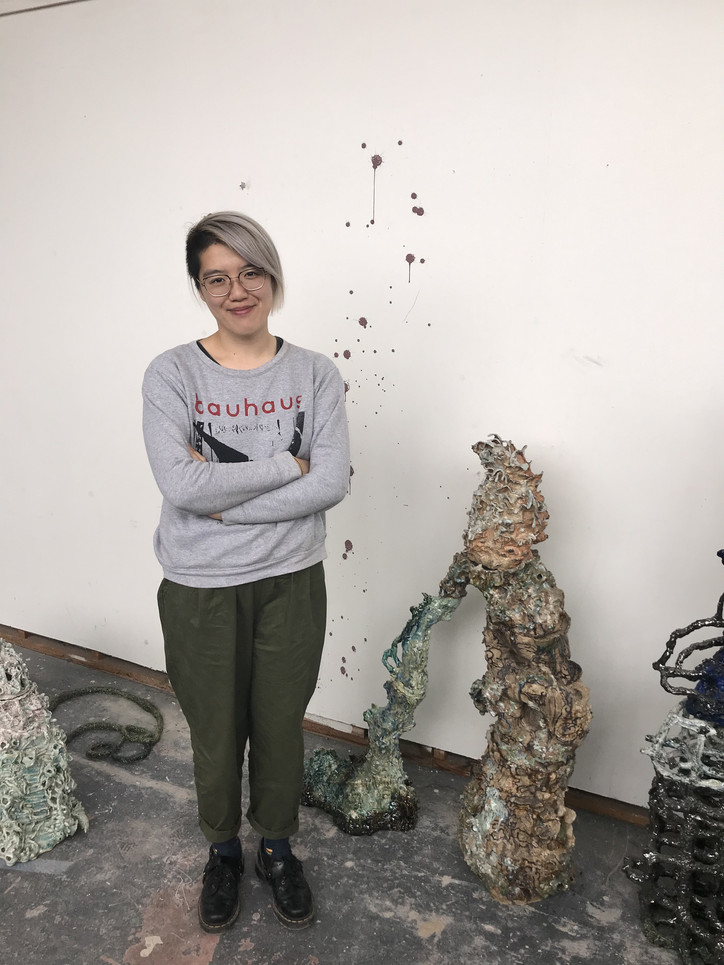
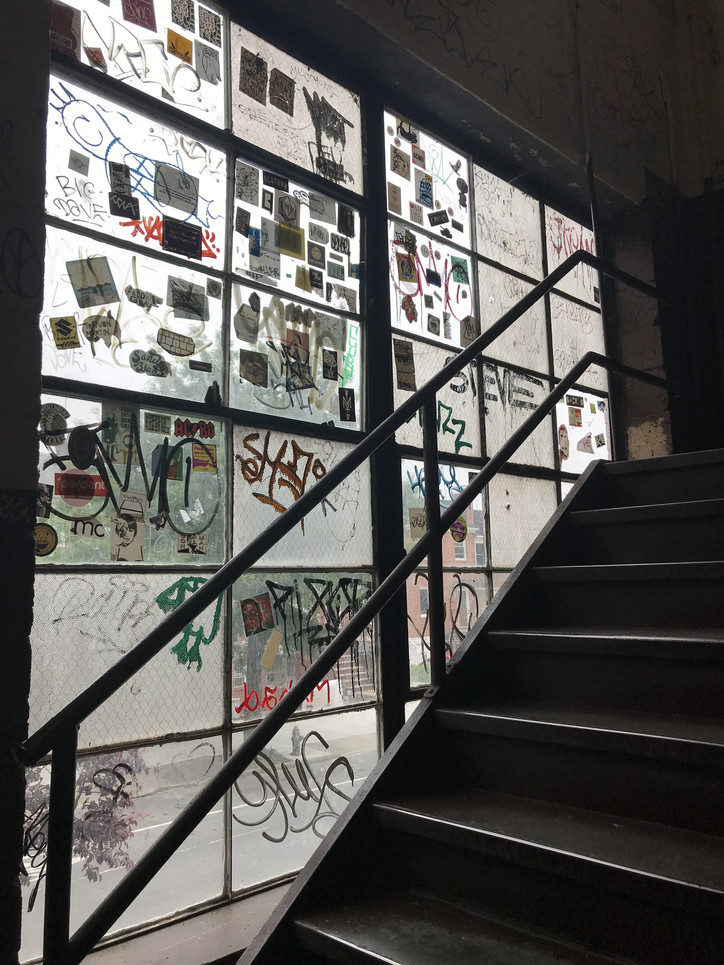
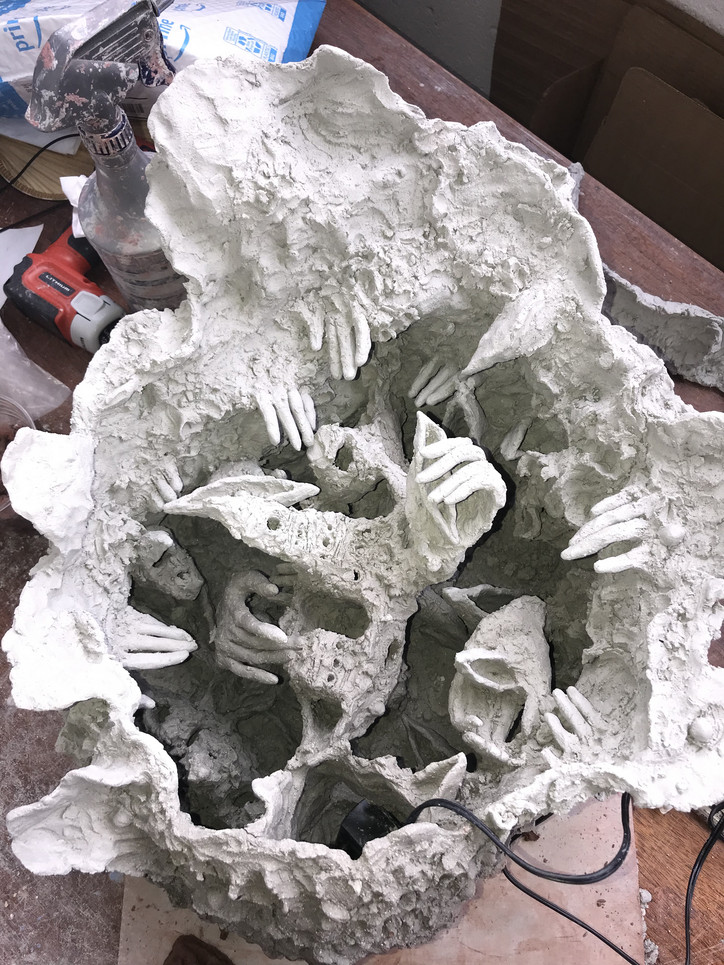
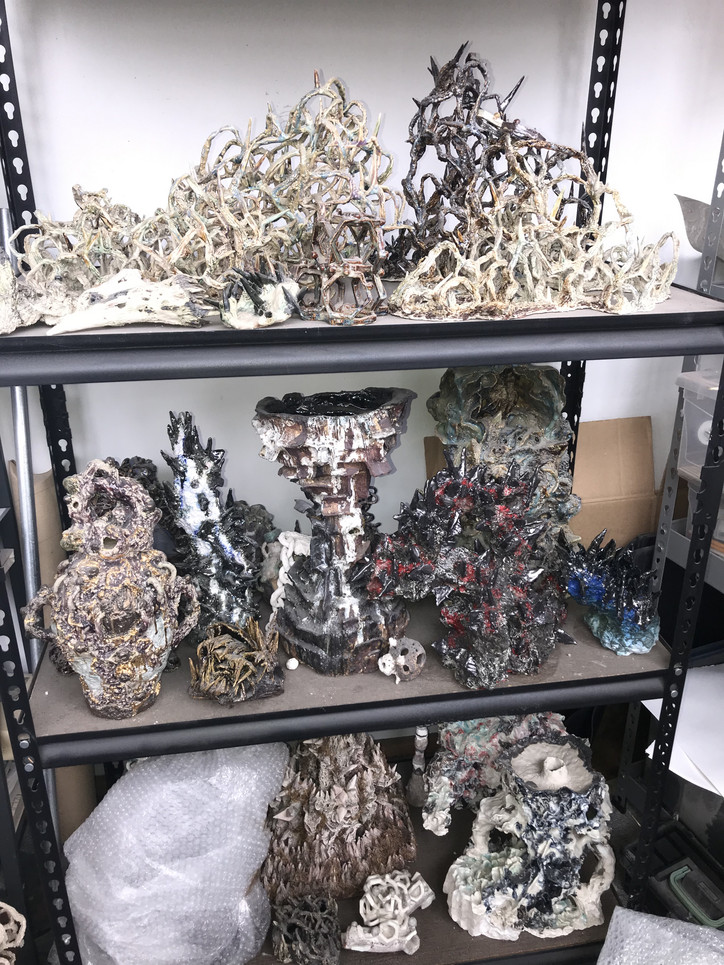
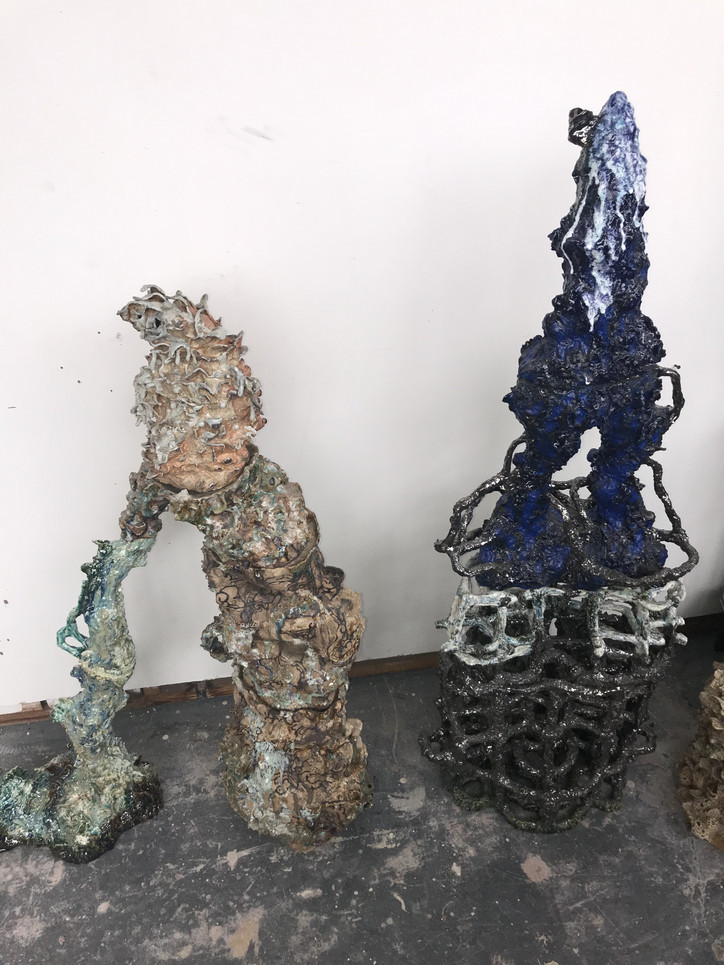
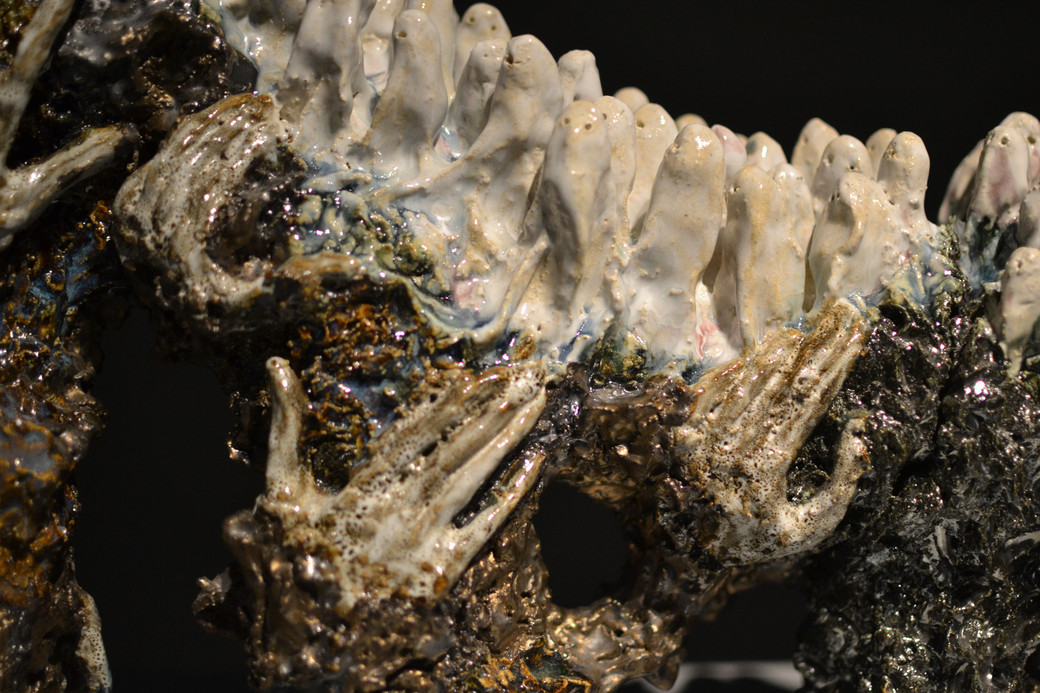
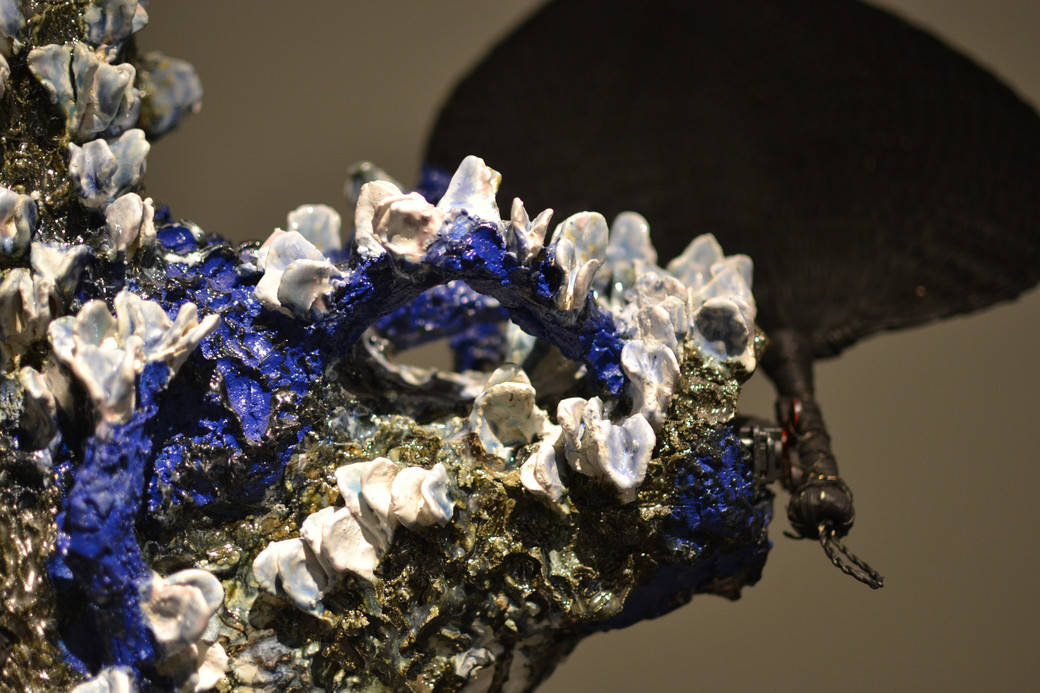
When I arrived at the address in Brooklyn, I was surprised at the sheer size of the building—an old industrial warehouse that occupied an entire city block, with patched-over windows and a foreboding brick exterior. Heidi Lau met me at the door and led me up a set of metal stairs and down a seemingly endless hallway, where distant sounds of art making could faintly be heard. Her studio was a lot like her: small, bright, unassuming, full of little surprises. Her sculptures seemed to listen as we talked about them, as if they might worm their way out the door the minute we weren’t paying attention.
Tell me about your work.
So as you can see, this is like my cave. I got my own kiln maybe four years ago, and before that I was sharing in a communal ceramics studio, and it was harder to make larger work, if you can imagine—because usually a lot of pottery studios are good for making fifty bowls, but no so good for making sculptural work. But I got the Joan Mitchel Foundation grant and that’s when I decided I needed to take it to the next step. So, this has been where I make everything for four years. Everything is hand-built here, and I don’t actually use that many tools, other than this little awl. Everything is basically made by my hands. I guess I can talk about these two things I got back from MAD [Museum of Art and Design], the Burke Prize show.
I love the MAD Museum, they’re like my favorite museum, because nobody knows it’s there.
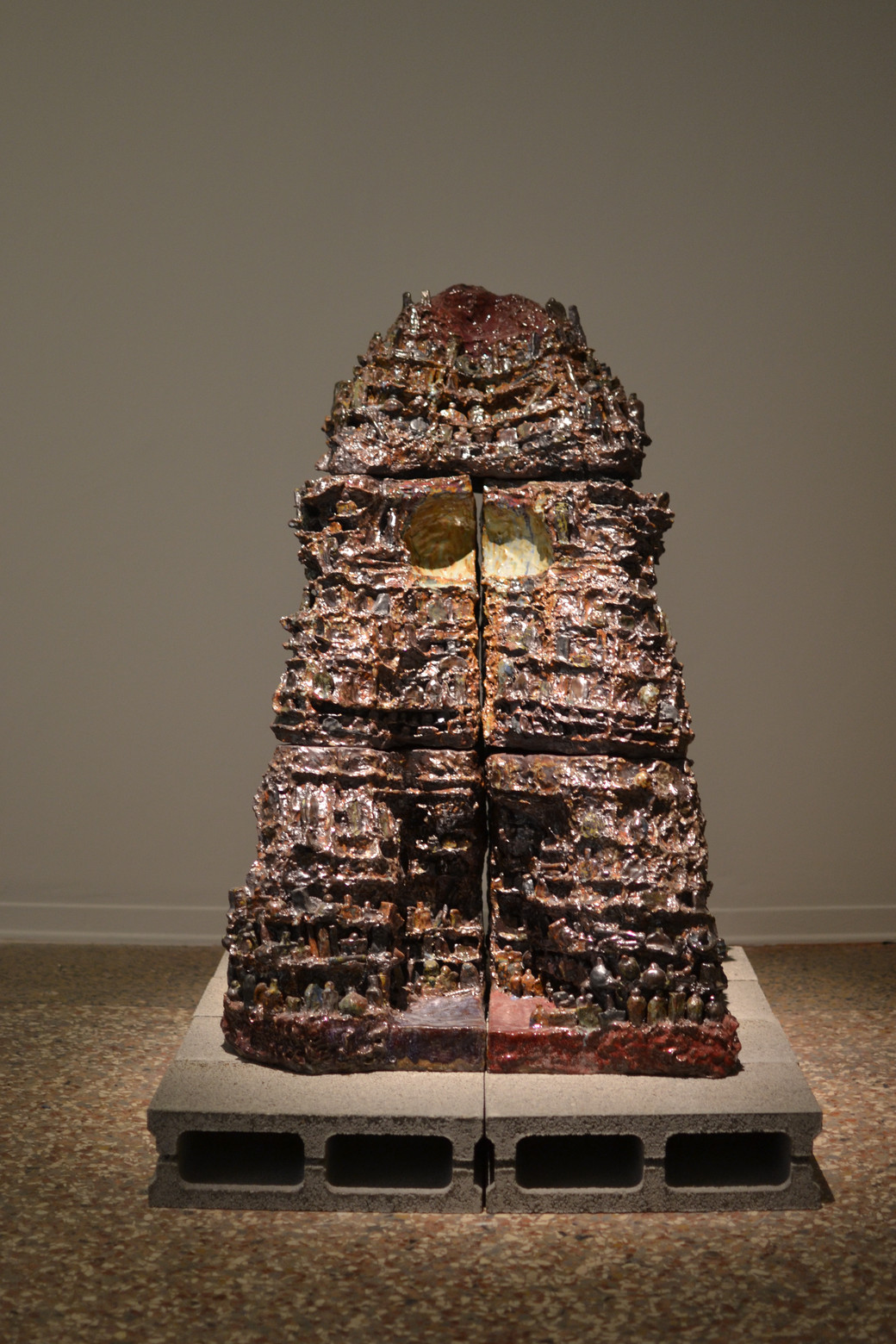
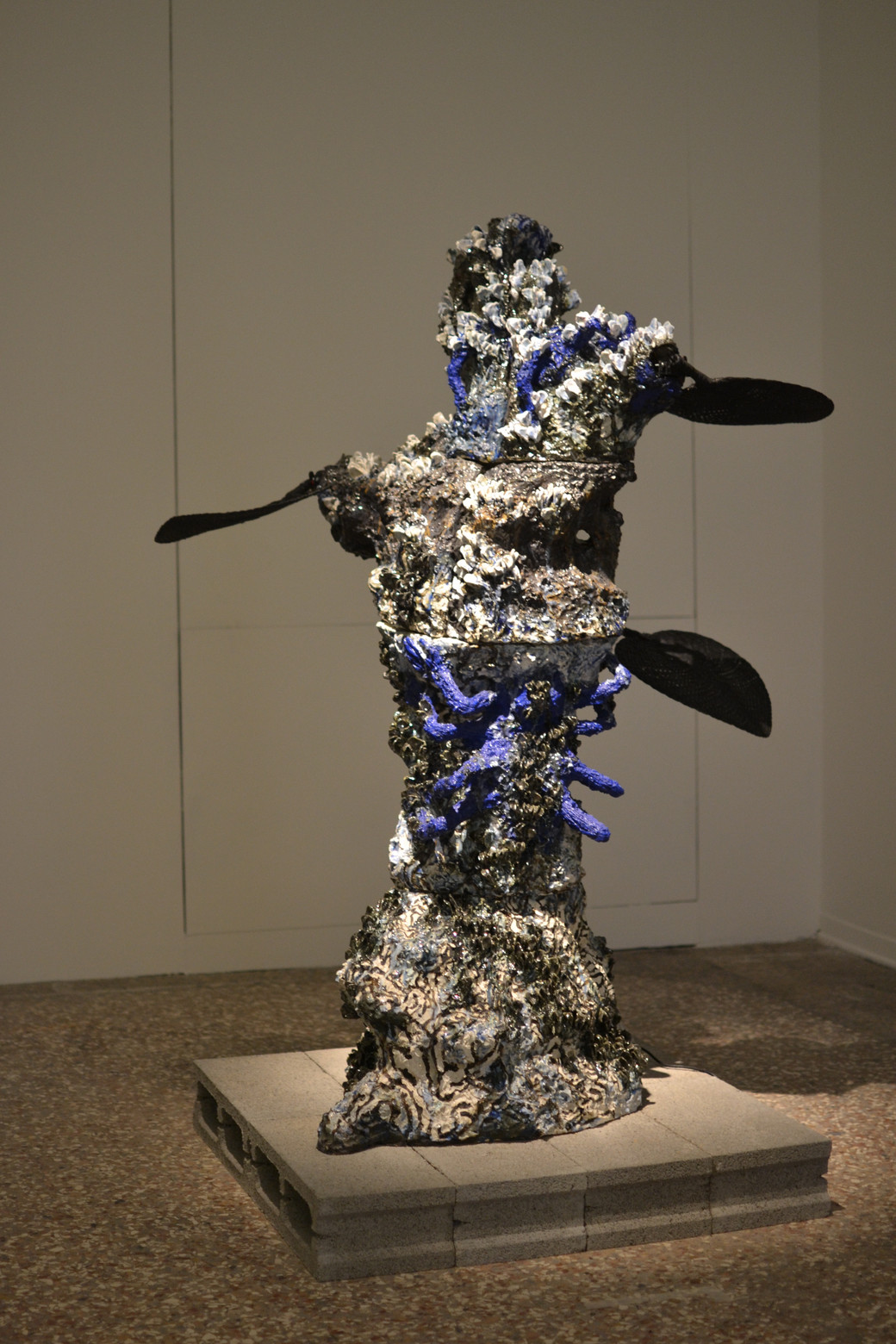
They always have really interesting work. It’s kind of crazy, they started doing this thing called the Burke Prize, which is a $50,000 grant for anyone that works in ceramics or craft-related, so the Burke Prize exhibition is the 16 finalists, so I was one of the finalists, and these two pieces were showcased. I guess a lot of my work is inspired in many ways from growing up in Macau, where I’m from, my family was and still is very Taoist, and very superstitious. I always remember the first memory of going to a temple with my grandma and her telling me, ‘This gatekeeper of hell is your great grandfather.’ I guess she was really sick as a kid, and then her parents did this Taoist ritual on her so that the gatekeeper would keep her out—that story really stuck with me in many ways, it’s this strange familial connection to the underworld, or just things you cannot see. I guess this arched piece is sort of based on imagining my grandma going through an arch-like doorway into the underworld, but also returning from the dead as well. I was reading a lot of Taoist literature on the descriptions of hell, because there’s actually eighteen levels, so it’s dependent on what sin you have committed, you’ll be thrown into a different level.
Now is it a similar concept to Judeo-Christian hell, like it’s a place strictly for punishment, or is it hell as in just the afterlife?
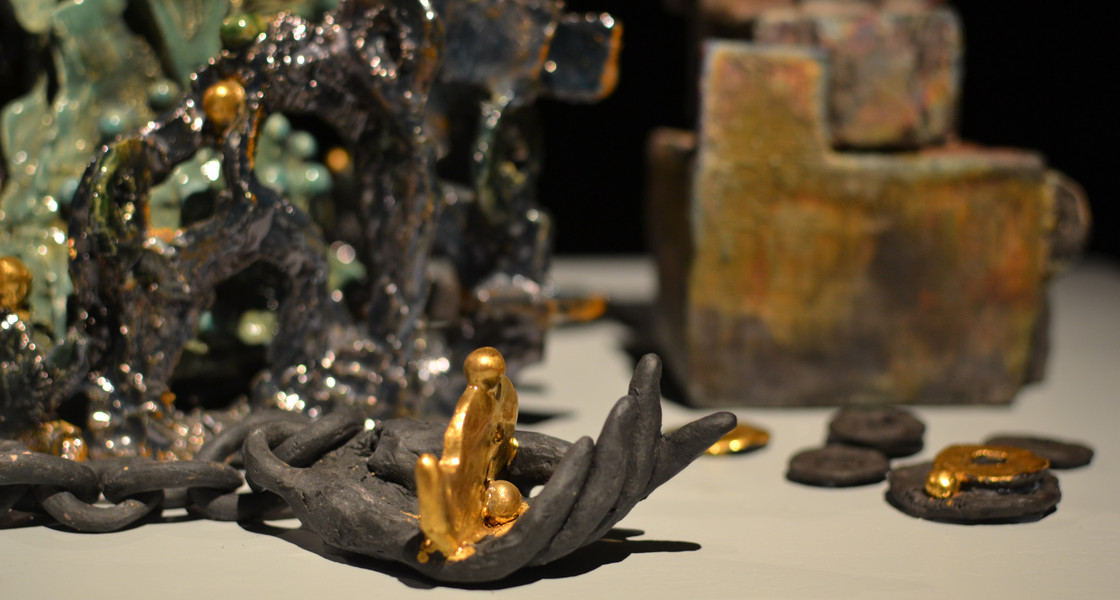
It’s just the afterlife. There’s no heaven, it’s just the afterlife. And you can leave, you have a choice to leave. Actually I did a piece in the Socrates Sculpture Park a few years ago, I made this grotto based on this idea where at the end of hell there’s a bridge and an old lady who serves you a bowl of soup to erase your memory, so that when you pass on, you don’t remember. But there are a lot of spirits that get stuck there, because there are things they don’t want to give up, so they would rather be in hell forever, and it’s kind of like their bodies start merging with their environment. So that enters a lot of my work, it’s like anthropomorphized environment—people have turned into their environment because they have been there for so long because they couldn’t get out or didn’t want to get out.
So where does the bridge go?
That’s so you can be reincarnated.
Ohhh. So the spirits that choose to stay, they don’t want to forget their life.
Yeah, so they would rather be in hell forever.



Above: Lau in her studio; staircase approach to her studio.
They’re holding onto their memories.
Or they’re waiting for someone.
It’s kind of romantic.
It is romantic. But also it’s like forgetting is worse than not death, but…
It’s a second death.
It’s very powerful to me. So much of my work has to do with memory, and the stories that my grandma told me about herself, and then me using that material to make something that wasn’t even true to begin with or had never existed in the place.
They’re almost little depictions of the underworld.
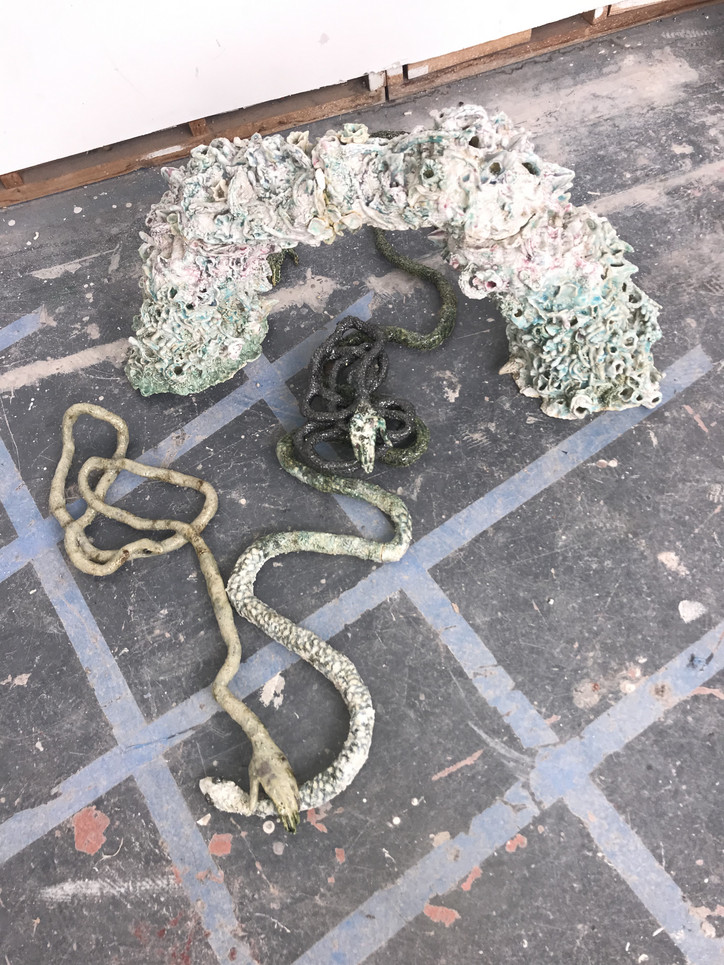
Definitely. It’s like a snake that has turned into a body limb, maybe at one point he had a whole body, but after a millennia, only what you needed was left.
It’s almost like they’re merging with the Earth.
Yeah. And they’re shedding maybe what they don’t need.
You know what they look like to me is coral. Do you get that a lot?
I do. It’s not necessarily conscious, but when I make work I do think a lot about dump sites and things that people had gotten rid of. It’s also me bringing in Macau also, because I grew up in a colonial time, and then Macau became a part of China again. So during that time there was a lot of social and identity upheavals that I feel like a lot of things were torn down to make way for new developments, and new urban policies—which is also when the casinos came in. I actually lost the house I grew up in at the time, so sometimes I feel like I’m imagining this wall that I had stared at a million times, being at a dump site by the water, it eventually will become a clay. It’s totally a material fantasy, but I think about decay and rebirth a lot.


Above: Studio views.
It’s like ashes to ashes, dust to dust. Everything is essentially the same material.
It’s also kind of works with the idea of reincarnation.
I’m not too familiar with Taoism. Do you still practice Taoism?
My grandparents were the ones who were really into it. It’s so stereotypical—my dad was really nihilistic, he’s a pragmatist, so he was like, my daughter is not going to practice anything. I think that’s why my grandma and grandpa would sneak in a believe system, little stories about how they honored the dead, and what a funeral’s function was in family and also in society. I’m trying to learn more about it, but I haven’t practiced it—except in funerals and weddings.
It is so interesting to think about the power of stories and family, especially in China, right? It’s really intense in China.
It’s almost political. Because of the Cultural Revolution my grandpa settled permanently in Macau because he couldn’t practice Taoism, because Communism is atheist—anything supernatural or spiritual is considered anti-progress. It makes you not want to be a useful part of society. Even now all the religions in China have to be officially permitted, it’s a very strict process. That’s not so much in Macau and Hong Kong yet, because they’re still special regions—we could still bury our dead, we don’t have to have them cremated, we could still have a Taoist funeral, there’s still a little bit more freedom. In the rest of China you have to be cremated because it’s the most efficient and non-religious way to bury a body, it’s an official thing. If you live in a very small town and did it on the DL, you could probably get away with a burial, but officially cremation is the state regulation.
China blows my mind.
I have a complicated relationship with it.
How long have you been in the United States?
I moved here for school in 2005. So a while.


Above: Studio views.
Do you feel your work reflects on your time here, or is it kind of a looking back at your time in Macau?
I think it’s a lot of things. I’ve always tried to identify as an artist from Macau as much as possible because our culture is already so invisible—for a city that has such a rich history and has been around for so long, when you hear about it now you just think, ‘casino.’ A lot of the press I’m reading now at the Biennale, that for political reasons Macau and Hong Kong and Taiwan can only be collateral exhibitions inside the China pavilion. Macau has been a colony for over 400 years of Portugal. Then after 1999 it became a part of China again, similar to Hong Kong.
So tell me about Venice.
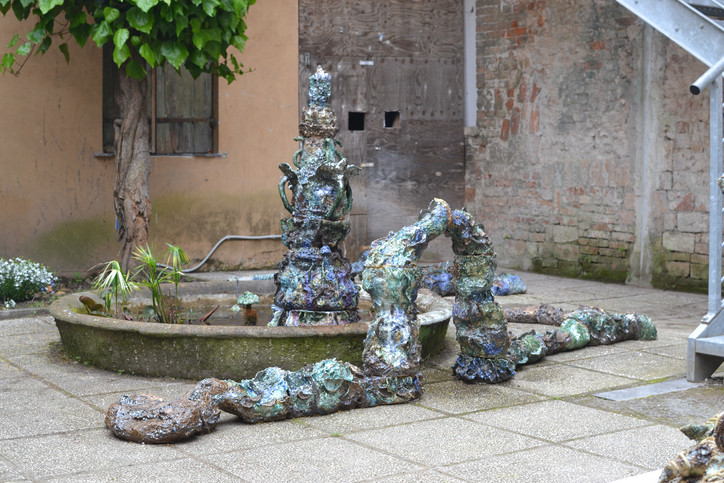
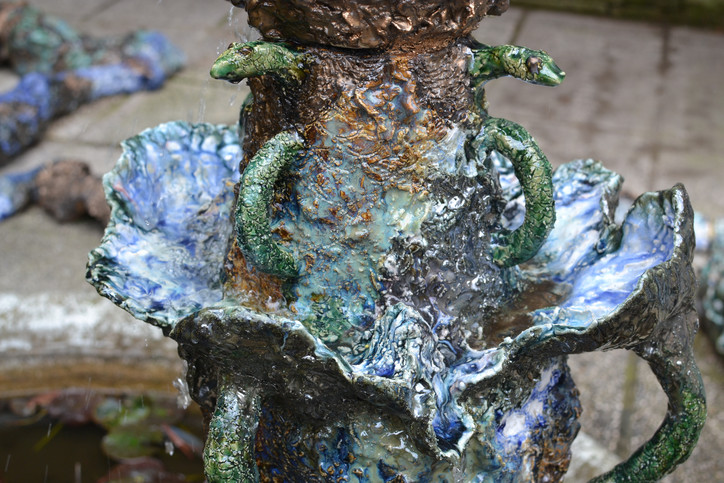
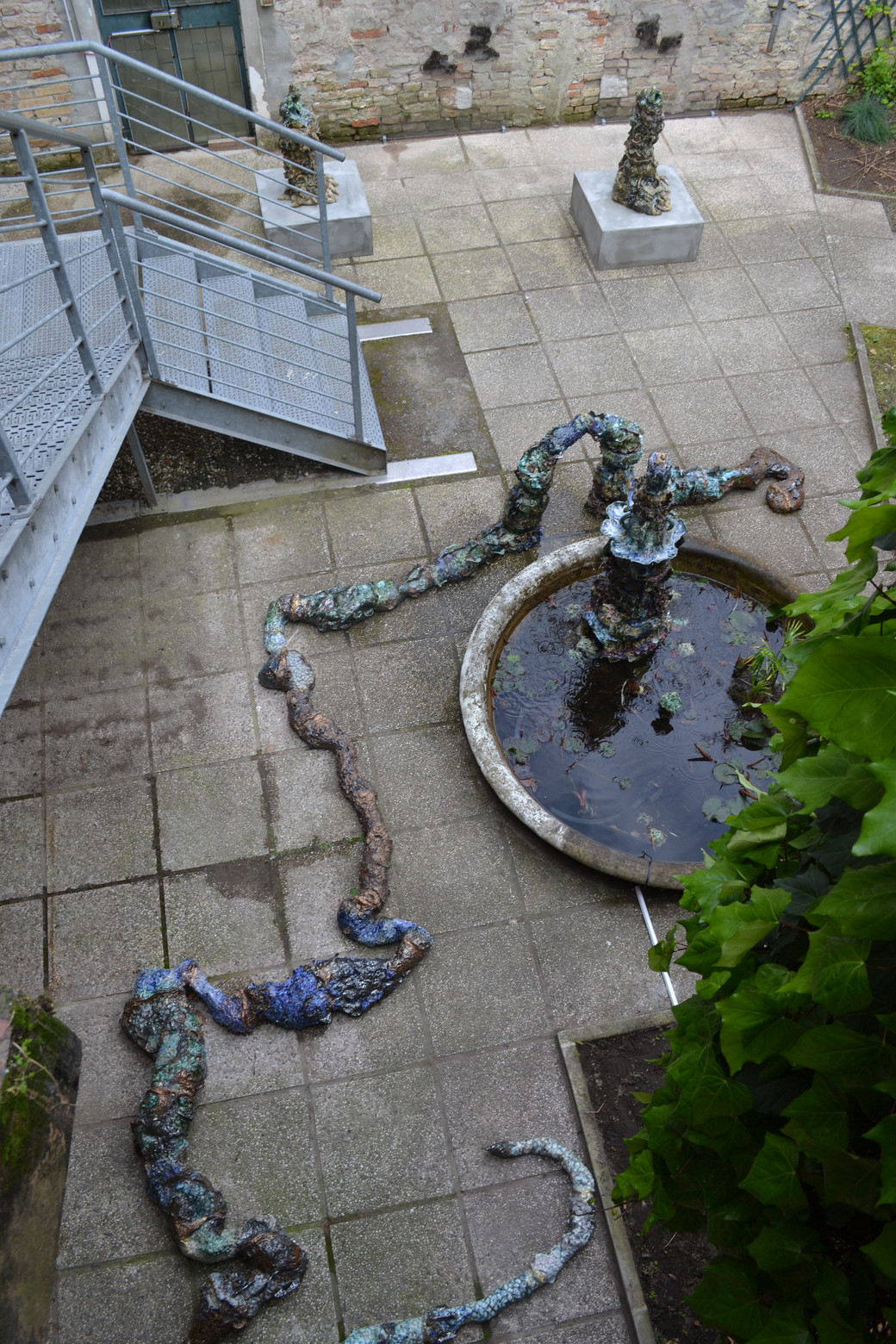
It’s in a courtyard—after we saw photos of the space, it reminded me of an older building in Macau, this courtyard isn’t Portuguese but I feel like a lot of European buildings have a garden and a fountain similar to this. So it reminded me of buildings I had seen growing up, and I wanted to create a mythical corner when you walked in. So this fountain with the pond already existed, but the snake itself we created.
Now is your work a part of the functioning fountain?
Yeah, we made it for the space. The form itself is based on this Taoist snake goddess, Nüwa, it’s kind of a creation myth—she had slain a giant turtle and used his legs as columns to support the sky from falling, which I’ve always felt was a great feminist story.
It almost looks like it’s melting.
Oh good!
Like it looks as if it’s crumbling. But you said you were interested in decay.
Eventually the snake goddess’s body decays and becomes the Earth that we inhabit, her body became mountains and terrain. So I feel like when I was coloring the piece and working on the glaze, I was thinking about a landscape changing, or an energy that’s powerful enough that it changes a landscape. So it makes sense that it looks like it’s melting.


Above: Views of Lau's work at the Venice Biennale.
Almost like it’s fusing with its surroundings.
Totally. It’s also just perfect for the material of clay, because it does go through 2000 degree Fahrenheit heat in the kiln, it’s a very transformative process. These other pieces are like the turtle legs that the Nüwa used as columns. I like the pieces to look both architectural and like they’re a part of a landscape. When you enter the space, we included a quote from a cultural critic in Macau, Zhidong Hao, which says, ‘Not only are those from the outside unable to see Macau, the locals are also unable to recognize themselves.’ It’s because Macau has been under very dominant narratives for so long, I feel like it’s hard for us to imagine our identity in some ways. I don’t know this, but this was an open call put out by the Macau Art Museum for a proposal to exhibit in Venice—so when my curator and I started thinking about it, we thought this was actually perfect timing. I think my work has always been about Macau, but not in such an obvious way, but this felt like a good time to think about how Taoism fit into Macau identity, as well as a chance to look at a lot of folk beliefs that are so important to our culture but that you don’t hear about or necessarily associate with Macau.
Now what’s going on in this other room? The Recreation Garden?
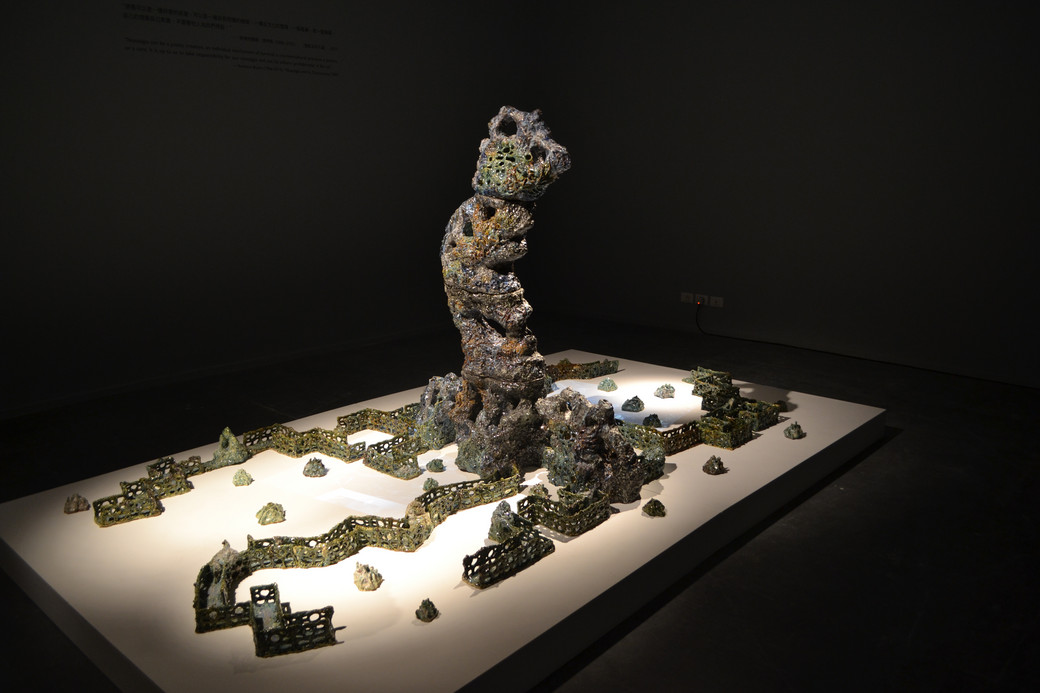
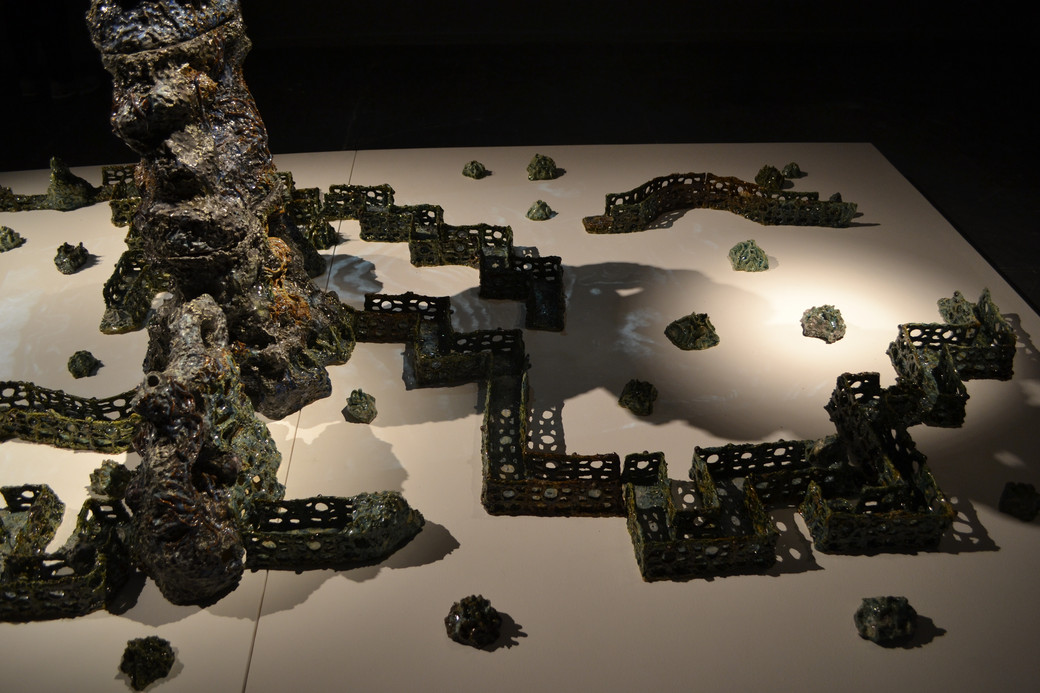
So this garden I constructed from memory, but it’s based on a garden that was built by the first casino owner in Macau in the twenties. Ever since 1999 we had an explosion of casinos going up in Macau, which has caused a lot of social and space problems. But at the same time, that’s why people know about Macau, it’s a bit ambivalent. I was trying to think about the urban space in Macau and the things that had influenced me as a kid, and I was kind of shocked to remember that a garden like this that nowadays local people just go and do Tai Chi and play chess, but it has a history where it was founded by a casino owner. I feel like when we talk about casinos now, it’s always about capital and progress, but the thing with this particular casino is it completely failed and he ended up hanging himself in his estate. So in a way, this has become his ruins, his monument, which now we use and don’t even think about the origins.
It’s almost like a casino of the underworld. So it’s like a garden with a little maze?
It’s accentuated, but it’s a Suzhou-style garden, where it turns around nine times—I don’t know why that it, but it’s a style of bridge. So imagine the negative space below is water, and you walk on a tiny bridge. This is really accentuated, it’s kind of from my imagination.
You should add a water feature.
I’d love to make it into another fountain. Another part of this garden was it had a theatre for Cantonese opera, which my grandma used to be an amateur singer—I would hear her from the kitchen. For this accompanying piece, I worked with this singer in Chinatown to record a song my grandma used to sing—so this actually has a speaker inside, and it plays this song called ‘Song of Exile.’ A lot of Cantonese operas, the stage is very temporary, the foundation is made of bamboo sticks, so this is kind of based on that. To me, it’s almost skeletal—they would put really colorful fabric on top. I imagined it to be like a stage, and also like a small birdcage.
It seems like you use the skeletal trope a lot.
I like imitating building materials, like the bamboo sticks, or the arches.
Above: views of Lau's work at the Venice Biennale, images courtesy the artist and the Venice Biennale.