PRESENTE CONTINUO: the intimate ties between then&now

Starting May 30, PRESENTE CONTINUO will be available to purchase on presentecontinuo.com, cpcompany.com, and at the C.P. Company flagship store in Milan, Corso Matteotti 7.
Stay informed on our latest news!

Starting May 30, PRESENTE CONTINUO will be available to purchase on presentecontinuo.com, cpcompany.com, and at the C.P. Company flagship store in Milan, Corso Matteotti 7.

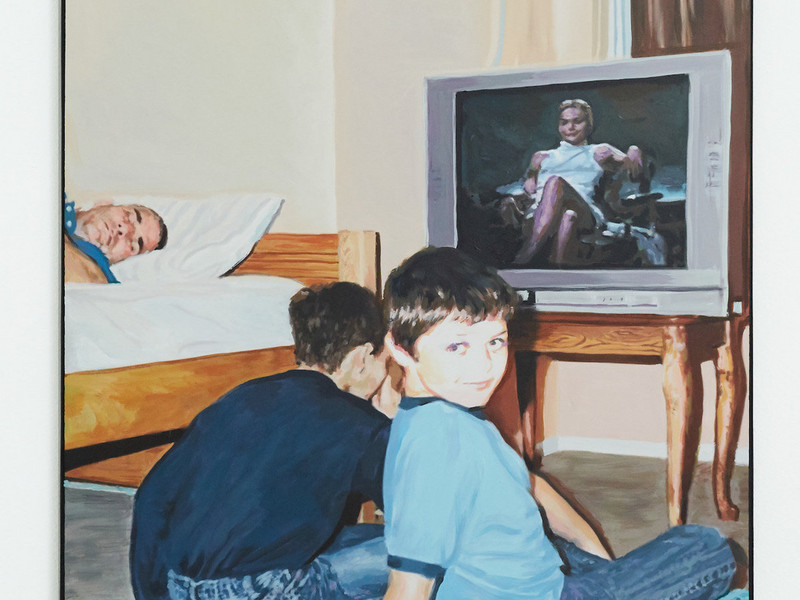
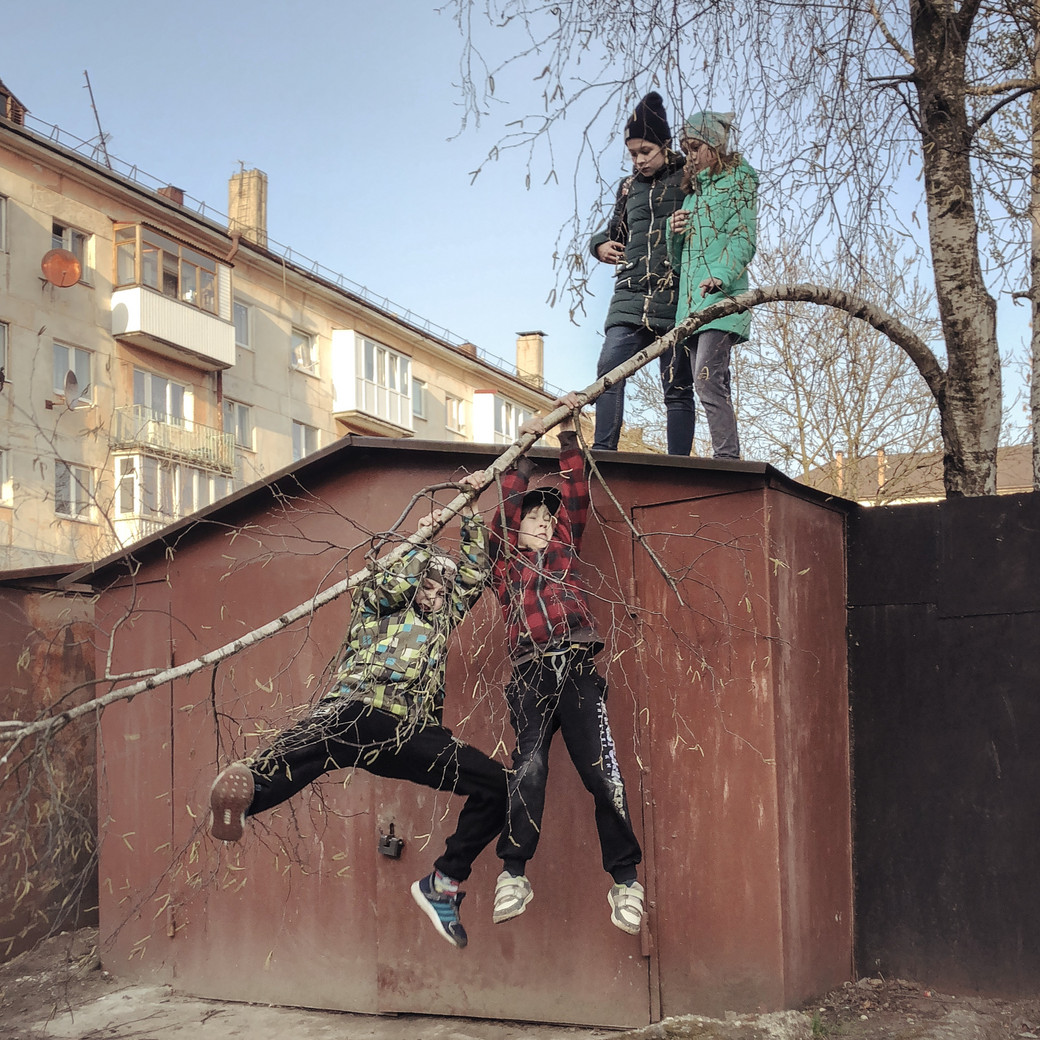
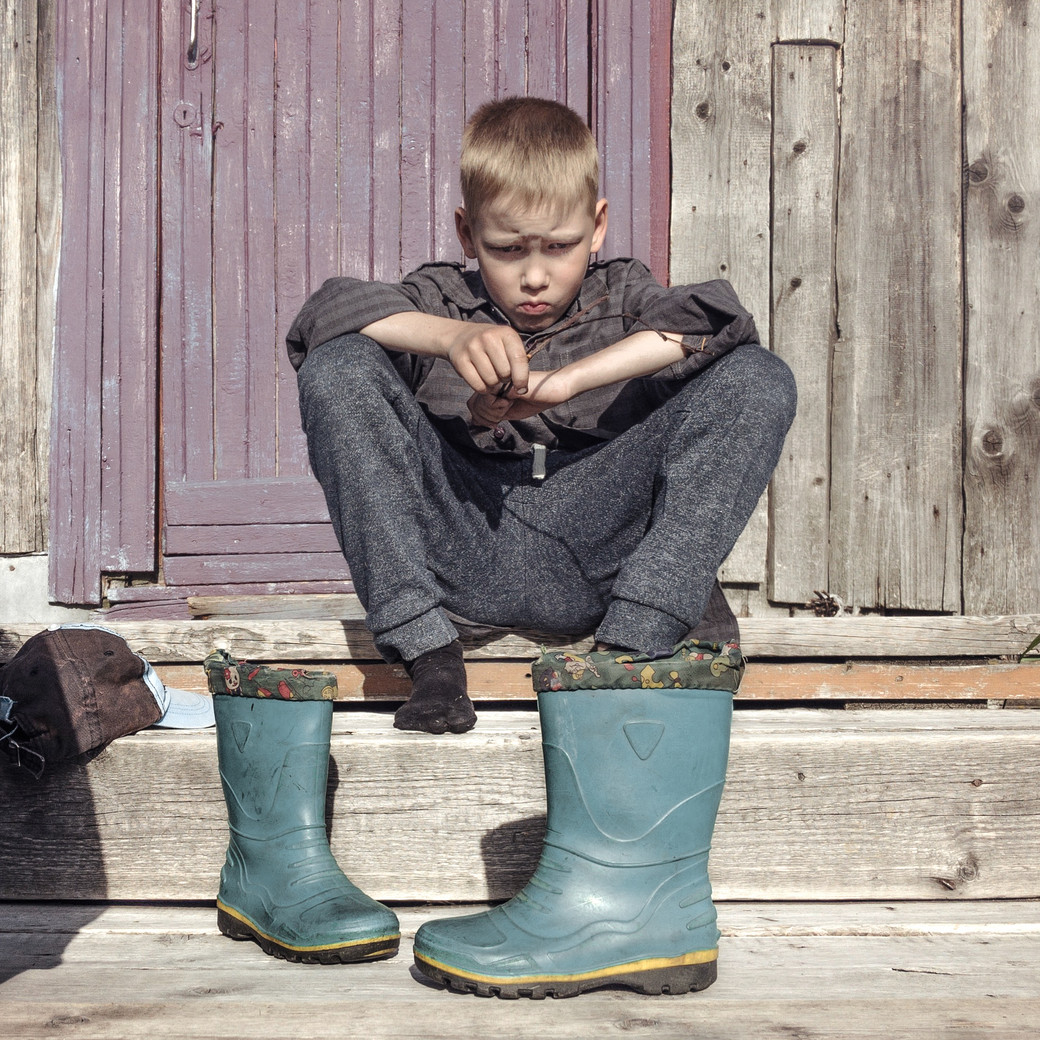
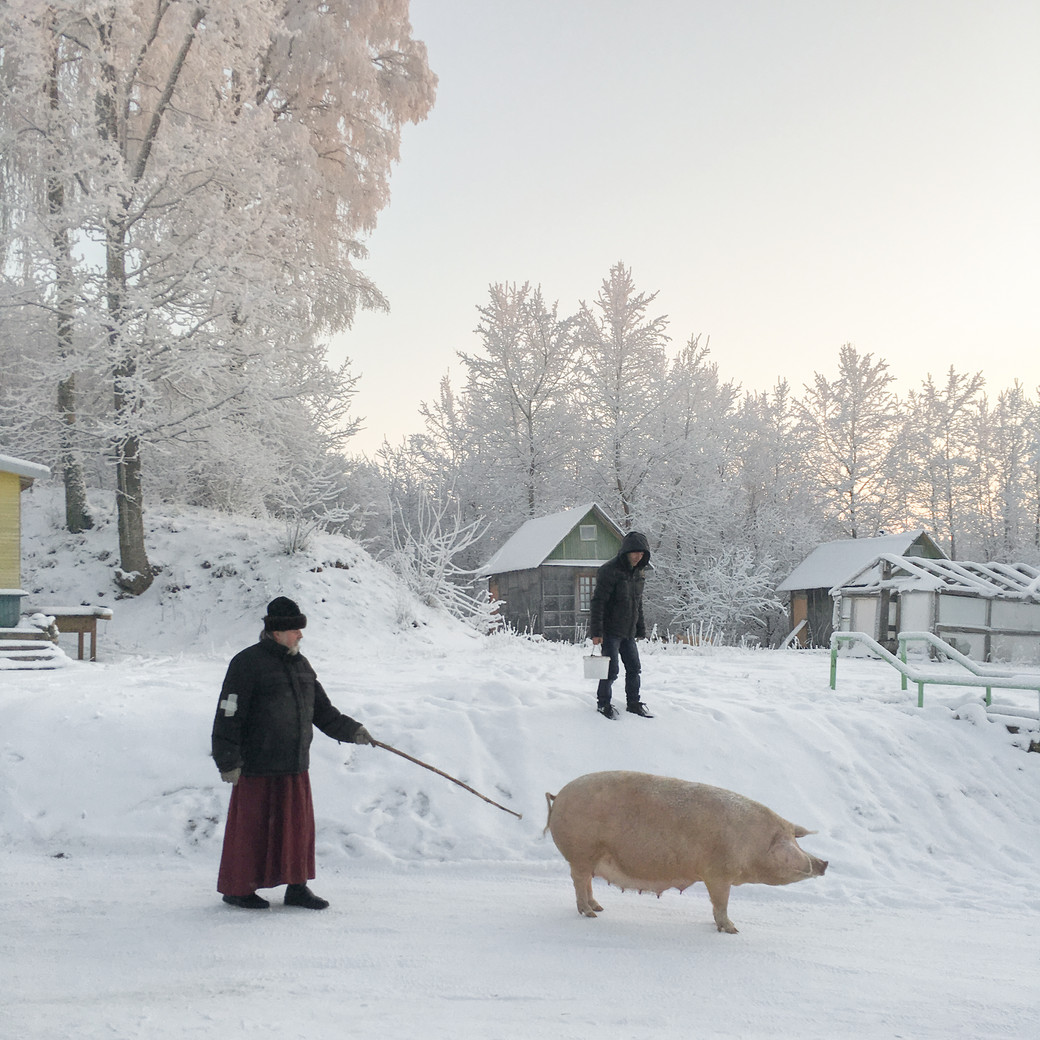
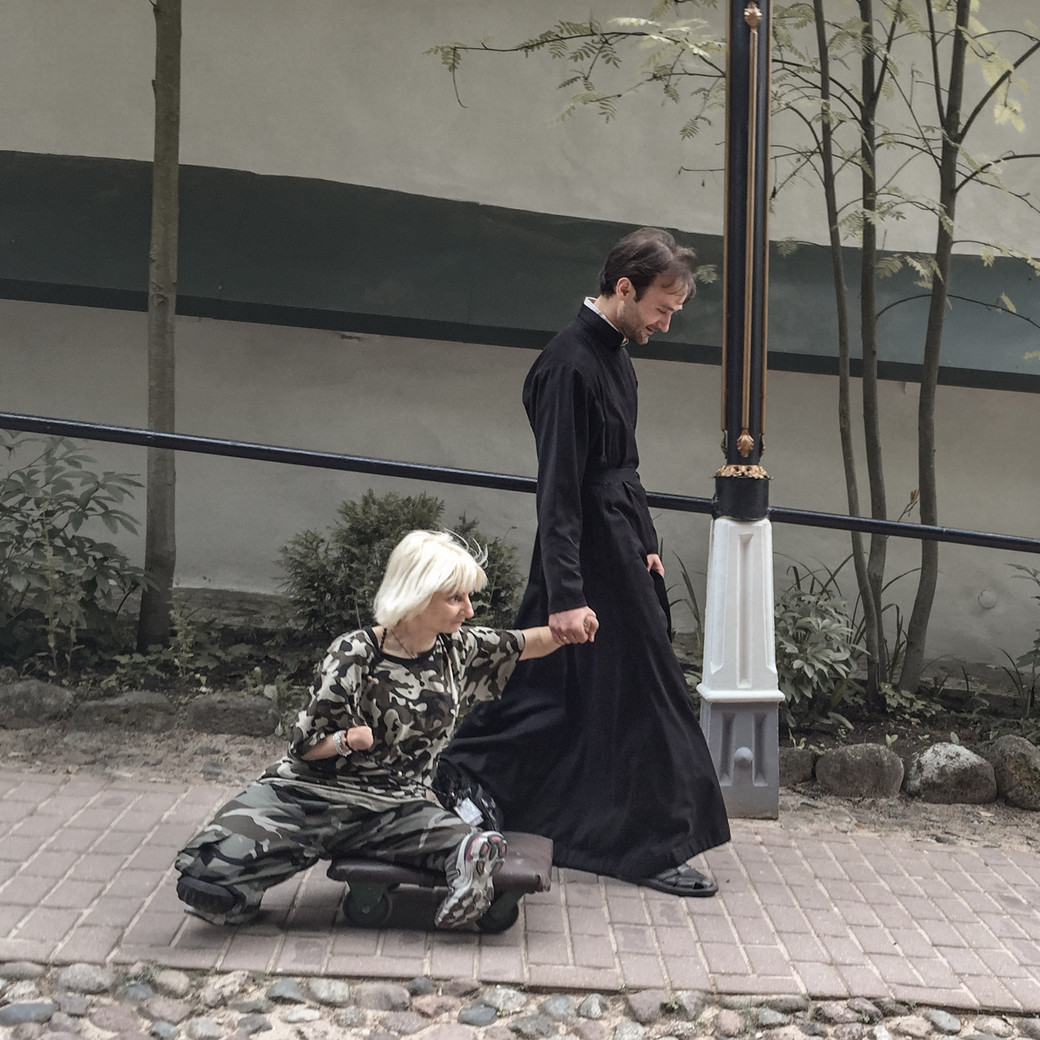
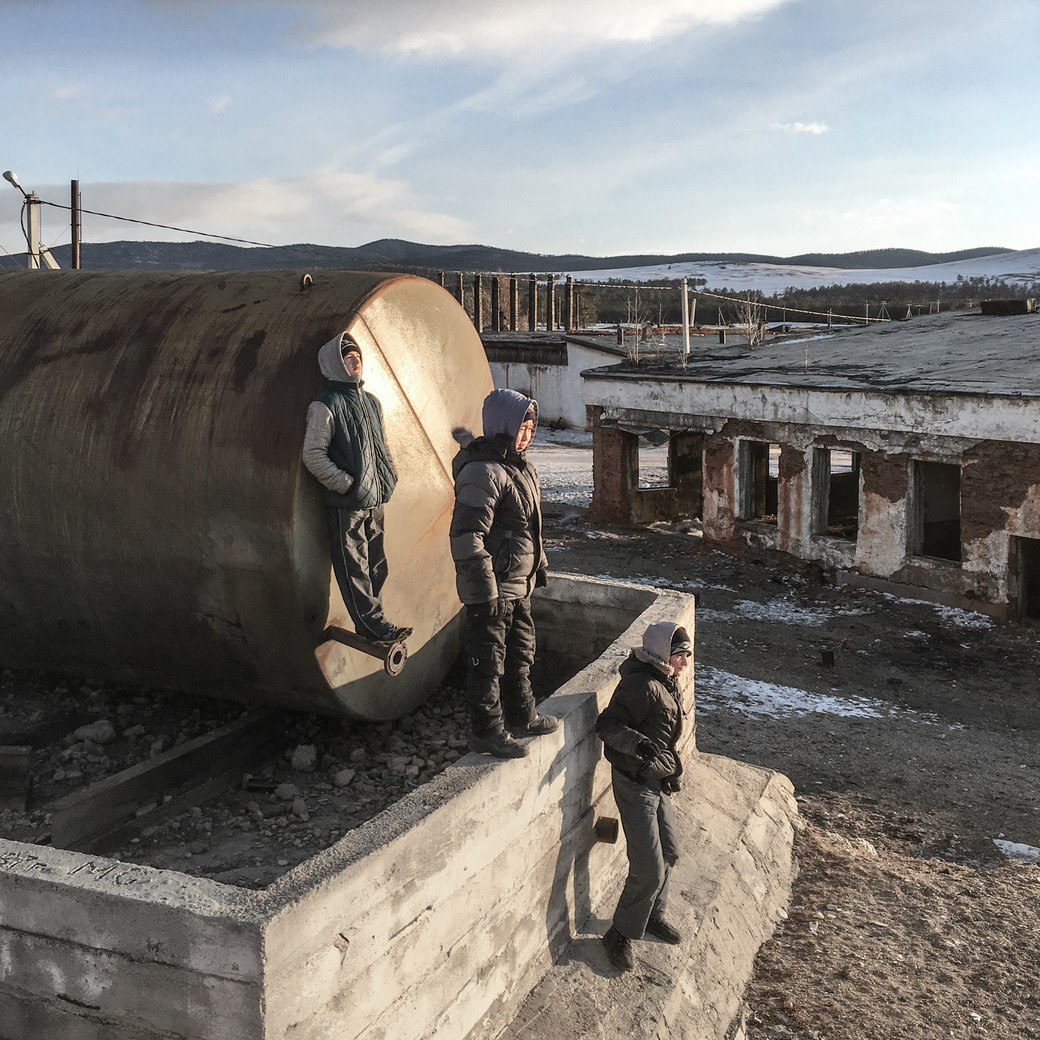
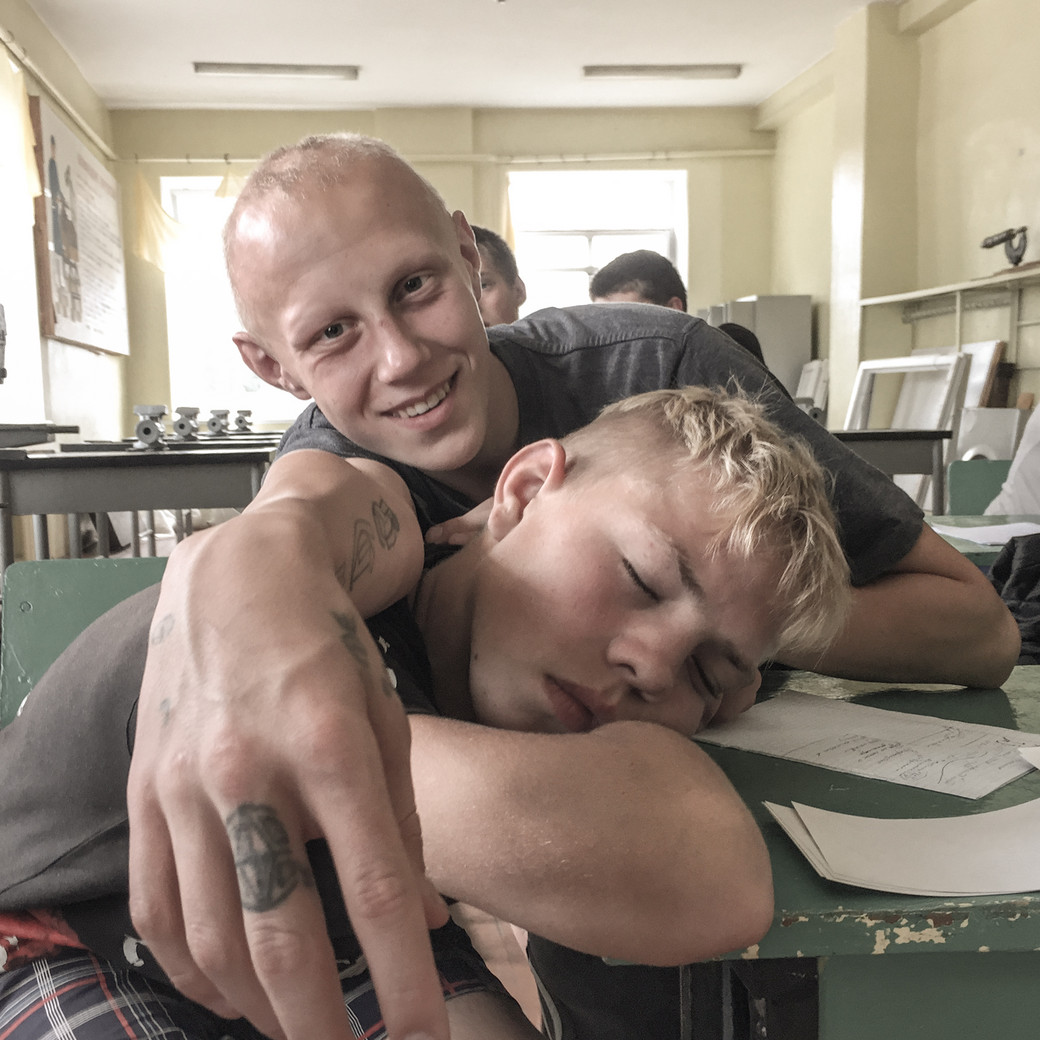
Snow-swept landscapes and crumbling concrete structures are the bewitchingly bleak backdrop for tough-as-nails characters who live their crunchy, uninterrupted lives within these frames, and go on living outside of them in all their red-blooded mundanity. The very young and the very old are frequent subjects, like parentheses to a long life of hard endurance and snatched moments of clumsy joy. Boys caught in hooligan horseplay feel like brethren to the viewer — but ‘caught’ is the wrong word, since these images give the distinct impression that the photographer, moments after snapping his pictures, set down his camera and joined in the shenanigans.
“I like traveling around the country and taking pictures of the ordinary lives of ordinary people. It is sad to hear people say I capture the seamy side. I don’t see anything horrible in these pictures of mine. They are not just ‘social photography,’ as many people see them, they are my personal encounters and scenes. Every picture is like another chapter in my own history. And when I get asked why I go after ‘life’s unpleasant side,’ I reply: ‘Because I am part of it.’" - Dmitry Markov.
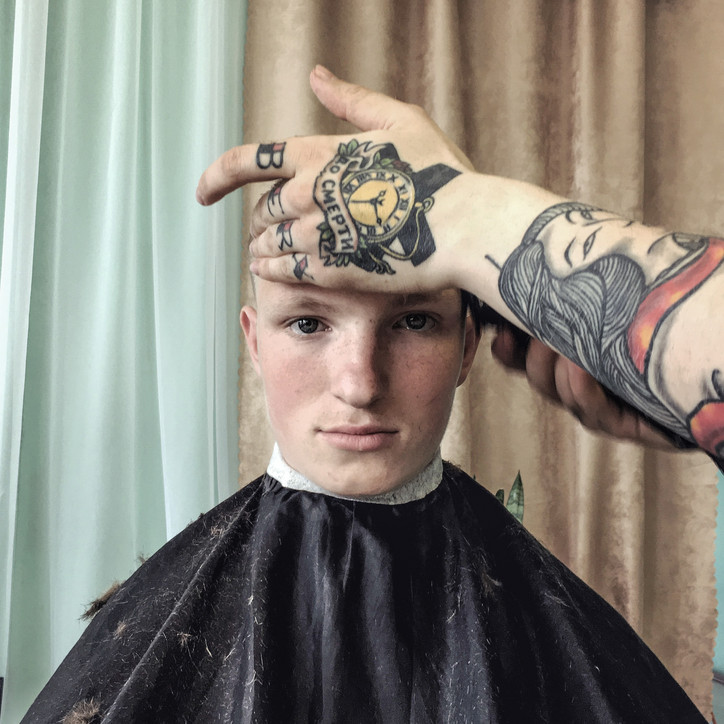
#DRAFT #RUSSIA is on view through June 4th at agnes b. Boutique Gallery. Images courtesy of the gallery. Lead image: "[Time] to death". Haircut of 18-years old teenager, before his release from orphanage. Idritsa, Pskov region. Série #Draft #Russia, 2016 © Dmitry Markov Courtesy Joe Baio Photography Collection.
Check out Dmitry's book, Cut Off, out now.
But it’s not all bad––Instagram has also cut out the middleman and offered creators of all kinds a platform––albeit, one that’s addictive and structured around its own mysterious algorithm. And director/designer Jenna Josepher is addressing that complicated dynamic of creating for Instagram head-on.
In her looping video installation at 312 Canal St., “Don’t Box Me In But Check Out My Grid,” Josepher invites us to examine what the app is doing to our ability to retain visual information, and confronts the limitations inherent to creating work for Instagram. The video, featuring characters that range from slightly off to total aliens, plays on the process of mindlessly scrolling through Instagram, consuming what she calls “disposable eye candy." Each looping clip shown in the work exists on Josepher’s actual Instagram page as well –– but as a shorter version, so you actually have to leave your house for the full experience.
And while the exhibit replicates sitting on Instagram on your phone, the works are more memorable IRL on Canal –– simply because they’re offered the context of a real sensory experience. Standing in the empty storefront gallery space with the Chinatown traffic behind you, you’ll actually absorb the visual of Josepher’s three-eyed iteration of @scientwehst. Something definitely worth committing to memory.


What is “Don’t Box Me In But Check Out My Grid” about?
The entire piece is both an embrace and a commentary on social media, and as a whole reflects this love/hate relationship I’m having with Instagram as an image-maker. Everybody wants to stand out in the art or image-making world, we’re all trying to stand out in some way. And yet we’re all slaves to the same metrics and grid system, and we’re all working within the same format. And the way we draw people to our work through social is pretty similar across the board.
That’s what the piece also addresses in a way; I wanted to show multiple instances of my work but I didn’t want to just loop them together one after another without any context, and I felt Instagram was both a reasonable and meta way of tying everything together.
The piece reminds me of this idea of directing people to “tap the link in bio” to see the whole thing –– you’re doing that but bringing the Instagram posts into a real-life context.
I’ve been playing with the idea in my work too of making something specifically for Instagram and designing it to work within the metrics that we all work within. But that’s not the most fulfilling as an artist when you can’t control all the aspects and you can’t play with the aspects of a project. And a lot more work goes into these things than what we can show.
Was looping the videos a commentary on the “box” that’s inherent to creating something digestible for Instagram?
Looping the videos mimics scrolling, scrolling, scrolling through Instagram –– your movements are looping while you’re watching something looping, it’s something repetitive that feels very monotonous. The whole project is super duper meta. I really like when you can’t tell where something begins or ends, and I’m interested in tricking the eye.


Piecing the clips together with the Instagram element, I was losing track of what I’d already seen –– the same as when I’m on Instagram on my phone.
Exactly, and I think what’s so interesting about Instagram in particular is it brings this ephemeral idea to visuals. It’s just disposable eye candy. You see it for two seconds and unless you save it or screenshot it, it’s pretty much lost within the algorithm forever, unless you go back and find it deliberately. So I’m trying to play on that idea of once you see it, it’s gone, or forgetting what you’ve already seen. A lot of my work plays with attention span in an under-the-table way. Making sure that something interesting happens within a few seconds so that it maintains your attention.
How would you compare seeing the videos on Instagram to seeing them in a physical space?
I think seeing the videos on Instagram is a little more expected, that’s the context where you always have this content –– it’s in your hand and there’s only so much you can do. The content of a video can be anything, but the fact that it’s 2-D and it’s in your hand and it’s that small, that’s the constraint that every visual artist on Instagram works within. But putting the Instagram interface enlarged and in a public space is a little less expected. I wanted people to catch it as they walk by, and see Instagram in an unexpected place.
'Don't Box Me In But Check Out My Grid' is on view at 312 Canal Street through May 7. All images courtesy Jenna Josepher.

Tell me about the bears.
These bears have funny titles. We showed them in Miami in the Bass Museum, they’re full-grown size. This one is called “why am I climbing anyway” this one is called “I am Vitamin C,” and this one is called “I love my life,” “Freaking Yoga,” “Here comes the hunter” “it's not fair” and this one “mama no more diapers please”. These are really cute. I’ve been doing these for six years and people love the bears. And I like them but people really adore them. So its been like a big part of my life. I also do completely different works that have nothing to do with this.
I saw them in the book, so good. So how about this show?
When I was looking at this gallery, I had this vision of seventy baby bears this time. All different shapes, all different colors and all displayed in this big room so that when you will come at the end of April you will be able to walk through a sort of lagoon of baby bears. It will be this colorful kind of ocean.
Do you always focus on animals in your work?
No, it’s quite the opposite. If you see the other cover of my book — my book has two covers — this is a Piper Seneca, a real plane with two engines. It's at the entrance of Central Park. This was a public art project and this rotates forward.
Wow.
I do very very different works.
So how do those connect?
They're all signed by Paola Pivi. That's the connection. You see, this is the airplane. They connect because I like freedom. I like to allow myself to take what I can take. And people can take much more than what usually they take.
So this is a large scale.
It's huge! It's a real airplane.
It seems like you’re working with large objects on a real scale.
Yeah, basically I like to play with things, you know? Things that I like. So, if the thing that I like is small, it ends up being small. If the thing that I like is big, it ends up being big. But it's not a repetition of it. So this is another installation with 24 completely fake bear rugs. Like they're realistic.
They look very real.
They look completely real, but they are from eco-fur. They’re all fake. And so my work completely changes in different areas. This is an installation of rhinestones. It's a sculpture covered in rhinestones and it's pretty big.


Above: 'We like to fight' and 'I just miss my mom'
So how did you come to the bears?
Oh, well, I live in Alaska. I'm Italian, but we live in Alaska. So for example, I did a work that was this humongous pizza.
So primarily sculptures. You're interested in the three dimensions of sculpture and the possibilities there?
Yeah, so for this show I'm making seventy of these baby bears.
Why seventy?
I just thought the biggest number I could put.
So these baby bears, are these the babies of these bears?
Yes.
So these are like the mama bear kind of?
Just the same species.
It's funny because the larger ones are almost babyish.
And the smaller ones are less babyish than this. This ends up being a little bit...
Maybe almost more mature.
Yeah, they're more like teenagers. The larger ones are very very playful bears.
The little ones are a little more feisty.
Exactly, feisty is the right word.
You can see their teeth, they have more of a growl.
They're more like feline.
Now why is that?
They came up like this. You know when you start to make the art, then the art makes itself.
Do you feel like because they're babies there's some kind of connection to childhood?
My husband Karma and I were adopted by the most amazing child in the world.
Oh, okay. Now when did that happen?
That happened in 2013. He is adorable. He’s a lady killer. Like a mama killer boy. Like super cute. And so suddenly in my life, all of these things of his came into my life. All the shoes, and the little jackets. Like yours but smaller. It's actually quite beautiful, the aesthetics of it, you know. I mean some of them are very beautiful, because the proportions are also very beautiful.
So would you say he’s had an effect on your work?
So, I was asking myself how is this going to trickle down into my art — motherhood and the beautiful aesthetics that children bring with them.


Above: 'Long time no see,' and 'I was born this way'
You say the beautiful aesthetics of just everything? Like the toys and the clothes and just their size?
We made an effort to dress him well because, you know, we always look at him, so he was well dressed. I mean we didn’t do it consciously, but I realized every time he was wearing something he was really colorful and nice, because I was thinking, yeah, that's why people always dress their children so nice is because they always look at them.
Well, and it's a reflection of you in a way as well. I mean, you're an artist, of course, and you get to pick what they wear.
But it's a little bit everywhere. Most families have this joy coming from having children.
How old is he now?
Eleven.
And what does he think of all of the baby bears?
He likes them. Especially he likes the blue elegant bear he told me.
Does he help you name them?
So all the names of my art, 99%, are made by Karma. Because Karma is a songwriter and words come out being beautiful.
Because the names are very much a part of them. I played this game one time in a museum with a friend of mine and we would try to guess the titles of things, which is a great game at museums, especially for abstract art. With yours I feel like it would be really fun to try to guess the names.
I’m going to look first here if I can show you a few more of these baby bears. I had to make 70. I made many, we actually don't have enough photos of the ones I made but I made more than those.
Do you feel like these are interacting with each other more than the ones before?
Yeah. It's true. Compared to the big ones.
It seems like the big ones are more interacting with the viewer and that these ones are interacting with each other.
Yeah, that's true. The big ones are more like, you are immediately drawn to them. So actually when I had the show in the National Gallery of Victoria in Melbourne, there were eight bears in the lobby of the museum and the people were so attracted to them, they had no restraint, they would just hug and touch and take photos and the guards! I've never seen anything like that — the guards screaming and there was a physical happening because people were just ignoring the guards and hugging the bears and posing for selfies.
It almost seems like that’s almost what you want or something. I thought you were going to say the guards were just letting them do it.
The guard doesn’t have any weapon or power or handcuffs, you know, so the guard tells you to stop, and usually the people stop. These small ones in this show, you wouldn't really hug them. It's almost like they're going to bite you if you go too close.
Right. And they're so small. With the big ones they're so big that you're almost like sucked into it. Whereas with the small ones, you don't want to knock it over. Because it's small, it's fragile. So I can see how the size of it would have an effect. It's like a big warm couch or something.
We’ll all find out. And i'll read it to you. This is my art in the Bass Museum. It just popped up by accident. It's two planes of mattresses where people climb inside. So I was trying to look for the titles of the baby bears. So I'm thinking of, 'What's up, baby bear?' as the title of the show and also for the title of one of them.
You know what it reminds me of? Children's books. Did you have in Italy any classic bear stories? Because I know in American culture we have. Have you heard about Goldilocks and the three bears?
Yea, I heard of that. With the beds.


Above: 'You drive me crazy,' and 'Two more.'
There's the Berenstein bears, too, and your titles remind me of the Berenstein bears. Have you ever heard of that?
No, what is that?
It's a children's book series and I don't remember but it's about bears. And we all grew up with that.
No, I don't think we have exactly the same stories. We only have Snow White and in my life, they were not a big deal the children's stories.
I mean are there bears in Italy? Maybe there just aren't bears that are native to Italy.
That's right. There's like one.
You know what else I think of? There's the Coca Cola bears. Do you know the Coca Cola polar bears? Do you ever think about how we’re so drawn to bears but in real life they're extremely dangerous. Do you ever think about that?
I mean, I obsess over that. We live in Alaska! When we had a house on the edge of town I lived with the bears spray on every floor of the house.
The mace?
The mace.
My dad got me that for people.
Ah, for people in New York.
Yeah, my dad's crazy, he thinks danger is everywhere.
Me too, with bears. I'm totally obsessed with bears, and in Alaska we are in their home. But at the same time, the bear is the teddy bear. And also at the same time, the bear is the man-eater, like a real man-eater on land.
That's so interesting. Now, have you ever encountered a bear?
Yeah, many, many, many times.
Really? Like a real bear?
Yes!
Like a polar bear?
No. polar bears are in the very, very far north of Alaska and Alaska is very huge. But I heard that polar bears, if they see you, they eat you. It's not like brown bears or grizzly bears. Brown or grizzly bears are not supposed to be interested in hurting you or eating you unless something goes wrong. The polar bears, they see, you they eat you.
That makes sense because they're polar bears, they're up in the cold, they need to survive. That is so interesting. Where in Alaska do you live?
Anchorage. The big city.
I'm interested in the feathers. Why feathers?
Well, it just came. I was obsessing over making a sculpture of a polar bear dancing with a grizzly bear and I was obsessing over the fact that I could not make it because it would not come out, how do I put this, if you have a dancing sculpture you cannot have two dead bodies in it. I did not want to have a dark sculpture.
Did you want it at first to be real taxidermy bears?
Yeah. I had this vision of a taxidermy white bear and brown bear dancing, and I did not intend it to be a sort of Edward Kienholz, or darker, which I love but...
But you wanted it to be light.
Right. What’s the name of the artist showing at the Margulies Collection, the historical American artist, you know, who do this realistic reproduction of life and then there's this little bit of darker side to it [George Segal]. I love those. But I wanted it to be about dancing — like real dancing. And so I was really struggling about how to do it. I was calling parks to tell me when a bear would die of a natural death and send me the body. But there would still be this body, this death there. So I finally had the vision of the feathers. It came out of that struggle.
Did you ever get an actual bear body?
Uhm, no. I have only seen them alive. But I've seen in Alaska many bear rugs. You know the real ones.
Have you worked in taxidermy?
These are all made by a great taxidermist who knows the real bodies and works with me to make the sculptures. So working with him, he brings the knowledge of the real animal and I bring the art and that's how they are made.
Bears have a very strong connection with us. Like just think of the teddy bear and how that's a symbol of love and comfort. And one of our friends in Alaska had to kill a bear because the bear was assaulting his tent. He told me that, when he butchered this bear, because of course in Alaska whenever an animal is killed it's also butchered and used, he told me that it was striking how human the body was. Out of all the animals that he had hunted and butchered, this was the one where the arms and legs and belly and dimensions are exactly like a human. And he was very impressed emotionally by that.
Maybe that's why we’re so drawn to them, because they can stand on the two feet and they're the only animal that can really do that.
Yeah, you're right.
Now I'm thinking about with the Russian bear trainers and things like that. Like how they would balance on the ball. It's so interesting. Bears! Did you have a teddy bear growing up?
I had a cat teddy bear. It was the shape of a cat.
'We are the baby gang" is on view at Perrotin New York through June 8th. All images courtesy the gallery. Lead image: 'Oh oh'.