PRESENTE CONTINUO: the intimate ties between then&now

Starting May 30, PRESENTE CONTINUO will be available to purchase on presentecontinuo.com, cpcompany.com, and at the C.P. Company flagship store in Milan, Corso Matteotti 7.
Stay informed on our latest news!

Starting May 30, PRESENTE CONTINUO will be available to purchase on presentecontinuo.com, cpcompany.com, and at the C.P. Company flagship store in Milan, Corso Matteotti 7.

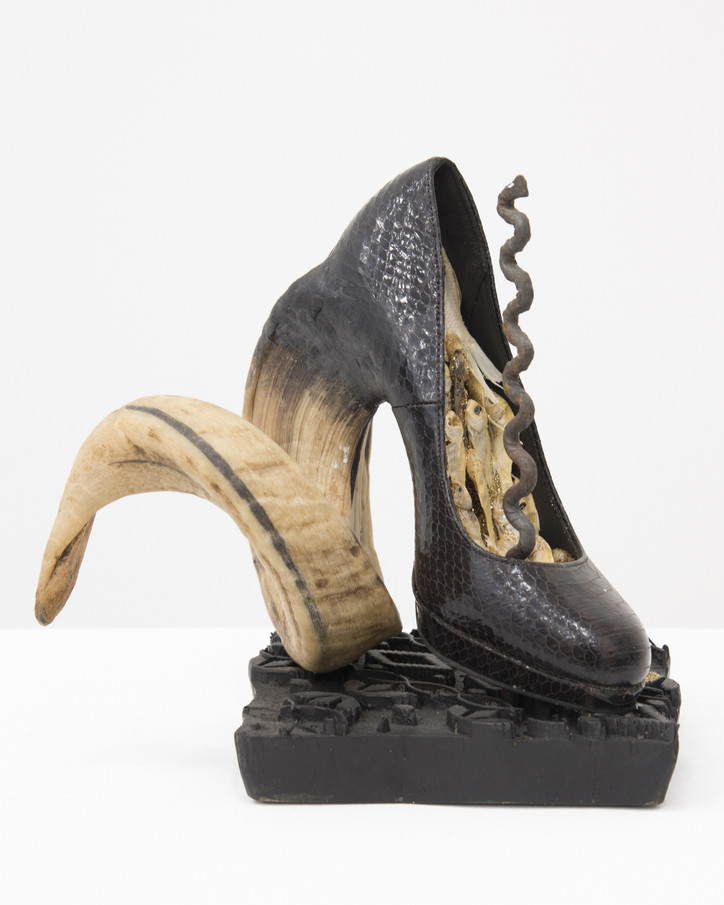
The shoes themselves seem almost animate beings, their presence here a mere pit stop on their way to a land full of mystique and wonder. Needless to say, these are sculptures with layers upon layers of story. Speaking to artists on a regular basis, I often run across the concept of objects being ‘charged,’ but never have I seen such an optimal example of this idea in action. The materials in these pieces almost quiver and squirm, the organic shapes entangled with those that are manmade lends the effect of an intrinsic clash that seems to spark, rattle, and pop. There is a kind of childlike idolatry embedded in these shoes—many contain once-living animals. A freeze-dried bat rests in the sole of one pump as if it were its coffin, or a reliquary for a vampire.
The sustaining concept of a world beyond biological gender is reinforced in the use of these tiny, lifeless creatures: only an expert could identify whether the bat is male or female, and in the end, it simply doesn’t matter. To transcend biological reality is a goal humankind has been fixated on for these many millennia, and here the artist seems to reach into the natural world for a pathway to a higher plane, as well as through the simple concept of walking in another’s shoes. By projecting our minds into other worlds, the show seems to suggest, we find ourselves on the cusp of the Unknown, posed, like these magnificent shoes, before the precipice.
There is one key element to these pieces that cannot go without mention: shoes always come in pairs, yet these shoes are solo. The artist spoke of Lady Jaye often, Genesis’ other half, who left her body in 2007 (in Genesis’ words), and who shared the idea that the two of them were two parts of a whole. The other shoes, then, are missing their partners on the other side, but are not yet unwilling to thrive.
I spoke to the artist about these incredible sculptures, what they mean in regards to Lady Jaye, and the charged objects that form the fascinating story of this show.


'Red Shoe for Susana.'
I love the show. Can you tell me how it came together?
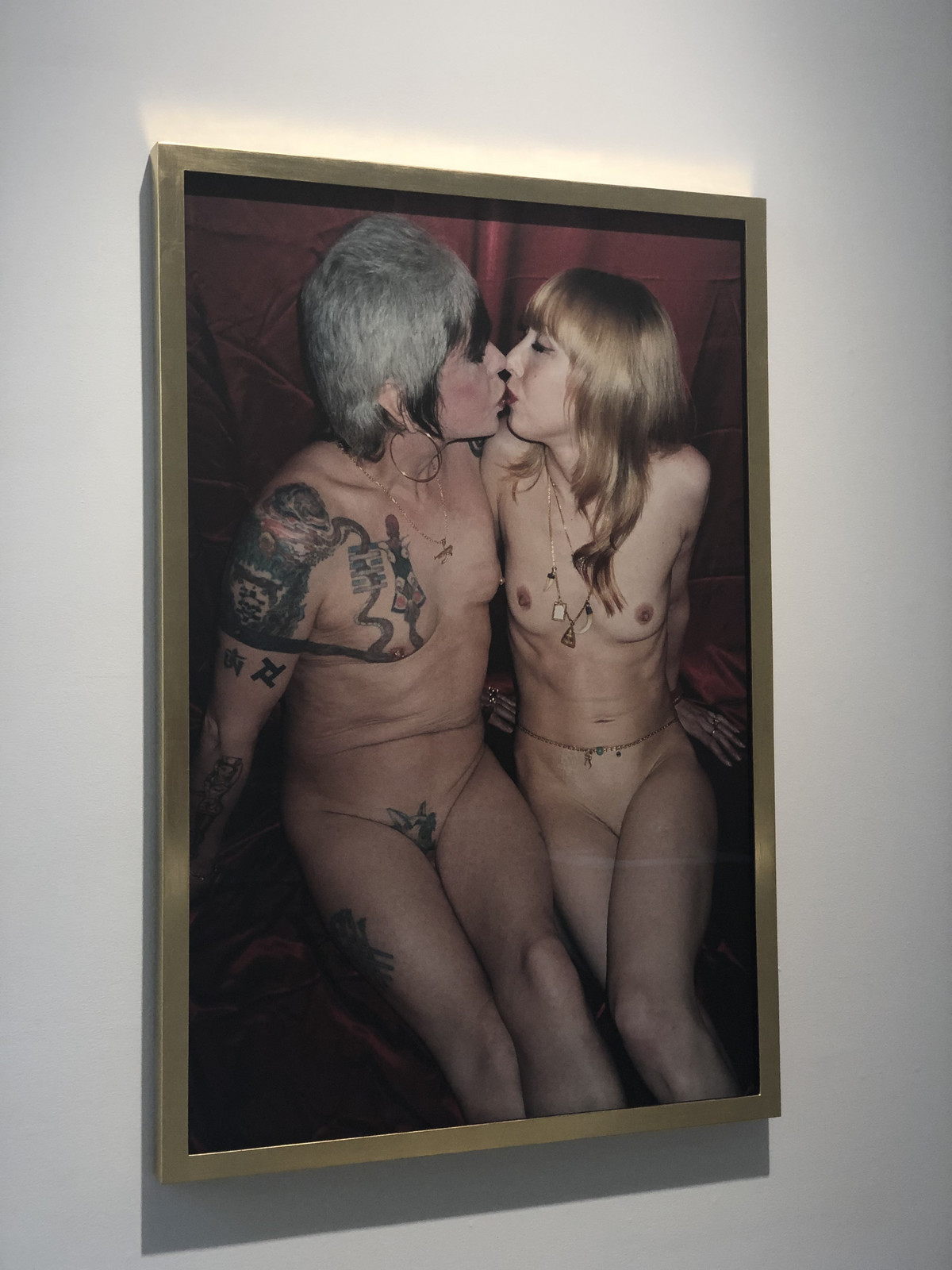
I personally think it’s one of those times when you can say: it’s perfect. Everything in it I wouldn’t change. They’re like little crystalline jewels, and it’s presented just the right way. I don’t know if you saw it when the photograph was up? But that really finishes it, completes it. There’s a photograph of myself and Lady Jaye prior to any surgeries of androgyny, but both looking very androgynous, naked, entwined. When you look it from behind all the shoes, it turns it into a shrine. It’s much more clearly a shrine at that point.
That’s interesting. I love androgyny.
That’s the basic theme, of course—the end of either/or, not just the fluidity of becoming one or another. We had a way of explaining it: some people feel they’re a man trapped in a woman’s body, some people feel they’re a woman trapped in a man’s body, but a pandrogyne feels they’re just trapped in a body. So, that’s why it’s about the end of biological perception—it’s time to totally forget about the package, the ‘cheap suitcase,’ as Jaye would call it, and recognize the self you identify when you say ‘I'—that’s consciousness. It’s not in any way to belittle the progress that’s been made in terms of identity and people like to create their own narrative—it’s that there are no limitations at all except one’s own imagination. Flesh isn’t it. It’s consciousness—that’s who we are, and it’s time to stop being distracted by stereotypes, no matter how radical the stereotype may seem. That’s something we’d been thinking about for a very long time. You said you liked it—what did you feel? I’m curious about how people respond.
I don’t even know. It’s kind of monstrous—it’s fashion meets macabre—but then it’s also playful.
That’s good, you see. It’s nonverbal—it’s bypassing explanations and ways that we perceive things and explain things. When they’re being made it’s very intuitive, it’s almost like a trance state. I don’t know if you saw what they’re made of, the materials, but all those squares of wood that have patents in them—they’re all antique blocks for printing fabric that we collected in Katmandu over the last 30 years. All the shoes have, at some time, belonged to sex workers—transexual dominatrixes, biological female dominatrixes, go-go dancers, strippers, hookers, you name it. All of them have been connected to the interplay between the sexuality, the body and desire.
Then you have all the pieces of iron, the little wiggly ones that actually represent pythons, and the ones that look a bit like umbrellas—they’re all from West Africa, from the voodoo ceremonies that I was initiated in about three years ago when we were making the documentary, where we were investigating. There’s a huge twin cult in voodoo in West Africa, so we were fascinated by what that was about and what it might be, what it might explain, because we felt that we were two parts of one. The minute we got there, the first night we were in the little tiny town square drinking beer, and I was facing a different direction than everyone else and I saw this very tall figure in blue robes and in the shadows that just seemed to float, and as we were looking we said out loud, ‘I think that’s a priest,’ and everyone turned round, but they’d gone, vanished. Then the next day our guide said, ‘Would you like to come and meet our family for dinner?’ so we said, ‘Yeah, of course,’ and we went to their house on that side of the compound behind a wall in the town square—so it wasn’t magic, the father was very tall, he was the high priest of all the voodoo there, as it turned out, and he’d just gone in the gate, but we couldn’t see that in the shadows. So, it wasn’t so mysterious. Then he looked at me and he went, ‘You had a twin, but she died and you’re wearing her gold earrings.’ My hair was down so you couldn’t see my ears, and I was wearing Lady Jaye’s gold earrings. And we always saw each other as the other’s half, as twins, and that’s when they started to initiate me into the twin cult and the python cult. So, all those bits of metal are from that trip, and that investigation. That was three or four years ago, it was over a whole year, the documentary premiered at the Rubin.
I don’t know if you noticed all the little fish, but they were from our fish tank. We’d put feeder fish in for the other fish, and when they died we’d dry them out and keep them. So, everything is little fragments of ritualizing daily life, which made total sense when we were in Africa, or in Kathmandu, with the different tribes of that part of Africa, that’s how they view life—there’s no separation between mystery and mundanity. It’s all interlinked. You can be walking to the office in your office clothes, and literally we saw a woman stop and sacrifice a goat, then carry on to work, and no one looked at her because it’s a part of daily life—this mystery and nonverbal communication and devotion are all absolutely integrated into everything that happens. Domestic or banal objects can actually have great significance if you know more about them, and that’s kind of the root of what we were doing with the show. And shoes are just such a wonderful thing to work with, because they’re already a fetish.
Lady Jaye was your partner?
She was my other half, yeah. She left her body in 2007. She was a professional dominatrix and a registered nurse, so her whole life was about the human body and the tensions of fixing it, and attacking it in a way—that strange combination that people have.
'Shoe Horn 7' and photo of Genesis and Lady Jaye.
So, that’s how you acquired all these shoes?
Yeah, exactly! Later on I started working as a transexual dominatrix in a sex dungeon, too, my name was Lady Sarah—a very strict former English school principal.
You were a dominatrix?
Yeah.
Are any of the shoes yours?
Some of them are, yeah.
I love the taxidermy—well I’m not even sure they’re taxidermy, but I love the use of animals.
There’s a freeze-dried fruit bat in one of them. Isn’t that strange?


'Shoe Horn 3.'
My mom would keep things like that all the time. She had a bat in a little box for a while that she’d found in our garage. We had a lot of taxidermy in our house, so I totally relate to this fascination with preserved animals.
There’s a box as well in the show, I don’t know if you saw it, but all the little papers inside are all genuine heroin bags from the '80s and '90s when they used to give them all special names for branding. So, all of those are in there, and then the little gun, which is a genuine antique pistol, I’ve had that since I was six years old. My father gave it to me when I was a little kid—I used to collect antique weapons. I’ve kept it all that time—for 60 years we’ve held on that, and of course played with it when we were little, and kept it because it’s association with childhood. Then finally it was ready to be used, and it became part of the box. And the two little statues are twins from West Africa, and if you look inside you’ll notice each only has one leg. And we asked about that and they said it’s because they’re only whole when they’re together, which is what myself and Lady Jaye felt—that we were twins and we were only complete when we were together. We were each half of something—something spectacular that could only exist in the union of unconditional surrender.
It’s almost like a time capsule.
Yeah, of course. In a way it’s a journal, almost. Everything within it has been a part of our lives, or has different effects, or represents different times when our ideas changed, or our perceptions adjusted because of new information, or wisdoms we might have collected. So, each one is that encapsulated. They’re almost hieroglyphic. It’s like when you couldn’t explain how you felt about them—that’s what we want. We want them to be like Mayan hieroglyphs—something you look at it and go, ‘I know this is significant, I know this has a lot of thought behind it, it’s the purified essence of all different kinds of lines of thought and different ways of seeing the world and using perception, but I can’t read it, I can only feel it.’
It’s also an interesting comment on fashion. I always think when I see something crazy in a thrift store or a shop, I want to meet the woman who would wear that. I feel that about this show—I want to meet this woman who’s wearing these shoes. You can’t really wear them, but it’s like a fantasy—it’s almost like a goddess.
Right! Absolutely. We have a real belief that objects absorb some kind of energy from the people who keep them and the way those people revere them and what they usually represent to the world outside. You’ll find most people keep things—pebbles and shells from beaches, or bits of driftwood, or like you were saying, taxidermy, things from childhood, little dolls. People all respond to those things, but they’re somehow trained that they have less intrinsic value, when in fact for me they have the most value, because they have an unwritten language that connects everyone. You could take one of those shoes to the Amazon and they’d be equally fascinated by it, the feathers and such. It would still reflect and resonate. You could take it to Kathmandu and the shoe is a religious object, or a shamanic object. It’s a sort of universal language that we’ve often had diluted in the West.
There’s also the satirical reflection of fashion as well. The shoe is an impossible item—why do people wear high-heeled shoes? It’s a ridiculous idea. It’s uncomfortable and difficult—you can break your ankle if you slip. And yet there’s this universal obsession, as well. I wanted to look at that: the impractical but the desirable.
I feel like I’m still reeling from the voodoo element you were talking about. You’ve clearly traveled quite a bit—did you go specifically go for artwork or was it a part of some kind of research?
Research for everything. I often give talks at universities and young students will say, ‘What can I do to have a life like yours?’ or ‘What can I do to be more expansive in my ideas?’ and I just say, ‘Travel! Get out of the United States and travel! Go to Africa and see what poverty really looks like, people who live in one room with a dirt floor and feel blessed that they can eat that day, and they’re not complaining because that’s normal, that’s a good day.' Just to get a sense of proportion. Everywhere you go there are traditions and stories that will teach you things that you won’t learn from the established culture, because it wants to remain established—it wants to remain the main culture. So, to break away from what you’re expected to use as a reference, you have to travel and open up the mind to all sorts of possibilities of addressing the mysteries of existing. That’s why we travel.


'No Mercy.'
It almost seems like your show is about that—the objects are collected from so many different places.
That’s why I said it’s very much like a journal, as well. It’s an act of faith, in a way, that something will be communicated through the interaction of the different items when they’re put together—that it will speak, and I really think it does. The response has been incredible to these shoe sculptures.
They’re really approachable, I think, too, because everybody wears shoes.
There’s a glamour to high heels, too. There’s been a resurgence of a surrealist approach to fashion again recently, as well. A lot of the young designers and photographers are doing a lot of things that are post-Leigh Bowery—very impractical, but incredible visually. They’re not made for everyday, they’re made to literally blow your mind for a moment. I think that’s really healthy and exciting.
I think there’s a return to decadence right now. I don’t know why, but I love it—it’s like, we don’t need this at all, but we do.
We’ve just been involved in a publication online and, I think in print, of something called Dazed Beauty. It’s connected to Dazed and Confused, and it’s dedicated to post-internet, post-technology versions of things that might once have been called glamour, or beauty—people who are interfacing with technology. So, they came to us to be one of the four people on the cover—they’re doing four different covers—because we’re one of the trailblazers of anti-fashion fashion. It’s like suddenly everyone has become Leigh Bowery on ketamine.
But with the shoe sculptures, I can’t really leave my apartment very much at the moment because I’m sick, but I have a little row of black boxes above my bookshelves full of strange little items, and I just made the sculptures out of what was here. It was all here. It was like, this is already in my life. All I did, really, was collect it together and let it coalesce. It was so much fun creating them. It was like, 'There’s a shoe, what’s gonna happen with that shoe? Which of these horns is gonna go with it, and which way?' It was really quite incredible to produce an entire show in one room on the Lower East Side without leaving.
These were all just things that were laying around? Wow.
We were in Wales about twenty years ago and they had a big box of horns, and I said, ‘Just buy the whole box, they’ll be useful some day.’ We held onto them all the way through moving to America and changing houses and homes, and now there they are, all being used. Of course, what happens next, when all my shelves are empty, I don’t know.
'TOWARDS AN END TO BIOLOGICAL PERCEPTION' will be on view at Marlborough Contemporary through Febrary 16.
Lead image: 'Shoe Horn 9.' All images courtesy the gallery.

Read our interview with the artist, below.
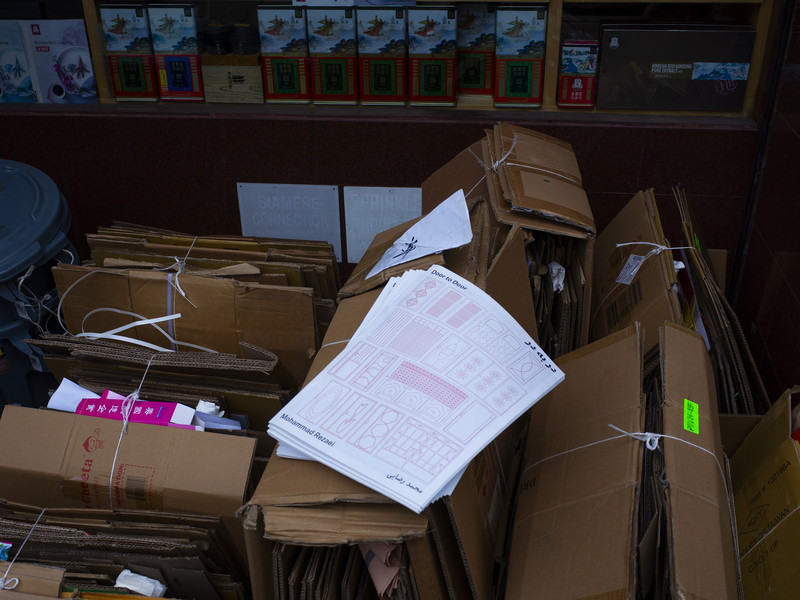
Describe the presentation, all of its different components and how they inform one another.
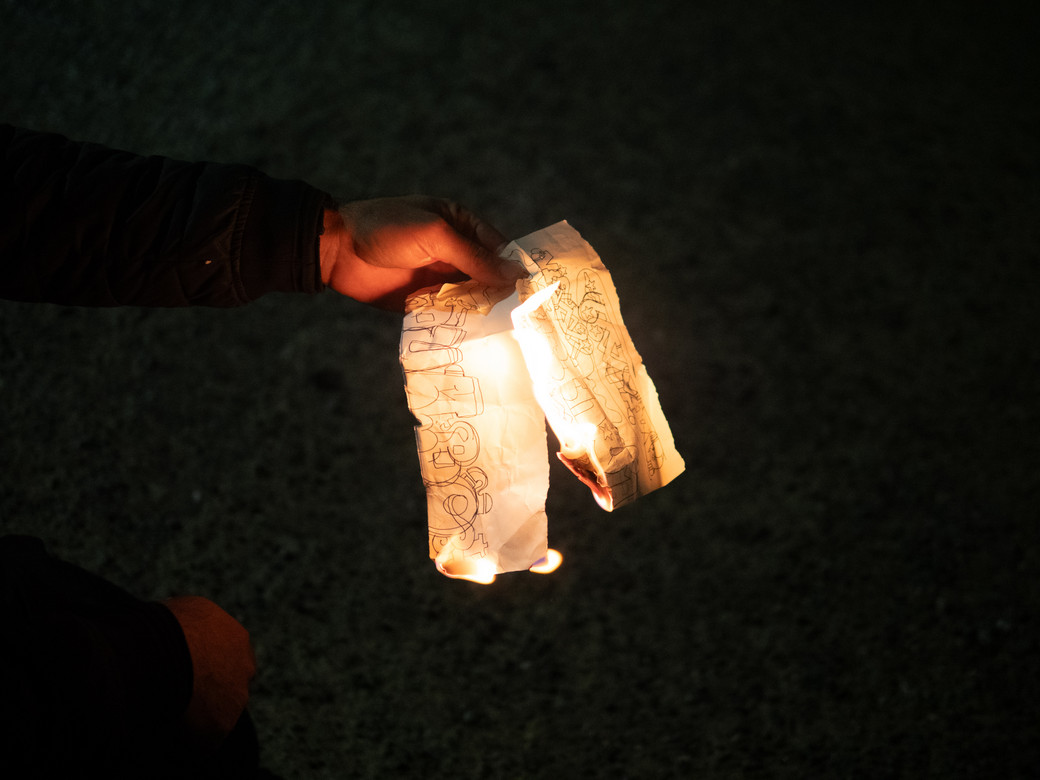
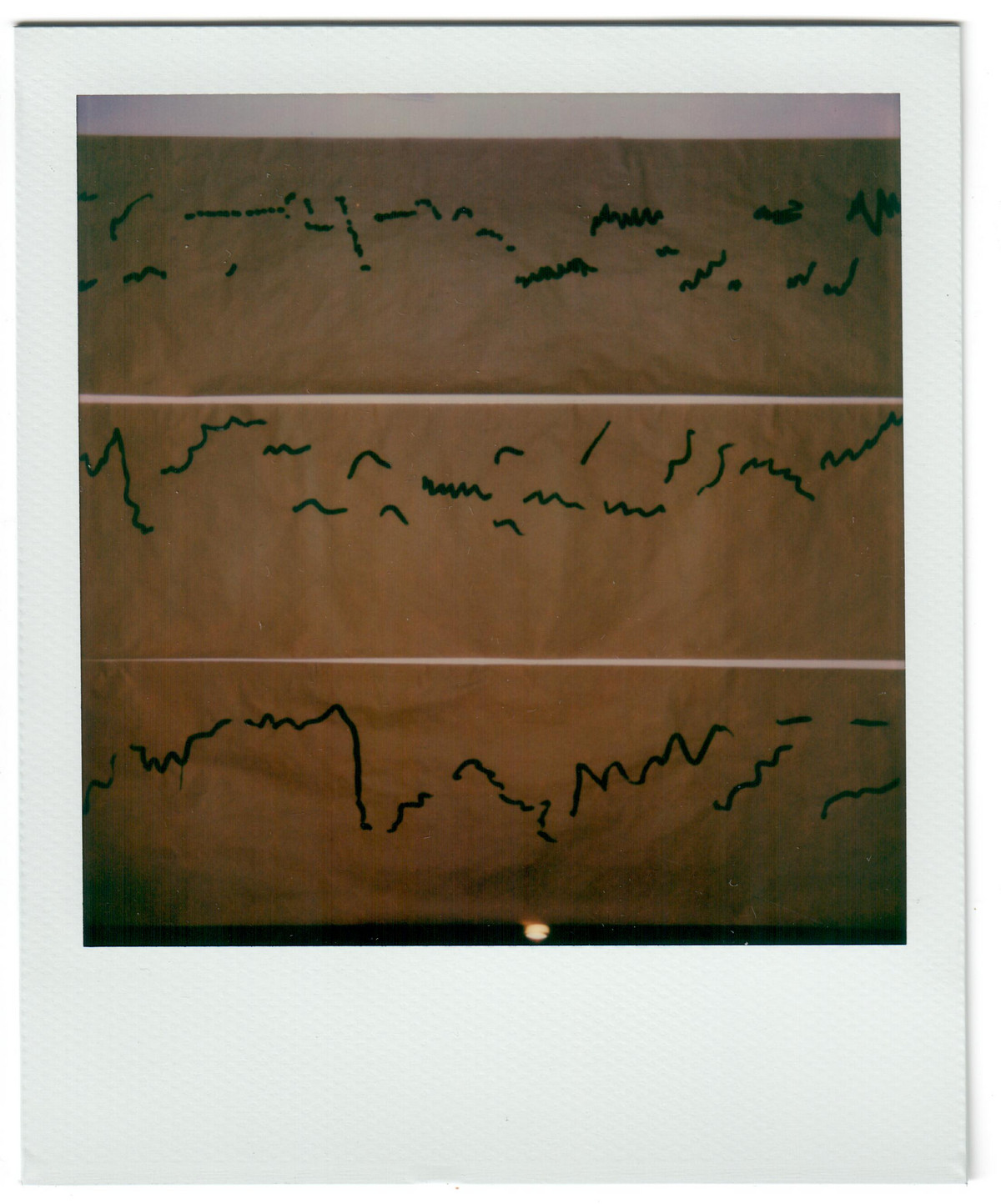
First I wrapped the walls of the gallery with butcher paper in three levels, circling like a spiral. I listened to a piece of music and did a live abstract linear interpretation of what I was hearing. Next, I photographed the walls and organized the images into ‘sheet music’ that could be read left to right and in the same order as my flow. I sent the ‘sheet music’ to Jake Falby, a composer who’s amazing at the violin (among other instruments), to create a recording based on his own interpretation of the music. I’ve also turned this ‘sheet music’ into a poster that I will make into limited Risograph prints available for sale at the show.
What will the opening involve?
The opening involves a few different elements. I have four performers coming in including Alex Knost (one of CMCAC founders), Verge Bliss, ENTRANCE (Guy Blakeslee), and Abby Banks. Each performer will do a live improvised interpretation of the transcription on the walls. I’m excited about this group because everyone will be doing something different: noise, guitar, voice. The performers don’t know anything about the original piece of music I transcribed from. The choice of instrumentation and length of their performance is up to them and their own interpretation. In the back room of the gallery there will be two listening stations, one with the original piece of music I did my transcription from and one with the interpreted recording from Jake Falby. There will be a monitor showing a video of my live painting performance and a station to view prints of the ‘sheet music’ that I gave Falby. After the opening, another monitor will be set up showing the four performances from opening night.
Where is the initial message that's to be transferred coming from?
I chose a piece of classical music, specifically Mozart, because to me it is one of the most visual. Mozart’s symphonies also tend to not be too dense, but still have multiple instruments. At first, I wanted to do something from Mozart’s Jupiter symphony, said to be one of his weirdest compositions, but after mapping out my timing for drawing and seeing what my pace was, I realized I needed something around eight minutes to have just the right amount of paper to cover. I also wanted something at a mid-to-fast tempo so my movements would be more reactionary. It ended up being Mozart’s Symphony No.34 in C Major, Part III.
What inspired the idea for the show?
I’ve had this idea for awhile. Now that I’m not touring I have time to do all these art projects I’ve wanted to do!
For years one of my friends ran an anarchist college called Corvid College. Anyone could teach a class or take a class and the way the class was run was up to whoever was organizing it. My friend did a class on sensory deprivation and Beethoven’s symphonies where we smoked a bunch of weed and went into a room with all the light blocked out and laid on the floor and listened to the music. It created so many visuals for me and sort of like synesthesia, I was able to trace the music visually in my mind using shapes and space.


Oh wow that sounds amazing. How did it evolve from there?
I thought about seeing that in a tangible, visible form, and then what people might make of it if they didn’t know what it was. It’s like reading a language where you don’t know the letters and try to create meaning from it, but in this case the characters have no rules because it is abstract. We’ve created a musical language and notation to be able to pass on musical information without having to actually hear it. But the way music is created a lot of time is super abstract and a lot of musicians can’t even read written music. Language, written or spoken, can sometimes be restricting because you have to follow certain rules. With art and music so much more is left open to interpretation and is based on subjective experience. That’s also true with how we communicate, especially today. Things are so impersonal and indirect that even a text message can be interpreted completely differently than the sender intended.
Tell me about the CMCAC and why you chose to showcase the presentation there.
I wanted to do this show in LA mostly as an excuse to skip winter and because the music and art scene out here are thriving. I was looking into where to have the show and hit up Alex Knost, a friend of mine through the music scene, and he passed on my proposal to his partner and girlfriend Daniella Murphy who co-founded CMCAC. They were both into the proposal and invited me to come be their artist in residence for the show. I’ve been staying at the gallery with my dog while I’ve been installing and working on all the pieces for the opening. They set me up with a super cute room and have been really helpful in organizing all the elements and things I need while I’m here. I’m very grateful for them.
Do you really think that news has become like the game Telephone?
I think it’s always been like that. Think about the ‘Extra! Extra!’ kid seeing some crazy event and running into the city to tell the guys running the newspapers, and then them spinning the story somehow to fit a political or socio agenda—there’s always been a spin on news. I think it’s just that now anyone can create these stories and put them out into the world. It’s not just reputable news outlets—I’m sure there’s always been partisan papers and then maybe a few objective ones but at least you used to know what you were getting into by picking up one or the other. Everything is so saturated now and information moves so quickly that it’s easy for important details to be omitted or unintentionally left out. I’m sure a huge percentage of people take their news from Tweets. How much information can you really get from 140 characters?
I think that people who get their news from Tweets must not respect real journalism or have much use for the truth. Do you regularly keep up with the news?
I really don’t. Especially in this political climate. It makes me mad and sad and depressed. Sometimes I scroll to the news app of my phone and see if there are any headlines that seem super important. Politics is such a shit game and I try not to take part, while still doing my own part to be a responsible and moral human being on planet Earth.
You also have a solo music project coming up. Can you tell me about that?
I started recording a full length with some songs I’ve been working on and that had laying around for the last three years or so. I’ve tracked some basics with Jay Heiselmann (Grooms, Roya, Habibi), and plan on spending some time recording at my favorite place in Topanga with Kyle Mullarky, who did the last BOYTOY record as well as a lot of California bands (The Growlers, Allah-las). I’d love to start playing some shows with this project in the spring.
‘Subjectively Speaking’ is on view at the Costa Mesa Conceptual Arts Center through March 2.

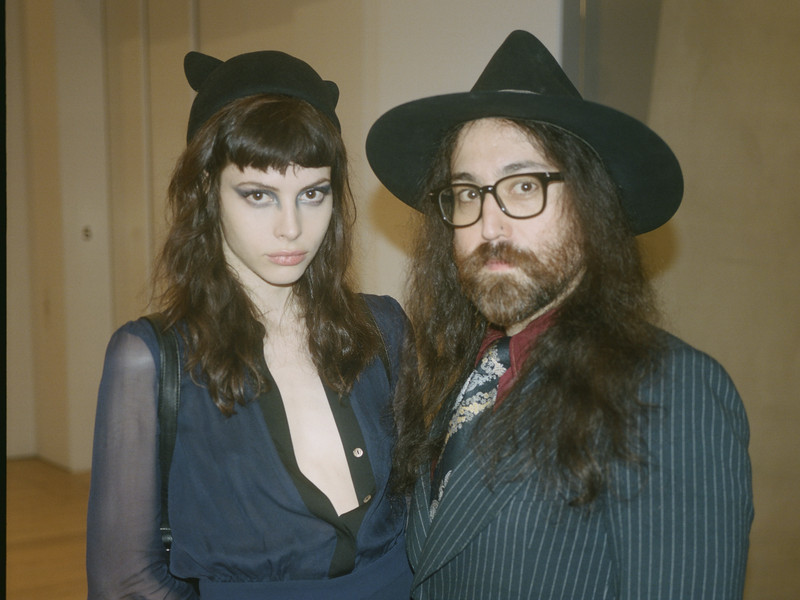
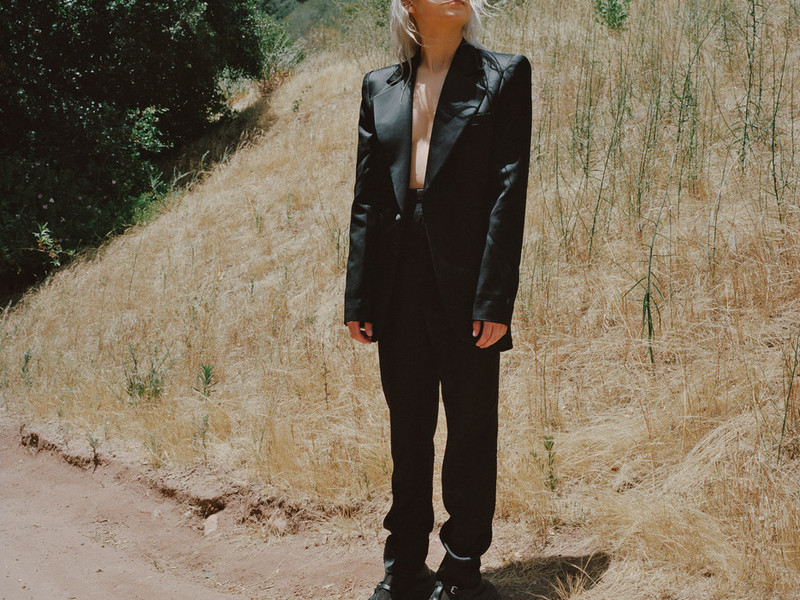
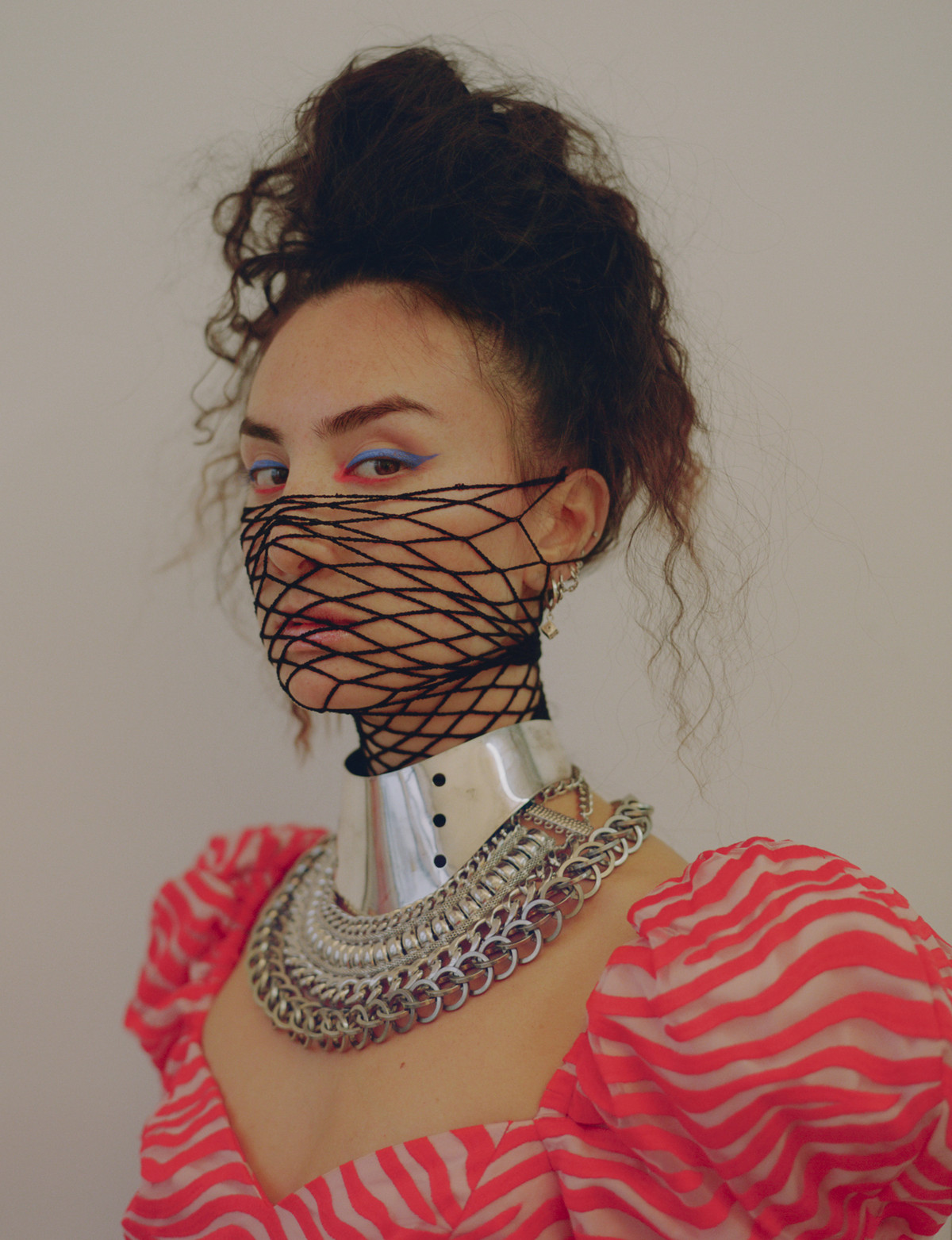
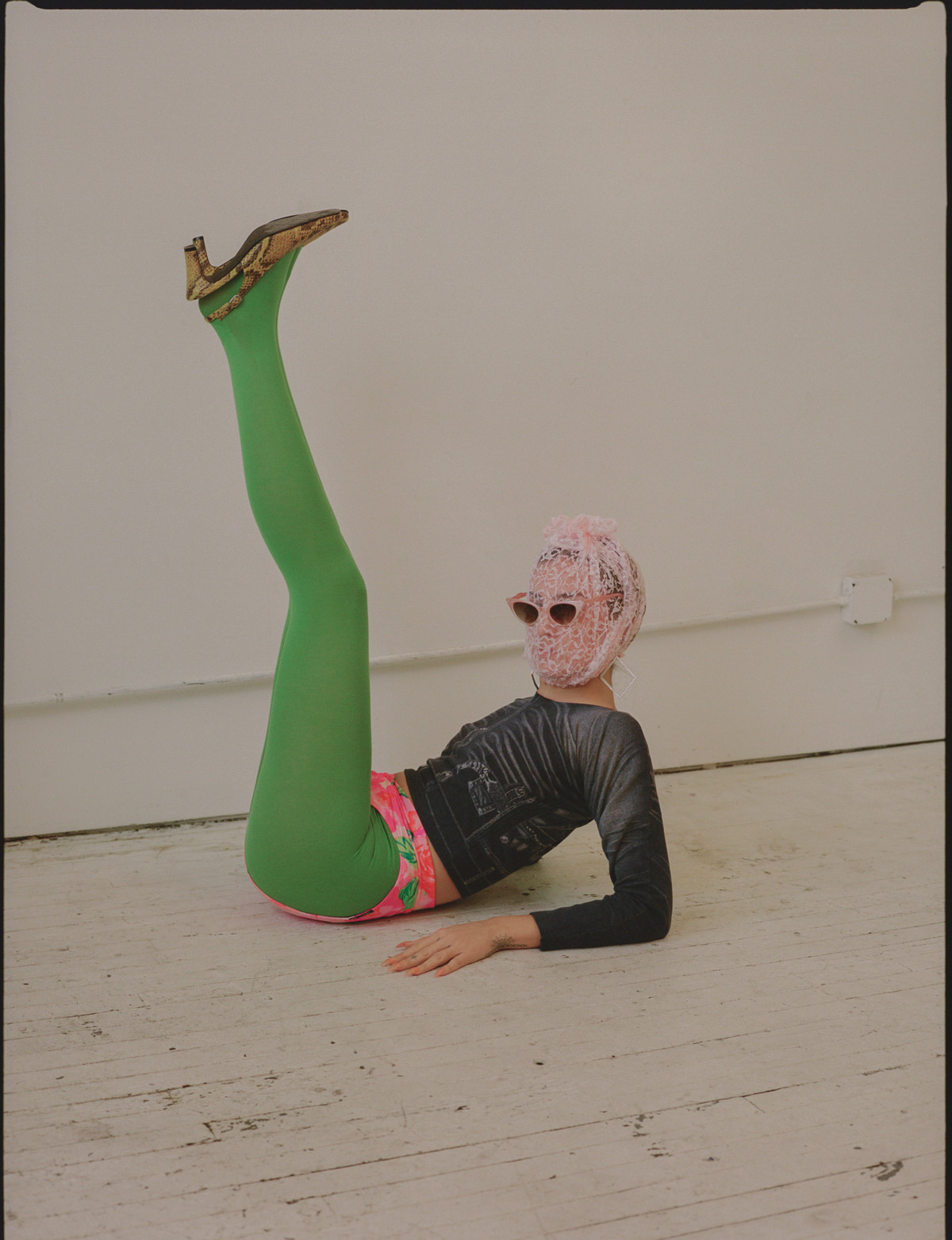
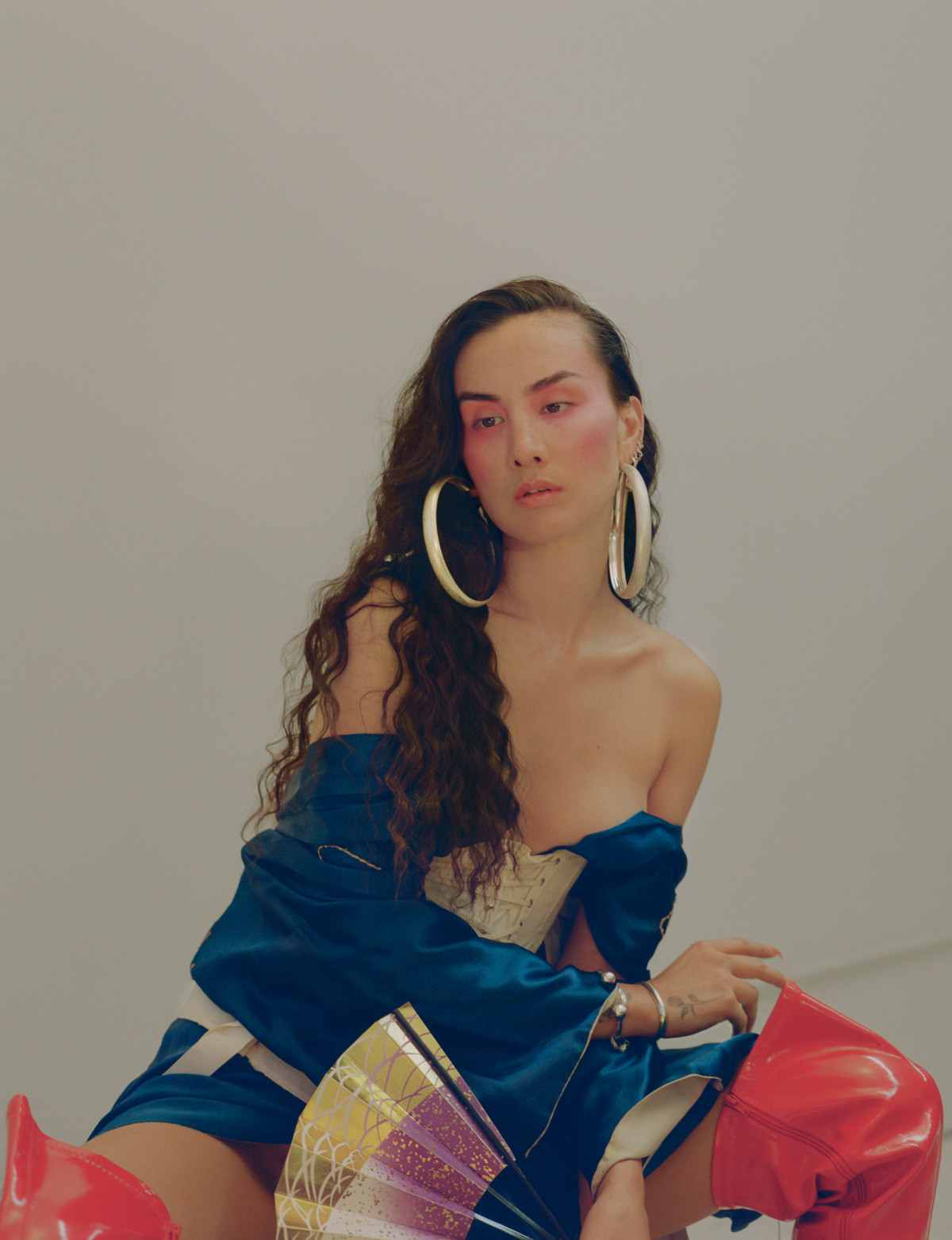
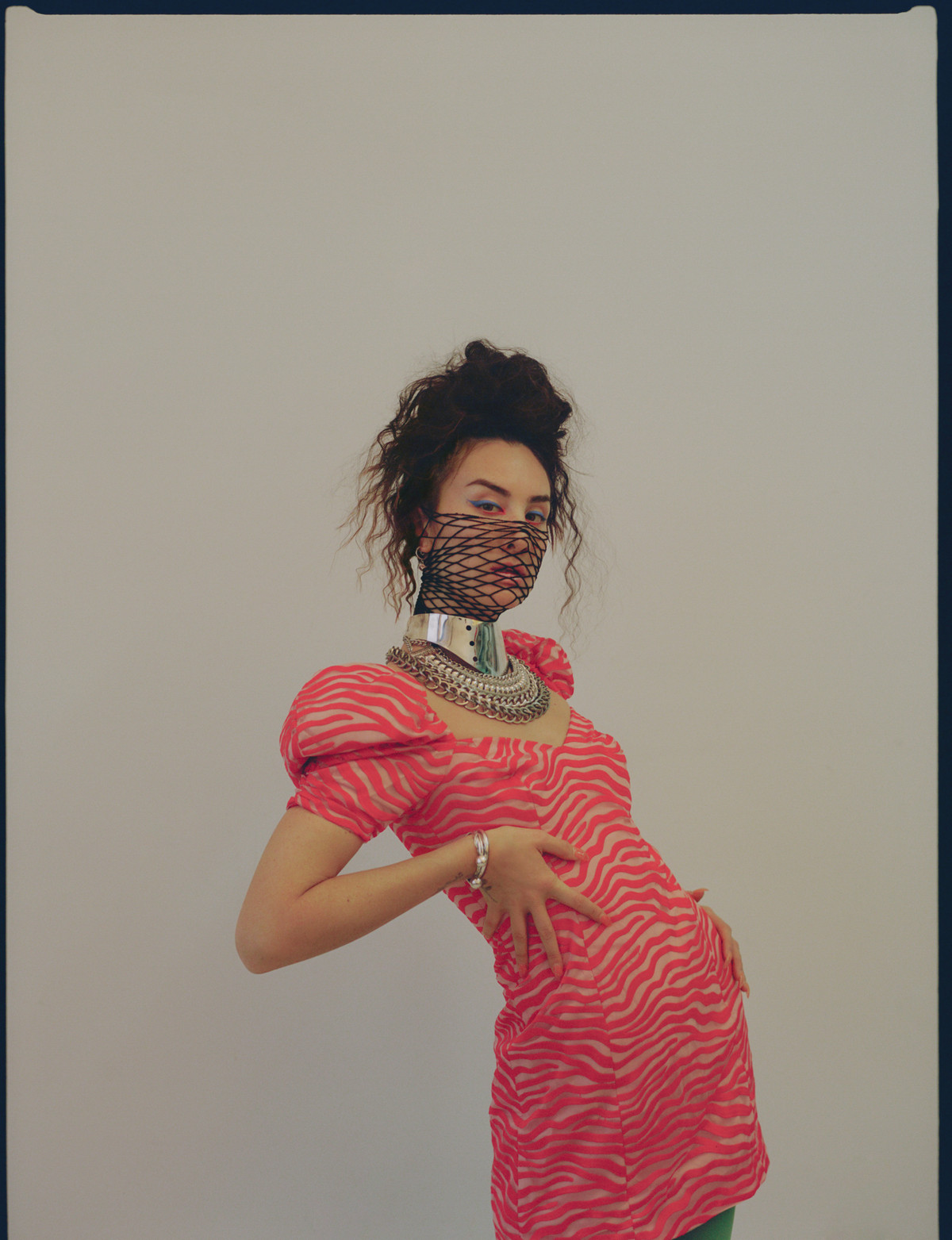
“Natalia brings out the drama in me,” said Miyako. “I love shooting with her because we can do whatever we want and just have fun.”
While Bellizzi has spent the past few years styling films like Good Time and music videos for artists like Jay-Z, Mantini has been shooting everyone from J.Lo to Barbie Ferreira. But no matter the subject—from high profile celebrities to Downtown cool kids—their vision never strays.
Peep their latest shoot exclusively for office, and read our interview with the best friends and collaborators, below.


What was the inspiration behind this shoot from each of your perspectives, as model and photographer?
Natalia Mantini: My inspiration was to have fun and not answer to anyone but ourselves about what we were making. I was feeling John Waters and aerobics videos mostly. I didn't want anything to feel constrained, and we are rarely serious when making things together. We take our work and influences very seriously, but we don't want any restrictions or outside trends to interfere. I prefer to be dancing and laughing the whole time. I wanted her to wear whatever she wanted to feel powerful and have fun. ‘Freak what you feel’ is often my inspiration when working with Miyako.
Miyako Bellizzi: It all started with a conversation about Natalia getting a new camera and how she wanted to shoot portraits of me with it. I was excited because I love medium format, and since she has taken portraits of me in the past, I thought it would be fun to do something a little different with this shoot—something fun and dramatic.
How would you each describe the work you’re making right now?
Natalia Mantini: I'm focused on making work that is influenced by subcultures and communities that shaped me, my love and admiration for cinematography, my ancestry.
Miyako Bellizzi: I've been doing more cinema which involves me thinking about individual characters that reflect a mood or tone, rather than an overall theme for shoots. So, when I work on shoots, I implement that same idea.
How do your styles interact with one another?
Natalia Mantini: Miyako and I are both heavily influenced by punk, goth, new wave, Chicano culture and the Bay Area. There are a lot of similarities that we grew up around, even though I was in Los Angeles and she was in Oakland. We have a lot of parallels in what we were drawn to as kids—whether it's music, party scenes or film directors. We have an inclination towards the freakier side of things, and grew up idolizing similar iconic women. I think our styles just naturally mesh well and tap into what we both love about each other's culture and purity. I think we often validate each other’s' style with appreciation.
Miyako Bellizzi: Natalia brings out the drama in me. We have the most fun together when we shoot. I love shooting with her because we can do whatever we want and just have fun with it. We play off one another's style and photo influences to create images that reflect us.
Who are some of your artistic influences?
Natalia Mantini: Lately I've been influenced by a lot of contemporary artists and musicians—Monica Garza, Mario Ayala, Cheyenne Julien, Jennifer Packer, Rhylli Ogiura from Krimewatch; the foto archive Veteranas and Rucas is huge for me; I love Wong Kar-wai. To get myself to a grounded place of figuring out what and why I'm making something, I like to listen to and read pieces by Penny Rimbaud. I am lucky enough to have some friends who work in film and am influenced and inspired by their process.
Miyako Bellizzi: Living in NYC is a constant inspiration for me. I take inspiration from everything I see—I'm inspired by real people mostly living their everyday lives. Friends who create art who inspire me are Emma Kohlmann, Heather Benjamin, Tamara Santibañez and Sonya Sombreuil. I love photography and some of my favorites are Mary Ellen Mark, Brassaï, Daidō Moriyama, Shōmei Tōmatsu, Robert Frank to name a few. I'm influenced by film, and directors I love stylistically are Wong Kar-wai, Godard, John Waters and my buds Josh and Benny Safdie.
What’s your collaborative process like?
Natalia Mantini: It's fluid and fun—it feels like we're kids playing. We conceptualize everything together and feed off of one another's energy. I think we value each other's opinion.
Miyako Bellizzi: I'd say it was a mutual meeting of the minds that we built together by taking inspiration from ideas we both wanted to showcase. It became a melting idea from different eras, different styles and genres that we like to create something different from what we've seen before.
How does your friendship positively contribute to the work you create together?
Natalia Mantini: It makes it enjoyable and gives me a feeling of making something with a sibling. There's a sense of freedom and presence to what we're doing.
Miyako Bellizzi: We are a very good team because we enjoy and take references from similar ideas. We are first close friends, and creating images for fun and the drama of it is just another day in our life. It's amazing. We can bounce ideas off each other and laugh throughout the entire process. I think it shows in the images we create.


What’s one way you’ve seen each other evolve as artists over the time you’ve known each other?
Natalia Mantini: Miyako has and continues to blow me away. I feel like her stage-mom. She has one of the most obviously pure and innovative ways of executing her style and I'm so happy it's being recognized in the way she deserves. I think what really hit me was when I went to see Good Time in theaters and saw her name on the opening credits. I started crying—I may have cried for an hour. I saw it twice in theaters. I could feel that the film had her touch in every scene, making it beautifully authentic. I couldn't be more impressed by her vision and the fact that she has built this all on her own.
Miyako Bellizzi: The last four to five years have been a rollercoaster for both Natalia and I in terms of highs and lows. We've lived together, we've worked together and have been on this journey together. I think about the times we were broke and had nowhere to publish our work—we'd still do shoots with the little money we had and figure out a way to publish our own magazine, Crave, with content that we wanted to share. I've seen her develop as a photographer and really find her niche over the last few years. I am so proud of Natalia and all of the beautiful women she's been able to photograph. She seems to only be getting better with age and I love seeing her process. Her passion to stay creative and inspired drives me to keep going. I'd say that's what friends are for: to push each other to be the best we can be. I feel that connection with her and it's really special.
What are your zodiac signs?
Natalia Mantini: I'm a Scorpio which some say you can tell by looking at me. I don't let it dictate my day-to-day, but I do like to connect with my astrologer friends to see what's going on with the moon.
Miyako Bellizzi: I’m very much a VIRGO.
What are your favorite New York spots to escape the chaos?
Natalia Mantini: Metrograph, Brooklyn Museum, Woodstock, NY and Dia: Beacon.
Miyako Bellizzi: The New York Buddhist Church, The Great Jones Spa, the beach and anywhere upstate.
What’s your dream collab?
Natalia Mantini: I need to shoot Sade.
Miyako Bellizzi: Wong Kar-wai and Björk.
What are you watching right now?
Natalia Mantini: I don't watch TV shows, except for true crime docuseries.
Miyako Bellizzi: Sex in the City—again.
Who are your style icons?
Natalia Mantini: My ancestors, Edith "Little Edie" Bouvier Beale and Selena.
Miyako Bellizzi: My mother, Cher, Debi Mazar and Björk.