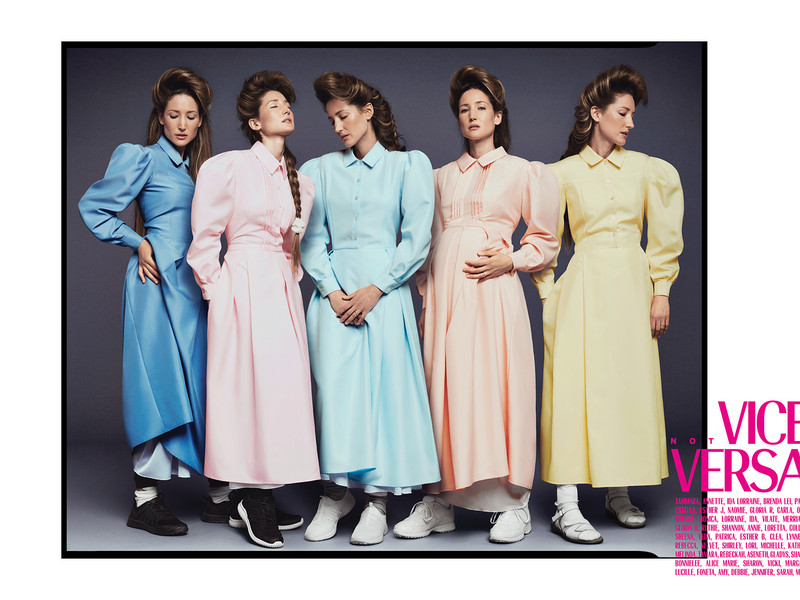
PRESENTE CONTINUO: the intimate ties between then&now

Starting May 30, PRESENTE CONTINUO will be available to purchase on presentecontinuo.com, cpcompany.com, and at the C.P. Company flagship store in Milan, Corso Matteotti 7.
Stay informed on our latest news!

Starting May 30, PRESENTE CONTINUO will be available to purchase on presentecontinuo.com, cpcompany.com, and at the C.P. Company flagship store in Milan, Corso Matteotti 7.

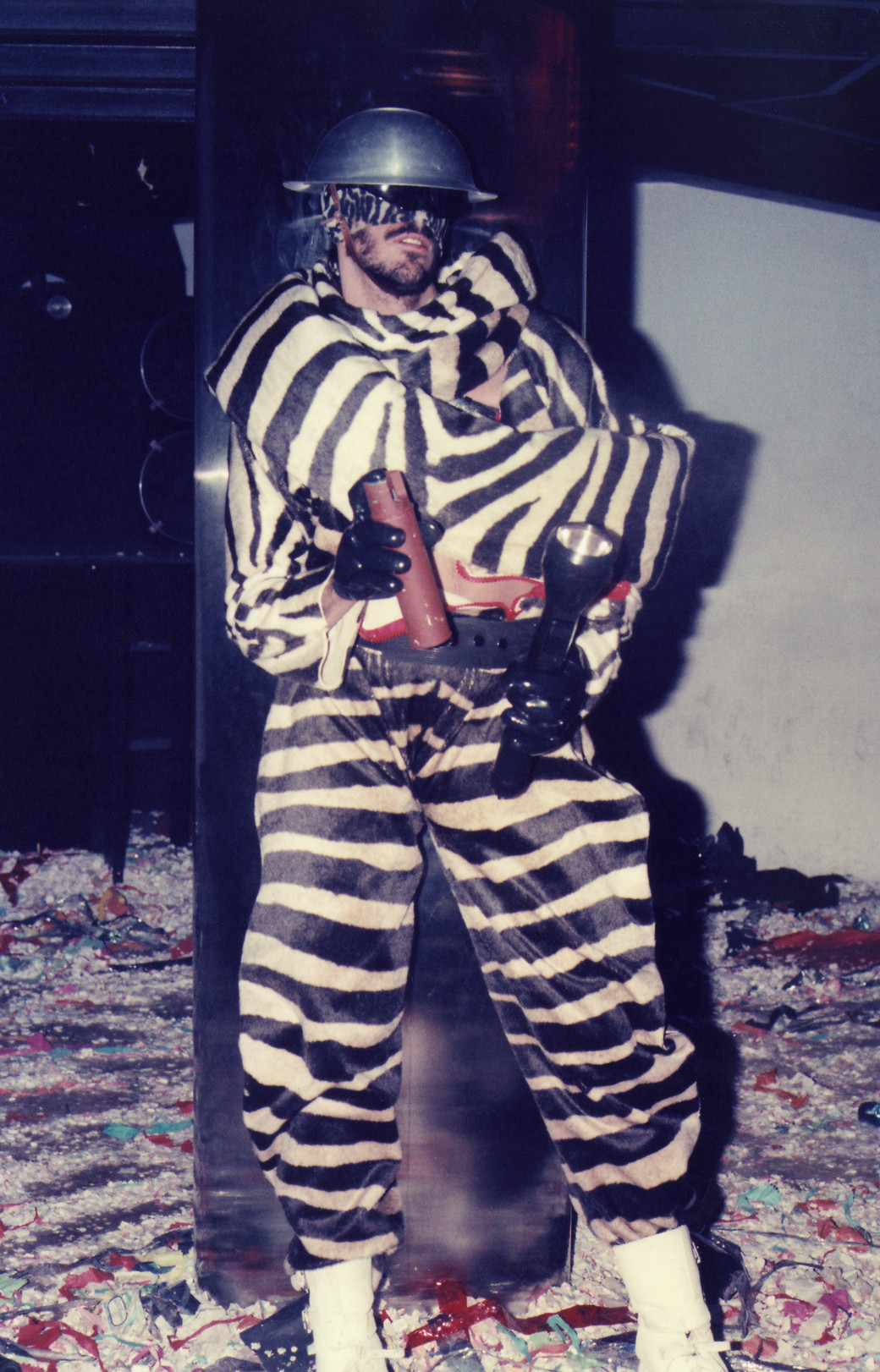
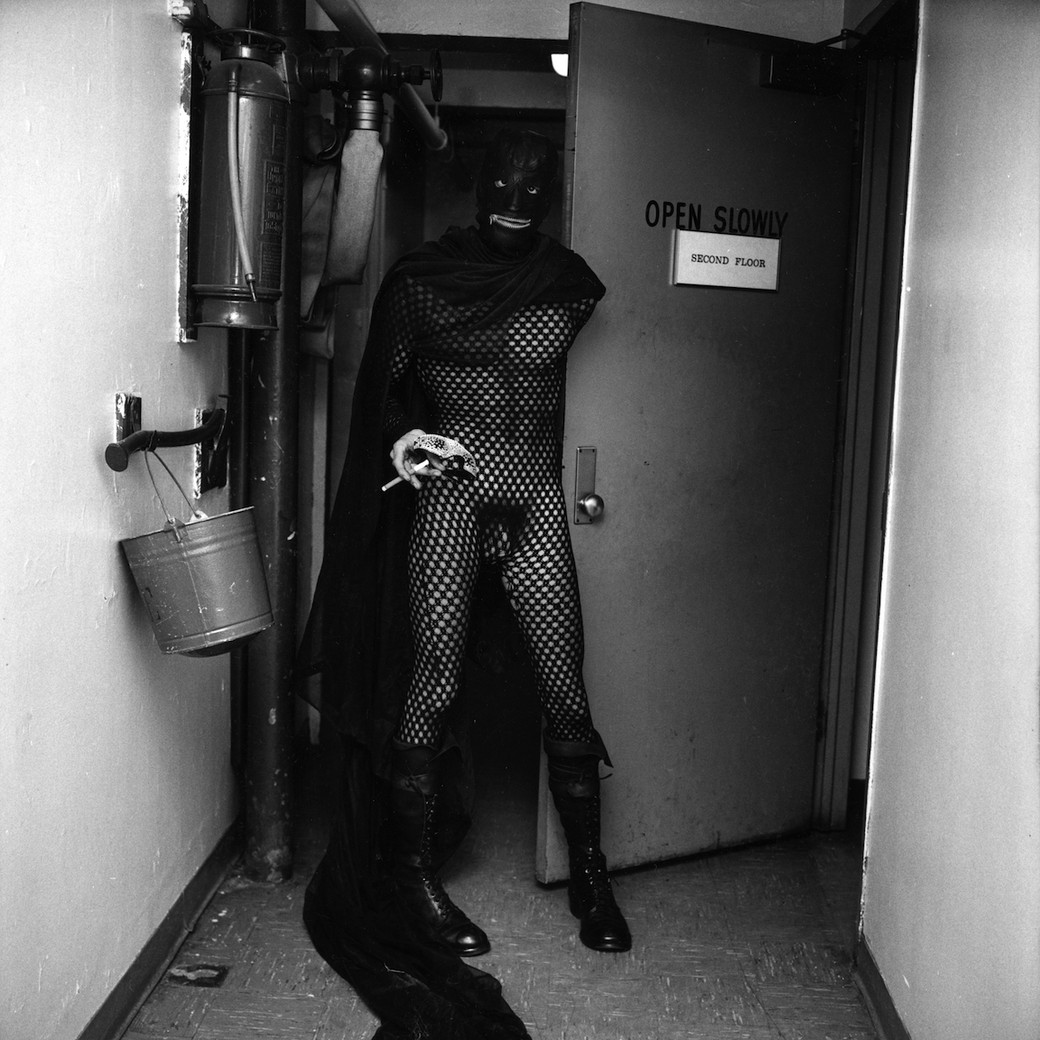
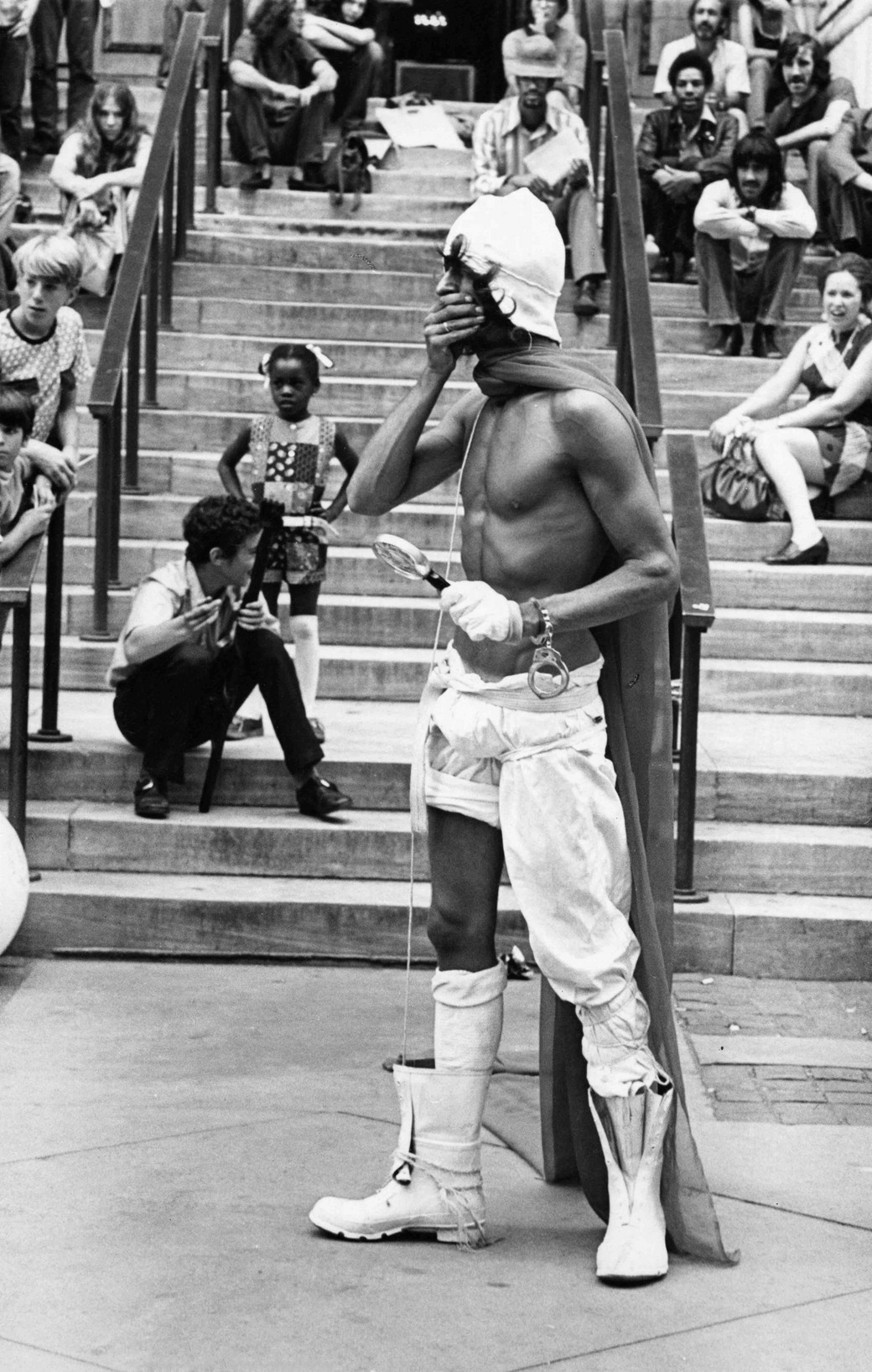
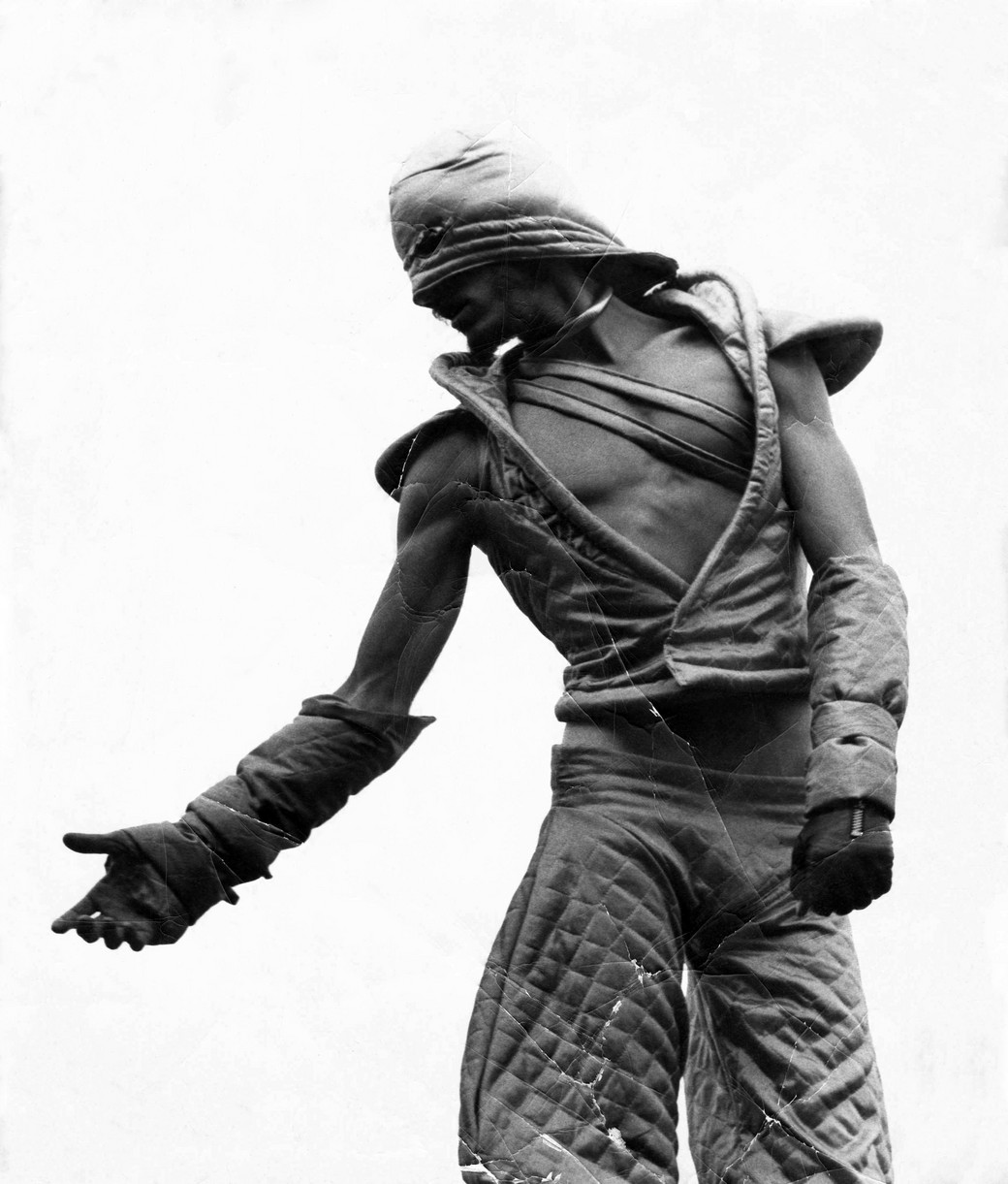
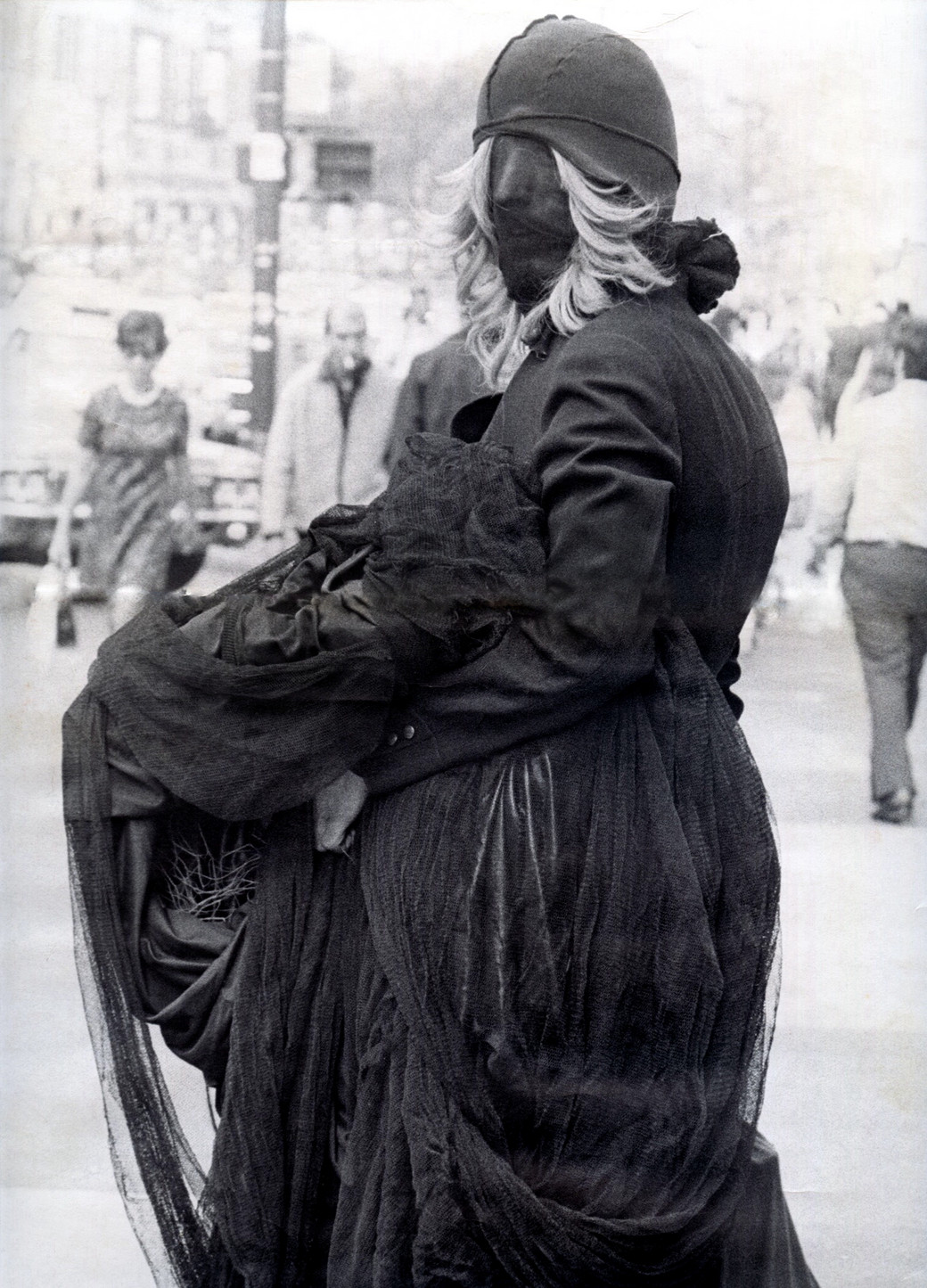
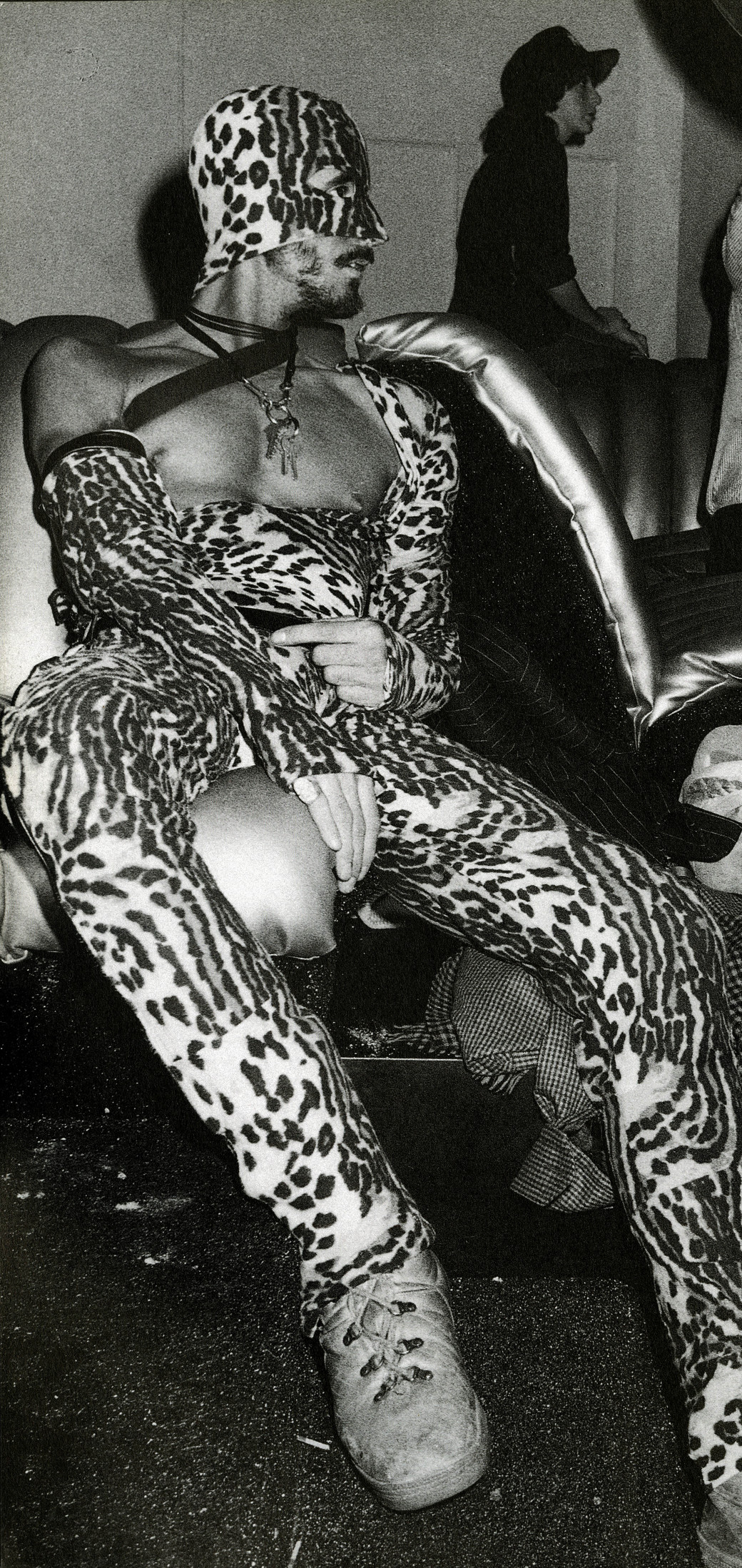
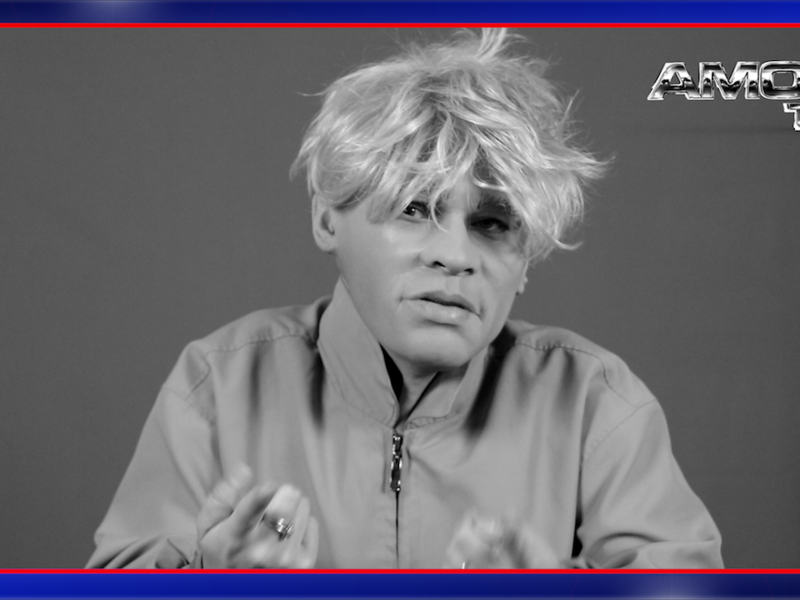
Gallo’s work—and unmistakable presence—caught the eye of everyone in the Downtown NYC scene, including Warhol. But after a sudden stroke in 1982 that left him partially disabled, he stopped performing forever, and slowly started to fade from the spotlight (or as Warhol would put it, his fifteen minutes were up). But even now, as new artists continue to pop up online and IRL everyday, with viral or not-so-viral performances, his influence on the Downtown art scene and its members is still palpable.
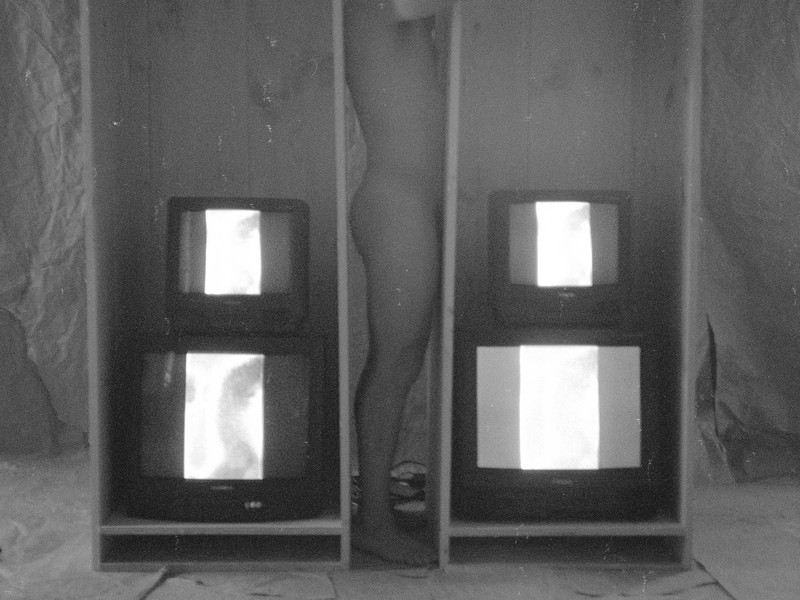
That's why, more than four decades later, Scott Rollins and Noah Khoshbin have brought the late Gallo’s legend to life in their latest exhibition, Richard Gallo: Performance and Studio 1968-1980 at the Cressman Center in Louisville, Kentucky. Open through February 23, with plans to bring the exhibition to New York City in 2020, the show features over 60 archival photographs, on view to the public for the first time. With help from the Richard Gallo Archive, the Watermill Center and Robert Wilson Arts Foundation, Richard Gallo: Performance and Studio 1968-1980 is an ode to the madness of the 1970s, of New York, and of Gallo himself—and the ground-breaking works he created.
View some of the exhibition images below, and revisit our Richard Gallo feature here.
'Richard Gallo: Performance and Studio 1968-1980' is open now through February 23 at Cressman Center in Louisville, Kentucky.
Photos courtesy of Scott Rollins & Cressman Center.

Of course, like all art, it’s open for interpretation; but it’s obvious that the intellectual work behind these pieces has already been done. This is intentional on Nnamdie's part, a response to what he describes as the current shift in pop culture: “Responsibility [shifts] from the producer to the observer,” he explains. “Images no longer enable themselves; they are granted the status of meaning-bearers by their audience.”
Don't trust me, I'm homeless is not just a response to this barrage of meaningless images, but a space where the resistance’s strongest warriors can all call home.
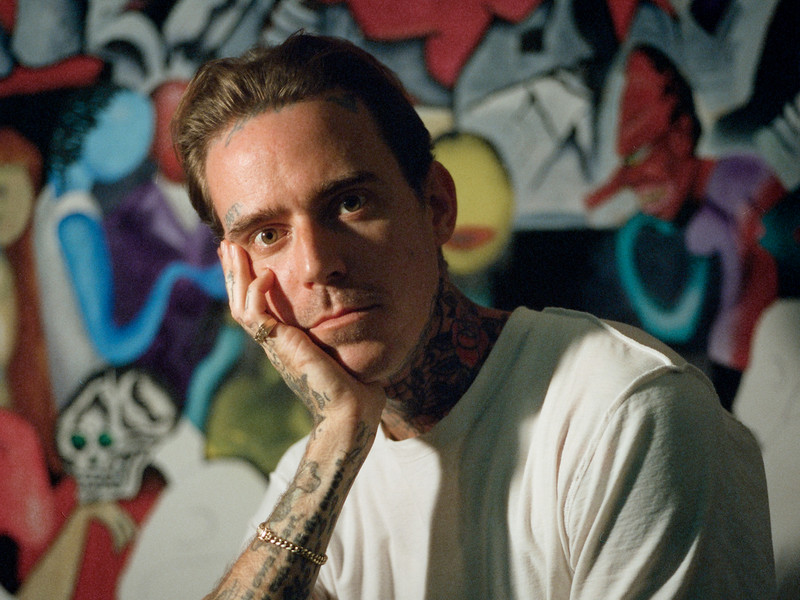
After the craziness of opening night, office sat down with Nnamdie to learn more about the show. Read our interview, below.


Tell me about the title. What does 'Don’t trust me, I’m homeless' mean?
The title is a statement that I know is jarring and was prepared to have a discussion about. Karen from Ed. Varie and I were not interested in poking fun at homelessness or mental health issues—the title is an entry point to a conversation that needs to be had. It’s about giving space to people who you might not think would ever make it. The statement 'Don't trust me, I'm homeless' translates into, “I don't need your trust, ‘cause I’ll be alright anyway.” And the dictionary definition [of homelessness] is broad. It’s about being a thing without a home. I’m hoping to expand that definition to people who have ideas but nowhere to put them—that’s what the show was about.
What was the reaction to the title?
I got a lot of trolling, a lot of DMs. People didn’t understand it. It was quite interesting to talk to these people and let them know that I want to talk about it, but I’m not going to put up with online bullying. I wanted to tell people that it’s okay if you don’t understand, but come by the gallery, anyway—I would love to actually talk about the show. Once you’re inside, you’re hit with the reality of it.
Some words trigger people—words like ‘homeless’—and that can halt conversation; or it can spark it. Sometimes real self-reflection is messy.
Yeah, and they might not even be going beyond surface level which is not interesting. I want to penetrate people, including myself. The title even makes me uncomfortable but as a person of color, I felt it would be important for me to stand, not buckle or waver, and to just speak about what this is as much as I can.
How do you think pop culture has impacted our understanding of art?
I think pop culture has completely shifted so many times—it shifted when I was writing the press release and it’s shifting as we’re having this talk right now. It’s ever evolving. I do feel very strongly that the internet is taking on different forms. So, there are lots of artists that have thousands of followers, but have never had a real show until now. Yet they already have celebrity. It's just so many things. One of our artists, Lizzi Bougatsos, she says shes the joker of the art world—her piece is expired dog excrement encased in a mason jar.


Was that the piece you were guarding?
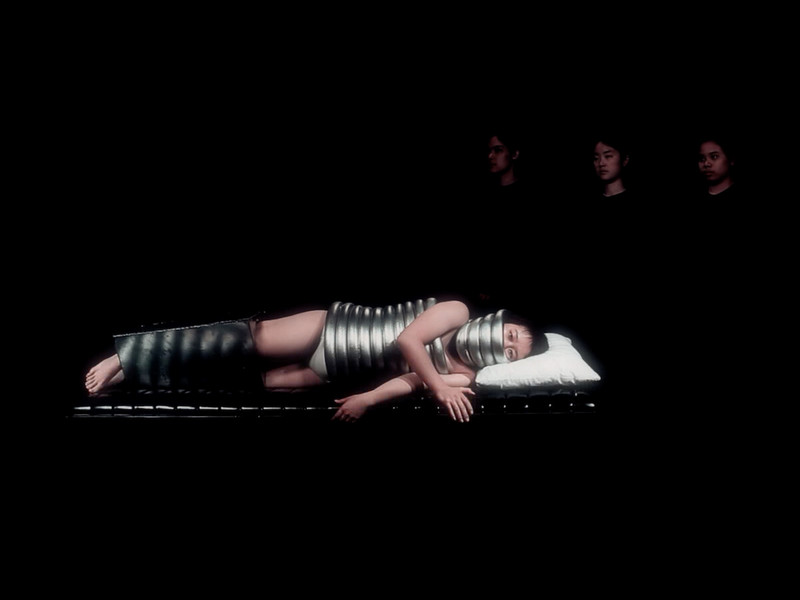
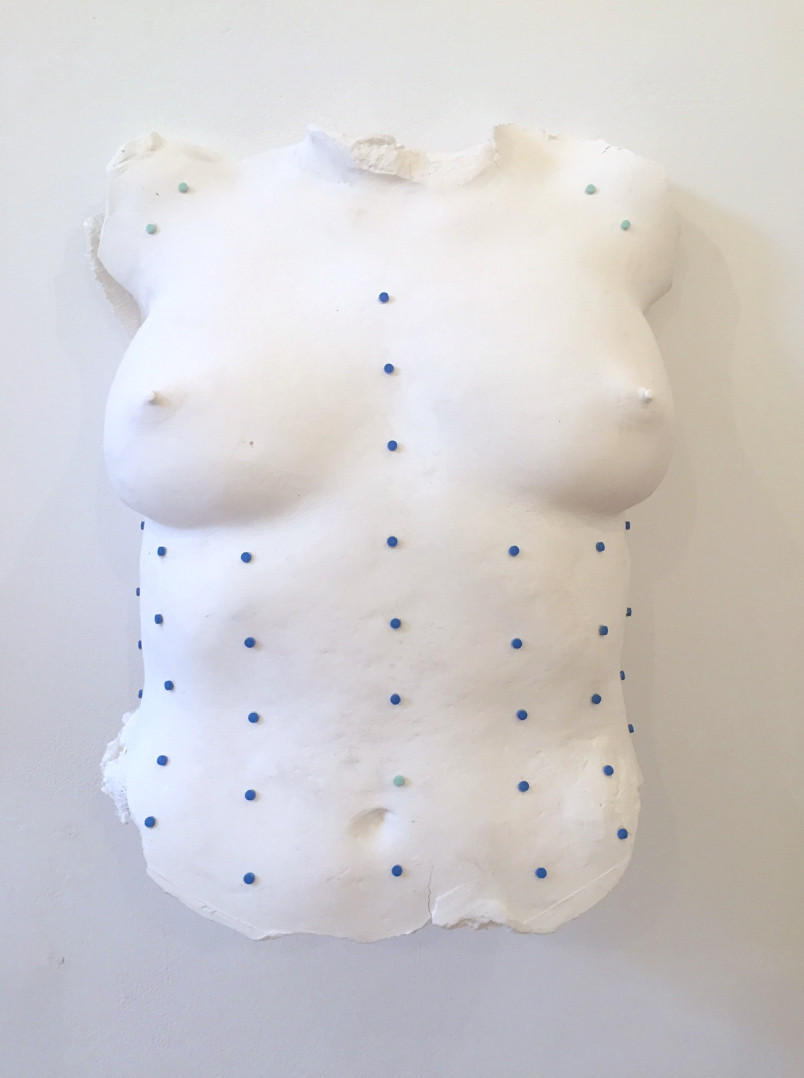
No, that was by Valentina Vaccarella, an Italian artist born in New York. That piece is really important to me and her. It's about her past careers that had to do with her body, sex work, etc. She casted her body and placed her birth control pills that she didn't want to take anymore, because they were driving her loopy, in the cast—they were embedded in the body.
How did you choose which artists you wanted to include? What connects all of the work in the show?
I didn't know that I was going to have such a wide array of people. Like I said, [the show] has been marinating in my mind for two years, so it went through different phases and titles. I had some artists in mind, though. I always want to show an array of established and emerging artists. Unlike the show I did with Wolfgang Tillmans and Carlos Reyes, which was really specific, this show is more of a celebration of the underdogs, of people we thought might not make it—it's a celebration of us. That's the only connection. It's a unanimous, ‘We did it.’
As far as their practices go, they all have ideas and they all need a home for those ideas. That’s all the show is about. There’s no focus on just one person. Jordan Wolfson’s work is in the show, titled ‘Con Leche 2009,’ and while it is the main audio of the show, it’s not the main focus. Jordan is amazing, for me, because his work operates on so many levels, and so does the exhibition. I’m not interested in being irresponsible with the audience—I wanted to guide them, but I also can't tell them what they should be thinking.
How important is it to have a physical space for work, opposed to visual?
It’s crucial for the work to breath. I’ve been thinking about this show for two years. It wasn't ready to come out to the world at that moment. Now, where we’re at politically, we need to have serious discussions about the future and not be too scared to talk about things that might be painful. The show is all about the artists—I didn't even want to have my name on it. It's about the idea of the show, and the space, and the idea of desperately looking for spaces—that’s what homelessness is: searching for a place to put yourself.
‘Don’t trust me, I’m homeless’ is on view now through February 10 at Ed. Varie Gallery in New York.
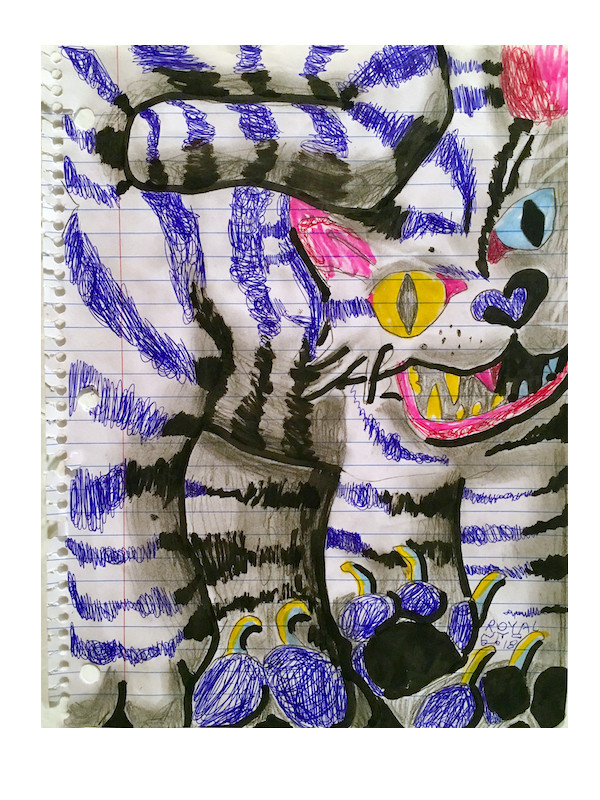
Art work by: Dana Lauren Goldstein, Valentina Vaccarella, Andre Yvon, Monica Hernandez & Royal Jarmon. All photos courtesy of Restaurant Projects and Ed. Varie.

What world lies on the other side? office spoke with Theodora to find out.
I love that the exhibition title is an anagram—it’s so cool. How did you come up with that?
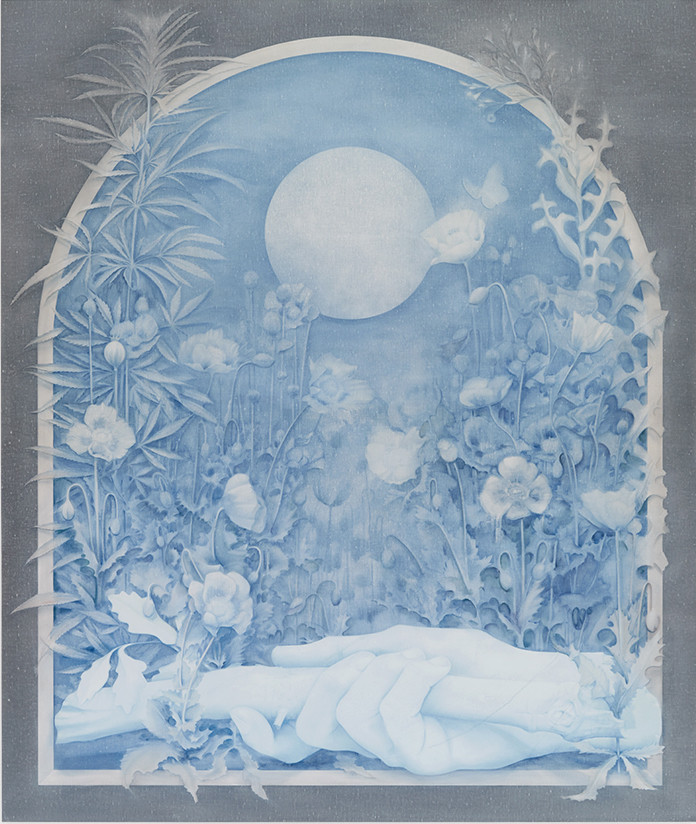
In doing research for these paintings, which involved looking into the histories of various psychoactive and medicinal plants, I came across the term dwale—an Old Norse word that translates to 'trance' or 'sleep.' Dwale, also the given name for a widely used anesthetic in the middle ages; a heady tincture comprised of various narcotic herbage. Through dwale, I came across the anagram weald—another archaic term, this one from the Old English meaning 'forest.' With weald and dwale, and the linguistic play between them, we have two words that locate the imagery in the show to a misty space, somewhere at the cross section of landscape and mindscape.
There is something very Medieval about the pictures—do you have any favorite hits from Medieval or Renaissance art?
I’m endlessly inspired by the stained glass windows and woven tapestries of the Medieval period. The Unicorn Tapestries at the Cloisters are among my favorites.
I’m a fan of the Tarot card-like imagery—do you read cards? Have you ever visited a psychic?
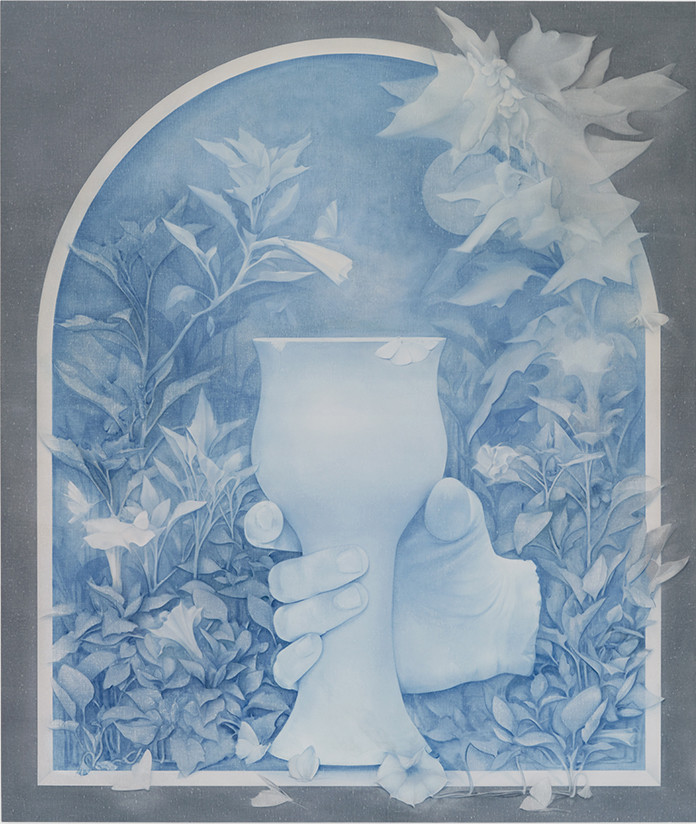
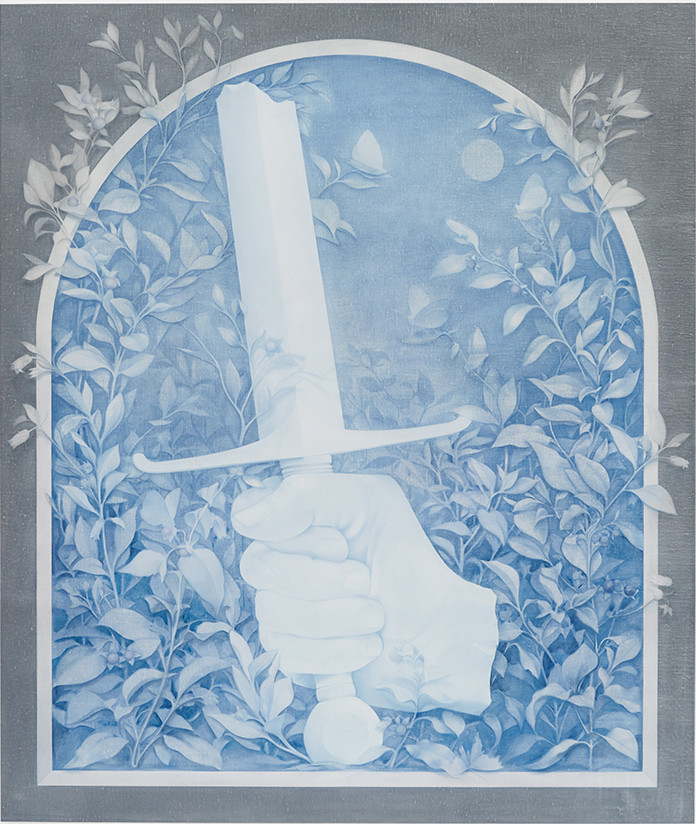
The emblems in the Monument (weald) paintings are based on a suite of symbols from early Tarot card games from the middle ages— the cup, coin, branch, and sword—motifs that have historically stood for the various planes and experiences of earthly existence, essentially what is known as the human condition. My interest in these symbols is rooted in an inquiry that is decidedly humanist, but the avenues that we take to define and discover meaning and purpose in life are endlessly fascinating to me, and for some that includes divination. I’m interested in these histories, but I don’t personally subscribe to any such mystical belief system. I believe in the transcendent power of art.
Do you grow any plants or herbs? What kind of power do plants have over humans? How do you channel this power?
I do have an area on my hillside where I’ve cultivated a few of the plants that appear in this body of work. Most of the imagery of the Jimsonweed were gleaned from this source. The Jimsonweed plant is ubiquitous in Los Angeles—they grow wild and widespread, cropping up in wastelands and off of freeway on-ramps. In the spring, they populate the Arroyo River path near my home and studio in Pasadena, where I often walk in the evenings. From there, I borrowed a few seeds and planted them on my hillside. All of the plants in these paintings belong to a world of remedies, poisons, sacraments and aphrodesiacs that alter, enhance, or destabilize the human experience in one way or another—for better or worse.
There is a lovely sense of restraint in your work—what would happen if you totally let go?
My painting process is slow and precise. The light source in the work comes from the white ground (the gesso), so there’s a certain amount of preservation that takes place in order to maintain that purity and glow from underneath. That said, I always leave some room in the work for aberration, and for changing course along the way. Sometimes, that happens quite dramatically, and other times those decisions are subtle—faint marks and ghost images visible through the layers; a record of how they were made. If I totally let go... well, there might not be any paintings—they might take a different form entirely.
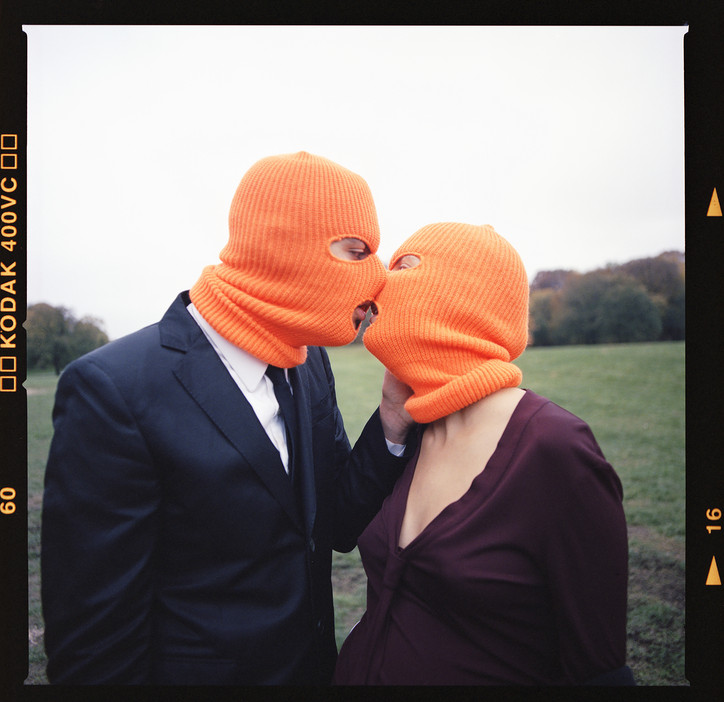
'weald' is on view at Paul Kasmin through March 9. All images courtesy of the gallery.
Lead image: 'Monument, No. 2.'