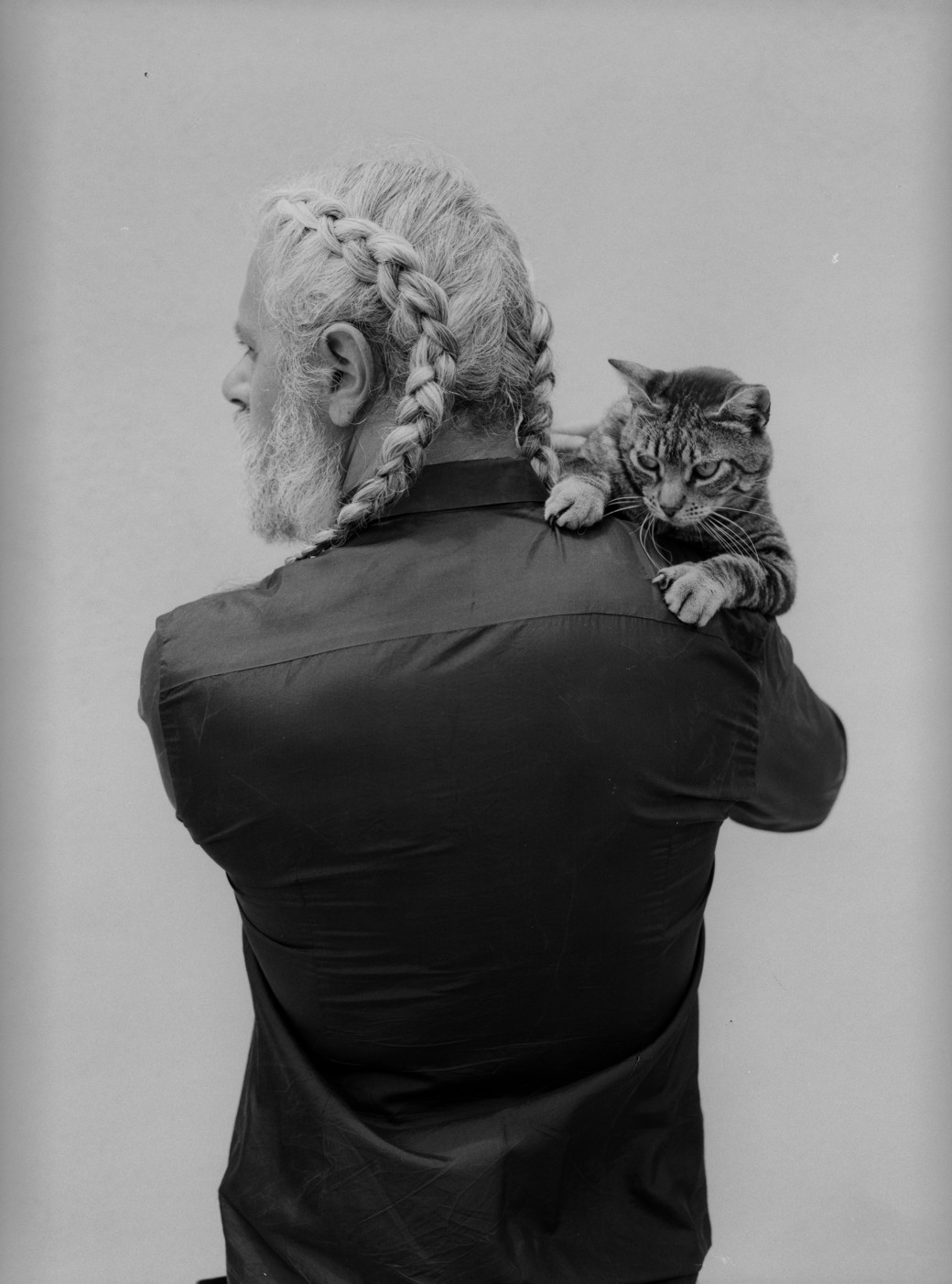
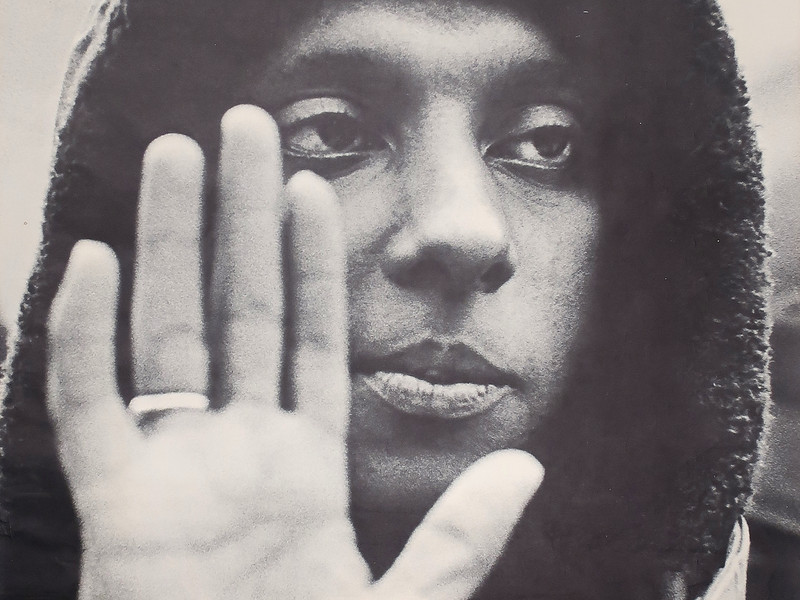
PRESENTE CONTINUO: the intimate ties between then&now

Starting May 30, PRESENTE CONTINUO will be available to purchase on presentecontinuo.com, cpcompany.com, and at the C.P. Company flagship store in Milan, Corso Matteotti 7.
Stay informed on our latest news!

Starting May 30, PRESENTE CONTINUO will be available to purchase on presentecontinuo.com, cpcompany.com, and at the C.P. Company flagship store in Milan, Corso Matteotti 7.

I left the screening unsure of how to feel. It was a lot to take in.
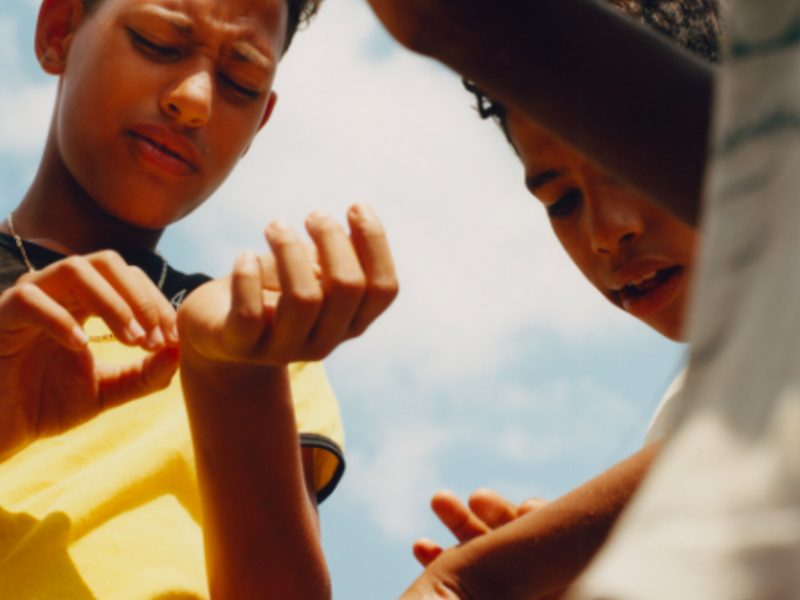
Men are not raised to be sensitive, vulnerable beings. Jonah Hill explores this concept through the antics of a particular crew of skaters 13-year-old Stevie becomes involved with. You witness the contributions, both small and large, made throughout that latch onto Stevie's innocent mind, brainwashing him into believing and perpetuating the toxic behaviors and ideals that men so often celebrate each other for. And you can't do anything but watch.
While Stevie is the main lens from which we view this world, every character has their own specific narrative. We see the layered complexities of racism, homophobia, toxic masculinity and other problematic normalities we still experience within the skate community, and society at large. But at the same time, we see how these boys support, and help each other, serving as safe havens from various levels of abuse at home; as coaches and teachers when it comes to skating, music, girls, life. Like the characters’ own personalities, life, and most often, the truth, can be messy and of course, hard. But that’s the beauty of growing up. And Mid90s captures all of it.
office got the chance to sit down with Hill, surrounded by his crew of teenage skaters, to talk about the film and overcoming people’s perceptions. Read our interview, below.


First of all, congratulations!
Thank you.
I’m 23, so I have this flashback memory of being on my porch at home watching Superbad with my friends when I was 13. It’s amazing to see a film so starkly different from where you come from.
Long journey, guys.
So, how did this process begin exactly?
I mean, I guess you could start there in some ways. That was a seed planted for me. That was a group of filmmakers—Seth Rogen and Greg Mottola—that made a movie that was their exact voice and different from what they had seen, what had been missing. So, it was sort of a seed planted in my mind that you can make something that’s truly in your own voice. What’s interesting is that people do expect certain things from you, but as an actor, you’re a color in someone else’s painting. I’ve been a good green for a long time, and I love being green—it’s awesome—but if someone wants to paint purple over it, they’re going to do that. I spent my 20s kind of doing things that people thought I should do as opposed to who I genuinely was. I’m my own person, I have my own voice, and what do I want to say? What kind of filmmaker do I want to be? And when I look at my heroes, like Mike Nichols, or people who started in comedy and went on to be amazing filmmakers—you only get one shot at your first film, you only get one swing at it, and from the people I love and admire, it came from a very personal place. So, I waited until I really had something to say and knew what kind of filmmaker I wanted to be, and that’s why I chose Mid90s.
Have you always been interested in skateboarding?
Yeah, I grew up skateboarding in LA in the mid-90s.
Go figure.
I spent every day at the courthouse for four years—that’s a place featured in the film—and I never got great. Like, even being around these guys—becoming friends, making a movie—it’s exciting because I still would trade all of my filmmaking skills for Na-kel [Smith, who plays Ray]'s tre flip, you know? It gave me a real point of view and aesthetic, a group of friends, a family. It taught me about music, because everyone liked the right kind of music, dressed the right kind of way. It’s like, you either have that outlook or you don’t, so I knew it would somehow be a part of my first film.
How did you go about casting the project?
It was an unbelievable process. A friend of all of ours, Mikey Alfred, who I originally hired to just shoot skateboarding for the film and shoot behind the scenes, but he did a really great job and became a co-producer—he knew a lot of these guys and girls and brought them in. But Sunny, I saw a photo of him and then I saw him at his local skatepark. Then I brought Lucas one day to see what the vibe was like between them. I mean, it’s a long individual story for each person, but each one of these people brought this movie to life. Each one of them. And I’m so individually proud and excited to be a part of their journey in this way.
The film had a really organic, authentic feel to it.
The hardest acting really is naturalistic acting. They weren’t just playing themselves—they really had to become these characters, and that’s acting. So, to do that, and have it look like they’re just talking, and hanging out—that’s so much effort on everybody’s end. But that’s what makes you an artist—going out of your comfort zone. Man, I just can’t tell you how amazing it is to watch everyone here do their thing because the main thing about this movie, especially, is that if you give 99.9%, it’s a failure. If you don’t give 100% vulnerability, it’s corny as fuck. So, I’m just grateful for everyone giving that 100% because it’s really not easy to do.
Yeah, and this is most of their first time, right?
It blows my mind. Even watching it last night—it’s funny because I’ve seen it a bajillion fucking times, but I was watching them watch it, and it just fills my heart in a way I can’t even describe.
What’s really incredible is that you took so many actors and gave them roles that were totally different than everyone would expect—especially with Lucas Hedges.
Well, look at my career! I’ve made a career out of it myself.
Honestly, the film is uncomfortable to watch in some moments. Was that intentional?
100 percent. I mean, I’m actually glad you brought it up because we’ll have these amazing screenings, everything will be so positive, and there will be one person that misunderstands the blatant homophobia, toxic masculinity, the abuse—they view it as me celebrating that, and obviously it’s shown so explicitly to hold up a mirror to how we were in the mid-90s, and all the things we have to unlearn. The way they talk to and about women, the homophobic slurs—it would’ve been so disrespectful to have retouched it with a modern lens because that wouldn’t be the truth. The more poignant thing to do is to show how ugly it was, and have it be that blatant. In fact, I could have left that all out of the movie, but it was the only reason to do it.


I’m queer myself, and obviously hearing the word ‘faggot’ every other line at times, was not enjoyable for me. But you’re right, it’s the way it was and needs accountability.
Especially 20 years ago! When I grew up skating and people were saying that so regularly, one or two of those kids was actually gay. But the uglier it is, the more honest it is. And in regards to sexuality, the scene between Sunny and Alexa—he’s not even enjoying the experience. He’s terrified! It’s not like, ‘Hey, I’m about to go fuck this chick.’ He’s shaking. He only enjoys it when he realizes it’s currency to raise up within the group. Popularity, you know? That’s another important lesson to unlearn. To me, some of that stuff is the best stuff about the movie. So, it’s nice to have a thoughtful conversation about it.
Right, and there’s also, like you said, the fact that some people might see the film and think it’s totally normal. So, it’s really nice to hone in and flesh it out.
When Wolf of Wall Street came out, there was some major uproar. But we were making fun of those douchebags when some people thought we were celebrating it. I mean, I’m just here to tell the truth, and I respect the audience enough to take away what’s important. I think it’s ugly, I think it’s bad, but that’s what the truth is, and I need to it and have you walk away with something to really feel. Then, hopefully, we can get to a place where people realize, ‘I don’t want to be like that.’
Now that you’ve made your first film, what do you want people to know about you as a creator?
This is my first creation; my first album; my first painting. This is it, and all of my friends and family helped bring it to life. Hopefully, I’m lucky enough to make another one. But what I’ve learned, having had this long career and doing a lot of things that didn’t come from my heart, I just want to continue making art that means something to me. Living a human life is painful and joyous enough to write about constantly. I don’t need superheroes, or anything like that. To me, the human experience is a lot. It’s like, facts: I’ll always have a job because life will always be hard.


office called the photographer to talk about her new book, now available at the office Newsstand.
Where are you now?
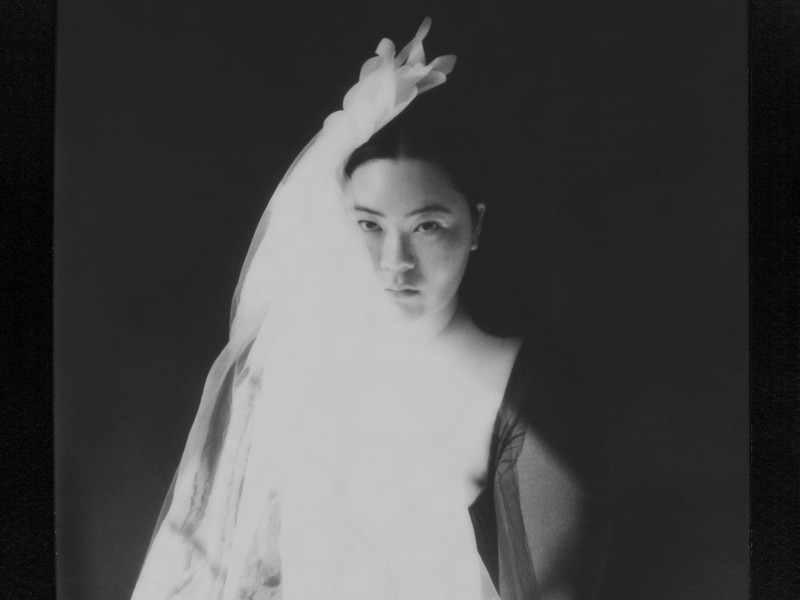
I’m in New York now, but heading to Alabama tomorrow for ten days for another project that I’ve been working on since last year. I don’t know when I’ll finish it. I’m always working on many different projects at the same time and they’ll probably continue on for the next five or six years. Whenever I have time or money, I travel to photograph for my projects.
What were you like as a teenager growing up in Japan, which has a very conservative culture?
When I was younger, schools were more strict than they are now. There were so many rules to follow and that’s part of why I left Japan—because I knew there had to be another way.
Were you rebellious?
No, I was actually good at following the rules. I was a leader of the class. I was the teacher’s favorite. Even if I had things to say against the rules, I kept them to myself. I was a good student. But I didn’t really agree with the system.
What was it like coming to liberal America for the first time?
I went to LA for six months when I was 18. What I really liked about American culture is that you can really be yourself. You don’t have to follow anyone else. It made me think that I wanted to leave Japan. America was a great place for opportunities. And at that time, I was really looking for what I wanted to do with my life. I thought that New York, especially, could give me options. It could open my eyes to discover things that I didn’t know about.
How do you think it changed you, moving here?
It changed my whole perspective on life. Living here and working in this industry changed my way of thinking. I think it made me more vocal and stronger. When I moved here, I didn’t really speak English. So, I learned through photographing people for this street photography magazine called Street. It was before the internet and blogs. And my roommate had an old issue of the magazine. I saw all of these photos of London and thought I’d reach out to the Editor in Chief and see if they wanted photos of New York. And so that’s how I started. I was outside all of the time. In winter and in bad weather, I was always taking photos. I was very shy in the beginning, but I was forced to speak to people when getting their photographs, so I learned to not be so shy and my English improved this way. And before this, I’d never really thought about becoming a photographer.
It must have also opened up your social life a lot, as well.
Yeah I met so many friends and people from all over the world. Like, if I met some people from Iceland, I would end up visiting them in their home countries to photograph them.


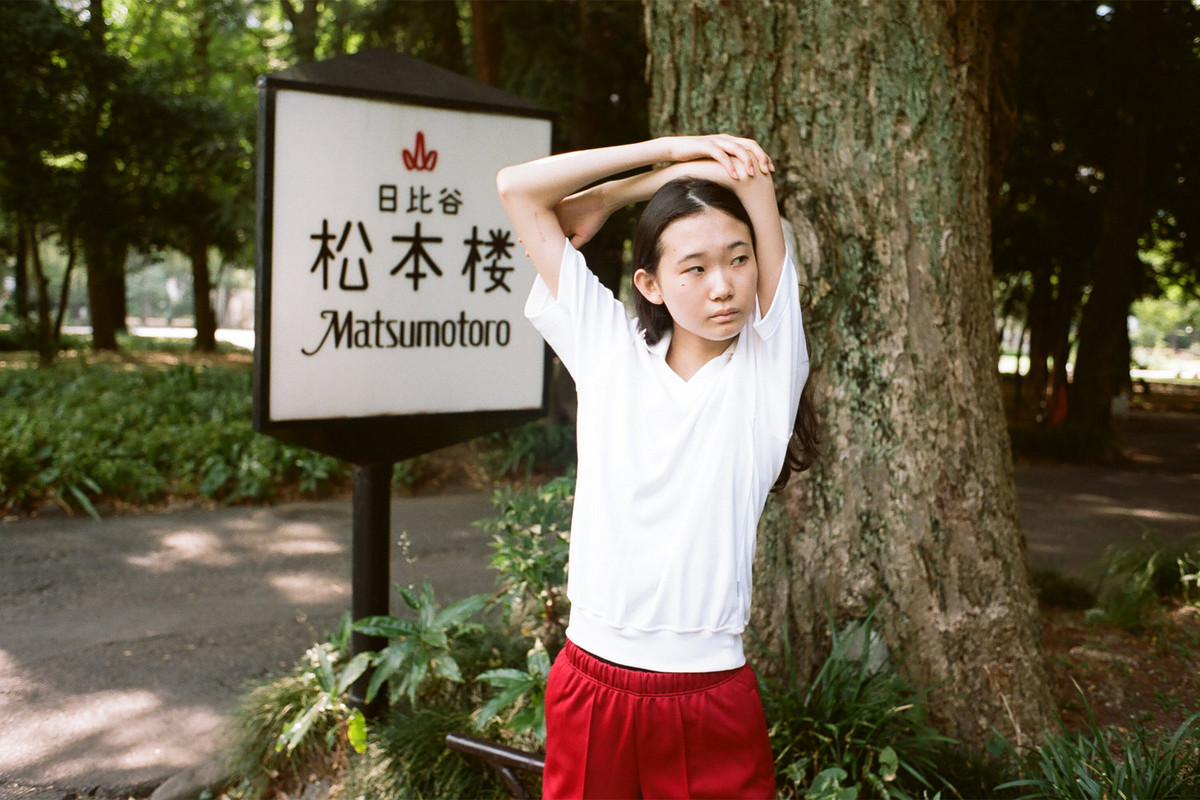
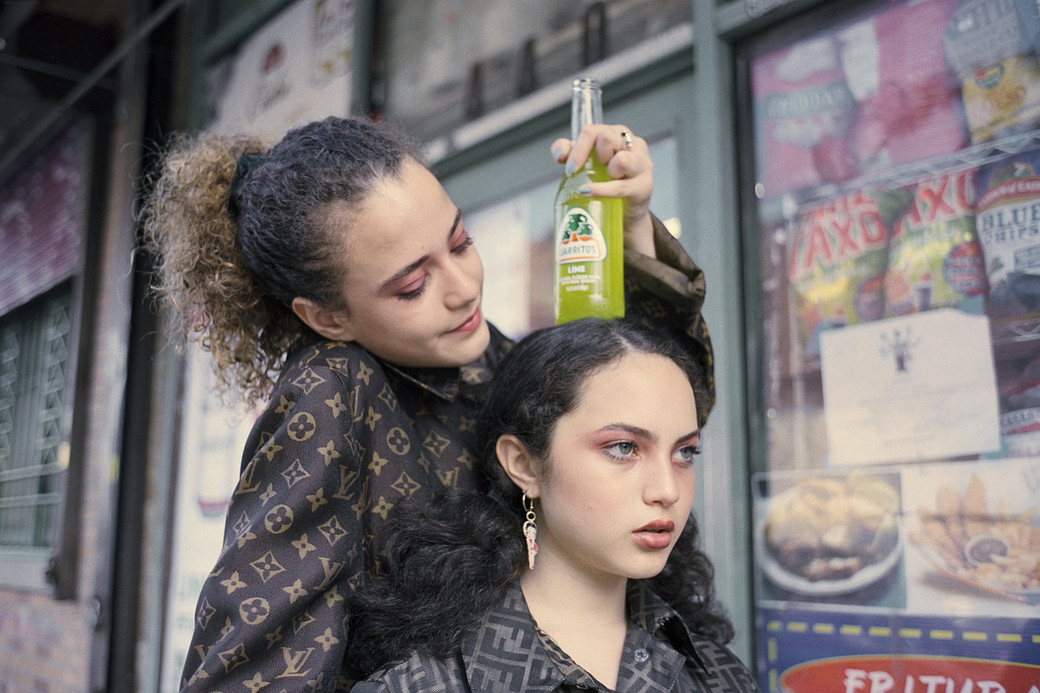
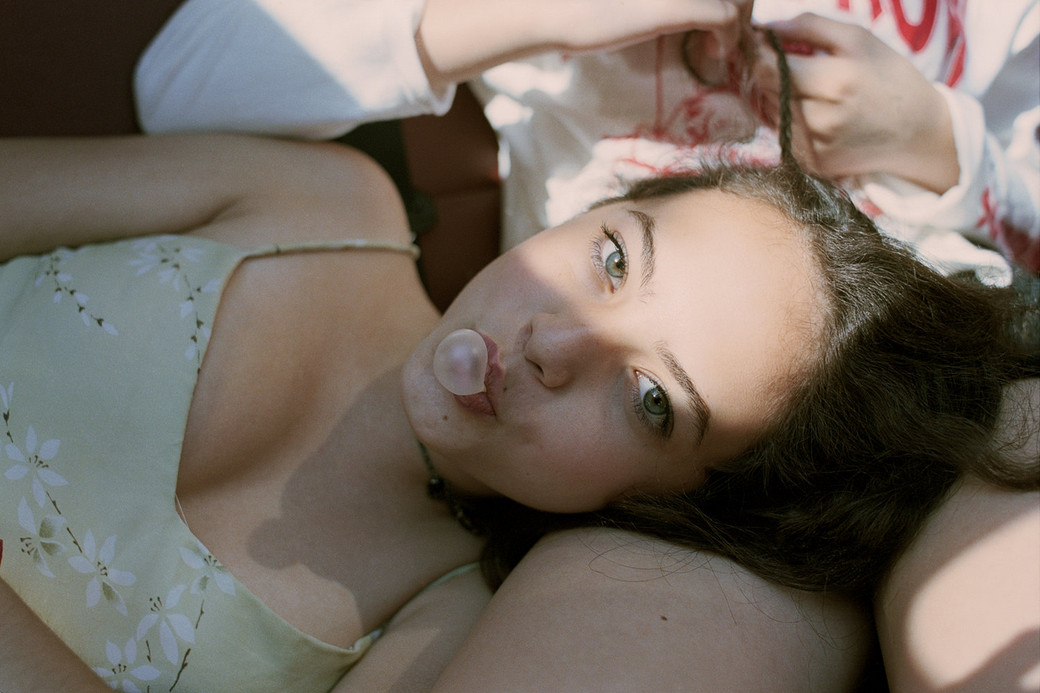
How did you meet the four girls in Teenage Riot?
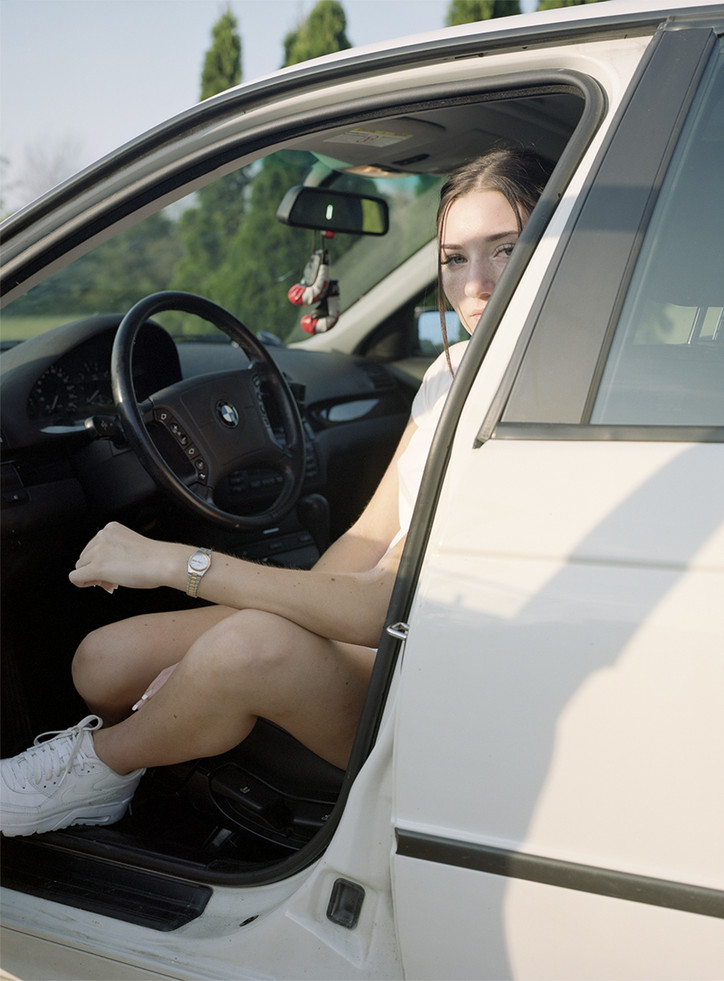
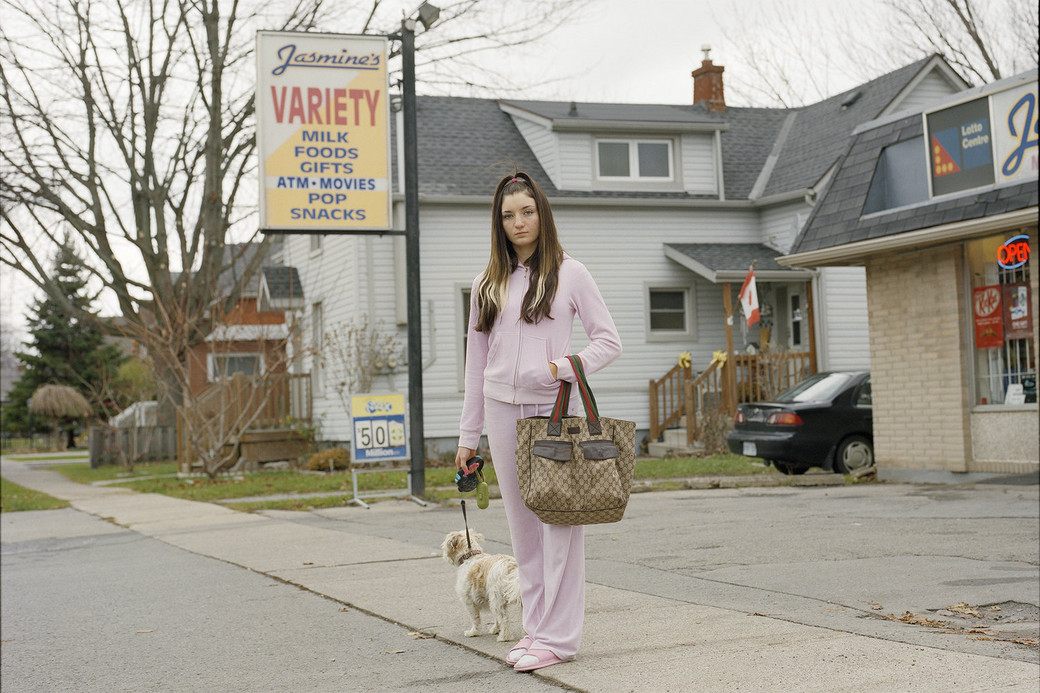
The place they grew up in really affects who they become. For the girl in Canada, she’s my book publisher’s daughter. I met her at the New York book fair three years or so ago. I was surprised how different she was from her parents, who are very cultural. She really likes Kim Kardashian and had really crazy eyelashes. I thought it was so interesting that she grew up in an art environment and had such dissimilar interests from her parents. That made me want to photograph her. So, I spent some time up with them at their home in Canada. Because the town is very small, all of the information she gets is from social media and the internet. She would wear Juicy Couture pink velour tracksuits and was really into Victoria’s Secret. Every year I went back and she would change her style—it was always very different from the year before. And when she turned 16, she got her driver’s license. So I would drive around with her in the white BMW her parents gave her.
Tell me about the girls in Brooklyn.
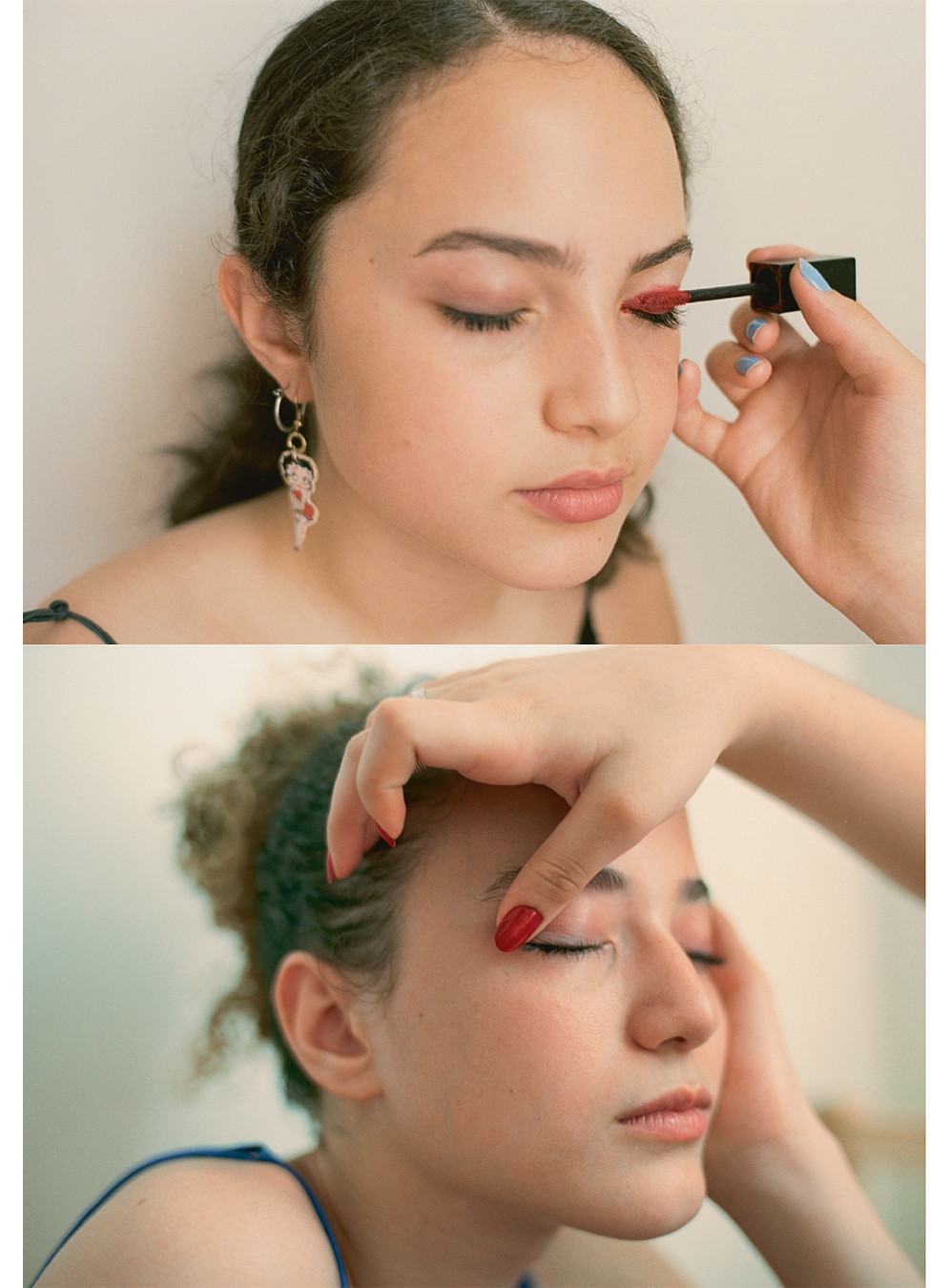
The sisters, 14 and 16 years old, were born and raised in Bushwick, in a kind of rough area. They’re into smoking weed and boys. I thought it was really funny. So, I started following them around to the places they went.
The Japanese girl, does she remind you of yourself?
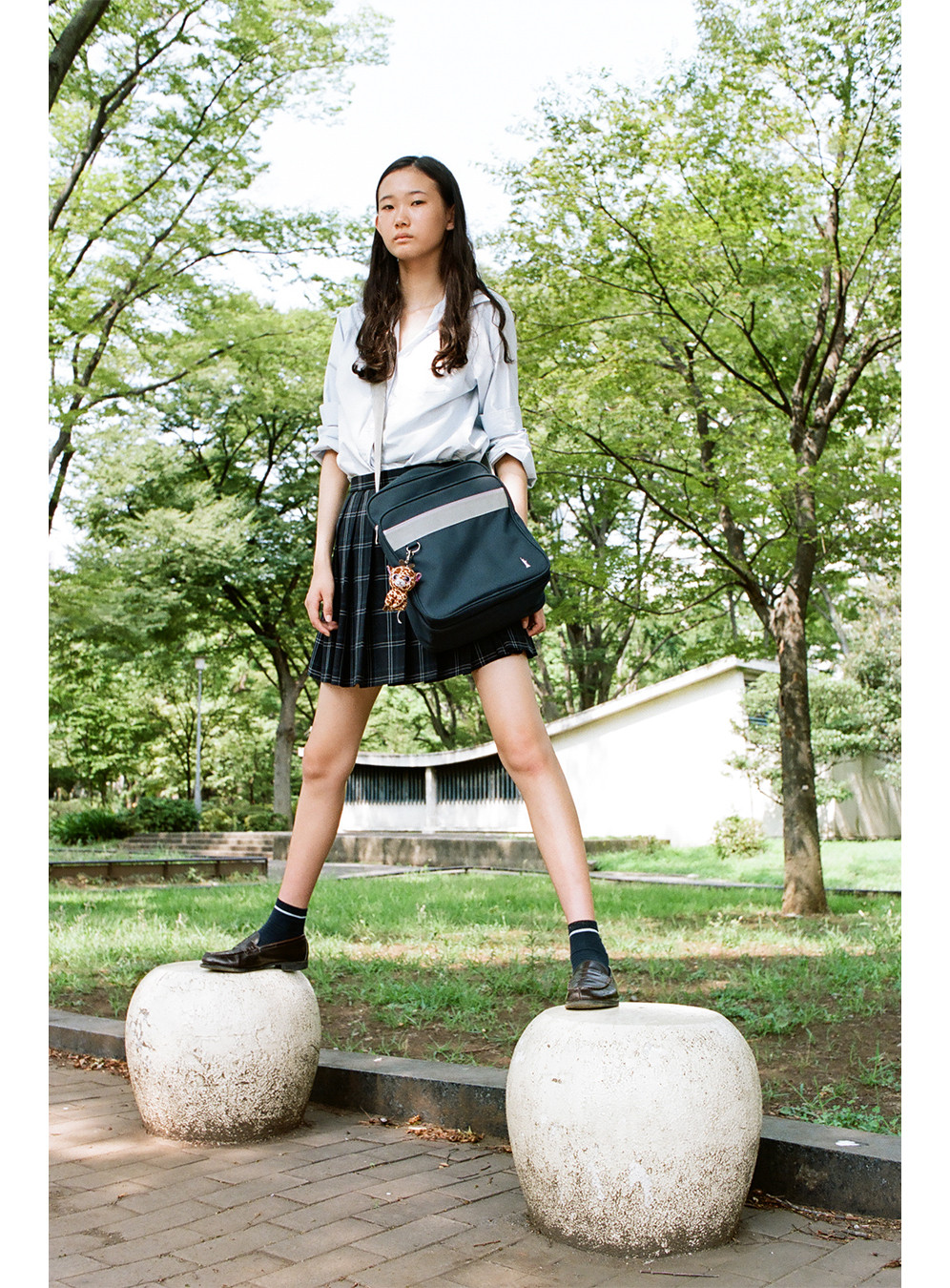
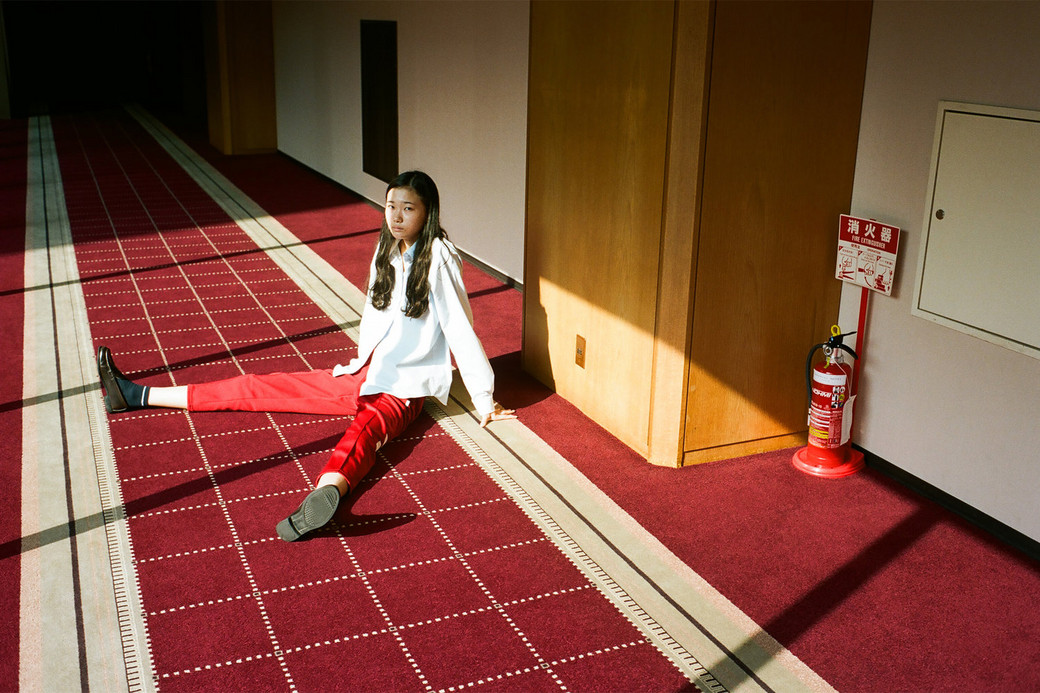
Yeah, she reminds me a lot of myself when I was young. She grew up in a Tokyo, in a really big city. She’s very quiet, very shy. She doesn’t know what she wants to do with her life. She has something inside—she just doesn’t know how to express it yet. I think that’s why I wanted to photograph her. She’s a very typical Japanese teen.
The book seems very subdued. Why does the title have the word riot in it?
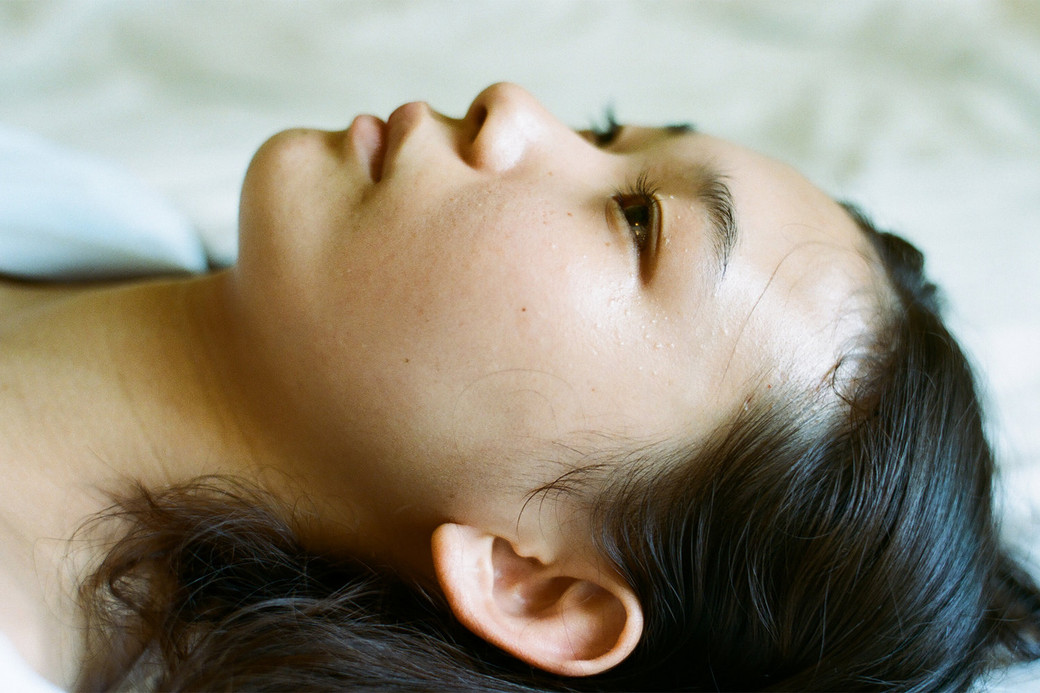
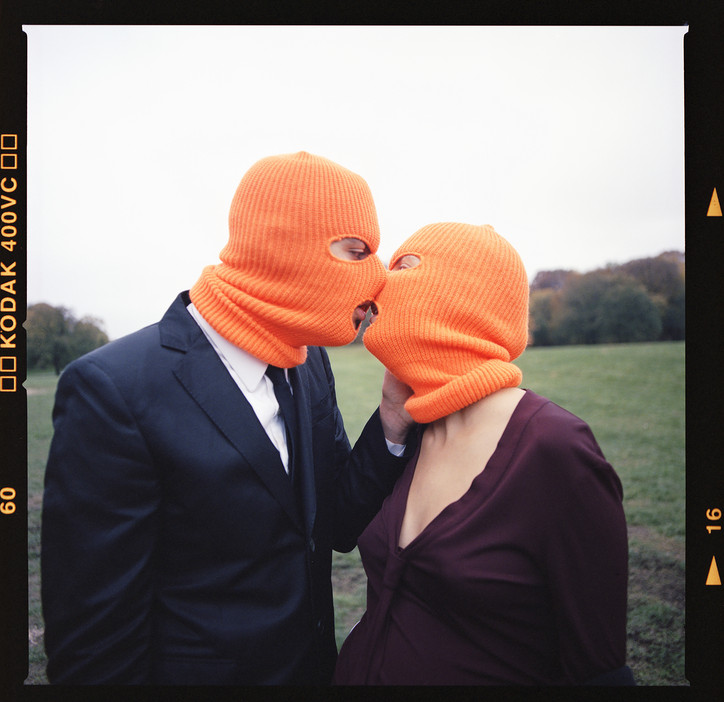
The title of the book comes from the idea that teenagers have something to say, but they’re too young to take real action. So, they do little actions every day in their lives. And I find that interesting, what they choose to do. I wanted to document that.
How is it a progression of your last book, Untitled Youth?
That book was published in 2016 and was a simple portrait of teens in different countries. For that, I just wanted to focus on the beauty of youth. I shot them on very simple backgrounds so there’s no distraction. Teenage Riot is kind of like a next step in that I wasn’t only interested in a portrait of the teenagers, but also their lives—how they live. My projects are always evolving with each publication.


What does the next evolution look like?
Well, photographing teenagers is my passion. But recently, I’ve been photographing older people as well, and including landscapes and still lifes with the portraits. I like a documentary style.
I was going to ask why you don’t shoot elderly people for instance, who have so much more behind their eyes.
Everything that goes along with being a teenager is so fleeting—they have beautiful skin and don’t have to worry about their futures. They fall in love and think they’ll get married. There’s a freedom in the way you think as a teenager. They don’t need to think about making money and paying bills. So, that’s why I love this age, but then because they’re young, I always need to get permission from their parents, who are more like my age. And then I’d meet their grandparents. So, now I’m photographing them, as well. And especially living in New York, I’ve met a lot of people from different nationalities and backgrounds. Like, I photographed this Russian family in Brighton Beach. The parents moved from Russia in the ’80s, but their kids are American and they all speak Russian to one another. And their grandparents came from Russia, but they don’t speak English even after living here for 40 years.
When you spend time with the girls, do you ever give them advice? In a way, especially with the Japanese girl, it’s like you can speak with your younger self.
Well the girls already have their own strong opinions. I don’t want to push them to think another way. I respect who they are. At the same time, if they ask me for my opinion about boys or what to wear or how to do makeup, I always give them opinions. One of the sisters is into art and asked me how I began my career. So, I tell her to do whatever she wants, to express herself. For my first book, I photographed over 200 kids over seven years. Some asked my advice about life, parents, sisters and brothers or girlfriends and boyfriends. I give them advice, but I don’t push them too much. I’m just happy to listen to their stories.
What do you learn from them?
To remember how I was when I was younger—I was very pure and I trusted everyone and respected everyone. And now, like with anyone who grows up, it’s not all about myself. You have to live and you have to work. There’s some pureness and truth in my photography. They’re raw and real and I think that comes from how I communicate with them. I think it’s very important for my photography. I want to be innocent—I want to be pure.
How do you define honesty and purity?
For instance, kids in New York have a lot of information for everything. Compared to people in the small towns, the kids in the cities are already grown up. They know more. And sometimes they have attitudes. Sometimes they’ve already worked with some other photographers on their projects. And they’ll ask me how much I’m going to pay them. So, I try to explain to them that this is my art project—it’s not about money. I will show them my work and most of the time they’ll understand and agree to work with me.
How do your parents feel about your work?
Well, I do not come from an art family so it was hard to make them understand about art and fashion and photography. I don’t think they understand my work. If they see photos of flowers or landscapes, they think those are beautiful pictures to hang on the wall. But I photograph mostly people, so they don’t really hang any of my photos up in their house. But they’re just happy that I’m doing well and they’re supportive. And my mom is obsessed with Instagram, so whatever comes out she reposts and tells people to buy my books.
'Teenage Riot' is available now at the office Newsstand.

Talk to me about what was being addressed at your Armory performance.
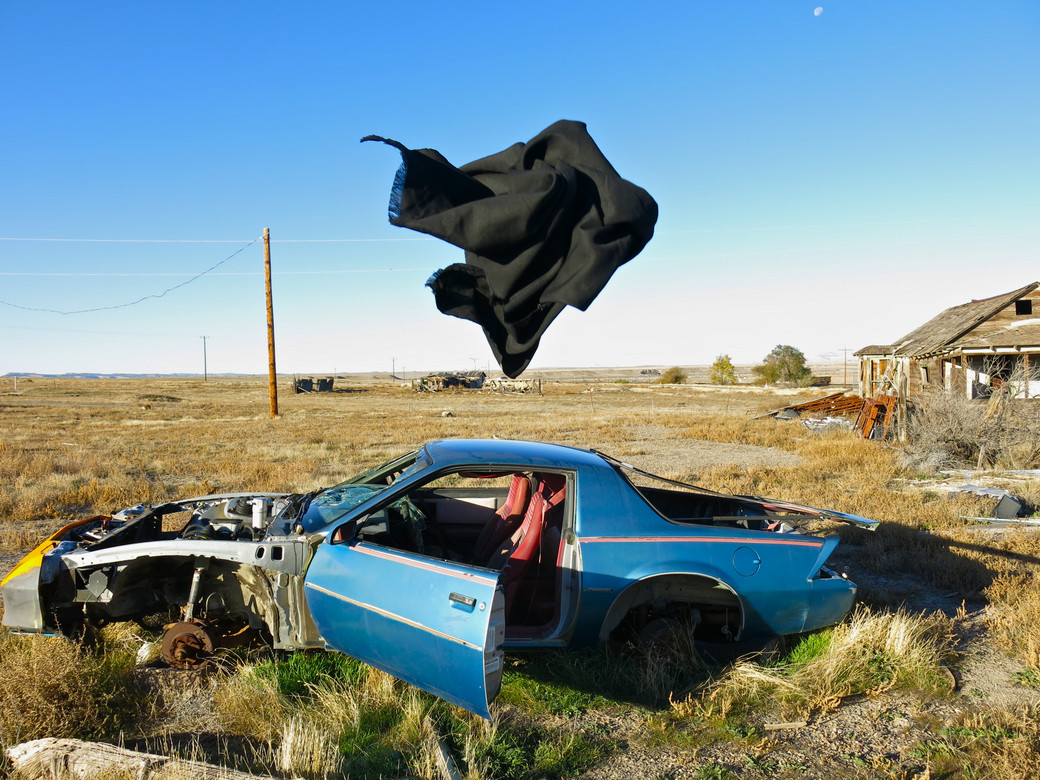
Well, It’s basically [the result of] an evolution. So, I started this piece—well one part of it, the performance, has totally changed since its original form—but basically, I started writing and thinking because I was invited to a festival that I really love in Glasgow at the very end of 2016. I really love the people who throw the festival and they had proposed an interesting idea to me—the loose idea around the conference was how to challenge or undermine ideas of power, but thinking critically about conventional ways in which people formulate those ideas. And specifically, thinking of the idea of a body—that was one of the subtexts of the conference. Like, what does a body mean? Does a body actually exist? When we say we have a body, does that involve a distinction with the outside world? There’s mind-body division. There’s also the idea that our body represents our relation to the state, and that there are an inherent set of rights attached to a body as a static and cohesive thing. So, the counter proposal was to find other ways of thinking of a body and thinking of ways that are actually a line in which that sort of fantasy is fabricated—whether its fabricated in law or literally, the way we talk about rights.
Fred Moten is a thinker who has written at length about this. If you’re thinking about something like blackness, how do you conceive of the notion of a rights bearing subject with a rights bearing body when you clearly have a long history of entire populations of people who have had that very notion completely unmasked in the sense that people were living as chattel? Not to say that rejects some inherent humanity of people, but in terms of the law, people were totally erased and that body meant nothing. That body signified a refusal of a coherent idea of rights. So, that was the loose theoretical starting point for the performance. I wanted to think about ways that plays out.
So, you originally created this piece for the Glasgow performance?
There’s one section in that festival performance, which is the one piece of the original performance that carries through to the Armory, about the train. And it talks about being on the train and it’s this experience of—I don’t know if everyone has experienced this but I know I have—whether it's sexual harassment, a rapey vibe, a homophobic vibe, or a transphobic vibe, a racist vibe—whatever. And being on the train is the example I use because it’s so specific to the past. In my adult life, since I was 18 years old, the train has played a central part in how I relate to the world around me. There’s that feeling when you sense a imminent threat or imminent violence and you realize there is only so much your so called ‘body’ will be able to do for you. Like, the idea of a right ceases to exist at the moment you realize that you have no defense mechanism; when someone takes your life a right ceases to exist; when someone threatens you, even in your head, a right as something real ceases to exist. And in the same way, a body really ceases to exist as a limit point, too. So, I wanted to think about flesh and fleshliness as an alternative [to the term ‘body’]. That's partially taken from some of the reading I did in preparation for that conference—the idea of flesh, and wanting to escape your body, or the body as a trap, as an allusion to this statement that ultimately you're a sack of flesh, which you could think of as negative, but that was kind of the starting point. So, basically I was thinking about fleshliness.
I had done other performances that weren't really related to that but when I had the opportunity to do something new, I thought of it as an opportunity to update that. So, for this performance there was a lot of new music. New text, because the original performance was focused more on danger, or perceived violence—i was all under the pretense of things that are related to some sort of violence. So, for this performance I was thinking of other ways that fleshliness could exist. I've been in a romantic mood lately, so I was also thinking about the dissolution of a body as the limit point, as a self-contained unit, that then contains a brain. Another way of projecting that is to encounter experiences with love and identification, whether that be with friends, whether that be racial identification, whether that be the dissolution of identity into a group, whether that be taking LSD. There are a lot of ways where the idea of a body as a limit and a self-contained entity that demands things like rights or—even thinking of things medically—that you would understand what you're touching is the only way to address an ailment. So, I was thinking a lot about those things and the performance kind of expanded. Also, I’ve been making music because I’m releasing music next year. So, performances are a really nice opportunity for me to practice. I haven't performed in New York in three years—I did one show at the Rubin Museum, but aside from that I haven't performed in New York at all since my Performa piece, which is strange.
And that was 2015, right?
That was 2015. Also included in the Armory performance was a section on WorldstarHipHop. I was thinking of Worldstar and the denial and invisibility and the refusal to recognize the constant erasure of black women’s bodies. And I think—specifically when thinking about black women—the notion of flesh and opposition to a body as some sort of rights bearing cohesive thing becomes really clear. Because so many videos on WorldStar are of black women.
Right. Videos of women being harassed or disrespected.
Or getting the shit beat out of them. Like 80 guys are just basically like—some might say ‘running a train’ and some might say raping. Real mental breaks, women having real mental breaks, and a lot of the times its voluntary and I relate to that—being in that moment of desiring your own extermination in one sense, because extermination is at least a moment where you feel real. And I think part of that feeling is related, as well, because that's when you are just flesh. So, to be in a moment when you are reduced to just flesh might feel exhilarating and free in the sense that it feels like something true. You know what I mean? In the way that walking around in a body that is constantly denied of all of the privileges and entitlements that are supposed to come with the body, it might feel more real, like more truth, to videotape that experience and put it on WorldStar. And honestly, I think the culture of WorldStar is disgusting but it really makes sense. That was a primary place—a sight of encounter—where I was thinking about the difference between fleshliness and bodies, and rights and violence, and the moment where all of these things come crashing into each other. And then at the end of the last part, which is the Worldstar part, it's about the basic question of wanting to be intelligible, wanting to be rendered. The desire for other people to engage you and have the cognitive ability to see and understand and treat you as a fully present, sentient being—it doesn't need to be human specifically. So, these are the pieces of the questions that the performance dealt with—different ways of thinking and through that.
With the WorldStar section of the performance there was a line that you deliver: “It’s violence you crave from a scene struggling to escape your own snuff film.” People’s rights are ignored and their bodies prevent those rights from being extended to actually being real. So, in these moments where you’re being degraded or brutalized that's when you might feel like your most ‘real’ as a person, because its authentic.
A sense of truth.
What about the space that your work is presented in—how does that affect its impact or how it’s perceived?
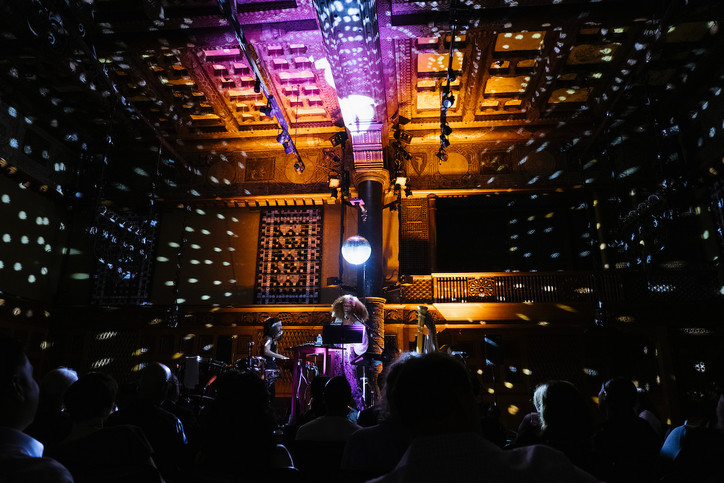
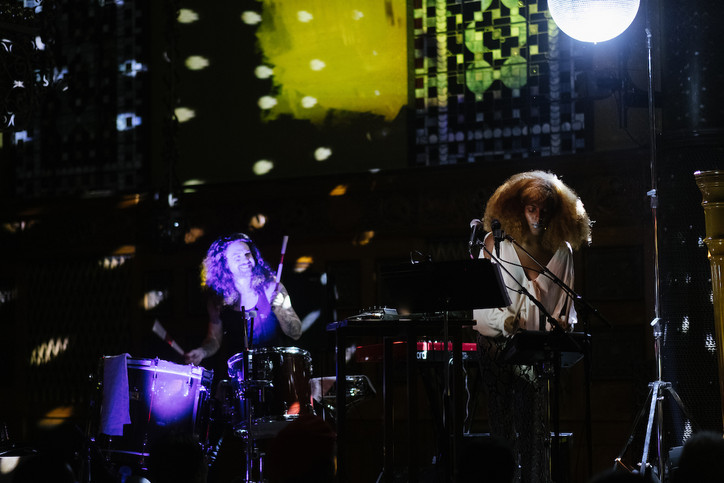
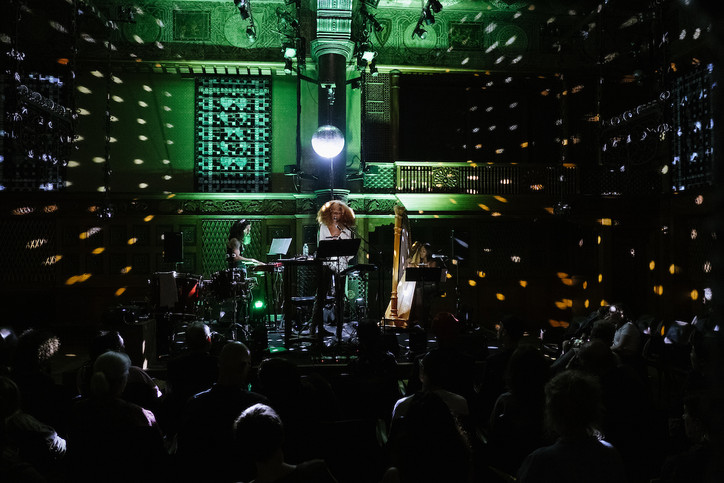
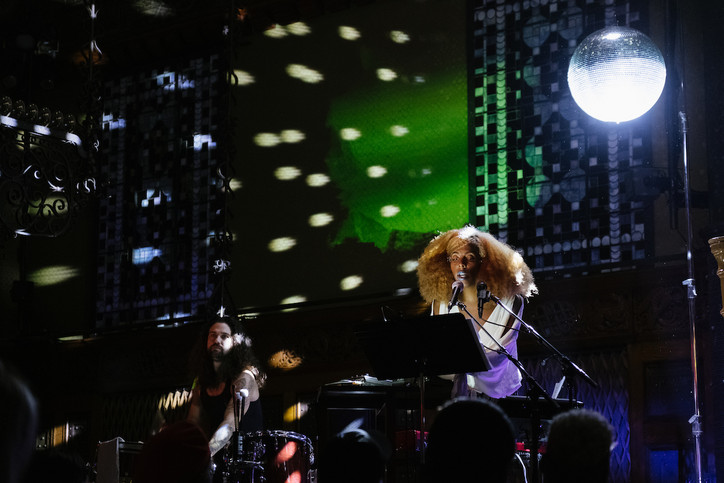
Generally, I'm down to perform anywhere as long as I feel like I don't have to compromise what I’m doing. I think there are advantages and disadvantages of being in different spaces. Part of the reason why I haven't done the type of performance that I did last night, why that hasn't happened in New York, is because there aren’t really resources. Like, if I want to just do a little thing and play a backing track and have Joe drum with me, I can do that in New York, but the resources here are much more stratified in the sense that it’s either the basement at the Spectrum or the Guggenheim or Park Avenue Armory. I haven't seen a model of making it work differently here versus spaces that exist in other places. So, I find in New York specifically for performing, if I want to do something of a certain scale or a level of production, it just has to be in an institution. The same cost of renting lights in New York is like half that in other cities—like renting a disco ball and having LED. It’s so expensive.
It’s hard to find middle ground between a space like Spectrum and the New Museum. In New York there's aren’t really a lot of options for that. Do you have a preference for what kind of space your work is shown in?
I don't necessarily have a preference. I like having the option of doing different things. I mean, that's what I’m working on making the performance become—or at least a certain type of performance has to become more and more about the music and the way that I write the texts are more lyrical. That’s one of the reasons I’m so excited to release this new music—because music can be less about performance and it can just be a show or a concert. I think I realized that a lot of what was happening was, sometimes I'm in a museum or institutional construct and they're like, ‘Oh it’s performance art,’ and I’m like, ‘Actually it's just a concert, but whatever you want to call it.’ So, I think releasing music will be nice because it will allow the musicality of it to be how it circulates instead of just everything I do—even if it's basically a concert—being under the guise of performance art. Although I like that because I do think it is performance too, but you know what I mean.
Of course. Performance is always an aspect, but sometimes you want the music to be at the forefront.
I think it will be interesting to release music and see how what I do mutates and travels because it will be a little less of a stratified experience. Because performance and things that I have done before have been in art context, and in an art context, questions of circulation can be a difficult thing.
Absolutely. And if your music is available on the go or wherever listeners are then that sort of alleviates any stratification and they can experience it wherever they might be. Also in terms of your music, you’ve been shaping the New York City nightlife scene for a number of years now. I used to see you spin at 11:11 a lot and I would get my whole life to your sets. What do you think is in store for the future of nightlife in the city?
I feel right now—and I dont think it’s a bad thing, because this is how I felt around 2010 when I graduated from school—but I sort of feel it's much better than it was then. Generally speaking, it’s much, much better. I have a feeling that things are just being figured out. There was a long time when I first got started that you had the ‘impresario’ model for who really threw parties. There was 285 Kent, there was Glasslands, and I loved them, but at that time, I would say between 2008 through 2010, there was cute stuff happening but it was really hard to get things off the ground, and I just felt like, ‘Yeah I’m hanging out at bars and going to parties but nothing is really hitting the spot.’ I had this feeling that in terms of real estate, venues and musical identities, there were a lot of questions that felt unresolved. And I’m really glad that I came up during that, when you had people just doing more stuff. You had [parties like] GHE20G0TH1K and there was a real sense of identity. I started throwing my party—
Shock Value.
Yeah, and it was like, ‘Oh we do shows during the day,’ and then, ‘We throw parties at night’—at least the type of parties that were my favorite. And then, if you were looking at something like Shade—technically there's Red Bull money behind it, but essentially it's an illegal party. I felt that the chokehold that police culture placed on New York—people were really responding to it. It was fun and I think that was the period when I was like, ‘I’m really in my New York identity.’ I loved throwing Shock Value, I loved throwing other parties. It was also annoying—dealing with illegal venues obviously has its downsides. I remember after the Ghost Ship fire happened in Oakland, all of the DIY venues got shut down, except for maybe Spectrum, which had just moved, but literally I would find a new venue, throw a party there and it would get shut down. Everything would get shut down. And even the place where I was throwing Shock Value, until the last one I did a few months ago, got shut down by the police. Right now, there's a lot of on-the-books venues—like, there’s Nowhere and Elsewhere and Mood Ring and Bossa—and a lot of these places are really great and have really strong programming; they hire interesting people. But I do feel like to move all this culture that was essentially off-the-books to an on-the-books model—there's something that feels unresolved to me right now.
There's always something that’s lost when parties move away from the DIY.
I’m interested to see what happens. I don't think that’s a bad thing, it just feels unresolved. I think it would be amazing if clubs really started going in and giving artists budgets. Like, if you're going to do the on-the-books club culture thing, go all the way. That's my fantasy. I’m not saying that's what anyone has to do, but that's what I think would be an interesting outcome. A space that has a lot of money, instead of having a really big venue that is nice enough to do the thing and hire cute people, why not also do like video installations and change the stage once a month? I feel like there's just a lot of spaces that come off as a bit sterile. So, I have a hard time.
I’m glad that there's a Nightlife Mayor, though. I’m interested to see what she does. I mean, she—Ariel Palitz—she's the woman who gave me my first space, the first space I threw Shock Value, at Sutra Lounge on 1st and 1st. She owned it. So, that is encouraging to me. Just the fact that she let me, at 23-years-old, take over her venue every Thursday and trusted me—I think that’s a good sign.
Definitely.
I would like to see things get more after-hours. It’s happening more, but I’m over 4AM, or 5AM, as the cutoff time.
Me too.
That’s what sucks about the place I was throwing Shock Value, which was great. I mean, The Gateway was technically on-the-books—
But only a little bit.
Yeah, only a little bit. But that’s what I liked about it. I don’t wanna throw a party—I mean, if I have to, whatever—but I don’t want to throw a party at a super legit place, like, in the sense of ‘the walls are all clean, and the tiles are all new.’ That’s cool that all the bathrooms are already gender-neutral, but maybe it might also be cool if you have to put a sign on them saying so. I really loved The Gateway, and they got shut down by the police for some arbitrary fine and the owner couldn’t afford to pay it. And the two parties that were coming up next there were my party and Unter, which would’ve given them the money they needed. But it was in that short window that the fees spiraled and the owner was like, ‘I have to give up my lease.’
We were all really disappointed to lose that space off the J train, it was really unique.
I loved that space and I haven’t thrown a party since then. I am throwing Club Glow, my big party that I throw with Chris and DeSe, but that’s not Shock Value. That’s when I like doing an on-the-books venue. Like, if we’re gonna do the legit venue then let's do it, but I don't want, like, 200 person capacity and leave at 3AM. Why am I filling out a W-9 for a 200 person venue? I’m not doing that.
We’re living in a very turbulent time on an overall scale. What measures have you been taking to keep yourself in a strong emotional space?
I mean I do a lot of psychedelics. And I dance. That’s what I do—I dance. Specifically, one of the things I like about going to other places [outside of the U.S.], is that I don’t have to stop dancing. Dancing, to me, is really, really important. I don’t like going to the gym—I’m not a gym person. I’m not obsessively planned, and no crazy diets or whatever. I just wanna dance. I’m happy when I dance, my body looks good when I dance, I feel good when I dance—it’s just what I want. Think what you will or won’t about Berlin, I just like that I can dance for hours. I can dance for hours on a Tuesday night somewhere. If I wanna start at 4PM, if I wanna start at 5AM, it doesn’t matter. I wanna lose myself, I wanna take some mushrooms, I wanna dance for a set, then I wanna go to sleep. It’s good for my metal health, it’s good for my physical health and I’m finding that to be really difficult in New York. I’m leaving the house at 2AM. I’m not going to a party at 11PM, 12AM, and I only get four hours of dancing? What kind of culture is that? It just sucks. I always say to people like, ‘This is not the city that doesn’t sleep.’ I don’t know where people got that from. It’s more 24-hours in small-town America—at least Walmart is always open.


Do you have a selection of dance floors that are your favorite when you’re not behind the decks?
I’ll keep it New York specific: I love Unter—that’s a party where I know I can get some marathon dancing in. What else—really any place where I can get topless and no one's gonna be up in my face. I also love Bossa. It’s always there. They’ve been doing what they’ve been doing for a long time and I’ve had so many good nights on that dancefloor.
That’s a perfect top two. Like you said, our city is sort of in a place of creative growth and there’s a lot of room for new spots.
There’s lots of venues that I love playing at but when I go I don’t really dance, you know? Like there’s a big dance floor and I’m technically moving, but I’m not really going off. I’m going to parties and feeling like, ‘This is cute to chat but I’m not actually going off, no one is going off, no one is dancing.’ But I do really like Dreamhouse—Dreamhouse is cute, too.
I’m into it.
When I’m away in places where I dance a lot and come back people are like, ‘Oh you look so cute, you look so fit,’ and I’m like, ‘Yeah, it’s ‘cause I’ve actually, literally, just been dancing. Nothing else. Just dancing.’
But I also wish there were more festivals, a festival culture here. Sustain-Release was great. That would be cute.
Let’s talk about representation. Right now, the intersex, non-binary and trans communities are seeing an increased media representation with the premiere of shows like Pose and characters like Bex in Assassination Nation and Raven on MTV’s Faking It. While we obviously still have a long way to go in terms of constructive/beneficial narratives, have there been any strides in representation that you’re happy to see?
For me, it’s music. I don’t think visibility is an end goal—I don’t think visibility in and of itself is progress. In some ways, maybe, but I think music is probably the place where the most progress is present. My friend Ziúr—she makes amazing music. I love that there’s so many people who are making brilliant music, whether or not that kind of music directly vocalizes their experiences as trans or gender nonconforming people. I think that’s where I see the most people where I’m like, ‘Thank you for doing what you’re doing, I relate to this, this does something for me.’ And that includes the production side—the side of music that’s generally super super cis-male dominated. That’s where I see a lot of really exciting stuff happening.
I really like that you specified visibility as not being the end goal.
I think maybe that’s why I’m so attracted to music. Music has to carry a life of its own. To a certain degree I guess art does too, but I’m not really about the trans fashion moment. I’m kind of grossed out by the fashion trans thing because it doesn’t symbolize anything outside of the sheer value of what transness represents as a sign. It’s a placemark—a unit of cultural capital. In fashion, in certain ways, it’s the most arbitrary, shallow way of dealing with transness. Because there’s nothing else behind it. Music, on the other hand—your music can travel on its own. You either go ham or you don’t, you know? Like, I don’t care if someone's trans if their music sucks. Maybe there are people who are out here on that level but that’s just delusional and weird to me. I think that’s why I’m drawn to mediums and genres where, if there is visibility there, it acts as a catalyst for what’s actually coming, which is a conversation about music or a conversation about writing. I don’t get this culture of ‘I’m in a bunch of fashion campaigns therefore I’m an activist.’ I don’t really think that’s doing anything for most trans or gender-nonconforming people. And this is as someone who has done campaigns—I’ve gotten my coin but I’d really hate if that was all I was giving.
I first encountered your poem Untitled (For Stewart) on Tumblr during my undergrad years. Are there any artists who have stirred your interest through their digital presence?
I love Andrea Long Chu—@theorygurl is her Twitter handle. I’m obsessed with her and I’ve never met her in real life. I love her writing and the way she writes about gender. She’s a lit person with a focus in gender theory, which is kind of my background. That’s my academic area of obsession, so I love her work, I love her persona, I love what she’s doing.
You’re quite a young person and you’ve navigated your way to success in a number of communities that are often considered insular, like fine art, music, fashion and performance. What advice would you give to other women about finding their place in those worlds?
To me, the first step to anything is finding a way to generate an audience. Relying on other people to give you an audience, or the idea that other people will pay attention to you, or care about you, or circulate the things that you do, or whatever—assume that that’s not going to happen. You have to build all of that on your own—at least, that’s how I felt. That’s why things like Tumblr are important—because you can just generate your own audience. It didn’t matter that everyone going out thought that I was just some random person at a party because I was able to generate a space and dialogue that allowed me to feel like I had a place and a support system. Everything really grew from there. Having a group of friends also helps if you can grow things out from there. I used to do backup dancing for Adam and Antonio when they were performing as House of Ladosha. No one knew who I was or cared what I was doing, but that was a way for me to support my friends—I had their backs, they had my back, and then when I started doing stuff they supported me. I just assume that whatever audience I’m building, I’m gonna have to be responsible for building that myself. That’s a very ‘Southern Black People’ way of seeing things, but that’s how I see it.
That’s the same advice my mother gave me: be ready to build it yourself. Start that community yourself and have each others backs.
I also would say, whatever your lowest point is, think about that a lot. For me, my lowest point in my life was my childhood. So, whatever's happening, if it’s not childhood, it can’t be that bad. Some people find that kind of depressing and I’m like, ‘Well, keeping that in mind has gotten me through a lot,’ and I think it’s cute.
We’ve talked a lot about your successes. Have you ever been unsuccessful in an endeavor but learned or found growth from the experience?
All the time, yeah. I’ve done performances that everyone hated. In New York, there’s this thing where no one is going to tell you that they hate the thing that you do, they’re just not going to say anything about it. That’s what I’ve realized about New York. In some places people will be like, ‘I hate this, I think you’re an idiot’. But no one is going to say that in New York—radio silence is kind of the biggest read. And so I’ve done a ton of stuff that’s gotten total radio silence and it’s like, ‘Okay, learning my lesson from this.’
So, you take that feedback, even if it’s no feedback. You put that non-response through your filter of understanding and improve from there, right?
Yeah because I think growing from experiences like that requires you to humble yourself just a little. I know some people who are like, ‘Oh whatever, everyone’s just being a hater.’ And sometimes people are just being haters, but even within that circumstance where you feel like you’re being attacked or undervalued, or someone's not appreciating your thing, I just try to think of something that I can take something away from that.
You mentioned the release of some new music next year. Are there any other themes or new projects that you’re looking forward to exploring in the near future?
There definitely will be more. I have some things that I’m loosely working on, but this year has been a lot. I’m kind of ready to just, like, not have to think too much about what I’m going to do and just lock myself away during winter and work.
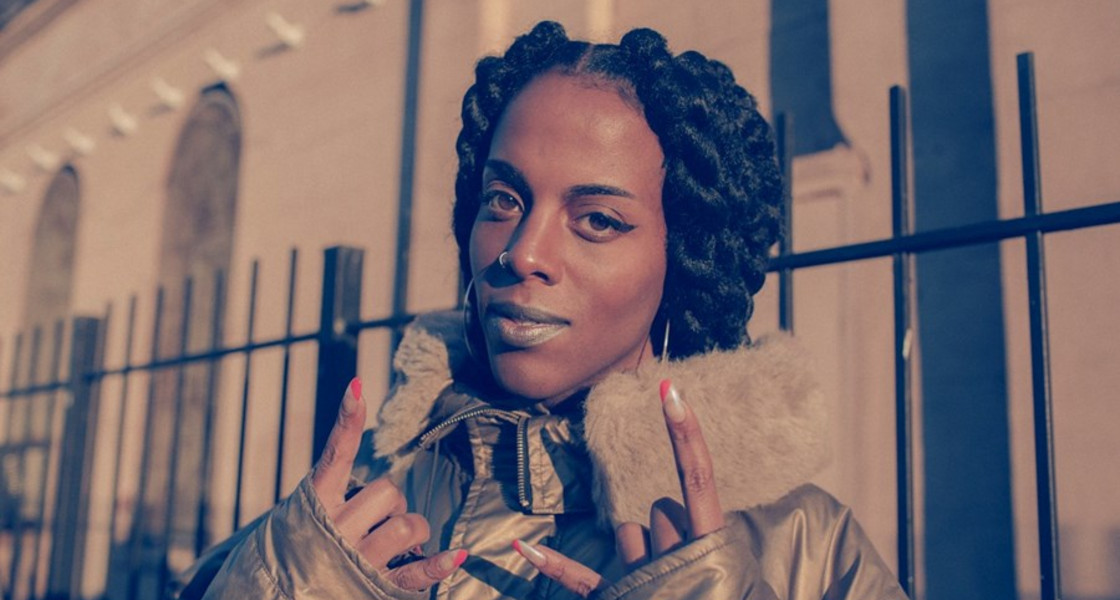
Juliana's next party, 'Doll Gang Massacre,' is at Queens' Knockdown Center on October 27. All photos courtesy of artist.