PRESENTE CONTINUO: the intimate ties between then&now

Starting May 30, PRESENTE CONTINUO will be available to purchase on presentecontinuo.com, cpcompany.com, and at the C.P. Company flagship store in Milan, Corso Matteotti 7.
Stay informed on our latest news!

Starting May 30, PRESENTE CONTINUO will be available to purchase on presentecontinuo.com, cpcompany.com, and at the C.P. Company flagship store in Milan, Corso Matteotti 7.

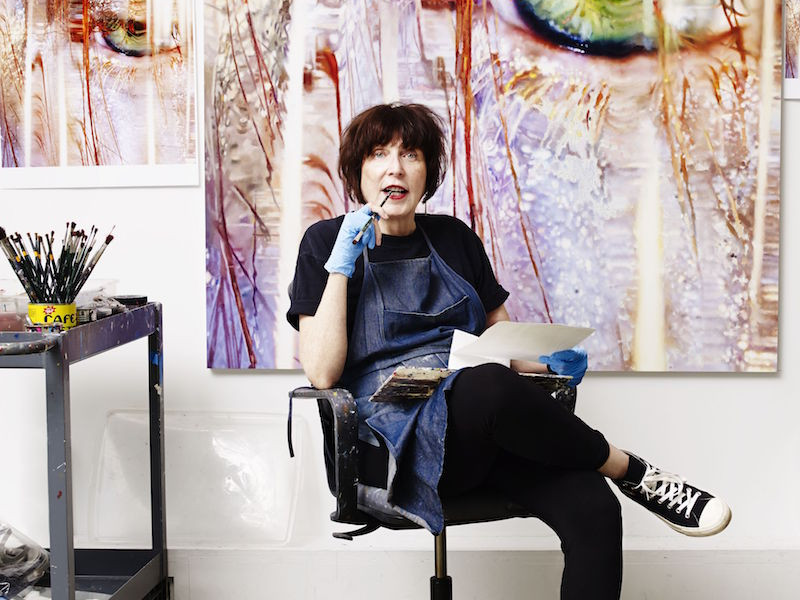
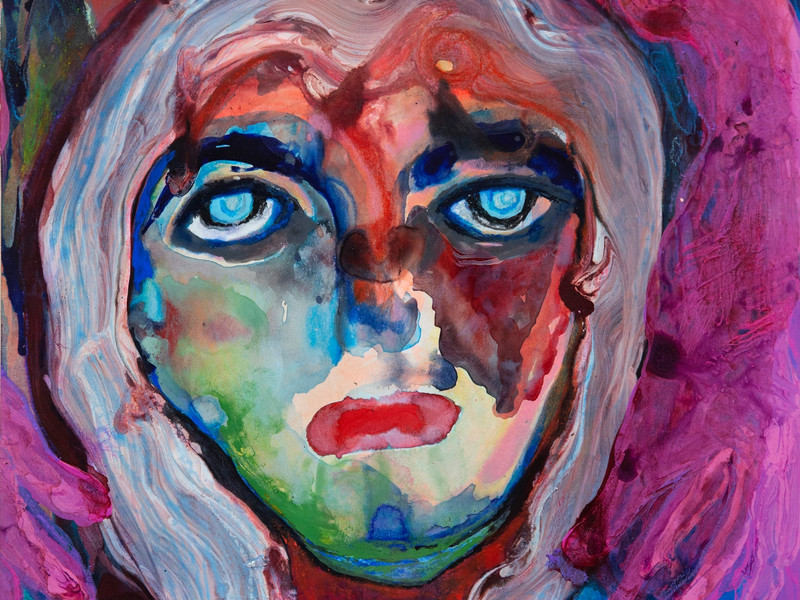
office talked with Pola about her newfound love (her garden), the fountain of youth and Latin class.
I love the show. How did it start?
I’ve always been interested in the female form, from young to middle to old, and from the viewpoint of observing nature I like to visualize the different stages of human or female bodies and physicality and sexuality. I live in New York but I have a place in Connecticut and where I am in Connecticut we have a garden, so the cycle of the garden—the fruit and the vegetables, from the moment they grow and then when you pick them, sometimes they get old and rotten—I just observed these things and it naturally made me think about how I can put together the idea of the body, physicality and the idea of consumption, and the actual elements of nature—vegetables, fruits.
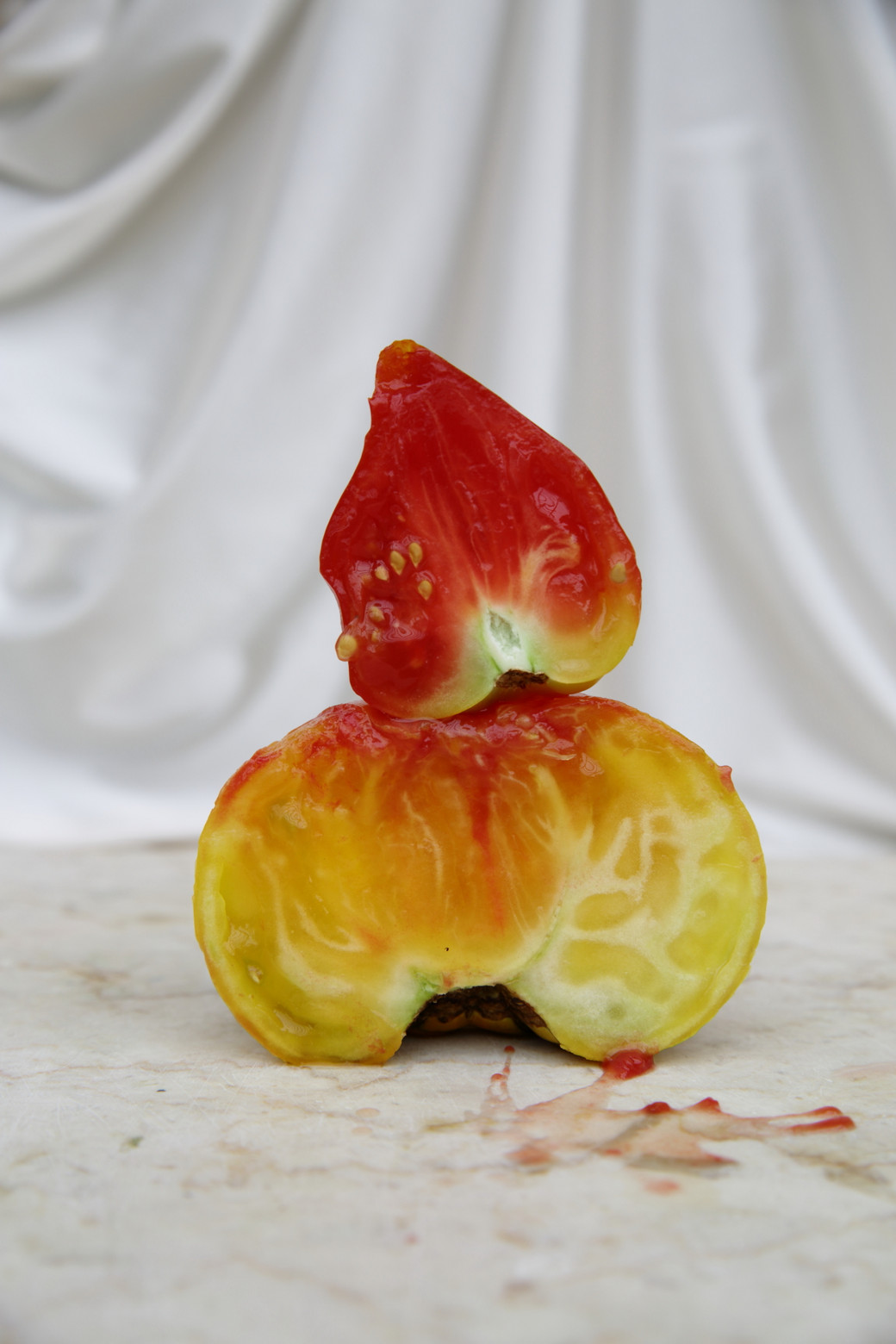
We also have chickens, and that’s how the whole idea of eggs came in. The show is called ‘Eggs to Apples.’ I’ve never had chickens before in my life—I was raised in the city, I was born and raised in Poland, and I’ve always been in a city, so the presence of nature and a garden wasn’t always a part of my life. The garden here came totally naturally for me, but then having chickens and eggs, I just thought it was so beautiful, the egg itself even. So, when I was preparing for that show, I knew what I wanted to talk about, so starting with an egg kind of shaped the whole concept. It’s purity, the beginning, an innocence all in this very simple form—and it just progressed from this. Or say a tomato, how it grows and then rots and wrinkles. And I have a few muses who are older, and I was looking at their skin and it just sort of came together.
So, it’s about the process of life, about birth and aging. When I see the egg I’m reminded of fertility—it’s a symbol.
Absolutely. And I know the phrase ‘from eggs to apples’ from Latin class, and I thought, 'Yes, this is what I want to do.' ‘Ab ovo usque ad mala’ which refers to beginning to the end, opening to closing. It’s from Horace. It’s about the feasts they have, they begin with an egg and end the meal with an apple, it’s similar to ‘soup to nuts’ in English.


Do you feel like there’s an element of death, since that’s the final stage?
So, my second phrase was ‘A Dream of Negligible Senescence,’ which is a lack of aging in certain organisms, like jelly fish or turtles. So, I was wanting to talk about the idea of how a lot of females—even males—want to stay young forever, even the idea of preservation, how we think beauty belongs to a young body. So, when I’m thinking about the beginning to the end, I’m thinking about how beauty connects this, from the freshest skin, the freshest fruit, and stays beautiful until the moment this thing perishes. There’s this idea of wanting to keep ourselves beautiful and flawless forever, but the flaws are fun and they are beautiful, too, and by exposing the flaws and drawing attention to them, I want to contradict this idea, this dream of not showing any signs of aging.
Especially because it’s women, it reminds me of the idea of the biological clock, or the fountain of the youth, or all the things tied to womanhood and childbirth.
I love this idea of fertility that you mentioned, because it is a lot about fertility—what comes out of the ground. It’s a really nice thought, I didn’t think about it this way. But for me, I take all those things out of context, so the fruit or the body in my work isn’t documentarian, it’s removed from its context. It wasn’t my purpose to photograph a hand that belongs to the whole person, or the tomato which belongs to the plant, but I wanted to take it out and make it into an aesthetic element by making it almost a still life. But I always love the idea of a carnal appetite, as well—the idea of consumption, ripeness and the sexual connotations that go along with that.
It’s a really old, traditional idea—the ripeness of youth.
It’s an idea that’s been there forever and will be there forever for us.


So, your garden in Connecticut was the first you’d ever had?
It was the first garden that I was able to just observe. My grandma had a garden but it was something that I never participated in, it was just there. But also, when I was growing up, the stuff that we ate was whatever was in season, so I remember there weren’t apples until fall, and there were no tomatoes until the tomato time—you had to wait for those things. So, I sensed this idea from a very young age, but I never watched it like I have now. I don’t know if you’ve ever had a garden—have you ever had a garden and were present to it?
My mom was a big gardener and we grew up in the country, but I was like you, I didn’t really participate. Do you get your hands in the dirt now?
A little bit, but I mostly pick stuff and watch it.
Yeah, because it will just grow on its own. Once it gets going, it’ll just go.
It’s so fascinating because it won’t stop! Things want to grow! And even comparing it to life, whatever path you’re on, your career or whatever, you think, ‘Oh, it’s going to stop,’ but things want to come out through life. Sometimes it’s amazing how much the plants keep producing. It just happens when you’re not looking, too, without your participation. But then you pick them and they keep growing, they keep coming back.
It’s magic.
The stuff just wants to come out. You have to put in a little effort, it takes an effort to grow things. But it will keep growing. So, that was just something I wanted to incorporate into my body of work. Also, I like the idea of making still lifes, of taking things out of context.
I love how cheeky they are, too.
I’m definitely a cheeky person. There’s also a pop energy to it. I love expressing sorrow, or joy, or whatever with a certain distance and a sense of humor. They make your imagination wander and then you check yourself, like ‘What the hell am I actually thinking right now?’
All photos courtesy of the artist.
'Eggs to Apples: Dream of Negligible Senescence' will be on view at the Lyman Allyn Museum in New London, Connecticut, through October 28.

The best part about this project, though—aside from the dope ass content, of course—is that 100% of the proceeds will go directly to the Henry Street Settlement, a community outreach agency that has provided social services, art and health care programs to over 50,000 New Yorkers for the past 125 years.
office had the pleasure of catching up with Nico in the wake of his video premiere and ask him about some of his favorite people in his favorite city.
Give me a little background information on your event this weekend—what was your inspiration?
Walltime reached out to me a couple months back to create content for their new app, which allows users to project their content on walls across NYC starting with Bowery and Houston. I immediately had the idea to make slice-of-life vignettes with some of the legendary people in places that make up the surrounding neighborhood.
Alex from Walltime had mentioned there is a function built into the app that allows the fee from bookings to go directly to charity, so I suggested we team up with a neighborhood charity. I have heard great things about the Henry Street Settlement through my research, so it only seemed right to team up with them!
What drew you to the people, places, and things you chose to capture? What about them makes them feel distinctly ‘New York’?
I was born and raised in Union Square, which is not too far from the wall. After doing a short stint in Los Angeles in 2013, I returned to NYC with a much greater appreciation for the city, especially the people and places that seemingly couldn’t exist anywhere else. I started my New York Nico Instagram account a few years ago, and have been just documenting street life since.
What makes the Henry Street Settlement special? Why that organization over all the other outreach programs in the city?
I try to use my Instagram platform to help others however I can. I have teamed up with many great charities in the past such as NYLAG, Grand St. Settlement, Urban Pathways, etc. Henry Street just seemed like the right fit for this project since they do such a great service for the people in the neighborhood.
What was the most fun aspect of this project for you?
The screening was amazing. Being able to see the happy faces of those featured in the film was awesome. Larry the Birdman was freaking out when he saw himself 65 feet tall.
How does your identity as a New Yorker inform your process of creation?
It’s literally where all of my inspiration comes from—NY works its way into everything I do, whether I know it or not.
You can see 'Neighborhood' above the Bowery Mural any time by scheduling a showing and donating to the Henry Street Settlement on the Walltime NYC app.

But if I were to take away one thing from the short, it would be the feeling of hope, a genuine belief that through death, in this case being through the death of the karmic cycle that is a toxic relationship, comes life, renaissance and rebirth. Stricker masterfully uses film as a medium not only to create a dialogue about gender, art and identity, but to explore in the visual realm what it means to be female in the first place.
office had the pleasure of catching up with Cara to dig a lil’ deeper into the themes of her new film.
Describe your personality in three movies.
Maya Deren’s At Land, Lost in Translation by Sofia Coppola and Persona by Ingmar Bergman.
How do you think your multidisciplinary artistic background informs your approach to film and how you capture the human subject?
Sound and movement, for me, play as much an integral role in telling a story in film, as do characters and script. I try to capture a sense of an overall feeling with this in mind when approaching film.
In Maverick, it appeared to me that color was employed as a means of denoting a particular emotional atmosphere, or as a signifier of certain moods. Can you tell me a little more about how color was used within the film?
In terms of the set, the color palette was very specific. The hue of red is used throughout the film to signify and nod to Napoleon’s infamous red cape he wore to battle and depicted throughout history. In the film, these symbols come further into play.
The lighting tone shifts throughout the film, visualizing the inner battle that Maverick is experiencing. It begins quite natural, and as the film progresses, the world becomes more surreal. As Maverick’s perspective shifts, the colors unravel to mirror the flipping power dynamics between Maverick and Richard.
There seemed to be an emphasis on language throughout the film—literature, spoken language (and the disconnect it can cause between two people), learning bits of a new language, etc. If language was a physical tool, what would it be and how was it used within the film?
It would be one of Franz West’s objects, Passstücke (Adaptives): Paravent (Passstück) (and Passstücke (mit Video mit Verwendungstipps) (Adaptives [with Video with Usage Tips]). These objects are intended to be interacted with, and ask how objects can function both as physical extensions of the body, and as representations of the human experience.
Within the film, language is used to explore ways that one can employ power over another, as well as capture a feeling of dissociation. It’s also used as a score device, to reflect the inner experience of Maverick’s journey. Symbolism is also used within the language of the film, to gesture toward the gaslighting environment that Maverick is in.
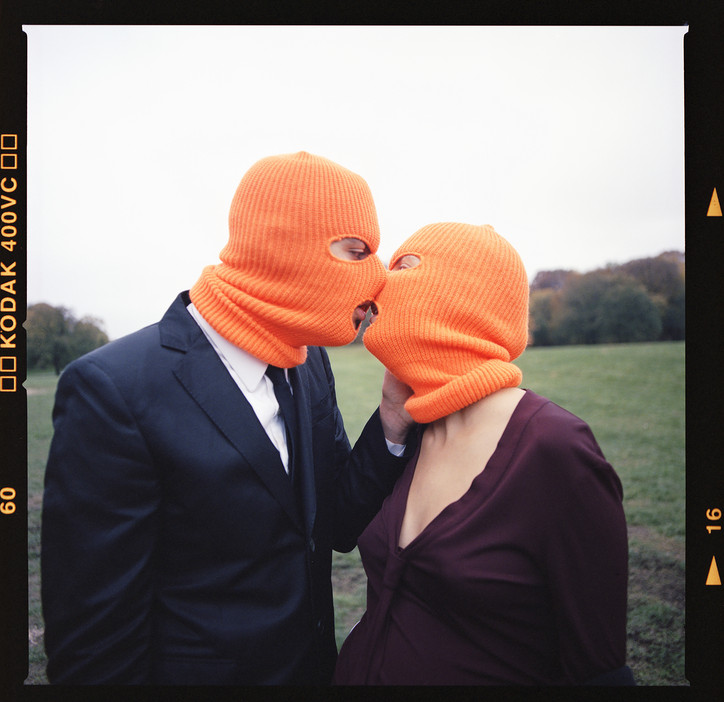
Can you elaborate on the meaning of the proximity of abundance to death and decay? What was that meant to denote, and how was this juxtaposition used to advance the narrative?
The abundance within Maverick’s house alludes to the fact that she is caged within herself, unable to leave her current state, and stuck in the home. The property functions as a progressive commune, and operates as a system that functions uniquely in its own way alongside the traditional societal system. She has enough to survive for long periods alone, on the grounds. 'Though its very ordinariness made it subversively utopian.’ Maverick’s process of overcoming the caged environment, engages an internal battle—the death and decay in the film embodies this theme. She is looking for a way to almost be reborn, and must go through her inner battle to get there. The Chicken Marengo dish she prepares, otherwise known as Napoleon’s Dish of Defeat, is a meal Napoleon cooked for his troops after conquering a country. Maverick, in her own way, must go through a battle to get out the other side.
What would you want buried with you so you could use in the afterlife?
Wings.
As you probably know, the title Maverick has a very specific definition. Can you explain the relationship between the title of the film and its content? Was the title a representation of Lee’s character?
The title encapsulates the plight of our character Maverick. The film is her journey toward the independent-minded person.
What surprised you most in the making of the film? What was the biggest challenge?
Every step of the way, from writing and conceptualizing, to raising funds, pre-production, scoring and post production, was as all-consuming as each other. They all had their own puzzles to fix and work around. I guess that was the most surprising and simultaneously the biggest challenge. I feel grateful for the village that was able to make this film together.
What's next for you?
A feature film!
For more information on Maverick, click here.