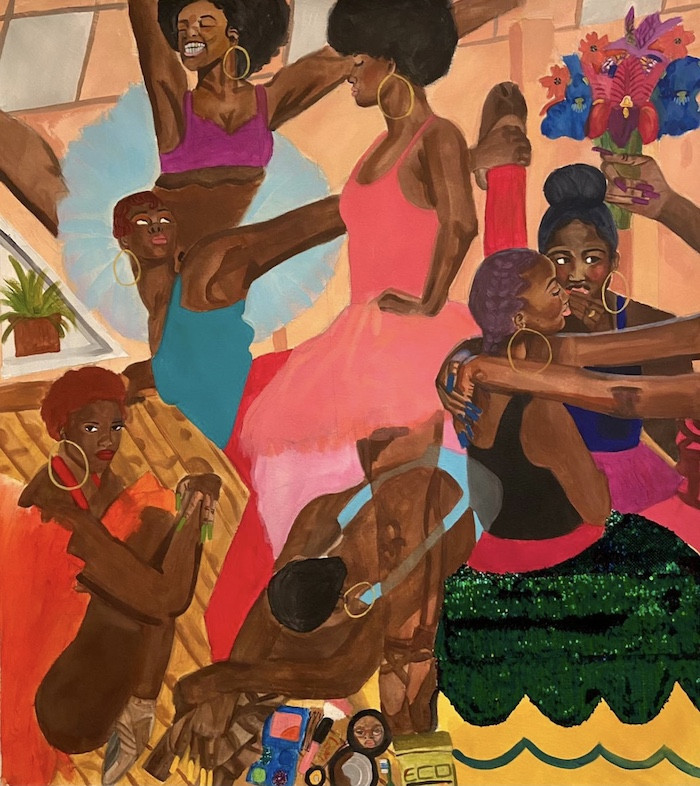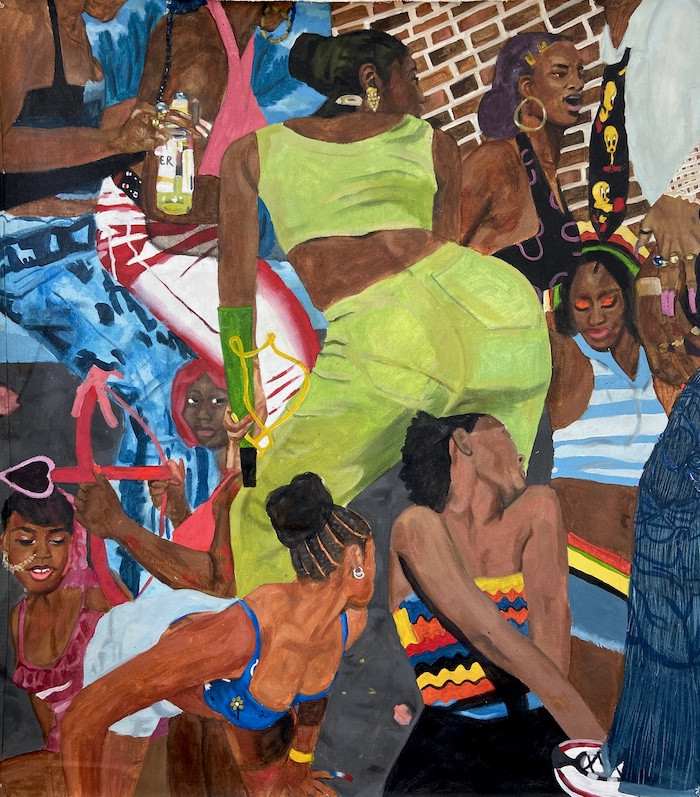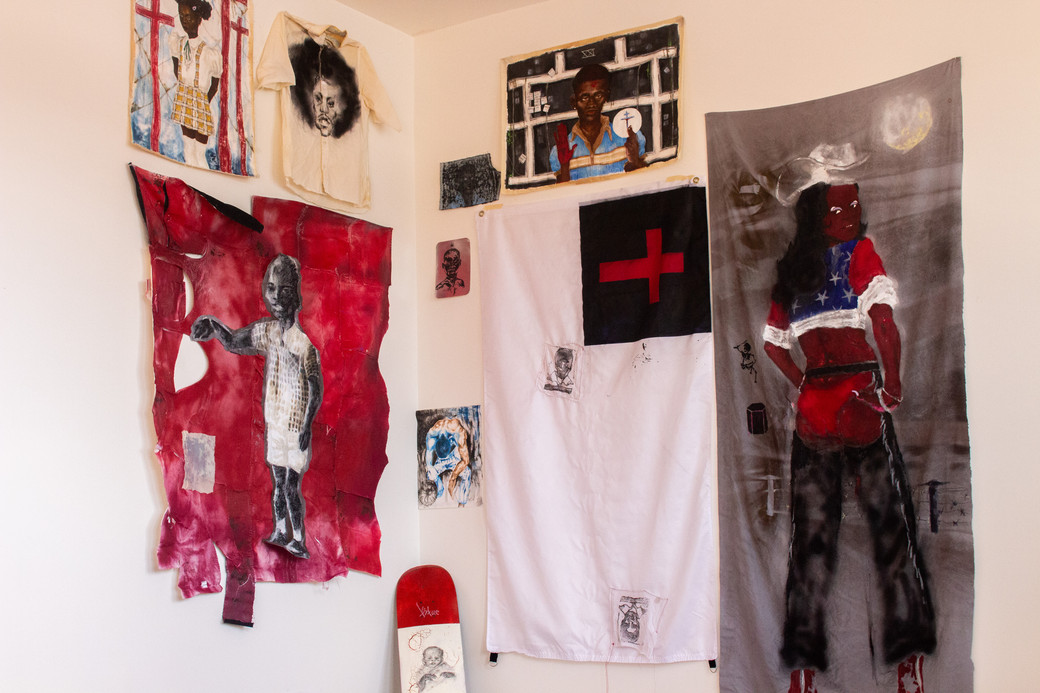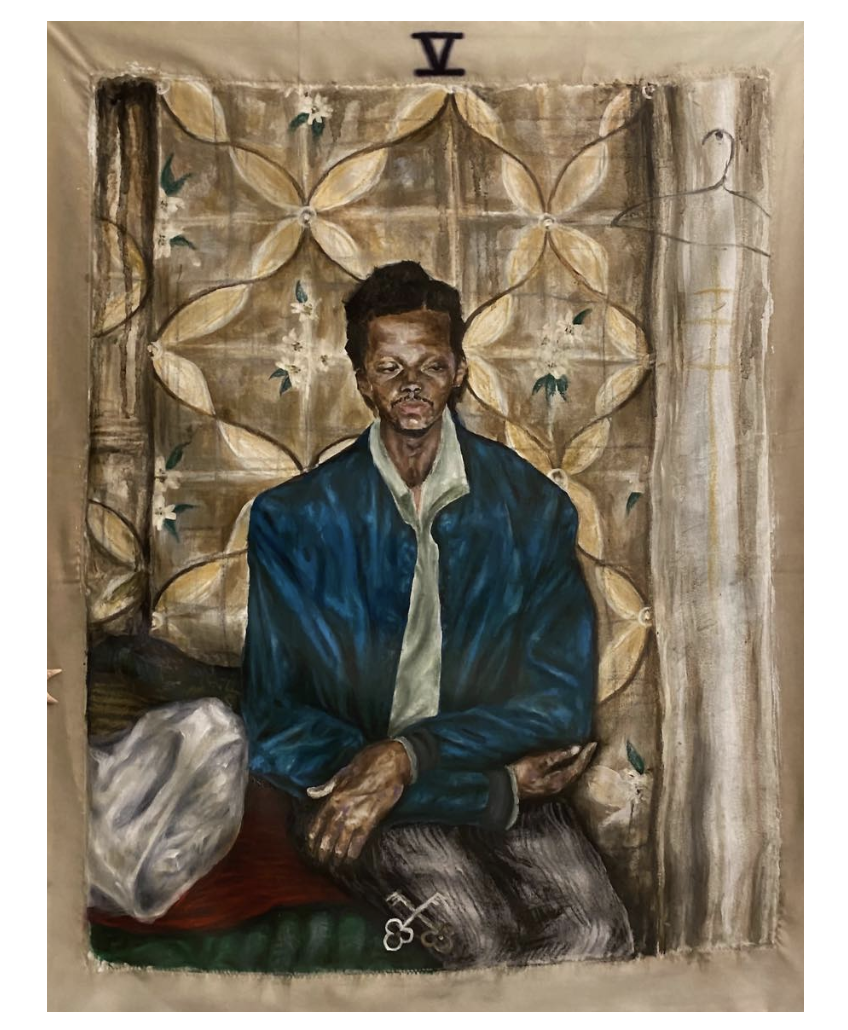

office had the chance to sit down with Emily and discuss the nuances of her mixed-media work, the interplay between self-reflection and a sense of community, and what it means to her to be able to continually honor her heritage through her pieces.
Your work focuses on showing how vivacious and close-knit New York’s Caribbean communities are. How do you encapsulate such a colorful, familial community just within the scope of a canvas?
Spending time in communities like Flatbush and Jamaica, Queens emphasizes the time I spent in Haiti and Trinidad. In these communities, I get a true sense of home, from the conversations I have with others to the food from the family-owned shops. The time spent in these neighborhoods is very intentional as I think about a way to commemorate and honor these spaces. I think about my work existing in Caribbean homes and aunties sharing and passing along my work. For me, each piece conveys thoughts on how I can memorialize moments in my life that make me feel at peace and at home in my heart.
What does true joy mean to you?
True joy for me looks like hanging out with my friends, dancing to a song that holds a specific memory, eating something that reminds me of where I’m from, talking about something I’m passionate about, and watching a movie from childhood. The truth in joy transforms our existence; it is a renewable source that bridges us with one another.
When you do feel undeniable, unbridled joy, how do you portray an intangible feeling as such in your work?
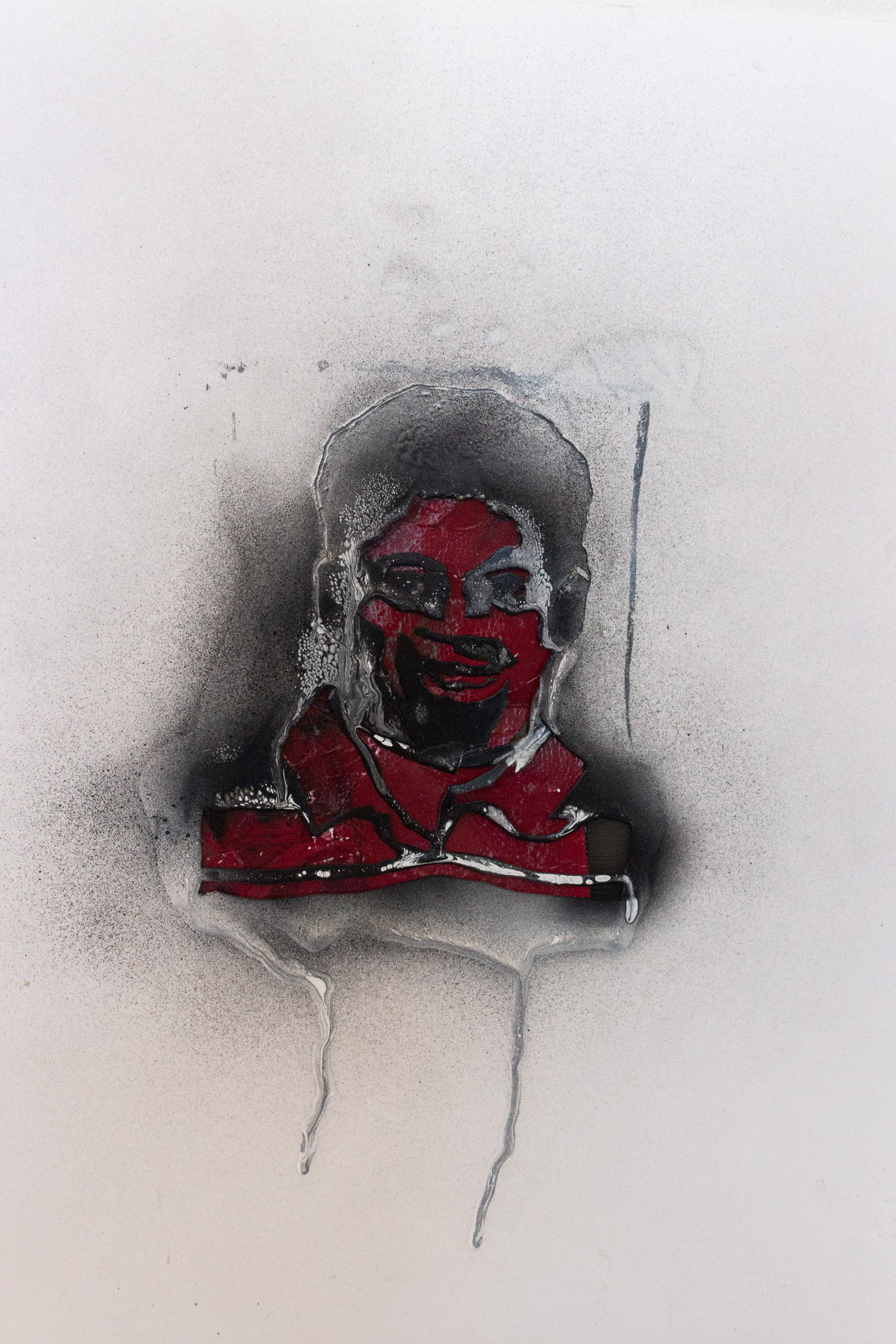
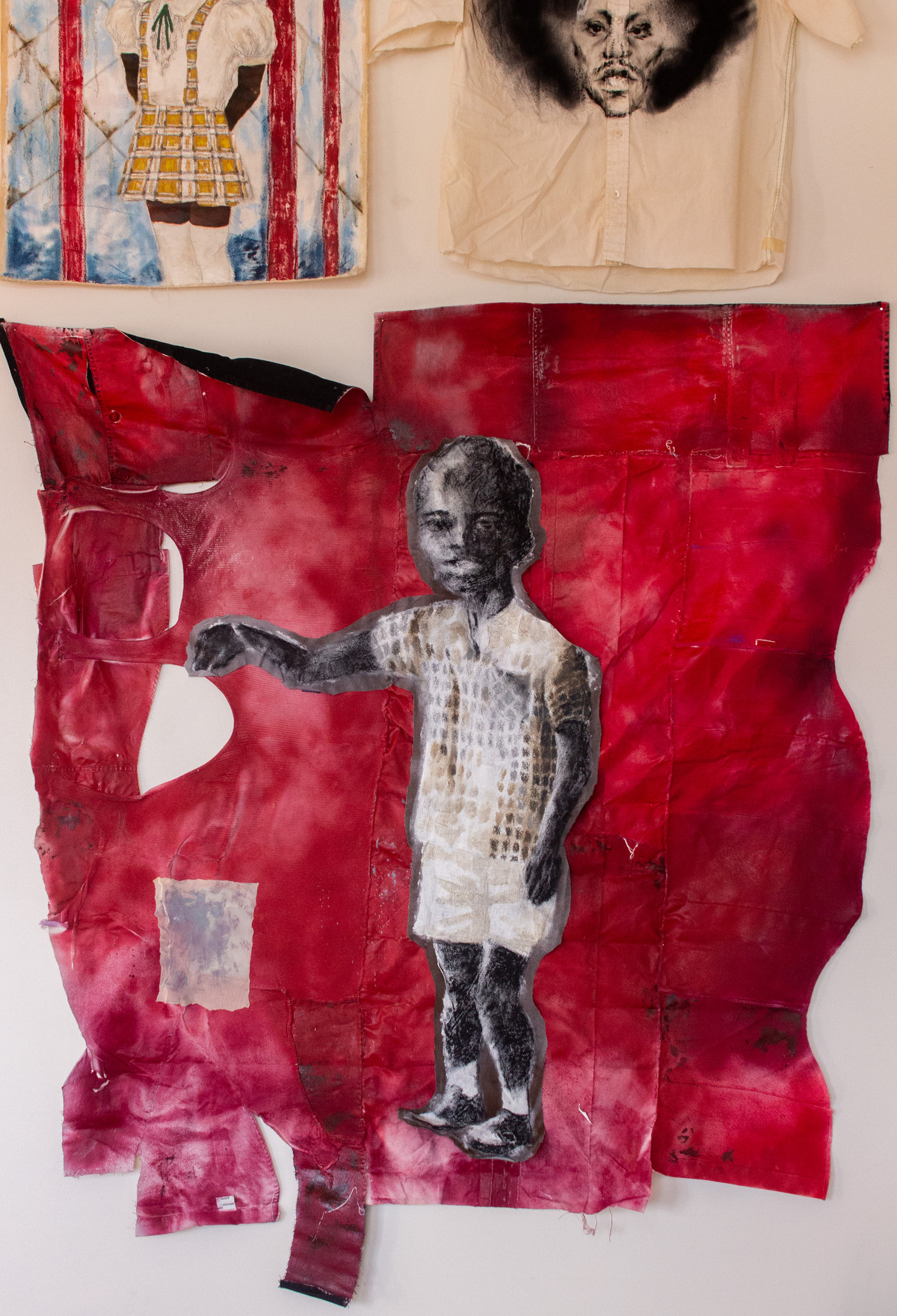
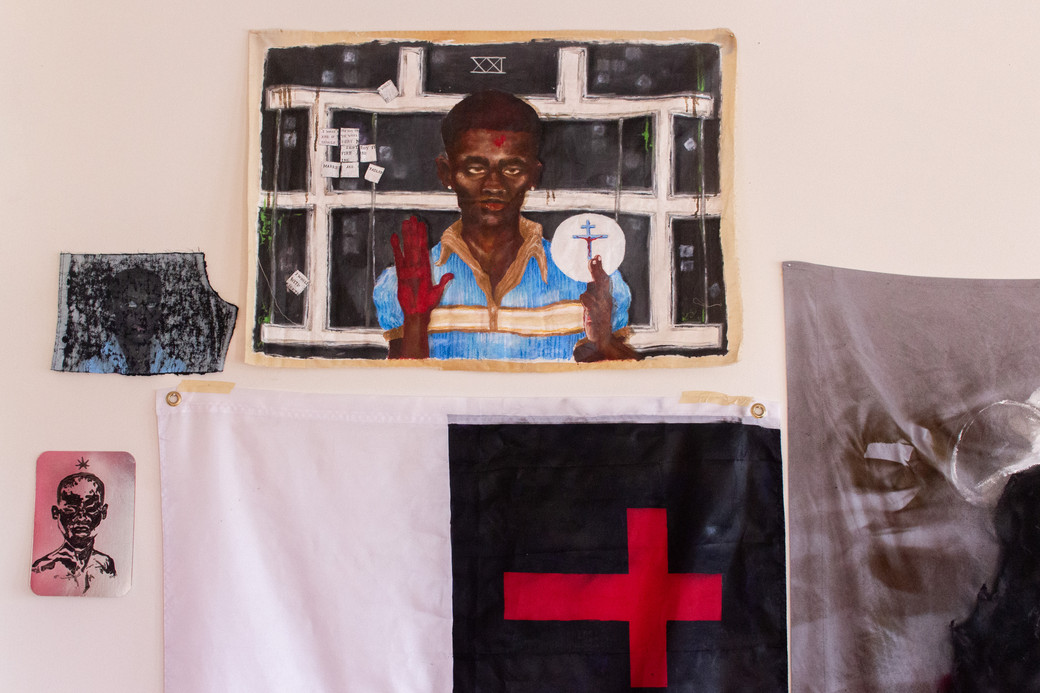
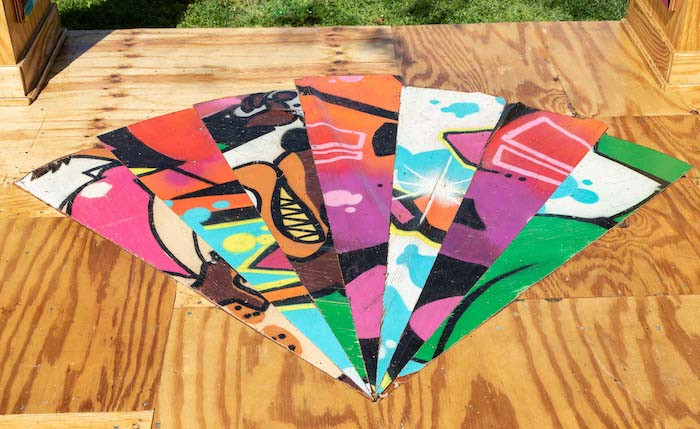
Through color, I am able to physically depict this intangible feeling. Selecting colors and associating them with each emotion allows me to create a full image of vivaciousness. The 3D materials I use in each painting are a very joyous additive; they help the work become more existent. When I form a collage for my work, I look at the expressions of all the people and how they communicate with each other. The paintings contain a lot of the actions and movements that remind me of joy.