












Jack Skelley— Let me turn on my camera. There we go. Hello. It's wonderful to meet you.
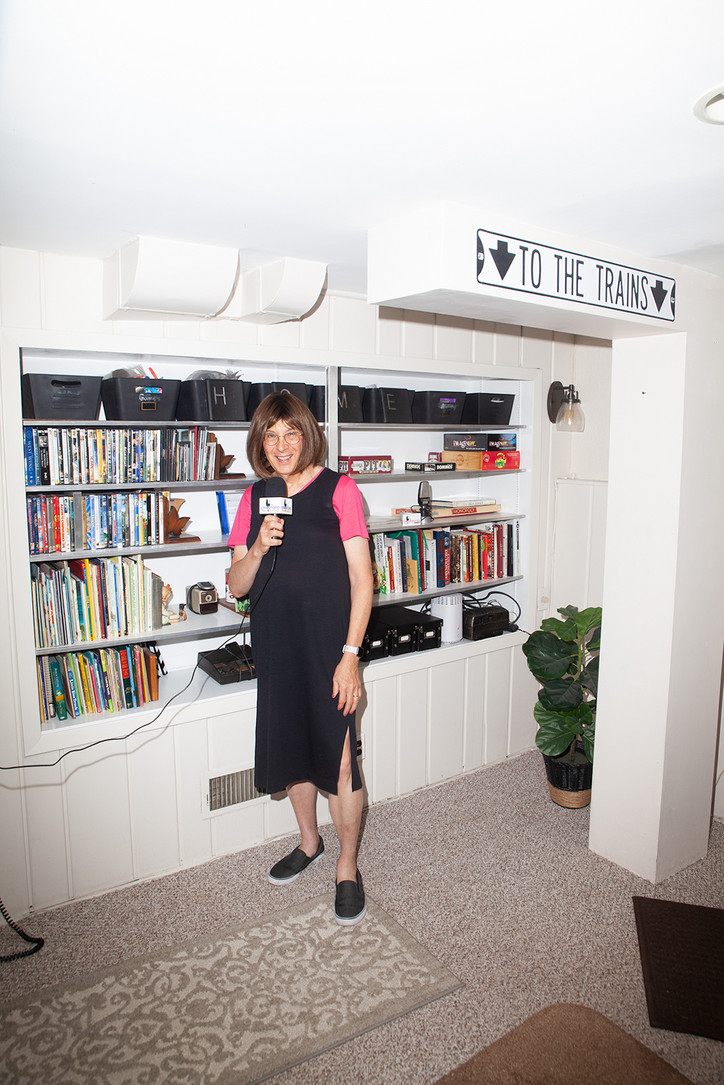
What a beautiful bookshelf you got behind you.
Look how high up it goes all the way to the ceiling, and all the way to the floor.
Yeah, that's what I would like to have one day; the ultimate proof of achievement.
Of course you run out of room immediately, you know.
Do you have your own books back there?
Yeah, my whole set of them.
Oh, further achievements. How are you doing?
I'm very good. Thank you. Glad to meet you.
It's great to meet you too, thank you for reaching out.
I got happily surprised because my editor looped me in the thread and initially I was like; what is this email even talking about? Either this man is something really good or this is something really really bad. Let's just say my intuition was right. I went down a deep rabbit hole researching absolutely everything about you, your book, you new scene - are you ready to drag us out?
Does that mean that you have been able to read the book?
It does indeed. How would you talk about it to the unknown reader though, how would you describe the book yourself?
The novel was written in the mid 1980s. It was published in bits and pieces, but has never appeared in its complete form until now. I was unsuccessful in having the complete book released at the time, because you know, things don't happen sometimes. But then, last year, Semiotext(e) decided to publish it. And that was a huge thrill. I mean, when I got that news, I couldn't believe it.
Was it like laying around in their archive and all of a sudden Semiotext(e) reached out to you and were like, By the way, we would love to finally put this previous failure into print?
Kind of, yeah. They had known about it and owned copies of the original chapbook excerpts. Publishers Chris Kraus and Hedi El Kholti and I swim in the same literary and art circles. Through our mutual friends — Dennis Cooper and Sabrina Tarasoff the complete manuscript made its way to them and they said, “Ok, we'll do it.”
In some ways the novel is a departure for Semiotext(e), but in others it fits with their decades-long exploration of language, extreme sexuality and theory. That's basically the back story, which is perhaps part of the book’s draw. This forgotten novel has become a document of that time and place. This has lent itself to all sorts of ironies and reassessments, including the fact that there are big chunks of the book that even I hadn't read since first writing it!