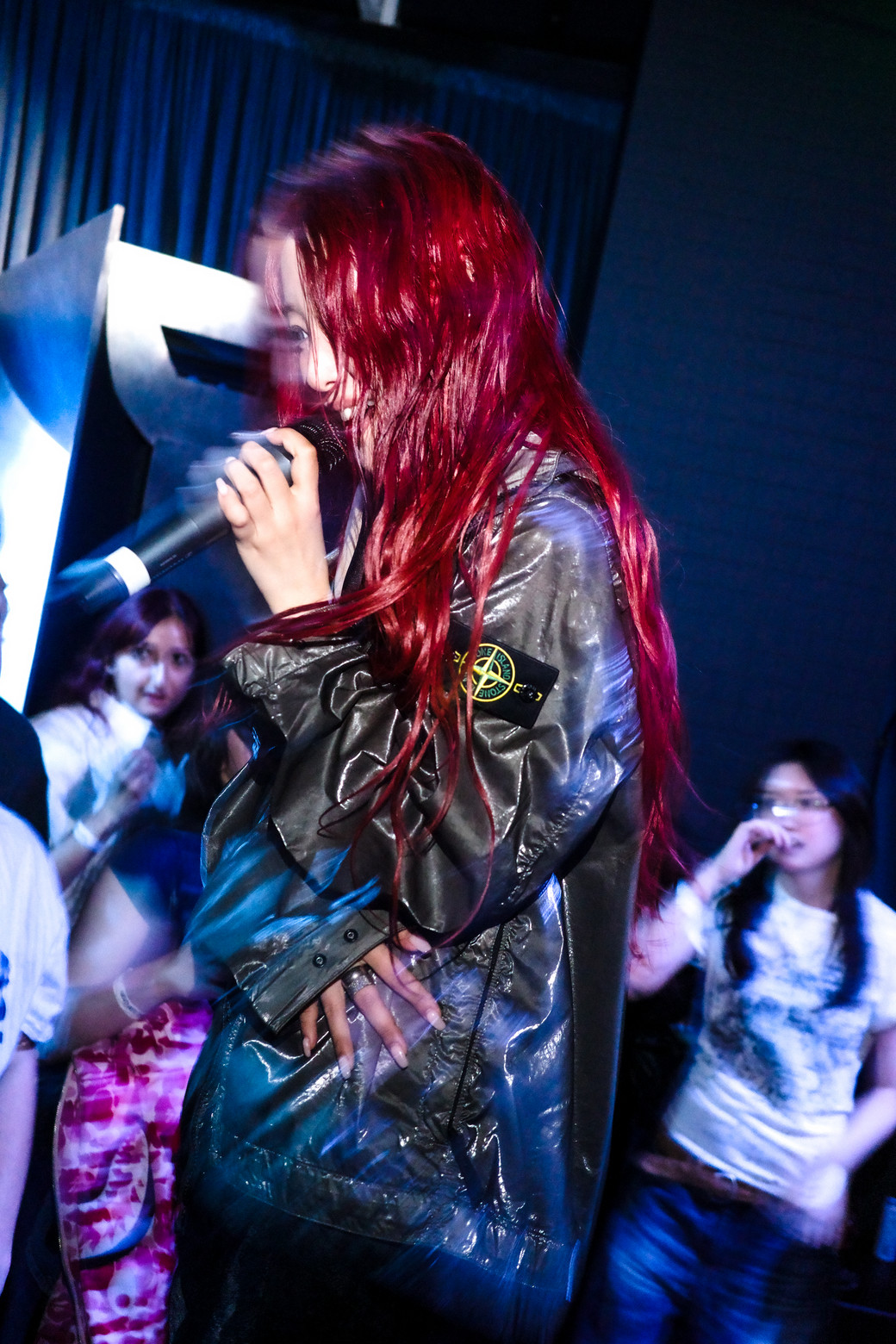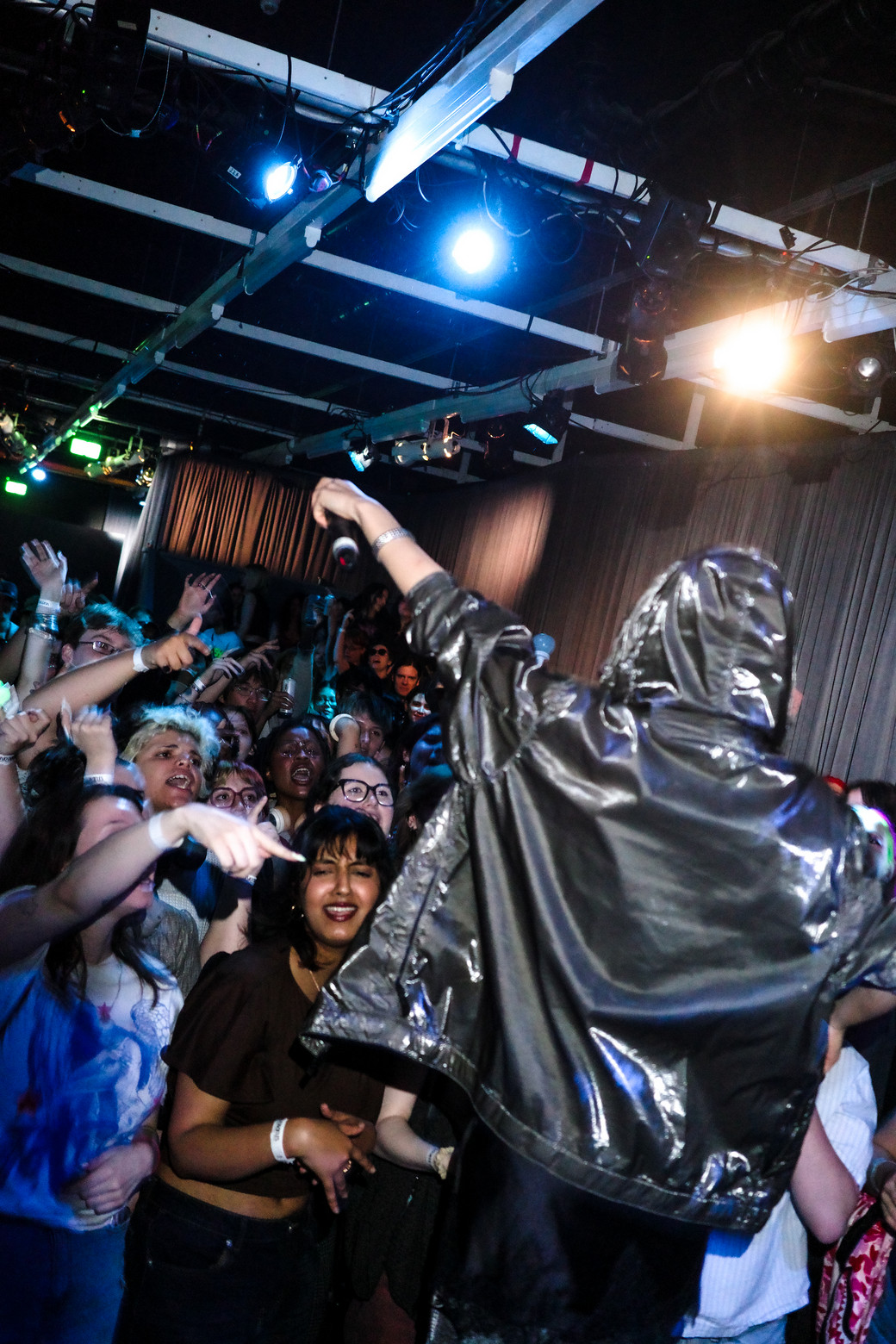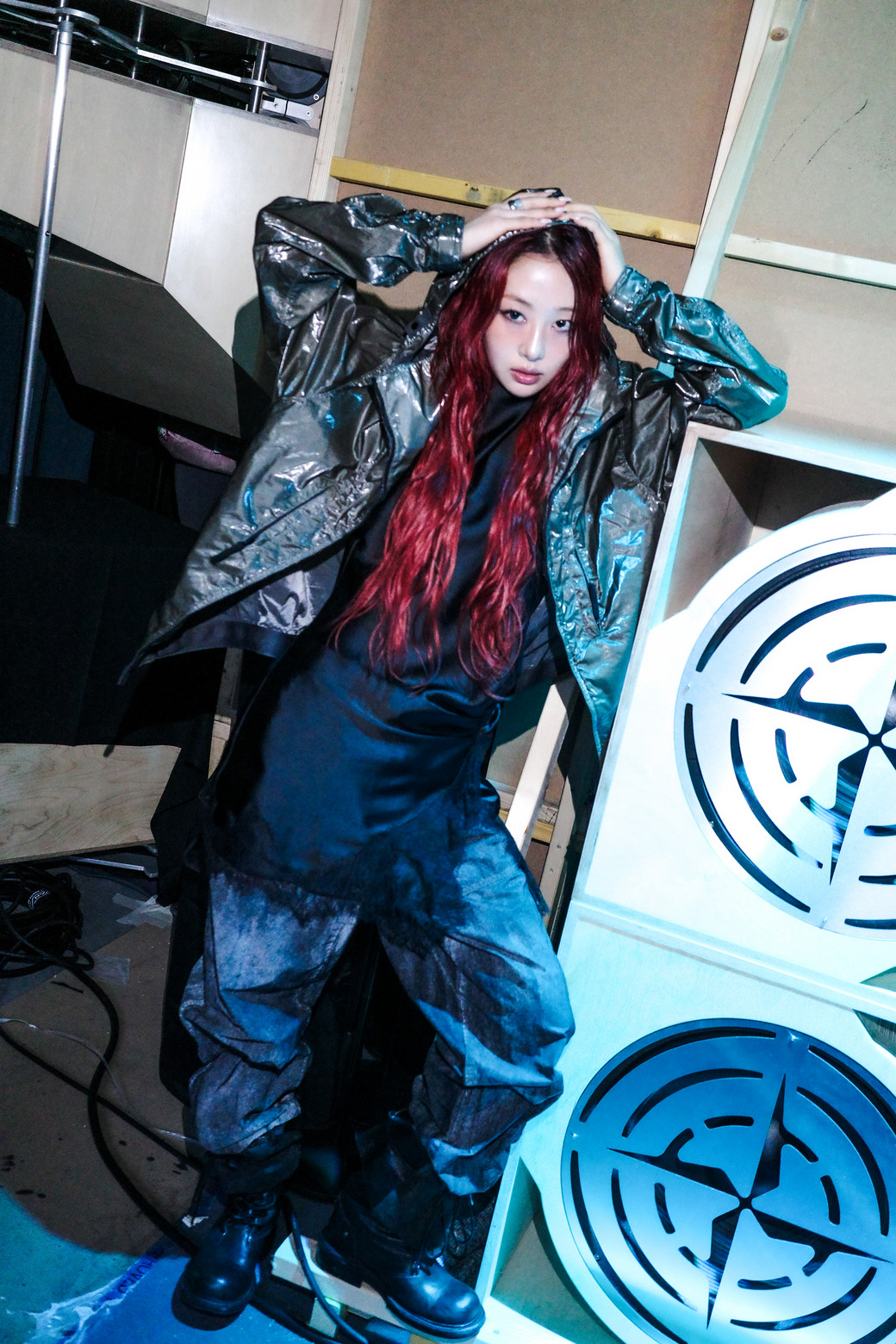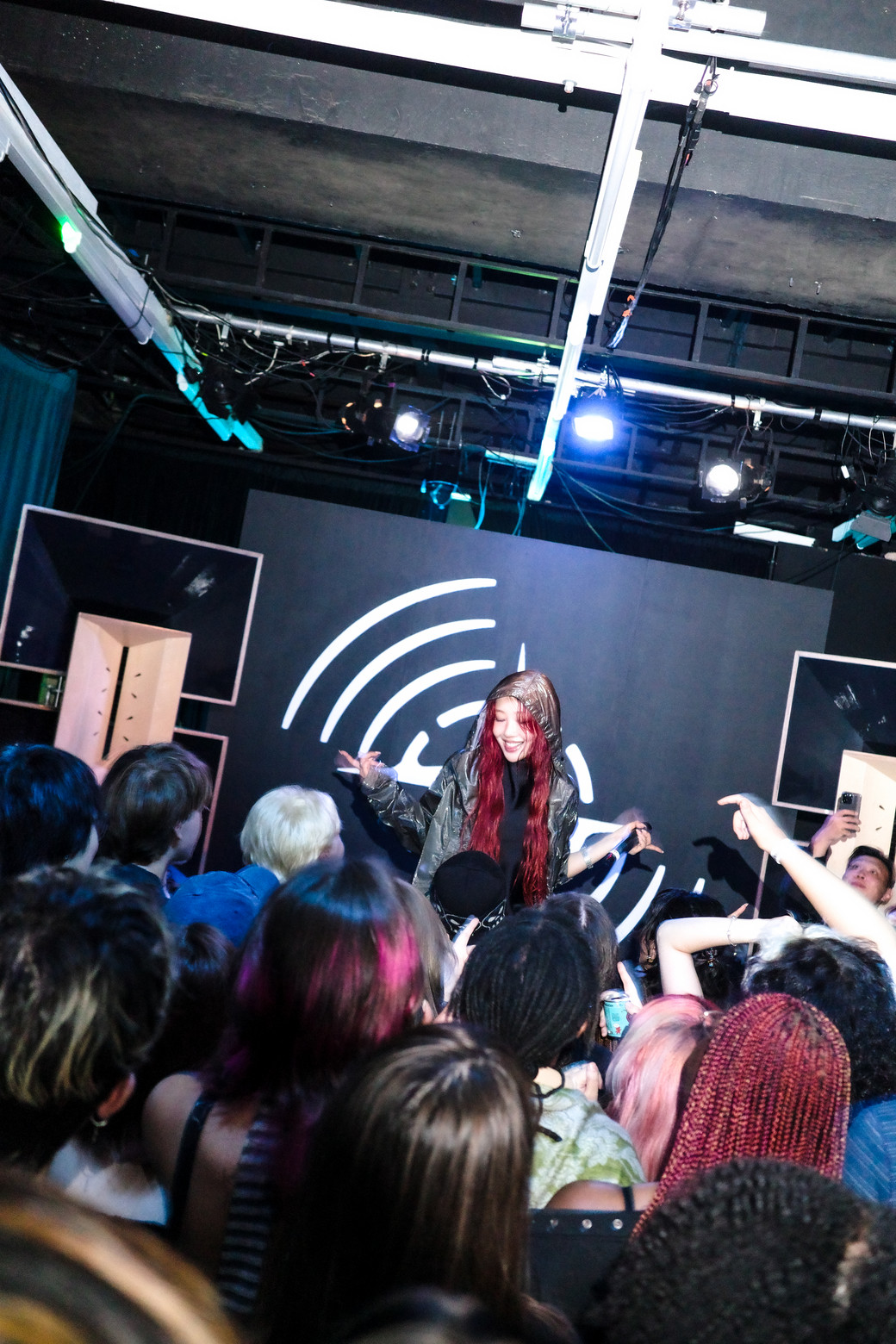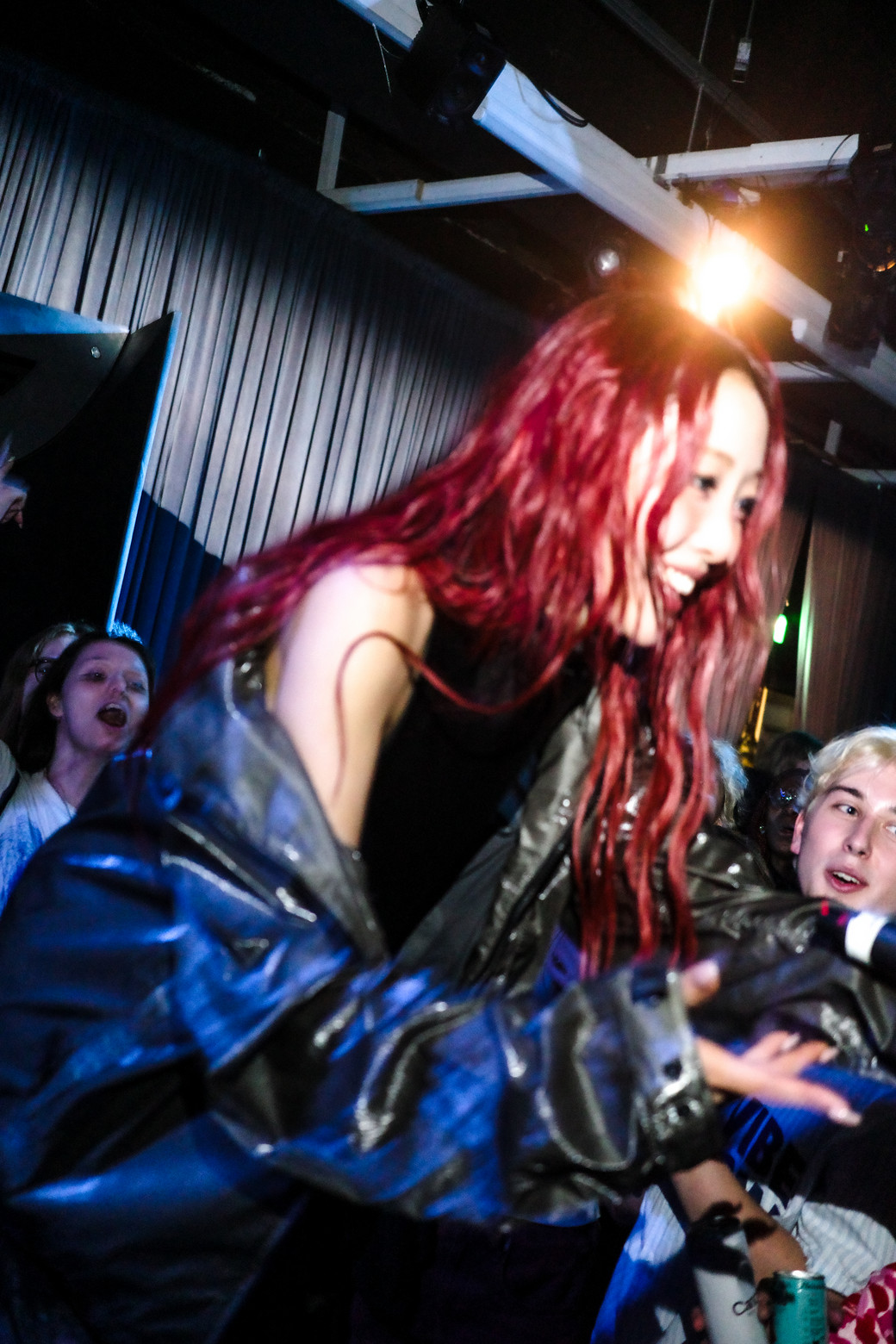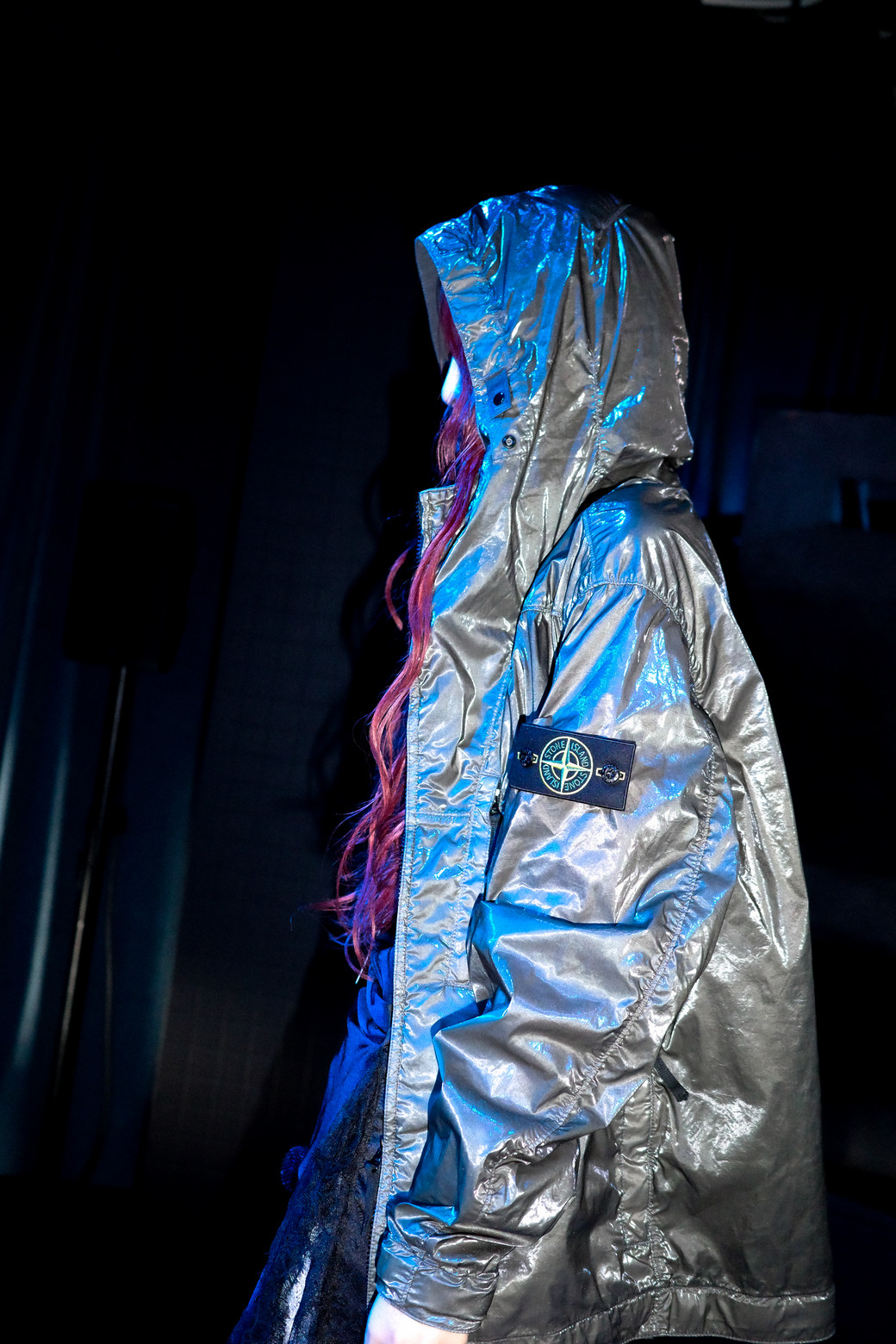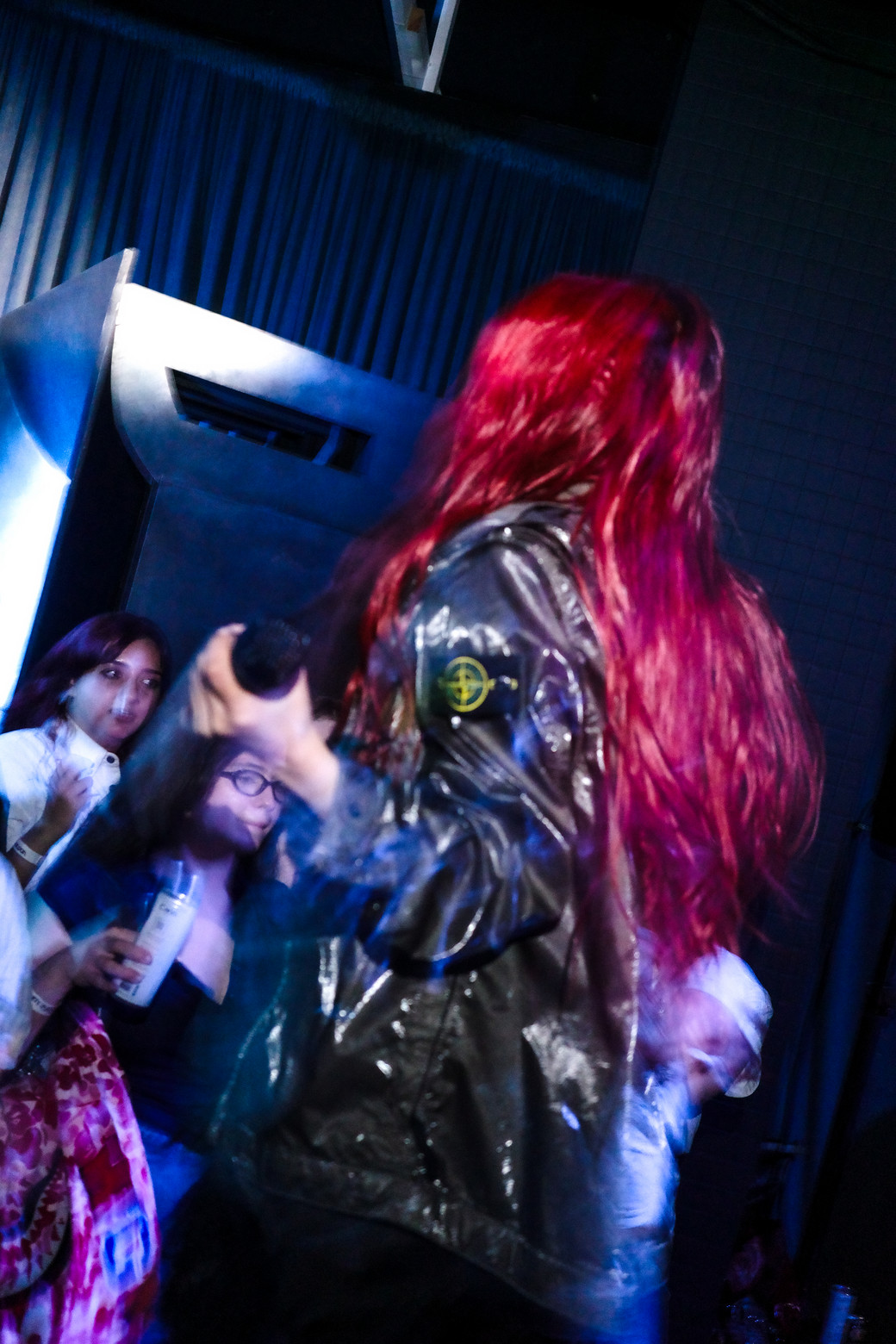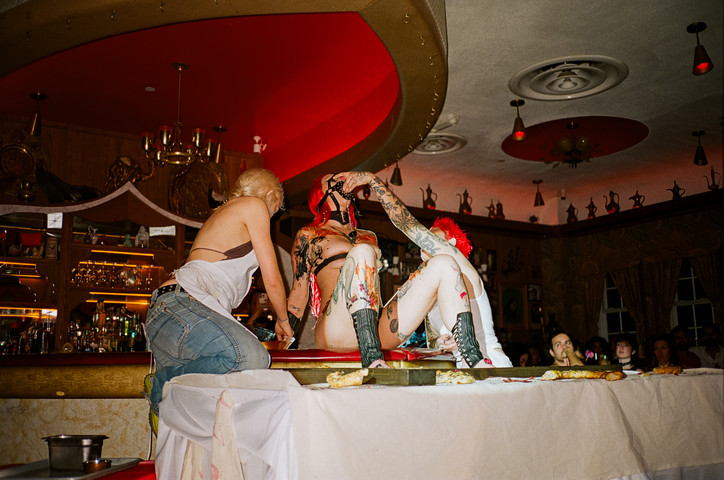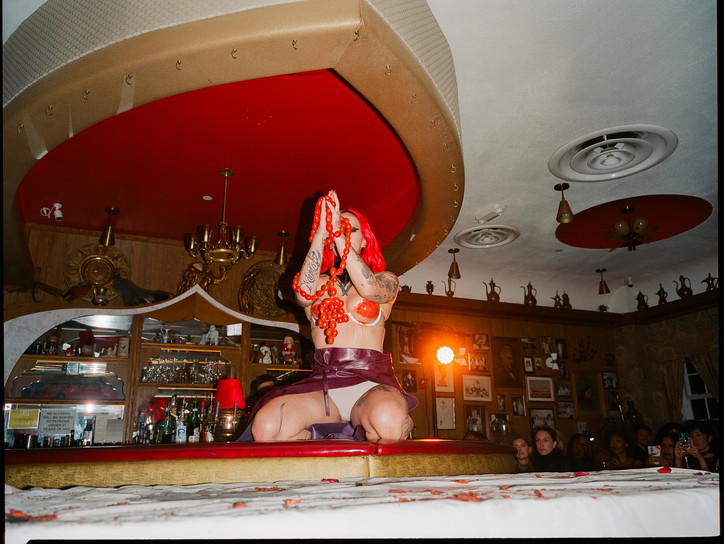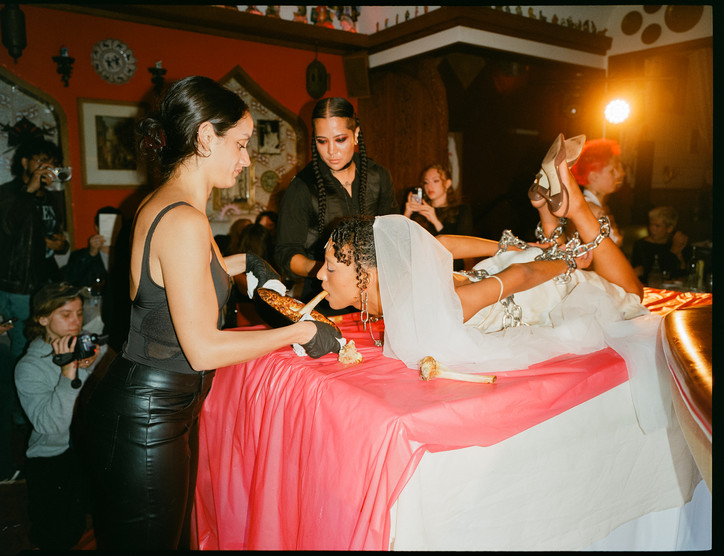
ThugPop's meditation
Along with NYMPH, all other content created by THUGPOP will live on his new online platform, ThugPop.farm.
Listen below.
Stay informed on our latest news!

Along with NYMPH, all other content created by THUGPOP will live on his new online platform, ThugPop.farm.
Listen below.

Day 1 - Thursday, June 4th
I’m at Primavera Sound in Barcelona with my ex-girlfriend and it looks like the sea is going to storm on us. It was drizzling earlier and some of the festival baddies are wearing ponchos but I don’t believe in rain. We get in and get a lay of the land, surveying the massive Parc de Forum. It’s a choose-your-own-adventure, and we decide to go see Blood Orange. When we get to the Revolut main stage, we run into Veronica from Church Electronic, and together the 3 of us bask in Dev Hynes’ brilliance. I’ve never seen him live before, and his band is resplendent; Eva Tolkin and Ian Isaiah take vocal lead on most songs while Dev conducts. The band was tight, as Tariq Saleem Al-Sabir provides a steady backbeat for the blissful alternative R&B/Synth Funk. It’s a great start.
We head to see Geese on the other side of the festival grounds. When Cameron Winter emerges on stage in an Adidas jumper and launched into “Husbands”, a shock wave of energy was set through the increasingly soaked crowd. Umbrellas were flying, ponchos were tearing, and by the time we reach the raucous “2122” (with an interpolation of "Interstellar Overdrive" by Pink Floyd in the middle), the crowd is worked up into a frenzy.
As I've watched Geese rise from a fledgling Brooklyn post-punk band into an online phenomenon over the last 3 years, I don’t think I registered their potential as an arena-rock band. Seeing the crowd belt out the lyrics of the anthemic “Taxes” shows me they could be just that, psyop-allegations be damned. During “Cowboy Nudes,” Cameron screams “BARCELONA UNDER WATER,” replacing his home city with a nod to our current situation. It’s electric.
As they open “Mysterious Love,” Cameron strips his jumper off, revealing a white tank top. He’s really belting by the end, and they finish with “Trinidad,” I venture towards the pitt. Next to me, a guy pleads with everyone to stay safe. They do not. Limbs flail, and people are slipping everywhere. I catch a glimpse of Cameron bathed in gold light with rain streaming onto him, and it’s hard not to mythologize the moment. Around us are mumbling skeptics and Geese sycophants, but most are converted by the end of the set.
We walk in a daze to the Pavillion that has the largest roof anywhere in the Parc de Forum in order to get cover from the rain. Everyone has the same idea, and suddenly we’re practically in a crowd crush. Rumours are abound; apparently a speaker fell at the main stage, and all the headline acts are cancelled for the day. We’re soaked and hungry, so we head back home. People are streaming out alongside us, disappointment and frustration plastered on their faces. The festival baddies have covered their tassels with ponchos and the mascara is streaming.
A quick taxi takes us back to a warm hotel room, where we strip our soaked clothing and order Thai Food. It’s not even 2 minutes after it arrives when my friend Dom texts me. “We left but FJM just went on.” I open Instagram and Primavera has posted that Massive Attack is going to perform at 12:30. I throw the phone at my ex (let’s call her B). My Instagram comment elicits a response from their social media, and the screenshot ended up on the Primavera subreddit as news. Dom calls me. Fine, we’re going back.


After a taxi, we break into a sprint to try to find Dom at Massive Attack. It's full of millennials slipping all over the place, but the energy seems optimistic, and the rain has ceased. At 1:15, a panicked sense of knowing ripples through the crowd, and people start leaving. A drunk girl with a mousy face tells us that the festival posted again, and that Massive Attack is not going on. Immediately, the regret sets in, and the storm begins anew. When it rains it pours, I guess.
Not all is lost. Dom is heading towards 2Hollis, a fine consolation prize even if he didn’t make “Mezzanine.” When I get to the front towards the stage, a festival staff member is hyping up the crowd, people are still pissed off. Suddenly, 2Hollis imagery casts a white brightness onto us. Our consolation prize steps out, and a girl next to me literally screams so loud that her voice cracks and she bursts into a coughing fit.
He commands the pit to open and it does so, rapturously, upon his command. Hollis is wearing a suede jacket, tight pants, and dark sunglasses. He flips his hair in a rehearsed way, but it has the desired effect. His aura genuinely overtakes the crowd. We find ourselves in a rage-inflected rave. I’m exhausted from the long day, but something overtakes me and I decide to join my first mosh since I had double leg surgery in 2019. I thought my moshing days were over, but “Star” had other ideas. At the last second, Dom grabs me and jumps in. We’re jostling, and even though I’m only 23, I feel transported to pre-COVID times. It’s pure catharsis, EDM excess to make us forget the wind and claustrophobia of earlier. This time, we can shove and push the unreasonable amount of bodies that engulf us.
Day 2 - Friday, June 5th
We stagger out of the hotel in a daze and head to a supermarket. I buy cigarettes and B buys bananas. When we reach the Parc de Forum, signs of yesterday's chaos are everywhere. I see a girl with a fresh eyepatch, and a tattoo-covered blonde boy with a makeshift sling. We hustle to the main stage again, and stake our place for the day. Slowdive are on stage now, playing their shoegaze classics. We sit and sip our overpriced mixed drinks, soaking in the sun. B has acid, and we debate whether it’s a good idea to take it amongst 70,000 people. I’ve never done acid before. We decide to take it during Ethel Cain’s set so that it hits during The Cure.
Ethel Cain has hit the stage, and there’s half a tab on my tongue. I’ve never done LSD before, but I feel present and ready. She looks goth as fuck and has admirable stage presence as she oscillates between the dream-pop of “Preacher's Daughter” and the drawn-out slowcore of “Willoughby Tucker, I'll Always Love You”. She’s the perfect mix of pop and experimental for a crowd that is mentally preparing for the shot-chaser of Addison Rae into The Cure. I find the crushed dream-pop of “Ptolomaea” captivating, but the tracks from Willoughby Tucker, strong vocals aside, bore me. It seems like there’s a prolonged build-up to what is supposed to be a purifying release, but it falls kinda flat to my taste. I begin to feel a bit lighter, and I realise the acid is hitting. I need to pee.
After Ethel we split up, and I'm solo. With no phone service, I find myself in a bathroom line, and I strike up a conversation with a lady named Glynis. She tells me she’s from Newcastle, and we quickly bond over our love of English guitar-rock. Apparantly, Glynis worked at a record store in the early 90’s and was the first person in Newcastle to get hip to Portishead. “It’s my claim to fame.” As we slowly work our way down the line, the acid really starts to kick into gear, but I love talking music, and Glynis is a riot. She brought up her kids on a steady diet of critically acclaimed 80’s and 90’s bands. I commend her for her parenting. When I emerge from the porta-potties, she’s waiting for me, and we exchange information. I need to find my friends.
I breathe a sigh of relief when I find them. Addison Rae has started on the Revolut main stage on the right, but we make our way to the Estrella Damm, which is stage left. I’m feeling a bit out of my body, but Addison is putting on a show, so I lock in. The Britney Spears of it all is evident, but it works. It’s pure pop excess, with dancers, outfit changes, and elaborate stage design. Seeing a main pop girlie live during her ascent has been on my bucket list, and it’s fun as hell. Her creative direction is second to none, wearing its influences on its sleeve in a cheeky, campy way. Addison is alluring, a pop temptress with clear intentions and strong worldbuilding. She’s painted in a hazy pink hue thanks to the LSD, and at the end of her set, confetti cannons shoot red paper into the night sky.
I wasn’t prepared for The Cure as a religious experience. We could have been sober and it would have felt the exact same. We’re surrounded by people of all ages, from talkative Italian Gen Xers to Irish twenty-somethings eagerly awaiting the presence of Robert Smith. It’s been 3 years since The Cure last performed, when they toured for 2024’s “Songs of a Lost World,” their first album in 16 years. They begin with “Alone,” the first track off that record. An older man behind me to the left, in full Robert Smith makeup, starts crying when Smith finally begins belting after a dramatic build up. At 67, Smith’s voice sounds like it’s been preserved in amber. Gradually, the gravity of the moment becomes clear. So many icons of Smith’s generation have either passed away or stopped performing. When they break into “Pictures of You,” the emotions start flowing out of me. The acid is in full effect now.
I feel a strange sense of calm, fully present in the moment. By the time we reach “Lovesong,” it truly hits that this is a defining musical experience in my life. I will never be 23 on acid, smoking a cigarette, watching Robert Smith belt one of the greatest love songs ever penned. “However far away / I will always love you / However long I stay / I will always love you.” The guitar-rock cacophony blends with the audience echoing his every word. He’s doing the opposite of phoning it in, gesturing appropriately, and emoting theatrically. He seems extremely pleased with himself. God, Robert Smith is adorable.
I tell Dom and B that this already feels like a memory. I can still see it so clearly. And God, do they have range. They are truly an arena rock band, fully formed and still kicking. On “In Between Years,” the audience yells the synth lead. We reach “Endsong” after half an hour, and my legs are aching, but these are some of the last remaining Rock Gods of the 20th century. We commit to sticking it out. I embrace Dom and B as Smith saunters towards our side of the stage for “Why Can't I Be You?,” sticking his tongue out and channeling the heavens. During “Boys Don’t Cry,” we try to beat the crowd surge out. I step on someone's foot, and he shoves me, which jarrs me out of the acid euphoria into reality.
B and I walk around in a daze, mystified by what we just witnessed. We soak in the festival for a few more hours, unable to go see another performance. Still stunned, we struggle for an hour to hail a cab before deciding the tram is our best option. It’s 4 am now, and the tram pulls up, people packed like sardines. It’s a nightmare of a commute, and I watch the Knicks win in our hotel. I am happy.
Day 3 - Saturday, June 6th
It’s 5:30 pm and we’ve just woken up. Fuck. I drink the hotel coffee, and then we get some fruit and grab a taxi towards the festival. Our driver has a blaring high-pitched noise emanating from his car that doesn’t stop the whole ride. I deserve this for how many times I’ve stolen cold brew from CVS. He drops us off, and we walk to get our first meal of the day - fried chicken with a side of a fried chicken sandwich. I will pay for this later, probably. We hustle towards the main stage, Estrella Damn, to see the back half of Big Thief’s set. Adrianne Lenker is resplendent, and her band is tight. We meet Dom and Veronica outside of the press area and head to see Little Simz. It’s been exactly a year since her last record, where she waxed lyrical about her ex-best friend and close collaborator Inflo. Her drummer’s kick echoes into the sunset, and she’s beaming. She races through some tracks from “Lotus” before cleverly hopping behind the boards for an impromptu “DJ Simba” set, wherein she hypes up the crowd while rapping along to some tracks. Then, it’s a greatest hits of her discography. I didn’t recognize how well her music would translate to a festival environment - she has genre-ranging bangers.
Simz finishes, and we go to get some wine. It’s dark now. My Bloody Valentine is about to go on. We linger in the back, sipping our wine as they take the stage. Their pink Loveless visuals outline a couple making out on an elevated surface in front of me. B and Dom lie down because they are tired, and I talk to some indie kids from Kentucky who are excited to see The xx. I’m going to Dijon. We enter the Capra pavilion for Dijon and take our seats on the stairs. We take some Vitamin K. Dijon is fucking with the songs from his sprawling, experimental R&B/synth pop album “Baby”, my 2024 album of the year. He emphasizes every oddity and idiosyncrasy to make it cacophonous, loud, distorted, and low-fi. I go and grab a Redbull with Rum because B doesn't like vodka. The bartender likes my eyeliner, and I like her piercing. She gives me a free shot, so I’m a bit fucked when Dijon launches into “Higher”, a song that sounds like church on Mars.
In a warped voice Dijon tells us how much he loves his wife, Joana, over and over, and then goes straight into a harmony-filled version of “Automatic” chock full of blaring synths. After a noisy ending, we rush towards the main stage to get a good spot for our final headliner, Gorillaz. We catch the end of The xx’s set, and I’m grateful for it. They tastefully weave in Jamie Xx solo cuts like “Loud Places,” and they finish strong with a remixed version of their iconic song “Intro.” It makes me feel like I could've been a good millennial.
Gorillaz hit the stage and the K hits me. They begin with “The Mountain,” the title track off of their latest album. As soon as the cartoon characters 2-D, Noodle, Murdoc, and Russell appear on the massive screen, the crowd erupts in a fervor. During the career-spanning setlist, Damon Albarn brings out singer-songwriter Kara Jackson for “Orange County,” and South-African artist Moonchild Sanelly for “With Love to an Ex”. She twerks on Damon. The band launches into “Stylo,” and Mos Def emerges. He stays for the politically charged “Damascus,” and embraces Little Simz as she returns to the mainstage for “Garage Palace.” After a mournful performance of “The Shadowy Light,”, Posndous from De La Soul emerges to introduce “Feel Good Inc.”, before the obligatory hit “Clint Eastwood”. Damon mumbles some Spanish, and the band take a bow.
It’s late now, but drugs are fueling us, and after some fried chicken, we meet Dom at a Nick Leon DJ set on the other side of the festival. We’re waiting for Ecco2k at 4:00 am, and I go solo again during Ninajirachi’s DJ set to fill our empty water pack. We get a good spot for the Swedish cult hero, front right, and he emerges in smoke like a cloud-rap deity. When he starts with “AAA Powerline,” it’s incredibly loud. I put in earplugs and soak in the drainers and ravers. Ecco delivered, but we are exhausted and leave halfway through the set.
On the train home, I feel like I'm vibrating. Every act I’ve crossed off my list was one I’ve never seen before. Yes, I missed Father John Misty and Massive Attack, but I lived music the whole weekend. I’ve been a festival skeptic for years, but this one lived up to the hype of its unmatched curation. For the rain, all is forgiven, Primavera.

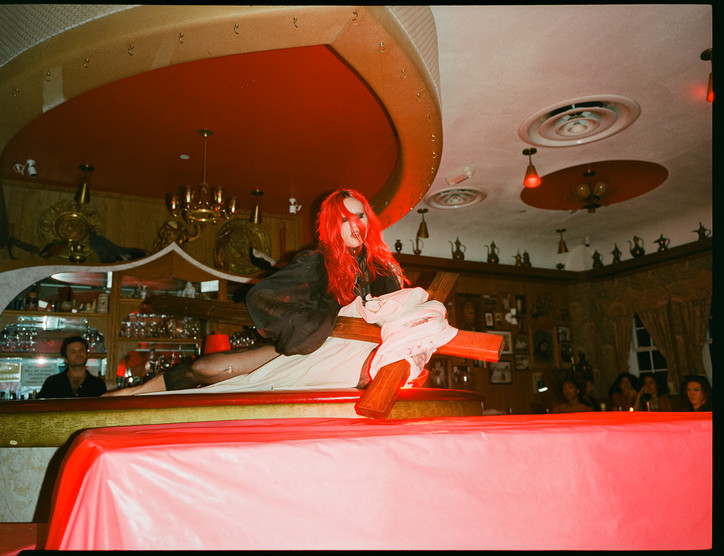
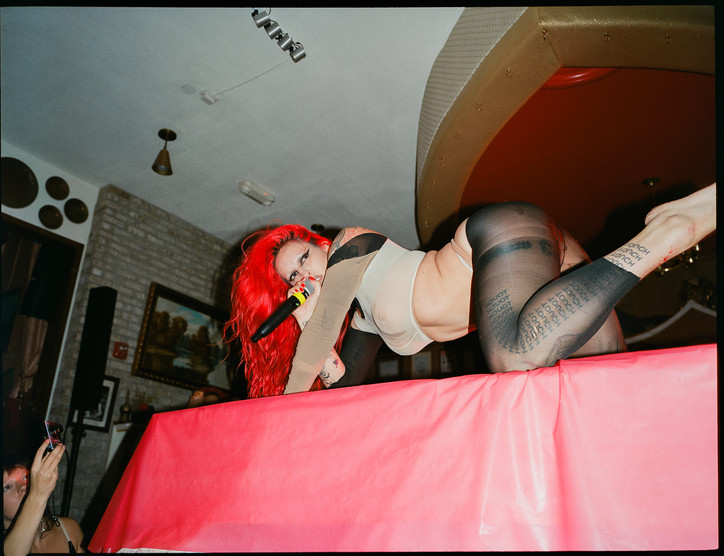
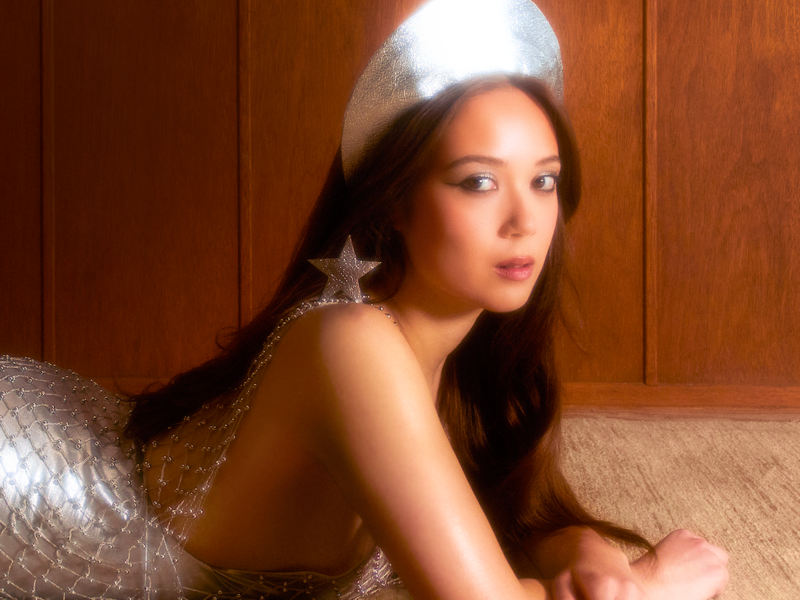
I had the privilege to speak with the ethereal, sweet miss Baby Jane, based in Los Angeles. Born to Soviet immigrants in Oakland, I asked how it must be to perform in the place you grew up. She solidified herself as relatable when she shared she was never uber popular and prefers to keep a small circle, so having a supportive crowd show up purely for your music is amazing. She fully dedicated herself to music at the age of fourteen and has since built an impressive portfolio rewarded with a fanbase just as dedicated to her. She's built a whole world for fans to get lost in, and in this world you're one of three things: a cowboy, warrior, or goddess. What makes Baby Jane such an imaginative creator is her open indulgence in fantasy and wistfulness, with love being the bottom line of everything.


Your name is an obvious nod to the classic thriller, What Ever Happened to Baby Jane? [in which ‘Baby Jane’ — an aging former child star — torments her wheelchair-bound sister Blanche — a famous actress following Baby Jane’s short-lived success]. Do you resonate more with the pursuit for fame or indulgence in retribution?
The initial spark of inspiration when I was watching that movie was [Jane's] desperation, so the former. Her whole behavior was kinda pathetic and ego-driven and I'm seventeen watching thinking, "You know what, it is pretty embarrassing to pursue this and trying so hard to get attention from people. Why deny that that's a big aspect of why we pursue [fame]?" So I decided just to wear that. Additionally, it reminds me of the love that I share for classic movies with my dad; we watched it together for the first time.
Yes, I saw it was a tradition for you guys to watch film noir movies every Sunday? That's a really sweet routine to have. Your instagram handle is @babyjanelives — what everyday routines or mundanities make you feel alive?
Everyday is kind of the same: wake up, work on my project, try to stay inspired, try to be in nature. I drive through the canyons a lot. I pray everyday so that's changed my life and gives me a lot of stability.
Your fanbase is dubbed The Coven with you as their High Priestess. What's the synopsis of your own religious manifesto?
I have one! It’s kind of like the bottom of the iceberg when it comes to my coven. When you join the discord you sort yourself into one of three archetypes: the cowboy, the goddess, the warrior. There's also the Six Principles of Terem — which are kind of like rules to live by, not so much a religion but a spiritual guideline [each spiritual archetype unlocks The Innate Superpowers of They. The Six Principles of Terem will lead them to The Divine Meadow]. And there's The Noble and Slow Burning Pleasures of the Simulation, which is another group of thoughts and ideologies... The whole thing is based on finding your own relationship with love and spirituality and empowerment. It's a cool thing fans can get into. I have a lot of plans for it but right now the music comes first.


How did you come to this arrangement of the three archetypes? Do these three share a common characteristic?
Each archetype represents a spiritual path and the way that you feel empowered in life. All of them have short stories you can find on terem.xyz.
[The cowboy is on a quest for personal freedom, the warrior for moral purpose, and the goddess for genuine connection. The cowboy believes in some place else, the warrior righteousness, the goddess beauty; once they learn that it does not exist until it ceases to be sought they will learn peace.]
Which archetype do you identify with? Or are you a secret fourth thing? After taking the quiz and reading about each archetype, I'd like to identify as a cowboy-goddess.
You might be the first fusion. I’m the original cowboy, the first cowboy.

When you're on the decks, you don a medieval-looking torture device, commonly called branks, used as public punishment to silence women. Tell me the story behind the branks. It's meant to allude to a song of yours and I heard it was fanmade, is that true? It's a visual element that adds to your virality. Did you always plan to incorporate the mask into your image?
I guess the origin origin is when I was in Luca, Italy and I went to a medieval torture museum. I must've seen something [that got me] really into torture devices and learning about them. On my first album, Otherworld, I wrote a song called “Put Me in the Branks”. My super og fans heard that song and one of them is a carpenter/welder in Alabama. One day he just said in the discord “Send me your head measurements” - shoutout Jack Hawkins! - and it kind of lined up with when I was going to do HÖR Berlin and I decided it'd be pretty cool to wear it. It all happened very organically.


Do you plan to invest in more?
I did six dates in the U.S. where I wore a lighter replica made out of aluminum that I can travel with. I like the visual of it but I am thinking I don't know if I want to DJ in it every single time; I have other ideas I want to showcase. So I'm just going to follow my intuition.
I feel like you have an intuition that's spot on.
I appreciate that. It's practicing it not questioning it, because I think we all have intuition but it's just, how loud are the doubts?

During a performance you transition from a silent, muzzle-bearing, bouncing DJ to an energetic, twirling live performer. Do you have any sensation in this transition, in the moment of breaking yourself free of the muzzle?
I love the theatrical element… it's a performance, it's very much Baby Jane, it feels really special. There is a satisfaction [from] the reaction I get from the crowd every time I take it off and they're excited I'm about to sing.

You've recently finished a month of the Strange Days Tour — congratulations! What was your most memorable rose and thorn from the experience? Any buds planted for what's to come next?
The rose was meeting the fans, that was just really, really crazy. I get a lot of dms and you see the numbers and the stats and the comments online, but it's so different to actually go face to face and meet the people who listen to your music. The thorn was some of the sleeping situations. I'm looking forward to playing more shows in more cities. Strange Days will continue — that was the first one, Strange Days is the name for that particular hybrid set so I'm going to be touring more dates with that. This summer I'm trying to set up some Europe stuff.
You bring the hardstyle of European rave culture to the the U.S., simultaneously bridging international genres and leading the western sound of new wave electronic trance. What would you like to see more of in the western scene?
There is an incredible, incredible level of creativity and community in the electronic scene in Eastern Europe right now. I really love that I've found kind of like a virtual sense of community there with a lot of the producers that I work with - like LONOWN and akiaura - and people in the angelcore scene and wave music and witch house. I really love being able to perform that in the U.S. and singing English songs over it. I just hope that more people discover the genre, how inspired what's going on over there is. It's completely not derivative. I think in the U.S. it's real easy to get stuck in an echo chamber of what's popular and what's moving and then you just kind of have all of these little clones — respectfully. I guess there's clones of that [in Europe] too, but it does feel like I've found a really cool sense of community and I'd love to bring more of that to the mainstream here.

About your upcoming album, Winter Forever, you said it was initially meant to express loneliness but instead morphed to explore personal freedom and escapism (very much embodying the cowboy archetype). Do you find that true individual freedom comes with a trade off of loneliness? Which would you rather be: truly free but alone or bound to limitations but within a community?
I do, it's a double edge sword. I'd rather be truly free and alone. I think that's what the cowboy archetype represents — funny how it all ties back in — complete detachment.
It's an artform. We’re so easily attached to things in a way that ends up holding you back from being open to possibilities and change.
Everything is changing all the time, then as soon as you start grasping on to something, there's death.
Your sophomore album is titled A Grave Marked Strange; How do you want your own gravestone marked?
Maybe "Unmarked". Or a mirror.
Your album will be released in a little over a month now. If A Grave Marked Strange represented the grave we'll meet at, how will Winter Forever expand upon your materializing world? What are some of the album's key takeaways?
I think A Grave Marked Strange represented a place outside of circumstance where the perfect romance could exist. When I started Winter Forever, it was about such a deep feeling of cynicism and loneliness and then through the music I discovered that - kind of like we were just talking about - that is the gateway to experience in life and joy and complete surrender to everything. The album is about personal liberation. The through line with all my music is just duality; there's always a little bit of darkness and a little bit of light and a little bit of fantasy and a little bit of honesty.


Your persona — both visually and musically — is very grounded in mysticism and horror, and the world you've simulated is dark yet delicate. What is it about these gothic visuals that captivate you?
I like that it exists outside of any frame of time. It's supposed to be otherworldly and fantastical and not rooted in whats happening now with trends. I want people to look back at my visuals and not be able to tell when it was shot.

I love that it plays a lot into fantasy, to me thats the whole point of dress. Playing more into fantasy is your association with gaming. Your brand image is adjacent to the eerie Silent Hill, your song “Eternal Embrace” is featured in the indie horror game Scary Shawarma Kiosk, and you’ve hosted a Halloween meet and greet on Roblox. The gaming community seems to support you as much as you draw from it. Is gaming a form of escapism you practice?
No, I don't game at all. I like the visuals that people have compared some of my videos to, like Silent Hill and Resident Evil, that made me get into the aesthetics of it. I used the original Silent Hill game on an old CRT in the "Starry Eyed" music video and that was the homage for what happened to "Eternal Embrace" and how it went viral on Roblox. I think that the surreal visuals represent emotion better than it does the details of a story.
What would your role be in a horror film/game?
I would be a lost protagonist for sure. I was thinking today how I want to create a short film where I play both the terrified protagonist and also the creature.

Winter Forever is a pioneer of the ethereal synthwave microgenre “angelcore”, in contrast to the gothic/witch house of former albums. As you delve further into your career, do you see yourself mastering one niche or constantly exploring new sonic landscapes?
I don't really want to be too precious with one niche because I think that stagnates you. I think it will expand. This one we expanded a lot but all the songs sound very much me. There's a lot of hard style in it like all of the niches have blended together in a way that it has created something different.

Part performance, part ritual, part musical anthropology, Ocean Cage emerged from Tianzhuo Chen and collaborator Siko Setyanto's research into the whaling communities of Lamalera, Indonesia. Yet what interested Chen was never documentation. Instead, he became fascinated by a worldview where life and death, violence and gratitude, human and non-human existence remain fundamentally intertwined.
"The whale is prey, but also ancestor, gift from God and sacrifice," Chen explains. "What touched me wasn't simply the ritual itself, but the fact that life and death weren't separated."
The result is a work suspended between reverence and discomfort. Traditional Indonesian cosmologies collide with electronic music, experimental performance, club culture, and contemporary mythology. Ancient structures are neither preserved nor abandoned; they are transformed.
For Chen, ritual and rave culture are far less distant than they appear. "I think ritual and rave already share the same structure," he says.
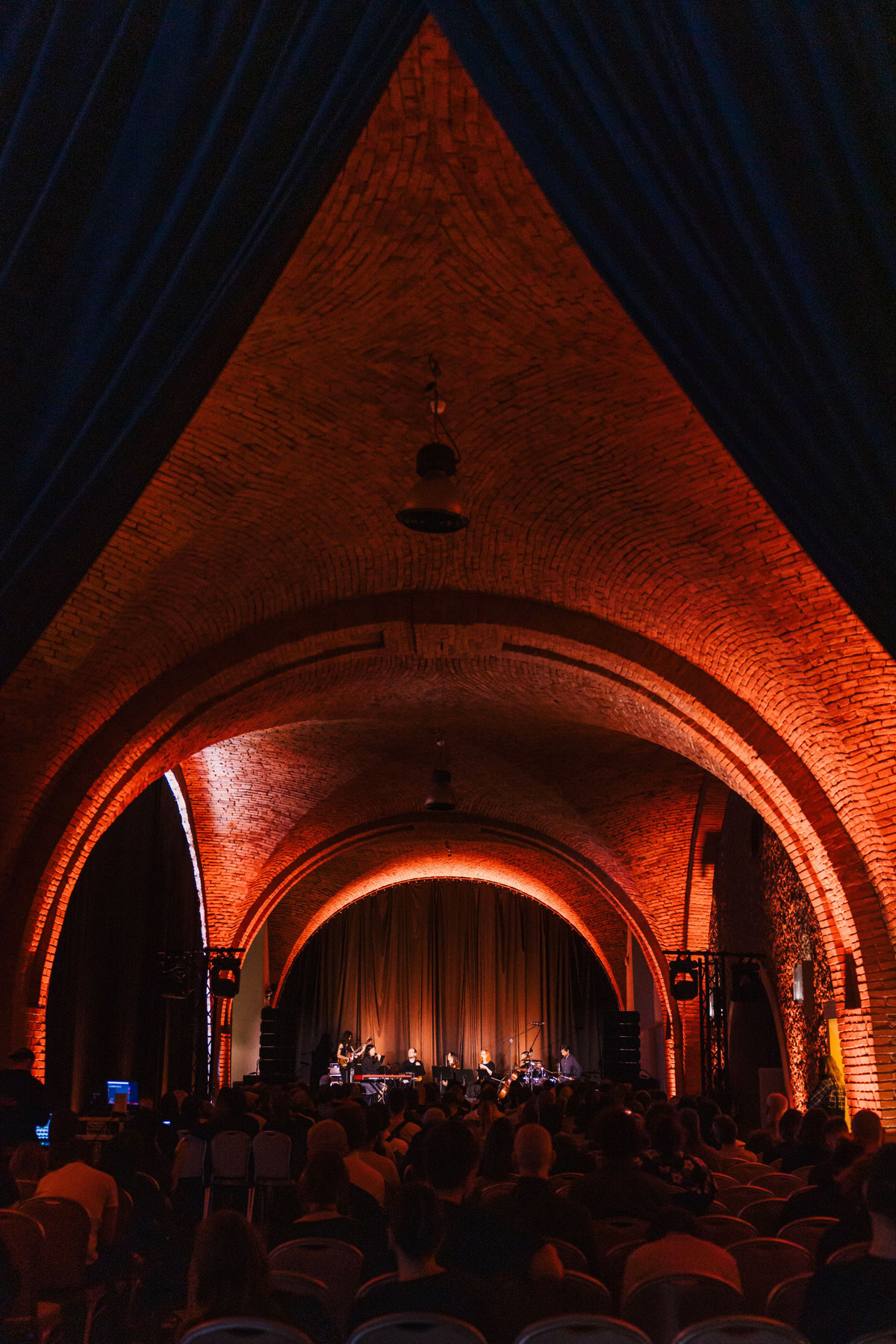
That collision between ancestral knowledge and contemporary experience runs throughout the entire Venice program. The performances feel simultaneously ancient and futuristic, existing somewhere between ceremony, theatre, concert, hallucination, and collective meditation.
Chen's accompanying performance, Moyang 先祖 & Seaman 漁師, extends this exploration even further. Through figures such as the Ancestor, Fisherman, and Sun Moon God, the work navigates a landscape where memory, fiction, spirituality, and imagination become inseparable.
"Today we spend so much time asking what we can learn from AI," Chen says. "But what if we looked back and asked what we could learn from our ancestors?"
For KUBORAUM founders Sergio Eusebi and Livio Graziottin, the attraction to ASIANDOPEBOYS was immediate.
"The first time we saw an ASIANDOPEBOYS performance on video, we literally went crazy," Eusebi recalls. "We became obsessed."

What struck them wasn't simply the visual intensity of the work but its refusal to separate aesthetics from ethics, spirituality from politics, beauty from community.
"It was powerful, immersive, beautiful, and raw all at once," he says. "Spiritual and punk at the same time. Contemporary, futuristic and ancient. Traditional and experimental."
This collapse of categories mirrors KUBORAUM's own philosophy. Since its inception, the project has existed somewhere between fashion label, art collective, performance platform, design studio, and cultural community. The eyewear itself functions less as an accessory than as what the founders describe as a "mask", not something that conceals identity but something that amplifies it.
That same philosophy extends naturally into KUBORAUM Editions, the group's vinyl-focused publishing platform. Every release is treated as an artist edition, existing simultaneously as music, object, archive, and cultural artifact.
In an era increasingly dominated by digital consumption, Ocean Cage arrives as something stubbornly physical: a gatefold vinyl featuring a 16-page booklet filled with photographs, texts, sketches, storyboards, and artworks documenting the project's evolution.
"We believe an object can become a container of culture," says Eusebi. "Collecting an object is also a way of belonging to it."
For KUBORAUM, the tactile experience remains inseparable from the music itself. Sound exists alongside paper stock, typography, photography, texture, and design. The record becomes less a product and more a portable world.
This idea of world-building extends beyond the object itself. Both ASIANDOPEBOYS and KUBORAUM operate through networks of collaboration that stretch across continents, connecting Berlin, Indonesia, China, Italy, and countless other cultural geographies.
Travel, in this sense, becomes more than movement. It becomes methodology.
The title of KUBORAUM’s event series, We Travel To Know Our Own Geography, suggests that understanding ourselves requires first encountering others. "Through encountering the Other, we ultimately come to know ourselves more deeply," Eusebi explains. It is perhaps here that the project's relationship to love becomes most visible.
Not romantic love. Something larger.
A form of collective responsibility. A willingness to remain vulnerable to transformation. A belief that identity is never fixed but constantly evolving through encounter, movement, ritual, and exchange.
For Chen, love appears not as desire but as interdependence.
For KUBORAUM, it becomes an active choice.
In Venice, surrounded by art world openings, collectors, curators, and cultural tourism,the festival offered something increasingly rare: a reminder that performance can still function as ritual, that music can still transform perception, and that travel can still be a tool for understanding who we are.
Or perhaps, who we might become.