You moved to New York at 19, correct?
Yes, and it was not an easy feat! After high school, I enrolled at Brigham Young University in an attempt to rediscover my faith. I couldn’t show my shoulders or knees, drink coffee/alcohol/tea, have multiple piercings or dye my hair any fun colors, and I also couldn’t be openly queer. I understood that leaving BYU and my religion would have serious, life-altering consequences on my education and family, but I was deeply attuned to this sadness and unease welling up in me. I felt like I was lying to everyone, and even moreso, knew I wasn’t being true to myself. I wanted to be absolutely sure that leaving was the right decision, something I was truly capable of, so I began taking Craigslist rideshares or Greyhound buses out of town to flirt with the idea of pursuing a different path.
On one of these trips, I missed a late night bus in Las Vegas and downloaded Tinder to pass time. I matched with a musician and fell almost immediately head over heels in love. One year later, I stuffed my belongings into garbage bags and set off from Provo to Los Angeles- fueled with the sort of confidence that comes with first love. There, I saved up funds with the intent to eventually move to New York, and heard about a program at Columbia University for people with nontraditional paths called GS. After ten months in L.A. I moved into a little windowless walk-in closet of a room in Ridgewood, Queens at 19, got a job at a restaurant, and started studying at Columbia.
How was it for you to break away from the life you grew up with in the church?
Have you seen the Truman show? I felt like Truman when he left his T.V. show world. Growing up the way I did gave me so many blind spots- culturally, interpersonally, and politically. I didn’t have artistic or intellectual figures in my life or examples of people who’d successfully constructed happy lives outside of the church. So when I ran away to L.A., the idea was I’d fling myself out into the big bad secular world to find myself- to find salvation. I’d also listened to Lana del Rey’s record when I was 15 and was immediately like, “Boom! I want to run off to the desert, brush shoulders with renegades, and fall in love with cartoonish humans who probably aren’t good for me. I want stories!” Later, I’d realize I traded in one sort of mystical religious belief, Mormonism, for another- romantic love.
I went from being a teenager studying at a conservative university in Utah to being a teenager navigating a big new city, living with my first partner who was much older and more experienced than me. At that time, I didn’t know how to operate. I had virtually no boundaries because I’d been told exactly what was right and wrong my whole life. The set of rules which often felt despotic and suffocating oddly made my life feel easier- especially when it came to making choices and just generally navigating the world. Religion says, “Here, these are your answers. Abide by these rules and be whole. Don’t drink, be virtuous, abstain from evils.” I made this major leap away from my old beliefs and felt liberated, yes, but also terrified because I didn’t know what my own morals were. I was out of touch with the world, my own instincts and boundaries. I’d no intrinsic belief in my own decision-making because I’d been told exactly what was right and wrong my whole life. And on top of it all, my new friends and the people I dated had no way of wrapping their minds around this.
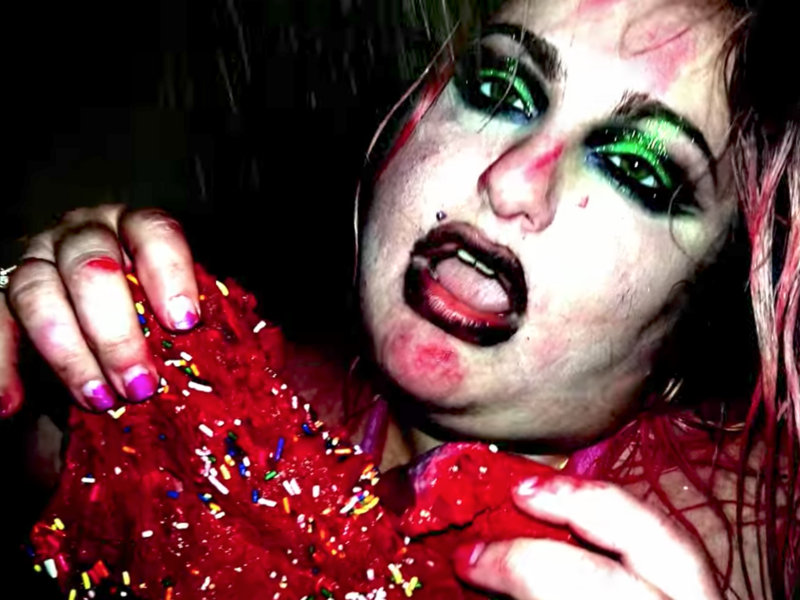
How can you expect people- who I thought of as so urban and savvy- to look at a seemingly intelligent, confident, articulate young woman and try to explain to them, “I know nothing. I feel like I’m going to hell for having coffee with you right now. I don’t know how to be a normal person, without a god.” Often, I think when people separate from their faith, they are left with an ache, this massive hole that religion used to fill. Where do you find community now? Where do you feel a sense of belonging? For a time I tried to fill this hole with an ivy education, by getting writing published, sometimes I’d go to 12-step meetings I had no business being at- but mostly, I tried to fill the void of religion with love. From 18-22 there was so much loneliness, so much strangeness in losing the community that Mormonism provided for me. It wasn’t until I started clowning and making music that I began to feel less of that emptiness, and more sure of myself.