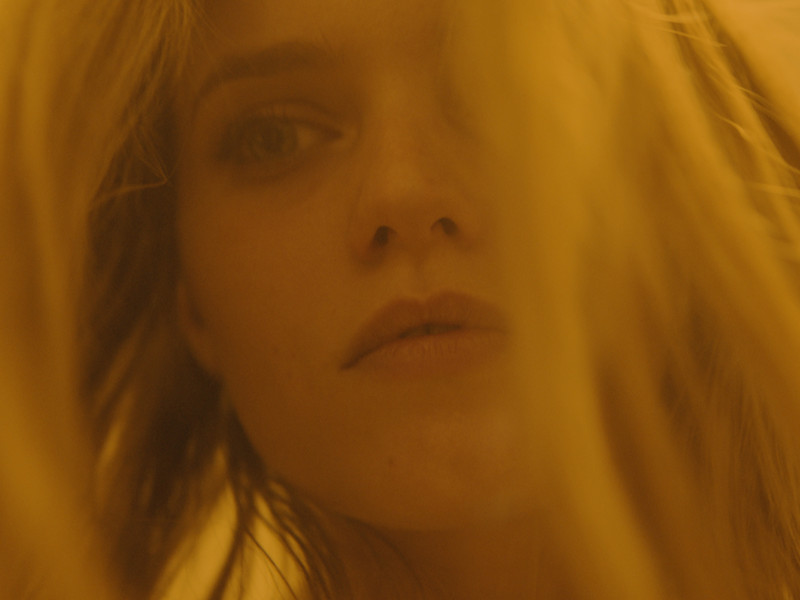
Vulvatious

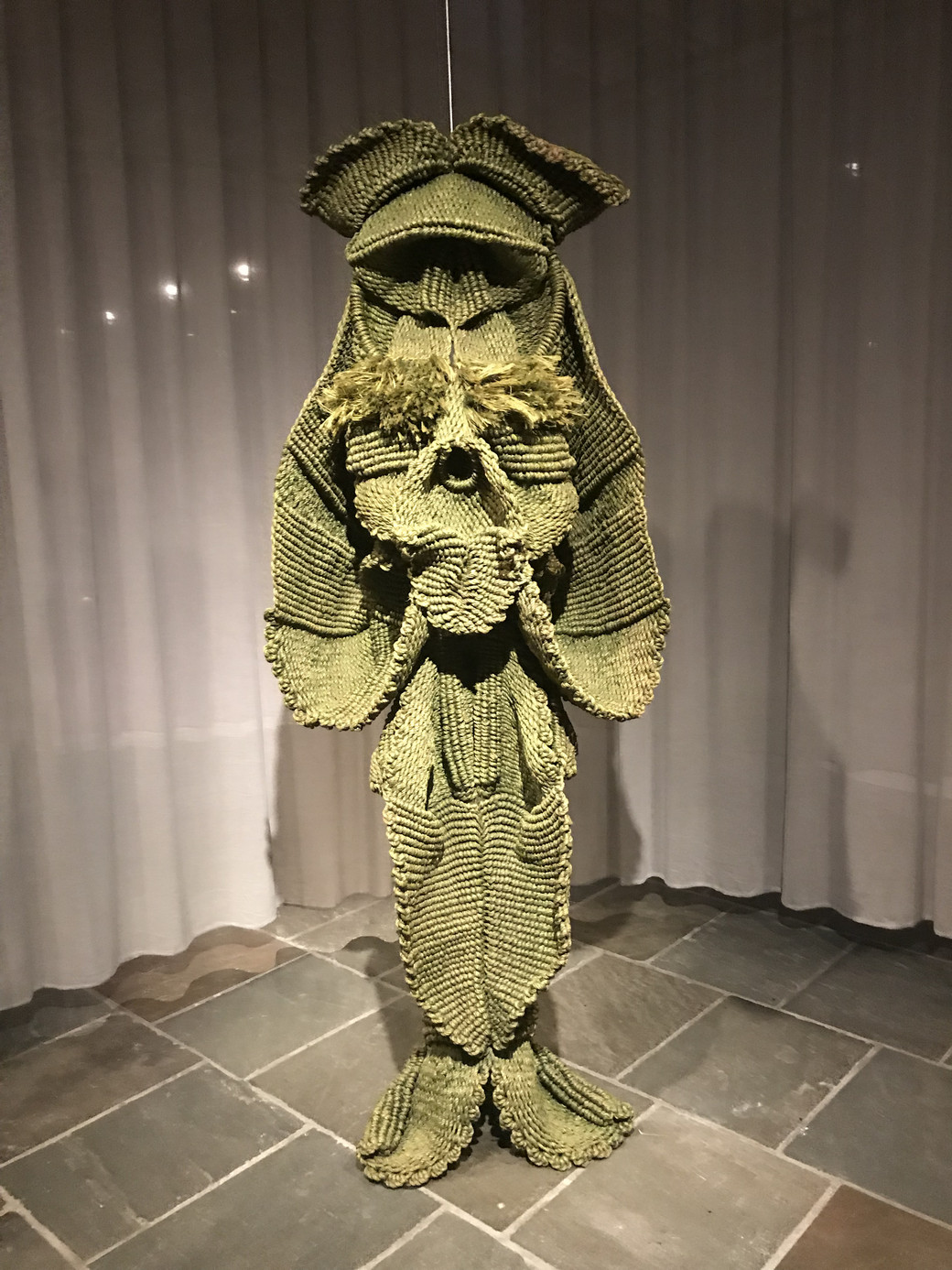
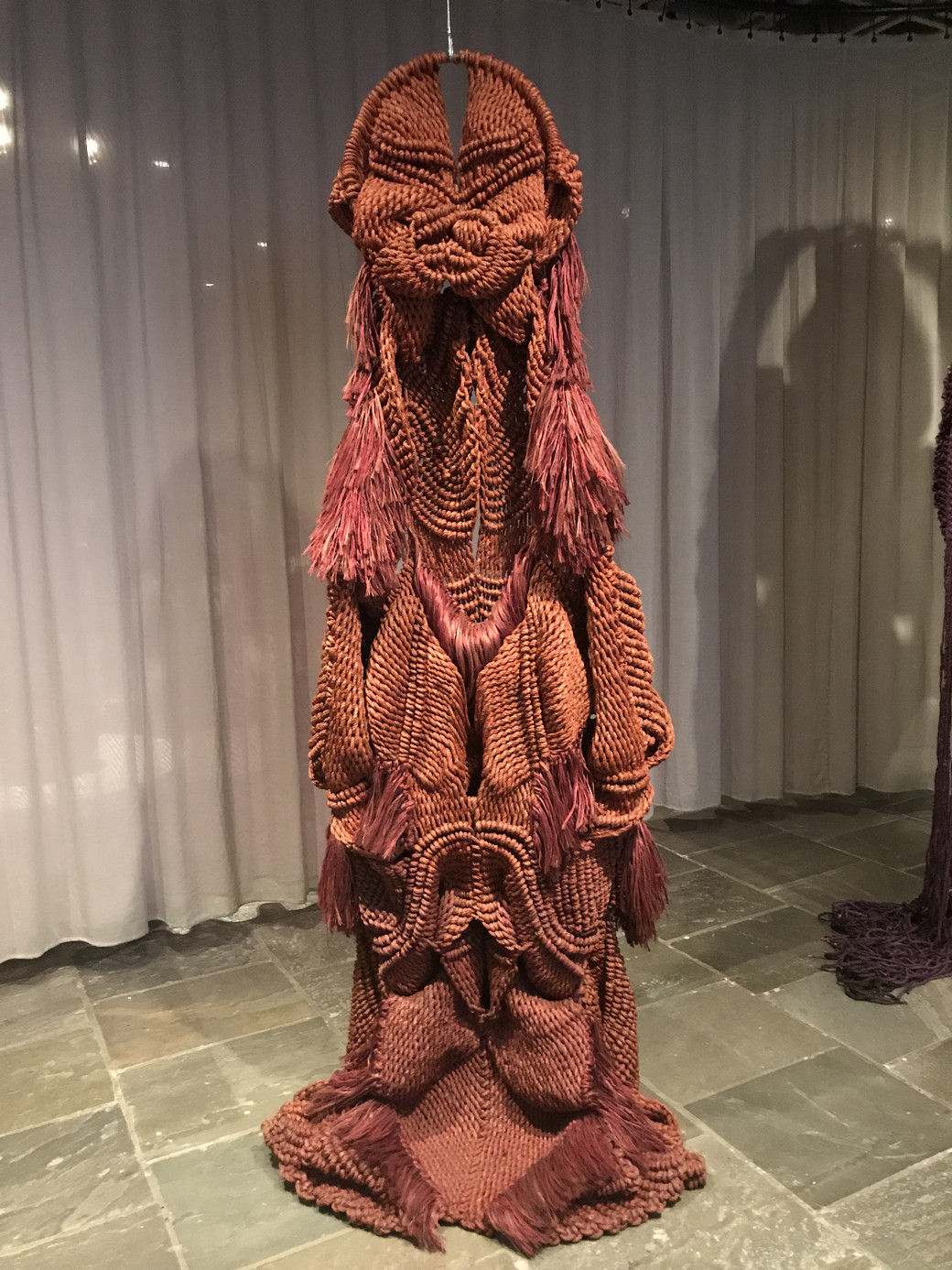
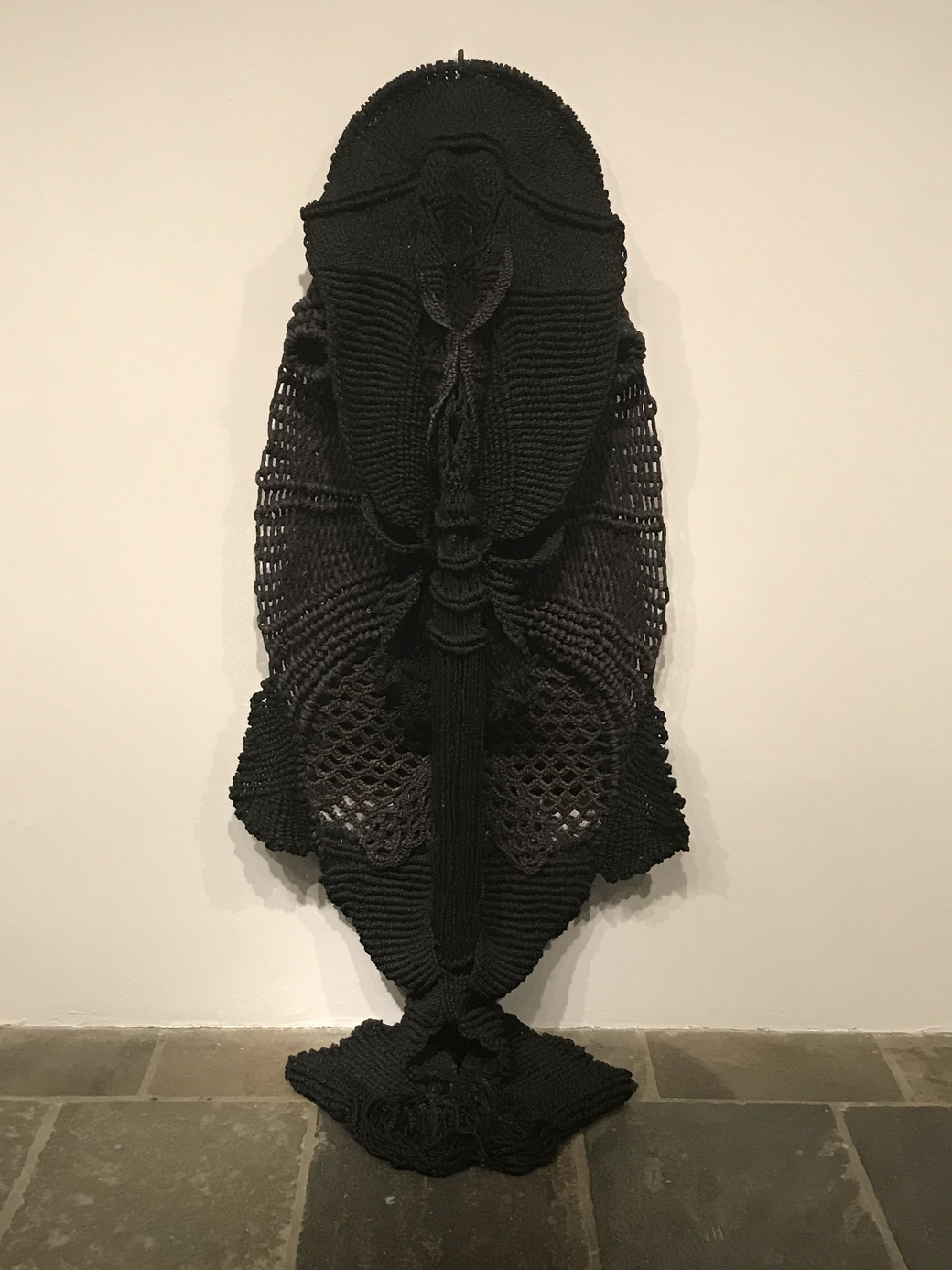
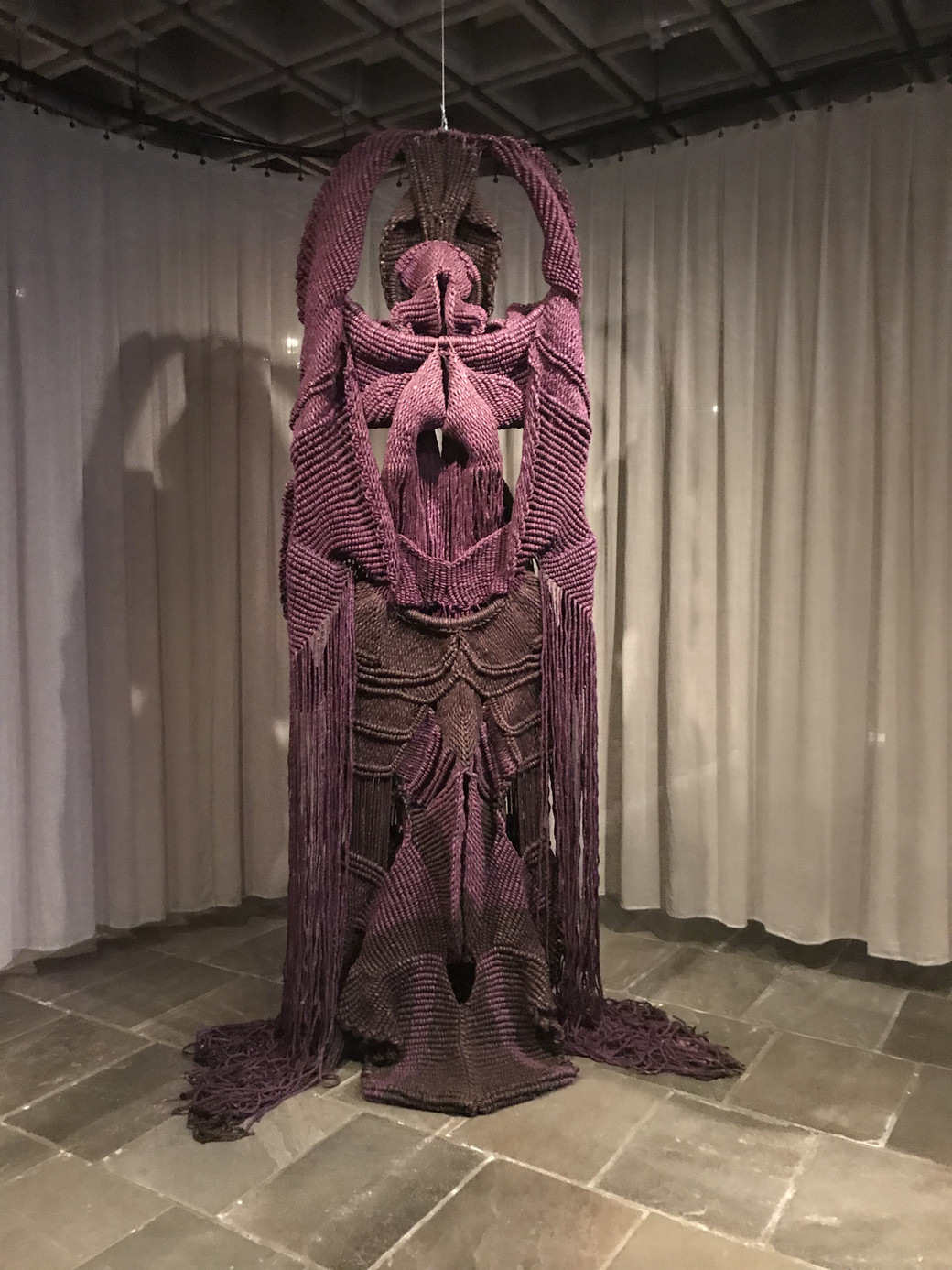
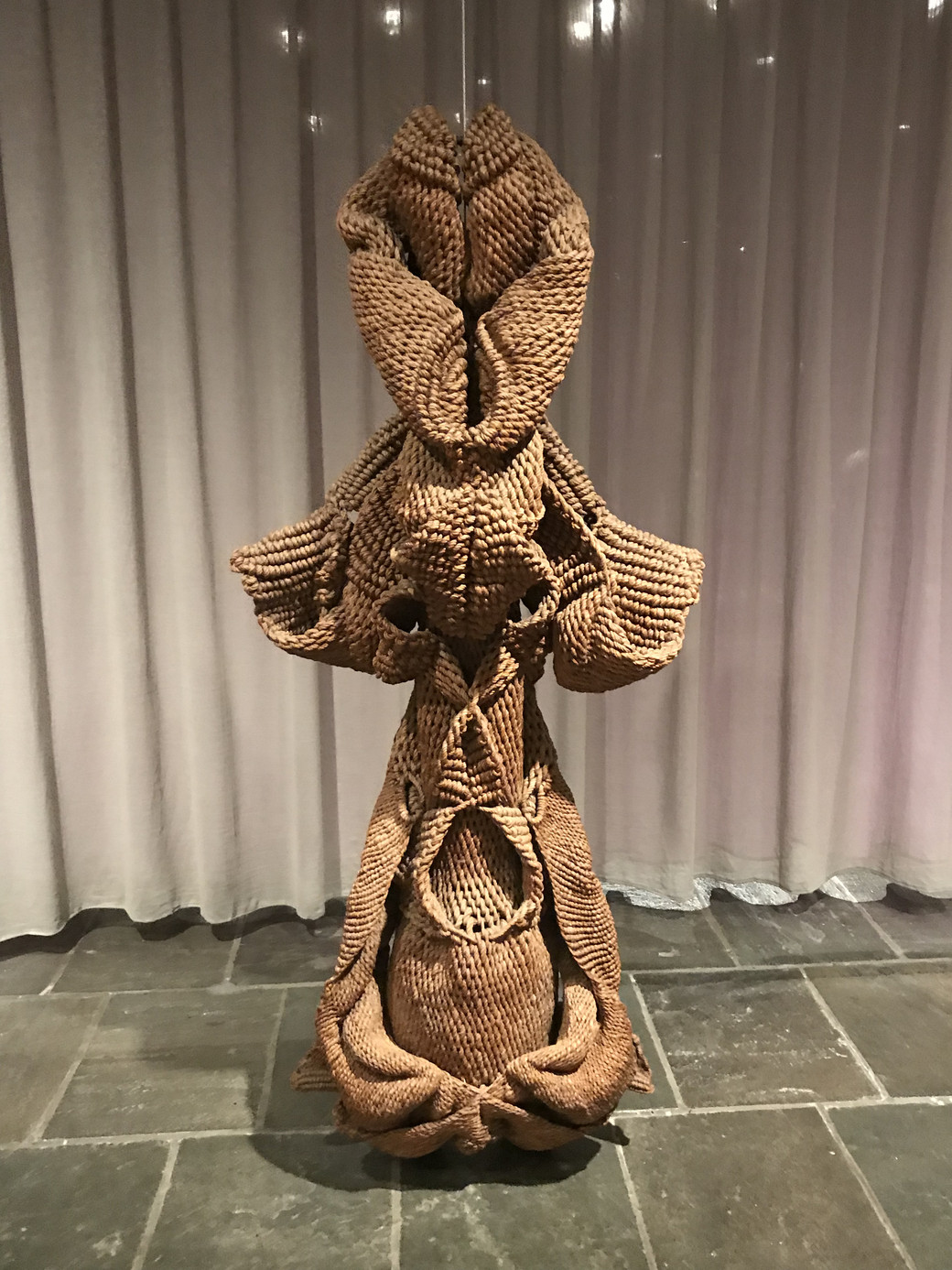
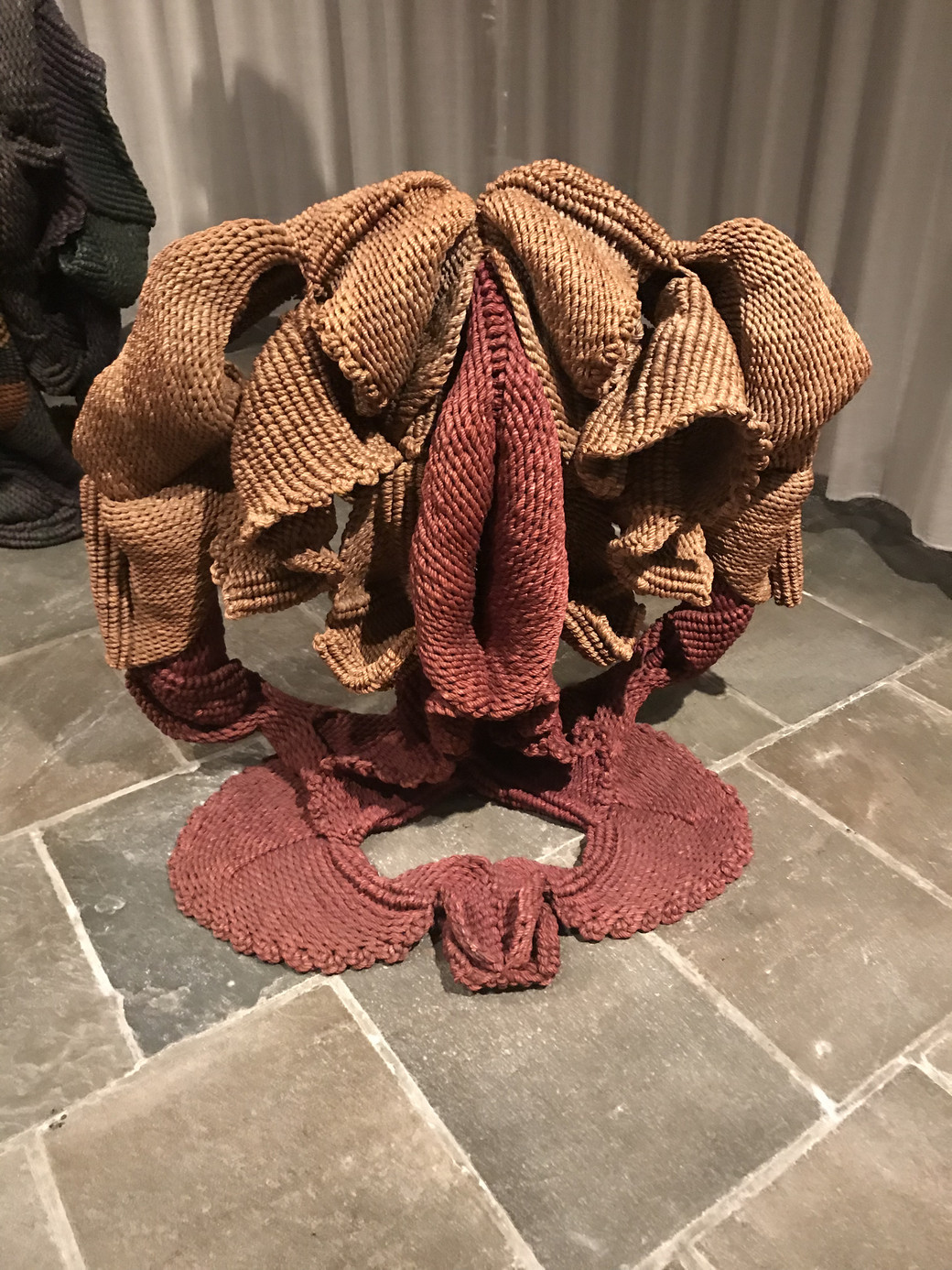
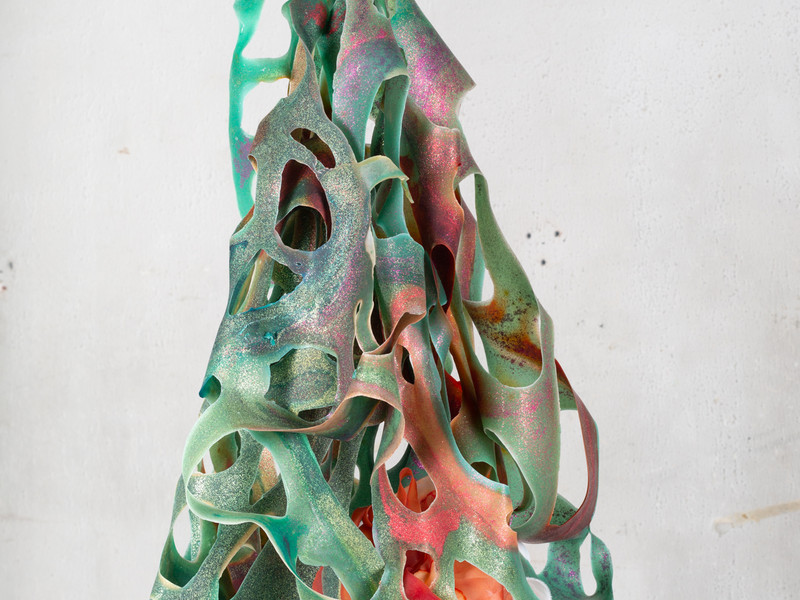
"Phenomenal Nature: Mrinalini Mukherjee" is on view at the Met Breuer through September 29th, 2019.
"Phenomenal Nature: Mrinalini Mukherjee" is on view at the Met Breuer through September 29th, 2019.

Late last year, Alaïa began hormone replacement therapy and with her nascent transition arrived the necessity to create CODA. Encouraged by her peers to document those early days, naturally she turned to her craft as a means to do so. It all started with an idea that was proposed by her close friend and creative collaborator on the piece, Luca Renzi.
“It has been a dream as a director to witness her dedication to her preferences and her ability to articulate what resonates with her. This dynamic environment has sparked a continuous stream of new ideas, and ultimately uncovered what truly speaks to the essence of CODA,” shares Renzi who co-choreographed and directed the piece.
Presented in video form, CODA lays it bare. Her sculptural physical form is captured on the cusp of life-altering changes and with that Alaïa relinquishes control and offers a deeply intimate snapshot of her most vulnerable state. Elevated on a clear platform, she appears weightless to abrupt beats and strokes of sacral undertones. Visceral movement phrases act as vessels manyfold. Variations of lights and pose reveal pulses of energy taking shape in her body — a raw farewell to the physicality she has known her entire life.
This dynamic self-portrait of sorts is stripped to the core, where isolated body parts are both erratic and synchronized moving through void space. Flickering frames capture her in motion, an abstraction of the moments in between where intrusive thoughts crawl into her posture, nerves pinch and muscles tense as her body succumbs to a new homeostasis.
“As I allow the viewer to take a short breath, squint and dip into the abyss of my artistry, I want to leave them with a frightening sensation of release that I am often faced with and seldom able to articulate in any meaningful manner besides in performance,” shares Alaïa.
A mere year out of New York University’s Tisch School of Arts, Alaïa has graced many stages. Following her stint on Lady Gaga’s critically-acclaimed Chromatica Ball you can expect Alaïa to resume the stage in the fall with an equally iconic artist. But with CODA she emerges as a solo talent on the rise.

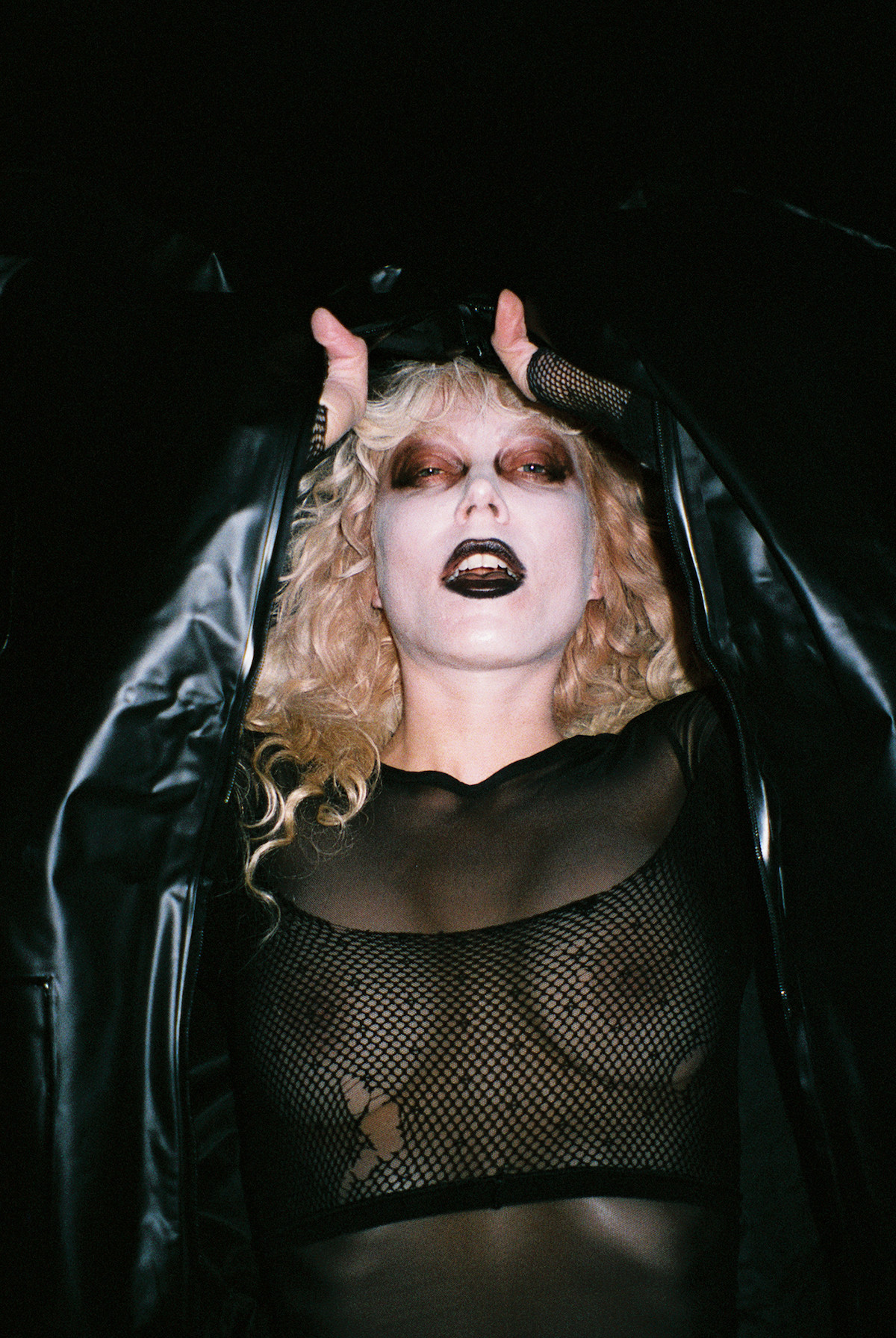
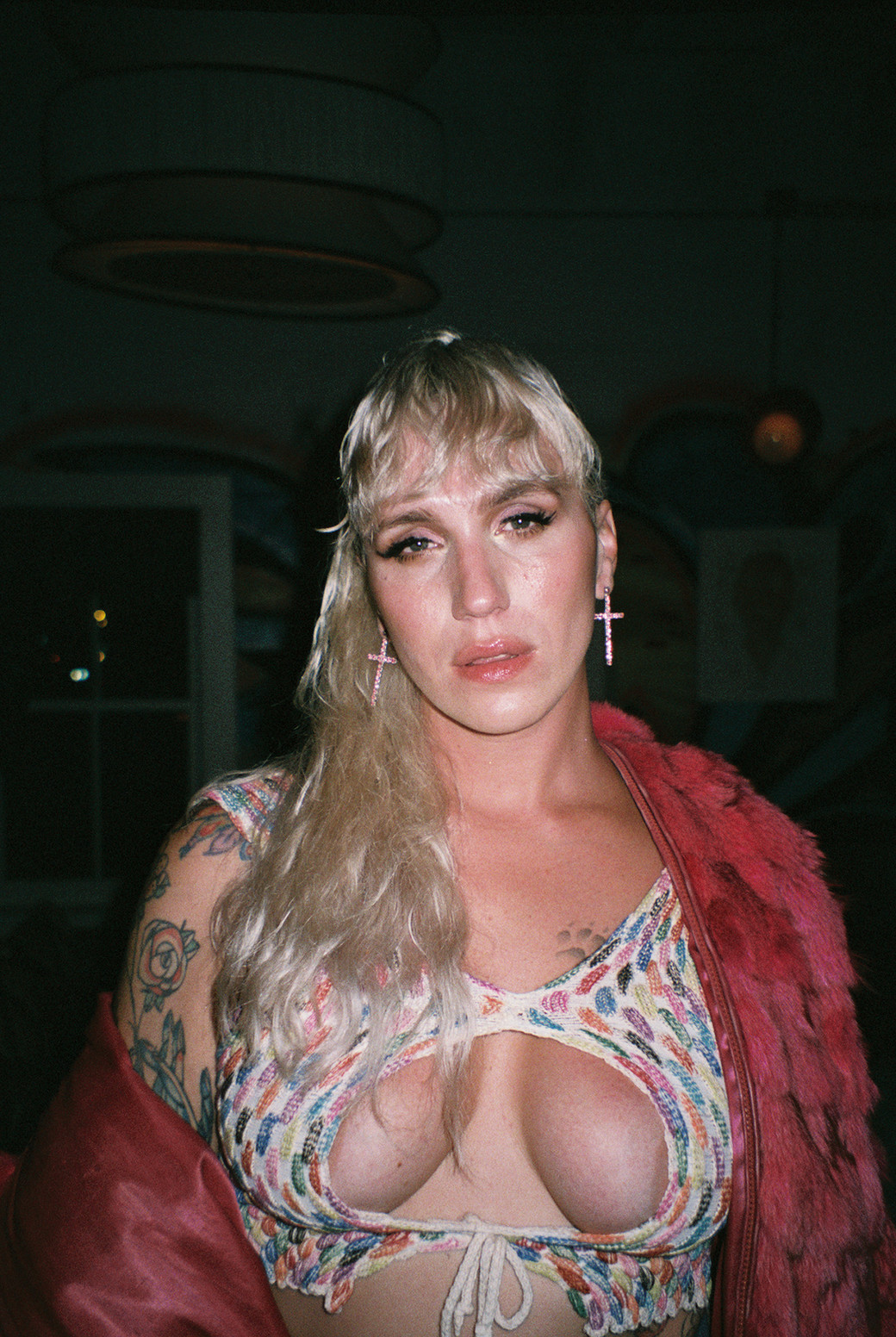
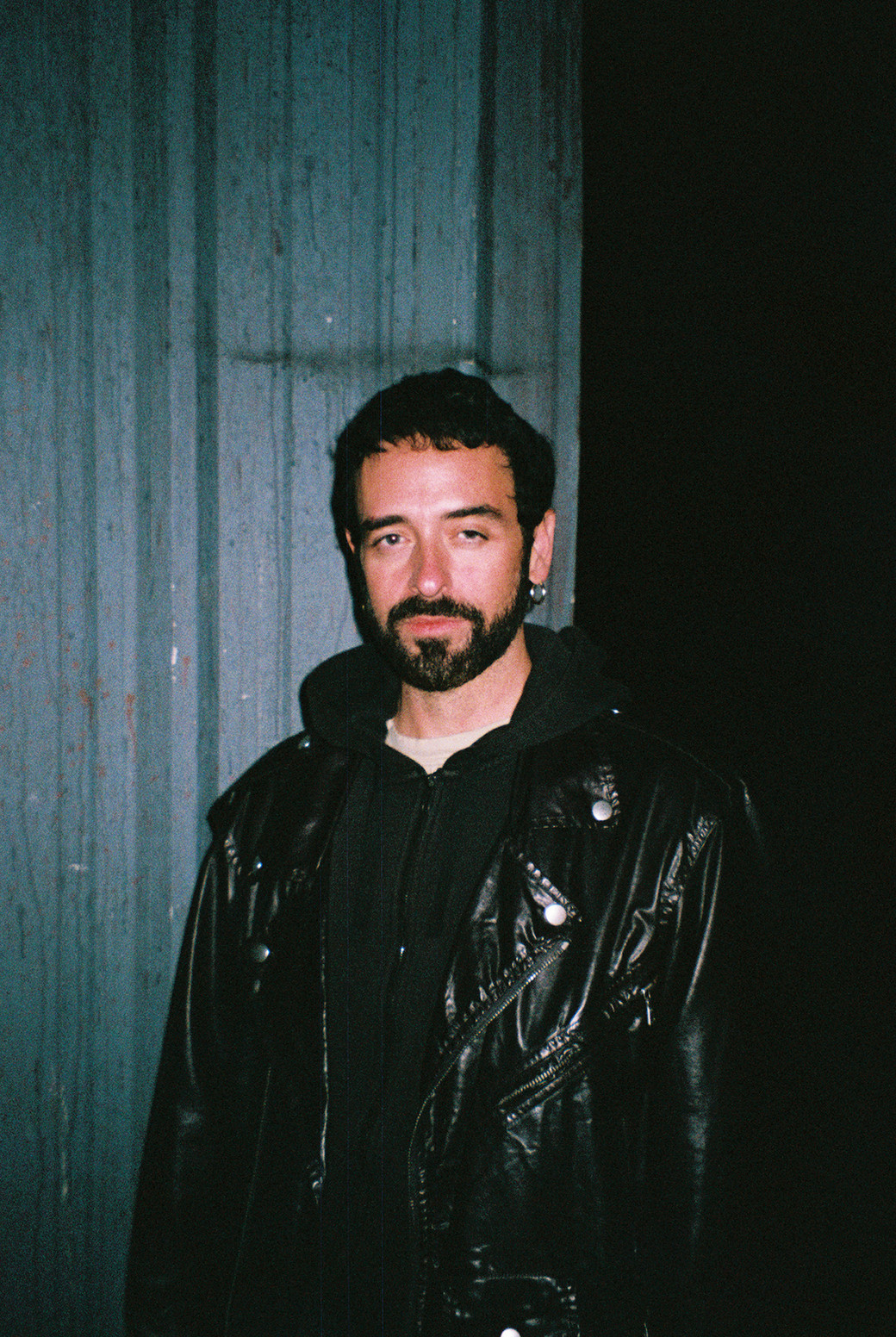
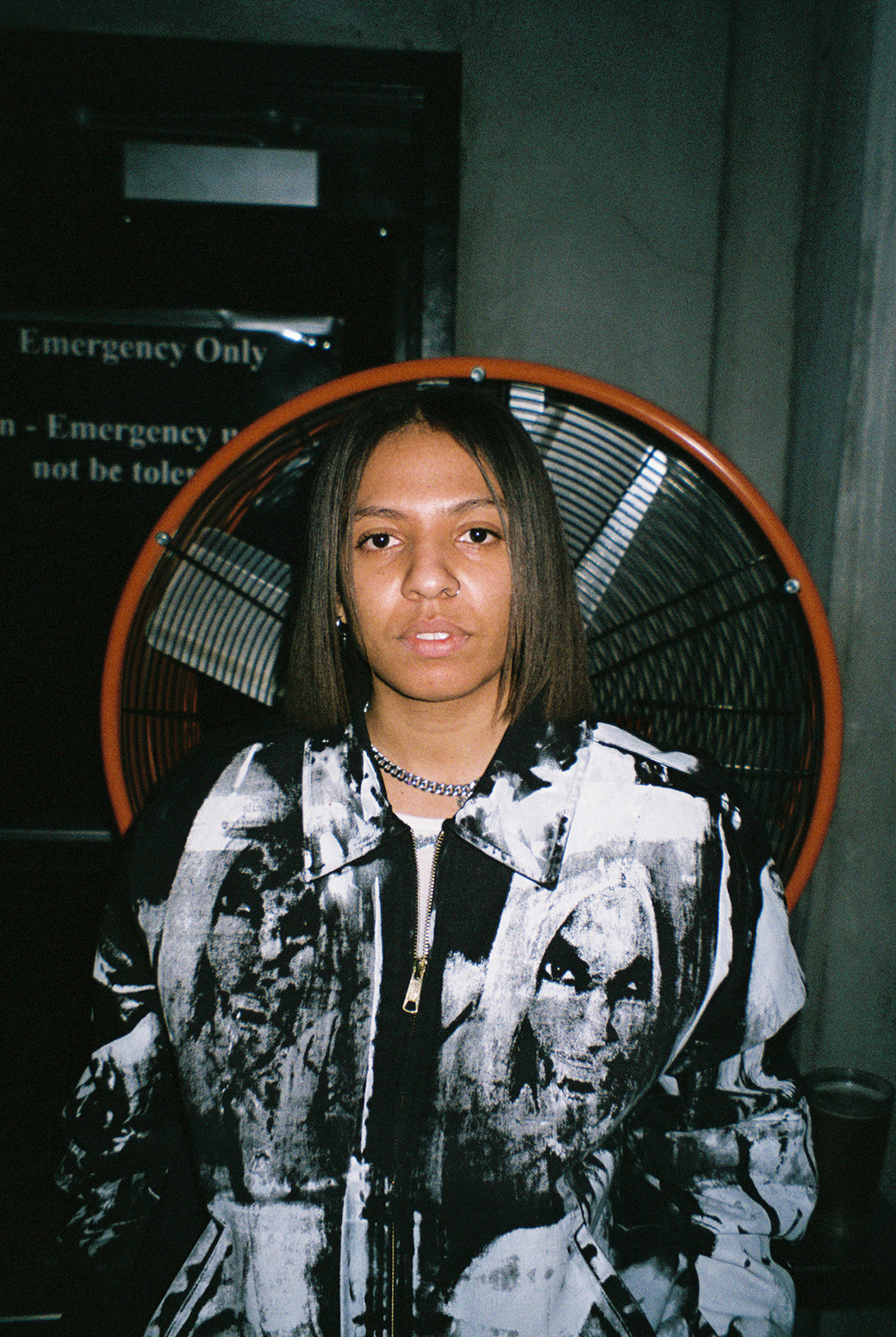
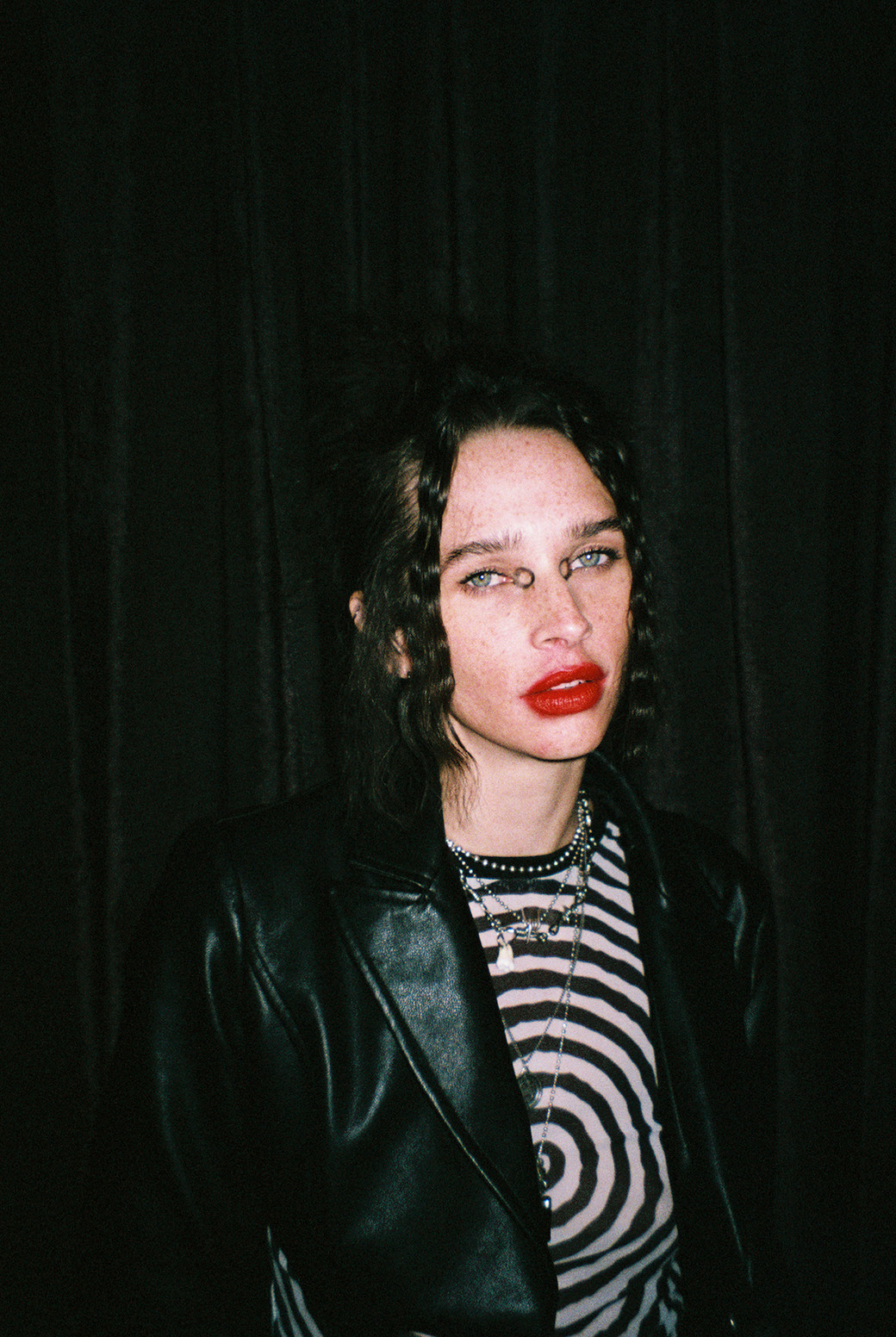
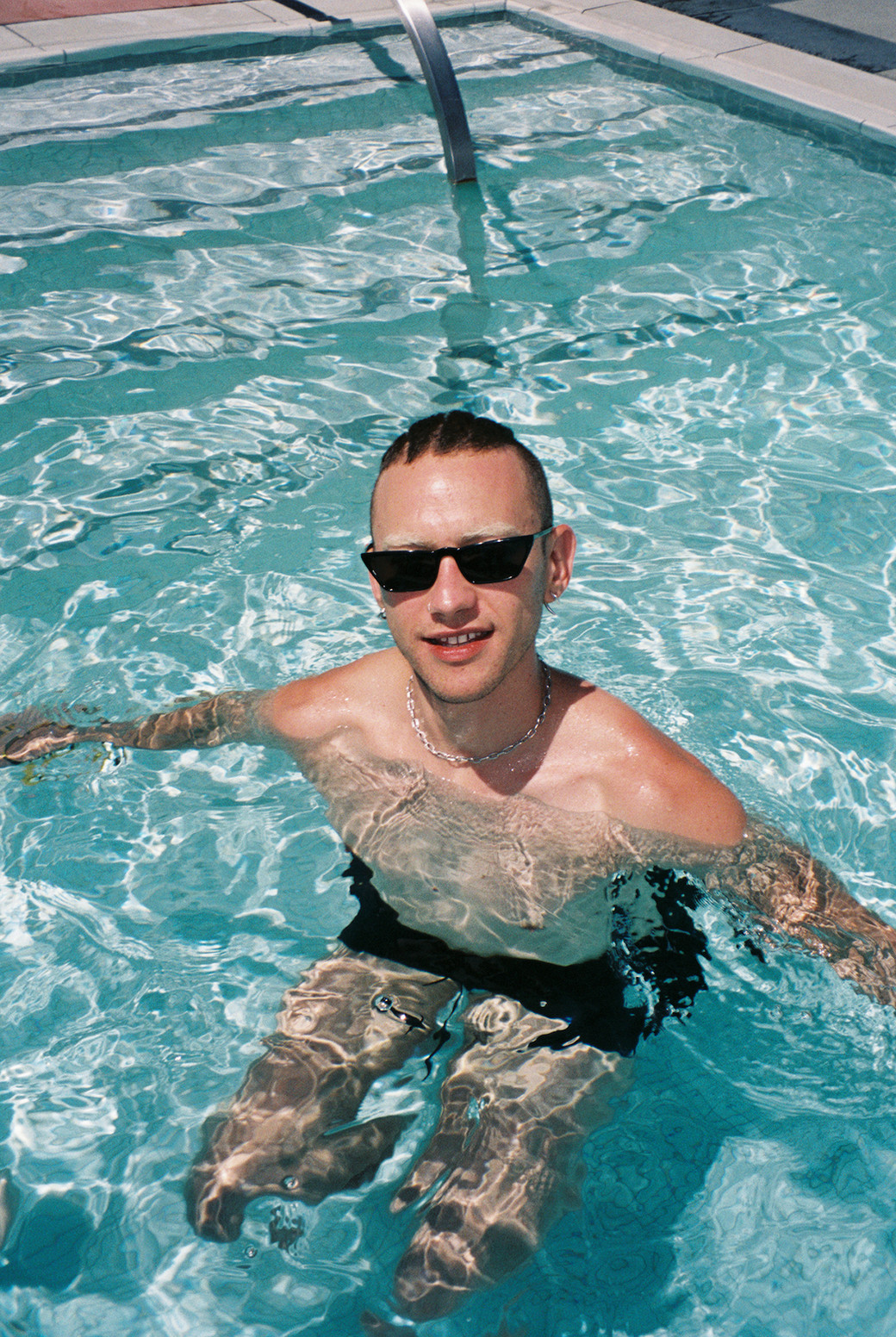
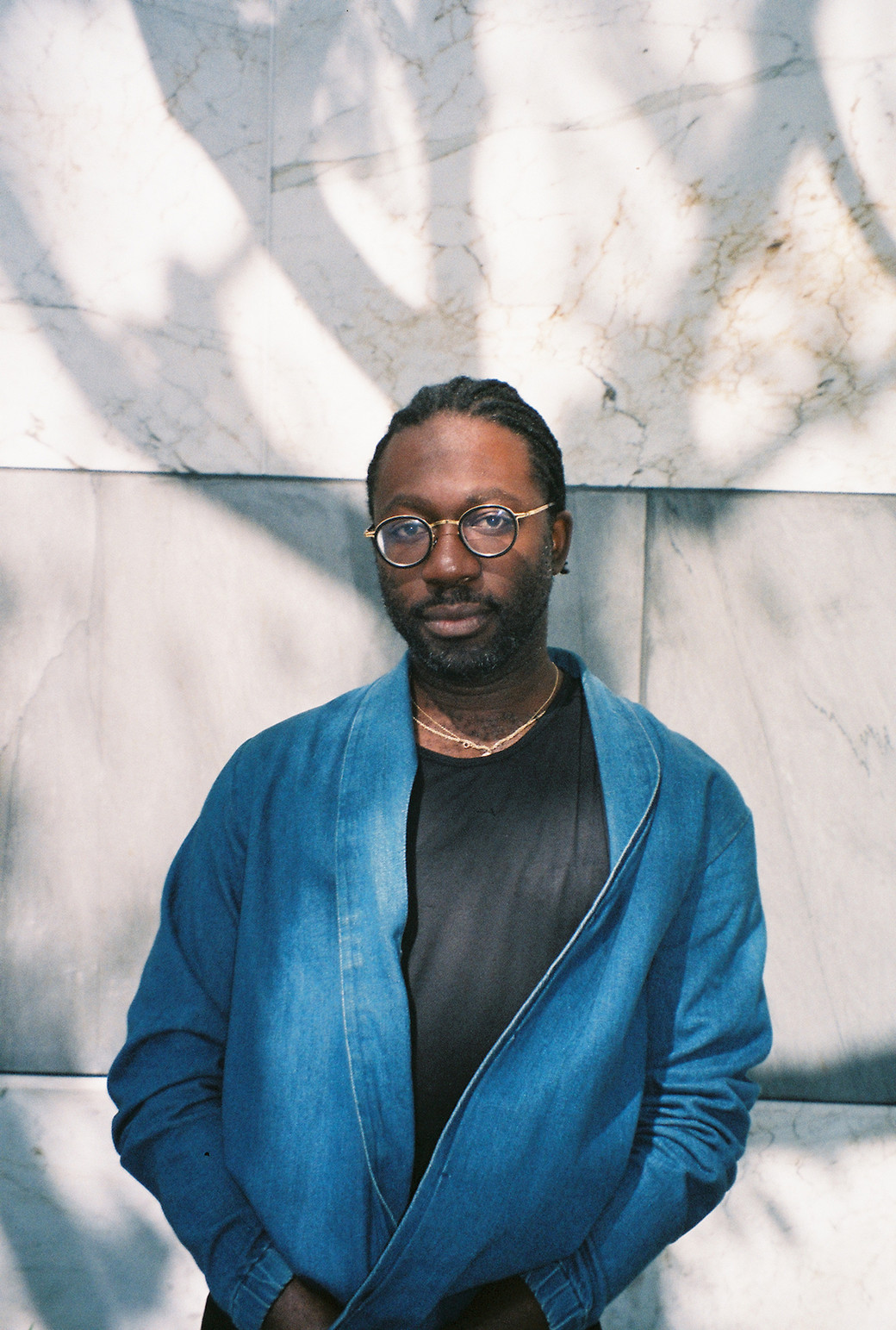
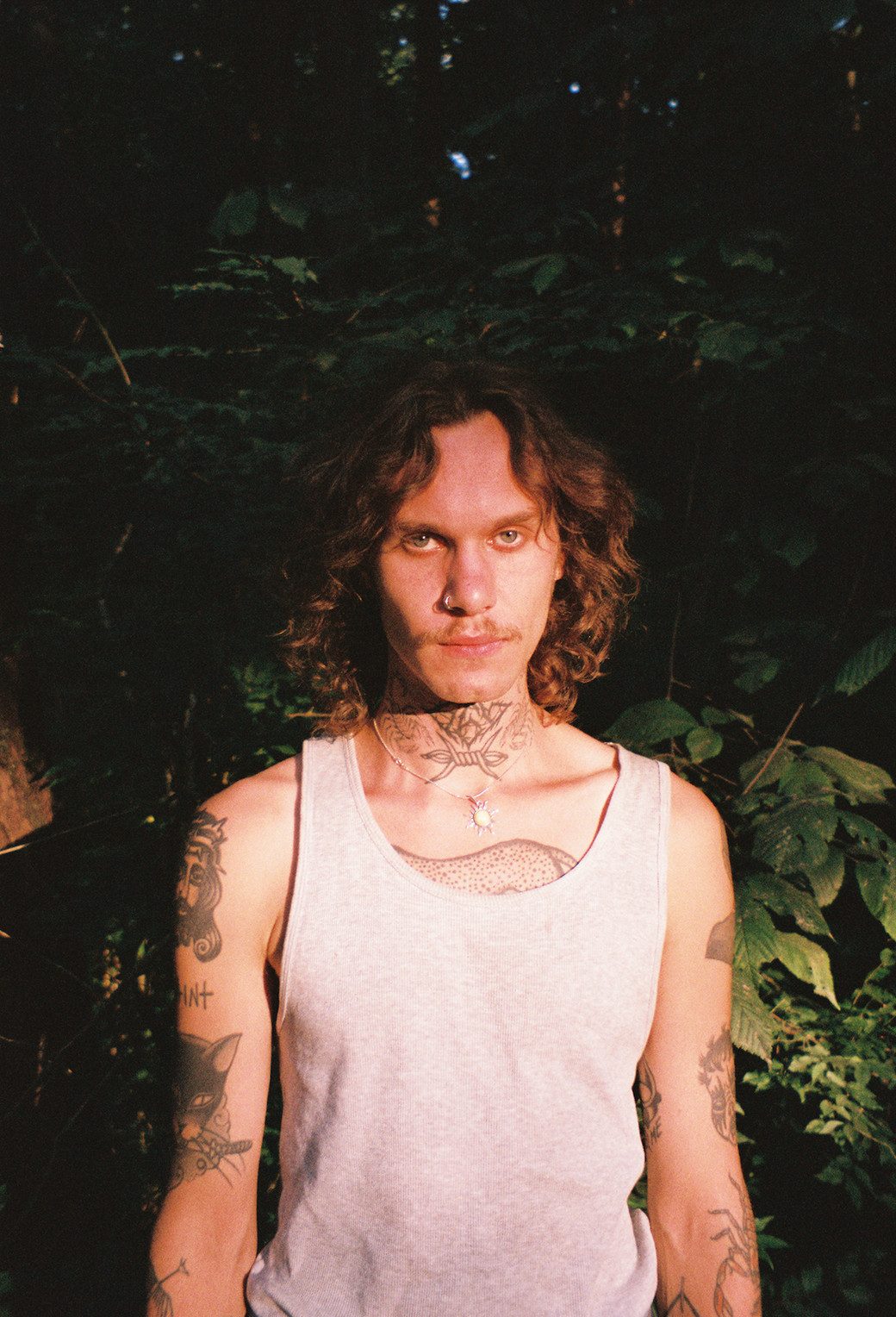
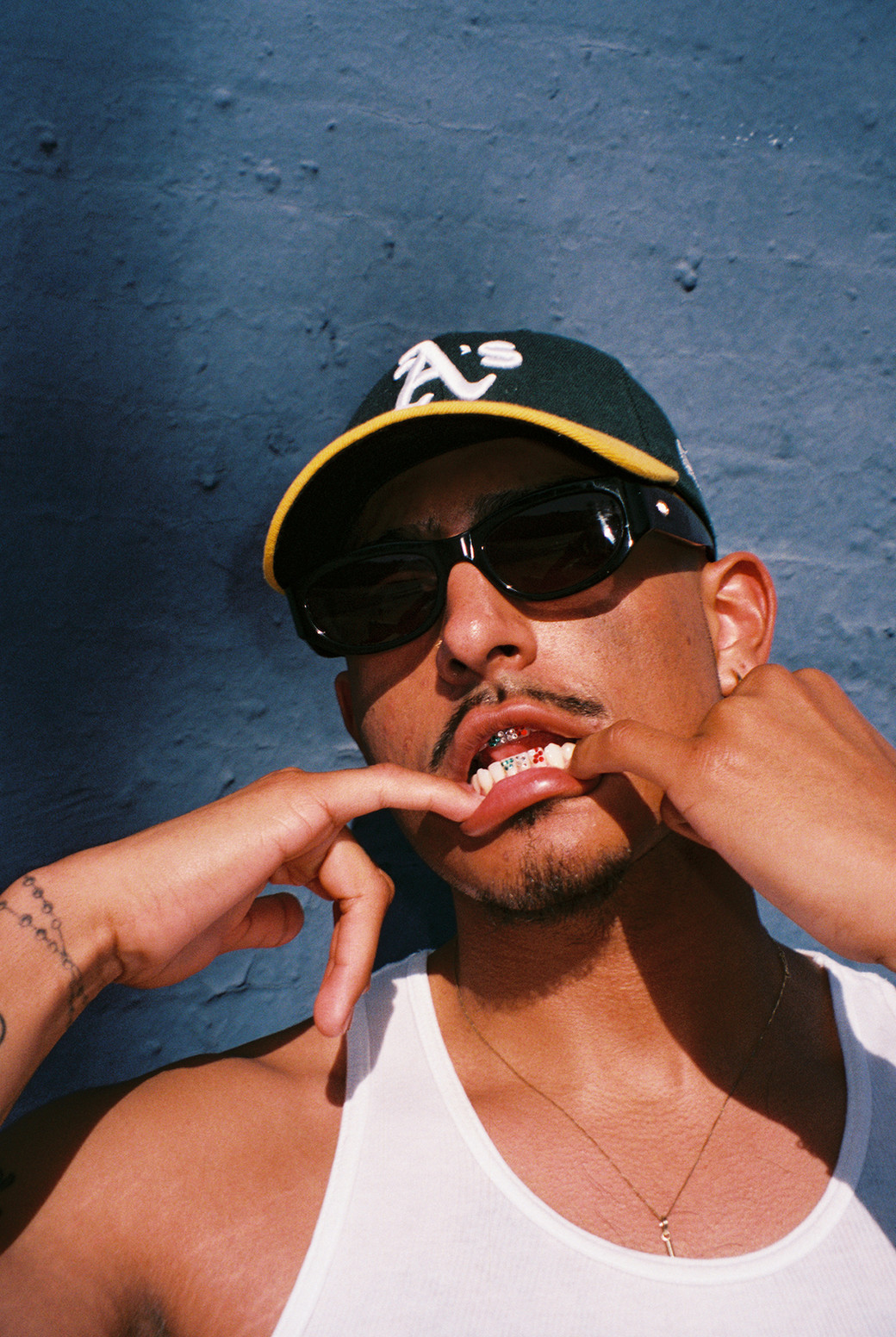
office sat down with Oyer to discuss his love for the lens, how his photography practice intersects with his performance art, and the faces in his latest project, Portraits.
How did you start taking portraits?
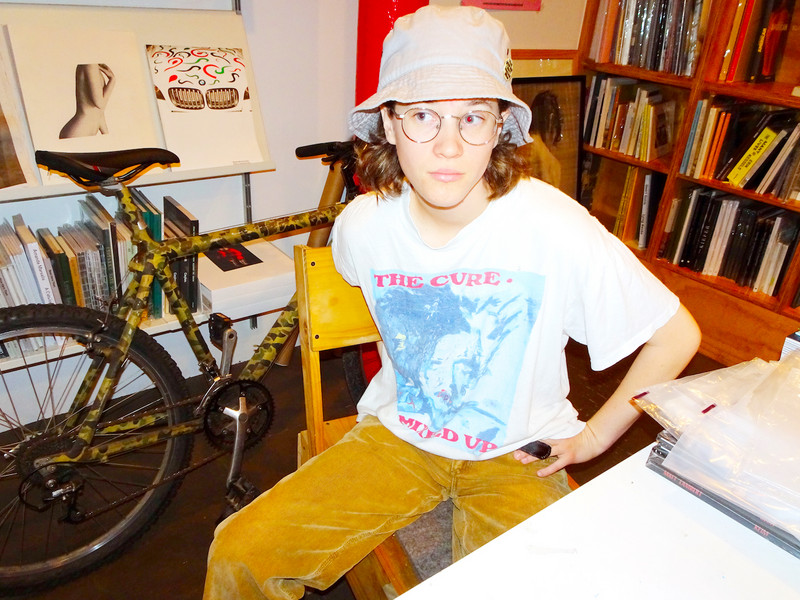
In early 2019 I was producing a theatre show in Zurich and was going to thrift stores looking for costumes and props. I found a basket of cameras, each was like five or ten euros. I grabbed an Olympus in good shape. It still had a roll of film in it. I started taking pictures of people around me. I’ve always loved Warhol’s approach to photography — building an archive of faces and stories.
Did music come first?
Yes. Music started as a child, singing in church and school choirs, and doing community theatre. I studied classical voice as a teen and was a competitive opera singer, believe it or not. Then I studied sculpture in university, and since then I’ve been exploring ways of putting music, theatre, and visual art together into my projects. So I’ve ended up being around a lot of creative people.
What do you look for when creating an image?
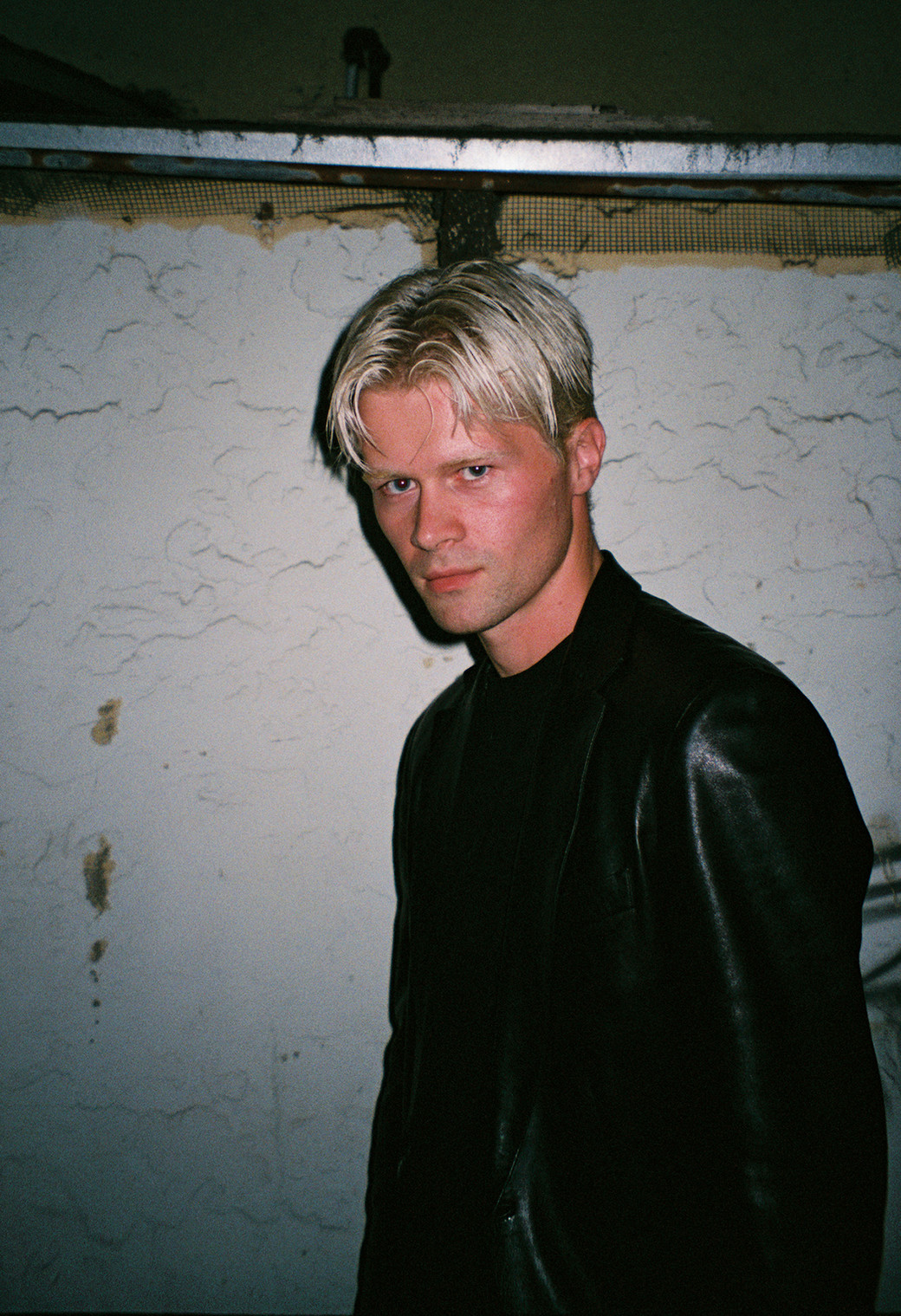
It is always a moment. I don’t do staged shoots, like in a studio. I shoot on the fly, out and about, at the moment. As I’ve continued to build an archive of portraits I’ve learned more about lighting, film qualities, and what the camera responds to. But it’s always about wanting to capture the person, first and foremost.
Who do you like to photograph?
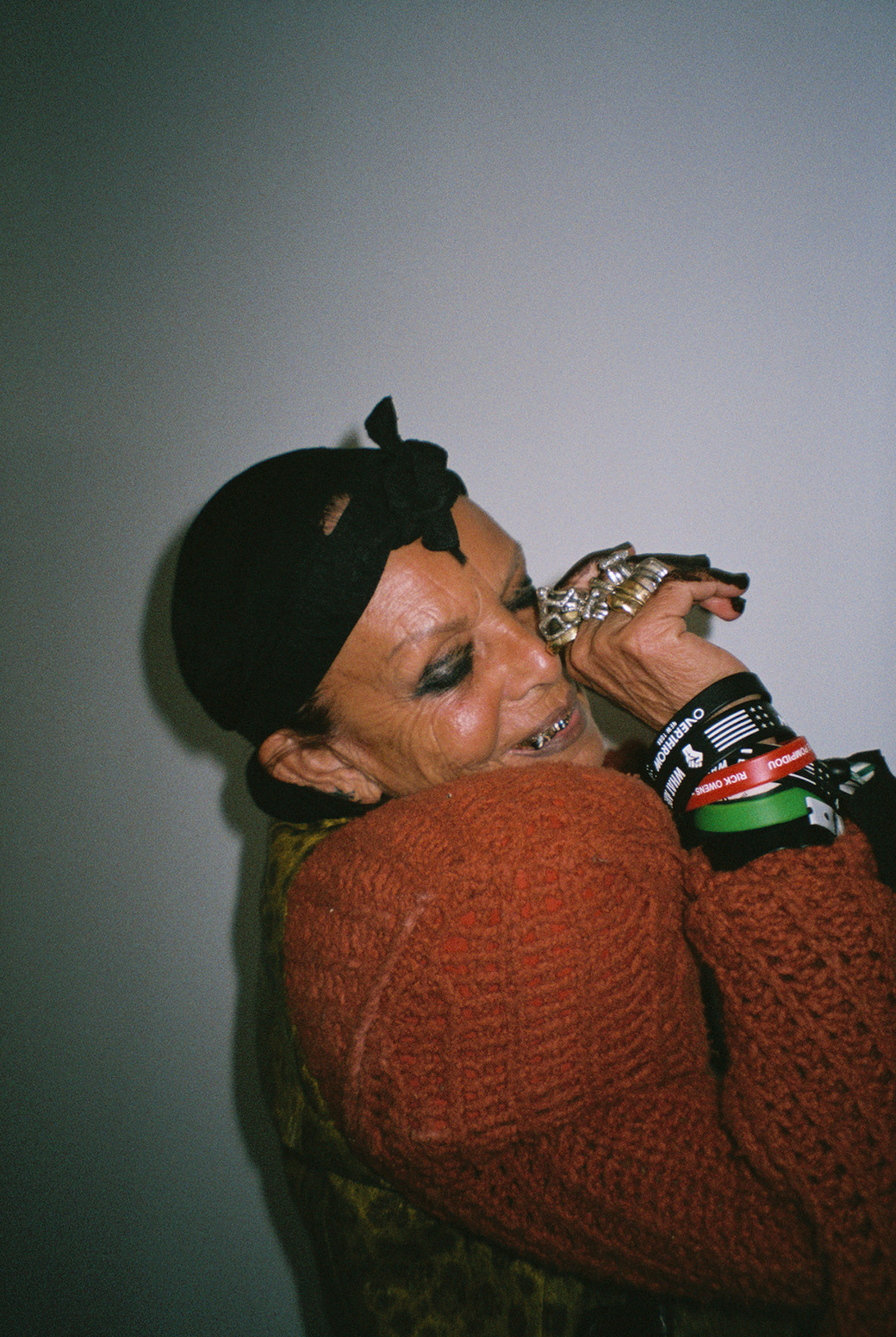
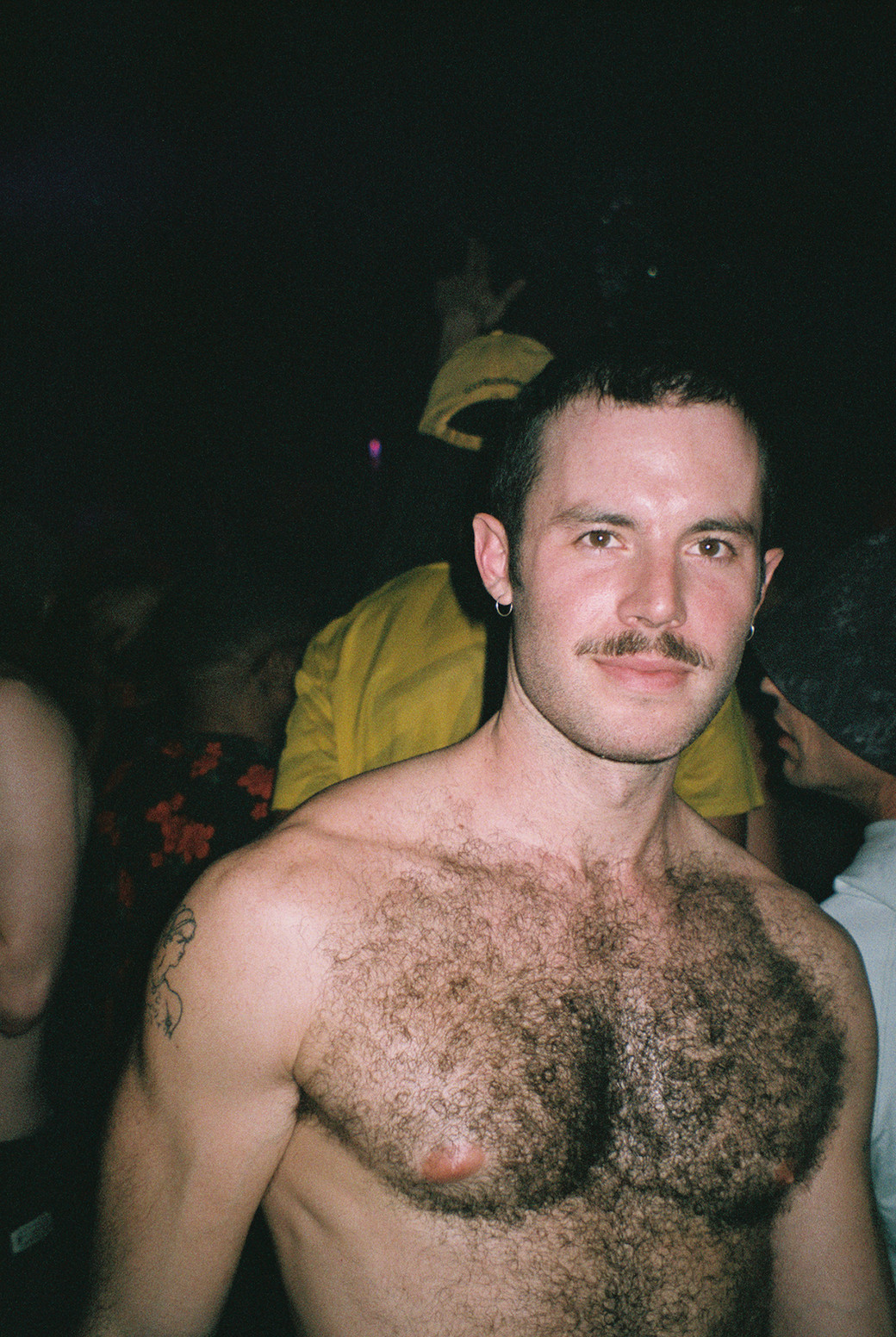
People around me. I’m Aquarius, so I love being social and floating between social scenes and contexts. I don’t photograph people I don’t know — so I focus on capturing friends, lovers, mentors, and cultural “icons”. I don’t stop people on the street based on their looks or style. This way of photographing feels more intimate for me and I think you can see that in the photos.
Is there something that connects your various subjects?
Admiration. I don’t care whether someone is super well-known or not. When I’m taking a photo it feels impulsive because it’s unstaged but really there is a deeper research impetus of archiving people in places at a certain time. I like the idea of photographing the same person over many years and seeing time and age and a story.
What was the most important detail when curating the pages of Portraits?
Layouts. Because there is one picture per page, each spread is a coupling. I like making connections between people who are side-by-side. Sometimes it’s obvious and sometimes it’s idiosyncratic and maybe only I understand the meaning of the pairing. Either way, people have their own ideas when they flip through the book, which I love.
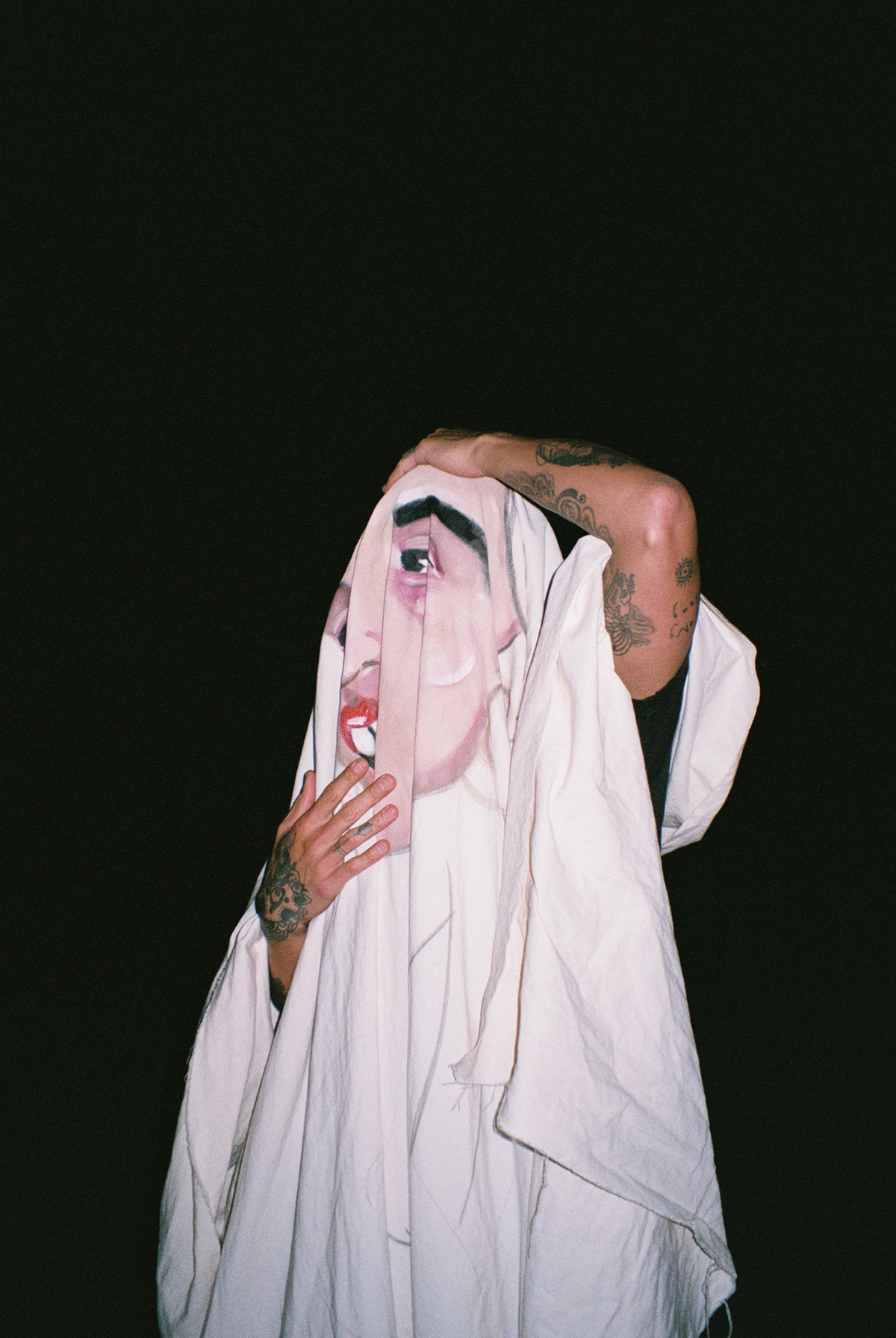
If your photos create a realm, what emotions inhabit it?
Trust. Taking someone’s picture can be invasive or domineering, which I don’t particularly enjoy. I’m also not behaving as a voyeur. I want to create an immediate sense of trust between myself and my subject — as much as possible in the few seconds it takes to get the shot. I want people to feel confident or sexy or powerful in front of my camera.
How has your practice evolved since your first published book?
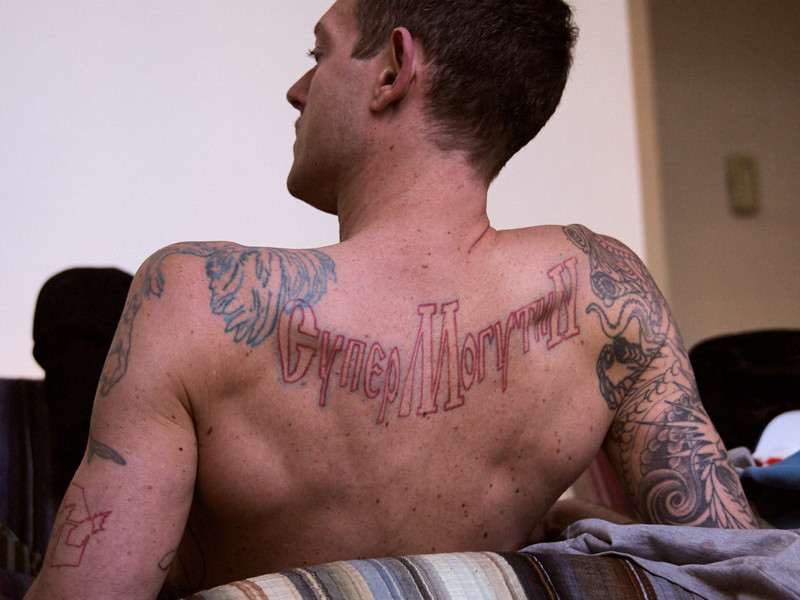
The first book was comprised of portraits from 2019-2021. I’m working chronologically. The first book was received well, it sold out and was collected by museums. I guess what evolved is that my hobby of taking portraits became a thing formalized in a book. Now two books. With this came opportunities to expand beyond singular portraits and into photo stories. For example, I documented Violet Chachki and Gottmik backstage at their Halloween show and I just shot a special Polaroid project with Charles Jeffrey for their runway show in Milan.
Are there any moments that stand out when reflecting on any of the portraits in the book? What comes to mind?
Something that has particular meaning for me is having photographed people who are no longer living. These images take on an expanded meaning because they are not only memories of a specific moment but function as memories of an entire life. As an archivist, that feels important not only for me but for people who knew, loved, or admired these individuals.
How does your visual practice intersect with your performance art?
Everything speaks to each other. I often think of my work as a constellation; objects, images, music, videos orbiting each other - all in dialogue. My paintings have text like a script or spell. My objects are stand-ins for the body or function as props, theatrical. My music is operatic and demands staging, costumes, and performance. I think I’ve created a lexicon for people to engage with the different disciplines I work with.
What’s next for you?
I’m excited to work on new large-scale paintings and some music collaborations. 2023 has been busy! In February I had a solo exhibition in Los Angeles called Hollywood Angel. Then I released a techno album BERLIN ALIEN, toured my show VENUS in Europe, and released this new photo book, all in a few months. Now I want to be in the studio! I’m excited to explore more backstage photo projects, documenting behind-the-scenes intimacies for creative friends. And of course, more portraits.

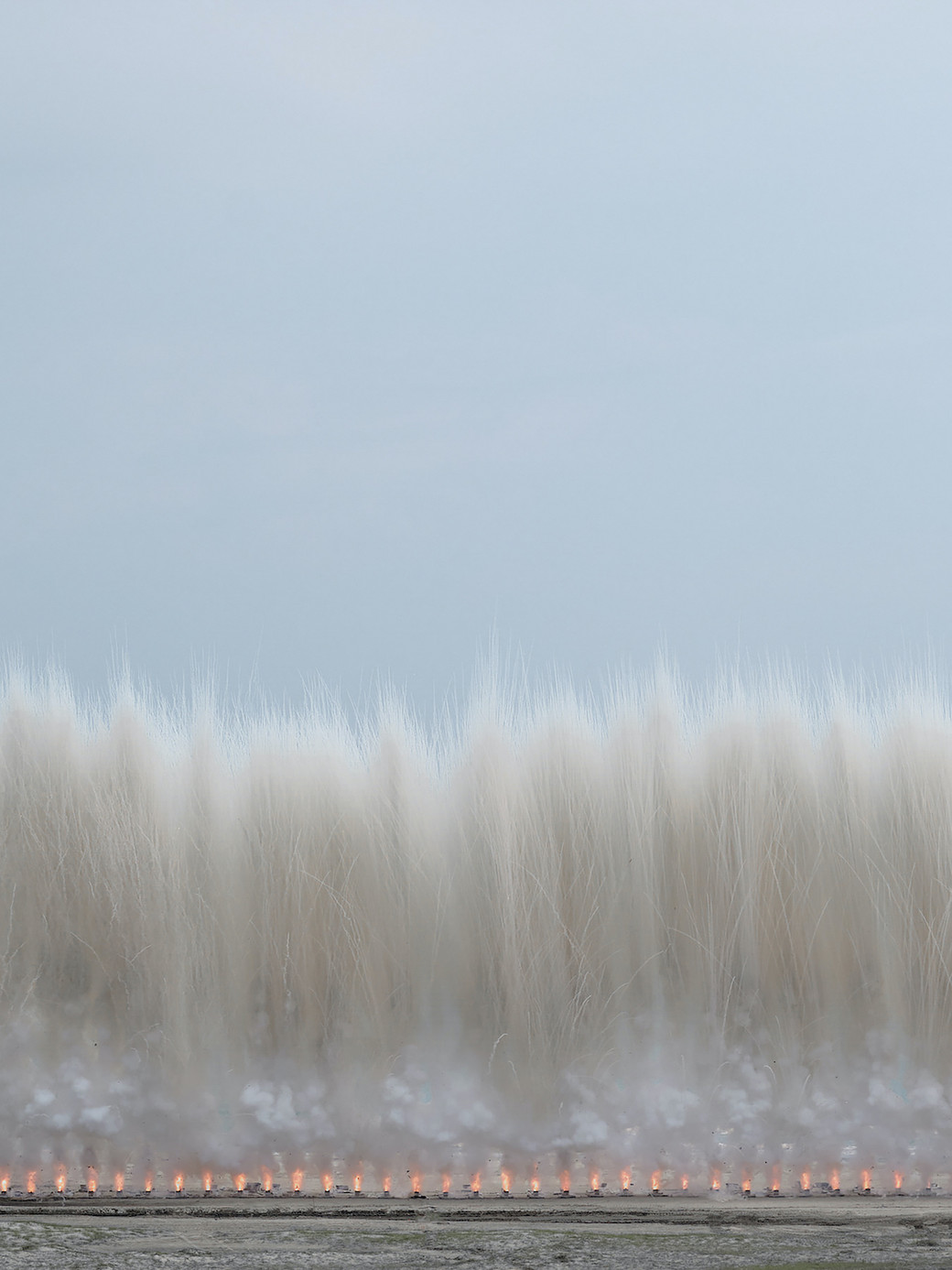
The display is marked by scenes. In the beginning, “Black Waves” uses literal darkness to confront the pain of the past and the harm that humans have inflicted upon nature. A bright white display in “Memorial Monument” serves as a grand mourning for the suffering experienced since the 2011 disaster.
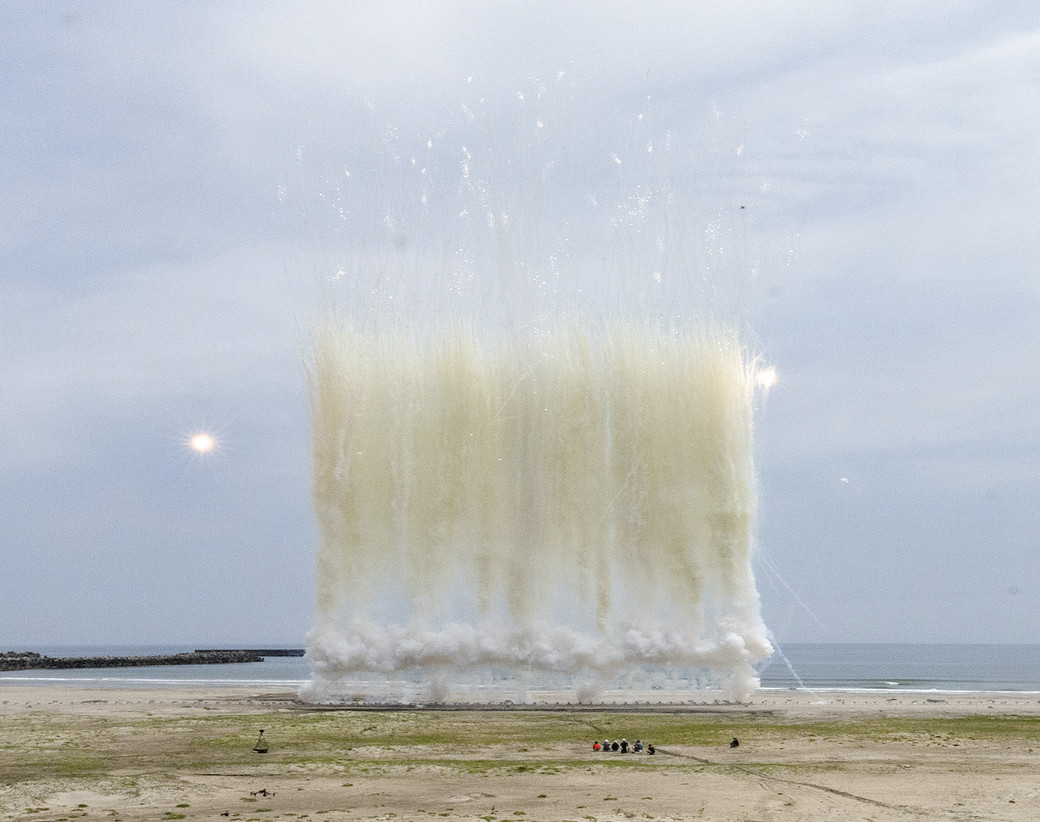
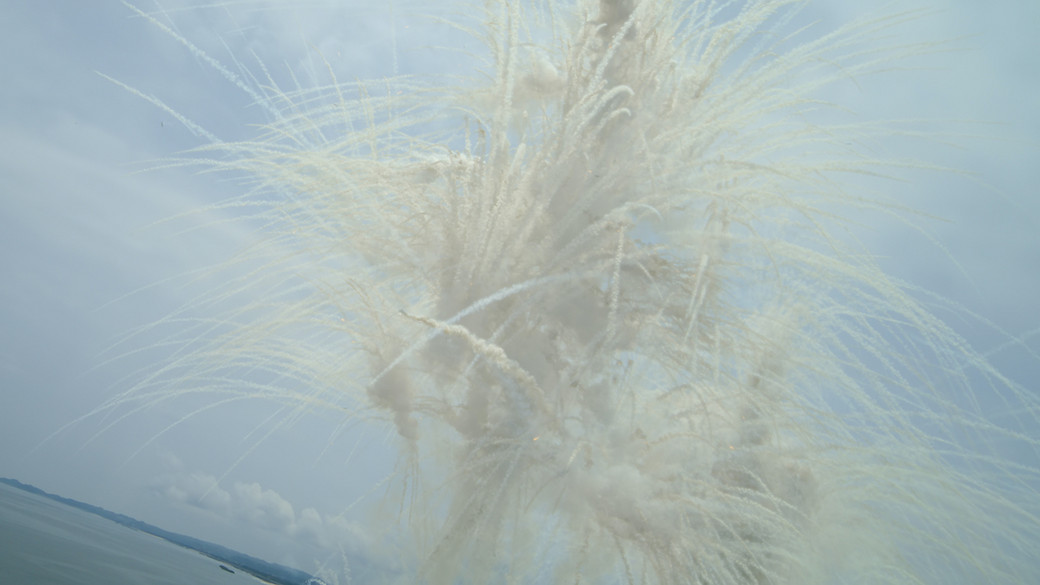
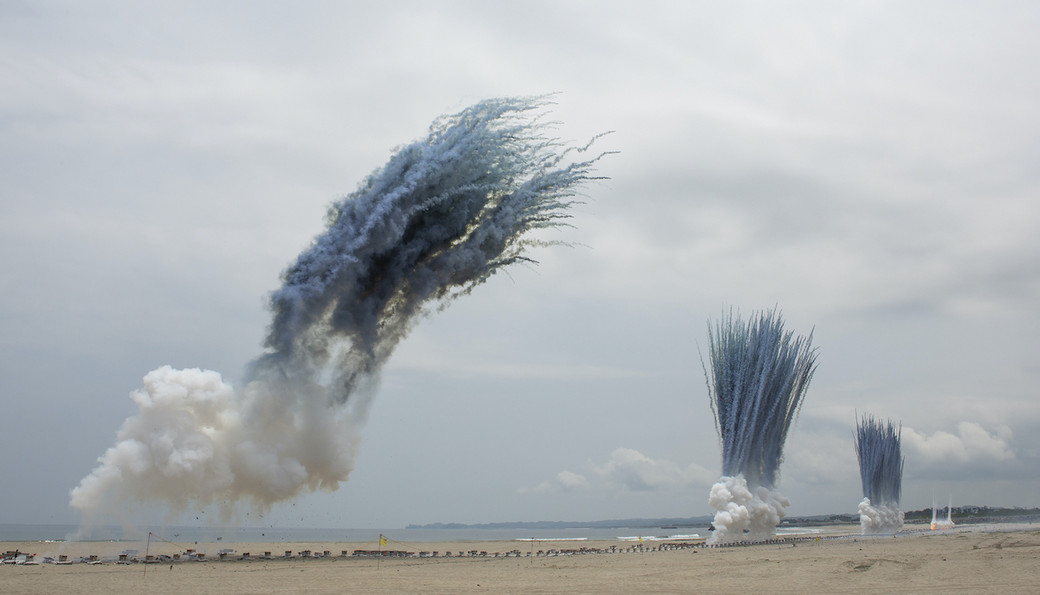
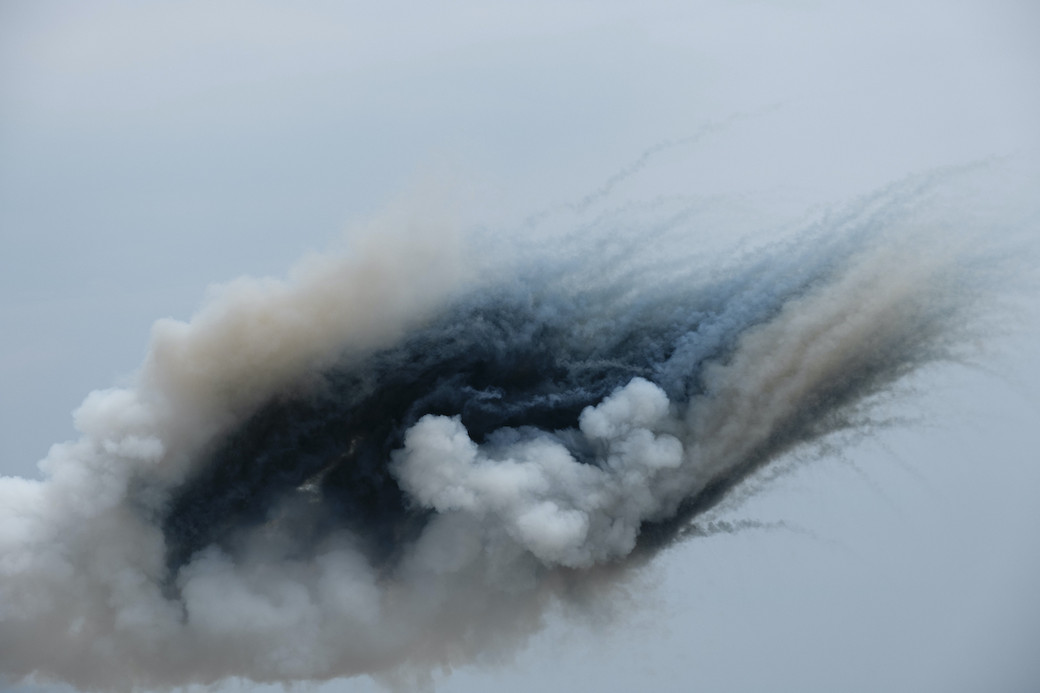
But, the latter half of the display shocks viewers with a romantic pink explosion of specially-designed fireworks. With an instant bloom of color above Fukushima, the pink clouds symbolize collective hope and dreams— for peace, a return to a thriving nature, and for a future of visible cherry blossoms. The second half of When the Sky Blooms with Sakura calls on the ongoing Project to Plant Ten Thousand Cherry Blossom Trees, initiated by Guo-Qiang’s friends in Iwaki and carried out by Guo-Qiang after the earthquake.
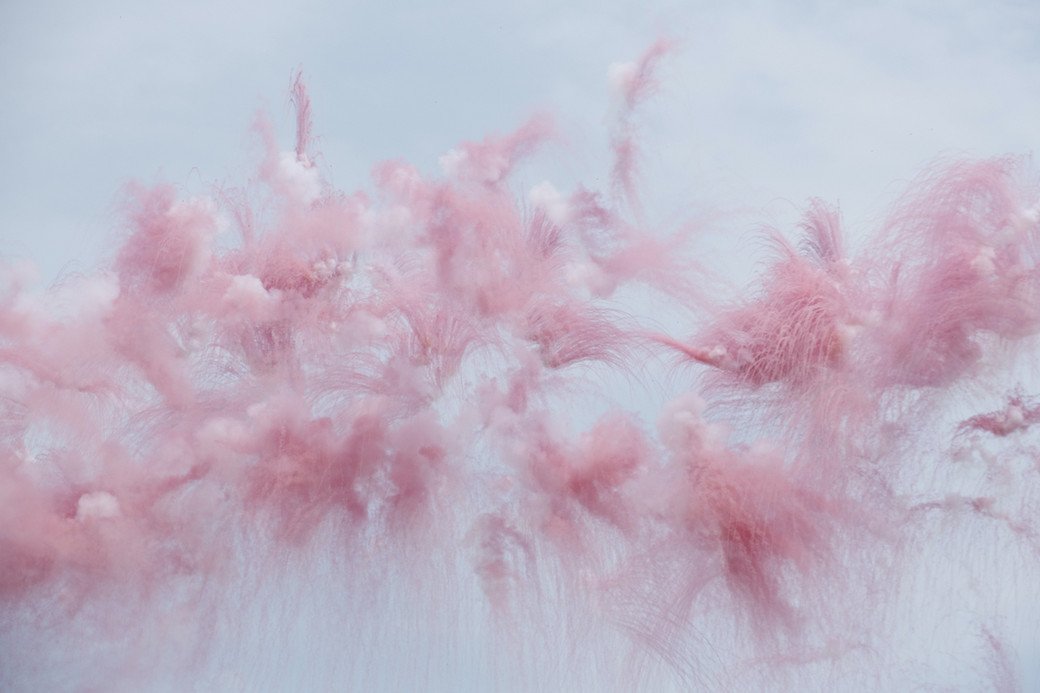
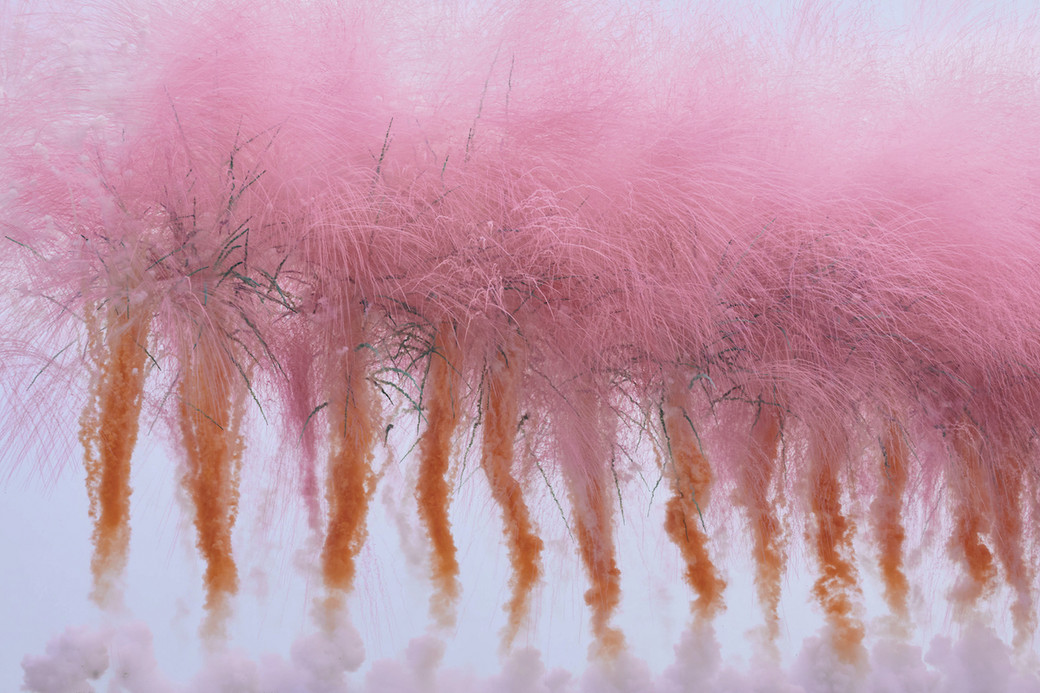
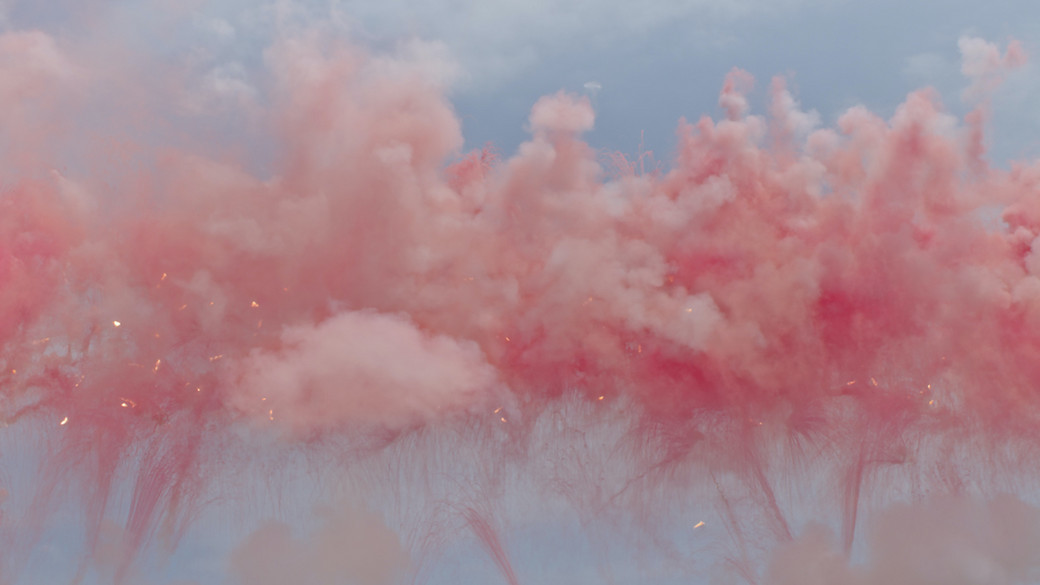
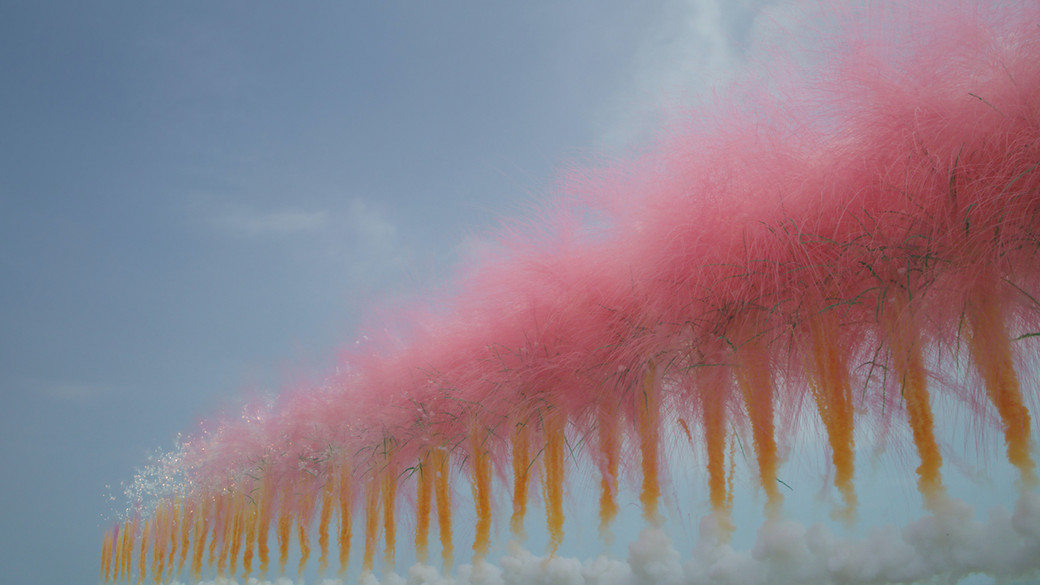
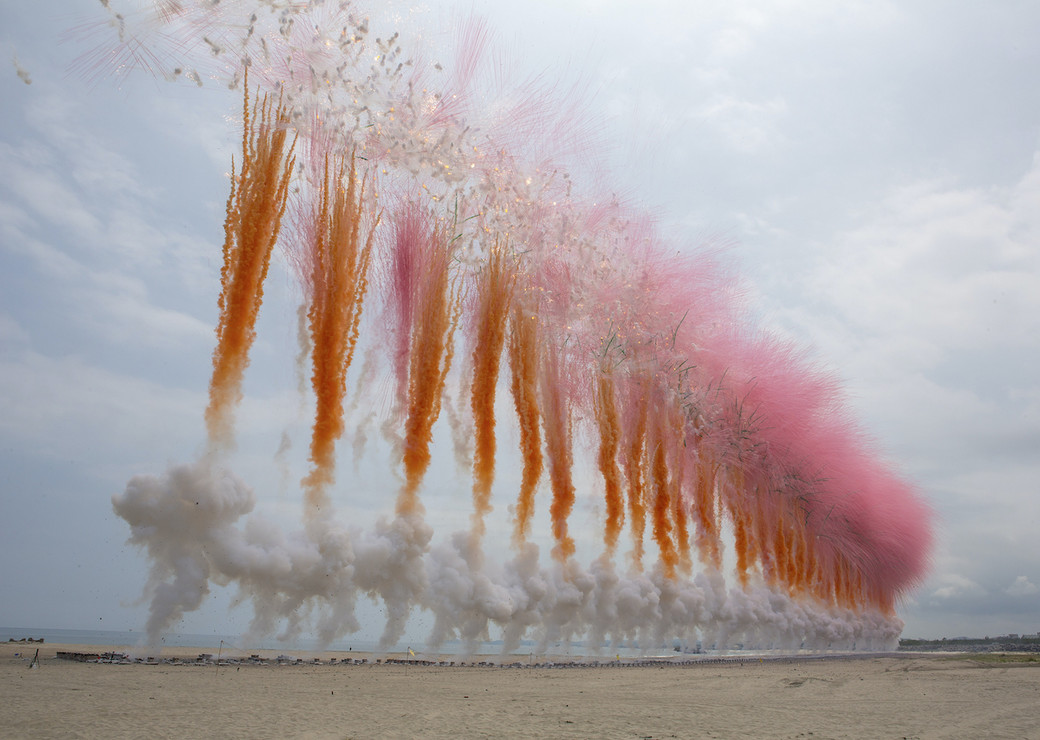
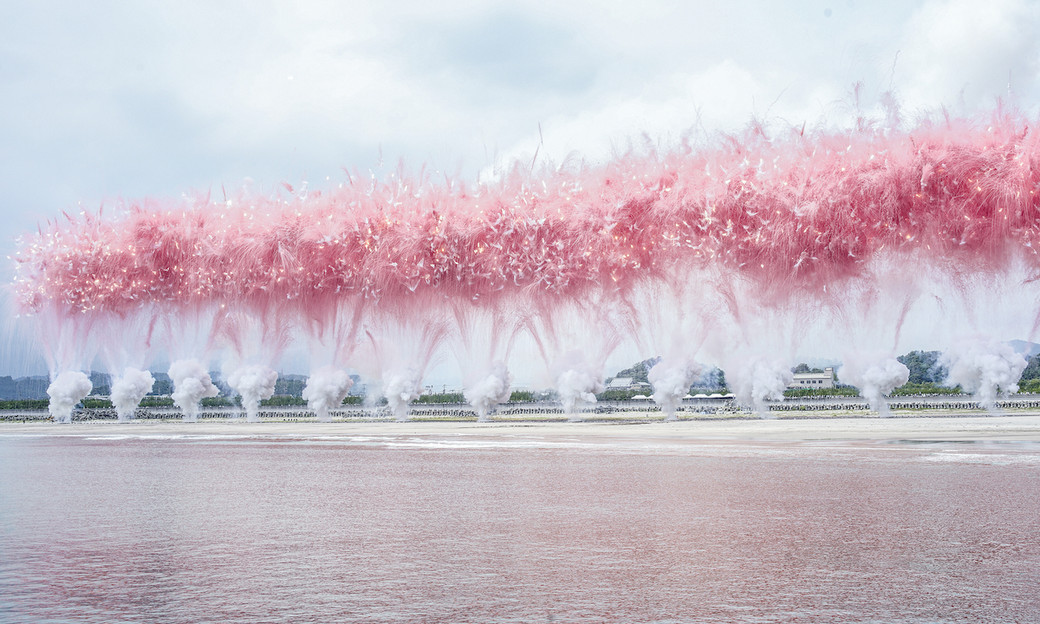
Guo-Qiang is no stranger to earthshaking art. While some artists prefer to work on smaller, more manageable scales, Guo-Qiang takes to the skies, engaging with the uncontrollable forces of nature to display the inherent beauty of the unpredictable. Having lived in Yotsukura in 1993, he’d previously collaborated with the locals on a similar piece titled The Horizon from the Pan-Pacific. Another explosion spectacle, the piece was a 5000-meter line of fire in pitch black night, aiming to display the beauty in the contours of the earth.
Part of the beauty of the piece was in its collective nature— the fact that locals were encouraged to participate in its creation through the purchase of gunpowder, and the collective action of everyone turning off their lights to make the fire more visible along the earth’s outline. Guo-Qiang honored the people living in Yotsukura, coming up with a motto that explained his motivations behind his art: “to create work here, to have a dialogue with the universe from here, to create a story of the era with the people living here.”