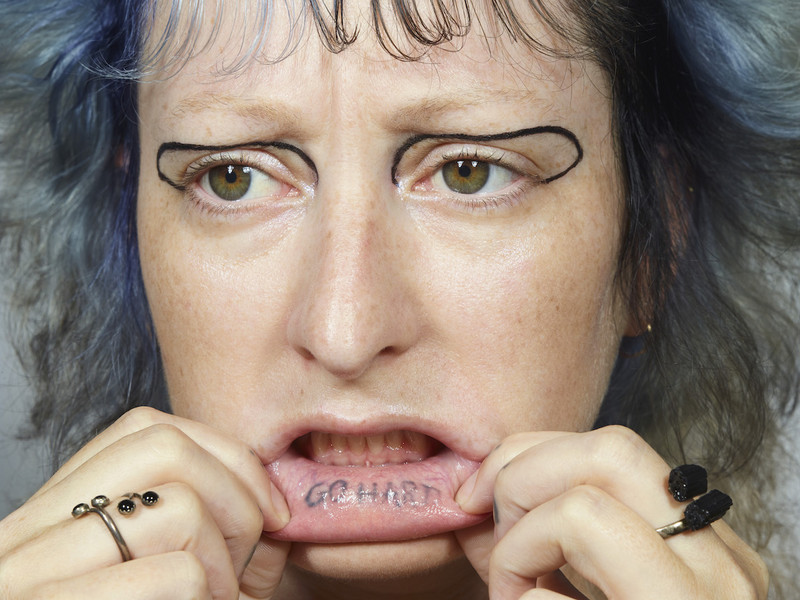
Vulvatious

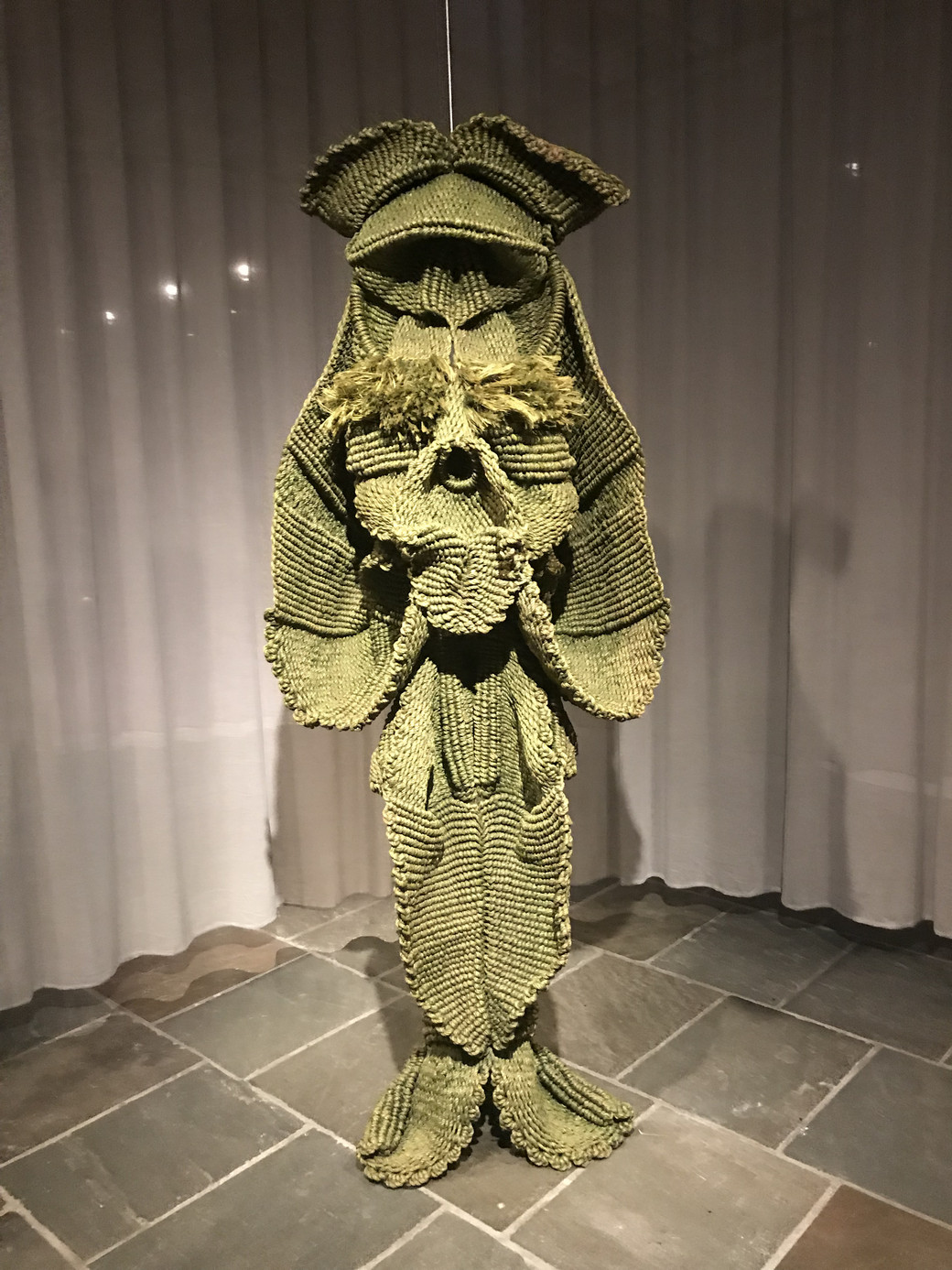
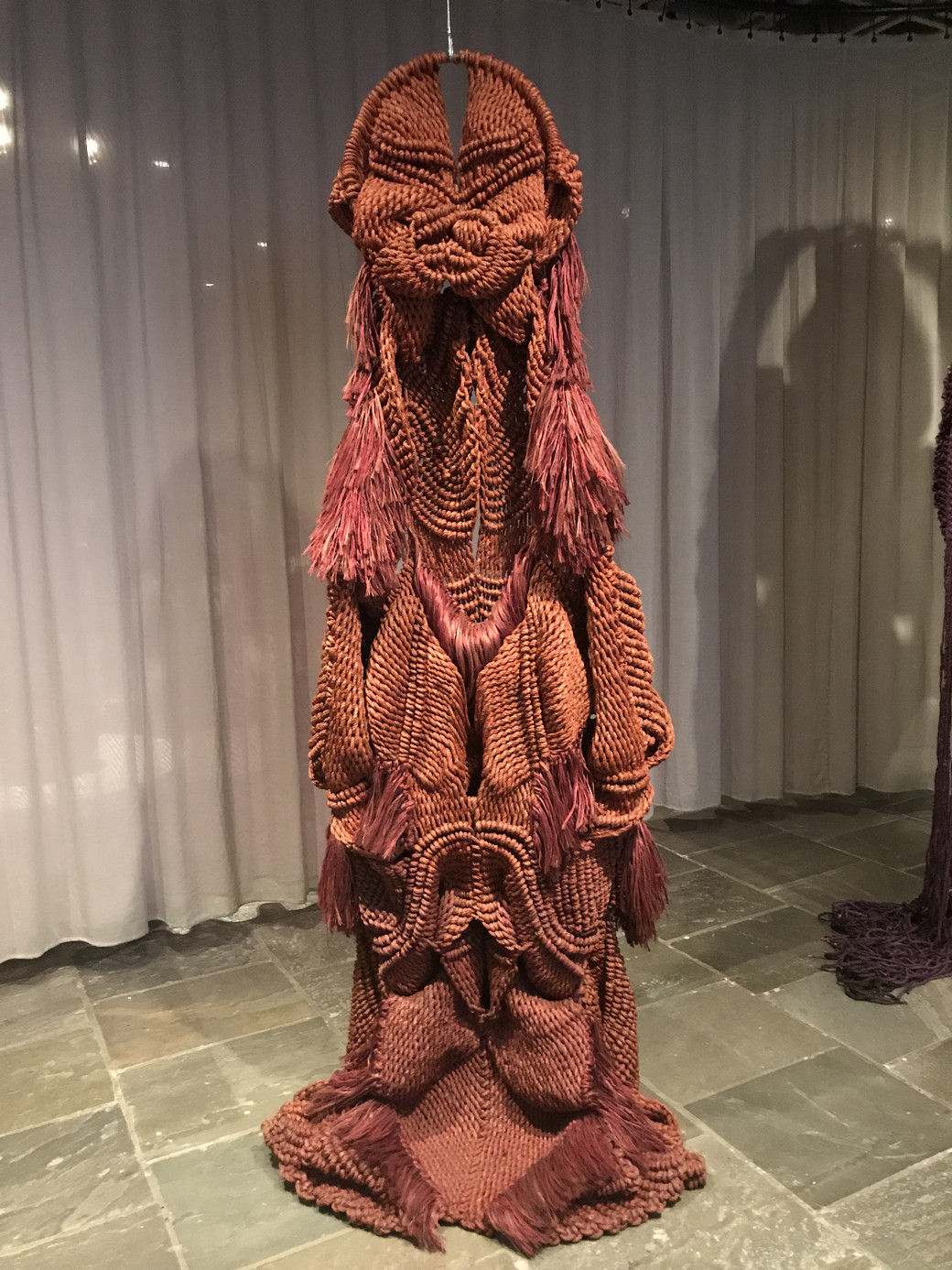
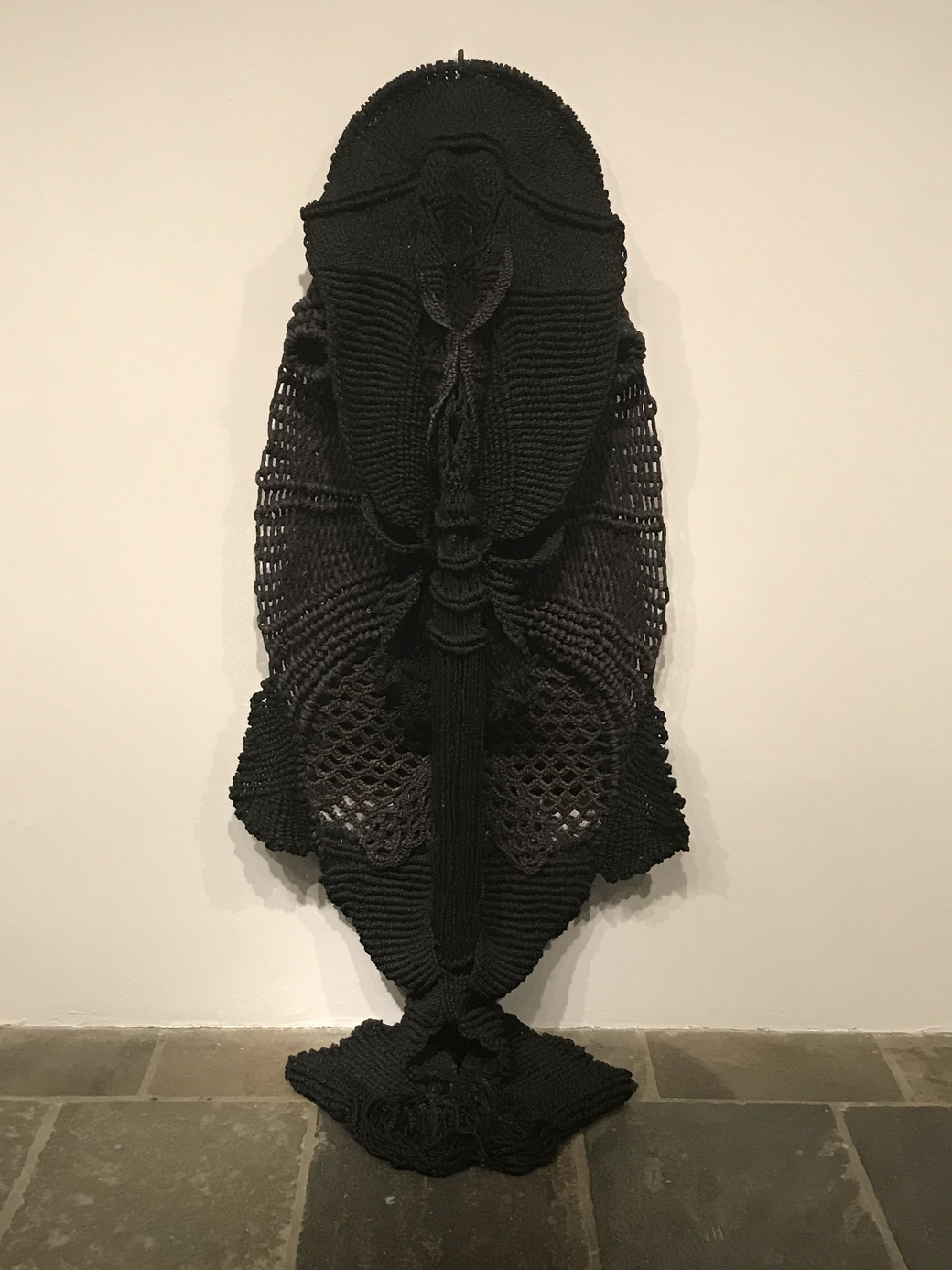
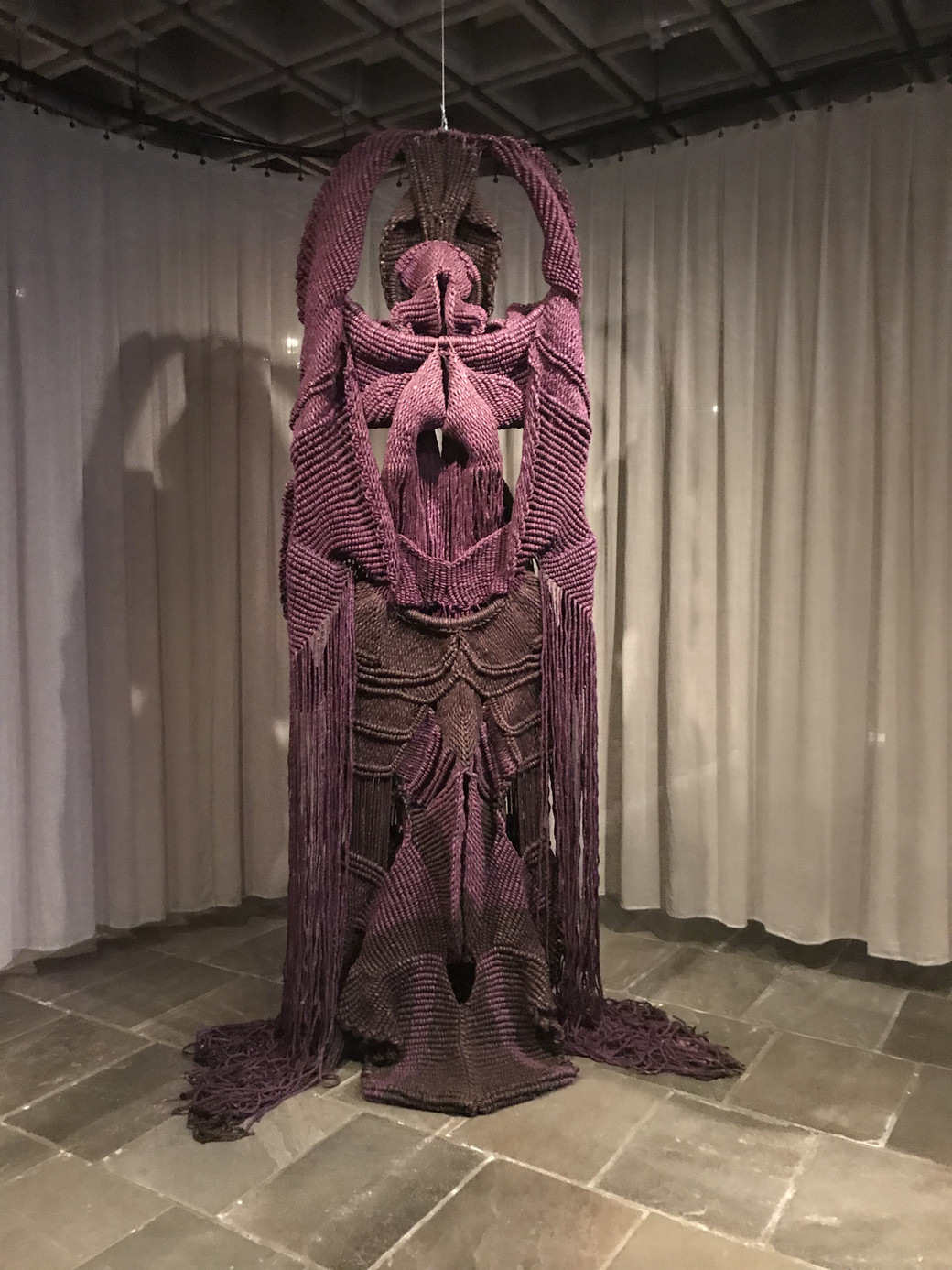
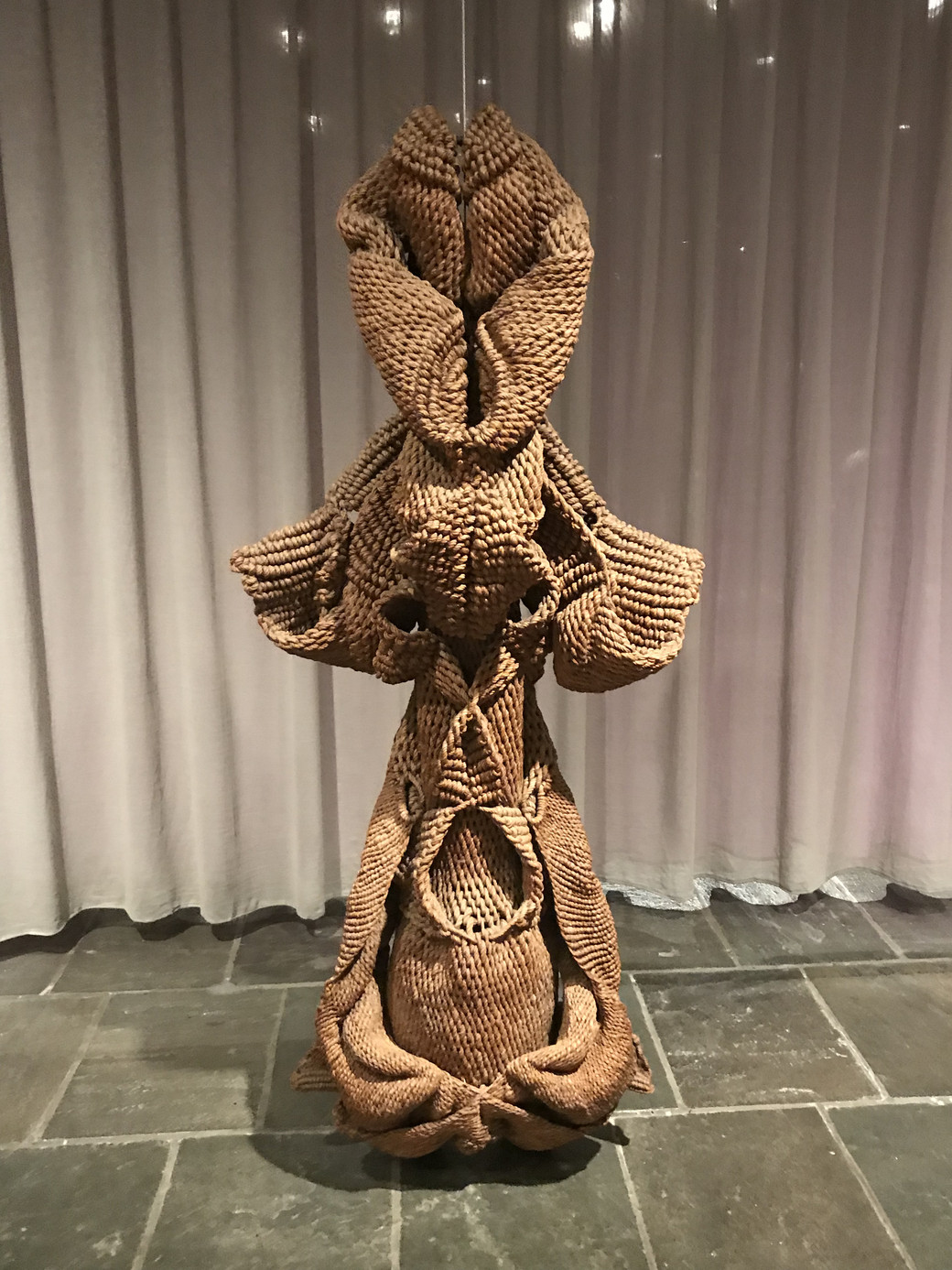
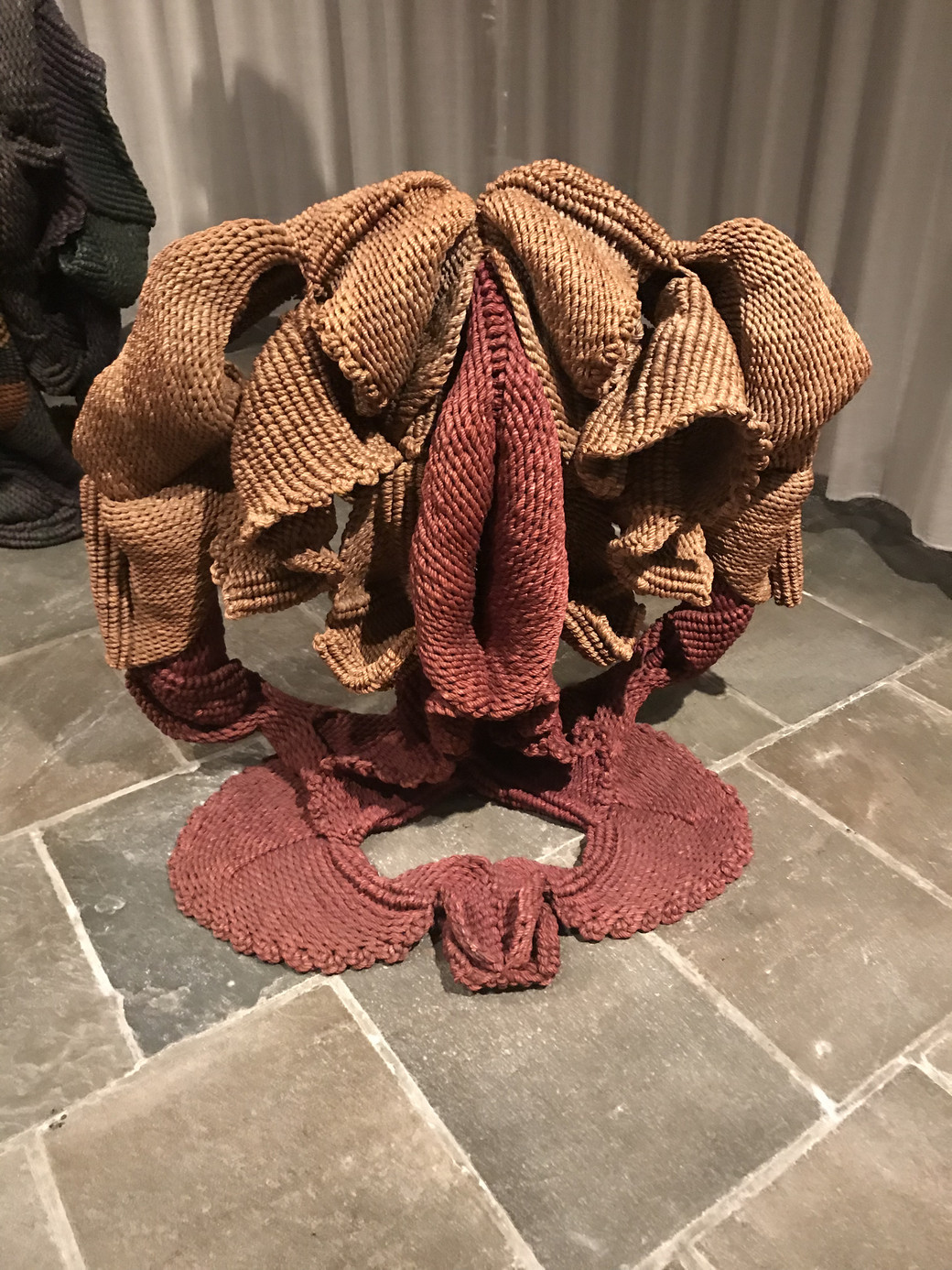
"Phenomenal Nature: Mrinalini Mukherjee" is on view at the Met Breuer through September 29th, 2019.
"Phenomenal Nature: Mrinalini Mukherjee" is on view at the Met Breuer through September 29th, 2019.

Okay, so this is weird but I actually thought all your pieces were made with needlepoint—am I crazy? Is this intentional?
It’s not intentional, but I welcome the comparison. This body of work was deeply inspired by the tradition of the decorative arts—most of the vases are based off of real vases from the Art Deco period, and I have looked to embroidery and needlepoint as inspiration. I personally do quite a bit of seed bead embroidery in my down time, like while watching TV or while on a flight and it has been great because it's an extremely slow and tedious art form. It keeps reinforcing in me that it's okay to take your time—not everything is immediate.
There is a really cool sense of psychedelia happening in your pieces. How did you make the connection between something so innocent and still, like a vase of flowers, and the trippy vibes of this body of work?
The spring board idea for the backgrounds was the idea of psychedelic still lifes. My flower paintings are usually very colorful and over-the-top, so I wanted to find a background for the still lifes that would kind of gel with the super colorful flowers. I started by researching rainbow GIFs and optical art GIFs online and went from there. Once I found ones that I liked, I'd select the colors and start building the composition for the paintings.
Have you ever tried psychedelics?
No.
I love the idea of kaleidoscopes—can you talk about that?
The idea of kaleidoscopes was another idea I had kicking around alongside psychedelic art. I love color!
It’s cool that these aren’t just paintings, but that it’s an entire installation. Why did you choose that medium?
The gallery is such a large and beautiful space, we didn't want to go too over-the-top with the installation. Since most of the vases are based on Longwy French vases from the Art Deco period, we went with a checkered floor, which feels very Parisian. The checkered floor also fits with the optical art themes in the backgrounds too—it is the perfect fit for the exhibition.
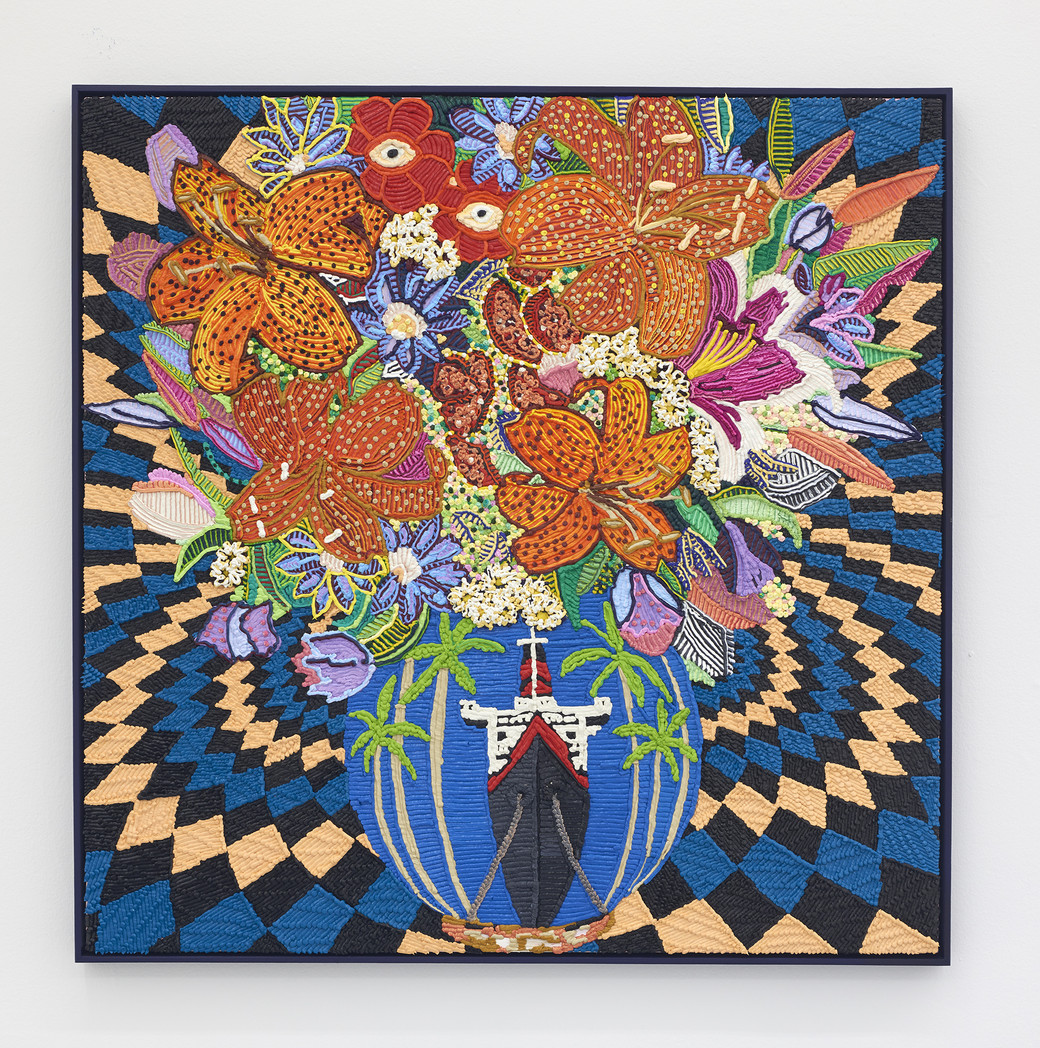
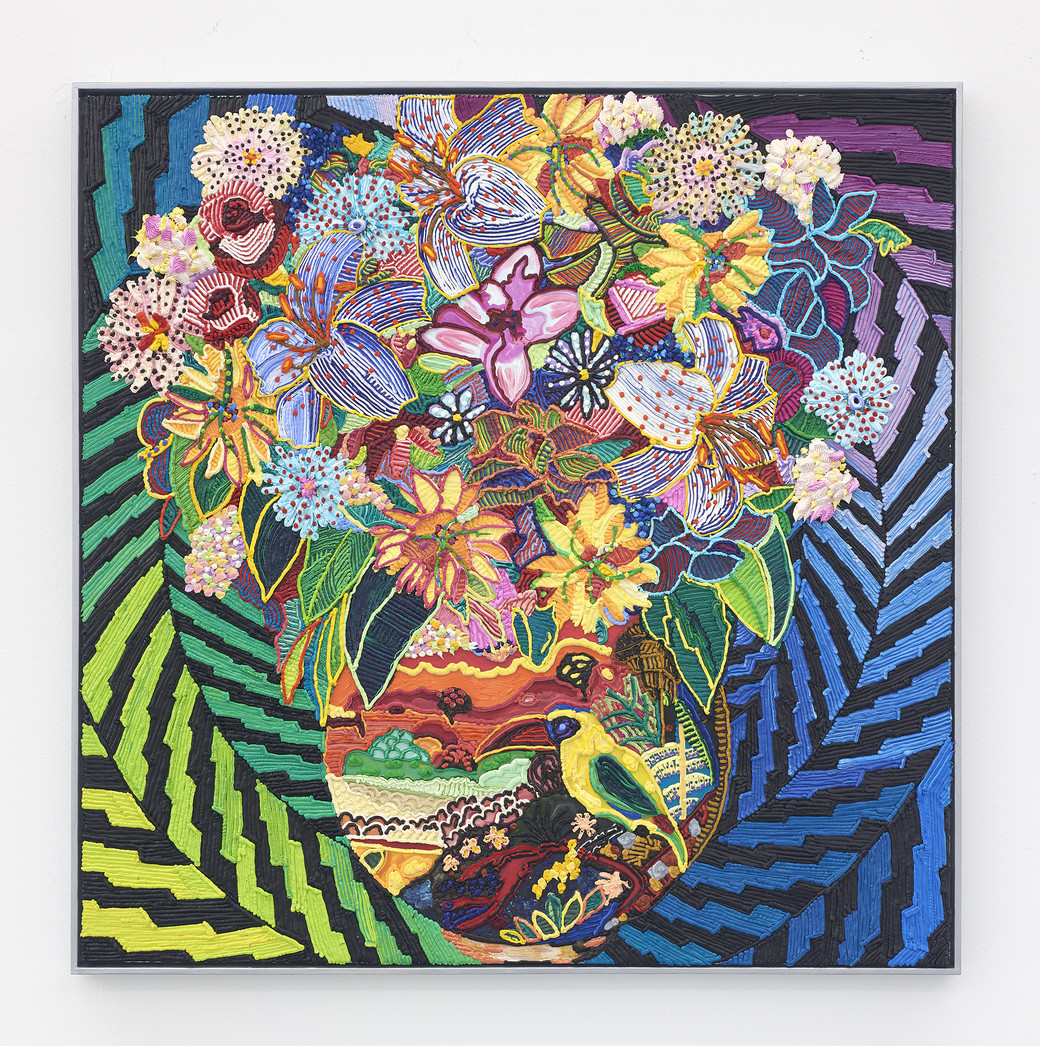
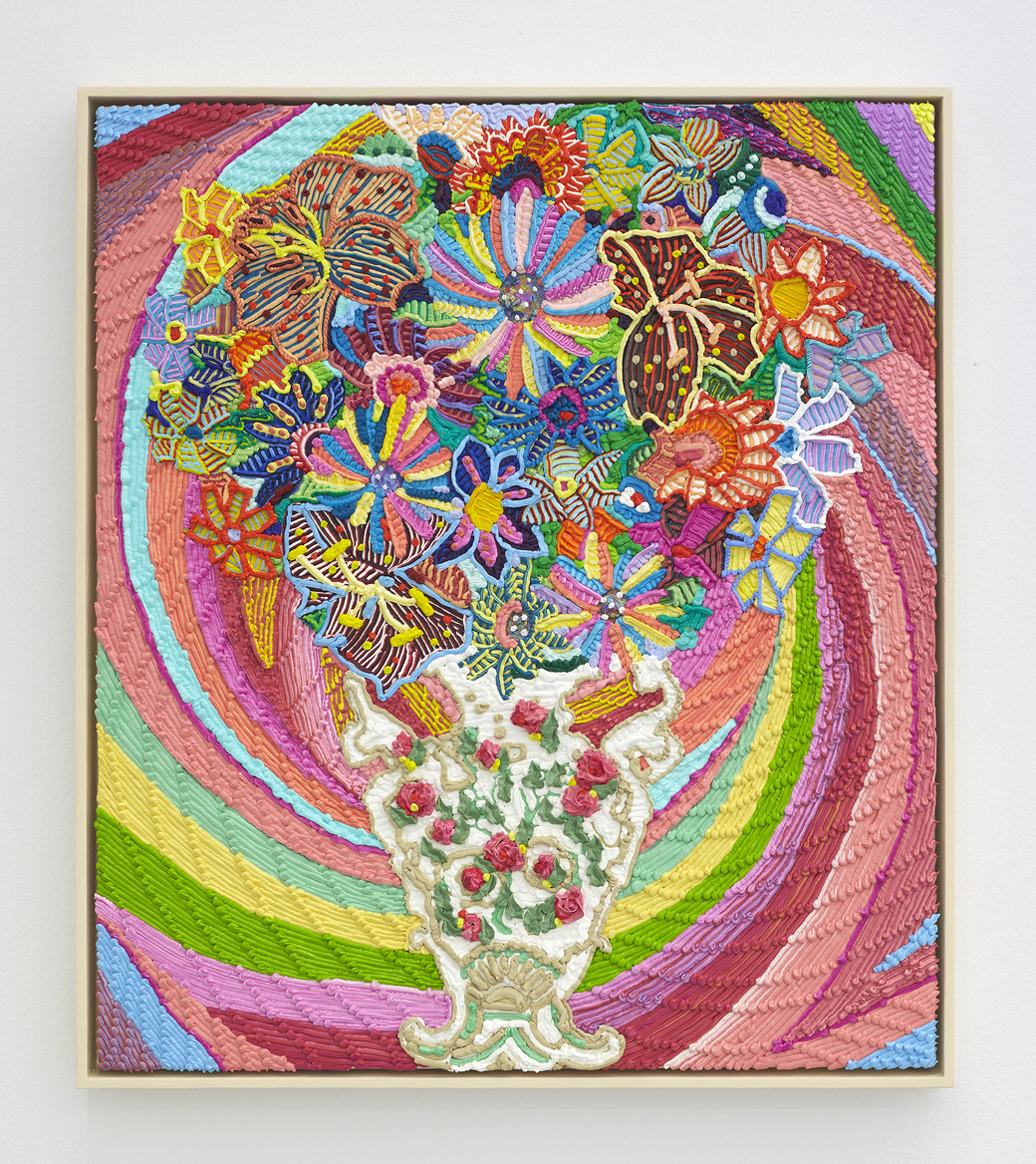
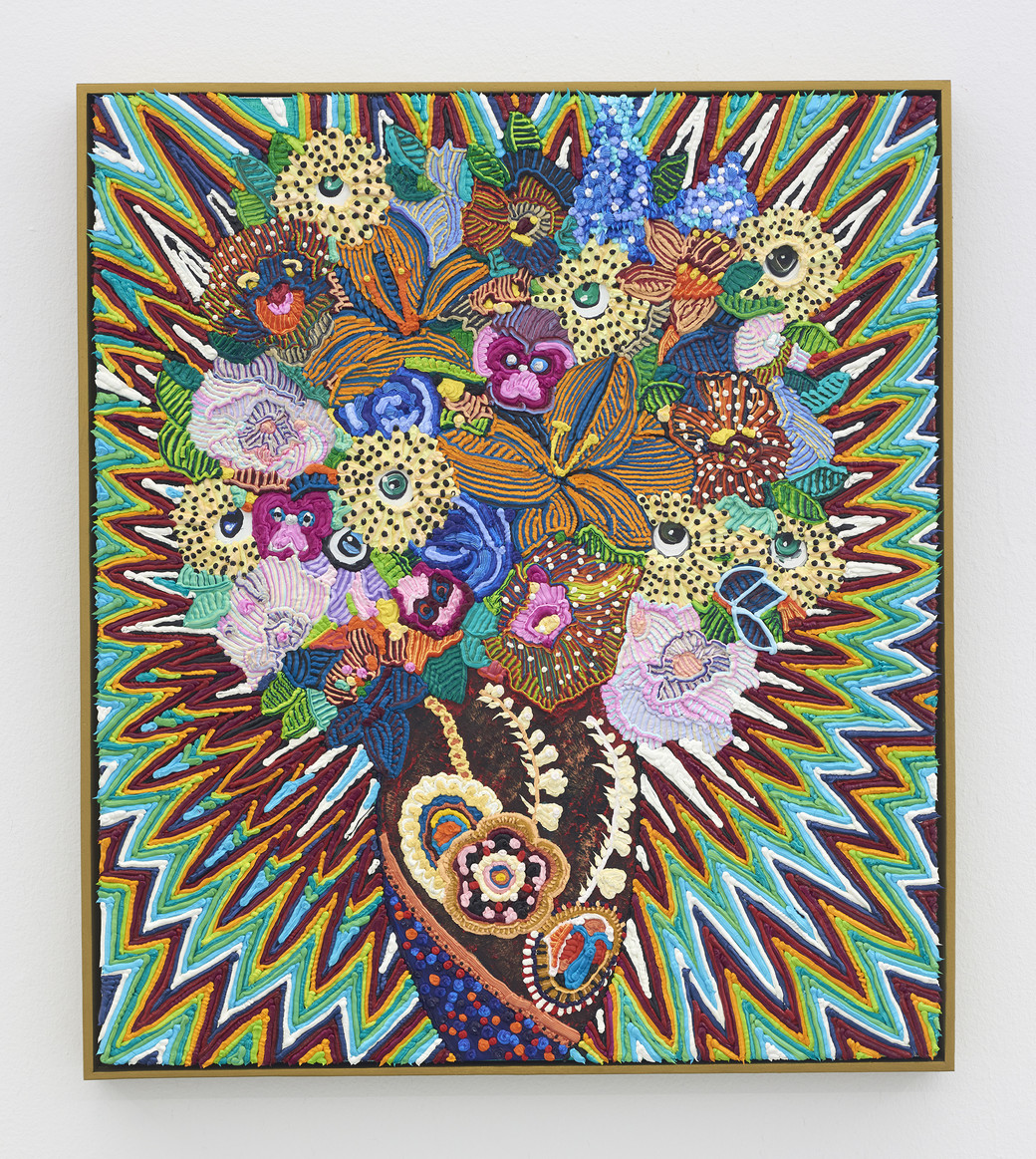
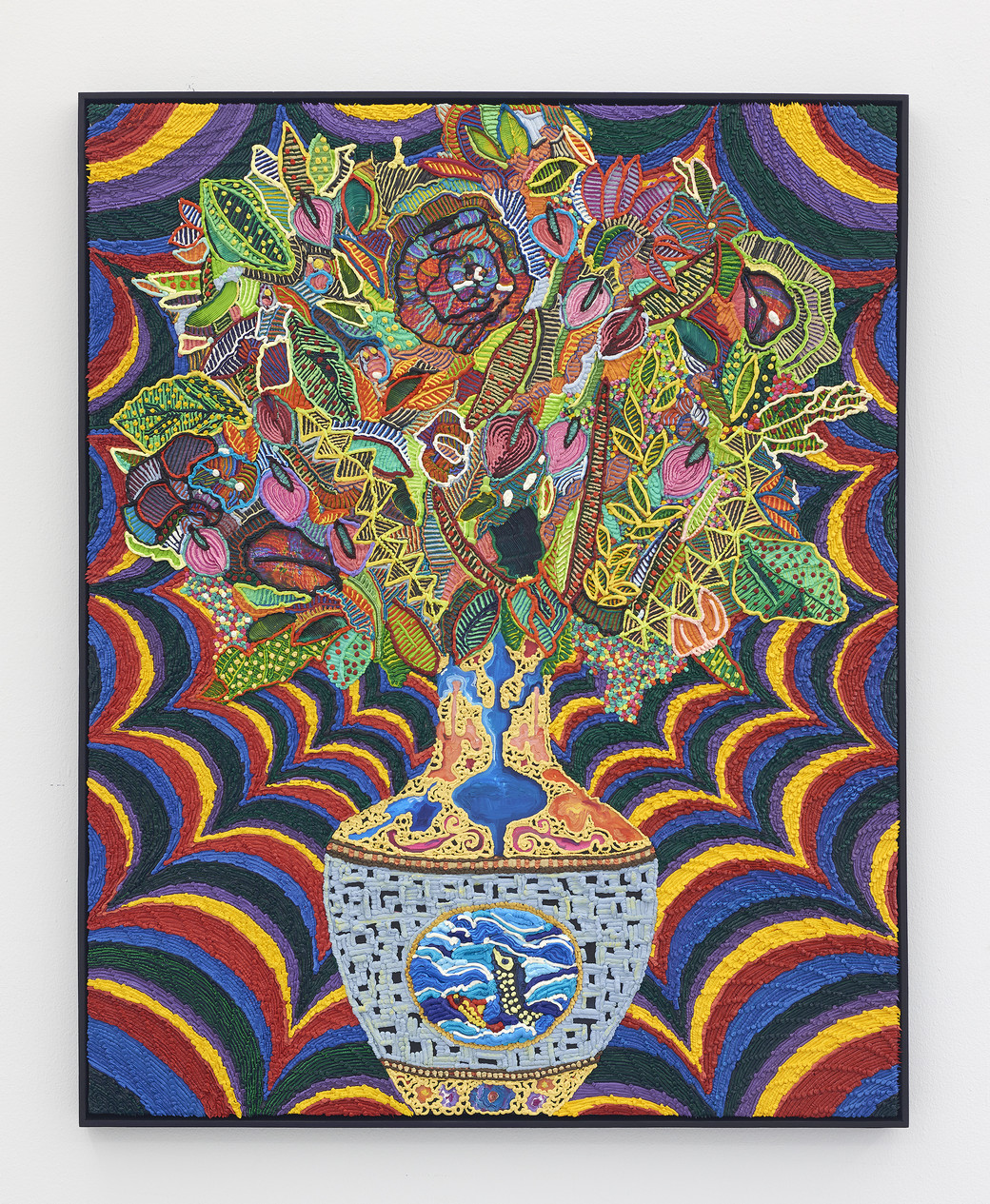
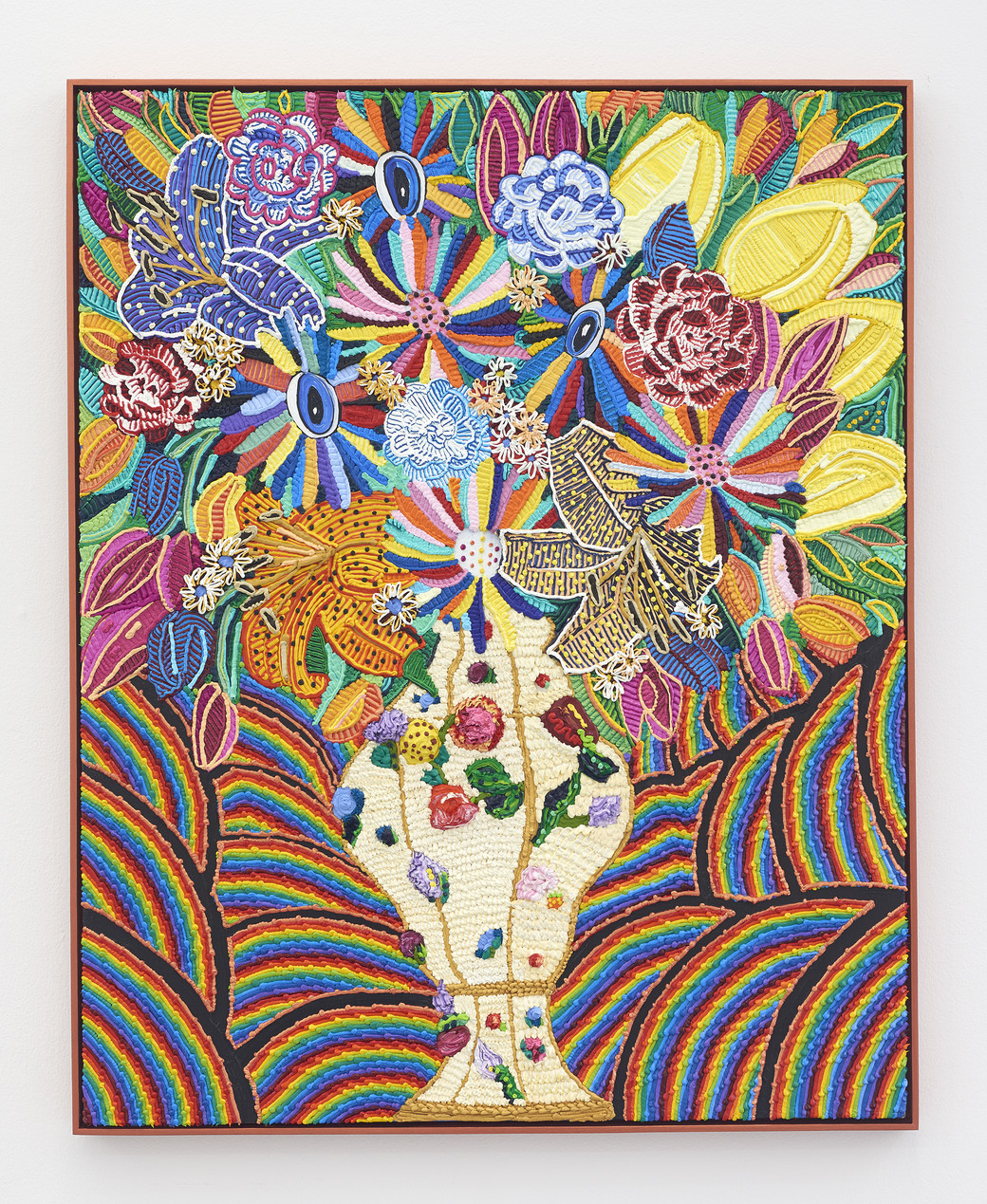
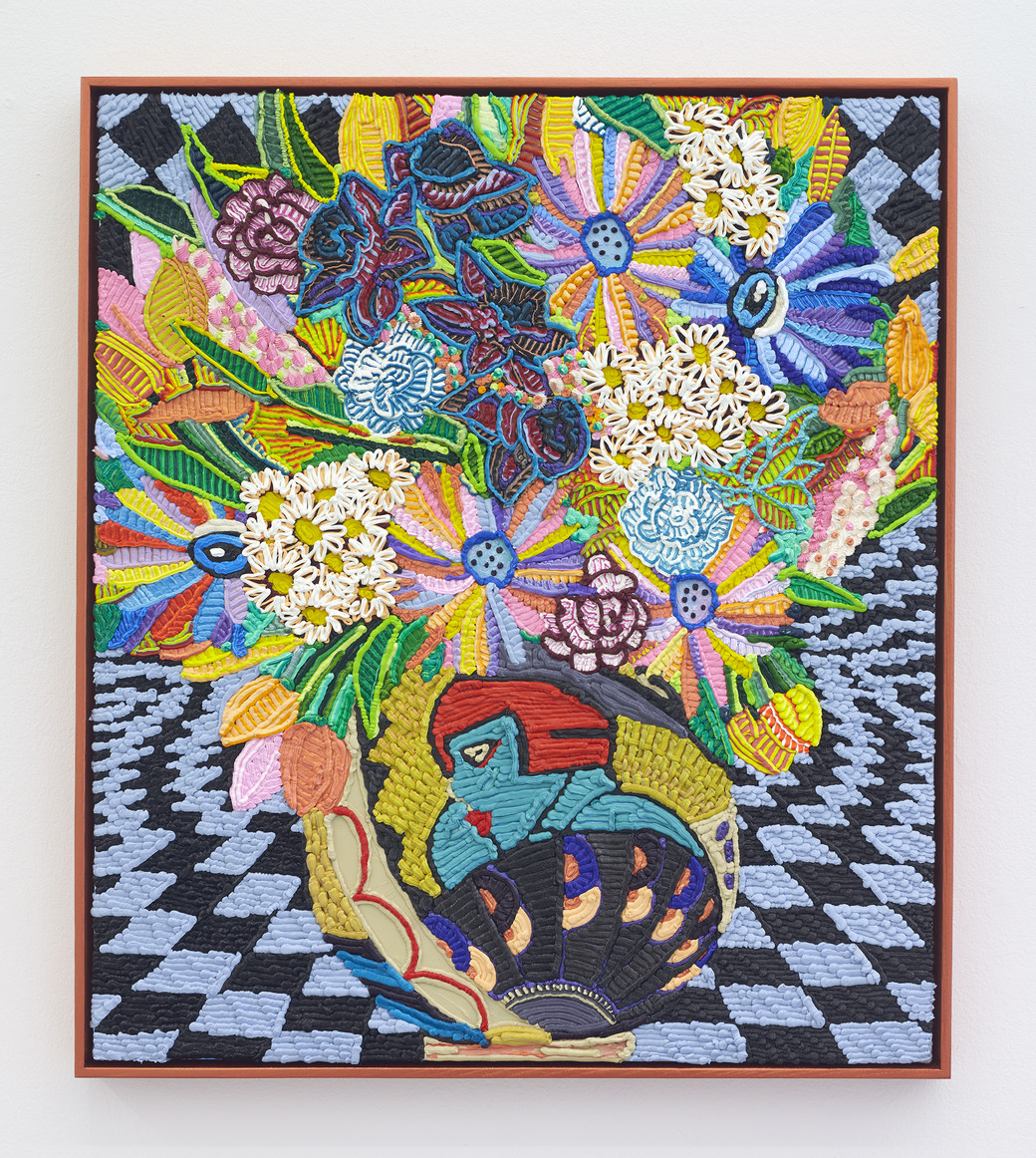
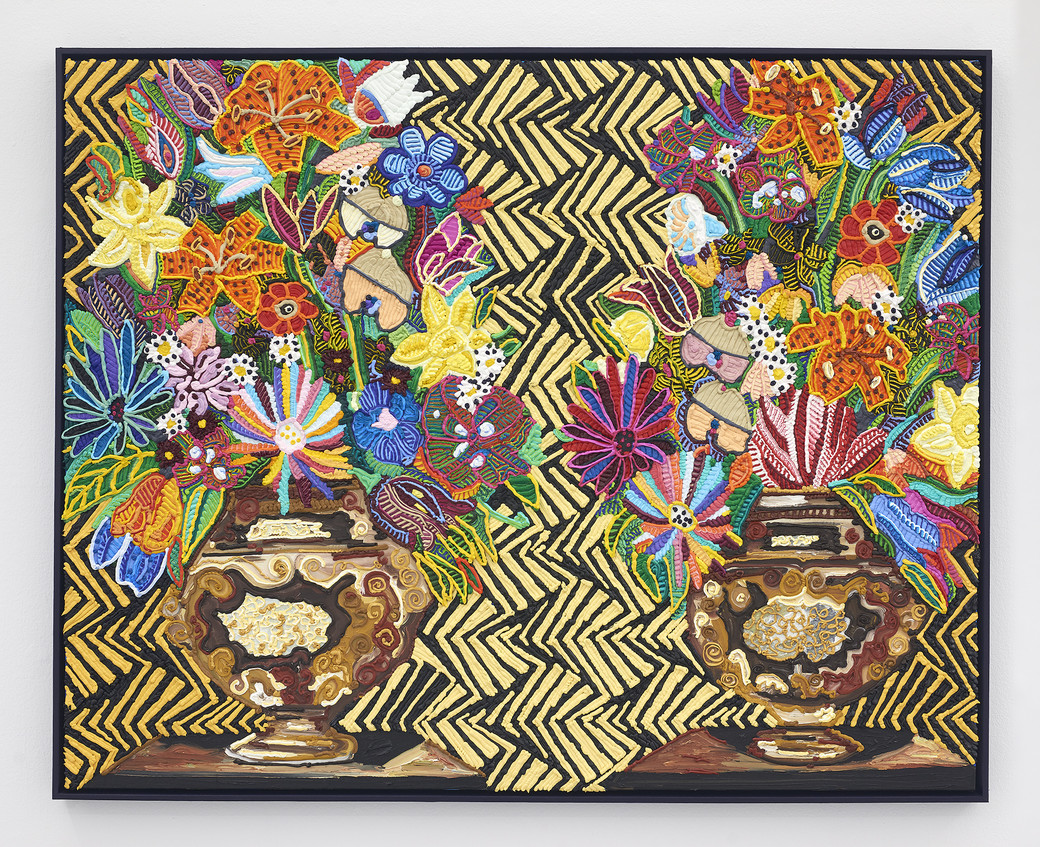
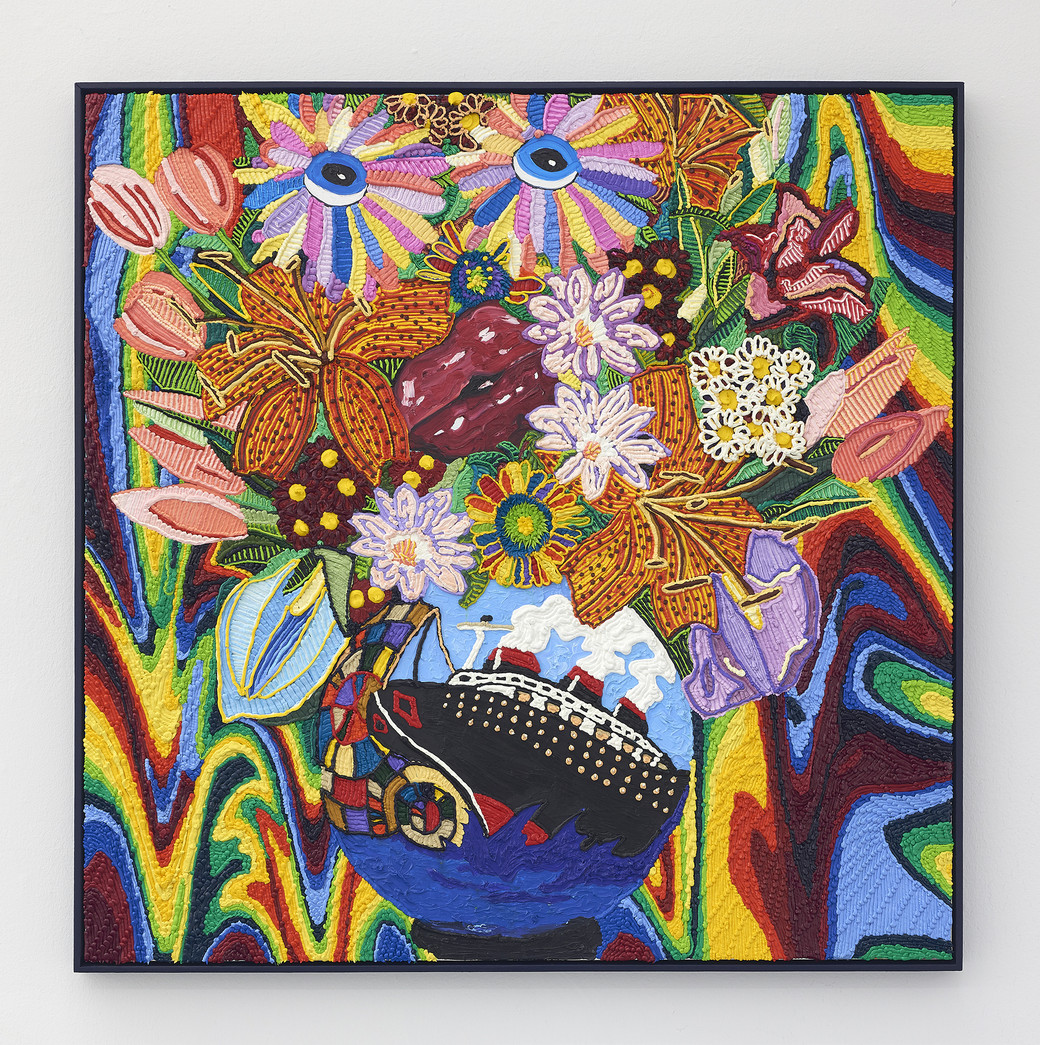
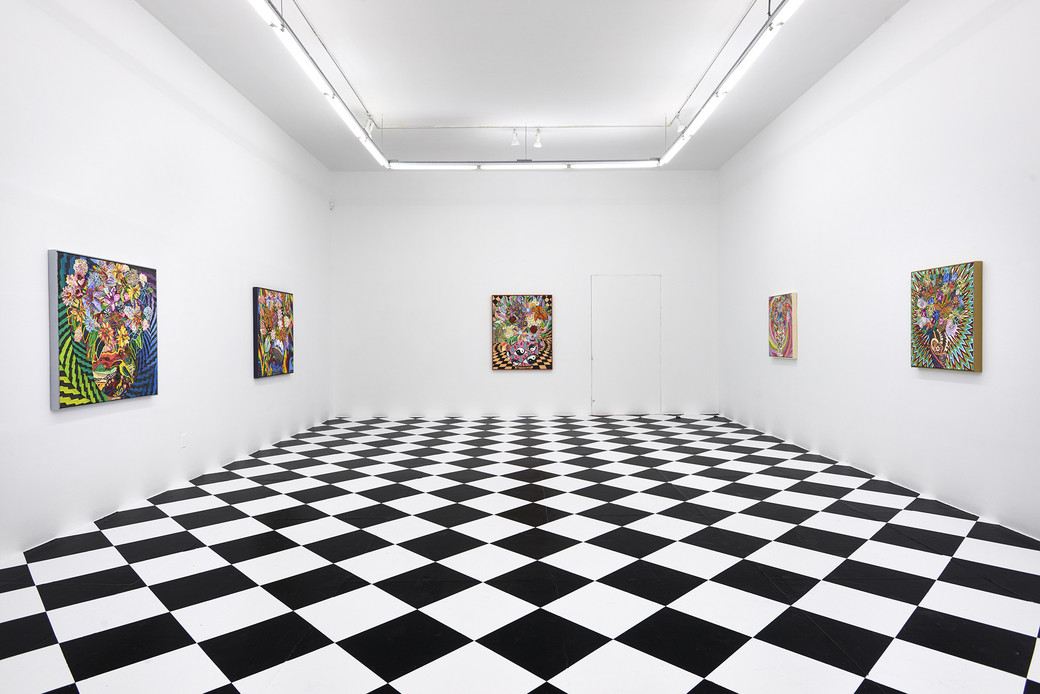
'Kaleidoscopic' will be on view at The Hole through February 10.
Lead image: 'Kaleidoscope.' All photos courtesy of the gallery.

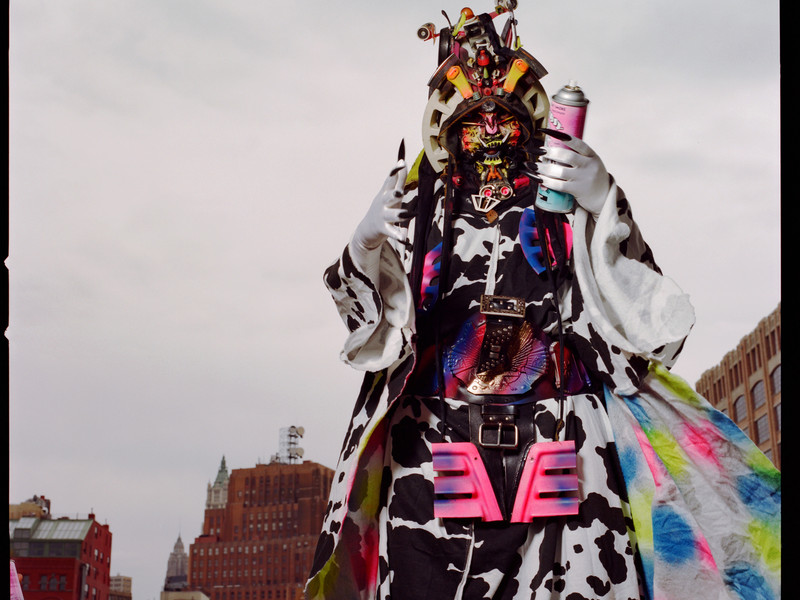
Gallo’s work—and unmistakable presence—caught the eye of everyone in the Downtown NYC scene, including Warhol. But after a sudden stroke in 1982 that left him partially disabled, he stopped performing forever, and slowly started to fade from the spotlight (or as Warhol would put it, his fifteen minutes were up). But even now, as new artists continue to pop up online and IRL everyday, with viral or not-so-viral performances, his influence on the Downtown art scene and its members is still palpable.
That's why, more than four decades later, Scott Rollins and Noah Khoshbin have brought the late Gallo’s legend to life in their latest exhibition, Richard Gallo: Performance and Studio 1968-1980 at the Cressman Center in Louisville, Kentucky. Open through February 23, with plans to bring the exhibition to New York City in 2020, the show features over 60 archival photographs, on view to the public for the first time. With help from the Richard Gallo Archive, the Watermill Center and Robert Wilson Arts Foundation, Richard Gallo: Performance and Studio 1968-1980 is an ode to the madness of the 1970s, of New York, and of Gallo himself—and the ground-breaking works he created.
View some of the exhibition images below, and revisit our Richard Gallo feature here.
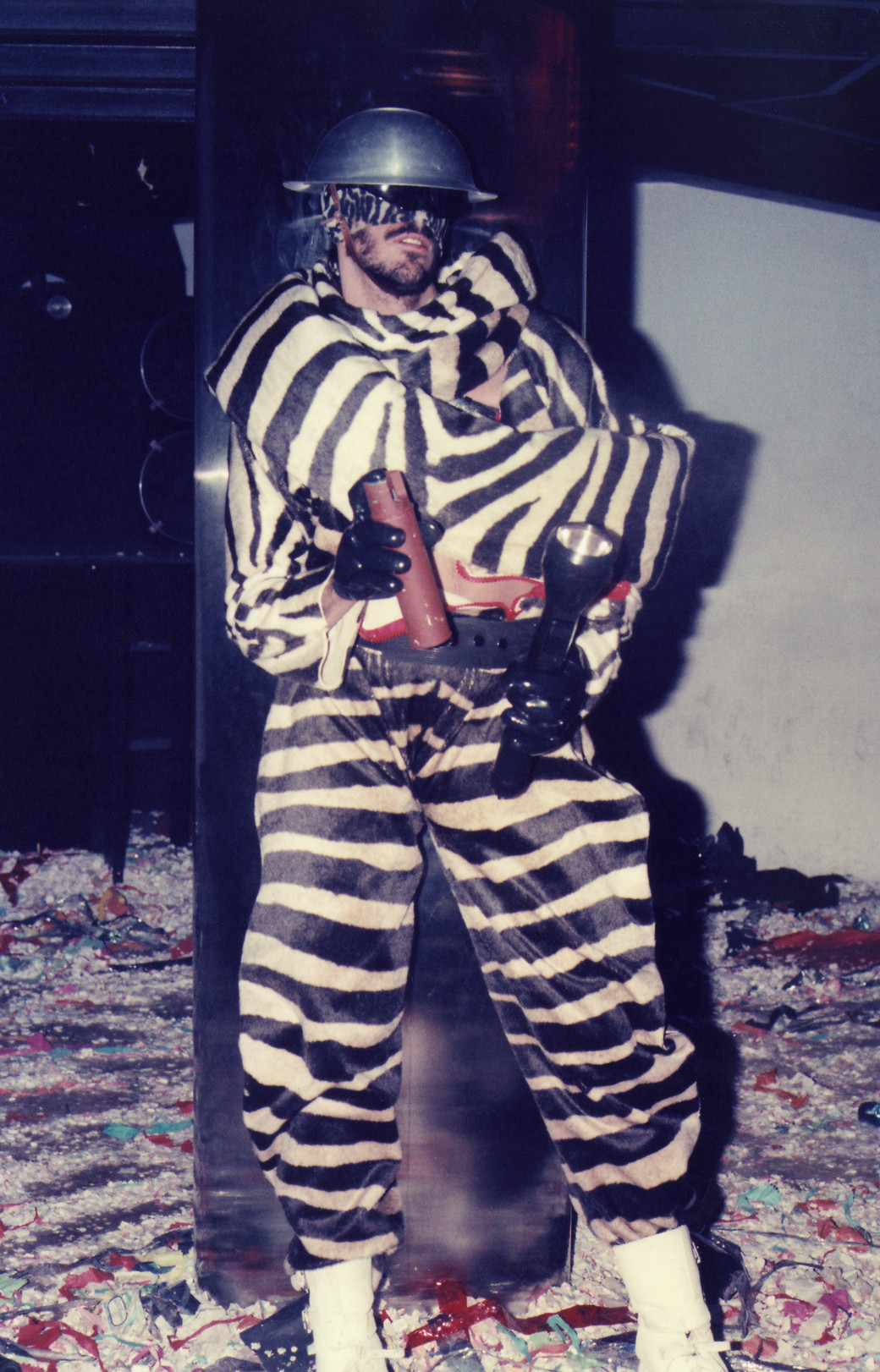
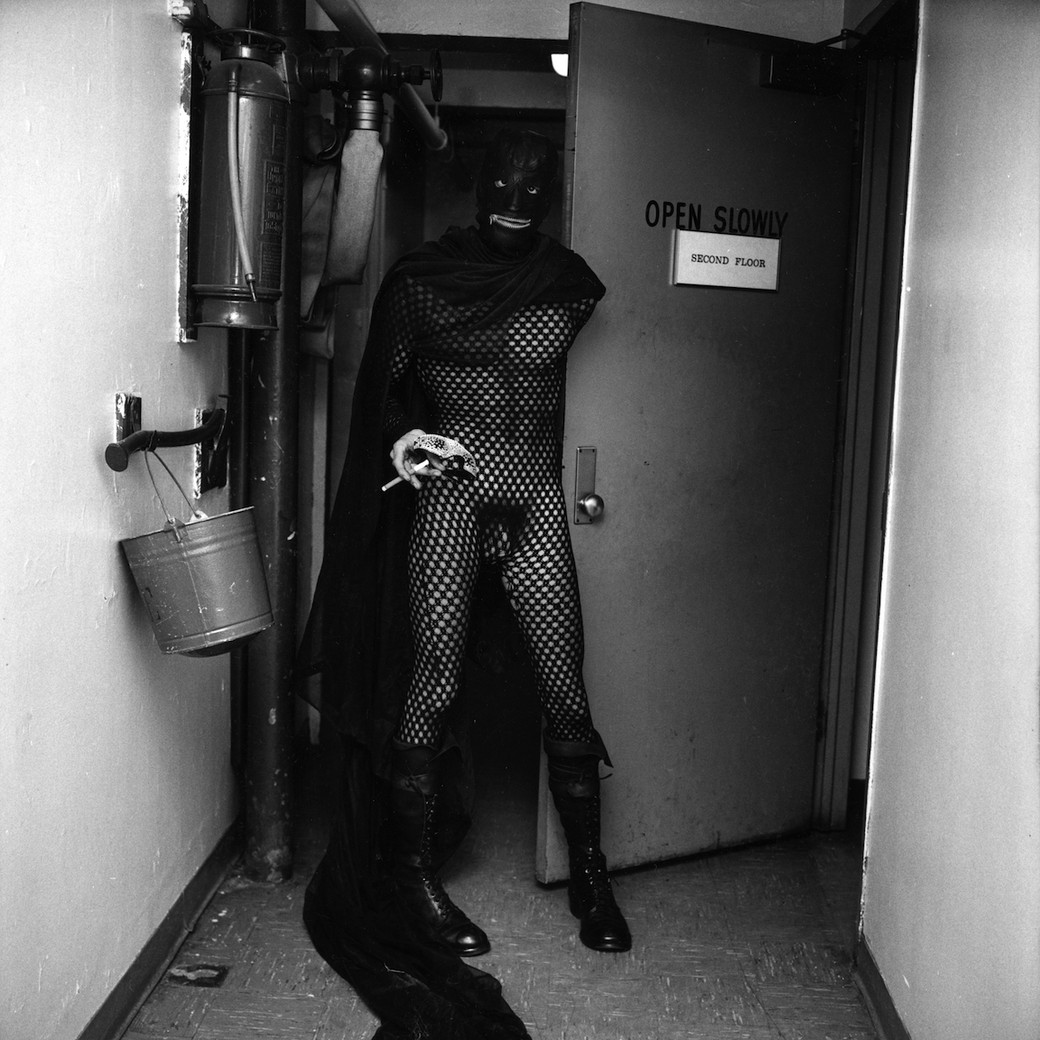
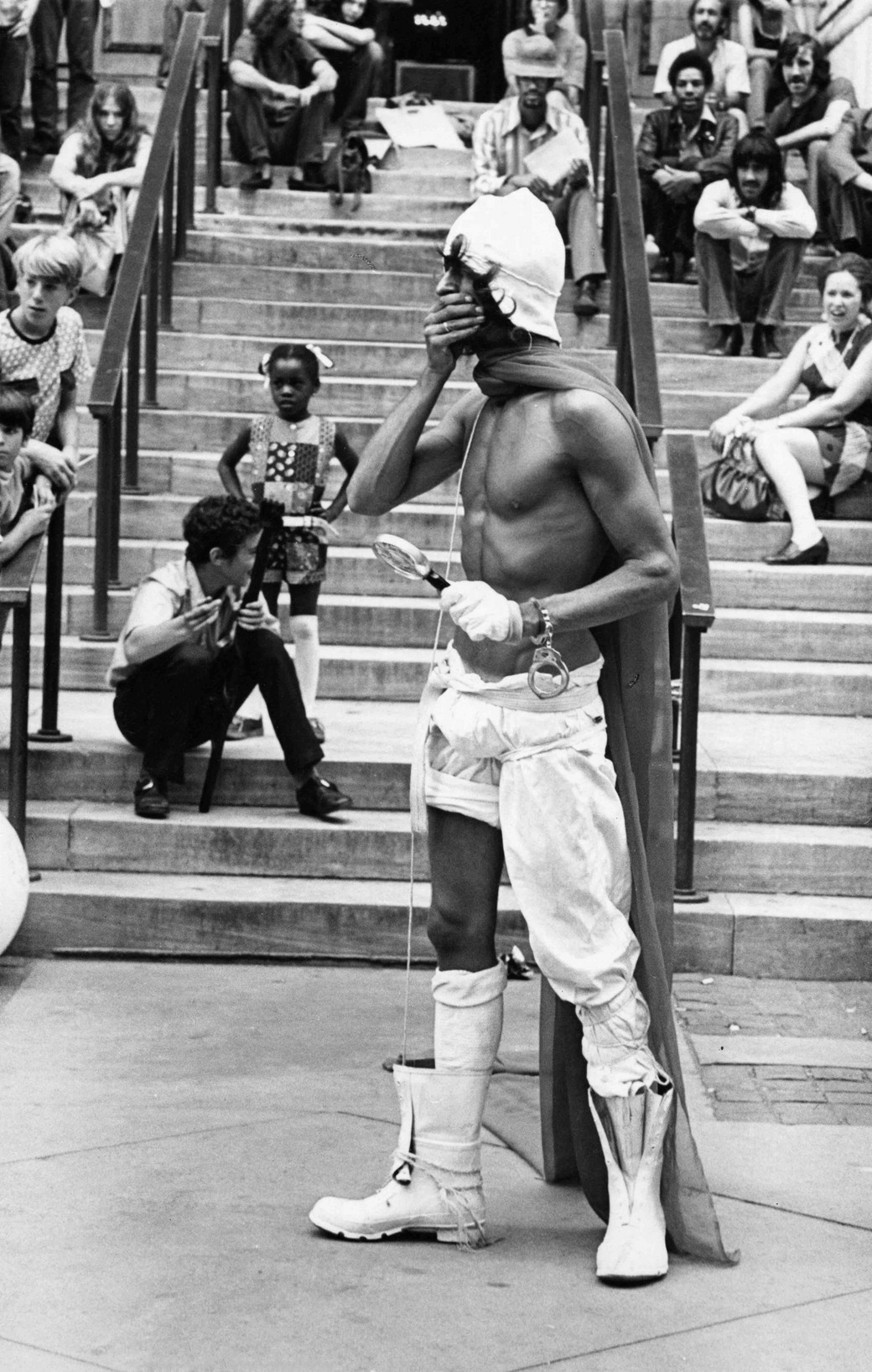
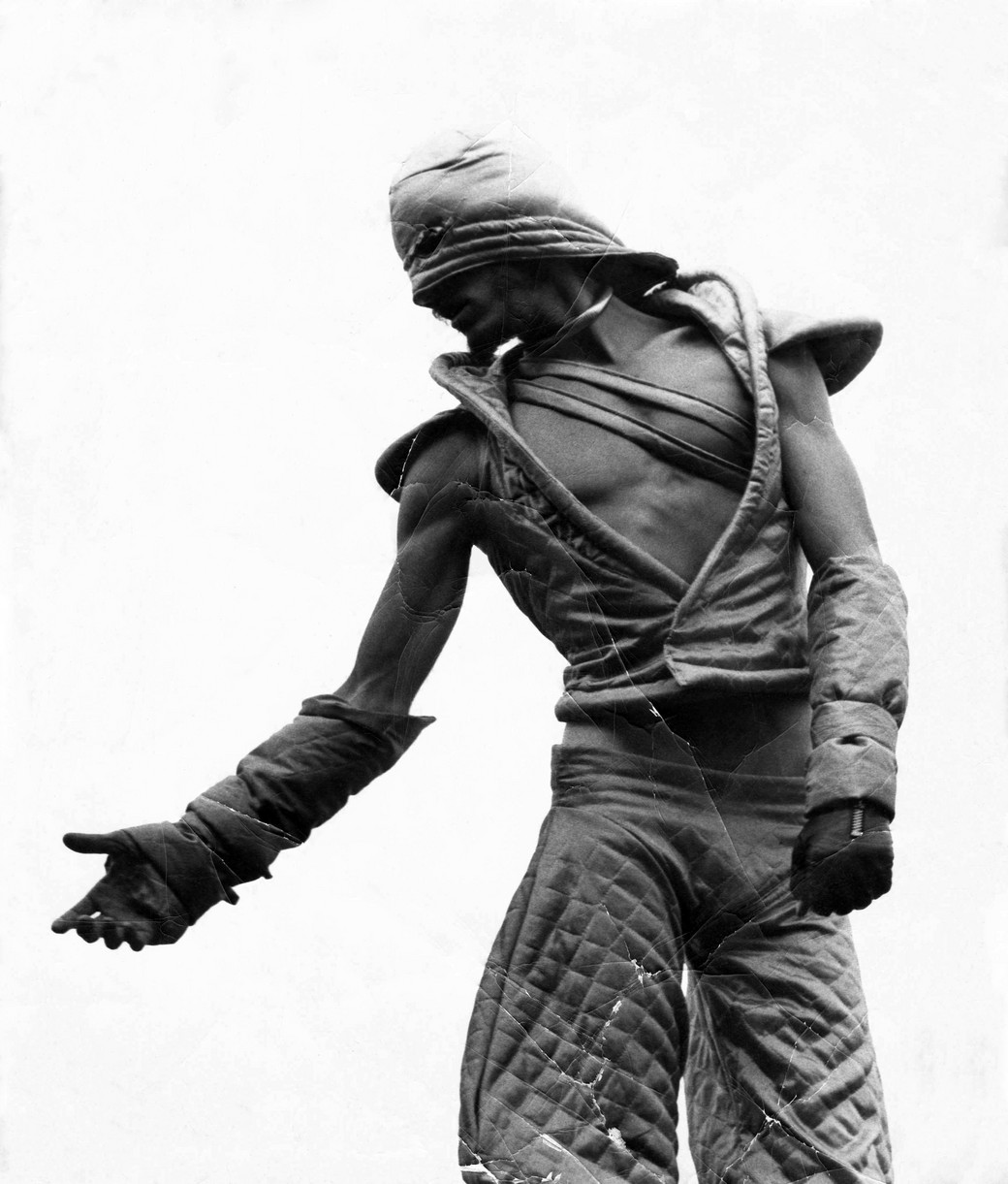
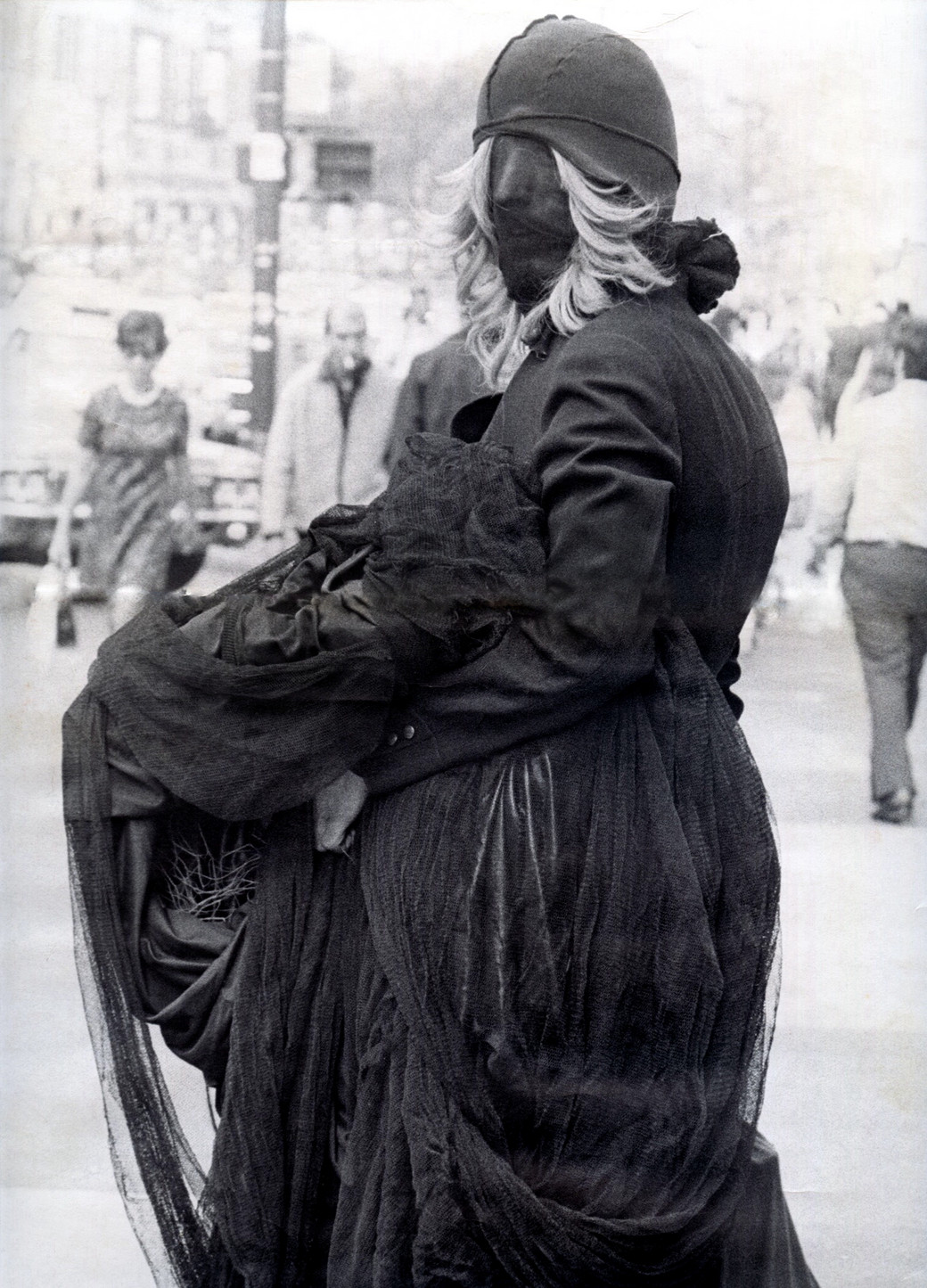

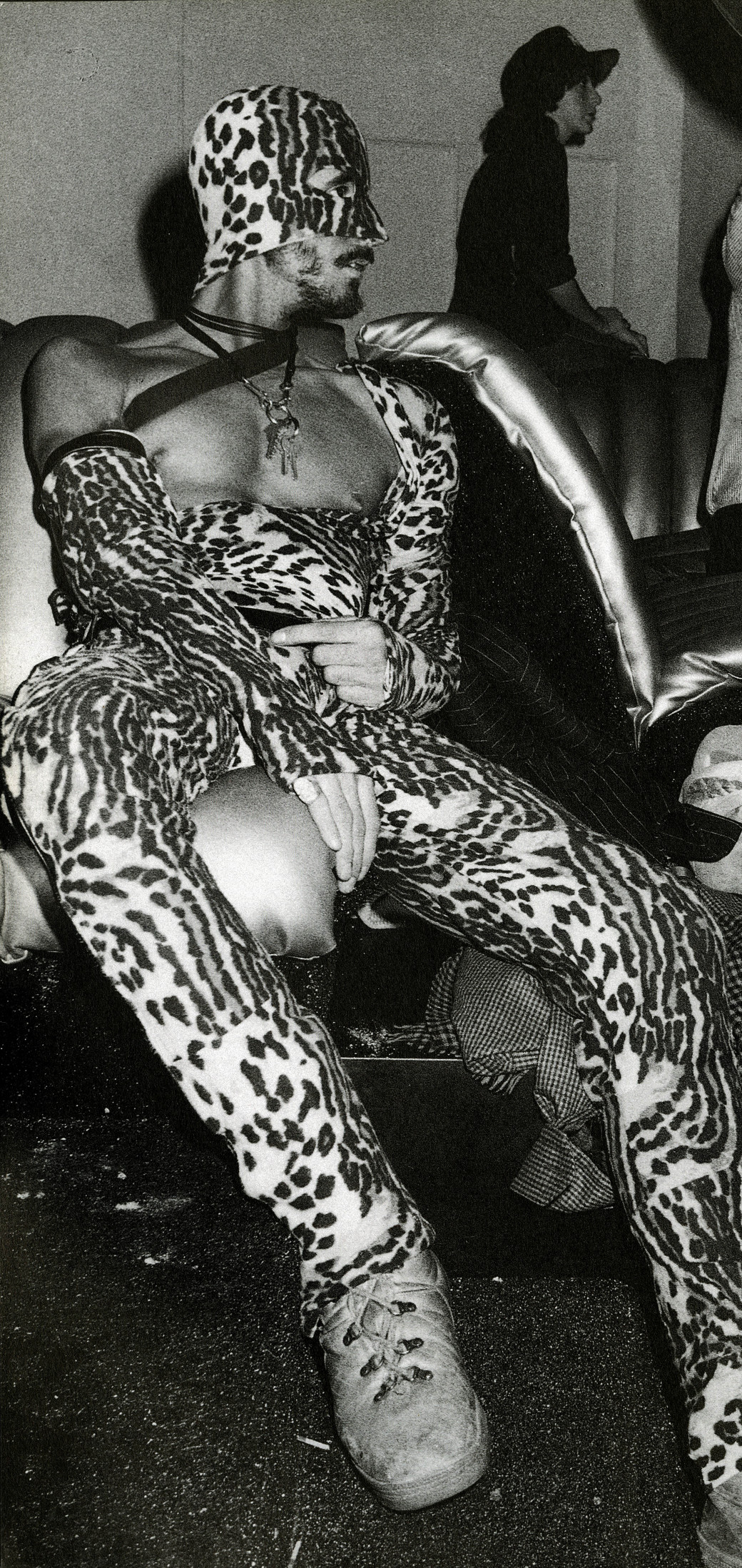

'Richard Gallo: Performance and Studio 1968-1980' is open now through February 23 at Cressman Center in Louisville, Kentucky.
Photos courtesy of Scott Rollins & Cressman Center.

Of course, like all art, it’s open for interpretation; but it’s obvious that the intellectual work behind these pieces has already been done. This is intentional on Nnamdie's part, a response to what he describes as the current shift in pop culture: “Responsibility [shifts] from the producer to the observer,” he explains. “Images no longer enable themselves; they are granted the status of meaning-bearers by their audience.”
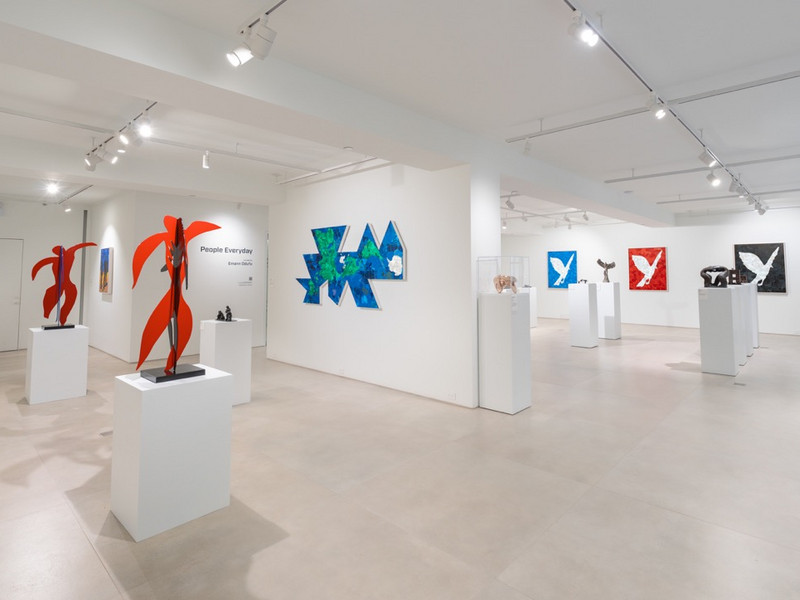
Don't trust me, I'm homeless is not just a response to this barrage of meaningless images, but a space where the resistance’s strongest warriors can all call home.
After the craziness of opening night, office sat down with Nnamdie to learn more about the show. Read our interview, below.
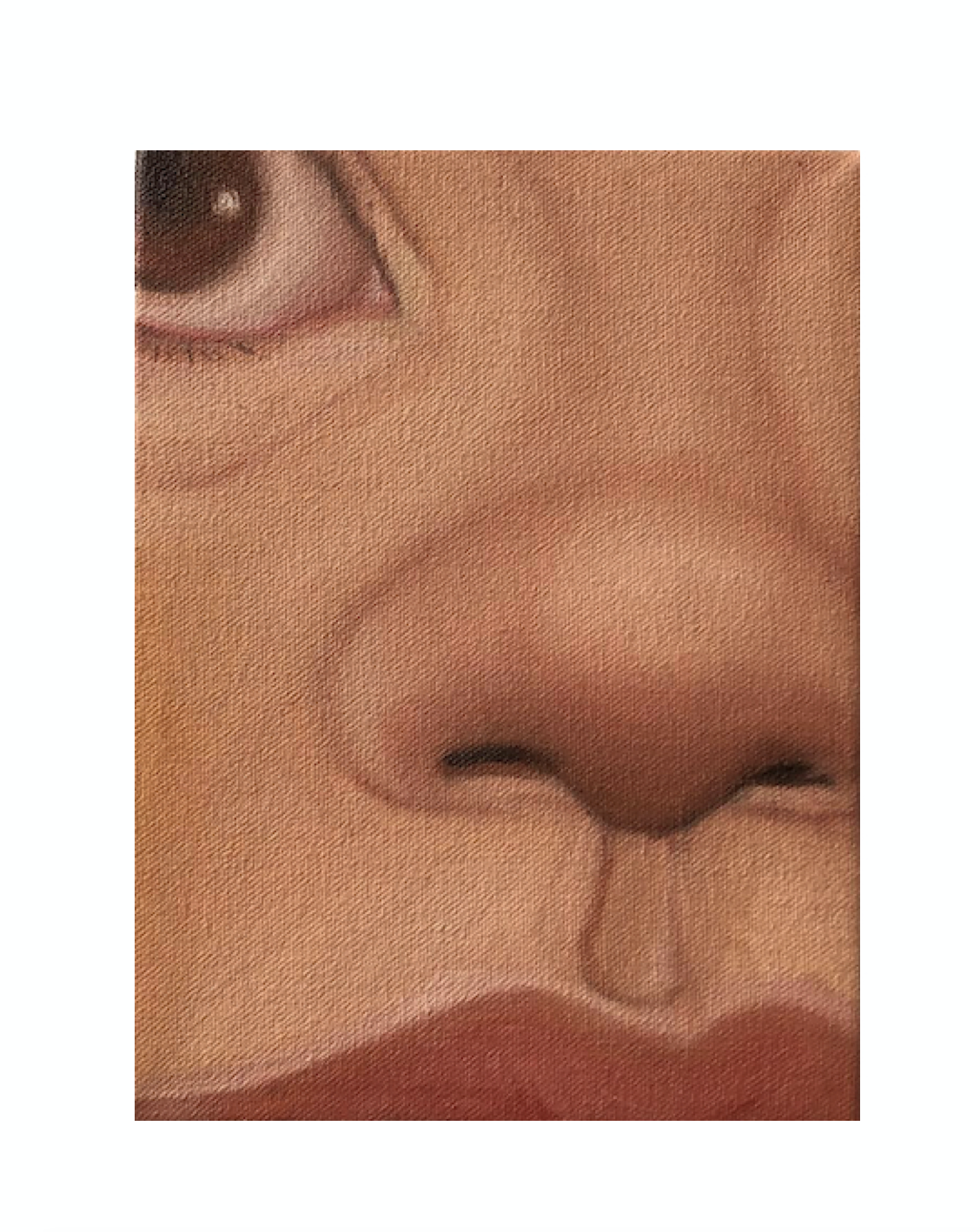
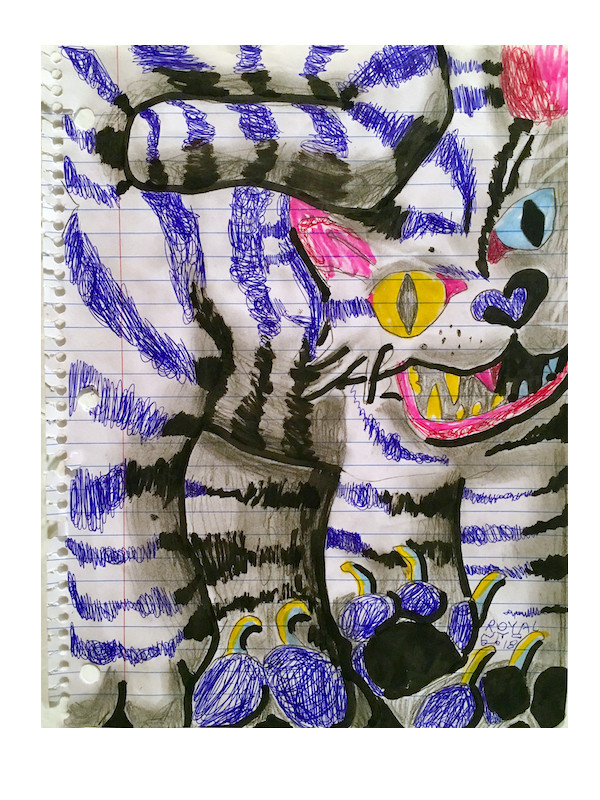
Tell me about the title. What does 'Don’t trust me, I’m homeless' mean?
The title is a statement that I know is jarring and was prepared to have a discussion about. Karen from Ed. Varie and I were not interested in poking fun at homelessness or mental health issues—the title is an entry point to a conversation that needs to be had. It’s about giving space to people who you might not think would ever make it. The statement 'Don't trust me, I'm homeless' translates into, “I don't need your trust, ‘cause I’ll be alright anyway.” And the dictionary definition [of homelessness] is broad. It’s about being a thing without a home. I’m hoping to expand that definition to people who have ideas but nowhere to put them—that’s what the show was about.
What was the reaction to the title?
I got a lot of trolling, a lot of DMs. People didn’t understand it. It was quite interesting to talk to these people and let them know that I want to talk about it, but I’m not going to put up with online bullying. I wanted to tell people that it’s okay if you don’t understand, but come by the gallery, anyway—I would love to actually talk about the show. Once you’re inside, you’re hit with the reality of it.
Some words trigger people—words like ‘homeless’—and that can halt conversation; or it can spark it. Sometimes real self-reflection is messy.
Yeah, and they might not even be going beyond surface level which is not interesting. I want to penetrate people, including myself. The title even makes me uncomfortable but as a person of color, I felt it would be important for me to stand, not buckle or waver, and to just speak about what this is as much as I can.
How do you think pop culture has impacted our understanding of art?
I think pop culture has completely shifted so many times—it shifted when I was writing the press release and it’s shifting as we’re having this talk right now. It’s ever evolving. I do feel very strongly that the internet is taking on different forms. So, there are lots of artists that have thousands of followers, but have never had a real show until now. Yet they already have celebrity. It's just so many things. One of our artists, Lizzi Bougatsos, she says shes the joker of the art world—her piece is expired dog excrement encased in a mason jar.
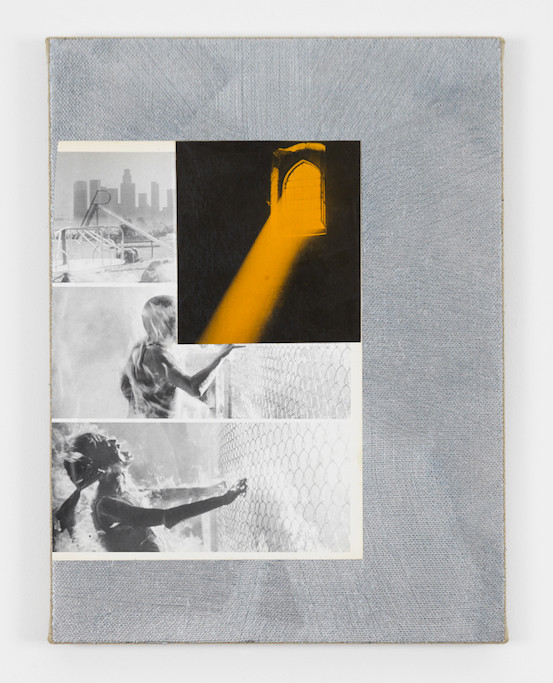
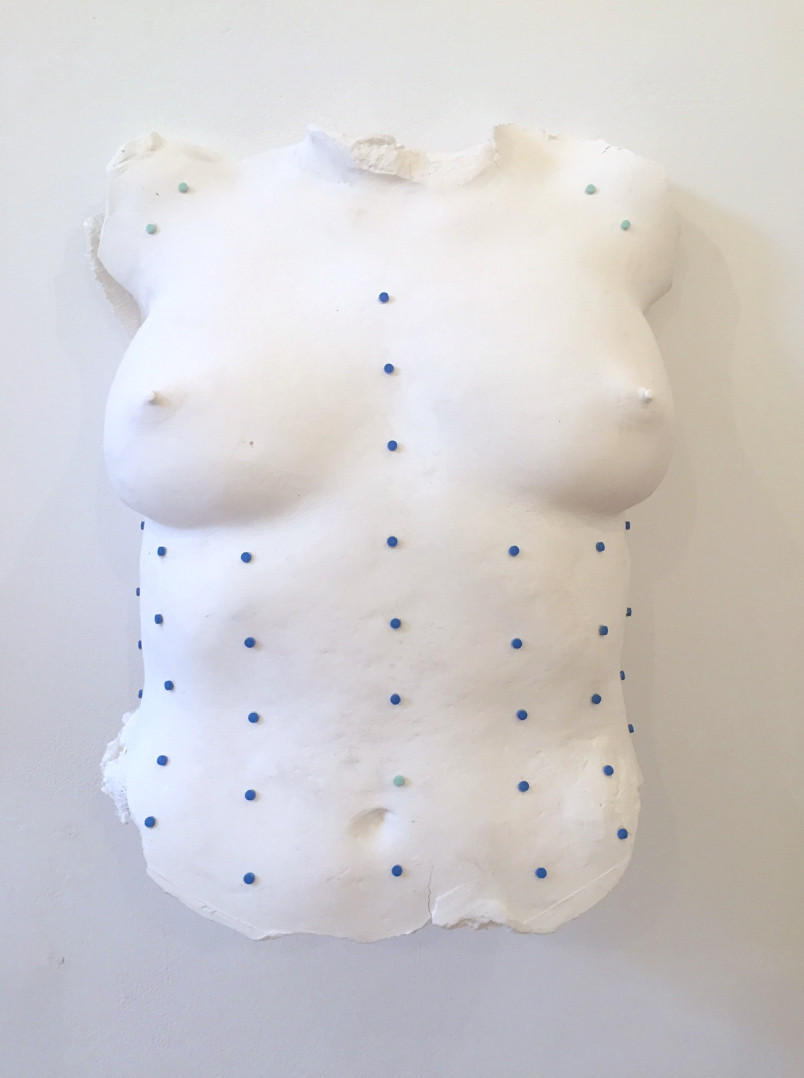
Was that the piece you were guarding?
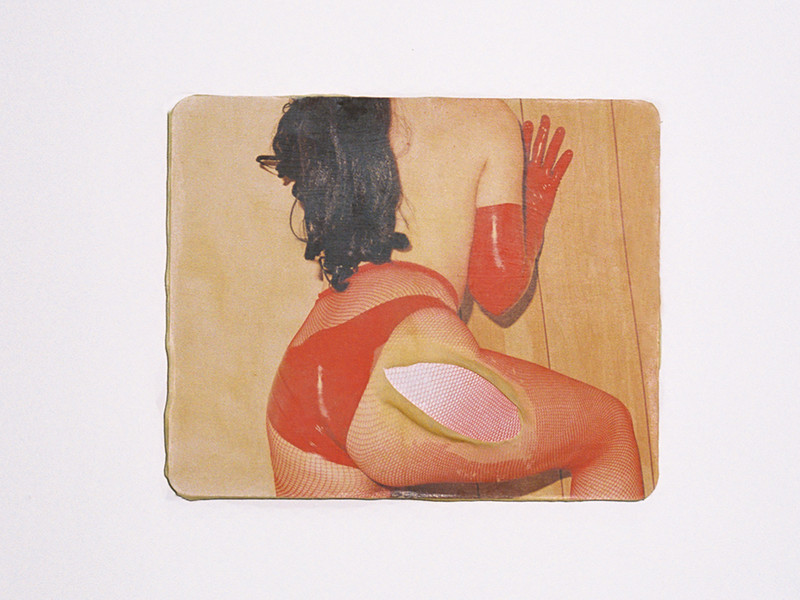
No, that was by Valentina Vaccarella, an Italian artist born in New York. That piece is really important to me and her. It's about her past careers that had to do with her body, sex work, etc. She casted her body and placed her birth control pills that she didn't want to take anymore, because they were driving her loopy, in the cast—they were embedded in the body.
How did you choose which artists you wanted to include? What connects all of the work in the show?
I didn't know that I was going to have such a wide array of people. Like I said, [the show] has been marinating in my mind for two years, so it went through different phases and titles. I had some artists in mind, though. I always want to show an array of established and emerging artists. Unlike the show I did with Wolfgang Tillmans and Carlos Reyes, which was really specific, this show is more of a celebration of the underdogs, of people we thought might not make it—it's a celebration of us. That's the only connection. It's a unanimous, ‘We did it.’
As far as their practices go, they all have ideas and they all need a home for those ideas. That’s all the show is about. There’s no focus on just one person. Jordan Wolfson’s work is in the show, titled ‘Con Leche 2009,’ and while it is the main audio of the show, it’s not the main focus. Jordan is amazing, for me, because his work operates on so many levels, and so does the exhibition. I’m not interested in being irresponsible with the audience—I wanted to guide them, but I also can't tell them what they should be thinking.
How important is it to have a physical space for work, opposed to visual?
It’s crucial for the work to breath. I’ve been thinking about this show for two years. It wasn't ready to come out to the world at that moment. Now, where we’re at politically, we need to have serious discussions about the future and not be too scared to talk about things that might be painful. The show is all about the artists—I didn't even want to have my name on it. It's about the idea of the show, and the space, and the idea of desperately looking for spaces—that’s what homelessness is: searching for a place to put yourself.
‘Don’t trust me, I’m homeless’ is on view now through February 10 at Ed. Varie Gallery in New York.
Art work by: Dana Lauren Goldstein, Valentina Vaccarella, Andre Yvon, Monica Hernandez & Royal Jarmon. All photos courtesy of Restaurant Projects and Ed. Varie.