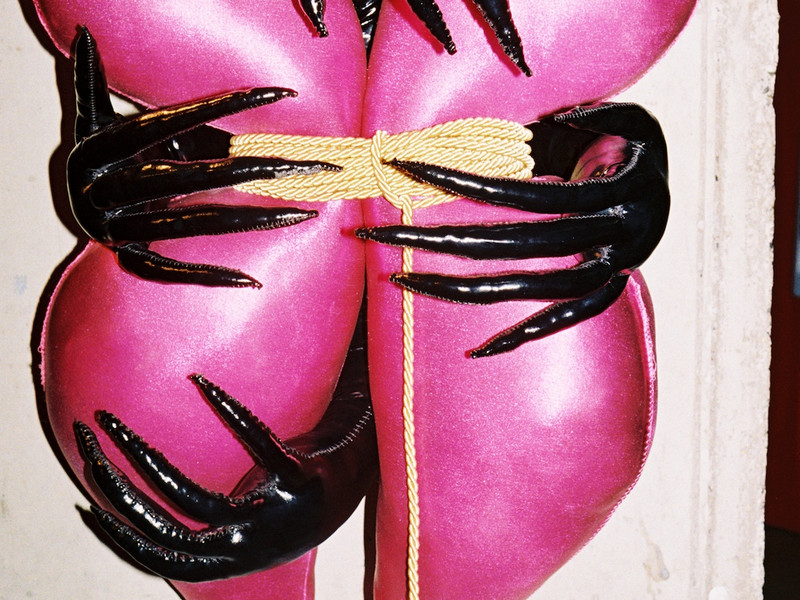
Vulvatious

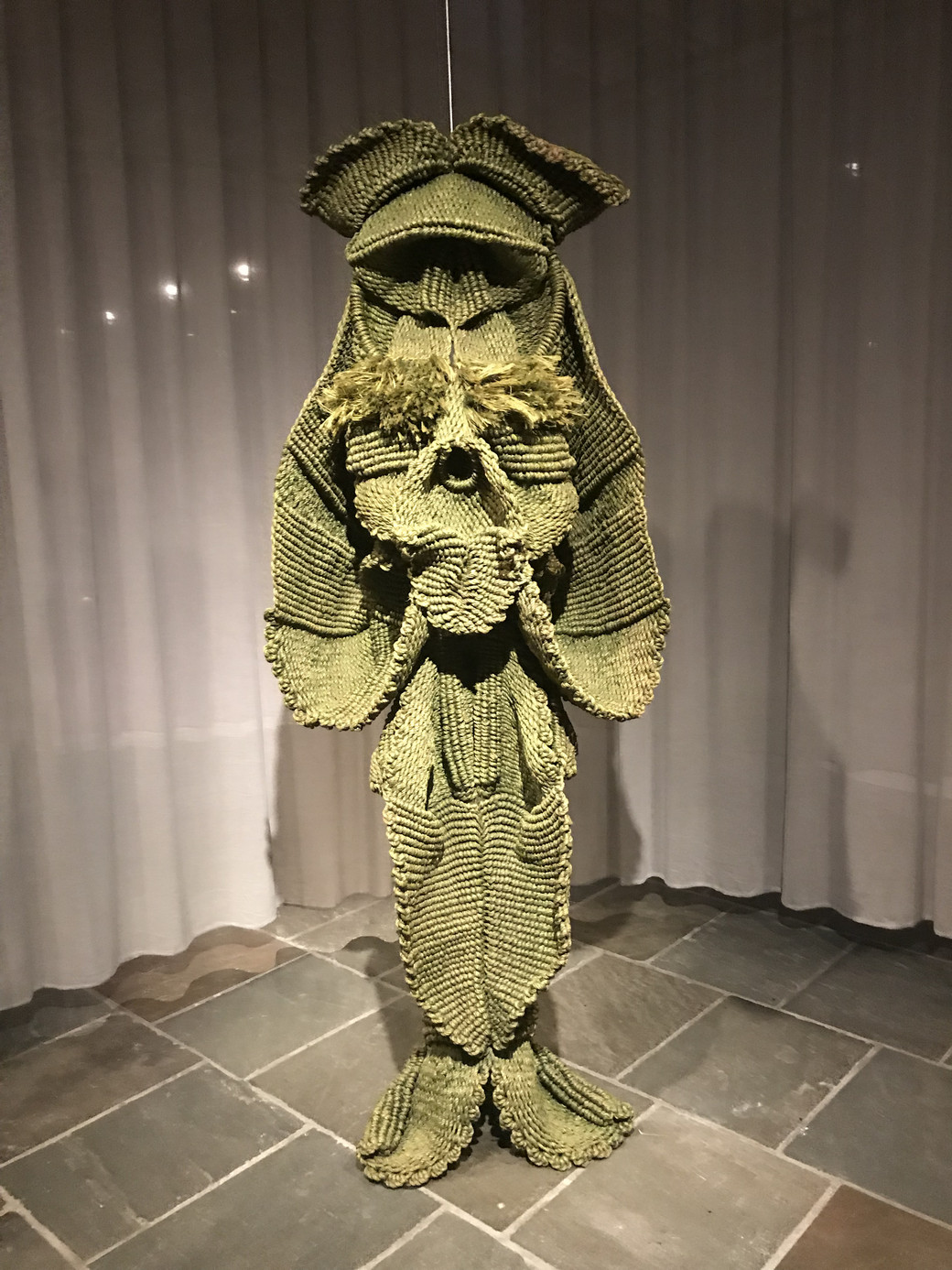
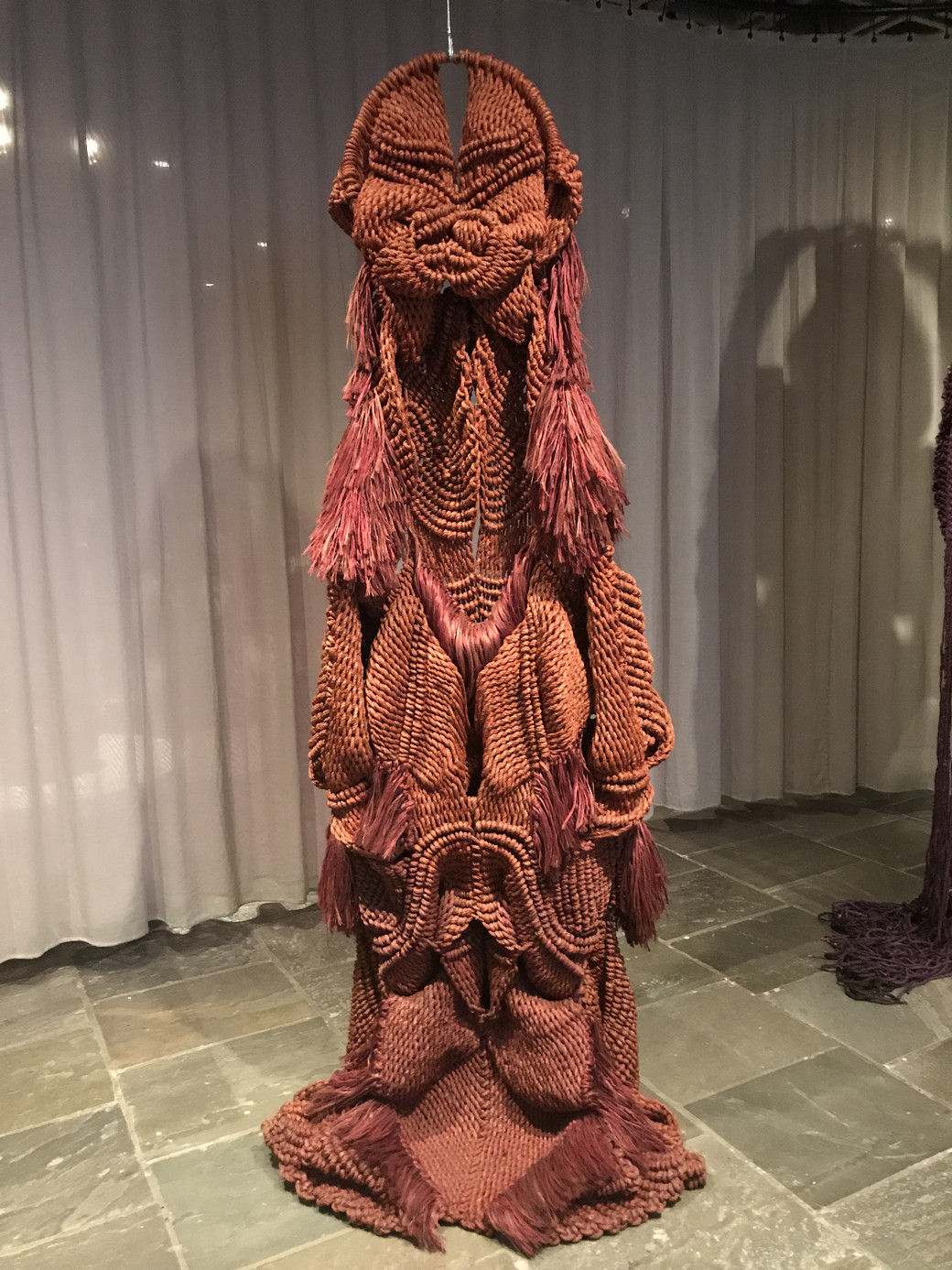
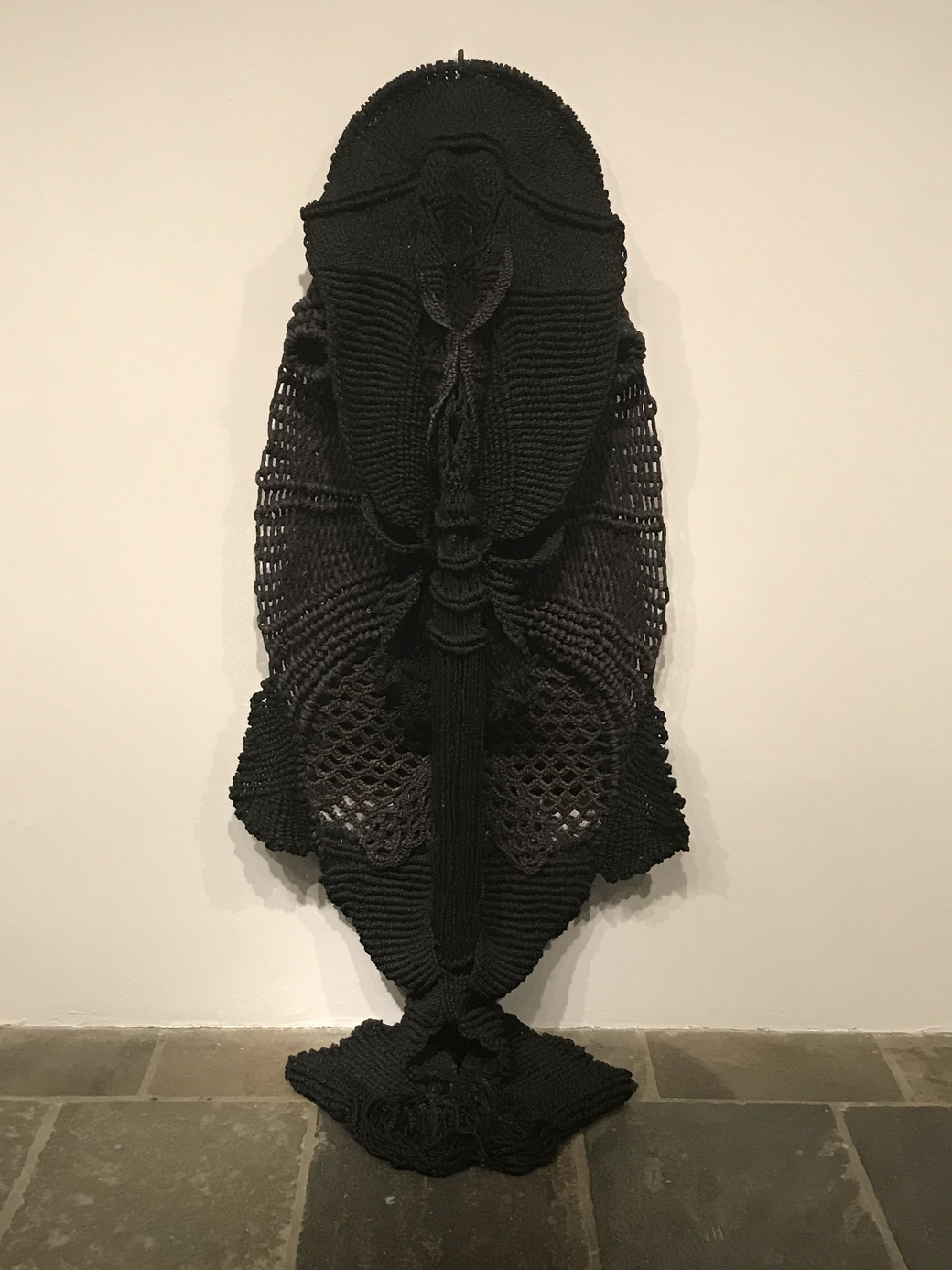
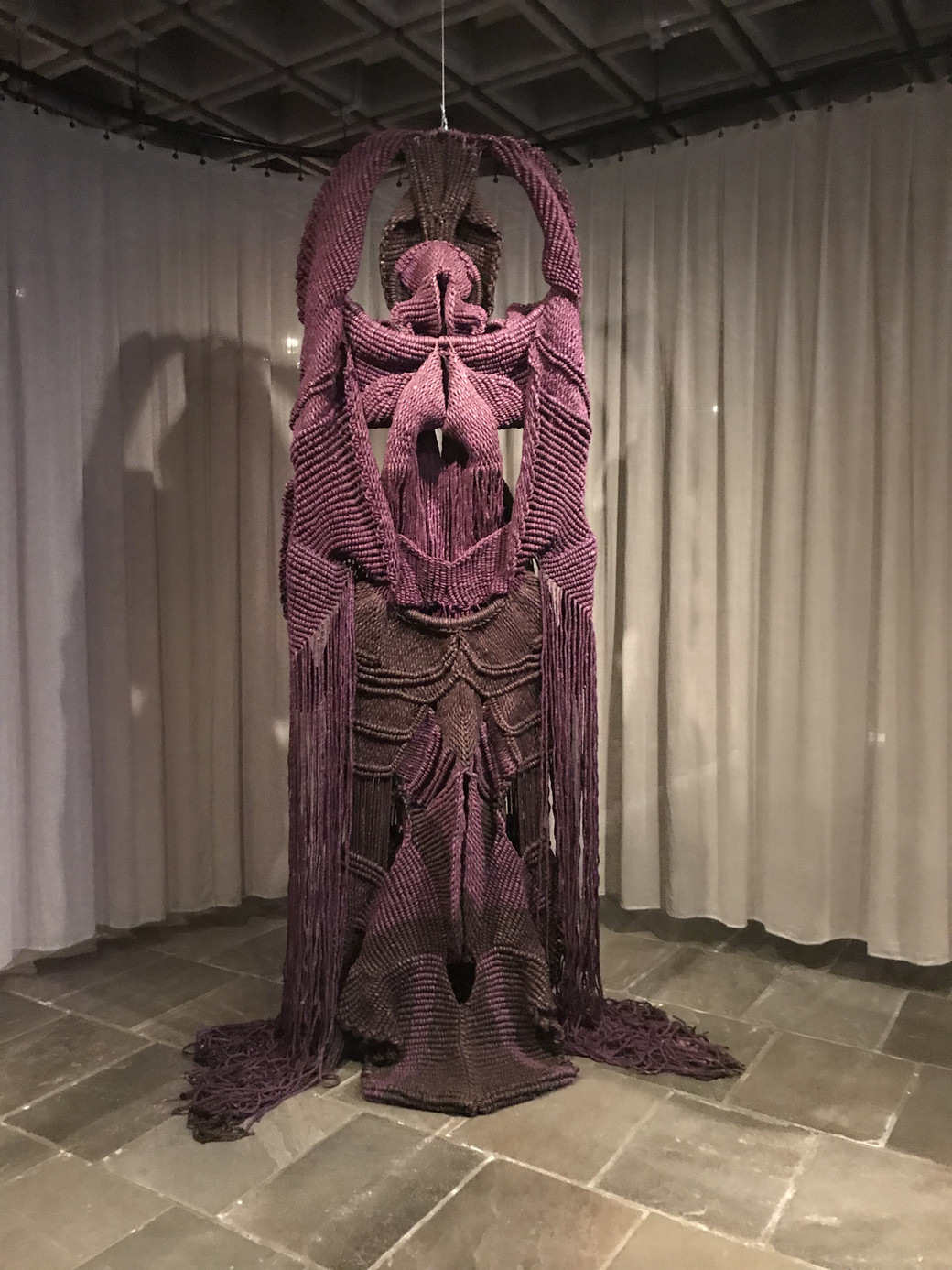
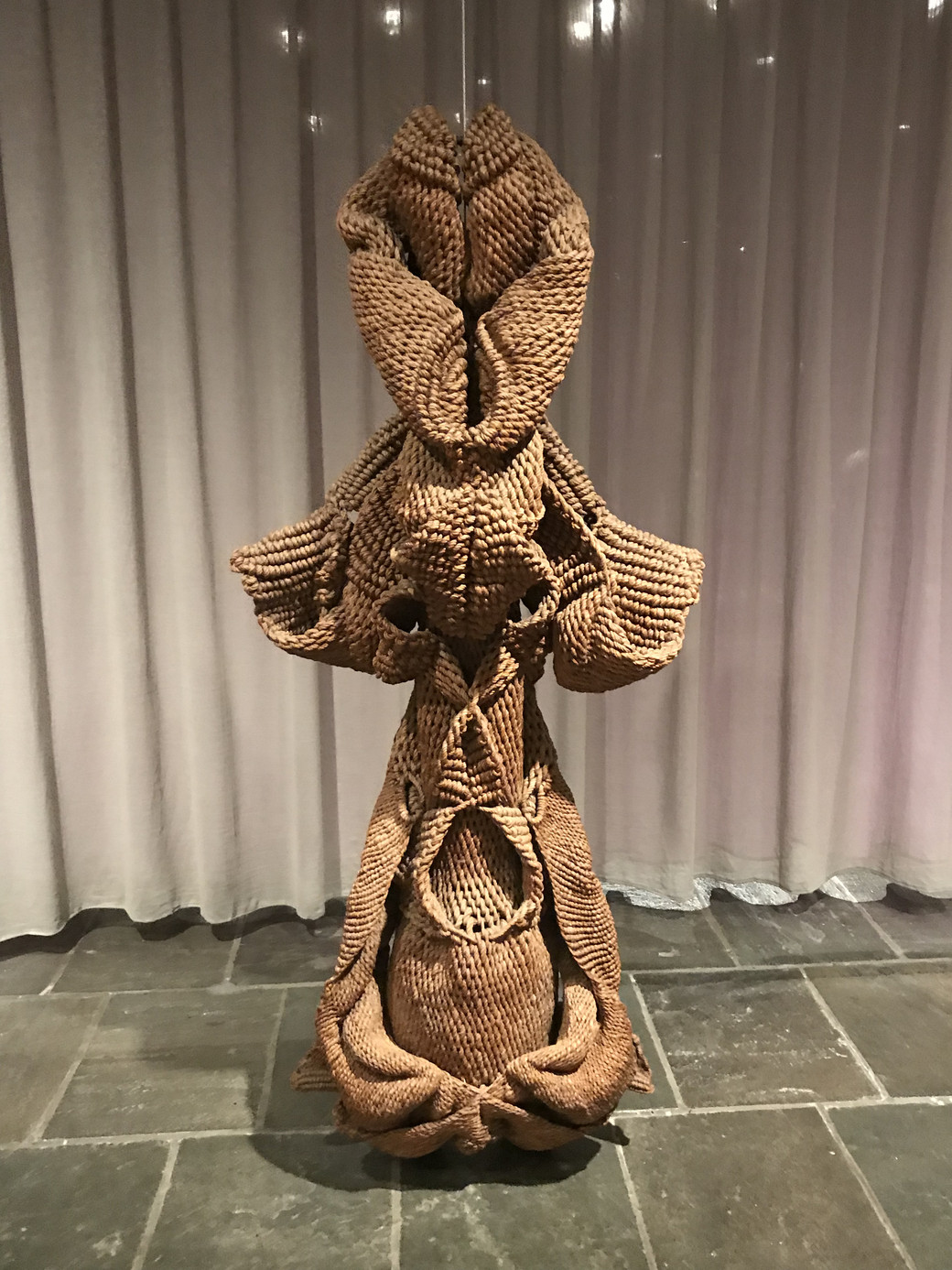
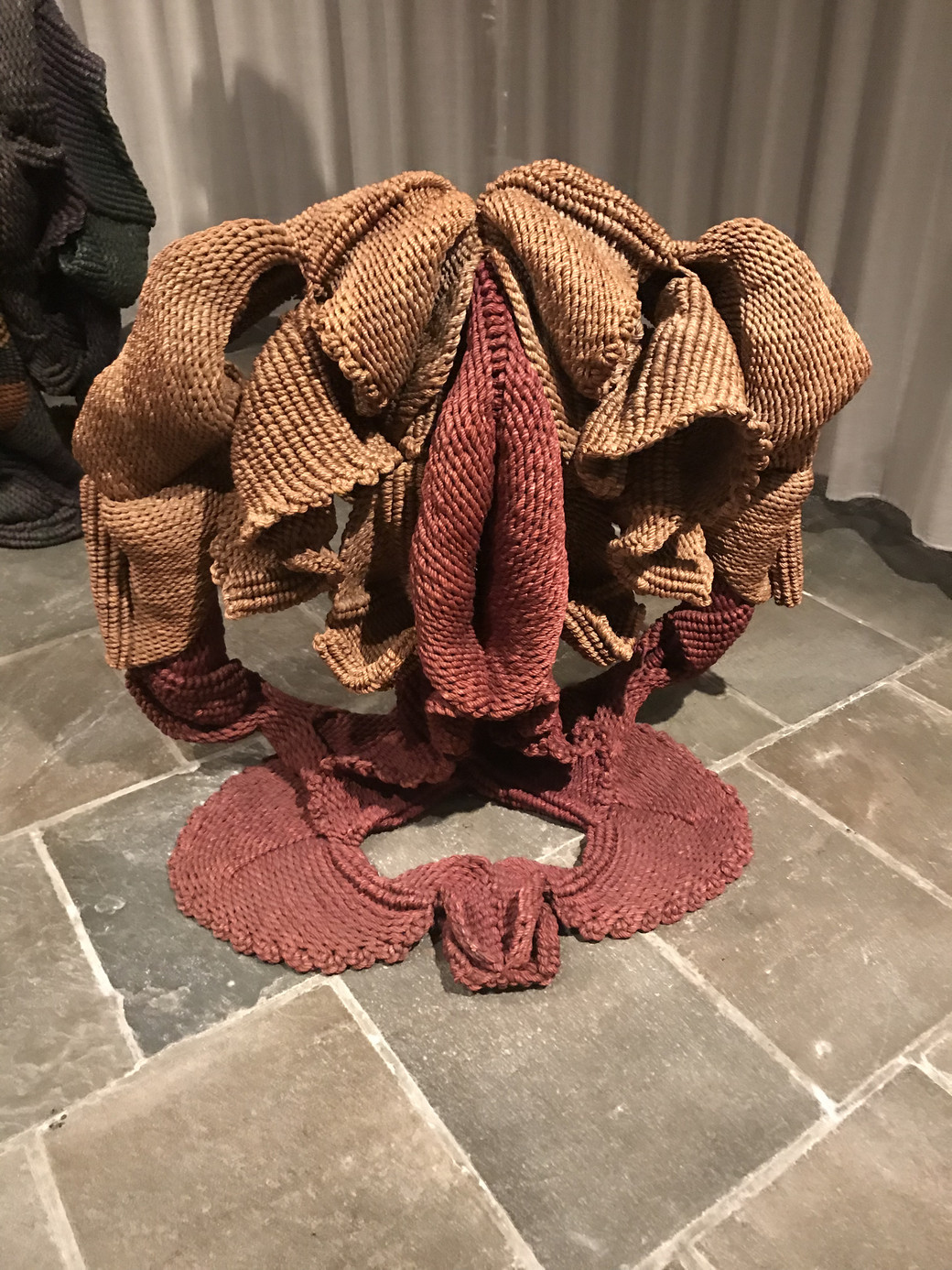
"Phenomenal Nature: Mrinalini Mukherjee" is on view at the Met Breuer through September 29th, 2019.
"Phenomenal Nature: Mrinalini Mukherjee" is on view at the Met Breuer through September 29th, 2019.

Your two new books are centered less around a linear narrative than a set of characters and symbols that are seen from various differing perspectives. Where do these motifs come from?
I had been planning a trip to Ireland and before I went I watched this movie called “The Secret of Roan Inish.” There’s this part in the movie where they describe the selkie creature as being trapped between Earth and Water. That idea – ”between earth and water” – really stayed with me. The idea of two things that sound so huge being finite at the same time was really appealing to think about as a kind of infinity loop in which both parties cancel each other out.
Once I was in Ireland, I was really impressed by the nature that I saw and began to draw from the feelings that came from things such as the weather, electric green grass and the ruins. For me this section of the book felt like a simple feeling of being grateful to be alive and to have my five senses to experience the world with.
Castle ruins are really interesting to me because they are each so unique, no stone is the same. The double helix has become very consistent in my work, and seeing moments of the persistence of life really fill me; moments such as seeing flowers and vines growing through fences. So it became exciting to see all this green overtaking the stones, and I began to imagine how the DNA could be applied to this feeling and the drawings just kind of happened.
What keeps you tied to drawing figuratively or orienting yourself through narrative when you so often veer away from it?
I enjoy drawing certain things over and over again, until I am naturally led to something new. It’s kind of like developing a muscle memory. I very much enjoy examining one idea from multiple angles and seeing how far something can get pushed. In terms of the narrative as a whole – I feel that I have always been more interested in the many stops along the way of a journey rather than an A to B way of thinking.
Also, working in a figurative fashion serves as a form of processing; it’s very cathartic. I am inspired by artists that have a very specific, obsessive persistence in their work. Someone like Keith Haring is very inspiring to me in how he really pushed his narrative through this one form of line but found so many different avenues to express on that journey. Another artist that I am inspired by is Aubrey Beardsley and the precision and craft that he inserted into everything he did. I feel a deep connection to that way of operating. I feel that drawing is the most honest medium that I can work in and it’s something that I truly enjoy. There are just certain things that I can only say with a line and it’s liberating to have a language to work within and to keep finding new sentences.

Much of your work in video and performance has been highly collaborative. Your two new books seem to me in a way the most personal of anything I’ve seen from you. What are the ups and downs of making work by yourself?
Well, while a lot of video/performance work has happened, my journaling process has remained consistent since I was 18. I am currently on journal number 25 and use these books as a way to remember and resolve. My drawings have been my most precious form of expression since I was 18 and I feel very good to be moving into this practice of focusing mostly just on that. It’s what feels the best for me and actually, the drawings really did begin with me doing them in the backs of classrooms. So with these two different books I wanted to give people a chance to see a more polished, finished kind of work, as well as a book that is more inspired by my journaling practice. I wanted these books to feel personal in two different ways; one being a loving, vulnerable growth, and the other showing a messier, sadder side of me. The past two years have been a very important journey for me in which I have learned that I really only can give my fullest attention to making the most vulnerable work possible.
Do you feel there is a responsibility for artists to be vulnerable?
I feel that historically the best art has come from a form of self-preservation – a need to decode and resolve one’s trauma – and I feel that a lot of this work has come from artists who are not white cis men. Not to say that that work wasn’t serving some spiritual purpose to those kinds of artists. It seems to me that putting certain work in a box as “self-care art” is misinformed because through-out time some of the greatest works made have been as a form of self-care and they are just seen as amazing works of art.
How long it took certain works to be regarded as high art is another question entirely. Someone that I think of in particular is Frida Khalo and the trauma that she endured in her life and the work that she produced; that was her process and her pain and the paintings she created were the outcome of that. Art is meant to be a form of therapy and healing and I don’t think that it necessarily needs a genre to be validated like that. Given our times, I think that it’s more important than ever to allow yourself to be expressive and share what you feel. I personally find myself being most drawn to work that is vulnerable because when you share your own power and truth, I think that makes other people feel like they can open up too. I know that in my own life, since the passing of my best friend, I only have the capacity to make work that is self-reflective and sticky and hard and vulnerable because that’s all I know now. With all the pain, loss and hardness these times come with, it can also can bring out internal strengths and beauty that we maybe didn’t know we had.
The characters in Fractures in My Structures sometimes feel autobiographical; sometimes they take on the decorative quality of an illuminated letter or the talismanic sensibility of a tarot card. Who are they to you?
Well in the past year, I have been definitely inspired by illuminated manuscripts. I like to think about them as comic books. I love how much information is being given to you in this highly flat 2-d World. That’s something that I feel has remained consistent throughout my work is information overload. I love that. I love having to examine something over and over again to find a new idea or detail that you didn’t see before. These figures are sometimes me, they are sometimes my best friend, they are sometimes no one in particular.
What is next for you?
Drinking water, eating healthy, telling my loved ones that I love them. I am also currently working on a solo exhibition that I will be having at Little Sister Gallery in Toronto in September.

What is your idea of perfect happiness?
Being with you on vacation.
What is your greatest fear?
Losing you.
Which historical figure do you most identify with?
Sonia Delaunay.
Which living person do you most admire?
Kim Gordon.
What is the trait you most deplore in yourself?
I can be too judgmental.
What is the trait you most deplore in others?
Not being able to see that they could do more in their lives.
What is your greatest extravagance?
Food!
What do you dislike most about your appearance?
My red-cheeks.
Which living person do you most despise?
Oh man, I don't want to say DT but he's pretty despicable.
Which words or phrases do you most overuse?
Amazing! Hilarious!


What is your greatest regret?
Not having met you earlier in life.
What or who is the greatest love of your life?
Do you even have to ask? My husband Jason Grisell, I couldn't possibly ask for a better partner. You make me better.
When and where were you happiest?
The day I got married.
Which talent would you most like to have?
I wish I was an amazing tailor.
What is your current state of mind?
Fairly relaxed, a little bit worried, constantly planning.
If you could change one thing about yourself, what would it be?
I'd like to have less anxiety and more money.
If you could change one thing about your family, what would it be?
They would get along better.
What do you consider your greatest achievement?
Moving to New York and teaching myself fashion design and all of the techniques I use to create.
If you could choose what to come back as, what would it be?
A rock star.
What is your most treasured possession?
My book-collection.
What do you regard as the lowest depth of misery?
Grief.
I miss you every summer
When Dad was alive
When David was alive
When Mom was healthy
I grieve for the days
When the weather was so hot
The sun so bright
The sky so clear
The wind like a trickle
The trees swaying
The lawn freshly mowed
The rumble of the cars slowly making their way down
The cobbled street in front of our house
Reading books on the front porch
Riding bikes with Johnny to the pool
Playing baseball with a fat red whiffle ball bat and tennis ball
Jumping out of the magnolia tree on a make-shift bungee cord
Fashioned from a popped bicycle inner tube
Walking down the railroad tracks
Wading through the creek
Telephones ringing as you walked by the neighbors houses
Their loud hellos
Picking berries with Dad and smelling like the vanilla
We dabbed on to ward off mosquitos
Hearing Mom’s laugh
I miss you Iowa
I love you
But I don’t want to live with you anymore.

Still Water, Circling Palms, which runs through August 3, is a frankly trippy look at how blurred lines get when it comes to natural disasters (like hurricanes) in the digital age. Now that I’ve probably confused you, like how the fuck does she turn screenshots into stretched linen?, keep reading to hear the artist explain her process, herself.
Loom weaving is a very old art form, and internet trends are, of course, new. What first inspired you to merge digital and tactile art making processes to create your work?
I first fell in love with weaving’s relationship to the hand, then fell in love with it’s relationship to the digital. The smallest unit of woven cloth where one single thread crosses another is like a pixel and operates on a gridded logic with a horizontal and vertical structure at its core. Weaving also has a direct link to early computing. The earliest computer maker borrowed a punch card system from the industrial Jacquard loom to store and process information. So there are already established links between computing and weaving. I’m playing with that even further in my work by looking at contemporary digital culture through a slow and tactile lens, using hand weaving and printing processes combined with commercial inks and synthetic materials that are common in advertising, marketing and fast-fashion industries.
It’s interesting that you use random algorithms to create your images. What part of your process is planned, or structured?
I search specific hashtags and geotags or browse websites and take screenshots of images and text I want to work with. This is a slower process, but allows more specificity in my collection strategies than sifting through huge dumps of images that I was amalgamating with the automated process. So the way I gather source material is relatively structured, but also unplanned in that I don’t go into a specific category or hashtag with an expected result. I let trends reveal themselves and find repeating motifs or unexpected images. The final weaving process is where I control how much of the source files are left legible or are distorted and erased.


Is social media fun for you, do you use it for research, or both? How would you have made your work before hashtags?
Social media is a part of my daily routine. I use it for convenience and to keep up on things. I also keep a critical eye on it and question the way it’s changing our self-image and public presentation of ourselves. Social media is a part of our national conversation now--our president uses it incessantly and unpredictably. It’s pretty crazy that a tweet has the power to spread fear of a nuclear attack. I’m interested in how social media is affecting us personally, emotionally and politically. Before I started collecting images through hashtags and geotags a lot of my work looked at language and the ways we communicate online. So I’ve been interested in digital culture for quite some time and feel compelled to respond to it.
Speaking of digital culture, what was your AIM screen name? And if you had to make up an away message right now, what would it be?
happymargo and ¯\_(ツ)_/¯
Would you rather live in the past or the future?
I’d love to get a glimpse of the future. Technology is definitely progressing more slowly than I thought it would growing up, especially after witnessing the birth of the internet. I’d like to see it go somewhere radical like 100% sustainable energy across the planet, or accurate yearly flu vaccines.


As a Detroit-based artist, how has the water crisis in Flint — another Michigan city — impacted your environmentally-minded work? Is this the “still water” the title of your show refers to?
The water crisis in Flint has been such a huge disaster and it is still not over. In Michigan water is always a big topic, especially the levels of toxicity and contamination in our waterways. The chemical and algae levels in the Great Lakes are common conversations, and I grew up hearing stories of the Rouge River, a major waterway in Metro Detroit, catching fire in the 60’s from huge levels of oil and pollution. We are very connected to water here. Detroit’s infrastructure, like Flint’s, is aging and we lack funding and political support to update things. These issues are very present on my mind and water is a big theme in the work I’m currently making.
Do you think the internet has desensitized us or empowered us with regard to the issue of climate change?
I think it has empowered us. Both to act, as so many social media campaigns help raise money and effect real change, and to empower through knowledge. The internet connects us in ways that make it easier to empathize and understand others. But it’s also a double edged sword. It puts up a wall of anonymity that can spread fear, misogyny and hate.
Yeah, social media is necessary, but so exhausting too. We all need to unplug from time to time, honestly. Is your ideal vacation: in a city, on a beach, or off the grid?
On a beach with plenty of shade, SPF30, and good WiFi.