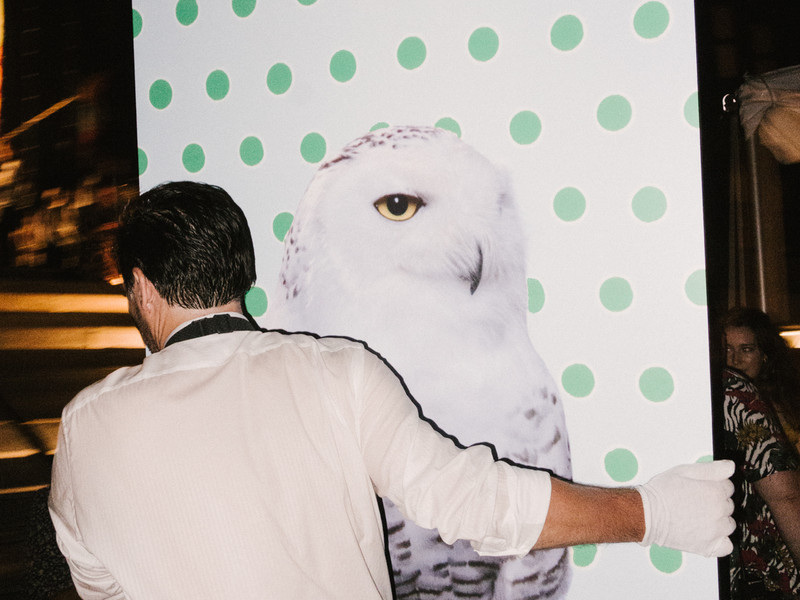
Vulvatious

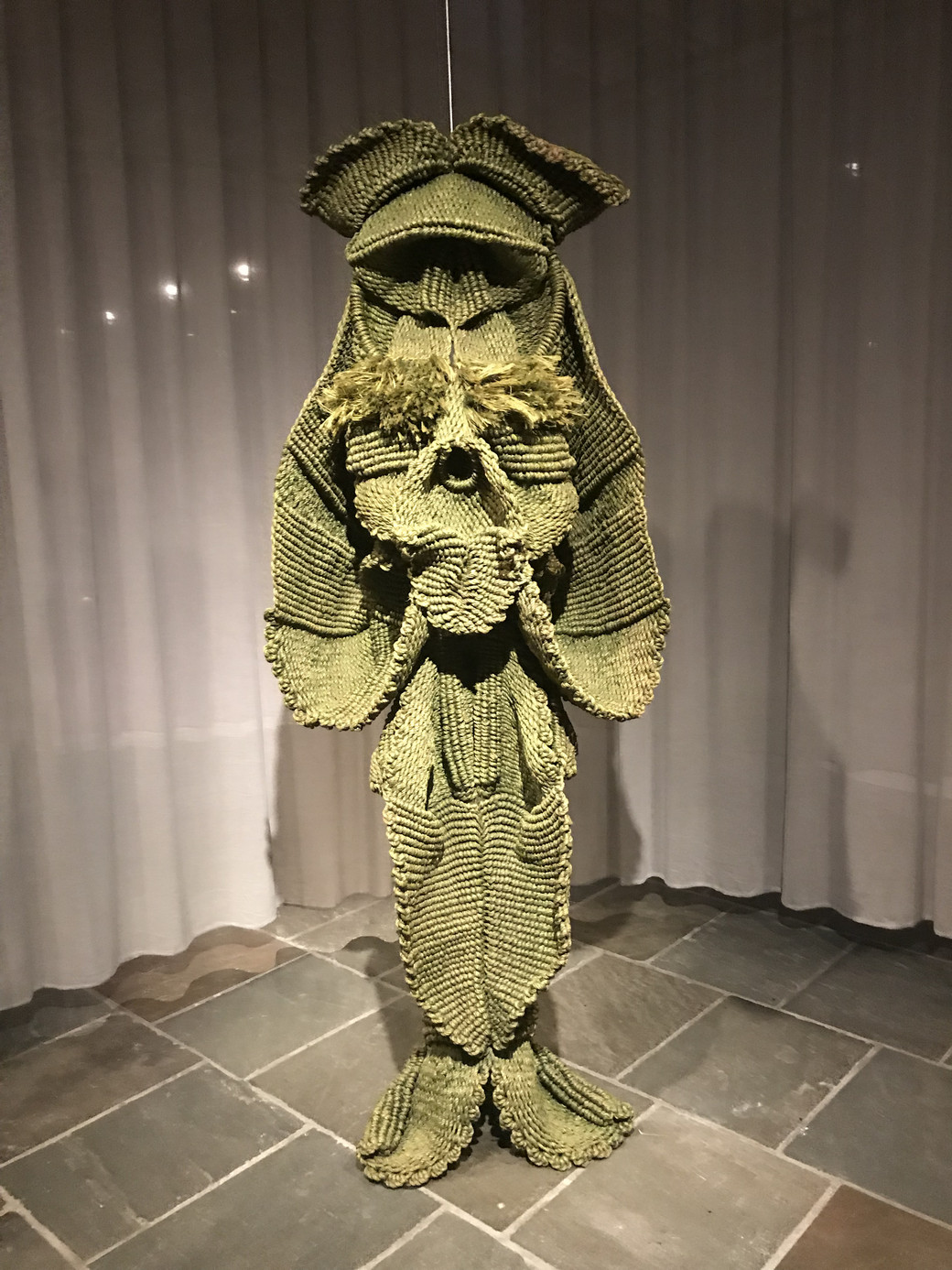
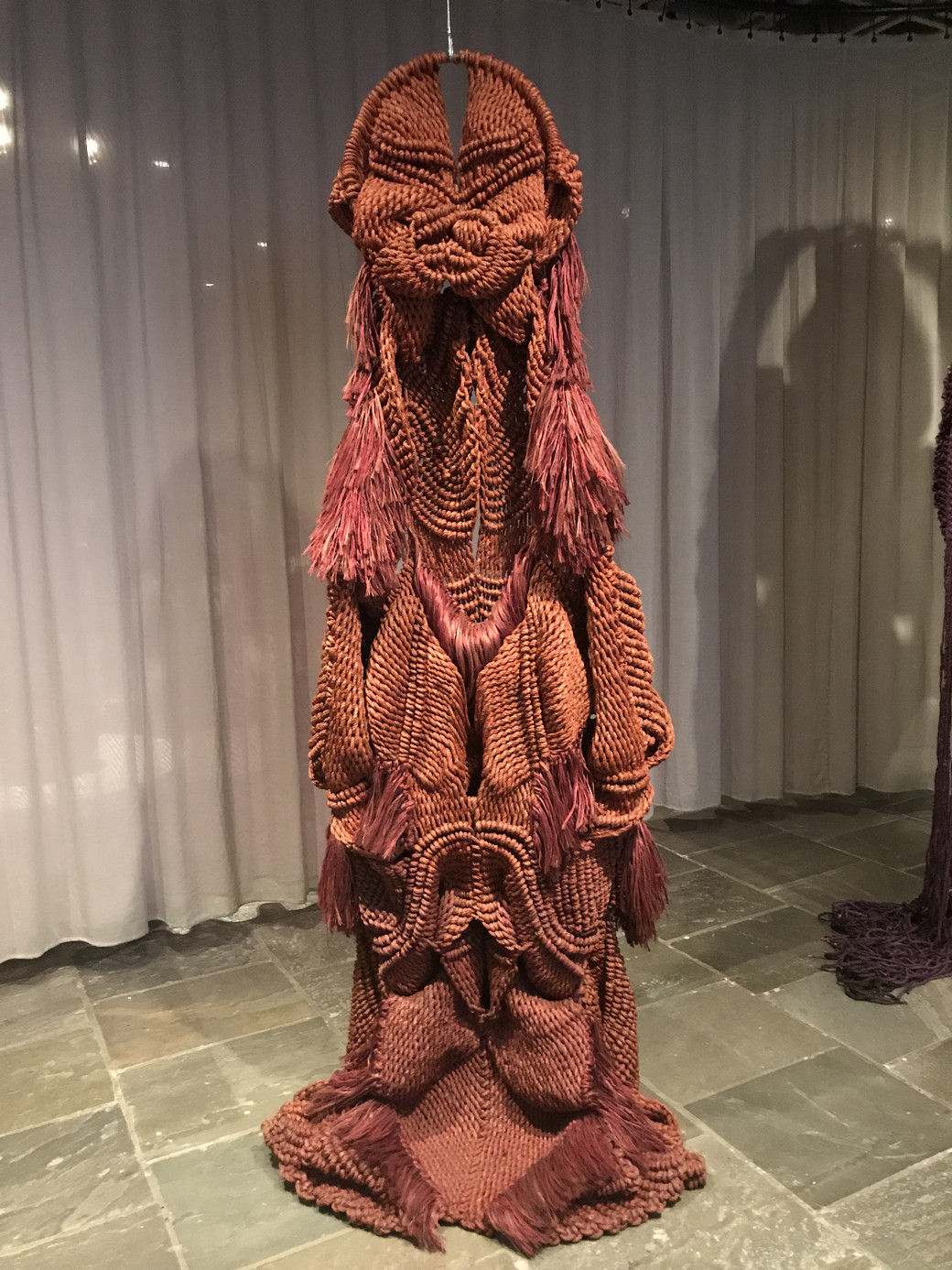
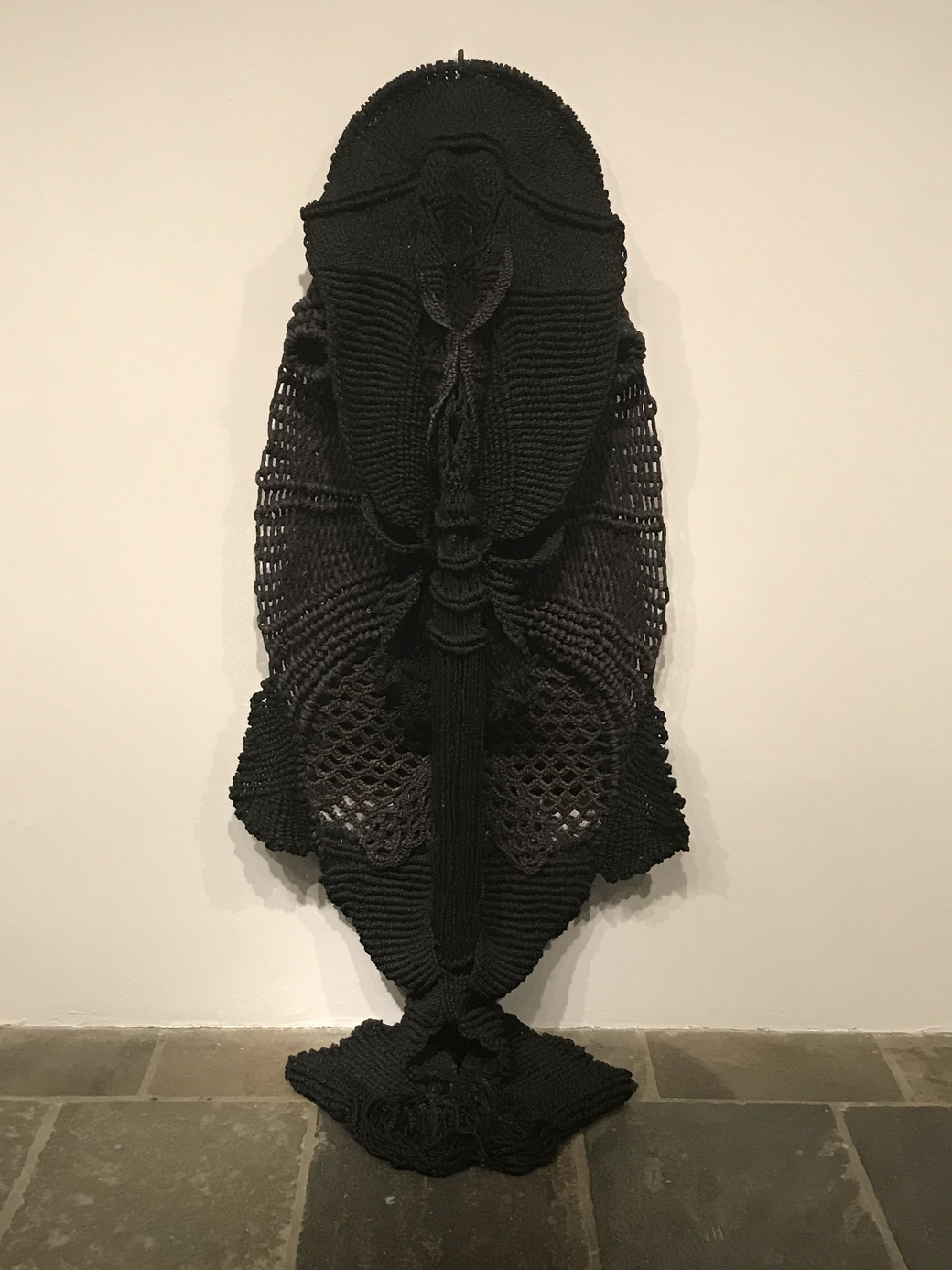
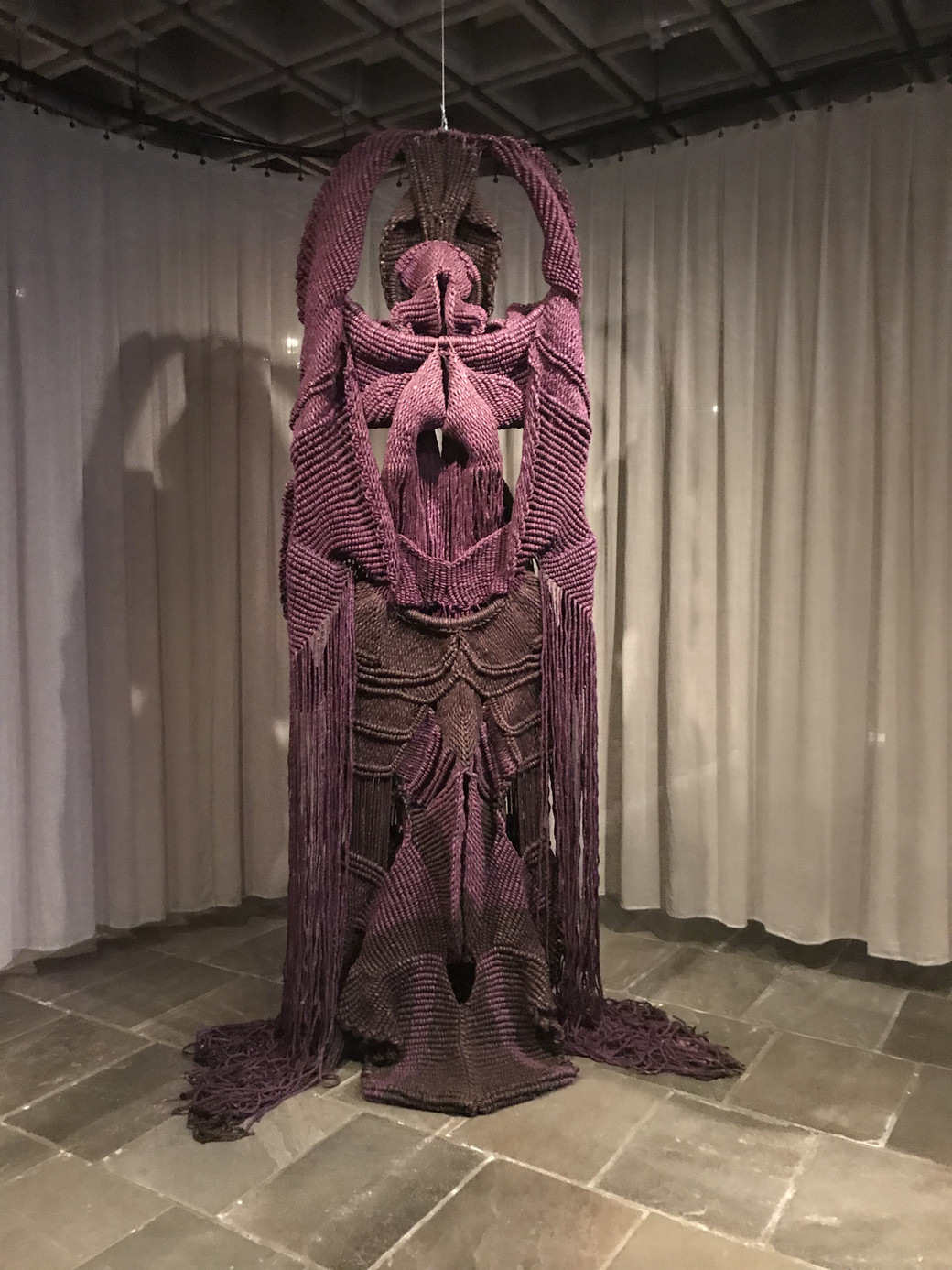
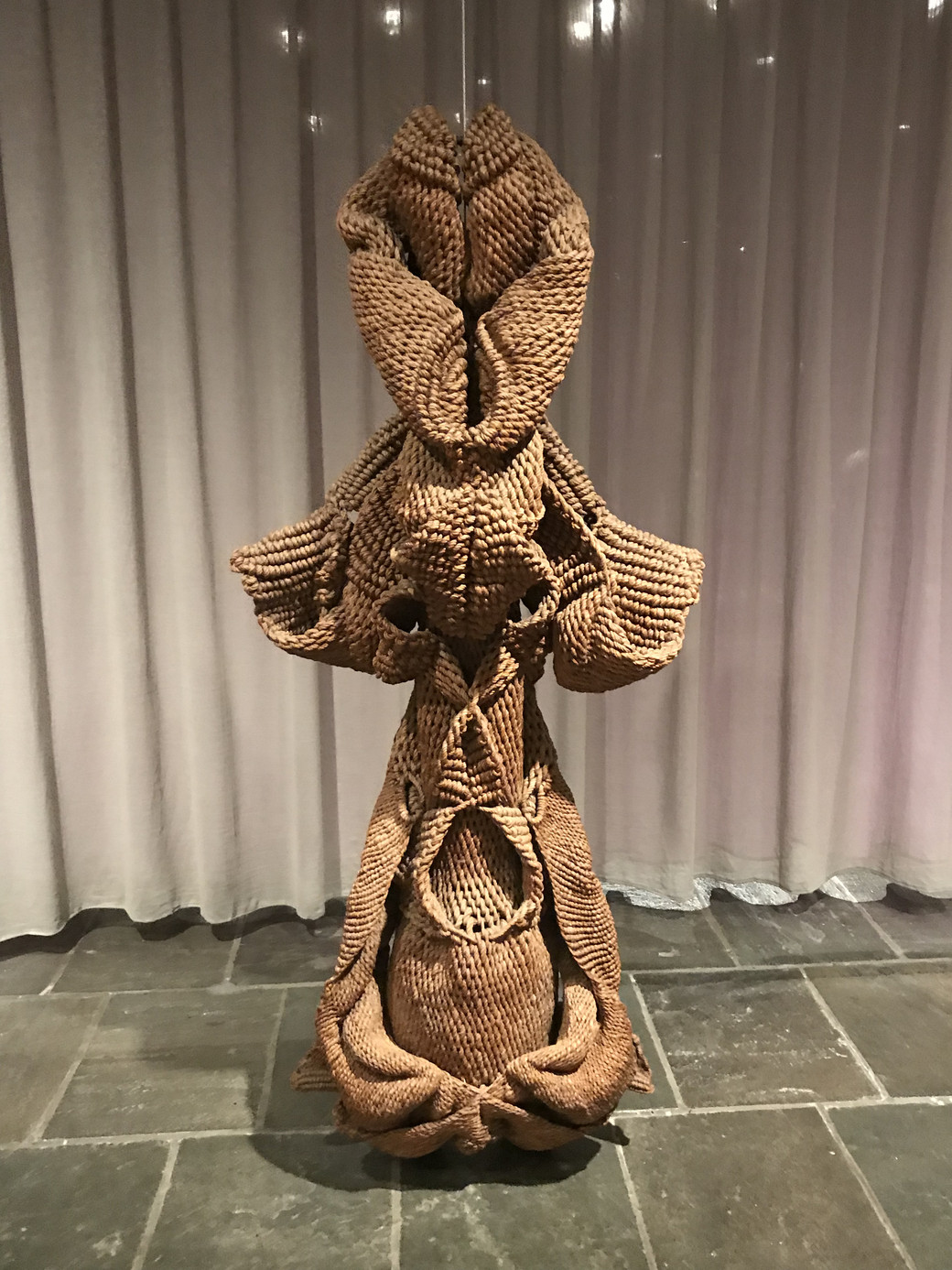
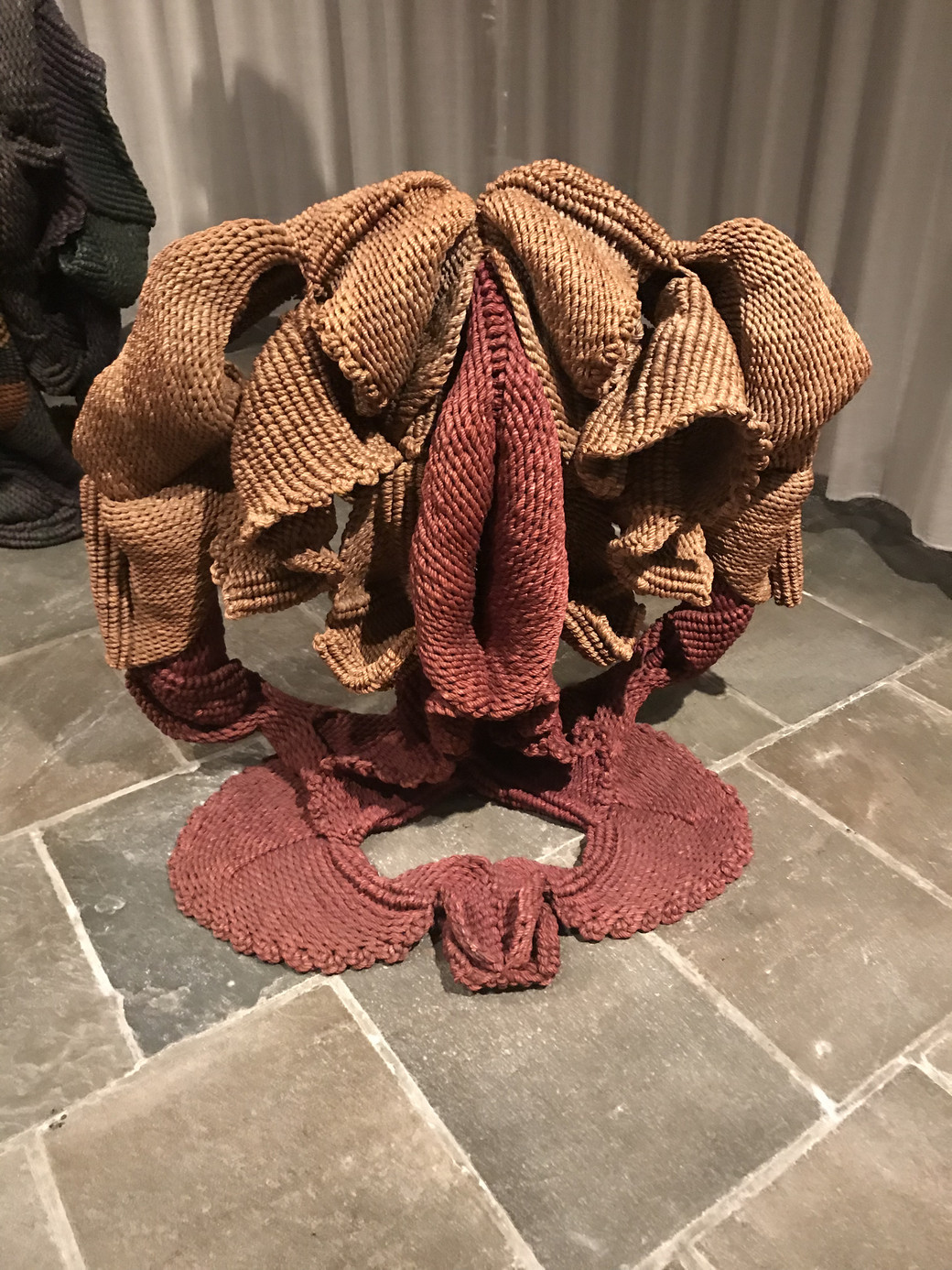
"Phenomenal Nature: Mrinalini Mukherjee" is on view at the Met Breuer through September 29th, 2019.
"Phenomenal Nature: Mrinalini Mukherjee" is on view at the Met Breuer through September 29th, 2019.

The critical transformation of the psyche — the death of the “false self” and revelation of the “true self” that is defined as the moment of ego death — is the jumping off point for curator Brooke Nicholas' show, den of my ego death, a part of the SPRING/BREAK Art Show, a curator-driven fair.
Nicholas asks a crew of artists, including Carly Mark, Jillian Mayer, Rachel Rossin, Zadie Xa, and many more, to react to her own revelatory response to this year's prompt, A Stranger Comes to Town, which explores the concept of "otherness" in the context of culture, and media.
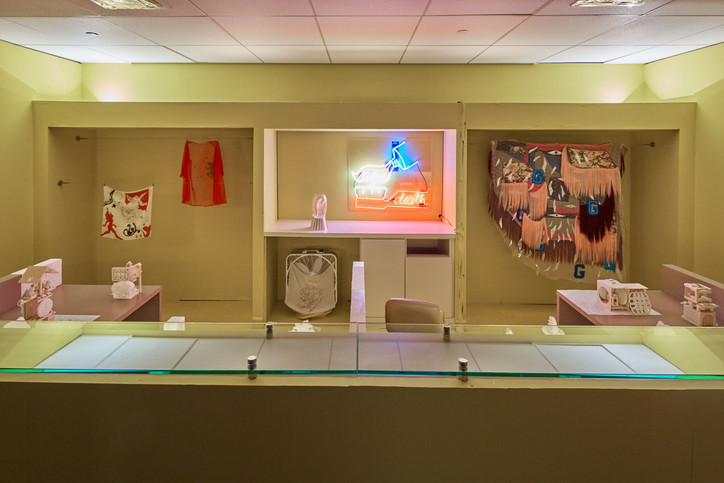
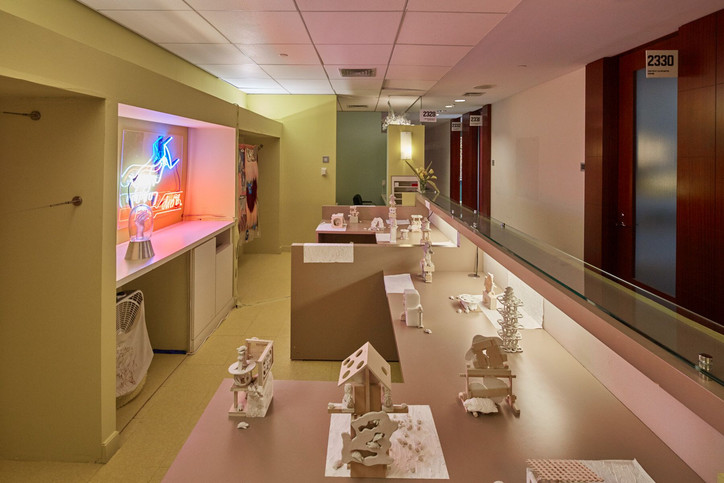
Inspired by bringing to light the idea of loss of identity to egotistical energy, the artists offer an emotional display of dreamlike scenes, steeped in a sense of bravery which veers into childlike idealism, while embodying an equally messy mixture of adulthood icons. As much as it is art— adorable art at that— den of my ego death is an amalgamation of uncomfortable questions, a philosophical puzzle you can purchase. But with our world well into it's overall identity crisis— this could just be the cure. Because we are all the heroes of our own lives, aren't we?

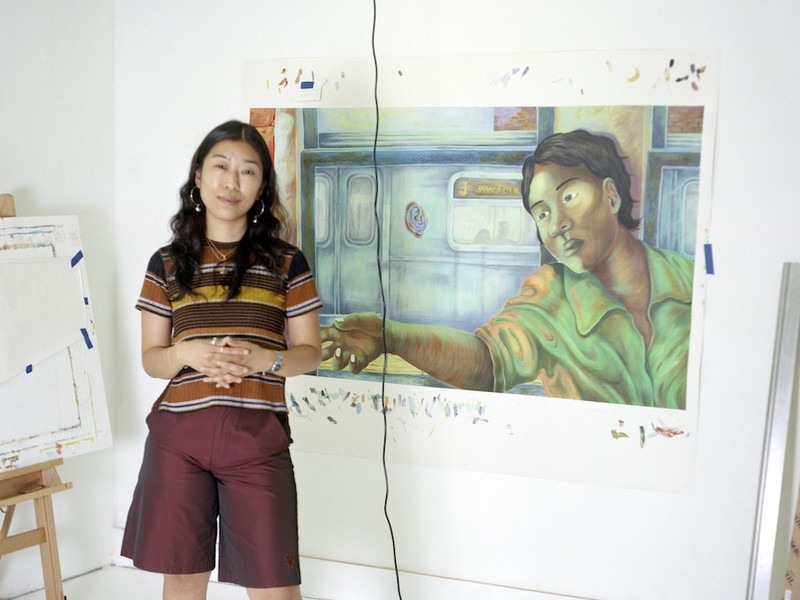
office caught up with Langberg to discuss James Baldwin, imagination vs. reality, and NSFW.
I’m embarrassed to say that I’d never read Baldwin’s magnificent essay about America and building identity from which you derive your show’s title — how did that inform your work? Were any pieces made in direct response to this essay?
You should! It’s so good and pretty short. I read Baldwin for the first time in my first year of graduate school and he’s been a huge inspiration ever since. Although none of the paintings in the show reference the text directly, the essay’s overall strategy of communicating politics through personal narrative is how I want my work to be read. In Nothing Personal he talks about how love is the ultimate tool to overcome any obstacle-from space and time to indifference and bigotry. The tenderness and empathy in his writing has all I want from my own work. For me, Baldwin represents the idea that depicting someone with enough care can reveal the interiority of both subject and artist, and create bonds that transcend differences.
All the people I paint are close friends, lovers, and family members, and whenever possible I paint them from observation — so it’s a pretty intimate process. I think a lot about the work of other queer artists like Wolfgang Tillmans or David Hockney, where queerness is not just a subject, but a lens with which to view the world. I want to depict queer sexuality or relationships as part of a broader context of everyday life — which is how I experience it.
What was it like growing up queer in Israel? How does that come into play in your art?
Where I grew up in Israel is pretty liberal so I never encountered any backlash from my friends, and my family is very accepting and supportive. I also went to art middle school and high school so basically everyone around me was gay. The first time I experienced anti-gay sentiments was when I was doing my mandatory military service. I was an airplane mechanic and I think for most of my peers and commanders I was the first gay person they were close with. I remember one of the officers in the unit saying he would rather have a criminal son than a gay son, and so on. But as they got to know me we became friends and I felt like an integral part of the unit.
As far as my work, it has less to do with being Israeli and more to do with being Jewish. My dad was born in Poland a month before the German invasion. To survive, his mom paid a Polish farmer to hide her in his attic and she put my dad in a monastery for the duration of the war. When the war was over she kidnapped him and they immigrated to Israel. While my dad and grandmother were able to escape, almost all of their family were killed. There are a lot of parallels between anti-Semitism and homophobia, and I think my family’s history was what drew me to focus on the human experience as my subject.


A lot of “modern” museum and gallery exhibitions are avoiding paintings like the plague. How do you feel about this, being primarily a painter yourself?
That’s funny; I really don’t see it that way. Especially here in New York there is such a live, diverse, and exciting conversation about painting, and it seems like painting still has a sense of urgency. In the last five years especially there has been so many shows about abstraction, culminating in the Forever Now show at MoMa. And more recently, there seems to be an explosion of figurative painting shows and articles focusing on portraiture and intimacy in particular. So actually I feel that there is a great context to the work I’m making right now. But of course even within New York there are so many different co-existing art worlds, maybe I’m just in my own happy painting bubble.
How’s Queens? Good queer scene? / art scene?
I love Ridgewood. A ton of artists live near by and it feels like the more chill and cheaper version of Bushwick. Before starting at the Sharpe-Walentas Studio program my studio was a few minute walk from my apartment at 17-17 Troutman, which is a huge studio building. So many cool artists are in that building and that whole area feels very vibrant. Because there are so many artists around all the bars feel a little queer, but I do have to admit that if I want to gay it up I usually go to Metropolitan Bar in Williamsburg, which is my absolute fave.


If you were an animal, what species would you be? Why?
A mermaid, obviously. I was obsessed with Ariel growing up, and my first oil painting ever was of her! I think every little gay boy can relate to feeling out of place and of course to collecting George de La Tour paintings in your underwater secrete cave.
Which is more important: imagination or reality?
Ah! That’s a hard one but I would have to go with imagination. When I was in graduate school I took George Chauncey’s class ‘Gay and Lesbian American History.’ One of the main messages of the class was that being able to imagine a different reality is the only way to bring about change. Which is extremely hopeful on one hand, but also makes the point that progress is not a natural process but the product of the hard work of many inspired individuals. For me, the ability to imagine and create a world in my paintings where queerness is valued and normalized is one of the main reasons I make work.


Porn: does it matter? Is it artistic? Is it useful?
Despite my paintings being quite explicit at times, I’ve never used porn as source material. My relationship to my subjects is a huge part of my work so they’re all derived from personal experience. I think that porn, like Google searches, is a reflection of what people want to see and what excites them. So as a cultural product it can be a great tool for artists, just not for me.
What do your subjects think of their appearances in your work?
It varies, some people are really into it and some people are doing it because I asked. But for the most part I’ve been surprised with how willing and excited people are to be painted. My friends are almost all artists so we’re used to being each other’s models, but for others I think it’s a novelty. The only person to be actively discontent with my depiction of them is my mom actually, who was like, ‘yes it’s me,’ which I thought was really funny.
Don’t miss his show at 1969 Gallery, on view through April 22nd.
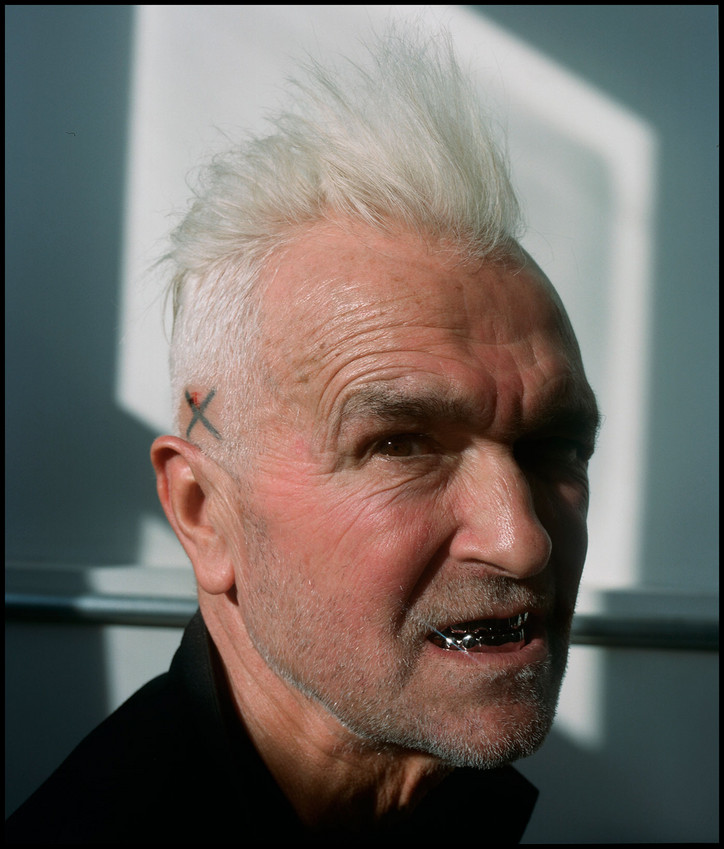
What would you consider your office?
Actually, you know what when I lived in New York, one of my office spaces was under the Williamsburg Bridge. I like street corners, but the Williamsburg Bridge was a great place for it. Under the bridge, I could do my screaming performance because there is lots of noise, and I don’t disturb anybody. So, that was also a good secret place. You could escape from being watched and heard, so I liked to talk to people in this noisy environment
Would you say you have a uniform?
I’m in my uniform today basically. I’m usually wearing a red arm band, but I didn't want to bring anything like that with me (when crossing the border) especially since this time they went through everything (in my suitcase).
When I was fifteen, Fight Club was my favorite movie, and the concept of Monty Cantsin seems to fall along a similar line. Could you give me some more insight on who exactly is Monty Cantsin?
It’s not exactly a “similar line”, but in some ways, they do meet. It’s a bit complicated, but I’ll try to be as simple as possible. The whole story of Monty Cantsin, the Open Popstar started in the late 70’s, and the idea was initiated by David Zack, an American artist. At that time I was living Budapest, Hungary, and David came to exhibit his work there. We met, and he proposed to me to become Monty Cantsin the open popstar. He had an idea that anyone can be Monty Cantsin by doing everything in the name of Monty Cantsin, and that everybody is a Monty Cantsin except that people don’t know yet. We have to awake the Monty inside people. That was basically the beginning of it. I escaped from Hungary. Zack and I met again in Portland, Oregon. That’s where I first introduced myself as Monty Cantsin in 1978. My original name is Itsvan Kantor, but Monty Cantsin, I became. I stayed in Portland for 6 months. There I met all the underground, avant garde art society. Then, I went to San Francisco and everywhere basically on the west coast, and I was transformed into this Monty Cantsin, and my job became to transform other people. That became my mission.
Would you say your more of prophet than a follower?
Yeah, I would say I’m more of a missionary or prophet.
So in this you are more of Jesus and....
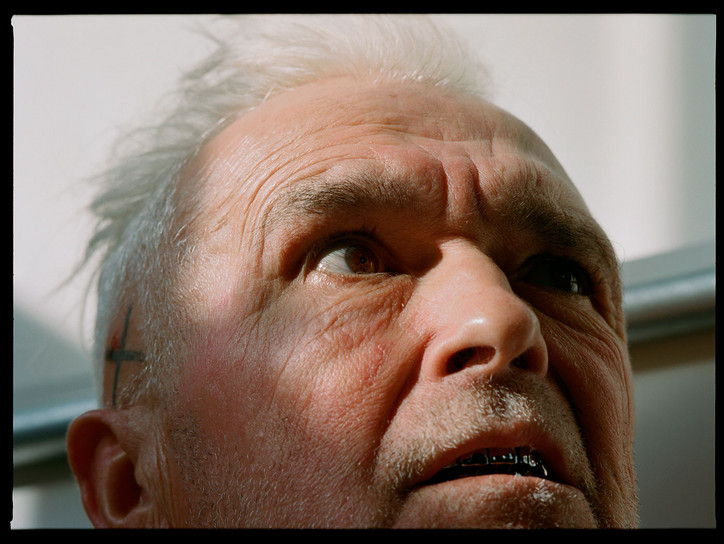
Oh no. I didn’t say that. There is not any religion… We do play with that idea often using religious symbols, but this in not a religion. It’s more conceptual, but (it’s important to note) no Monty Cantsins are the same. It’s not a uniform, so you don’t have to have the same haircut, but I am Monty Cantsin. She is Monty Cantsin. They may have the same kind of haircut a lot of the time, but when this all started, new wave and punk were big, that became a part of the Monty Cantsin style, and it is still part of it. There are resemblances between us, but each Monty Cantsin is different, and they are different individuals just doing everything by the name — Monty Cantsin. If we gave different people the same name, that wouldn’t make it control their muscles. That is the interesting part of it. But then this Monty Cantsin movement became international through the communication networks. You find many Monty Cantsin’s on Facebook, or if you google Monty Cantsin, you’ll have lots of stories about lots of different Monty Cantsins. They might have different explanations as well, which is good. So, it’s quite a big community. It’s not only North America, it’s in Europe and Asia.
It’s everywhere!
Yeah! (laughs)
So, would you say that Monty Cantsin has any type of anarchy in itself or associated with it?
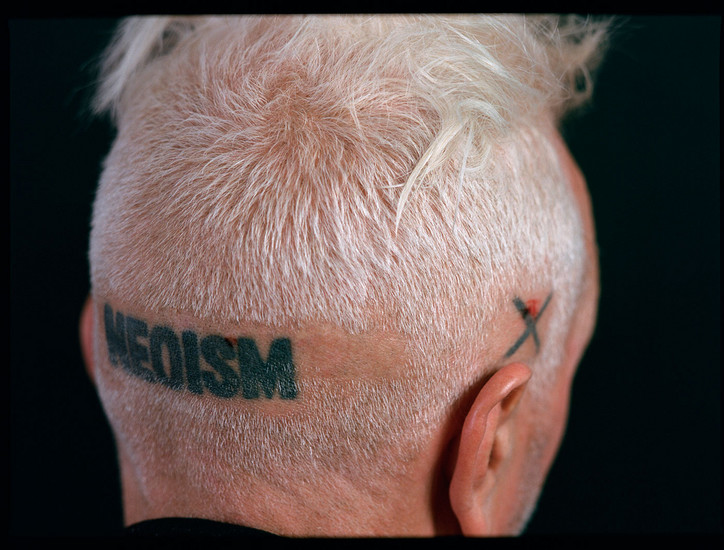
Actually, we always say it’s more like a revolutionary movement, and it’s not only in the art communities. It can be basically anyone. But yeah, the art is a very important part of it, but we also created a different movement, Neoism. We say that just like anyone can be Monty Cantsin, anyone can be a Neoist just do everything in the name of Neoism. That’s all you have to do. Usually movements have a manifesto, and you have to follow the rules. There are no rules (in Neoism), so in that way it’s kind of like anarchism if you say. Some people obviously have tried to create their own ways of expressing what is Neoism, but the only thing that is important is the name. You do everything in the name of Neoism and call yourself Monty Cantsin. That’s it.
How many people go by Monty Cantsin if you had to guess?
Today, I don’t know.. I mean we always say (there are) 7 billion Monty Cantsins. Maybe you are going to turn into Monty Cantsin as well. Once you become one there is no way back. Even if you say you are not, by denying you are not Monty Cantsin actually, you are declaring yourself Monty Cantsin.
You can’t say the “I am not Monty Cantsin” without saying the words “I am”. But I wanted to talk about some of your past performance art which includes you splattering your blood in museums, could you elaborate on this?
Of course, this is something I like to talk about, and often I have to when I pass a border. Like we just came from Toronto, and often I have lots of trouble, especially at the US border because I’ve been arrested many times here.
How many times have you been arrested?
Oh I have no idea… I mean probably more than a dozen. Not only here, but in Germany, in Canada, and in other parts of the world.
That’s a few more times than me. But how exactly did this all start?
So, I started this blood campaign in 1979. I’m coming from the eastern European, revolutionary country of Hungary. I had already for a short time studied medicine, and when I was 20 years old I was a paramedic. So, blood and the human body and all these things are very close to me as you would expect. In my early 20’s, I left, and I went to Paris and then to North America. I decided to devote myself to the arts. I was already so interested in body art. At that time, body art wasn’t just tattooing, but it included artists doing performances: getting naked, exploring their bodies. That’s the type of art form I wanted to explore, and I had many influences from the Vienna Art Action Group in the 60’s. They were exploring the body in a very radical form, cutting themselves and pouring blood on themselves and other strange experiences.
In ‘79, I began this blood campaign, and as part it, I thought I would sell my blood as an art object, and this way support neoism and give a significant value to my blood. I made plans that from ‘79 to ‘84 my blood will increase in value from $10 to $1 million a milliliter. It never happened this way, but I tried to explore performances with my blood that created lots of reactions, shocks, and arrests to make it known. To do this, I went into museums, and I splashed my blood between very important artworks like I did it here, in the Picasso room (at the MoMA) in 1988. I splashed 6 vials of my blood between the two most important Picassos. I was arrested and charged with $10 million damage because some of the blood went on the Girl before a Mirror, the most famous Picasso. That was over two years at the court, and it was a second degree felony.
I was very lucky because when I came out of prison, a young lawyer around your age was waiting for me, and she was very ambitious. She said, “Mr. Kantor, I want to take your case on for free because I just want to do it. I think it’s very important for me and my experience to start my career.” And she did it! After two and a half years, my ruling was reduced from a second degree felony to only five years in prison, then to criminal mischief. I paid only like $1000. It was great because during this 2 years, I could talk about why I’m did this, why I splashed my blood in the Picasso (room). I got publicity almost daily at that time in the newspaper, and this helped me a lot to declare myself as Monty Cantsin and talk about Neoism. The initial idea however, for the MoMA performance, was the Tompkin Square park riot.
The riot happened in 1988 in August. The homeless people occupied the park. It was a tent city. The police were called to kick them out. The art community got together and tried to save the homeless, and that caused a riot. Tons of people were arrested, beaten up, and jailed. The people built barricades, they brought in helicopters and everything on Ave. A., even a tank. A lot of my friends were arrested and prosecuted. A couple of weeks later, I went into the MoMA and splashed my blood and dedicated it to the artists, homeless and everyone who was part of the riot.In this way, I started a discussion about what was happening in this community in the Lower East Side and in the arts. There was a big problem with police brutality and dictatorship at that time, and all these things were bothering everybody. It also gave me a chance to talk about how museums try to oppress us as well.
So, it was more than just this idea of vandalism? And anarchy being created?
Absolutely, absolutely. Basically, when I explain everything today, I rather like to say that it’s an anti institutional declaration. It is because institutions and artists are alienated. There is not any direct relationship. They are kind of leading the artists completely against what artists would like to do and what would be creative freedom normally. The museums today are really not trying to help artists. They are trying to glorify themselves through exhibitions that show they are on so on top. That’s a very big problem. This kind of alienation! That’s a big part of it! So, I continued in this direction. I did many other museums in Berlin at the Hamburger Bahnhof, Ludwig Museum, National Gallery of Canada and so on. I’m basically banned from most museums for that reason.
If not, museums probably have your named bulletined around.
Oh yeah, they do. They have in the lobby a picture, I bet. It happens to me that they stop me even if I wear a wig or disguise. I’ve tried to this sometimes.
Wait, have you really tried to wear a wig?
Yeah, and they caught me because there are spies. There are spies and all kinds of people who tell them, “I heard that he’s going to come and do this and that.” That happens all the time actually. Anyways, one of the very successful numbers recently was the Jeff Koons exhibition at the Whitney in 2014. Jeff Koons had his retrospective, and I actually splashed my blood behind one of his most famous sculptures, The Balloon Dog. This time they took me to a lunatic asylum, which was amazing. I was escorted by two police cars in an ambulance with sirens, from the museum to the lunatic asylum. There I went under examination, and I enjoyed it fully.
They didn’t want to believe me, and all my stories. There was only one young doctor who believed me. He googled me. All the other doctors kept just saying, “Yeah, okay just take a rest. Would you like something to make you sleep? You can stay here as long as you want.” They came up with the diagnosis of “Narcissistic Personality Disorder”. I got a very nice chart about it. They told me anytime I want to come back and talk to them about anything they can put me on therapy. (laughs)
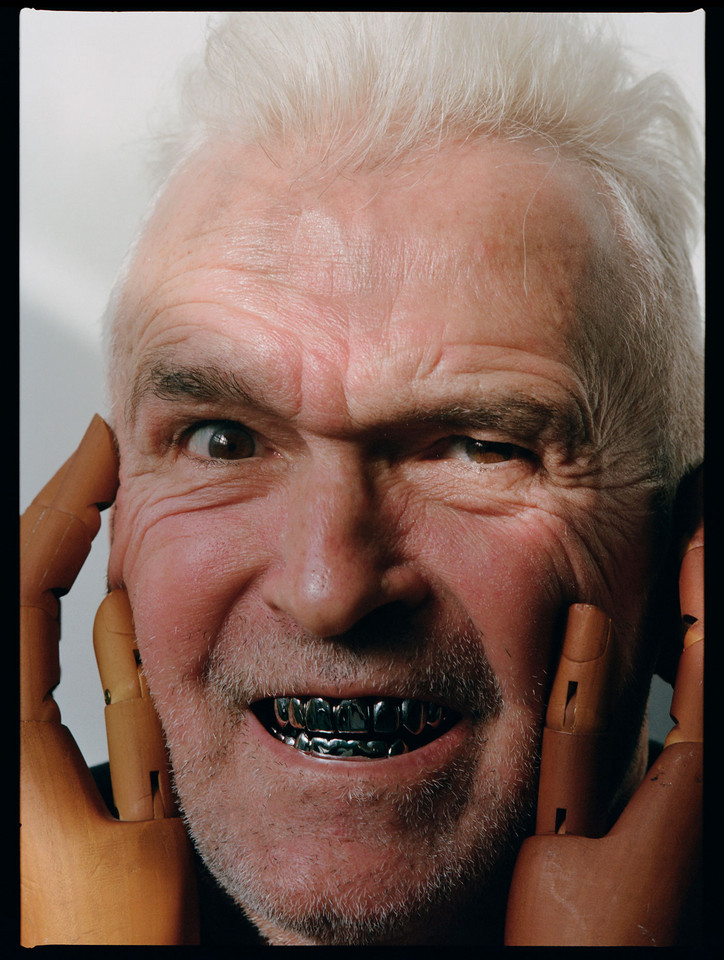
Have you taken about how much blood is in your body right now out?
I’ve probably taken more than one bodies worth. This blood campaign includes about 1000 performances. Not all exactly like these museum performances, but I have done it about 1000 times. I’ve never really counted exactly, but definitely lots of blood.
Have you ever thought about using anything other than blood?
Besides the blood performances, I do much more “serious” art. I’m a video maker. I’m also into robotics. I create machines with special software that is interactive where people can move objects and that moves an image on a screen. I also, do more traditional work like painting. Because I came from this multimedia background, mail art. Through the post office, artists communicated by sending things to each other. That could be a video or an audio cassette or just a little note or a painting, or whatever. So that form made me become interested in all the forms. Also, since my early age I was always learning from my grandmother, she was a painter.
So, it runs in the family.
Yeah, but they didn’t want me to become an artist. My father was a scientist in genetics, so he was counting chromosomes. I was supposed to follow him, but I was interrupted by other ideas. I think it’s quite scientific as well. Blood is a liquid identity. It has all the information about everything. People usually think about the ritualistic part of blood performances. In my performances, it is not that ritualistic. I let a nurse take my blood in the vacuum container tubes, or I do it myself because I learned as a paramedic. When I do it in public, I like to have a nurse or doctor. Then, it doesn’t look like I’m shooting up. I usually deal with the blood not just by splashing it all over. When I do it in museums, I’m actually very careful not to damage any of the artwork. I choose artists I think would appreciate it as a revolutionary gesture. Picasso was a revolutionary. Even Jeff Koons was when he was young. Not today, I don’t think. I did Andy Warhol, Paul McCarthy, Marcel Duchamp...
Did you do it into the fountain?
No, I did it between two his readymades, obviously because my blood is also a readymade. Now, I get invited by other artists to splash my blood between their works. (laughs) I have done it here at Shalom Neuman exhibition. He used to be part of the Rivington School which I was apart of. I was able to do it with his work, and that was a nice moment. It was officially done. It’s different when it’s official. There’s no arrest. (laughs)
I’ve also been invited to China where this project works really well. One museum organized a performance, just a couple of years ago. They collected lots of blood from me in Beijing at 99 (Art) Museum, and they are distributing it in different parts of China. But what I also did, was I bled in the Yellow River and the Yangtze River, so basically this way my blood would flow through the whole country. That created kind of a problem because the Chinese government heard. They told me not to do it. People told me, “Don’t do it because they are watching you.” Instead what I did was, I bled into the squatter toilet in my hotel’s bathroom. So, I bled into the sewer hoping that from the sewer system it would make its way to the river.
And you do music as well?
I’ve always had a band, we have a band together called IAMMONTYCANTSIN. (laughs)
I’m not on Spotify yet, but you can check on IAMMONTYCANTSIN on Facebook. There is another band, Red Arm Band that is also on Facebook.