Vulvatious

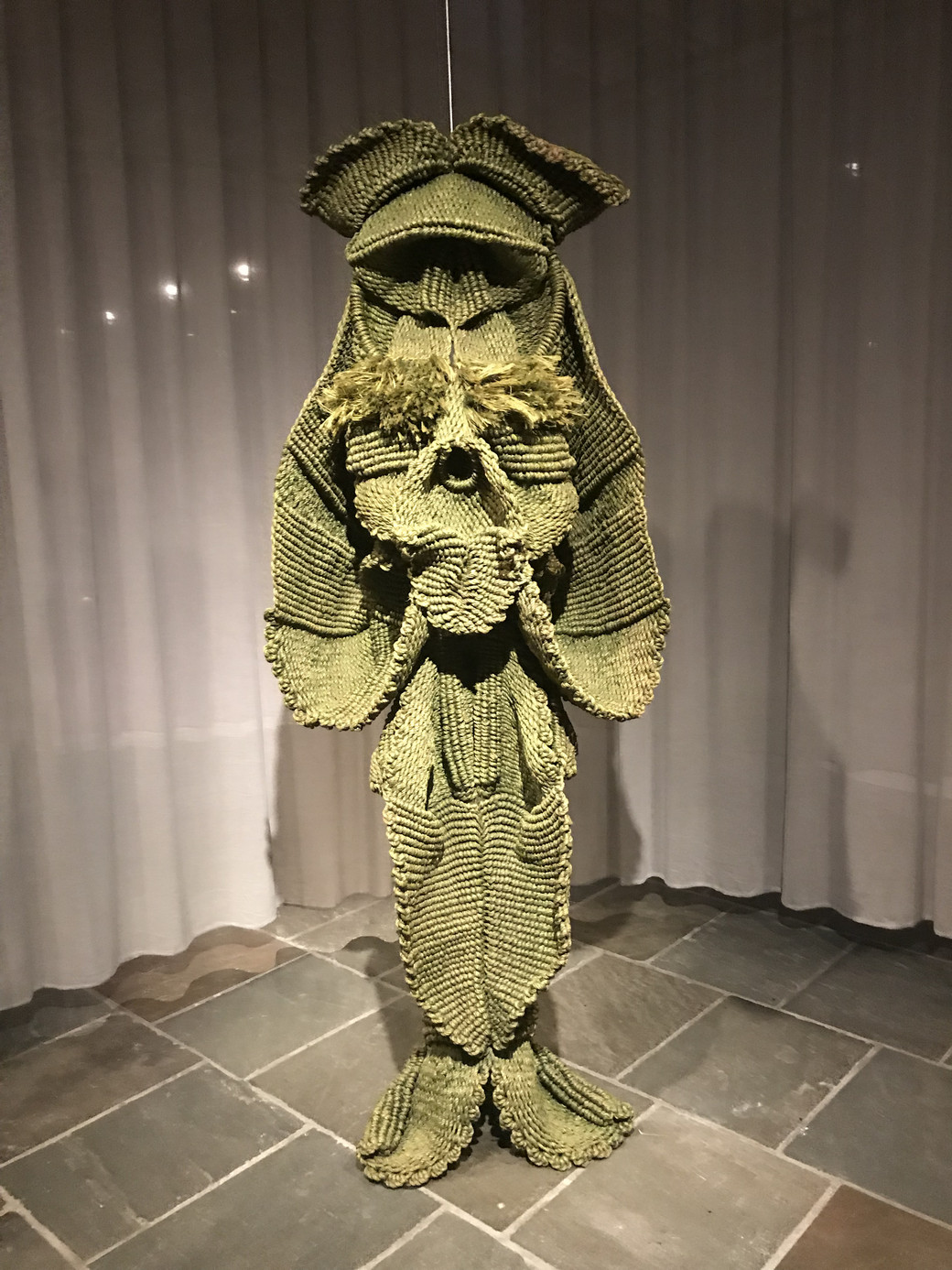
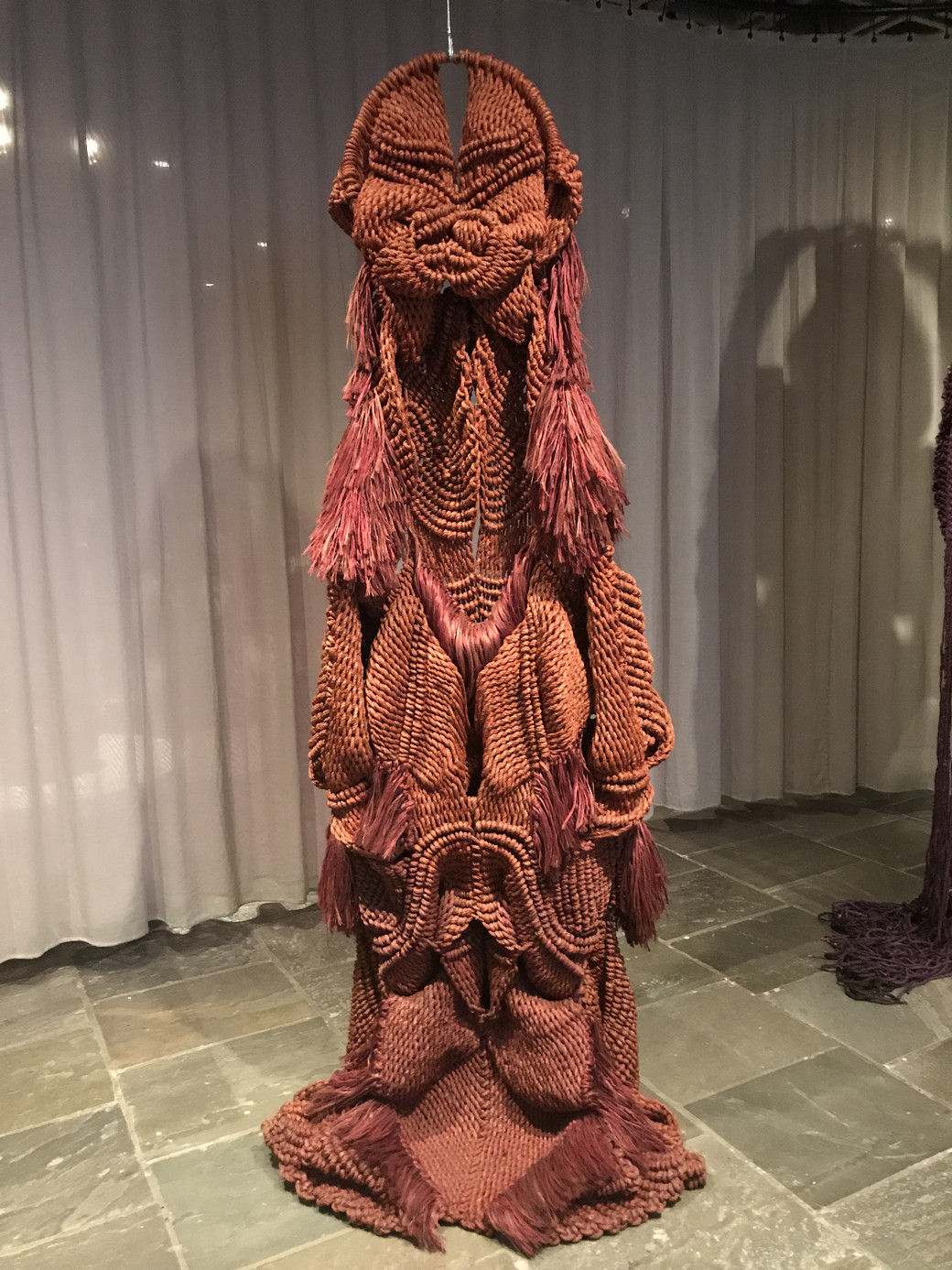
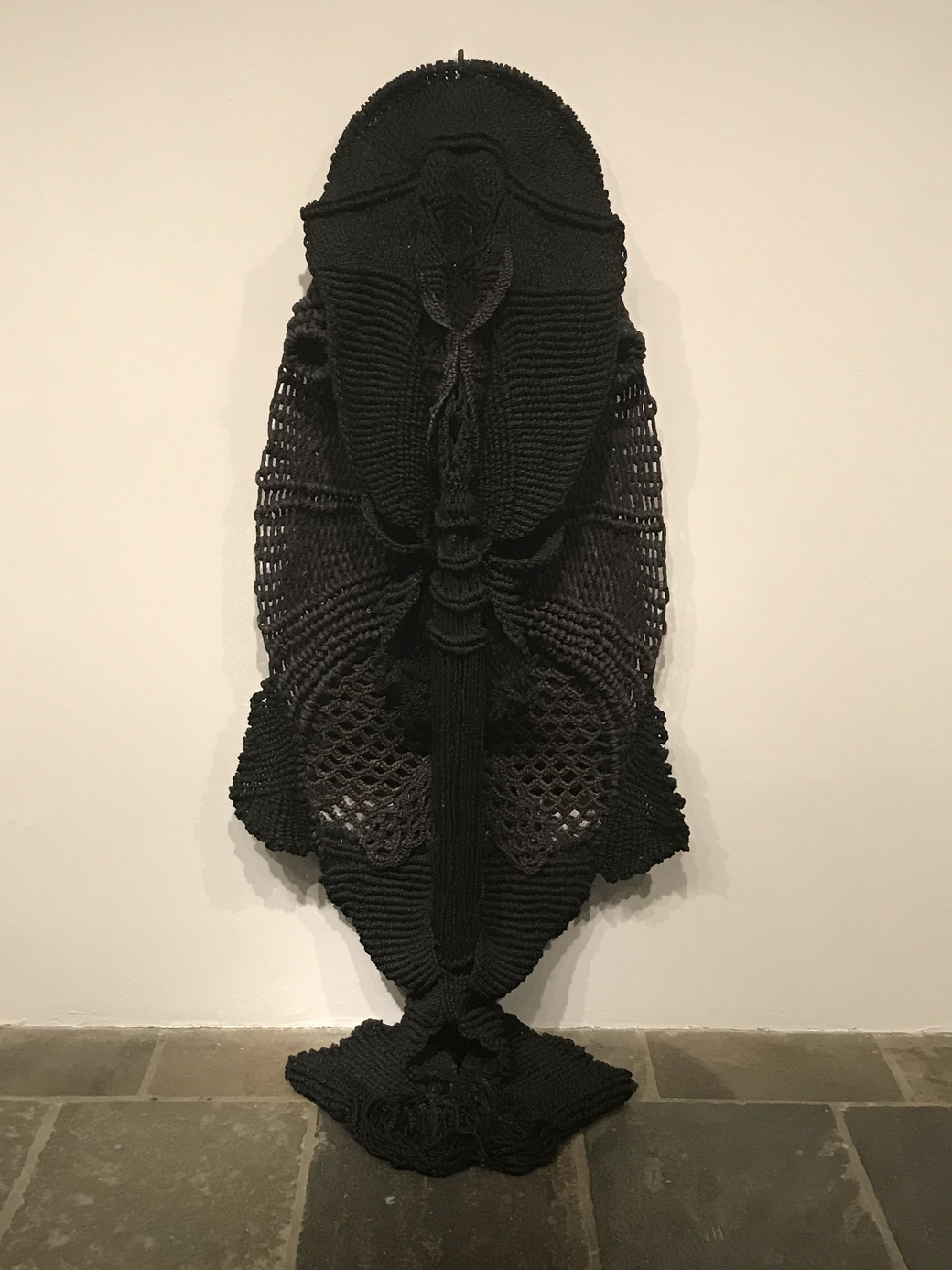
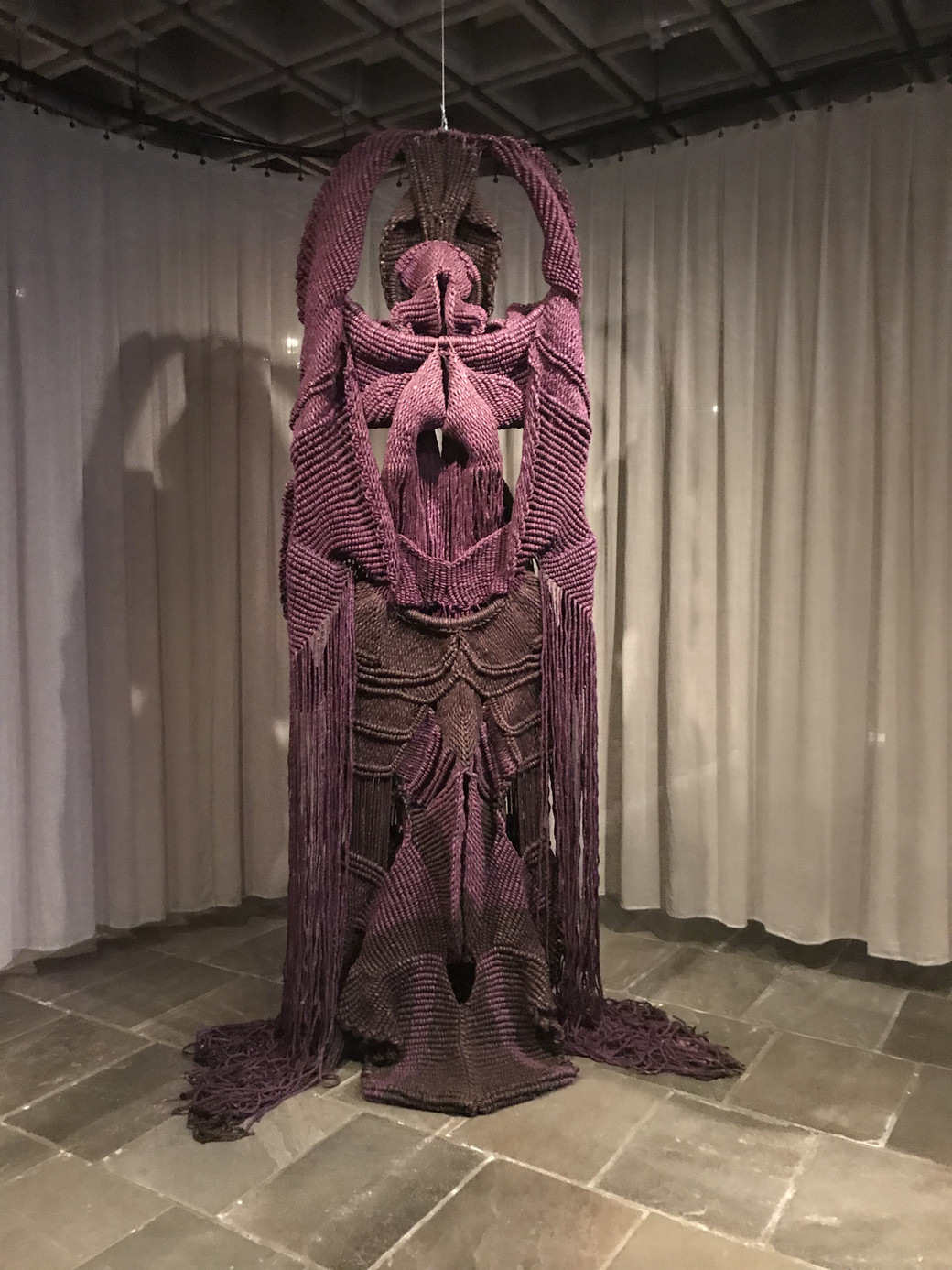
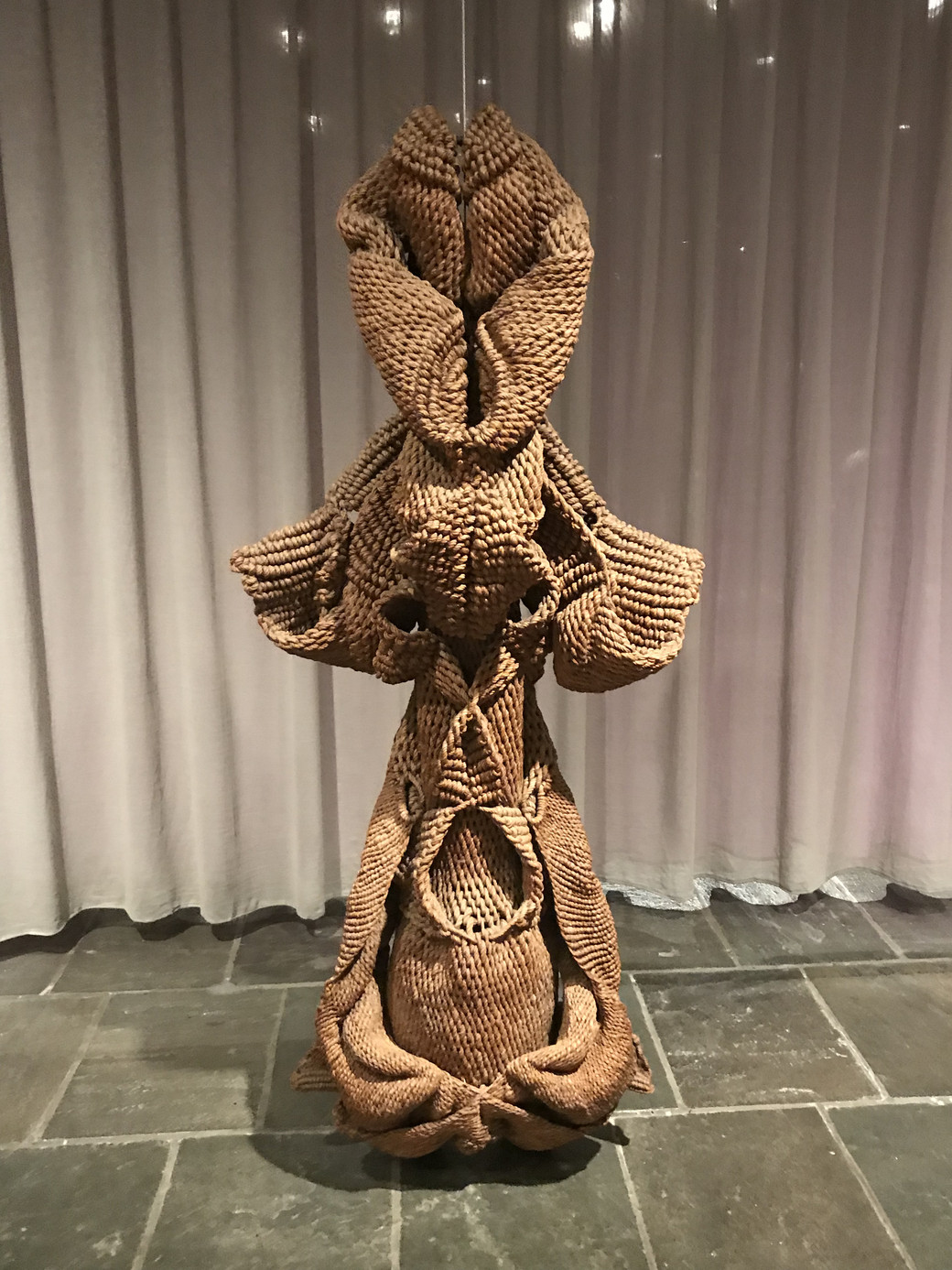
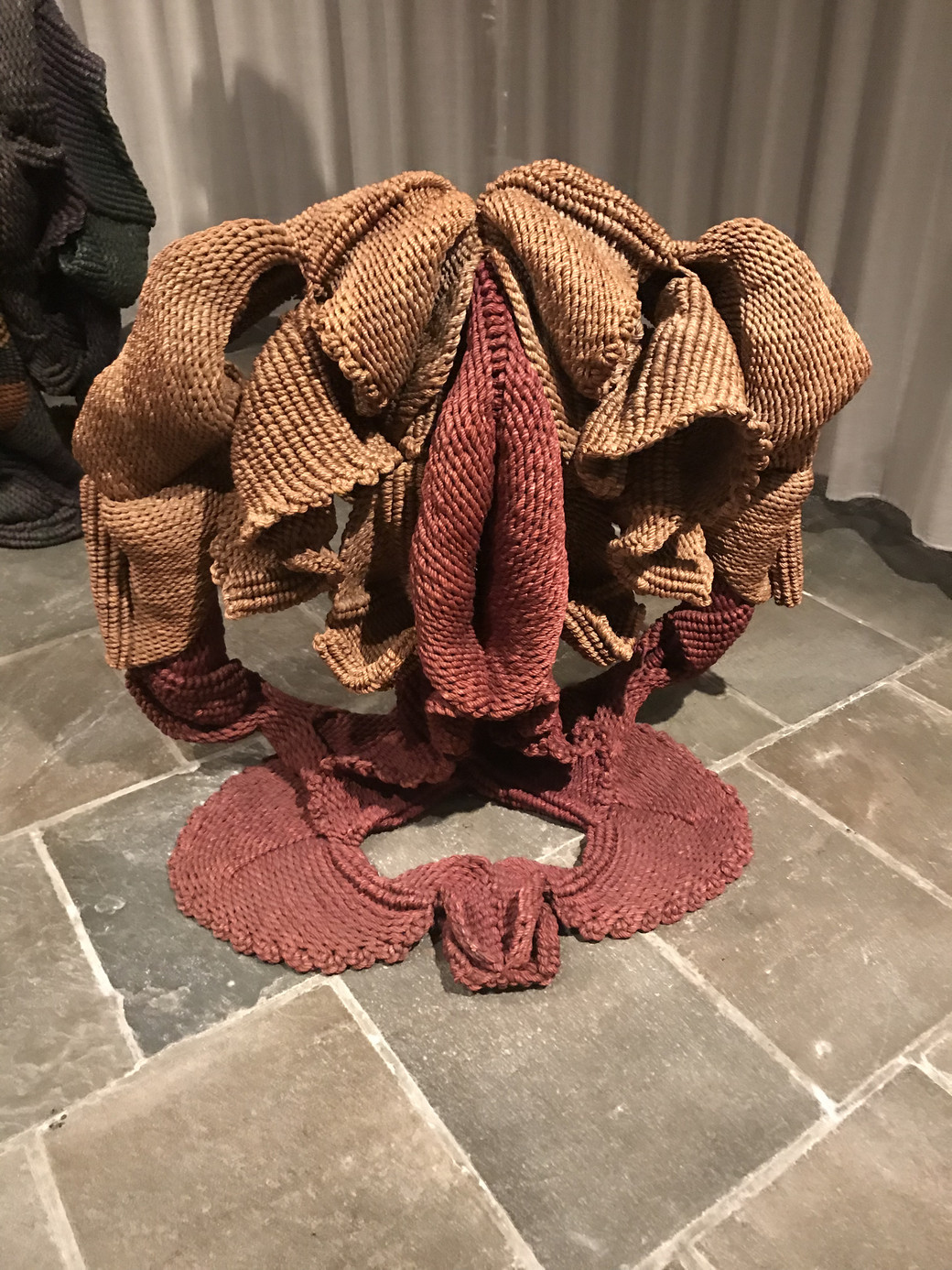
"Phenomenal Nature: Mrinalini Mukherjee" is on view at the Met Breuer through September 29th, 2019.
"Phenomenal Nature: Mrinalini Mukherjee" is on view at the Met Breuer through September 29th, 2019.

How did you come to start this project? And why?
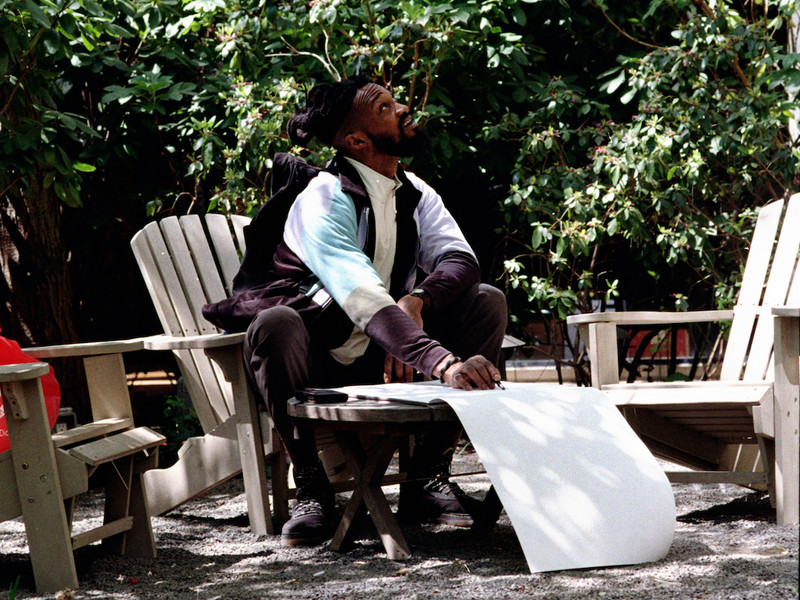
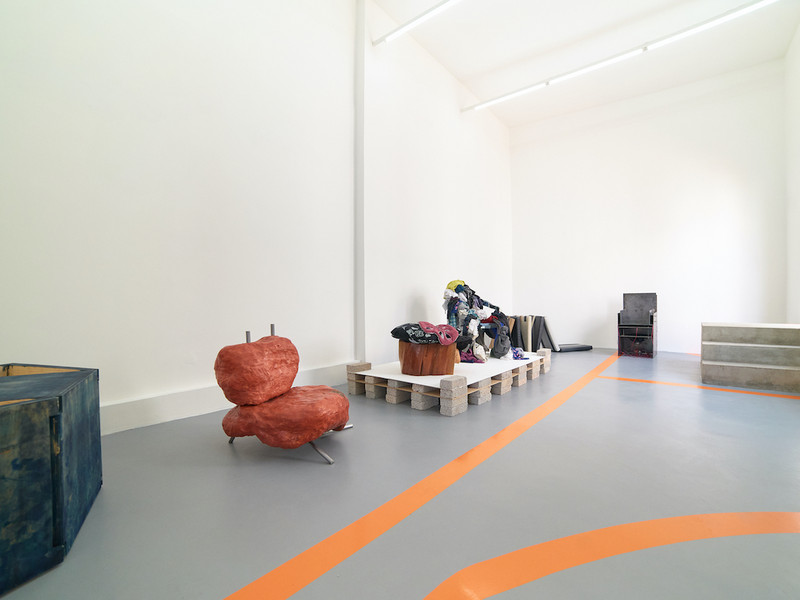
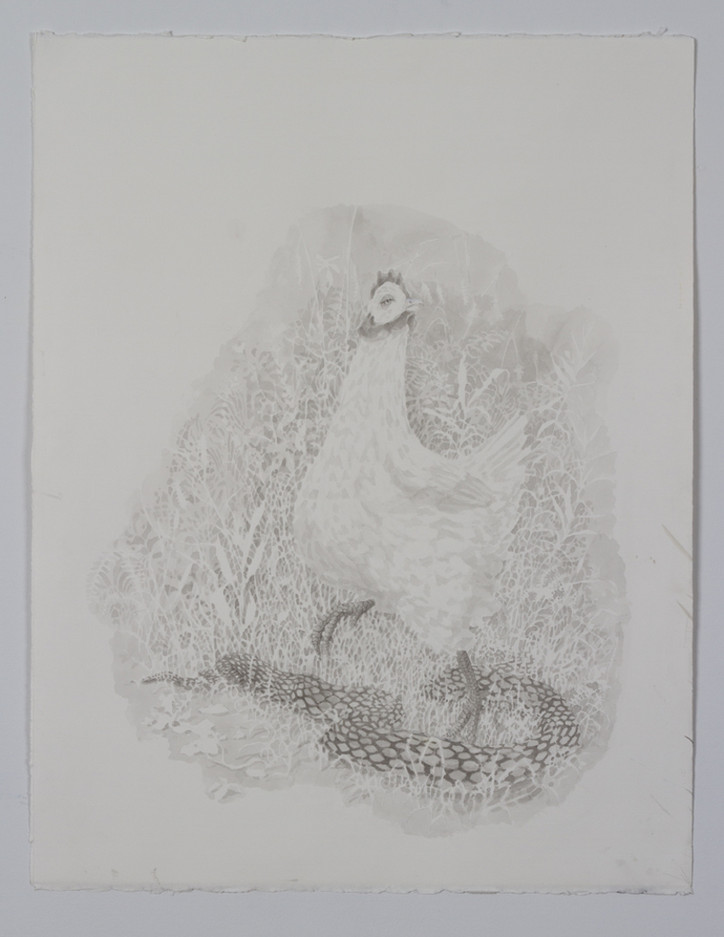
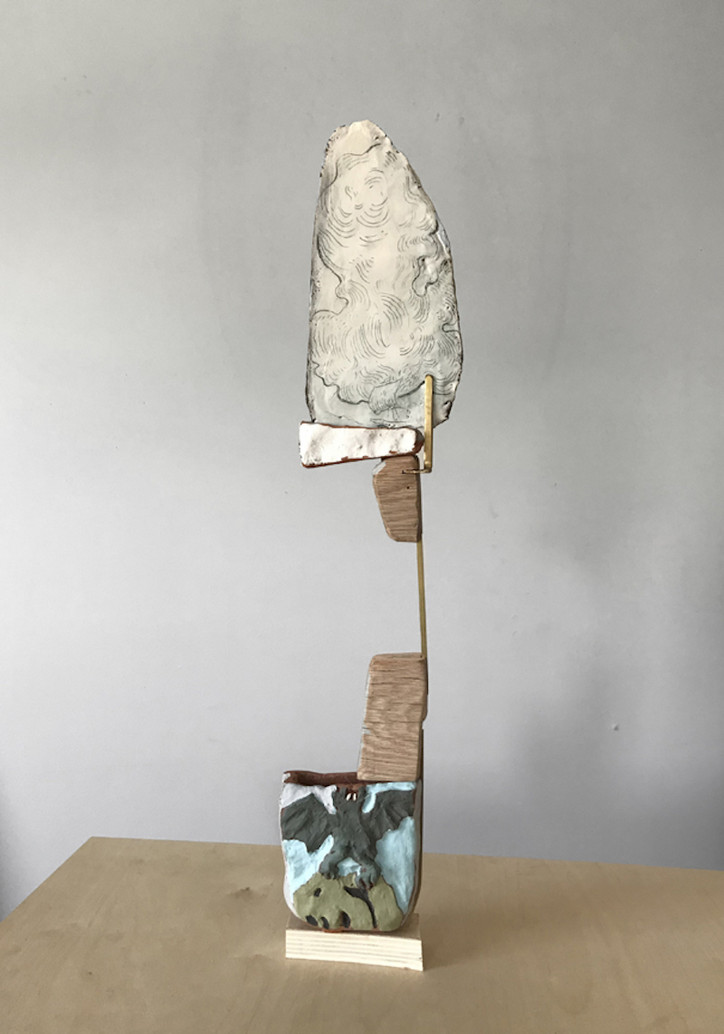
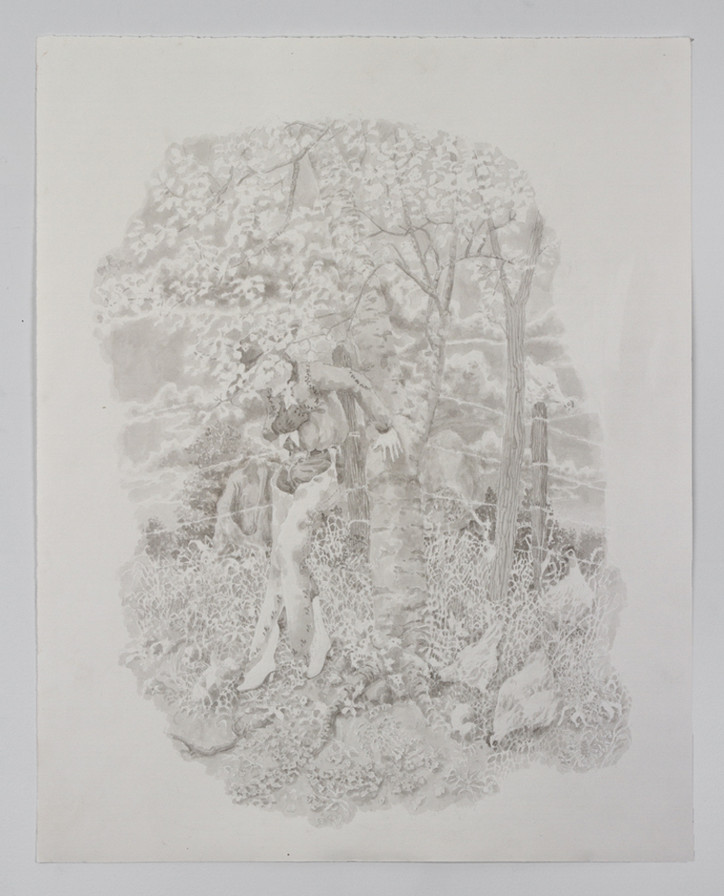
It’s sort of an extension of work. My work just continues and then it lands in places as groups of things. I’m always making drawings, photography is often involved and there’s always a combination of 2D and 3D work as far as the form things take. And the content is almost always from an American position; like taking into account that I am an American, male, gay, artist from the south and how that can be problematic. But it’s a given, you know? It’s not something that I can change, the way I view the world outside. So all of those are in the work. The imagery gets separated out from the more narrative, allegorical impulse of the drawing, which set a tone for these sculptures that end up being kind of totemic, like totems, like stacked symbols. It’s the gaps between the things are what I’m excited about, and the connections you might make between the images that are evoked or the narrative that’s evoked rather than any fixed description.
A lot of your pieces are fragmented, and you also use different mediums, do you think those were separate decisions or did you set out to do that?
Well it helps. It’s sort of like editing a film. You edit different narrative clips together; the different materials create broader gaps. Everything here feels really cohesive. In the past, I’ve shown really slick photographs with sort of wobbly ceramic vessels in front of them, so there’s a bigger material gap. But everything here has the same kind of tone, or delicacy.
How do culture and history and sexuality play into this project?
They’re all part of being, you know? I do psychoanalysis four times a week so everything is about following an instinct and knowing it has to do with part of your fabric and why you’re moving around. And I think my curiosity is in the complicated, unresolved parts. For instance, where sexual desire could be politically problematic because it’s for someone who’s oppressive rather than a good guy. That kind of gets weird and muddy, you know? I mean, there’s so much here that, they’re just symbols. And the way I’m using imagery is really symbolic.
You based a lot around the idea of the Policeman and pocketknives, why did you do that?
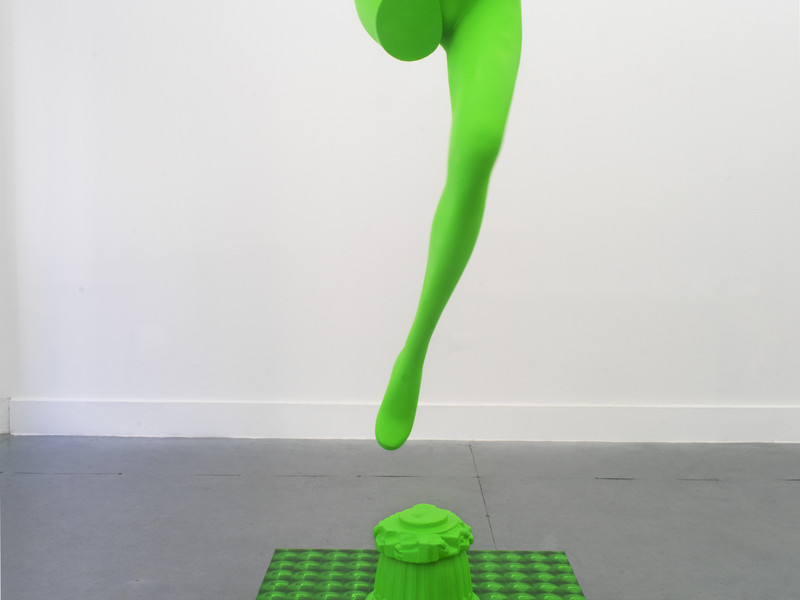
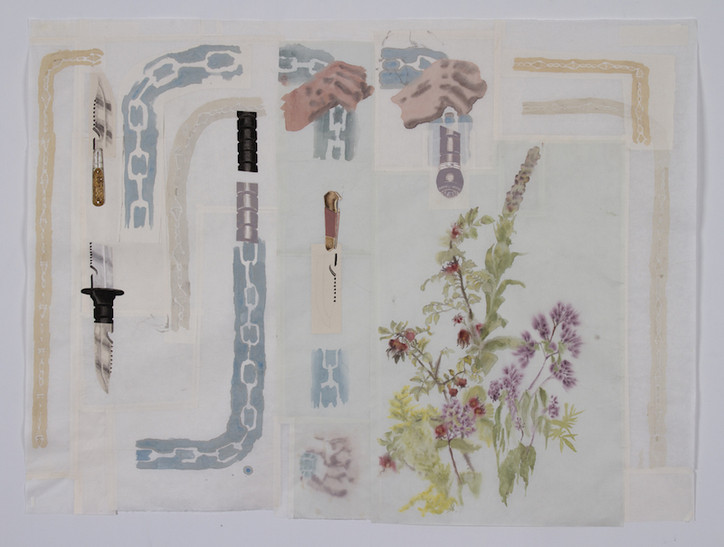
Well the pocketknife is something I’ve collected since I was really young, so it’s sort of an image that taps back to the formation of consciousness, like age 5. But it’s also this thing that feels very American. It can be seen as a threatening weapon, but it’s also a tool firsthand, it’s a tool you have a really personal relationship with. It’s in your pocket, you use it to eat fruit, you use it to make other tools. The blades are made from clay that was purchased, the body, the red clay, is dug from a pit. And they’re sort of wobbly and maybe sort of artifact found, and they become something else. So the symbol of the knife seemed like it pointed to all the things that are part of what builds up the work. I always go to the Mid Manhattan Picture Collection. It’s in the public library, the Bryant Park branch. It’s basically analog Google Image search. They’re all photographs that librarians have cut out and pasted on a page. There are five files of policemen from every country and it’s the same reason I’m using cowboys, it’s the same problem of objectifying sort of oppressive male masculinity, but it’s also sort of just considered sexy, and using that in a way that sort of questions it. I set up a game for myself to play with these images and make new forms.

What’s your work process from concept to final product?
The research is the doing. The research is not so much the reading and the thinking, but it’s the doing, it’s happening while I’m doing it, and then deciding when it’s at a stopping place.
Do you have a goal for the finished product?
The goal would be that it sort of be an in-between, there’s enough open space in it for it to still be curious. Trying not to over-render or over finish something. The part is always way more exciting than the whole, so trying to make something that’s whole but still wobbly.
Before, you mentioned gaps; can you expand on that a little more?
How is this narrative of a cowboy weeping connected to this sort of wobbly pocketknife, you know? I don’t know exactly other than I think about different things in between them. Like when I think of how [the cowboy] was drawn, his legs seem sort of insufficient to hold him up, in the same way the [pocketknife] is just sort of teetering. Maybe it’s a tool he once used or might have used. It’s a space for you to make your own connections that are definitely related to your subconscious.
Do you think that the viewer’s interpretation is what can connect it all or is that something you want to give the viewer?
I don’t think meaning can be made. I can’t make meaning with something but you can come and find meaning from something so there is a nuance in me setting up a space for meaning to be made. There are definitely omissions that happen and decisions that go into that is like a balance between giving you really strong connections and really subtle connections. I think the viewer’s interpretation is really important. Or, giving the viewer space to get there on their own is really important. It’s like the difference between watching a David Lynch film or a Hallmark movie.
Do you ever go back to a piece that’s been completed and work with it again?
I do. There are some drawings I’ve pulled out last year that I started collaging these other pocketknives on top of so they were started in 2009 but finished in 2017.
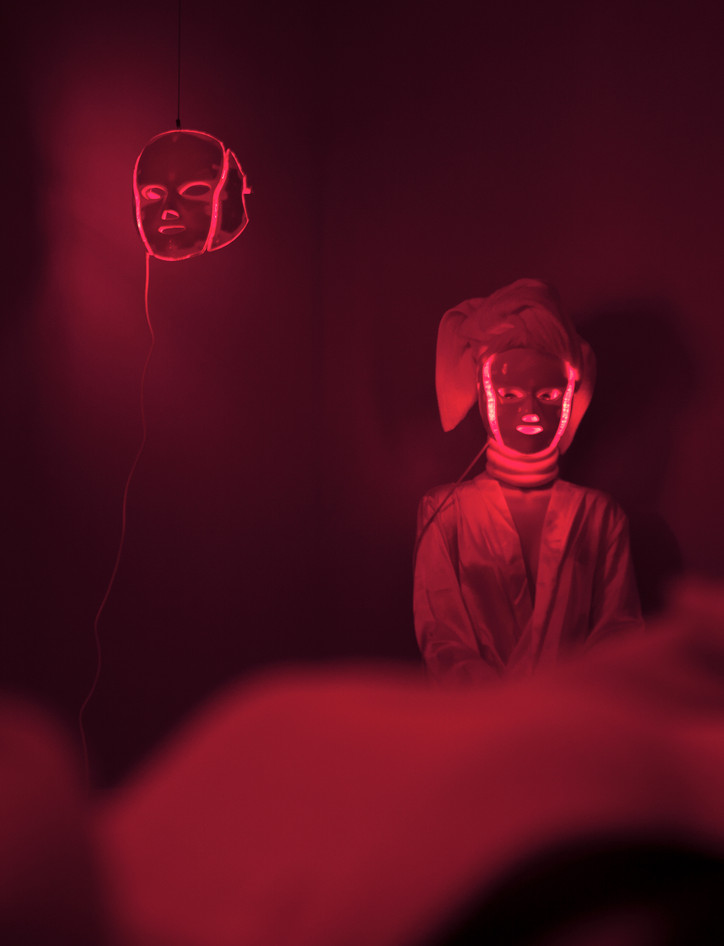
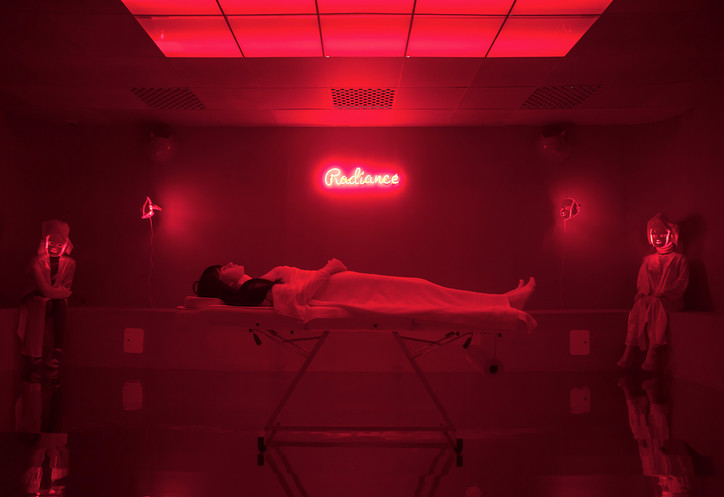
Calypso’s place of worship is a red-lit basement inhabited by imaginary clients – including a model of the Calypso at its centre that saw her endure three hours of clay casting with just two nostril holes – that’s something of a futuristic cult headquarters, reminiscent of beauty’s ritualistic tendencies and die-hard following. Meanwhile the entrance features a video created in collaboration with creative partnership GERIKO that takes viewers on a journey – a quest for eternal beauty. office sat down with Calypso to talk about the process behind The Salon.
What drew you to The Salon as a space?
I’ve always collected strange beauty devices and used them in my photos, so I think it was inevitable. The installation is in a basement and I wanted it to be like one of those basement beauty rooms. When I’m in one I just want to study everything. The machines, the decor, the music.
Why did GERIKO feel like the right match?
I love their work and approached them to make a video for the entrance. I wanted to have a spa introduction style video and so animation was the ideal format for that. What they ended up making blew my mind. I love it.
Tell us about the process involved designing the space...
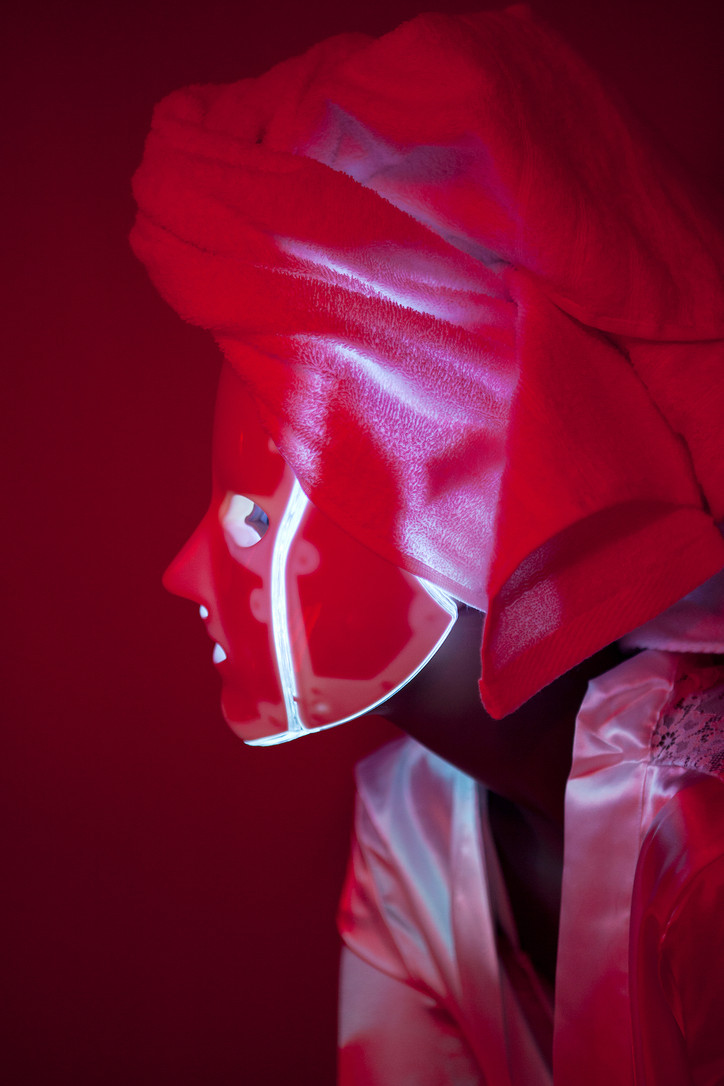
I work better in 3D so I made a little model of the space in a shoebox. I didn’t want to be predictable and do a pink room so I started with red. I took influence from a lot of horror and science fiction films. I wanted the room to be dark and simple, lit up by the masks worn by the models. And then in the middle an artificial body laying on a treatment bed. I thought it would just be a generic model but when it came to casting a life like head it had to be mine. I couldn’t put anyone else through three hours of clay on your head. Only holes for your nostrils. So the figure in the middle is me. I guess it makes sense though as I’m in my photographs.
You integrate film, fashion and tech through this project – was that a conscious decision?
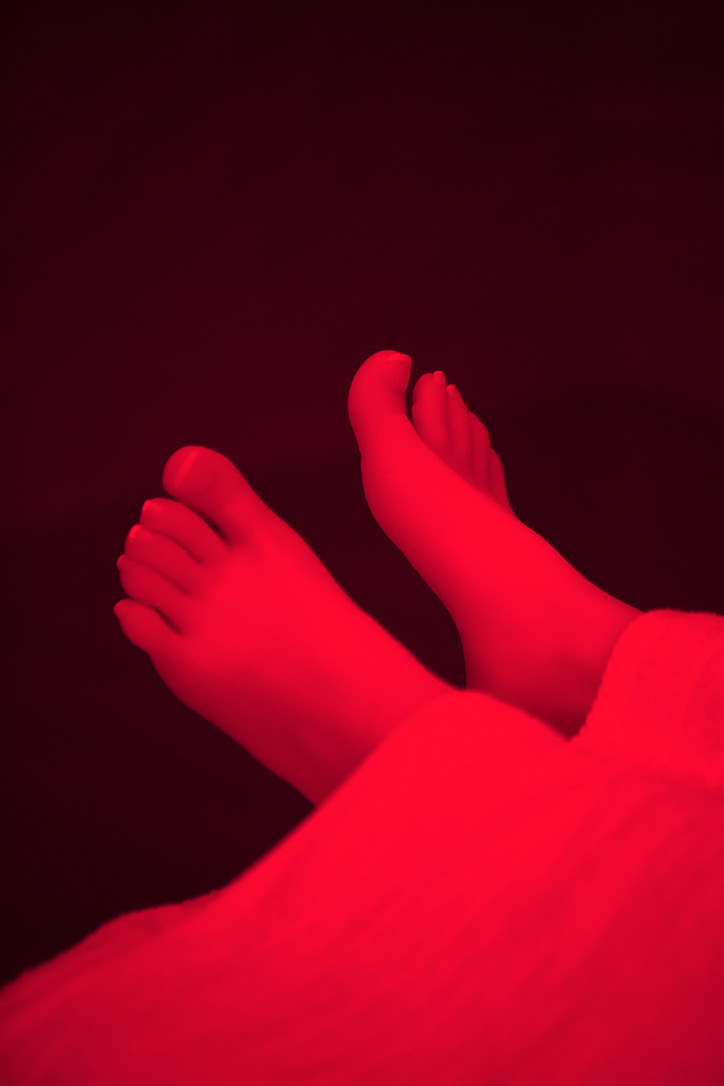
Yeah we opened during fashion week so I worked with London designer Hanger on the costumes. I wanted all the figures in the room to be wearing the same thing, like some kind of seventies space cult.
What are you aiming to challenge through this piece?
I’m not looking to challenge anything specific with this. It’s just something to experience and interpret however you will.
What do you want people to take away from The Salon?
Apparently someone came in, put on a robe lay down and had a nap. I liked that.
What does self-care mean to you?
Being able to escape the burden of reality by whatever means.
Do you think it’s something the younger generation are aware of the importance of?
Yeah and more than most of us probably.
Why do you think self-care has been highlighted as a key topic in recent months?
Because its big easy money for brands.

The large, immersive installation revolves around the concept of Nature Deficit Disorder, the theory of a continued, societal alienation from nature caused by, among other reasons, our growing dependence on smartphones. Hovnanian’s solution to this is a cold turkey return to nature. office spoke with artist about the woods, the web, and what's she's been building in between.


With your cell phone kept in a lockbox, Hovnanian brings you into a dimly lit forest - one in which the only source of light is the lantern given to each visitor. This is the first time an artist will have three sequential exhibitions in a gallery over the course of six months, as The Women's Trilogy Project PART II & PART III will open consecutively at the same gallery in April & June. PART I: NDD Immersion Room closes on April 13.


The installation seems to be making a statement on technology and social media, which are taking up more and more of our headspace. Are you concerned about how dependent we’ve become on our devices?
Yes, technology seems to provide a gratifying false mindfulness. I choose not to judge, however, I have been looking at our dependence on technology, and I question its effects on our human relationships. The effects of digital technology on our culture are yet to be fully understood, but one thing we can observe is how it has affected intimacy and individual isolation.
Where did you first come across the term Nature Deficit Disorder, and what made you deem it a worthy subject for the installation?
The title of the work Nature Deficit Disorder (“NDD”), was coined by American journalist and author Richard Louv to describe a form of human alienation from nature that results in both a greater susceptibility to negative moods and a reduced attention span. When I travel I don’t see children playing outside like we did when we were younger. Driving through the countryside in most areas you no longer see children riding bikes outside ’til dark, I find this indicative of what we are dealing with and quite disturbing. I read noted psychiatrist, Dr. Samantha Boardman’s blog Positive Prescription, where she wrote about Nature Deficit Disorder.
Dr. Boardman discusses the psychological and cognitive costs of human alienation from nature. I reached out to her and she recommended I read the book, The Machine Stops, written in 1909 by E. M. Forster, which portrays a world where human beings live in isolation beneath the earth surface, depending on an all-powerful machine for survival. The story concludes with the collapse of the machine and the collective realization of the doomed underground society that man’s connection to the natural world is all that matters. This installation deals with challenging the audience to lock up their treasured smartphone and allow oneself to be immersed in nature - allowing the individual to perhaps feel more than anxiety and boredom - Making Nature Deficit Disorder the perfect subject for this exhibition.
Can you speak on the decision to not let visitors of the installation have their phones?
Some days my cell phone functions as a studio tool responding to daily business emails or calls, other times it connects me with family and friends, and other times my phone is a “personal minder” offering me mental companionship as I catch up on reading or viewing images saved on my phone. And sometimes, if I forget a name, or phone number, it is a memory resource much like a personal library. Essentially I am almost always plugged in. Just recently I read in BBC News, on my cell phone, that a teen living in the Central Hunan Province of China, underwent surgery to remove a kidney in order to raise money to buy an iPhone and iPad. Think about that– maybe it's time we separate a bit from our iPhones.
What inspired the decision to create the exhibition under the pseudonym Ray Lee?
The Ray Lee avatar is my male pseudonym. This gender switch for me is a way of disguising my real-life persona and masking the artwork from being perceived as “by a woman artist.” Ray Lee was my nickname at the University of Texas, Austin, where I received my BFA in Painting and Sculpture. By working under Ray Lee I want to engage with the history of female artists who worked under male pseudonyms in order to exhibit their work in male dominated contexts that would often otherwise reject them due to their gender.


How did you go about the process of making the installation, and where did you get the materials?
All of my work implies that there is tension between the fragility of life, and technology. I am invigorated by this. I chose my materials accordingly.
The viewer is crucial and constitutive to the work–without their response to it there is no reflection. Upon entering the space, one is drawn to the tactile nature of my NDD Immersion Room as it is surrounded by darkness and the scent of the forest and plant life. There is a constant power relationship between the visitors, and the surrender of technology. In silence, the seated viewer, becomes part of the artificial wild surrounding the campfire. Some visitors feel helpless without technology, some are excited by it, and some find it meditative.
Initially, the viewer enters the wild space through a cold white room. There is a bunker in the space (a protection from the enemy) much in the same way our phone is our protection. The bunker has fake frozen plant life coming out of it. The visitor must surrender their phone in a lock box before they enter the dark forest. Then they are given a flashlight or lantern to follow a path before entering the forest where the viewer experiences small details in the wilderness. One experiences a lit campfire where you can meditate. Though the forest is not real, there are elements in the forest that are. The experience is actually meant to be mesmerizing similar to the way in which technology is mesmerizing. The entire aesthetic experience connects with the social and cultural contexts of my white Natural Fractile Series.
The installation is part of The Women’s Trilogy Project at Leila Heller Gallery. Can you tell us a little about the project?
The Women's Trilogy Project will be a series of three thematically related exhibitions all on view at Leila Heller Gallery and each exhibition will run for about two months each. With this project I really wanted to focus in on societal dependencies faced by females and how they come to shape our lives.
Working through The Women's Trilogy Project has affected me deeply and at times has taken an emotional toll, since it has allowed me to deal with the broader issues of feminism and also with personal experiences from my childhood. PART II, titled HAPPY HOUR opens April 20. PART III, PURE, will open on June 8. The response thus far has been overwhelming.