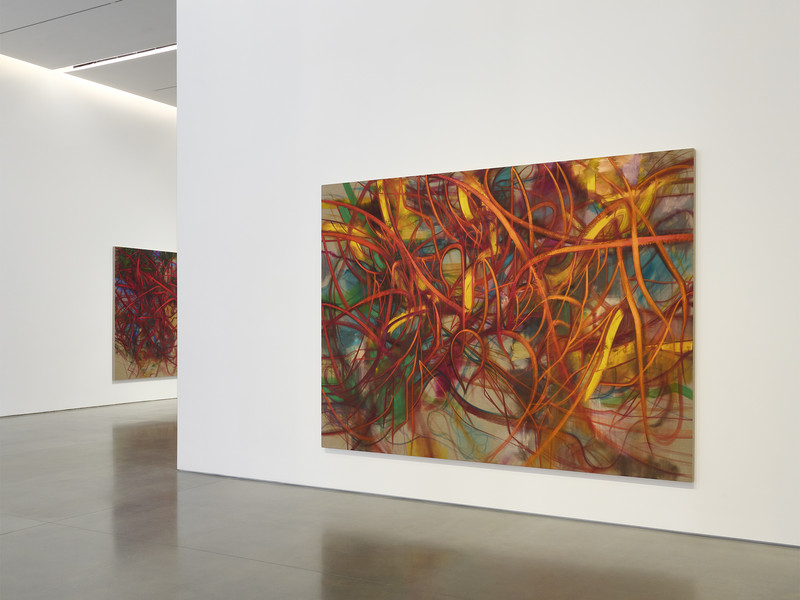
Vulvatious

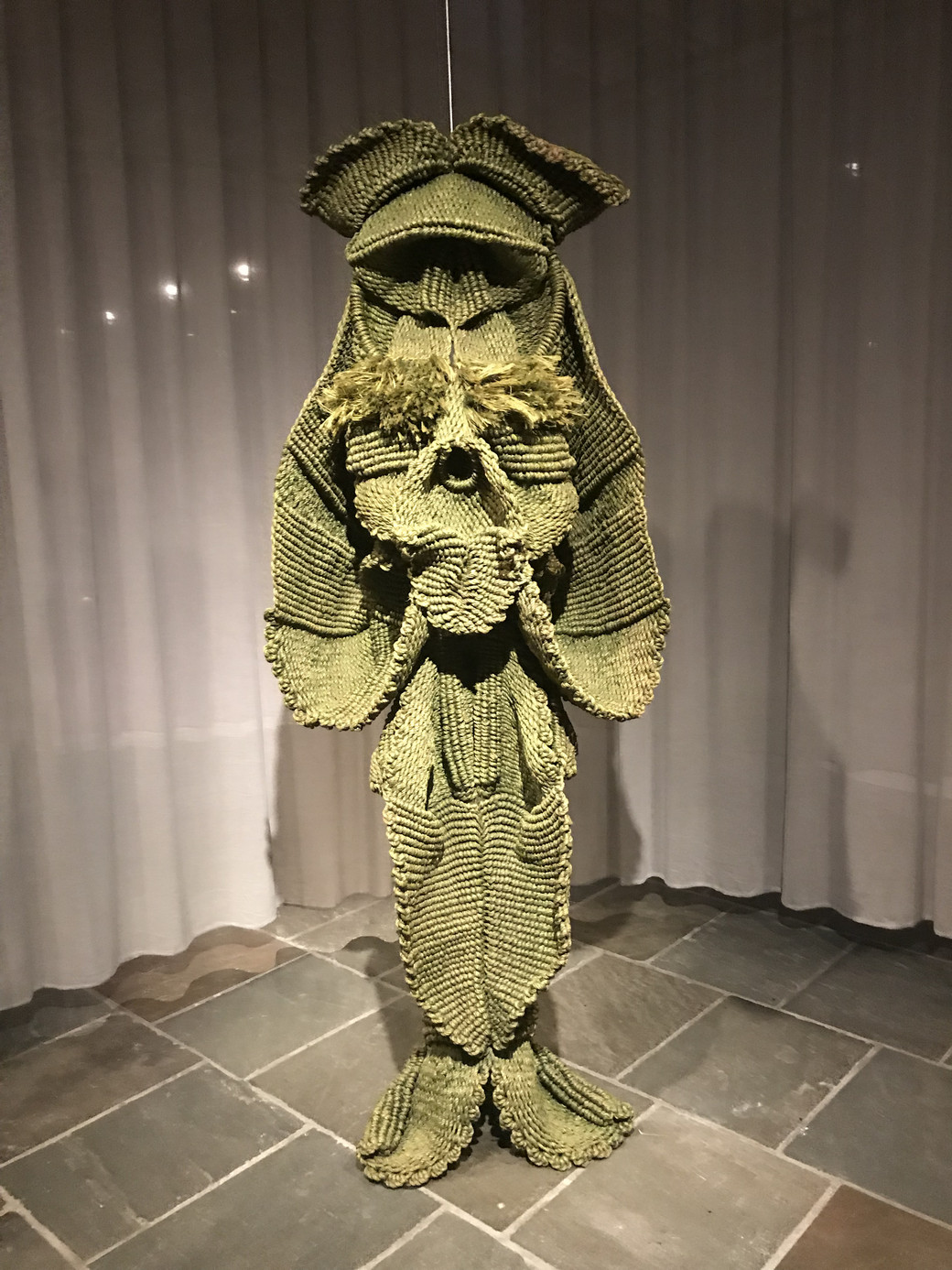
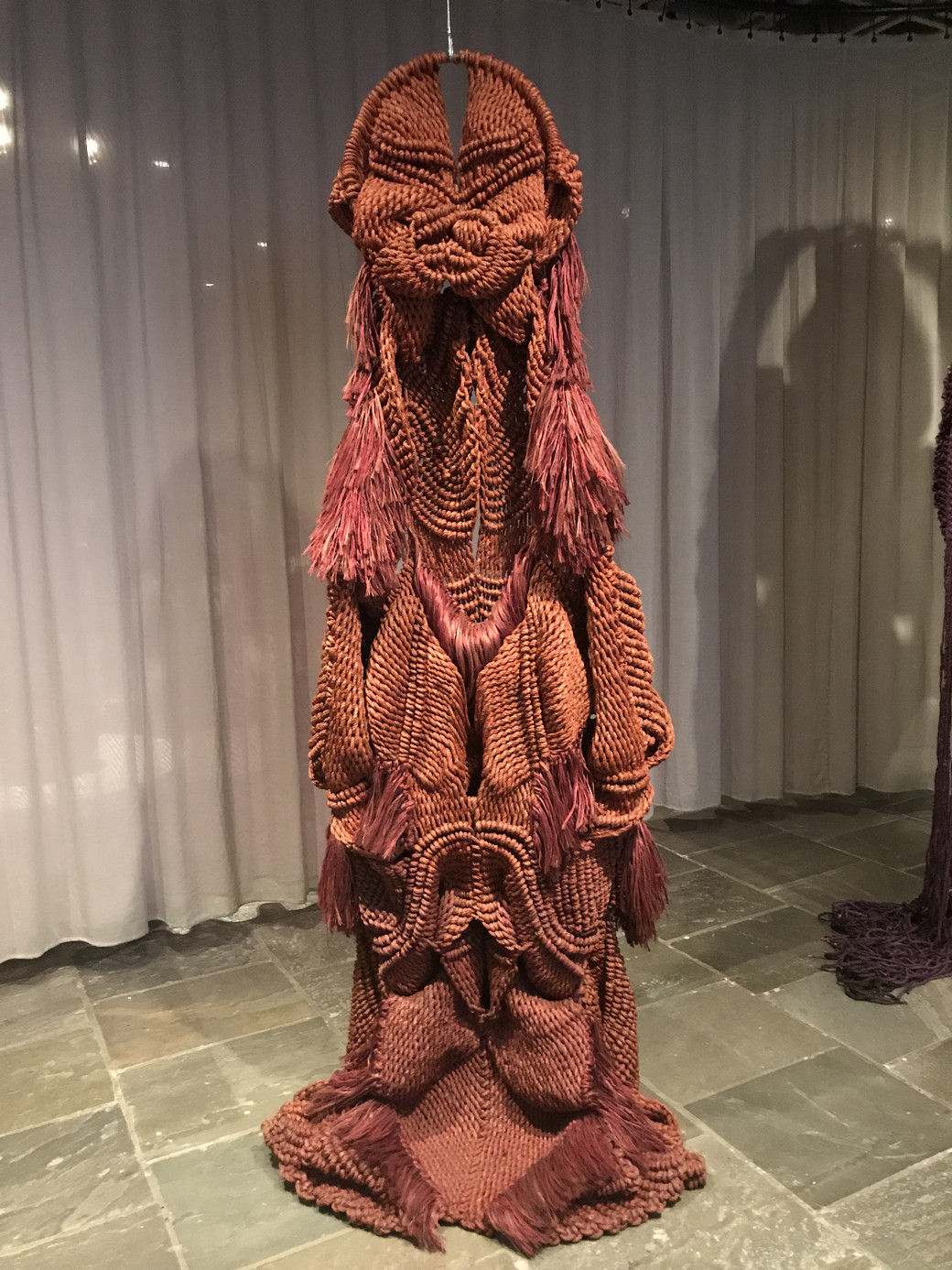
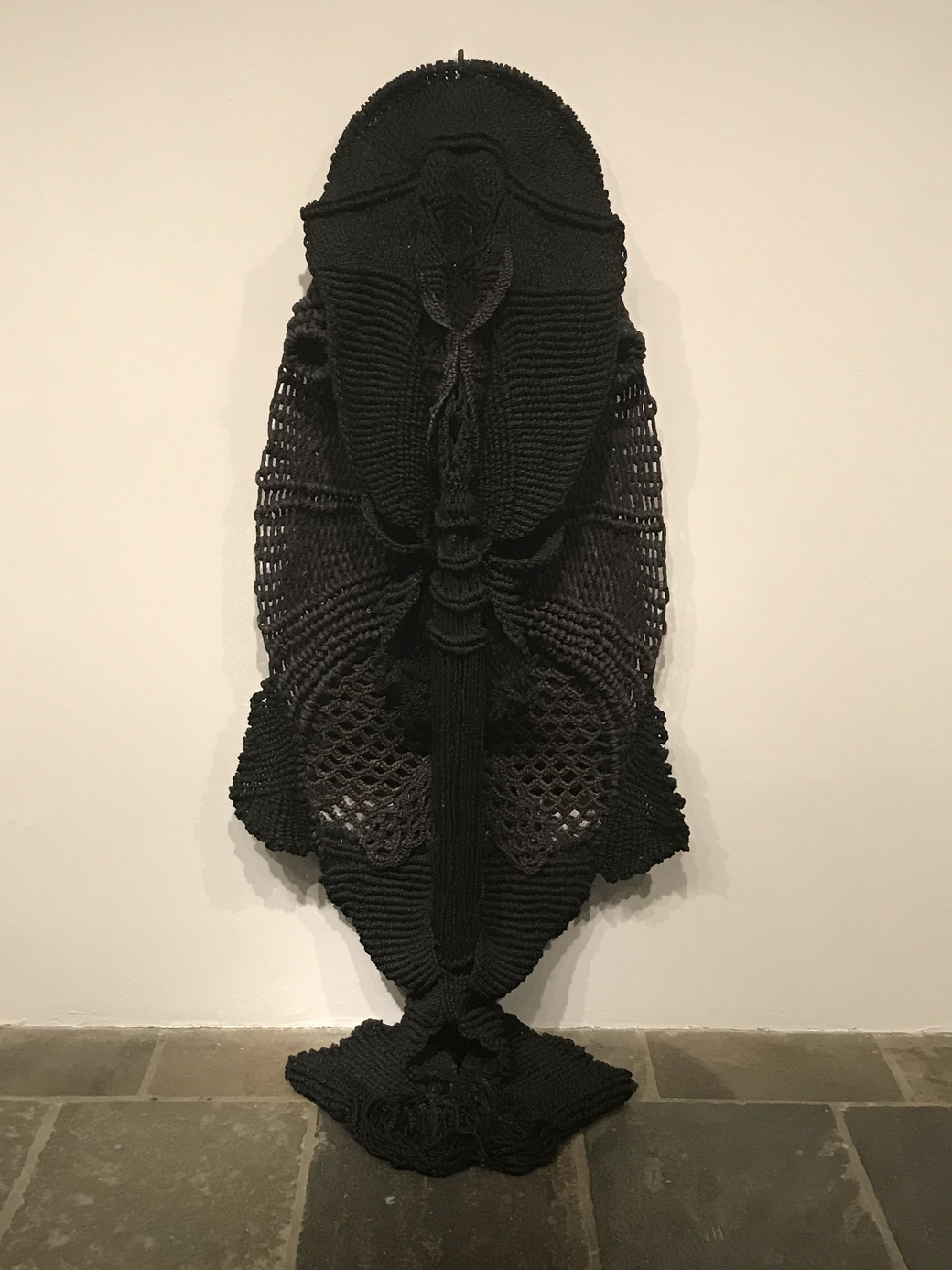
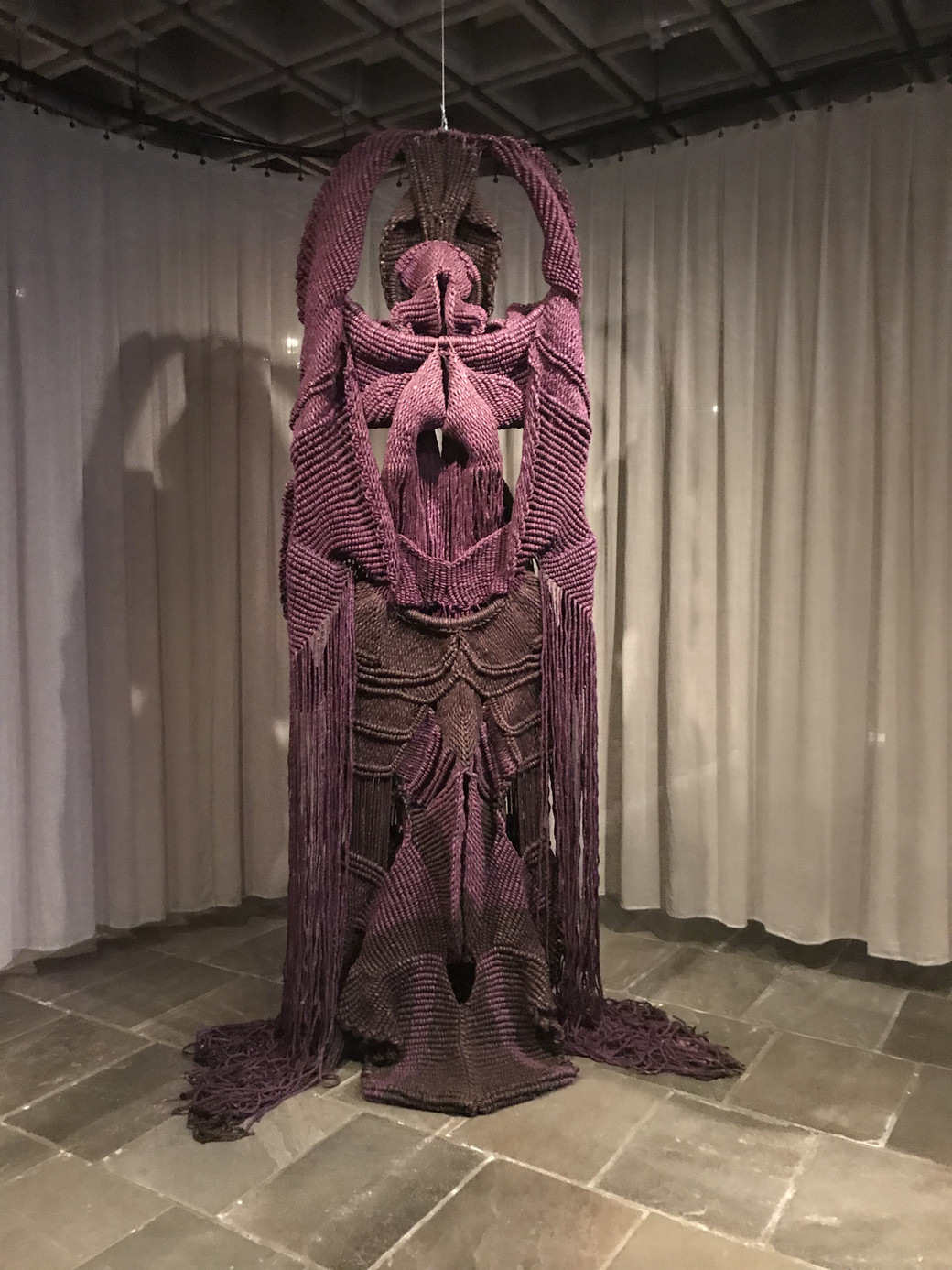
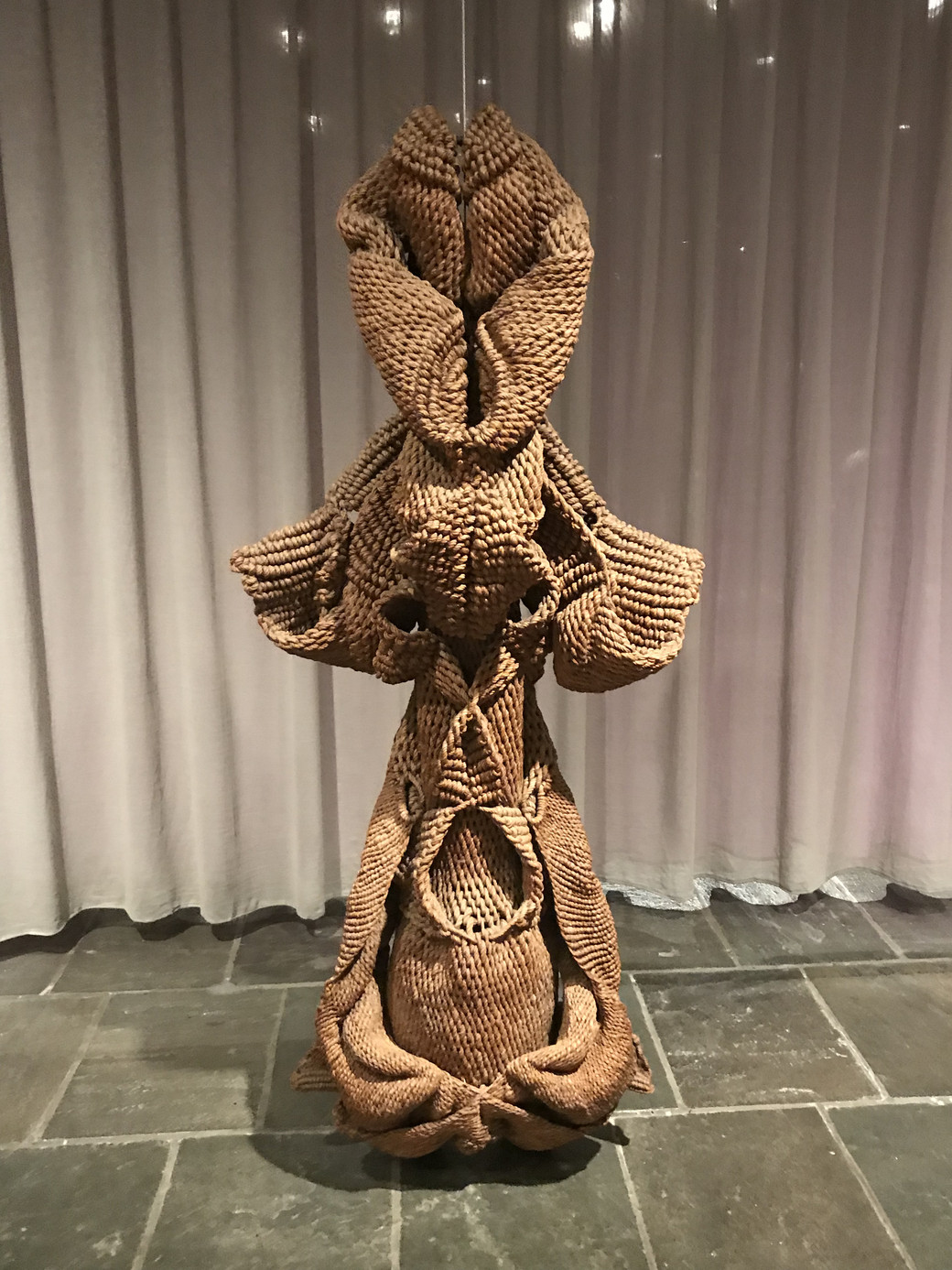
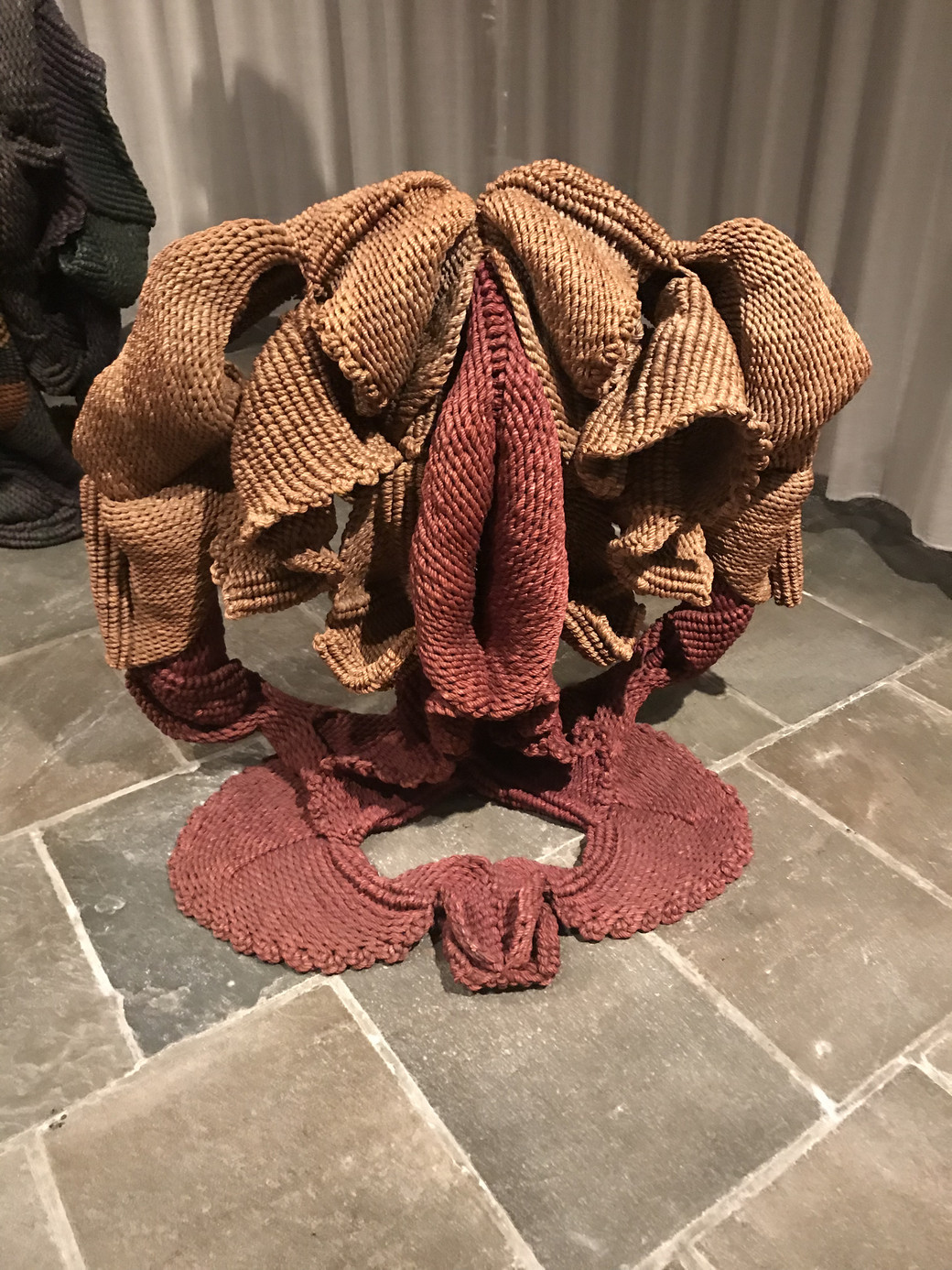
"Phenomenal Nature: Mrinalini Mukherjee" is on view at the Met Breuer through September 29th, 2019.
"Phenomenal Nature: Mrinalini Mukherjee" is on view at the Met Breuer through September 29th, 2019.

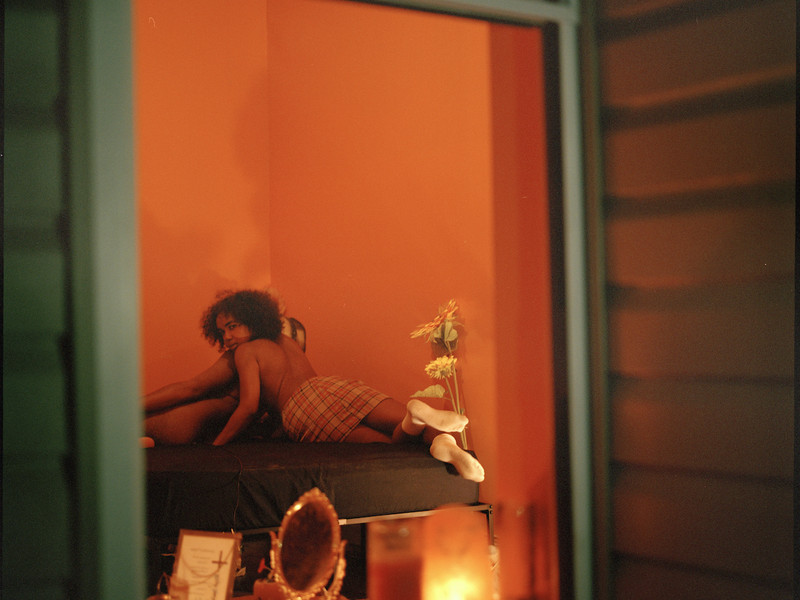
In re-creating images of your childhood with subjects you encountered [in the current] youth community, how were you able to insert and infuse yourself into their experiences while also separate them from your exact experience?
First, I have to explain that as a documentary fashion photographer, photography is very meticulous in terms of character selection, finding a location, styling, makeup and hair – the only thing left really is to let the youth be themselves. As natural as they can [be] within the staged situation.
The difference between youth in my time and youth today is not that great in essence, the adolescent experience is the same everywhere and at any time, in my perception that is. There is no need to separate or try to connect what they experience to what I experienced.
How much of the narrative throughout the images has been directly from your memories versus influenced by the current youth culture there, and their relationships and present lives?
Many of the photographs were created from my personal experiences, but again, my perception of youth's inner essence remains the same, despite the introduction, and once you disconnect them from the virtual world, they behave as teenagers in every way.
What aspect of this route and location has changed the most, and what has stayed the truest to your experience there?
In my opinion, what has changed the most is the construction of buildings. Multi-story buildings have multiplied in areas that were once free, green and open spaces for us. But the area remains more or less the same, particularly the beaches.
Why 14-17? What is it about this age range that is so unique in your opinion, in both creating your art and in terms of the larger meaning in our growth as humans?
Ages 14-17 are the ages I remember most significantly, these were beautiful, happy, innocent years, and to broaden this insight – it is the age of consolidation and self-identity, a recognition of yourself compared to society. The beginning of a certain independence, in which the experiences are very strong because everything is very new and original. Everything is so natural and real, there is nothing artificial and this is evident in the pictures.


There is definitely an energy behind the story and the photos that is beyond alive— if you could put a song, or soundtrack behind the project, what would it be?
I lived for the music of "The Smiths" from the eighties.
How do you relate to ‘homesickness’?
My parents and my family still live in the Hadera area, I visit them once or twice every couple of weeks, and still get the chance to photograph this beautiful place situated on the shores of the Mediterranean Sea.
You spent quite a while on this project, as it spans twelve years. Did you form your own relationships with the subjects?
The subjects are "new face" models from various acting and modeling agencies in Israel, some of whom I have worked with over the years, I wouldn't call them good personal relationships, but rather really good professional relationships.

When did you start to stand up for what you believe in?
When I was 17, the government raised university tuition fees from £3k a year to £9k. There were riots in the streets for days, and me and my friends got kettled by the police for hours. It felt kind of exciting, and I remember naively believing that we could make a difference. After the government (obviously!) did not renege on this, I felt deflated and apathetic— but those feelings soon turned to anger.
I started to become more interested and invested in politics and the inequality within our society.
How would you describe what your zine "HATE" it is?
I’d say it’s an art zine that tackles important social issues, and maybe the way we approach it is a little provocative. We wanted it to be informative but not intimidating. Too many underground, left-wing publications are made by intellectuals for intellectuals and this can be alienating for readers.
One of the issues focuses on mental health... Has the exploration/creation of this issue changed your views on how you [personally] deal with it?
No. I think growing up and gaining different perspectives on how to approach my relationship with myself has been hugely beneficial and I think that often this only really comes with age. It’s such a cliche that you hear when you’re younger, but I think it’s true!


When and why did you decide to come up with a zine?
Publishing and magazines have always really interested me. A few years ago I met Scarlett and we started HATE together. It’s a good way to publish what we want to see as I felt like nothing appealed to me. Doing something yourself, even if no one sees it, is really fulfilling and I would urge everyone to start getting more creative.
Do you work on it every day? How is the process of making one?
I have periods where I work in a more concentrated way. Me and Scarlett will meet up and dedicate a few days to each issue, and we’ll stay in contact 24/7, though she’s just had a baby - River Rain Noble. Because it is self-funded, it has to fit around our own projects and work.
What else aside from writing for this zine do you do? Any hidden talents?
I write articles for other magazines and sometimes poems, I’m also working on another zine called Awkward Sex Stories. Recently I’ve been singing in my friends band, Childhood.


Yves Scherer’s lenticular print of Lindsay Lohan hangs across from Curtis Kulig’s painting of scattered notebook pages featuring vague stream-of-consciousness and pop culture-influenced phrases like “When Dennis Hopper died,” “We do like Brandy,” and “Everything seemed wonderful with Obama Yeah Yeah Yeah.”
Adam Kruger offers a pair of plaid oil-painted suspenders attached to a pair of men’s underwear painted with hyperrealistic creases. The underwear carries a silicone rubber box tattooed with the unmistakable exterior of a Premium Crackers box. Olivia Taylor makes a vibrating skin-like bulge that reads “HYSTERICAL!” in bumpy pale pink font.
Erik Foss uses harsh, gestural brush strokes to create his smooth-yet-gritty abstract painting.
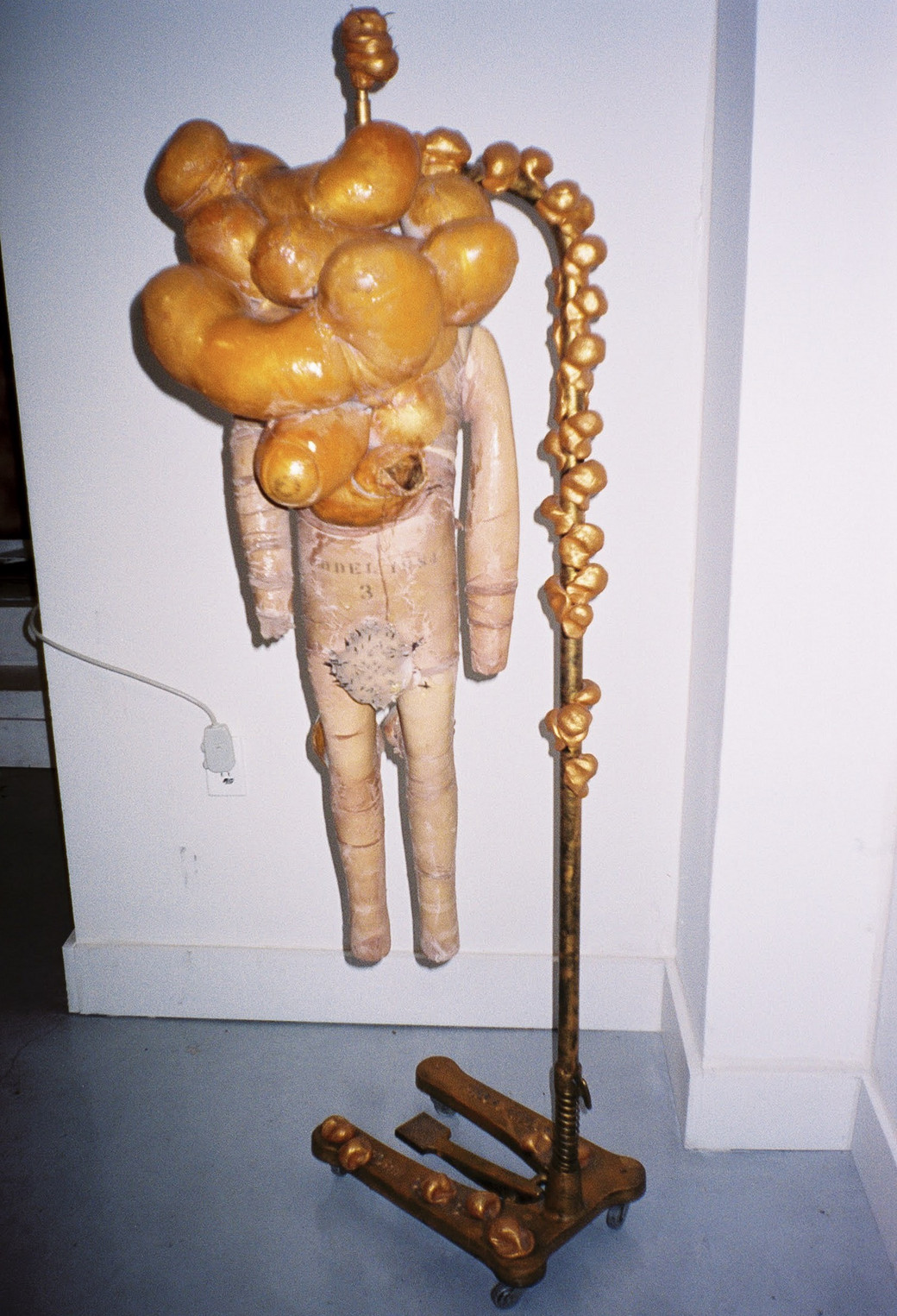
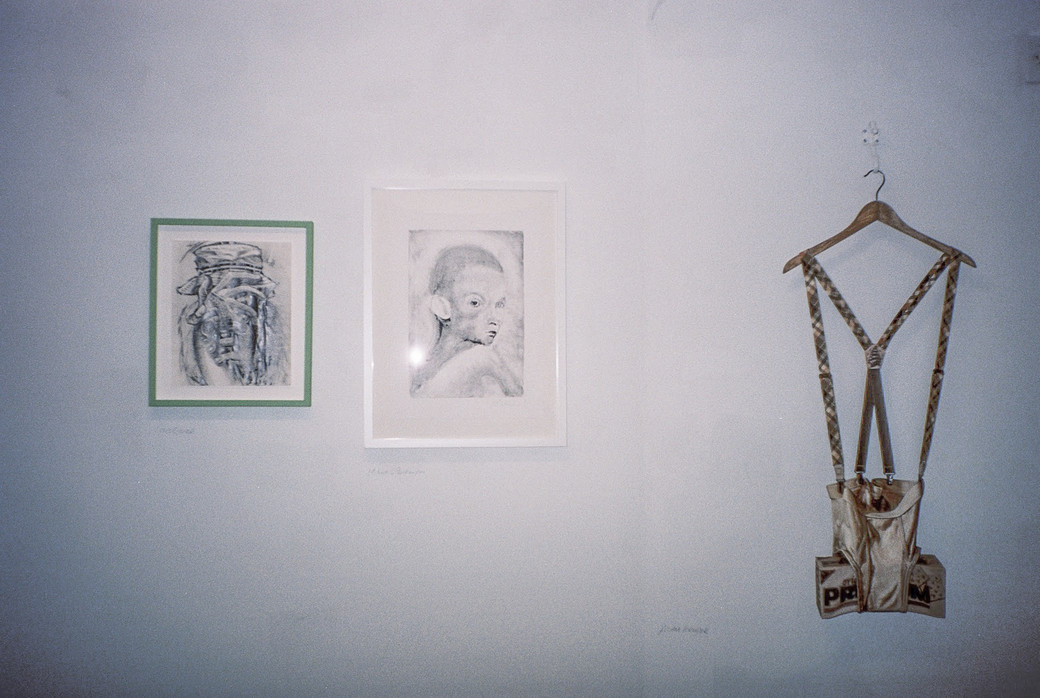
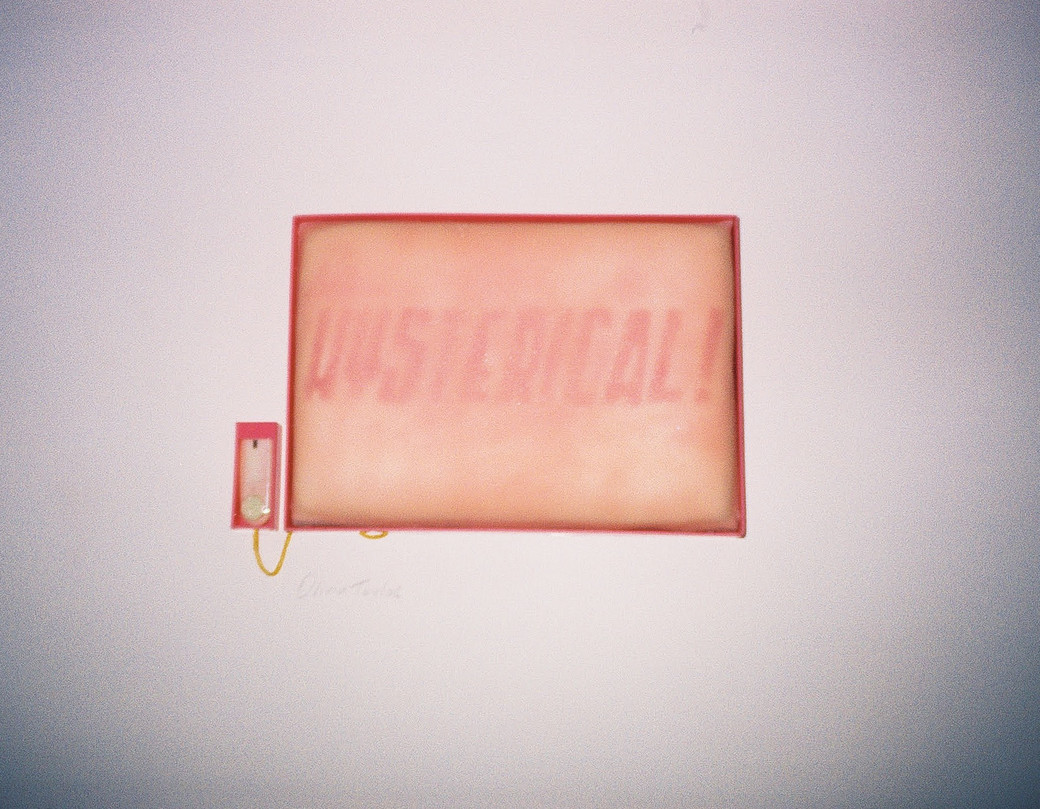
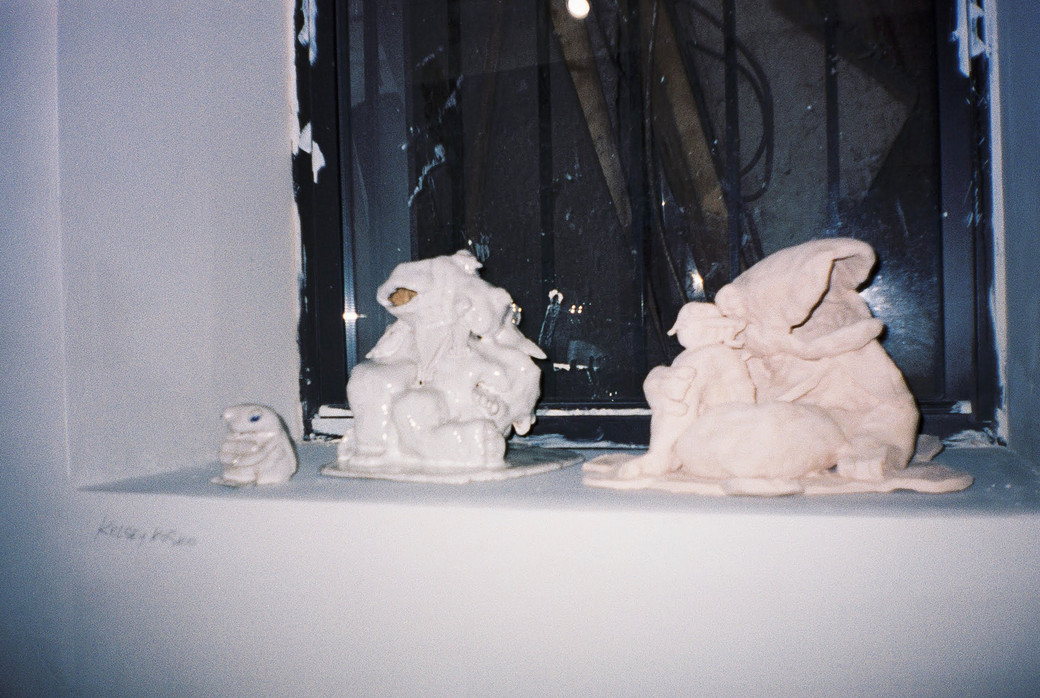
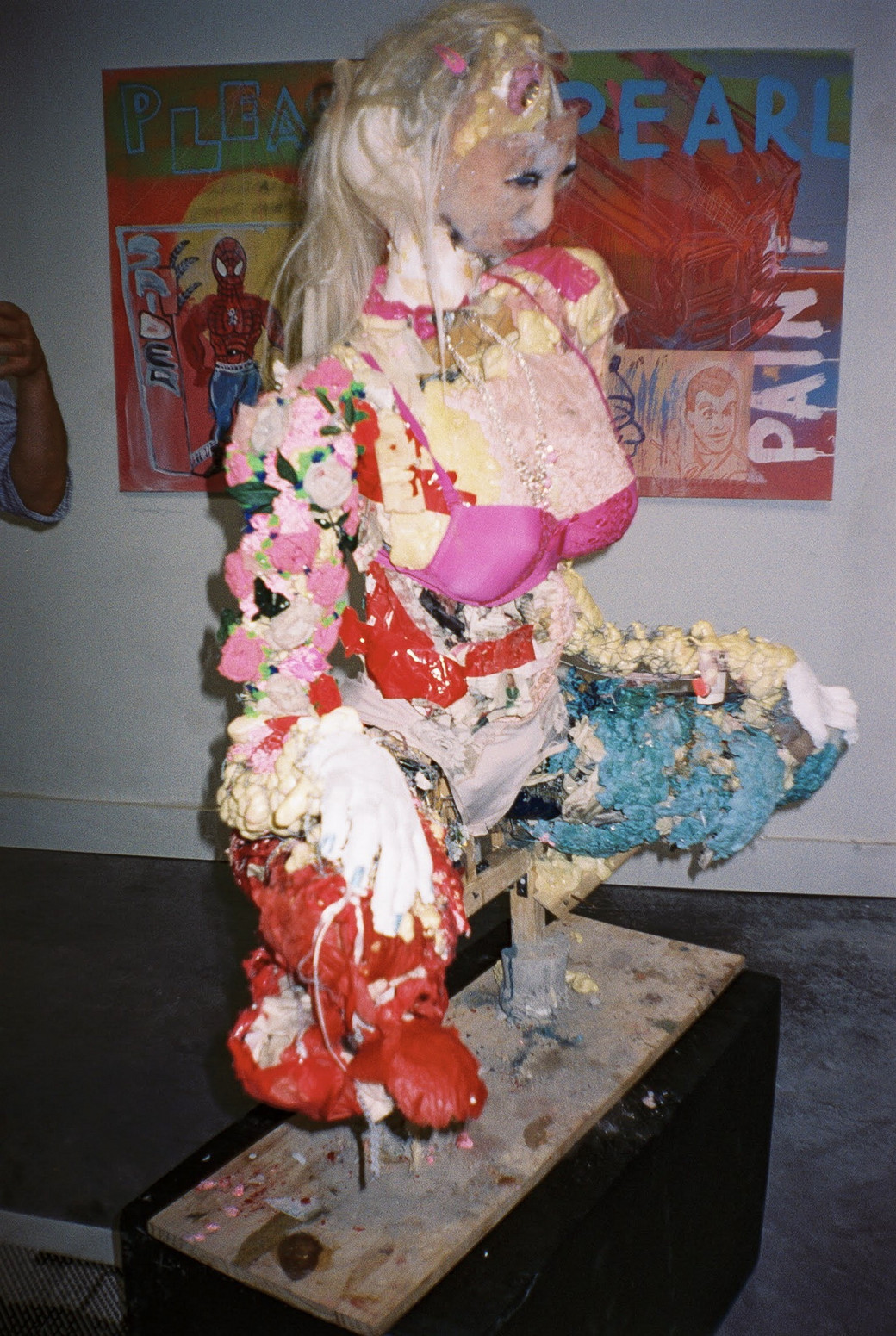
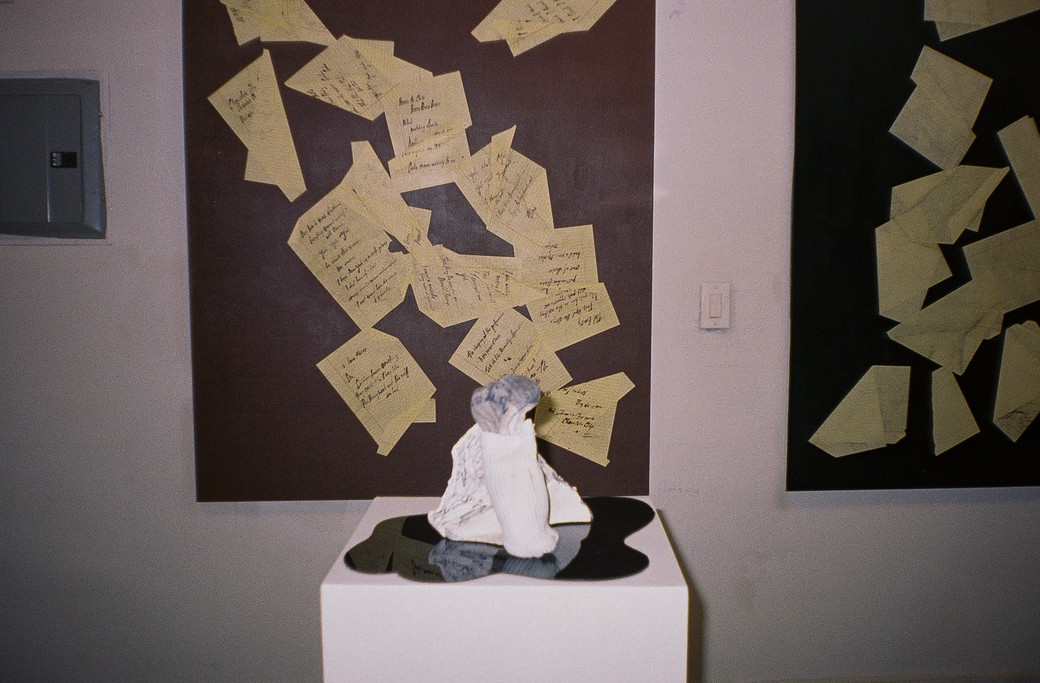
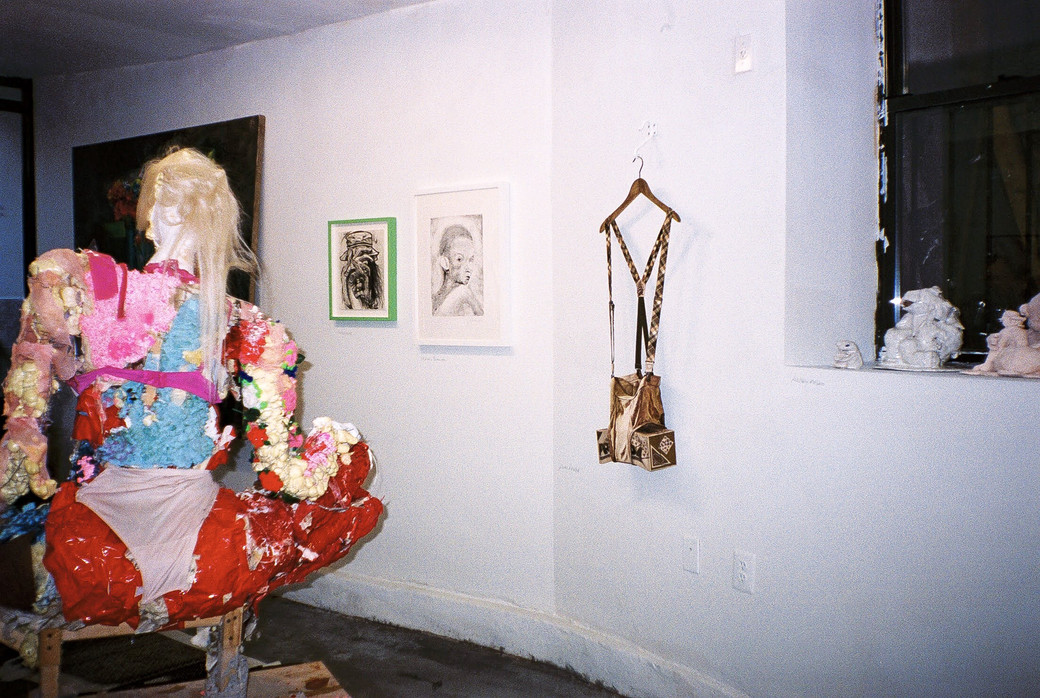
Plus One’s structure, or lack thereof, harkens back to the rule-bending nature of the DADA movement. “[The show] is DADA in the sense that there’s no rhyme or reason,” Gomez explained. “That’s how art should be. It should just come together.”
Participating artists and their Plus Ones include: Megan Cavanaugh, Jesse Edwards, Louis Eisner, Erik Foss, Anthony Haden-Guest, Christopher Johnson, Curtis Kulig, Mikhail Sokovikov, Jason Aaron Wall, Max Blagg, Yves Scherer, Grear Patterson, Blake Sandberg, Laura Kaplan, Samantha Rivera, Monique Montell, Pablo Power, Adam Kruger, Jacquiline Farrara, Kelsey Kosko, Adira Schiff and Olivia Taylor.