Tell me about your work.
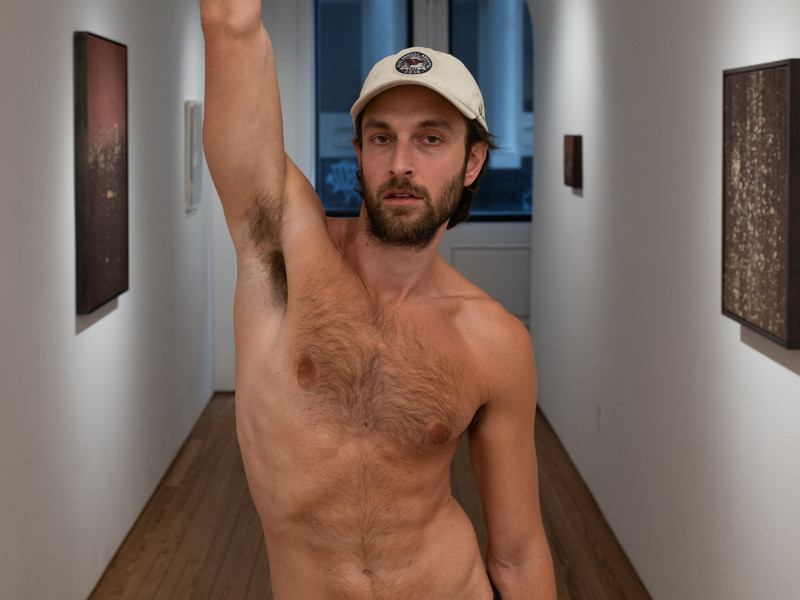
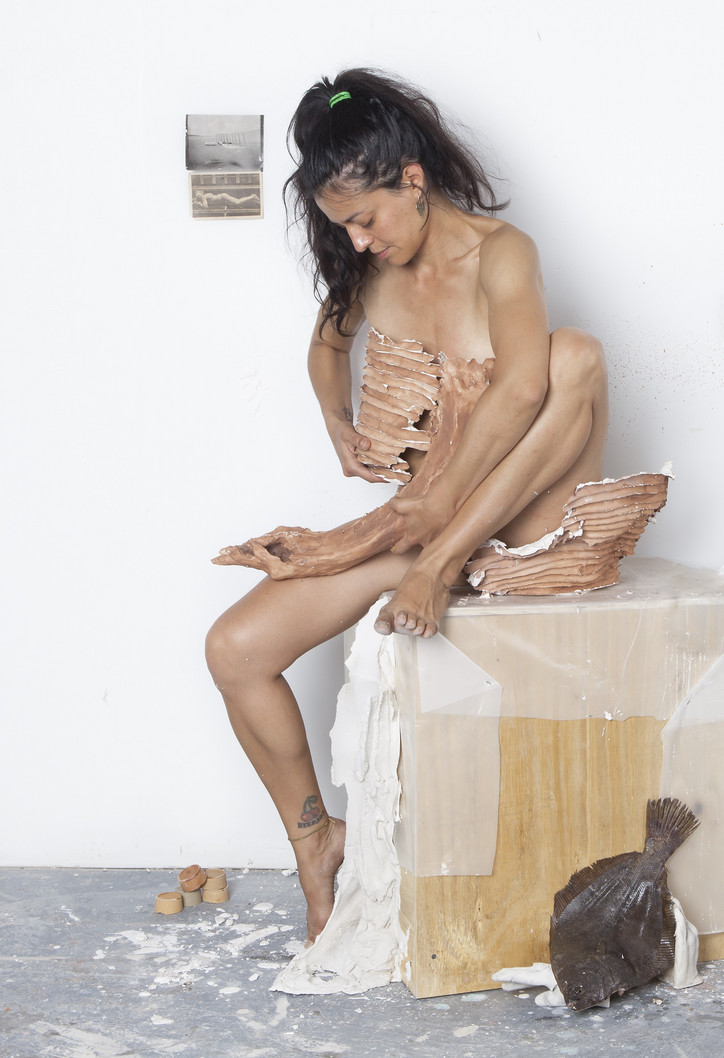
I’m a sculptor, I studied in England, I’m from Brazil, and I think a lot of what informs my work is the desire to engage the use of the body occupying space and how that manifests itself in many ways, formally, politically, and also, it becomes a pivot from which to engage in loftier ideas about being and gender. So, I’ve kind of been approaching everything from that angle. My work usually involves my body in some way or another, and often plays with themes of the inside and the outside, whether I’m present as an absence that you can visually fill with your presence in the work, or whether I’m present as a volume that occupies space.
And what about this show?
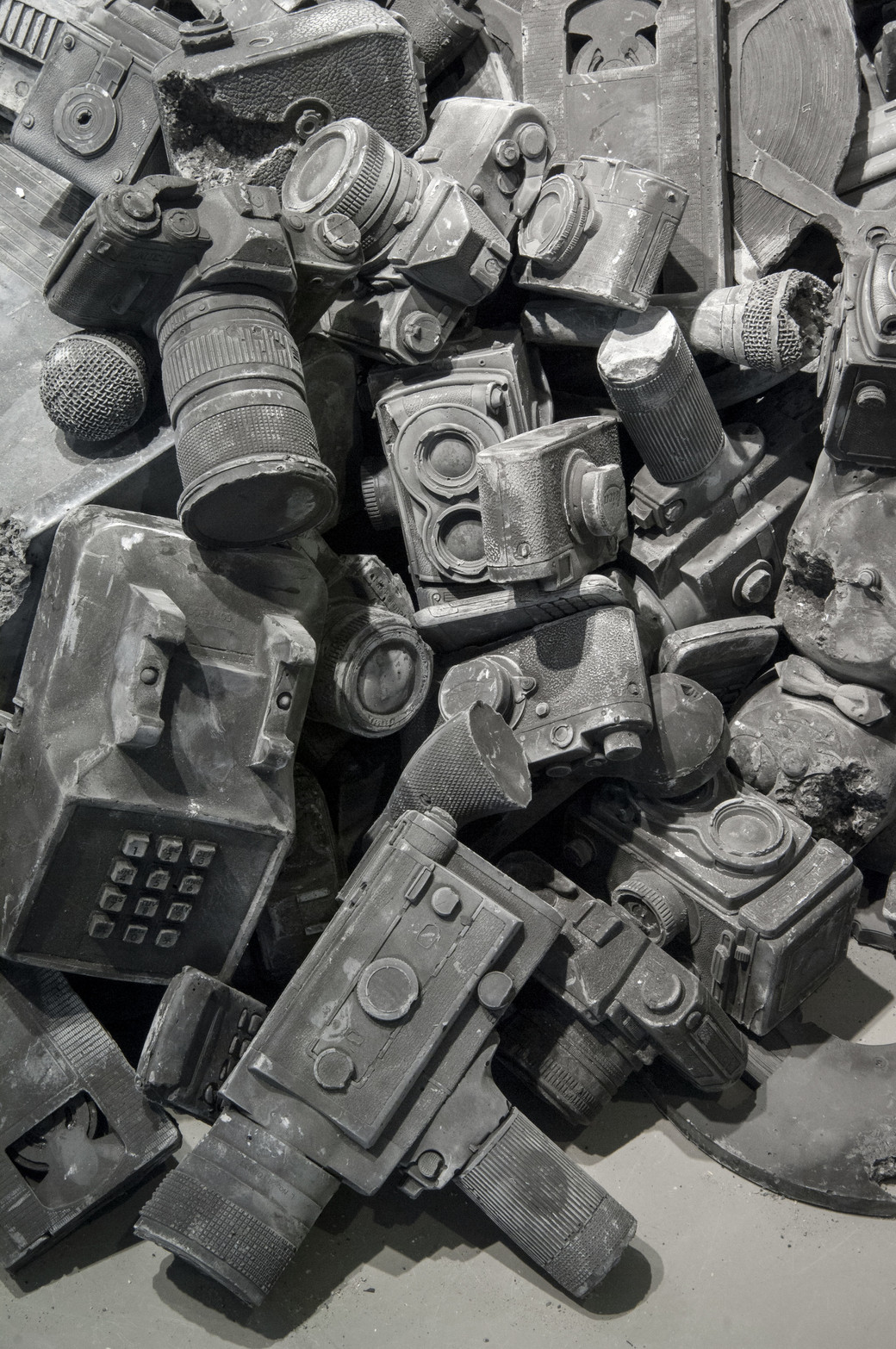
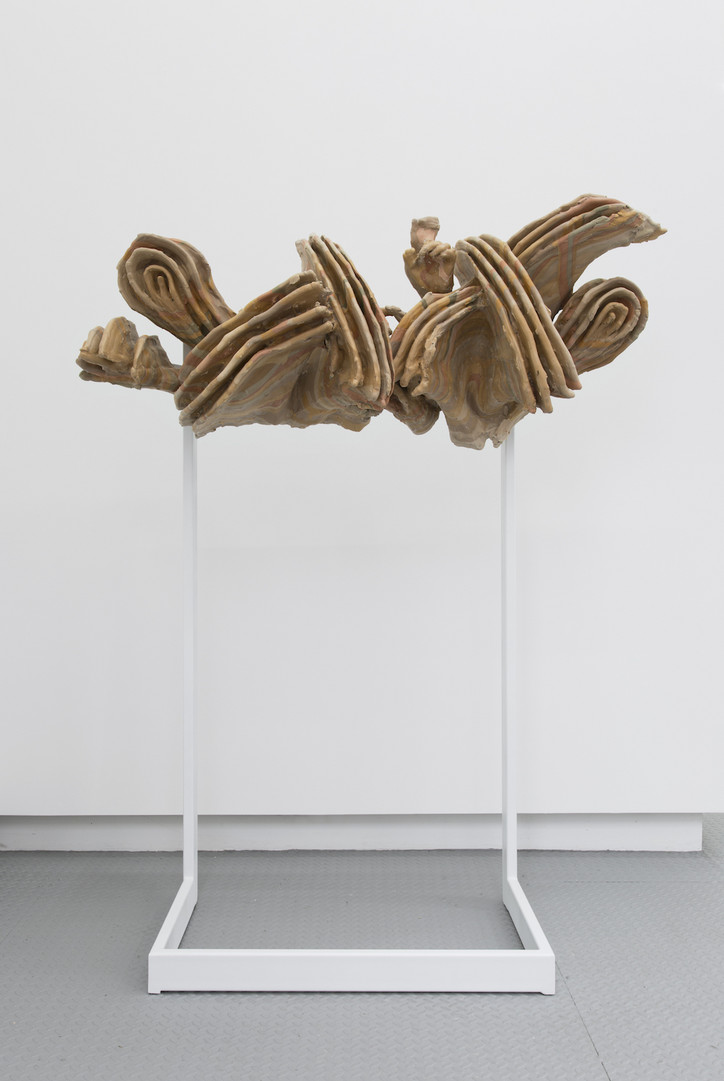
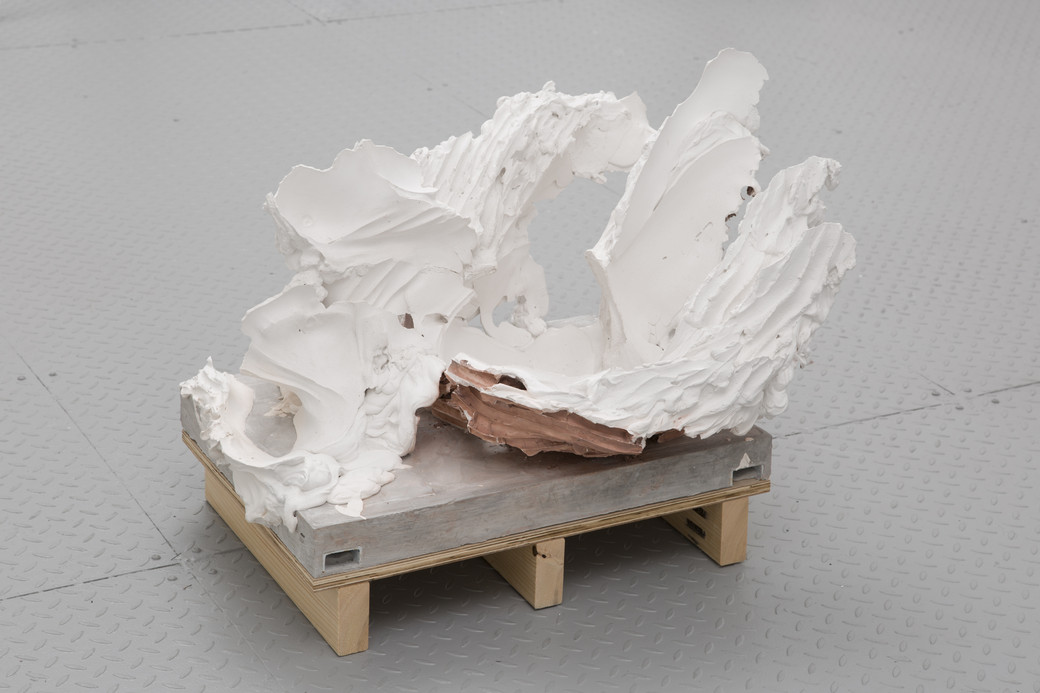
This show started off with the desire to do something that was perhaps different from things I’ve done in the past, in the sense that it was directly addressing more contemporary events. So, the first piece you see when you walk in, "A thousand year kind of flood," is a group of gesticulations that are performed by me into a very big clay box—this is a thing I’ve been doing for a while, which is I fill a volume with clay so it becomes almost like a solid space, and then I move into it and create a negative with that process. So, it’s almost like, if there’s a mold-making process, you have a positive and then you create a negative, then from that you can create another positive. The positive in that event is an action, so it’s the activity of moving through and in this case, gesticulating my hands into a volume that produces the negative, and so the gesticulations are all from the news, watching online news, things that people share on social media, often, like news clips showing the disaster of Hurricane Harvey, or Hurricane Irma, or Maria last year—they’re all from that hurricane season. I was very interested in how people’s hands moved when they’re trying to do something that language can’t do very well, which is convey this large-scale disaster or crisis. So, hands gesticulating to show how a roof was ripped off the building and thrown across the street, hands that gesticulate how the living room used to be here but isn’t anymore, or how high the water went—the ways in which the body becomes engaged in doing more than what language can.
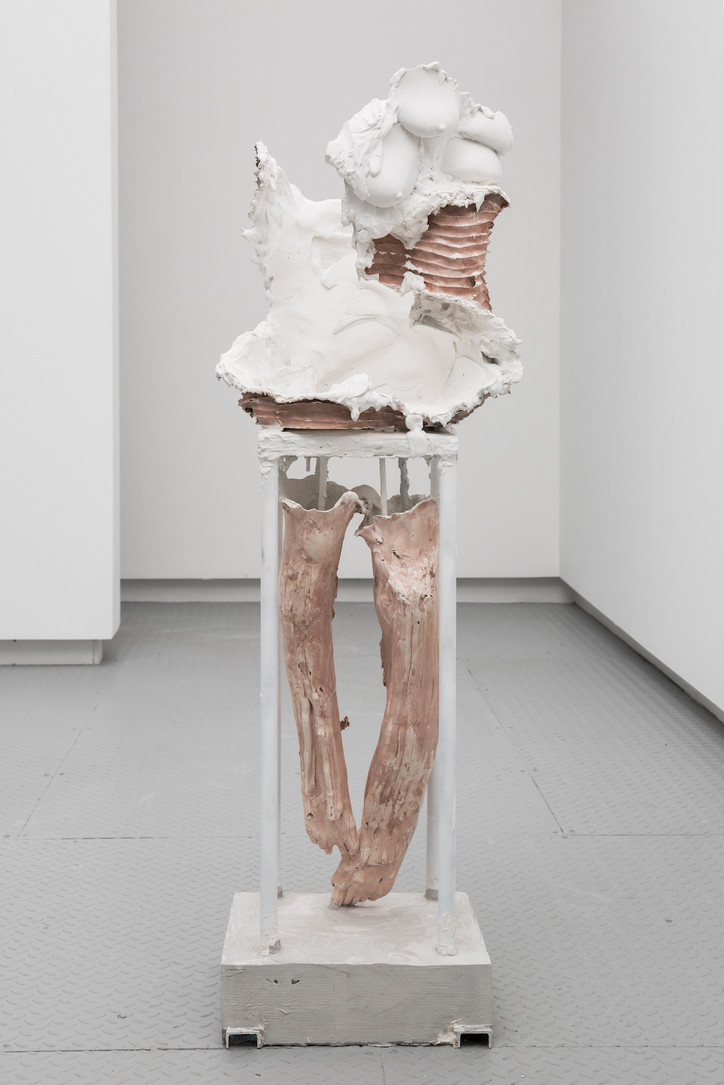
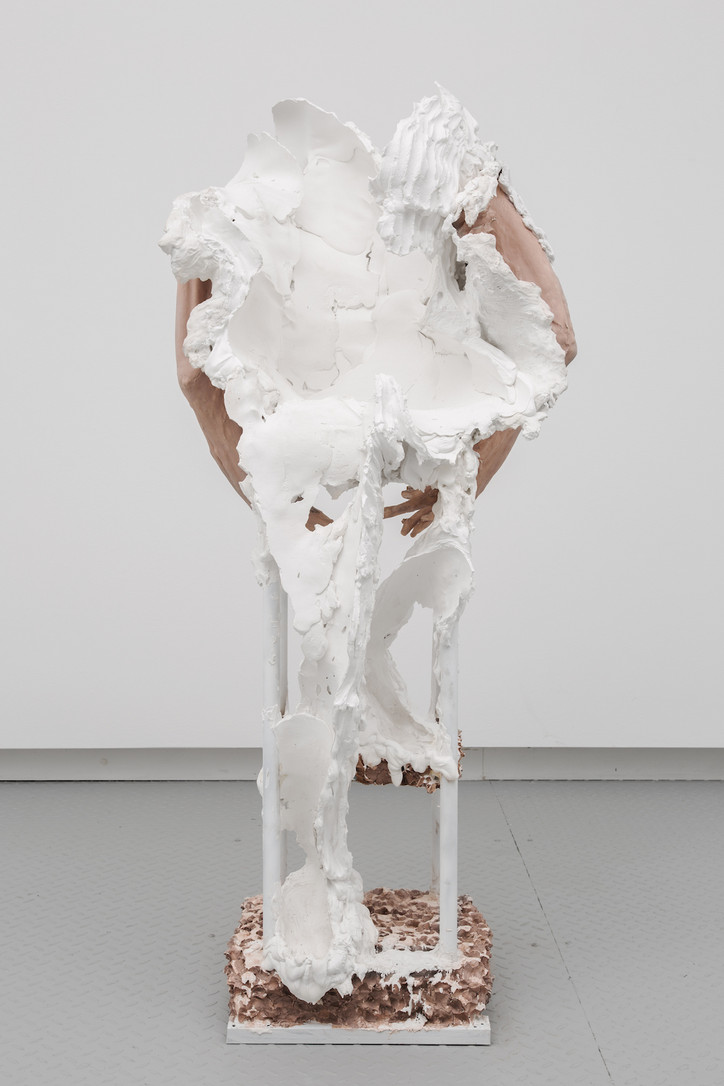
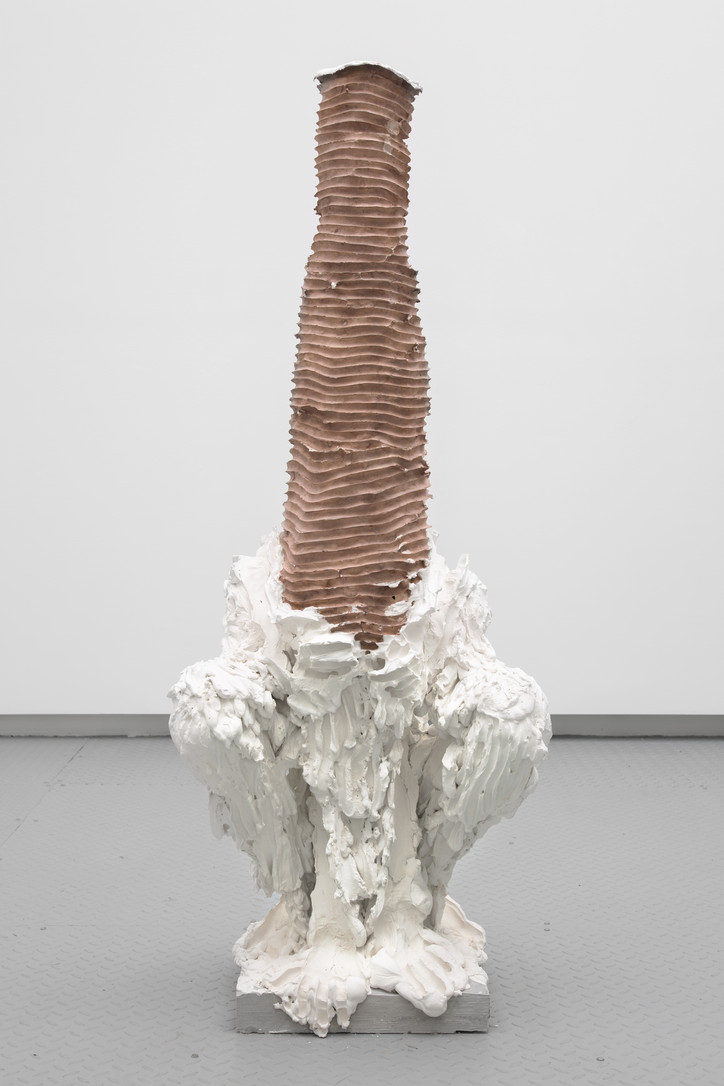
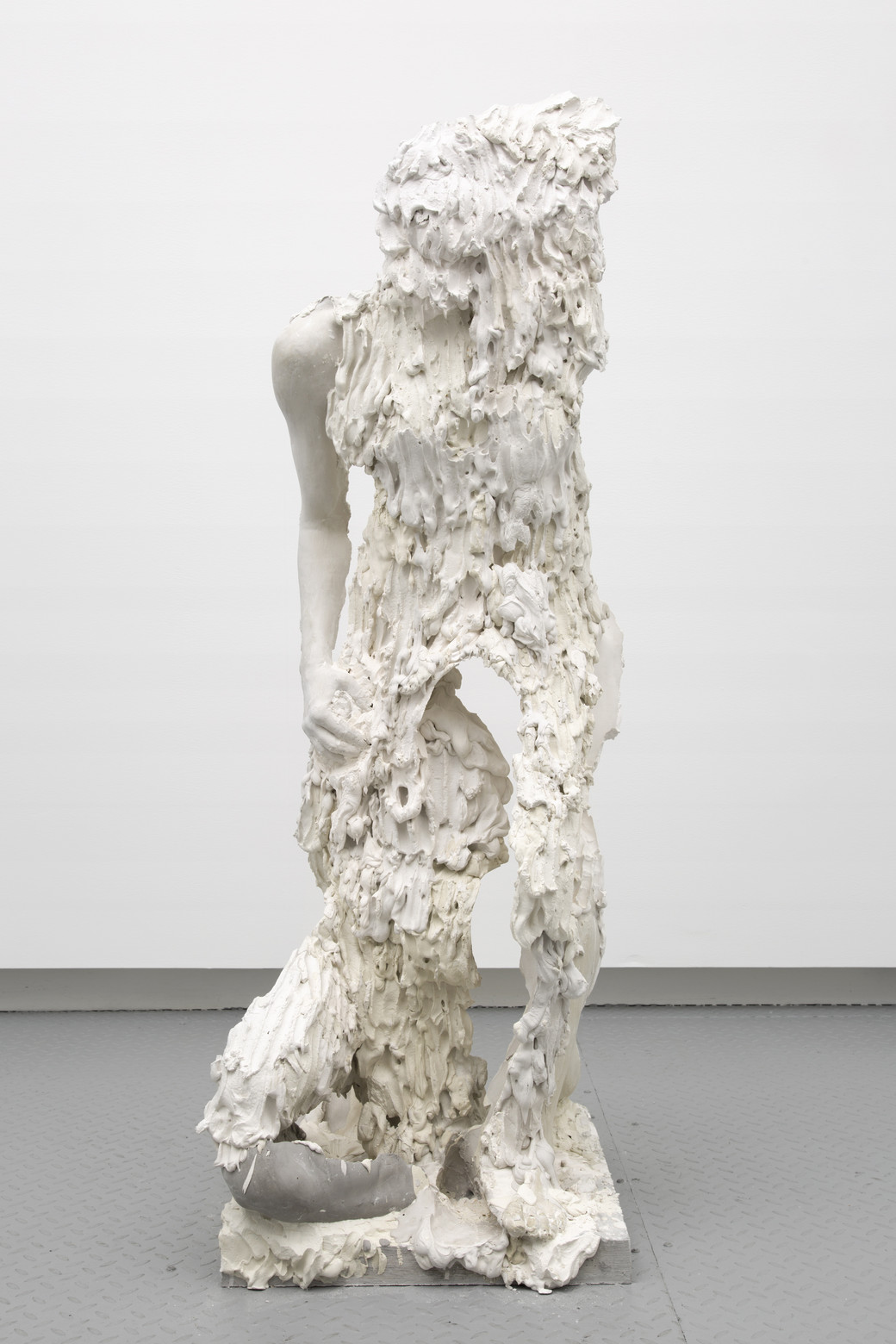
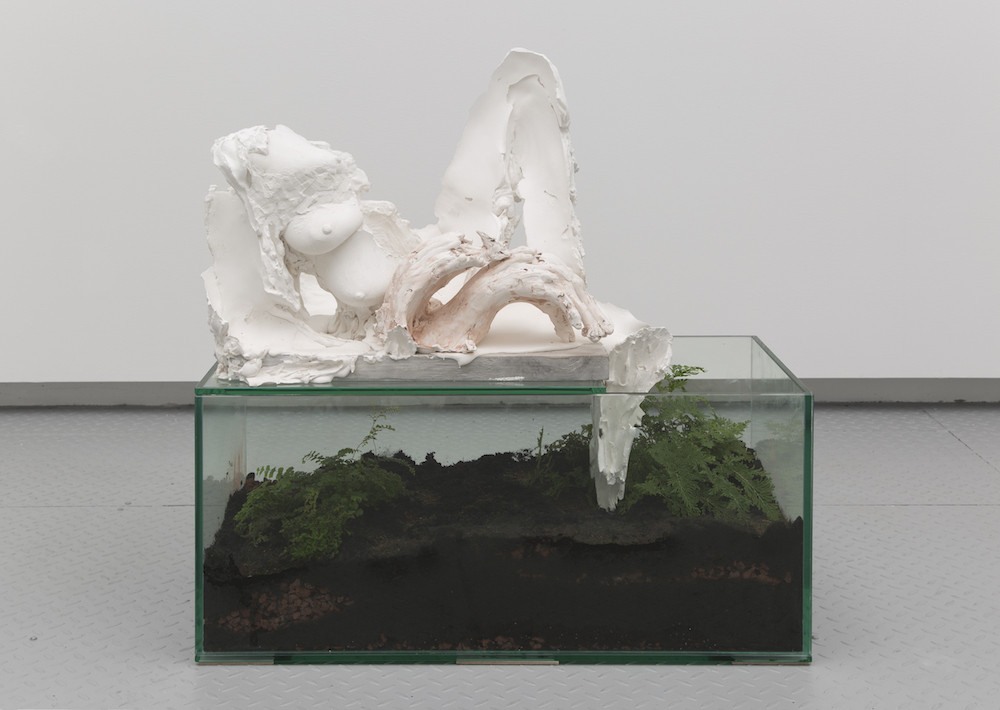
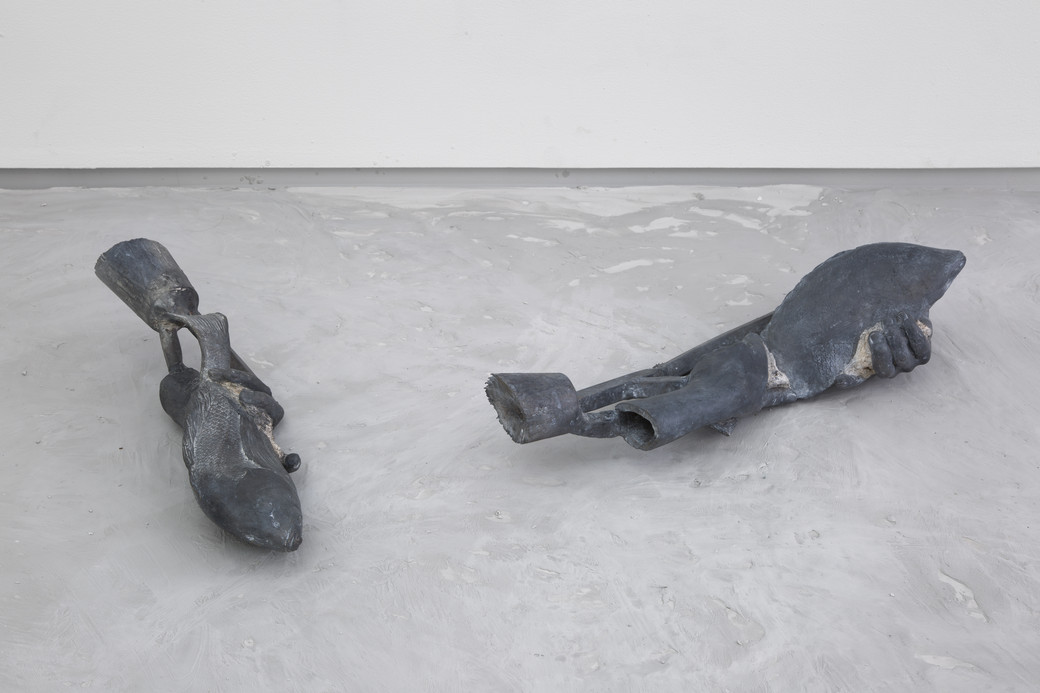
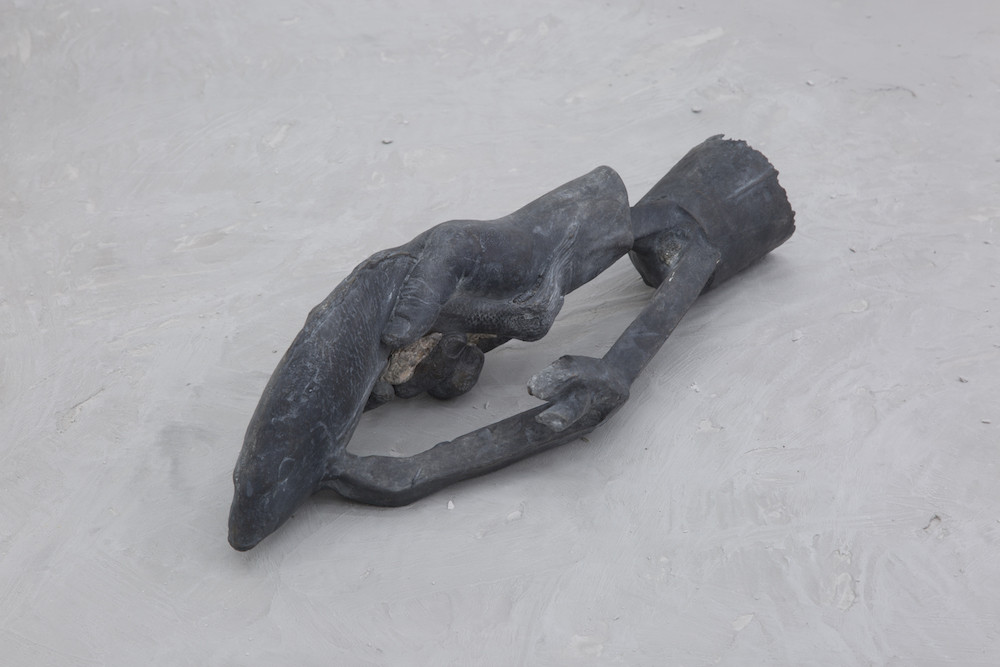
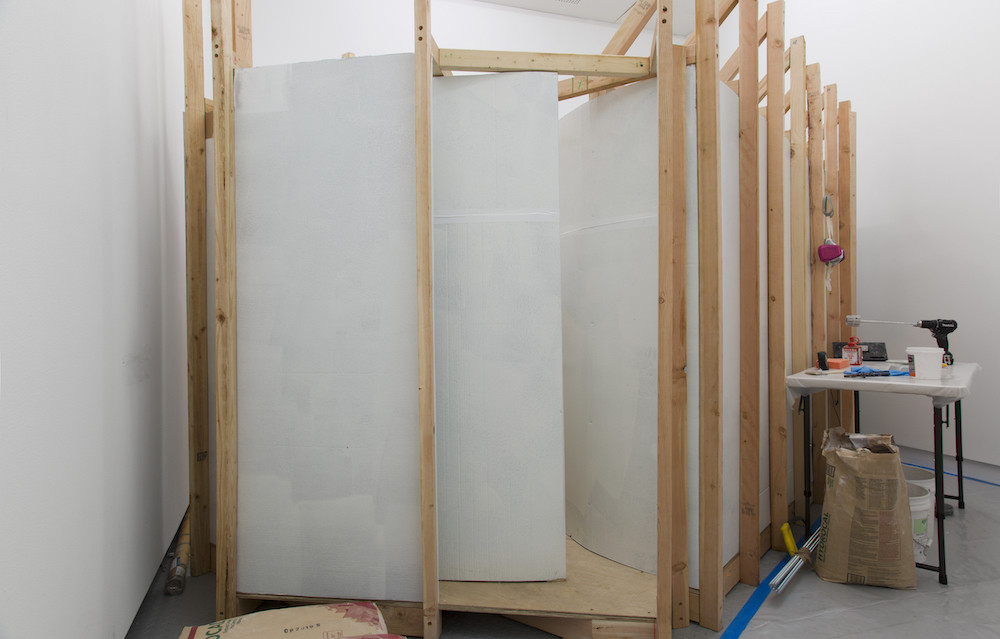
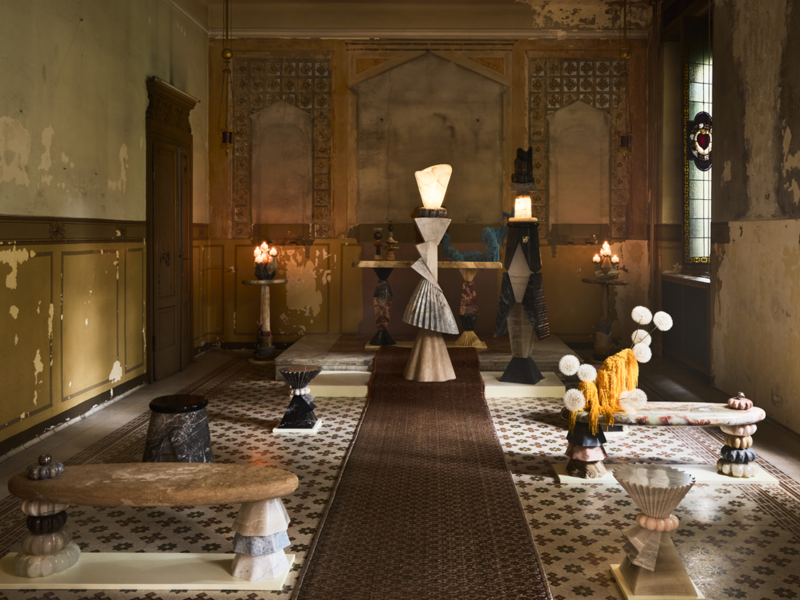
Then with the hands with cast fish, and the pieces that follow into the interior gallery, they’re all dealing with moments of loss, in a way, the loss of the body. These works are based on funerary urns that are from the Amazon region, Brazil and other countries from a time when those countries didn’t exist. Then in the back we have "SHEE," which is a habitat devised by a space architect that I met—she’s the coolest person I know, and she got this European Space Agency commission and made this habitat and it’s in its undeployed—let’s call it its storage or sleeping mode in the gallery—and I’ve been crawling and interacting with it in a very tactile way, and slowly destroying it. So, there’s a lot of loss, destruction themes going on, which for me tie into the moment we’re at, perhaps differently and more directly than other shows I’ve done in the past.
I love the weird connection between a funerary urn and outer space. Can you talk about that a little bit?
What interested me with these urns is that they’re kind of machines—the way that they are made and the belief system that structures them into being is very much this idea that the ceramic urn is there to control and contain and direct a process, so in a way it has a function. It’s an object that has an agency, like how a machine or a mechanical thing does. They’re very different from how we use funerary urns, like when we put someone’s ashes in it, and it’s considered a resting place for these ashes and just a place of memory, but the urns in these Amarindian cultures that were producing these were very much devised to control a very powerful force, which is your spirit. In these belief systems, when the spirit left the human body it was no longer human—you don’t have a human spirit like you do in Judeo-Christian religions where when you leave your body as a spirit, you still look just like you but you’re see-through now, right? In these cultures, it’s very dangerous and you could potentially become many things—a jaguar, a snake, a bird, or you could become a spirit that is used by a rival shaman in a rival nation.
This very dangerous transition from losing the body is what these forms mediate for these cultures. So, I became very interested in these urns in that capacity, because it’s an object that’s designed to mediate the loss of humanity in a way, the loss of a body, and if you’re humanity is your body, when you lose your body, you lose your humanity. Some of them were shaped like human beings, literally they’re just people with arms, legs, torso and a head out of ceramic, and the body of the dead would go inside. So, it’s like you’re putting yourself into a new body. Others were shaped in different ways where it suggested transformation into an animal. Probably the most popular ones, which are the majuata urns, which were very tall, like three feet—they were huge, and you would put a whole body in it. They suggest a transformation into an owl or some kind of bird; others suggest a transition into things that could be a snake, or a jaguar, other animals, turtles. So, in some, you have these urns that are trying to retain the human, as if it’s going to hold your spirit and its association with our culture and your descendants, so we can continue to use you as a source of identification and power. Then others were encouraging you to go be a bird, because that’s good—don’t be a jaguar and come back and eat your children. Just go be a bird.