What are your first memories of religion?
Well I was born in California. I grew up in Fresno, land of raisins and crystal meth. Growing up I was raised Lutheran, and I think my first memories were two things. One, the pageantry of it—stained glass windows, big ceilings, the physical stuff. And then the social aspect. It’s interesting, the church I was raised in was in the Valley in Fresno, and there were quite a few Midwesterners, specifically Minnesotans that’d come looking for a better life in agriculture, and among them were Norwegians and Scandinavians that were Lutherans. So this church actually had services in Norwegian when I was a kid. The Norwegian was more of a tradition than a necessity, the long-past cultural remnants of the ‘70s immigrant population, but that made an impression on me, this gathering, this mixing of cultural identity with religion.
Were you introduced to music through religion?
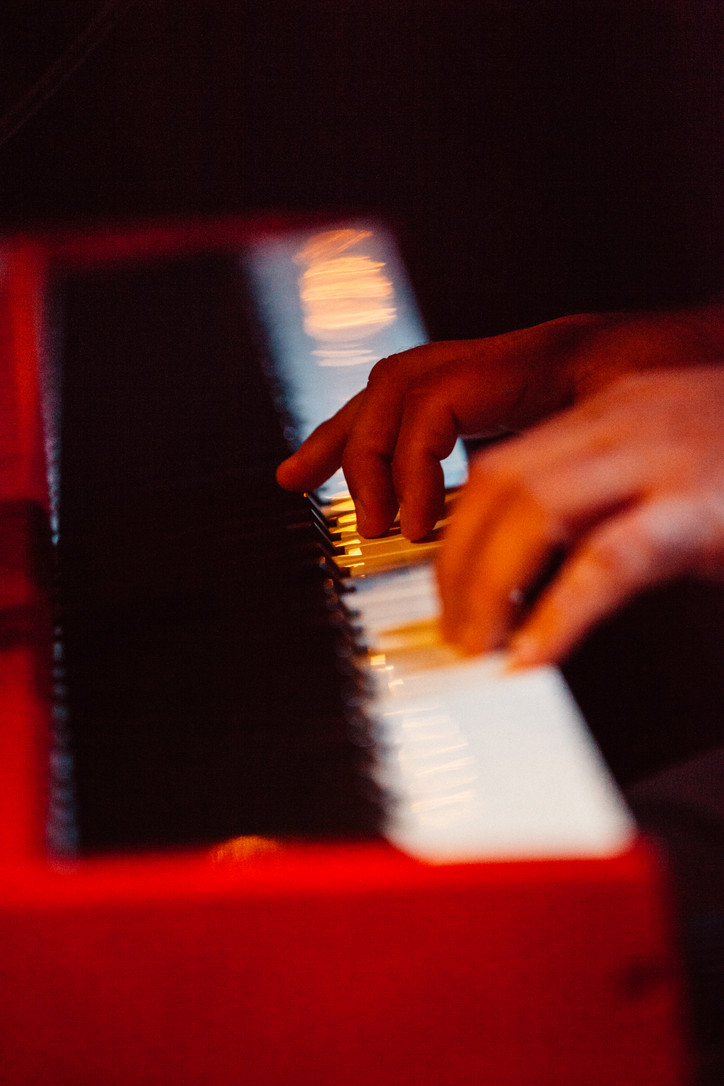
The Lutheran service is primarily sung, so there weren’t too many religious declarations made as a child that I didn’t sing. I started playing piano at a very early age in the church, and then family life—it seems like a horrible cliché, but as a family we would sing. That was our Friday night entertainment, we would sit around a piano and sing from this big Reader’s Digest book of old classic American songs. I have vivid memories of my dad singing Shenandoah with my mom accompanying him, and me and my brother attempting to do really bad harmonies.
But you recall that with fondness? You weren’t being held against your will...
I do recall it with fondness. Despite all my problems with the church, it’s always been, for me, one of the very few places where people sing together. That I always loved. As a kid I loved singing hymns and hearing all the voices around me, and hearing people attempt to do harmony. It wasn’t about the quality, it was almost like the badness of it, the brokenness of it somehow gave it more beauty. There weren’t glee clubs, or different places where people casually got together and sang, so for me, between the church and the family, it was pretty commonplace. I never really realized that a lot of people don’t do this, until I was older.
Why do you think that is? Why don’t we have more group singing outside of that context?
I think the main reason is that church music was never recorded. So you can’t find that many playlists of hymns. There’s the gospel tradition, which was widely recorded, and things like that, but I think for my generation, anybody that grew up after recorded music, popular song was transmitted through recorded means rather than being played and sung. There was a point when popular song was transferred via oral tradition or sheet music, and if you wanted to hear the song that people were dancing to at the Waldorf Astoria before recorded music, you had to buy the sheet music and play it. I’m not a Luddite by any means, but I do think that with the proliferation of technology and media, music has become more and more of an isolated act. Our relationship with music is each of us with headphones on. It’s a private thing, and I think that’s been a gradual shift since the dawn of recorded music.
So you were involved with music with your family, and with your church—did you have a band? Were you into rock ‘n’ roll as well, or was it mostly spiritual music that interested you?
You know, I was pretty wide open as a teenager. I had a little funny rock band, and so I certainly was never against music outside of the church. I never viewed it as a dichotomy, but it did seem like I felt a weird kind of freedom within church music that I was especially comfortable with. For me, music is a channel to whatever we call this mystery, this spirit, this something bigger than us. I call it the Holy Spirit, just cause I’m a fan. Music was always a vehicle to lose yourself and discover something different, and to me that was always holy, no matter if it was screaming in a rock band or being prayerful and meditative in a choir.
So was it that same goal, to find something beyond yourself, that lead you to seminary?
It was a few things. It was certainly that, this kind of identification or affinity with a mystery that seemed to capture my imagination. Religion started to feel like the greatest piece of art possible, the fact that it was said from the get-go that it was a mystery, that you don’t really know. To me that’s an amazing place to start a creative endeavor. The other reasons for seminary—I certainly felt called somehow to enter the ministry, and part of that call was this desire to acknowledge something bigger. Also, as I got older I was really attracted to the humanism of Christianity and of religion. I started realizing ‘Wow, this is all pointing back to humanity.’ So much of religion had been pointing away from humanity, for us to escape our own humanness, and transcend our humanness. “Sinners in the hands of an angry God.” That we’re sinners and we need to transcend that. A lot of my religious processing was in reaction to the birth of the religious right, and this idea of born again-ism. I found it odd that when you’re born again, you’re born as something less than human, this creature that has no desires and nothing of the beautiful quirks that make us individuals. You’re born again and suddenly you drink in moderation? You’re born again and you’re nice to everybody? No, those cracks in our humanity, that is our humanity. These things appealed to me, and were all reasons that I felt called into the ministry.