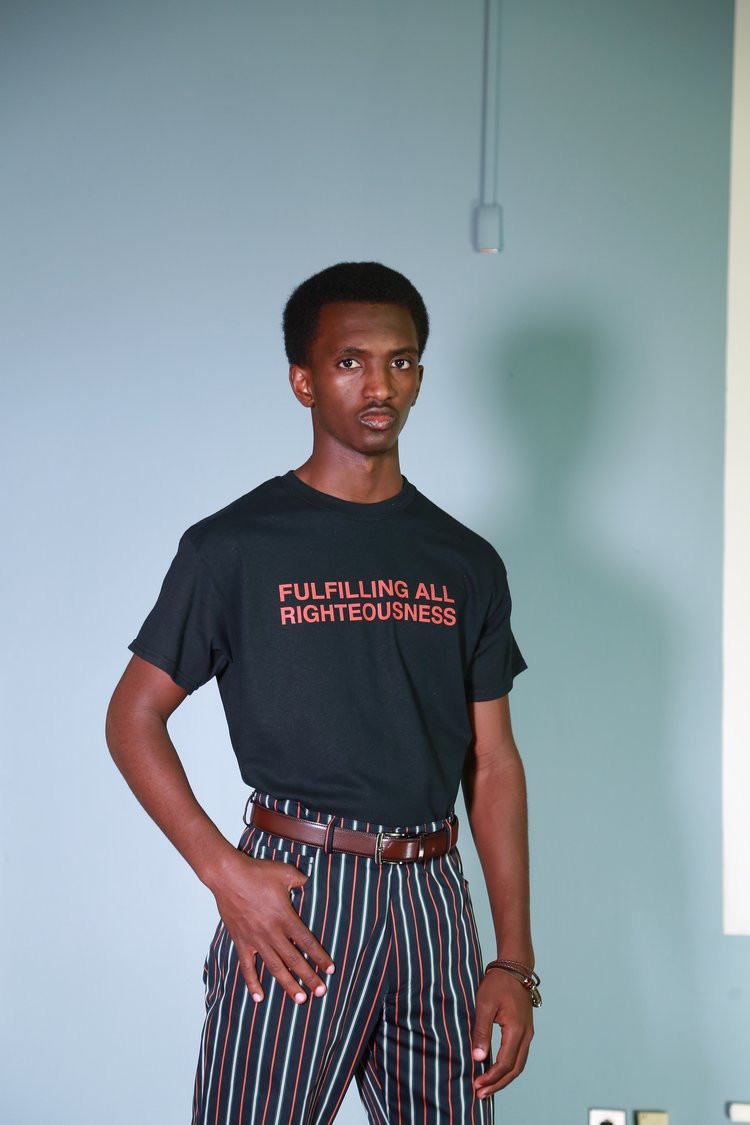
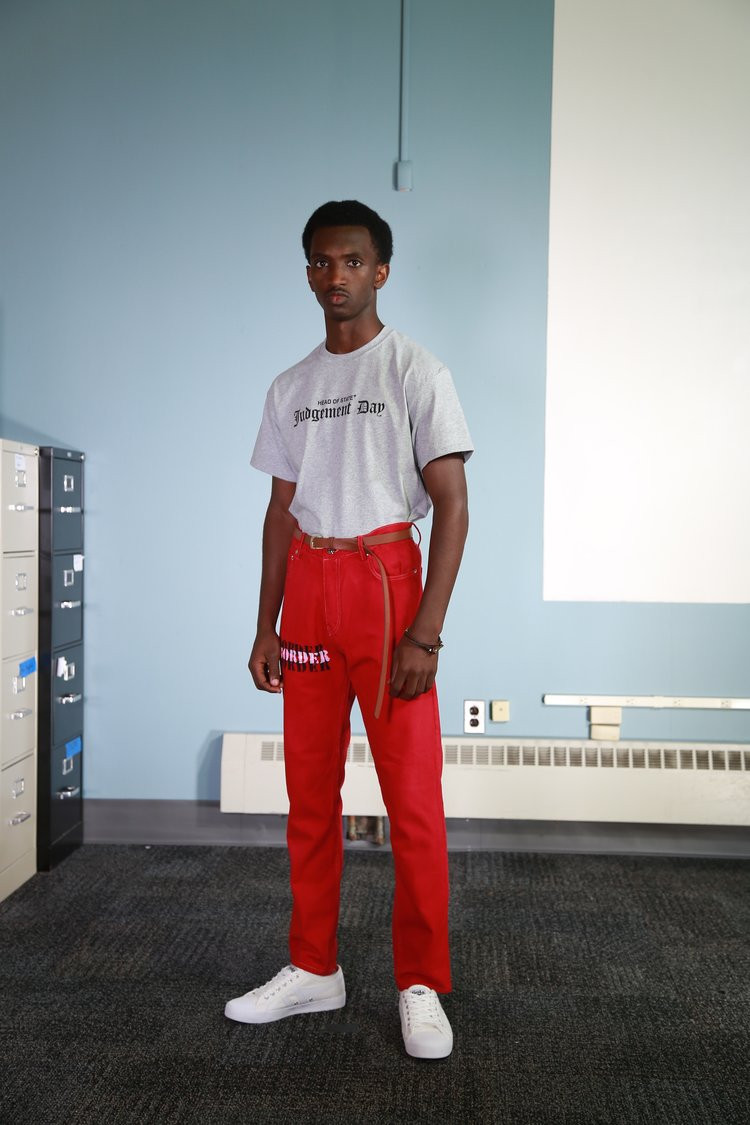
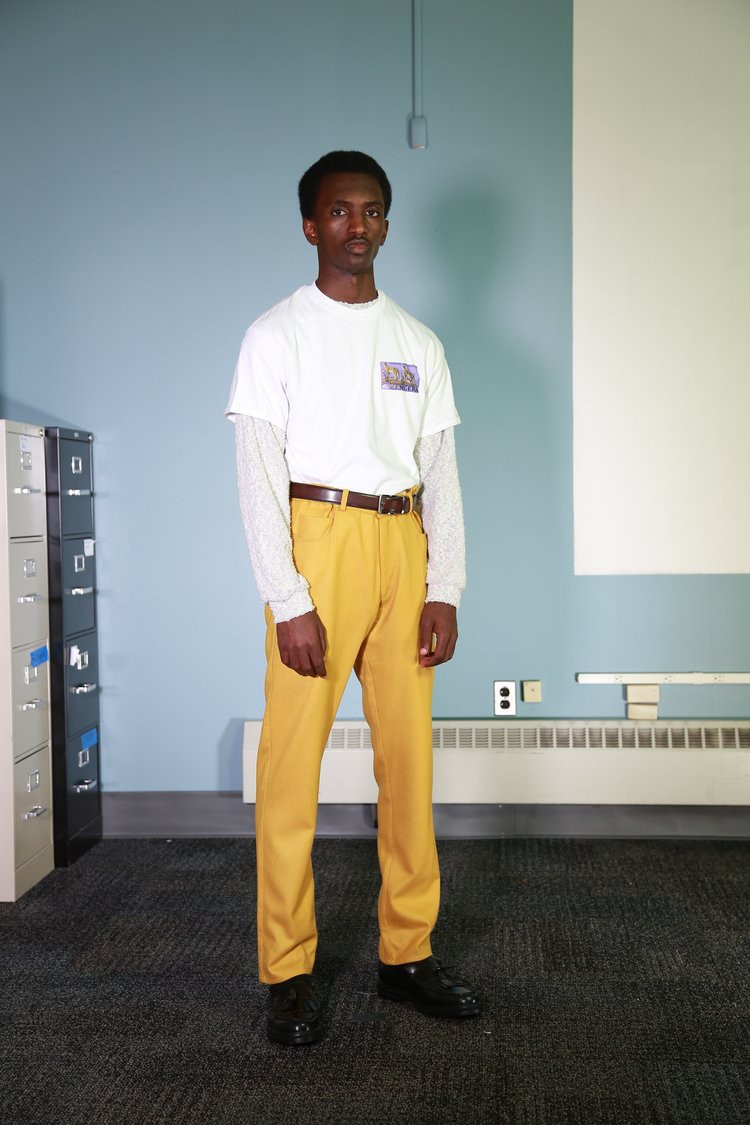
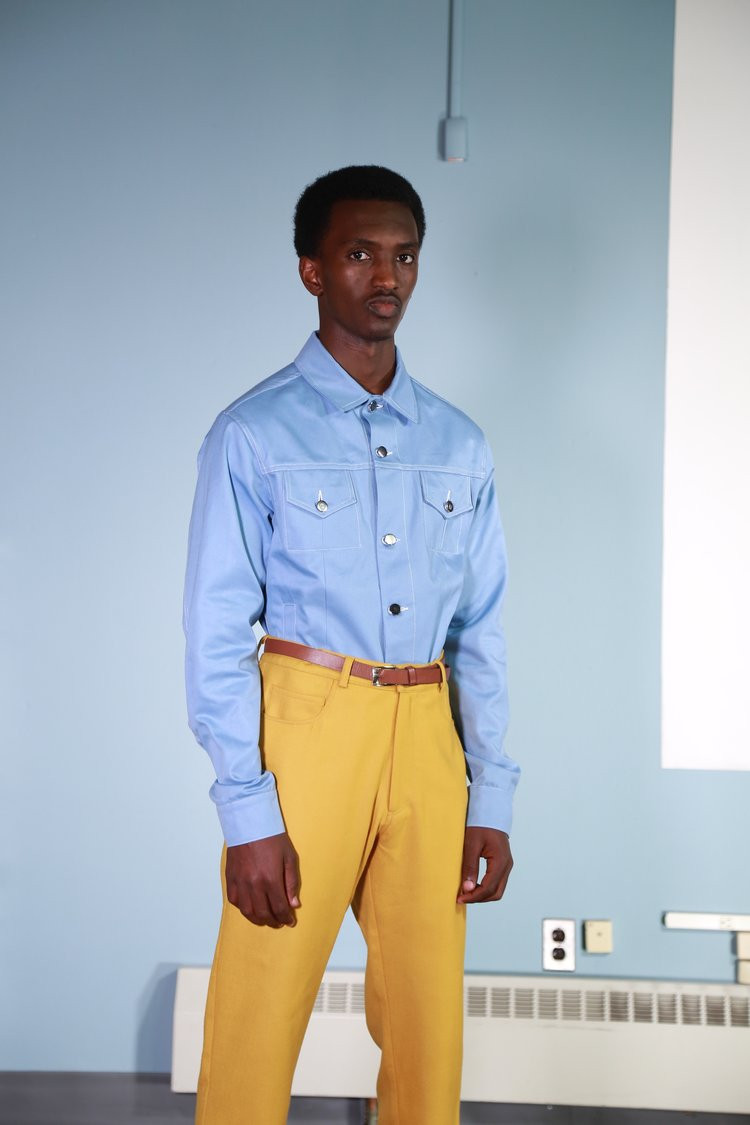
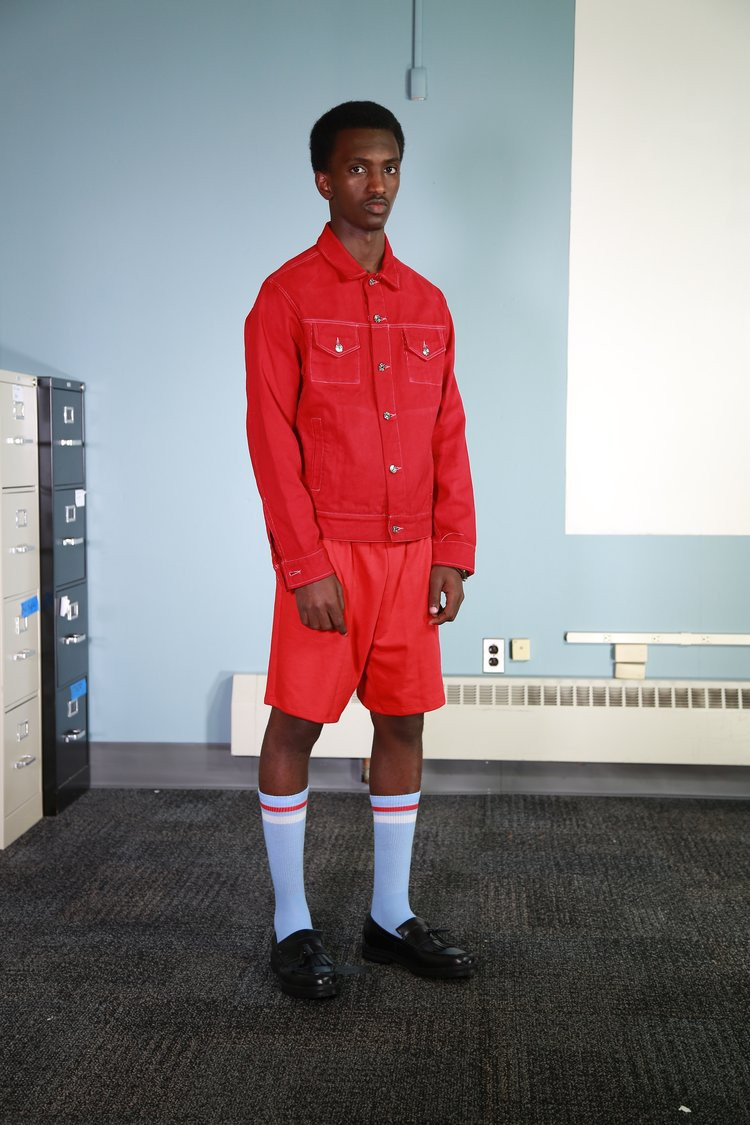
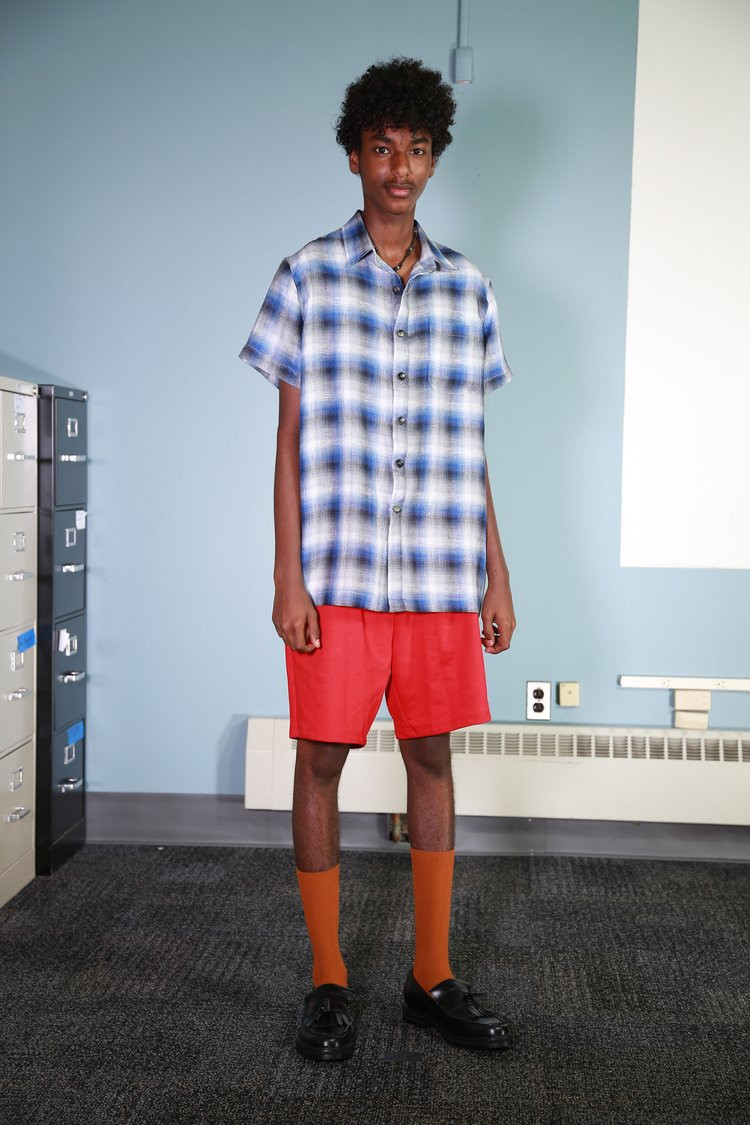
So, you’re like, ‘This is your homework.’
Yeah, pretty much. You go to the show and I go, ‘This is your homework.’ Any outsider who hasn’t been through that kind of situation, especially a lot of Americans, their job is to go home, open up their laptop and research the impact the actions of our country are having on people from the other side of the world. And I hope that’s the feeling a lot of people have leaving, especially my next show, which I think is super important, not only to me, but also to my family, and the people that are represented in the show. Oh my god, I feel like I’m gonna give it away! I’m slowly giving it away!
Do you see there being a narrative that links each of your collections together?
Yeah. And that narrative is my narrative. It feels like I’m writing a book and that book is my life—the people I’ve surrounded myself with, the culture I grew up in, the social issues and political issues I witnessed back in Nigeria. So, in a way, the first runway show is the first chapter to an infinite page book. Each collection is a development of the previous collection.
I believe as designers, we’re not just designing clothes, we’re starting conversations. Either we start a conversation or we continue a conversation, so the reason why I consider it an infinite page book is, after I’m done with what I’m doing, there will be someone else continuing that story.
I’ve read some of your interviews and you talk about being in conversation with previous artists—specifically West African artists from the ‘60s and ‘70s. Would you consider that part of the book too, or something that you kind of build off of in a different way?
I never grew up in the ‘60s, I never grew up in the ‘70s, although speaking to people who lived in that time period, it’s very similar to what I experienced growing up in Nigeria. When I reference West African contemporary photographers from the ‘70s, like Malick Sidibe, Saydou Keita, and Oumar Ly, I relate to the characters in the picture. Looking at the characters and how they not only express their confidence, but the way they also translate Western culture, Western clothing and all of that, there’s a deeper political aspect to it. The West comes into Africa, colonizes Africa, and deprives most people of their culture. And speaking specifically about Nigeria, post-independence, there’s this huge scene of people taking Western culture and twisting it. In a way, it’s like reverse—like, ‘You come here and deprive us of our culture, well we take your culture and look, we can do it so much better.’
But at the same time, if you go to Nigeria, if you go to any part of Africa, the culture is still there. The traditions, the ethnic groups. The Nigerian music industry is a perfect representation of this. A lot of the artists are getting inspiration from hip-hop, getting inspiration from R&B, although they’re still making it their own—the originality is still there. And I think, if that applies in the music industry in Nigeria, and in the movie industry in Nigeria, it can apply anywhere, in any industry. Being an African and being part of the diaspora, I have to not only represent my own cultural background, but at the same time, stick to my original story of me moving to the Western world and my translation of the Western world.
So, you have this really deep message and really important political story to tell. How does that impact the way you view the rest of the fashion world? Obviously, not all designers are trying to create clothes with a radical message. Is that frustrating for you?
No. At the end of the day, it’s all about making clothes. We’re not firefighters, we’re not doctors—all we do is make clothes. Although we have the opportunity to tell any story we want, not all designers have to tell a story.
There are three [kinds of] people in the industry: people who just design clothes, and those people are just as revolutionary as the other two people. The other two people are people who start a story or a narrative, and the last person is someone who continues and furthers that narrative. I respect all of them, but the designers I relate to more, I don’t consider them fashion designers, I consider them storytellers. I consider them authors. And I say this with pride and with confidence: I don’t consider myself a fashion designer. I’m not a fashion designer. I have a story to tell, and fashion just happens to be another medium to express that.
If I want to tell that story, if I want to tell a story of that intensity, it has to be as pure—as raw and as honest as the person who’s been through that situation tells it. I don’t want it to come off as me explaining someone else’s life story, or me explaining what someone else has been through.
How do you get to that level of honesty?
It comes from researching as much as possible. Once you’ve consumed as much information as possible, you yourself become the information. Everything I put out there has to be subconscious and it has to be natural. It can’t be forceful—I can’t wake up in the morning and go, ‘I want to tell this story.’
Even the idea for my next show, it’s based off conversation, off research. A lot of the best art I’ve seen or come across—the artist doesn’t explain, although the story is there. The way you translate it would be very different than the way I translate it, although there’s one similar thing under it, and that’s the original story.